Your profile is incomplete.
Feed others more info about you.
Restaurants
- Jon Cheng added a new meal Dinner at Ninetta at Ninetta
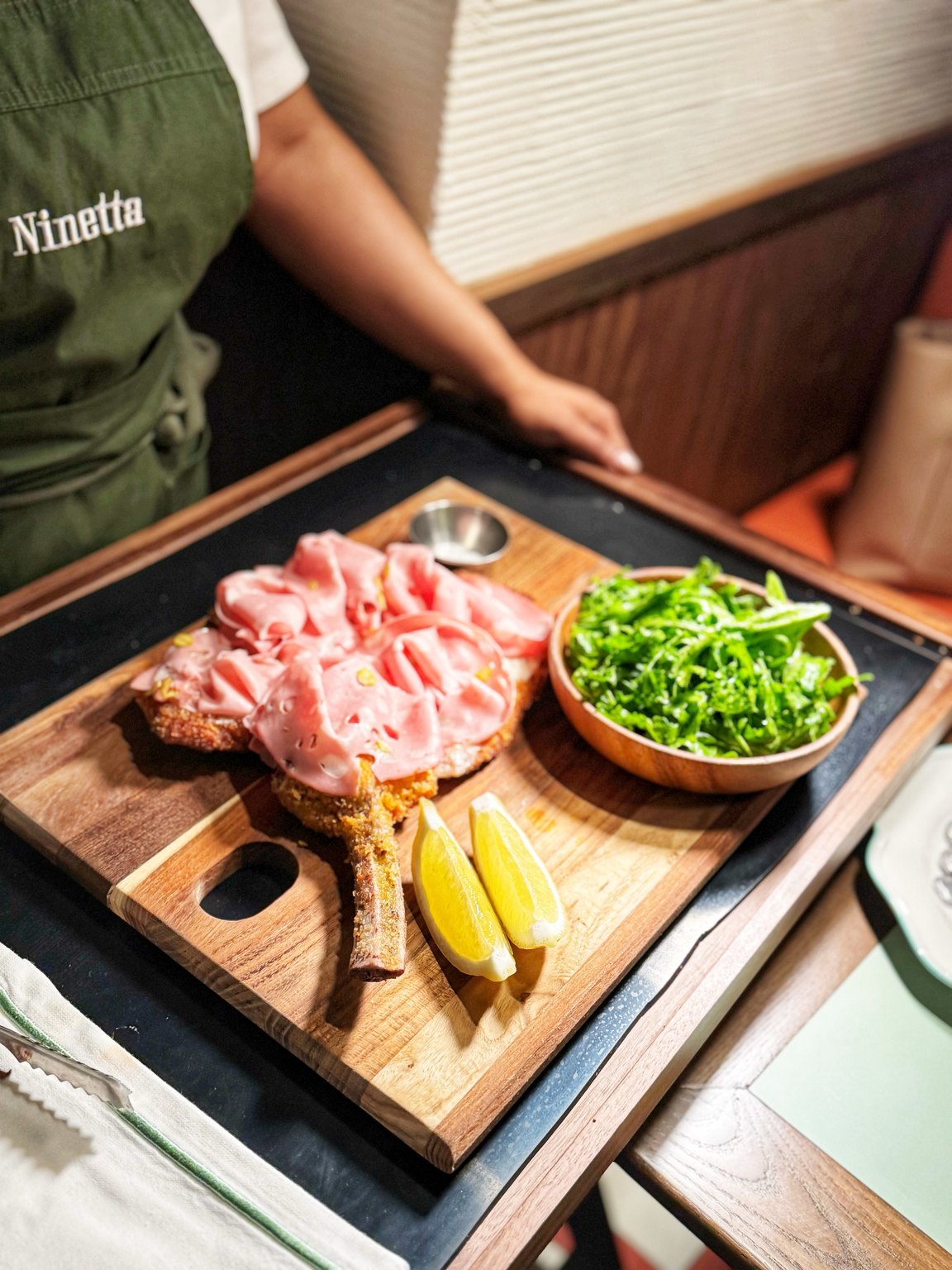
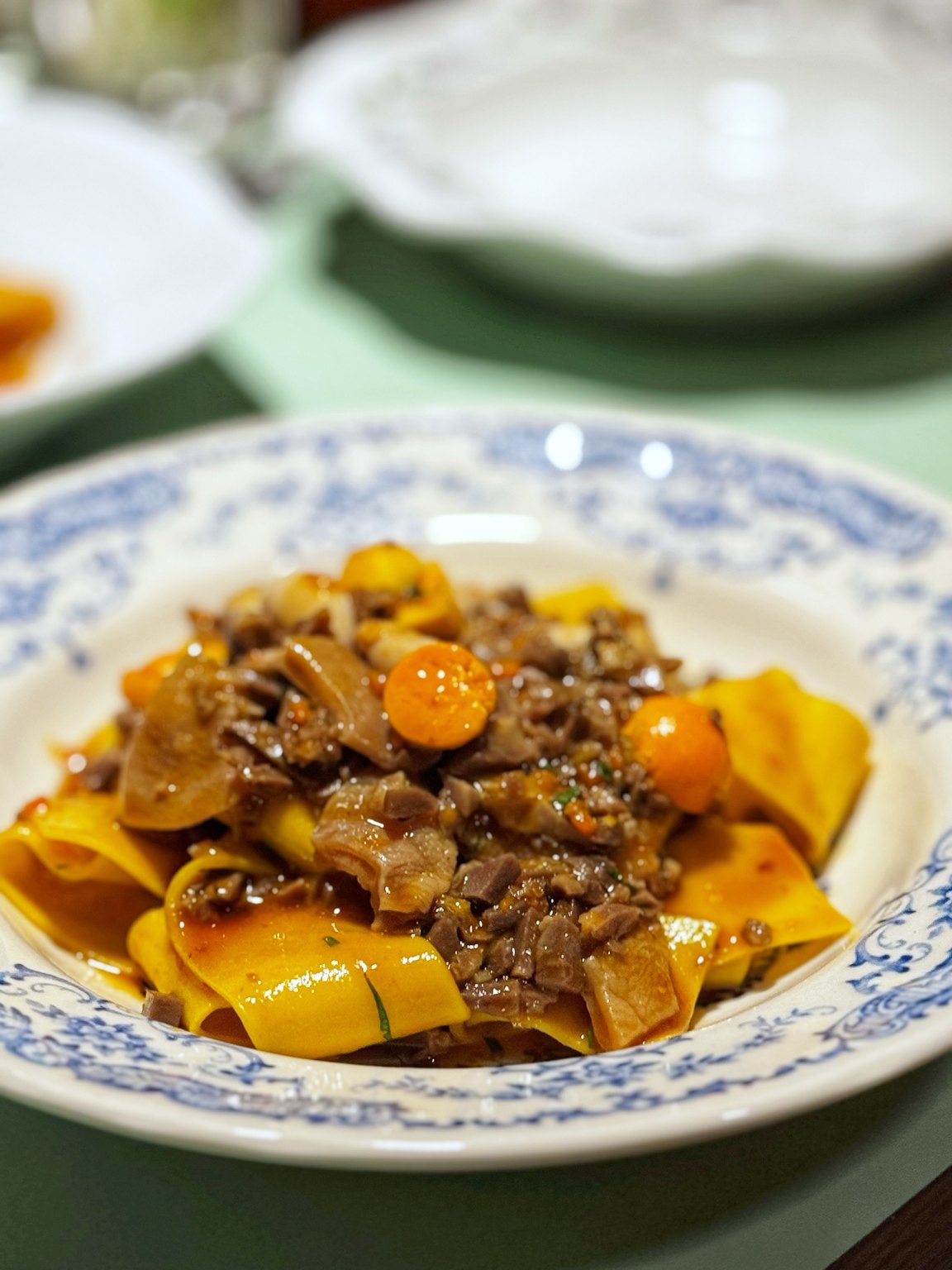
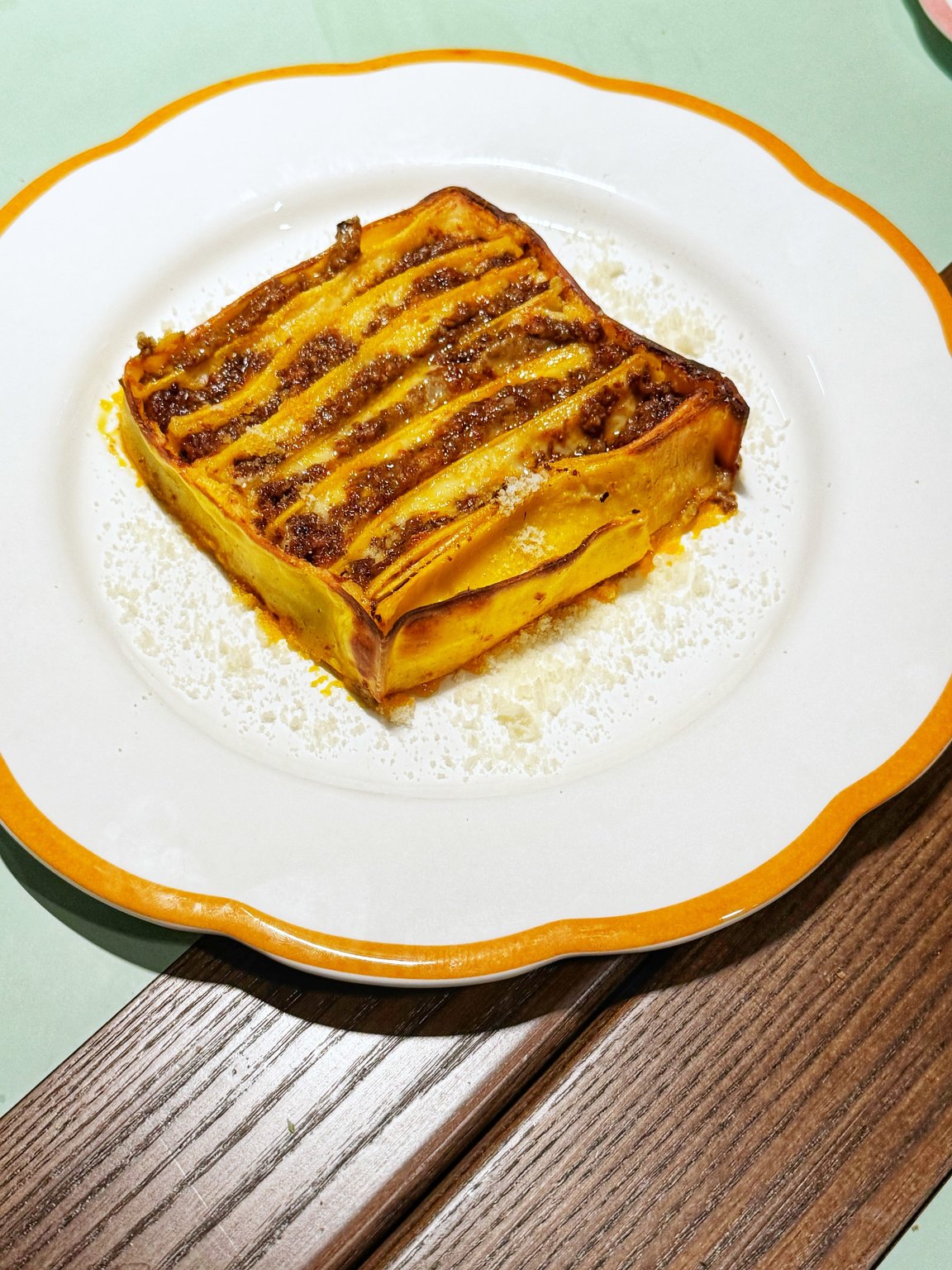
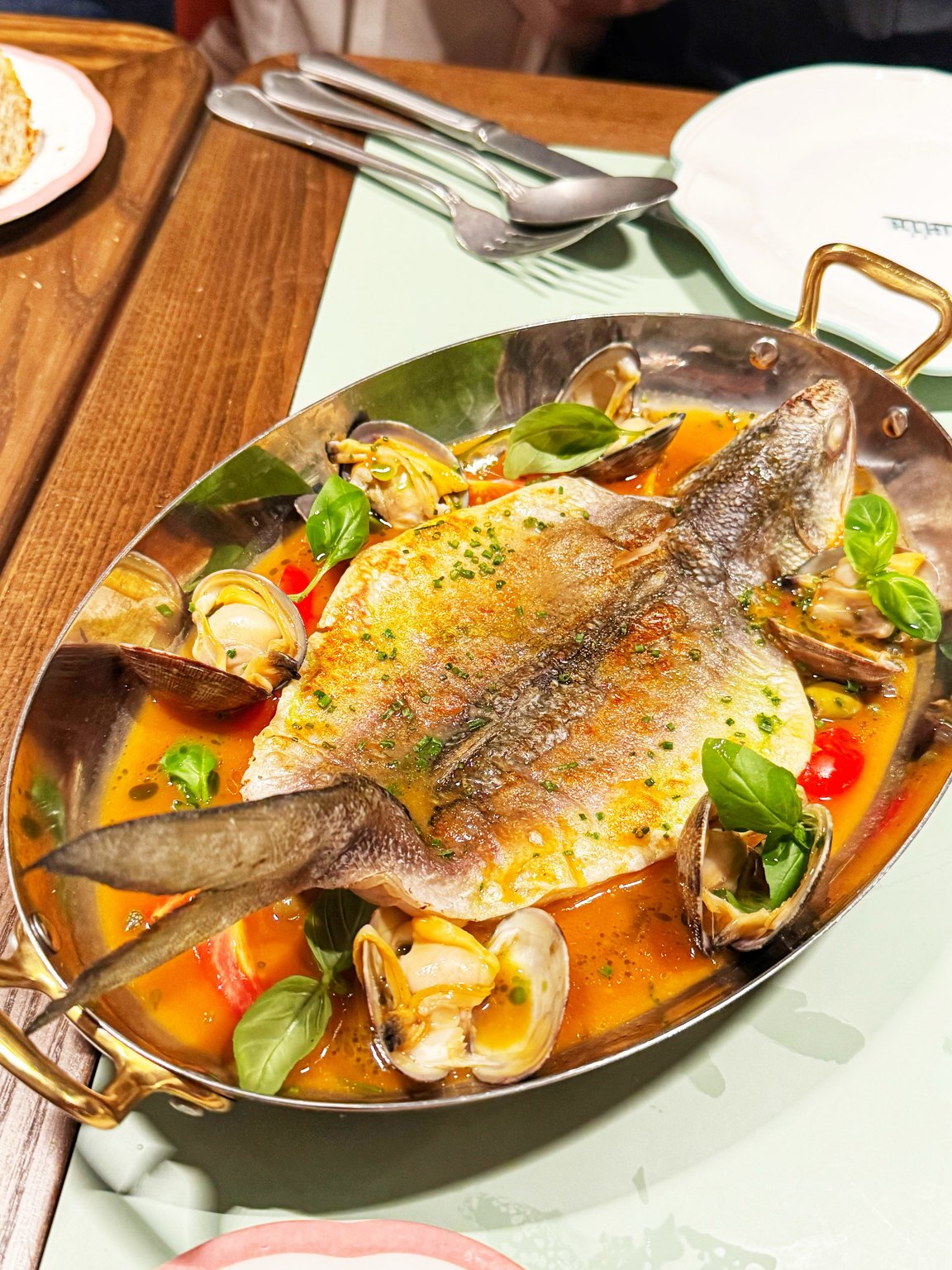
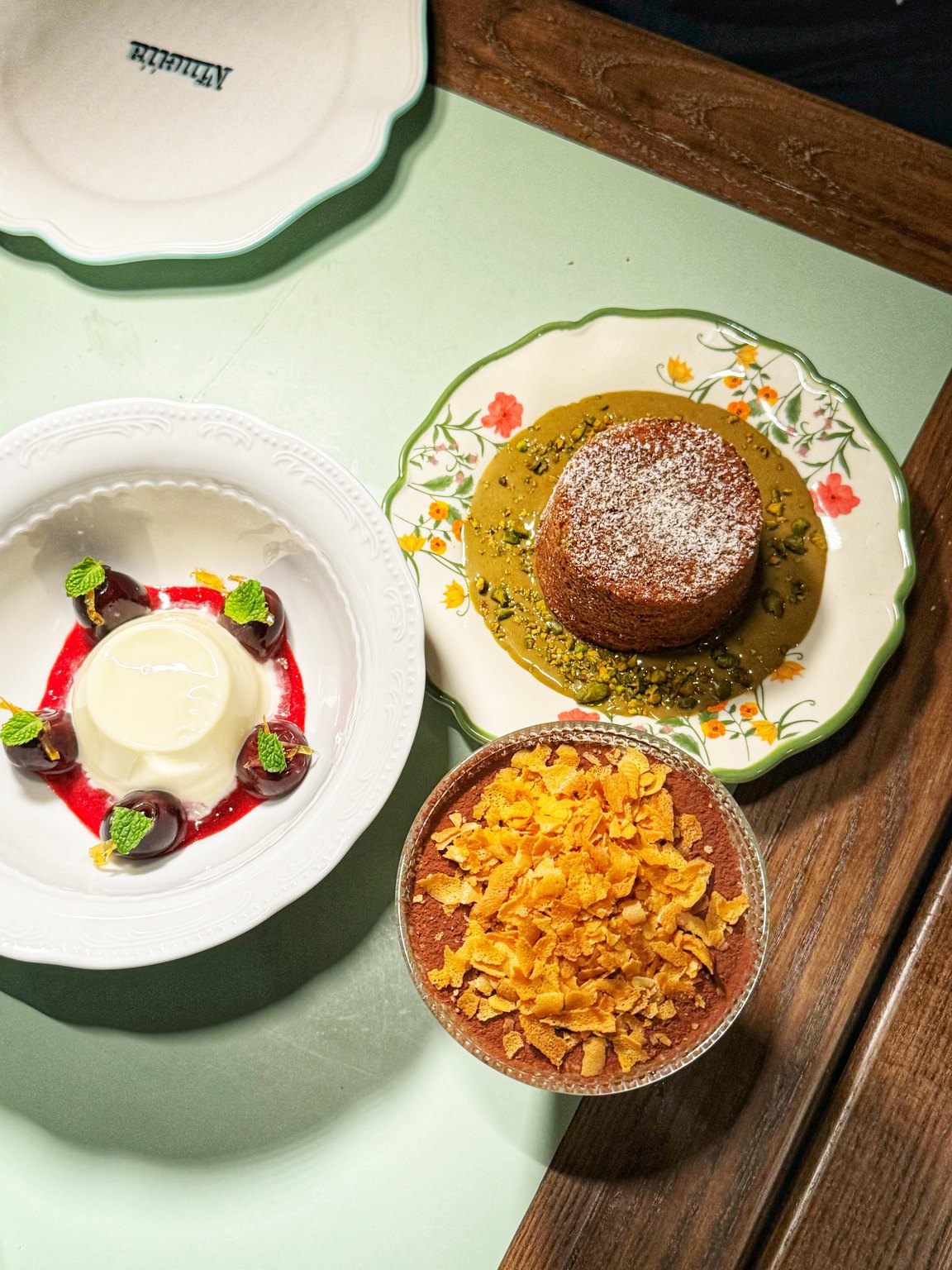
@ninetta.hk isn’t really about a doting nonna so much as the idea of one: a beloved matriarch with a rich story to tell and far too much food to share.
It’s a familiar conceit in the current wave of nostalgia-minded trattorias, where you’ll find veal chops and stuffed whole chickens on ornate silver platters, with thick drapes and... More
@ninetta.hk isn’t really about a doting nonna so much as the idea of one: a beloved matriarch with a rich story to tell and far too much food to share.
It’s a familiar conceit in the current wave of nostalgia-minded trattorias, where you’ll find veal chops and stuffed whole chickens on ornate silver platters, with thick drapes and flowered carpets to match. But if this Ninetta were personified, she’d be a little spunkier, with a healthy fetish for antique wall art and a flair for preparing said veal chop whose crust survives under a layer of molten provola and pink, salty ribbons of mortadella. You’ll find this and other terrific dishes like it on the 3rd floor of a Ginza-style commercial building on Wellington Street, in Hong Kong.
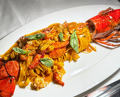
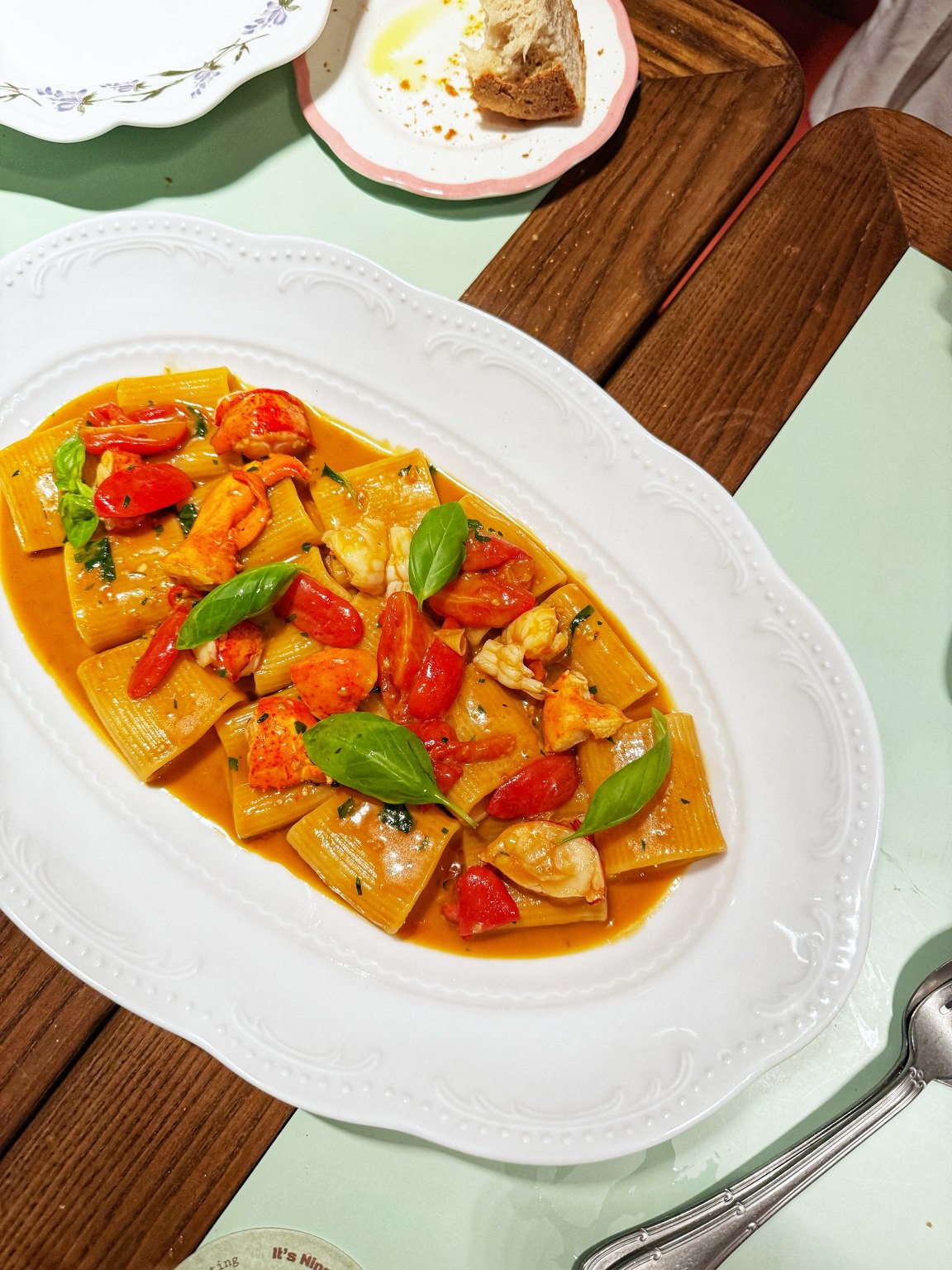
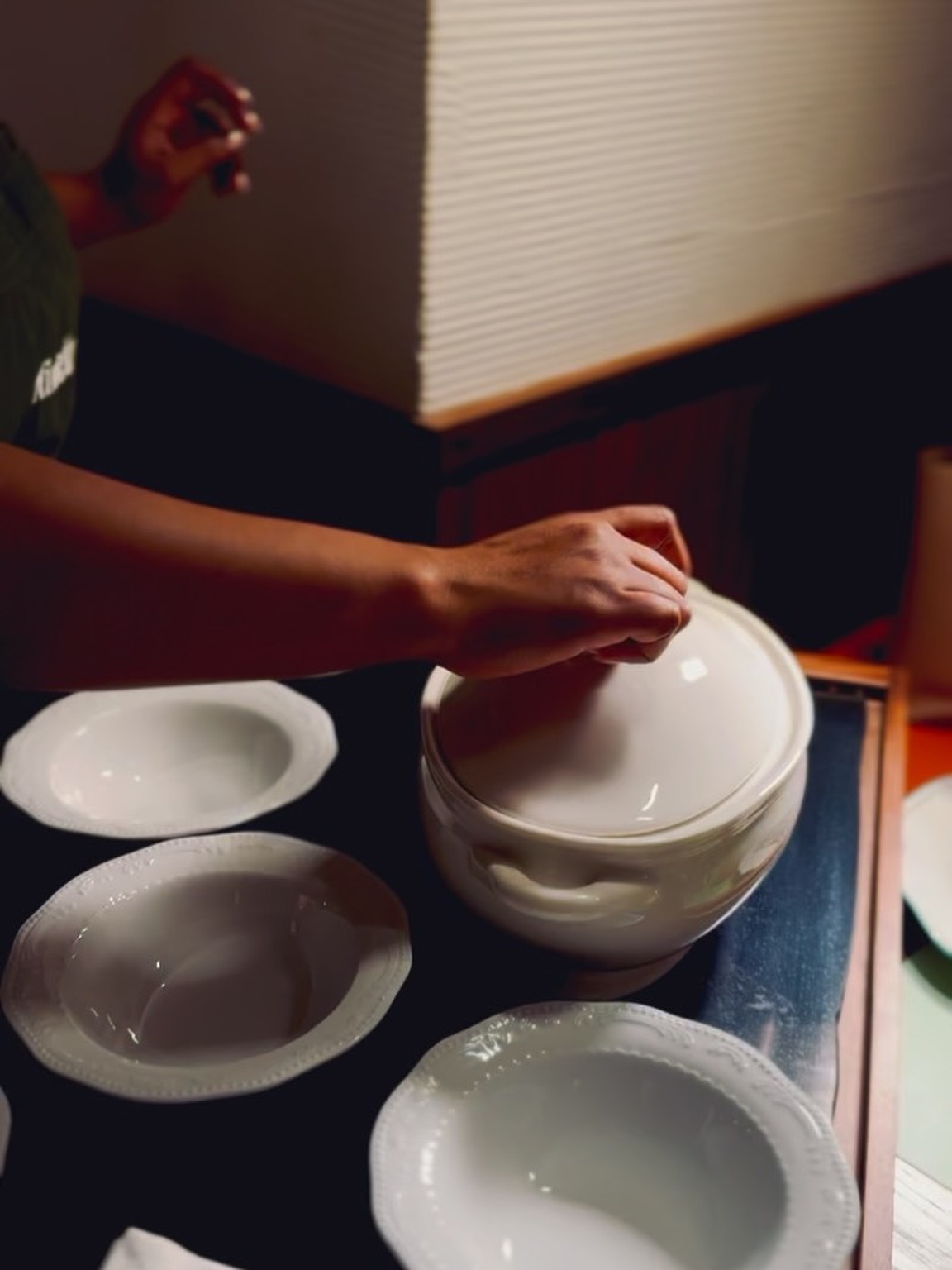
By Monday night, the conceit becomes clearer under the trained hands of the chef Marco Xodo (ex Testina), with Antimo Maria Merone (Estro) among its co-founders. You may find athleisure-clad aunties bent over a plate of braised baby octopus and a bottle of Etna Rosso, or families inducting their worldly children into pork neck and zucchini skewers. But the more adventurous among them should consider offal via Xodo’s yellow-chicken ragu, which embraces all the parts — heart, gizzard, comb — caught in broad folds of pappardelle. Or sweet peas, dotted in and around hand-folded tortellini and cream, which arrive in a tall porcelain tureen.
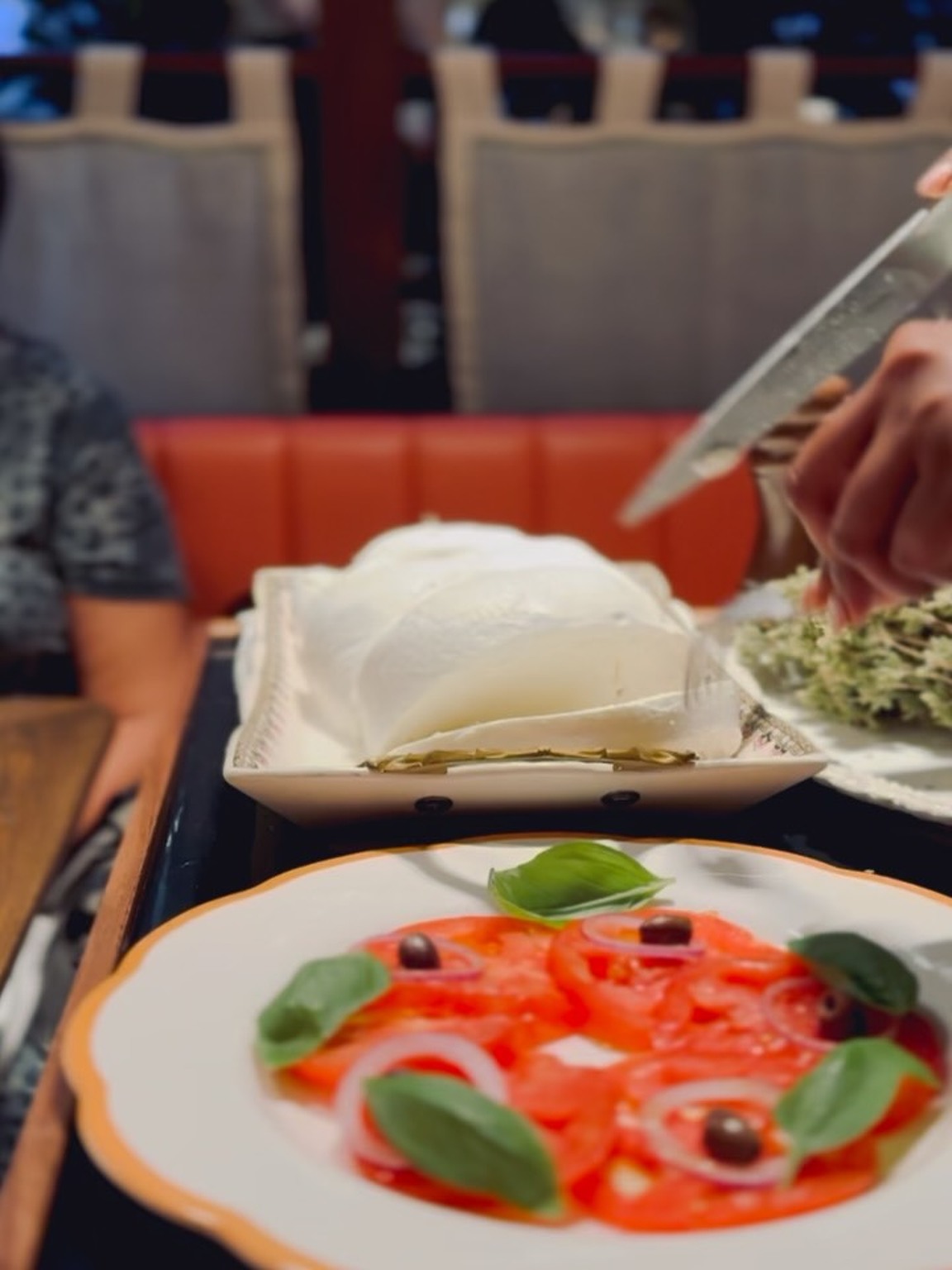
There’s a tableside braid of mozzarella, as satisfyingly thick as the torso of Michelin Man, and a textbook tonnato, where the veal is rosy and tender and the tuna sauce velvety, but when I return — reservations permitting — I’ll supplement the milanese and pappardelle with the lasagne terrine, handsomely crisped at the edges, and Ninetta’s excellent desserts. My favourite among them is the pistachio cake, almost weightless, in a sabayon that pushes the pistachio from sweet toward roasted and faintly smoky.
For all the looking backward, Ninetta feels remarkably alive. Thanks @theforksandspoons852 for paving the way. Less
Copy the code to embed the post
- Jon Cheng added a new meal Dinner at 永 WING Restaurant at WING Restaurant
If @wingrestaurant_hk has a dish that threatens to become its shorthand, as the chaud-froid egg has for L’Arpège, it’s the spring roll. Yes it sounds reductive until you realize it is, in fact, a vehicle for sea cucumber, which lies cocooned inside a wrapper so swollen and brittle that it splinters beneath a cleaver, giving way to something... More
If @wingrestaurant_hk has a dish that threatens to become its shorthand, as the chaud-froid egg has for L’Arpège, it’s the spring roll. Yes it sounds reductive until you realize it is, in fact, a vehicle for sea cucumber, which lies cocooned inside a wrapper so swollen and brittle that it splinters beneath a cleaver, giving way to something trembling and uncloyingly rich. At sister restaurant Vea, the chef Vicky Cheng crisps the sea cucumber itself and cushions it in French saucing; here, the crispness migrates outward.
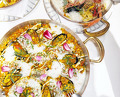
This distinction took me longer than one dinner to understand, which is why I’ve waited a year and three seasonal menus to write about Wing. Chinese restaurants can be tricky to judge from a single visit, and this one asks you to embrace the philosophy of a Hong Kong-born, Canadian-raised, French-trained chef who learned much of Chinese cuisine’s professional grammar later in his career. You should. While many of these flourishes show (well) at Wing, just as compelling were dishes with less spectacle: sweet peas against dried bamboo and salted pork; or asparagus resonant with green Sichuan pepper.
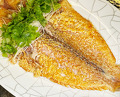
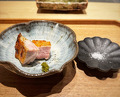
The dishes that do announce themselves are no less memorable too: gently-smoked, intensely-aromatic sugarcane pigeon; dry-aged crispy chicken honed through over 80 trials; a crystal century egg glowing amber over springy Okinawan peanut jimami tofu; and steamed tilefish prepared traditionally but whose scales are pelted with hot oil, shielding its silky flesh with a crisp skin that somehow refuses to soften. Does everything reward that scrutiny? Though the oft-served king crab with cheung fun has its pleasures (sweet crab, richer sauce, appealingly chewy rice rolls), it reveals nearly everything it has to say in the first bite.
No matter: three meals in, I’m less interested in whether Cheng is “reinventing” Chinese food than in his instinct for where to intervene. It’s why sea cucumber can be transformed without smoothing away what makes it difficult; why choy sum can carry as much weight as lacquered pigeon; why now, more than ever, Wing has become one of the Hong Kong restaurants I measure others against. Thank you to those who paved the way. Less
Copy the code to embed the post
- Jon Cheng added a new meal Dinner at VEA Restaurant at VEA Restaurant & Lounge
Before the first bite at @vea_hk , there are warnings.
Dinner will take three hours, there will be coriander, and raw shellfish will appear. A server works through these disclaimers and asides, landing somewhere between hospitality and a preflight announcement, as Charles Trenet’s “La Mer” drifts through the room and cooks move through... More
Before the first bite at @vea_hk , there are warnings.
Dinner will take three hours, there will be coriander, and raw shellfish will appear. A server works through these disclaimers and asides, landing somewhere between hospitality and a preflight announcement, as Charles Trenet’s “La Mer” drifts through the room and cooks move through the open kitchen. Then comes the treasure box: fish maw as broad as a small stingray and a 28-head abalone, brandished as supplements at prices (breathtakingly) commensurate with their rarity. By then, the point has more or less been made, even if very little food has arrived.
For nearly a decade, the chef Vicky Cheng has given ingredients prized in Chinese cooking the treatment French kitchens reserve for their own trophies. At Wing, one floor below, he begins with Chinese cooking and opens outward. At VEA, the direction is reversed. Here is caviar and truffle, certainly, along with Périgueux, bisque, velouté and beurre blanc; there’s also preserved turnip, sea cucumber, fish maw, angelica root.
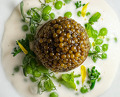
VEA is best when there’s a bit of discord; when luxury, as in caviar, is paired with vegetal accents like Taiwanese water bamboo, lily bulb and coconut; or when the sauce that gilds Pyrenees lamb is tinctured with just enough angelica root that it stops short of Auntie’s dispensary. Better still was crisp-skinned, mi-cuit flounder with a broth approaching velouté — and, crucially, bitterness. Then came the vaunted sea cucumber, slippery and gelatinous — a texture that French haute cuisine might ordinarily seek in a quenelle — over a sauce that follows the logic of an Américaine, whatever crab or lobster is best that day reduced into something indecently rich. A steamed bun follows for a scarpetta that felt deeply satisfying.
Missteps are rare. Kombu-aging intensified a prawn’s sweetness but left it mealy, while the kiwi pushed its sweetness too far. A bok-choy beignet arrived lukewarm and oily. And two pastries — one carrying asparagus, another carrots — were soggy. VEA has become extraordinarily good at making potentially difficult things easy to love. I occasionally wished it made me work a little harder. Less
Copy the code to embed the post
- Jon Cheng added a new meal Dinner at Wana Yook at Wanna Yook
The best dish at @wana.yook , set in a restored, century-old colonial house in Bangkok, is their play on khao kriap pak moh: a street snack built around an unusually delicate method, in which a thin rice-flour batter is spread directly onto a taut cloth stretched over a pot of simmering water and cooked à la minute, producing gossamer, gently... More
The best dish at @wana.yook , set in a restored, century-old colonial house in Bangkok, is their play on khao kriap pak moh: a street snack built around an unusually delicate method, in which a thin rice-flour batter is spread directly onto a taut cloth stretched over a pot of simmering water and cooked à la minute, producing gossamer, gently tacky skins without the density of boiled rice dough or the bounce of tapioca-heavy wrappers.
The easy route, and one many chefs would take, would be to tuck caviar inside and present it as some elevated byproduct of their worldly escapades. The chef @chaleekader , blessedly, isn’t so slavish to these Eurocentric ideas of luxury. He loosens the dumpling’s moorings, swapping minced pork for sweet crab and fried garlic for a floral, mildly tart broth of coconut and mangosteen, split with a Vietnamese coriander oil called Rau ram. It’s a dish that will haunt you, as do several other dishes on Kader’s menu.
To understand Kader’s philosophy is to know that the stark transition from delicate, elemental dishes to fiery soups and lancing curries is structurally Thai, even if the pork has become crab; the curry a foam; or a communal relish set contracted into a single plate. These dishes will all eventually coalesce into a narrative that works. Yes, my favorites among them appeared earlier in the menu. Notably, Kader’s miniaturized ode to Khao soi, where the texture of fried noodles cedes to a tartlette; as well as his ‘daily relish,’ a terrine flanked by paper-thin claws of soft-shell crab, propped like the wings of a Viking helmet, and set in a sauce dotted with deeply aromatic makrut-leaf oil.
But the khao gaeng deserves its due, too. We greedily expanded it with all nine kub-khao dishes: curries, stir-fries, salads and grilled beef arranged around rice. Best among them was yum phra ram doen dong, its pork jowl carrying the plushness of coconut-rich braised meat even after the coconut had disappeared. I preferred the first half of our meal, but very little rice survived the second. Thanks VP and GW for paving the way. A meal to remember. Less
Copy the code to embed the post
- Jon Cheng added a new meal Dinner at Feuille at Feuille by David Toutain
A great restaurant may yet emerge from David Toutain’s @feuillehk . Whether it has already done so remains less clear. Three years into its run in Hong Kong, Feuille still seems caught between his vision and the hazards of exporting it. For every Cristal Room — an arguable success — there is Plaisance, a rogue byproduct of Mauro Colagreco’s... More
A great restaurant may yet emerge from David Toutain’s @feuillehk . Whether it has already done so remains less clear. Three years into its run in Hong Kong, Feuille still seems caught between his vision and the hazards of exporting it. For every Cristal Room — an arguable success — there is Plaisance, a rogue byproduct of Mauro Colagreco’s global apparatus. And for every gougère and fatty fish drowned in beurre blanc enriched with ikura, there are progressive, welcome dishes like local lobster with pumpkin gut and guava, crowned with flowers that looked suspiciously like the feathers plucked from Big Bird.
What’s admirable is that Feuille does not seem eager to concede to the local palate except, nominally, in terroir. Even the gougère is anointed with sobacha, though how it was applied escaped me, as did the sermon I had hoped for on Toutain’s “Grains and Seeds” philosophy.
With enough prodding, a kind server may eventually produce Toutain’s doctrine of layering odd ingredients — nutmeg, sea grapes, kombucha, fig leaf — into savory dishes. These can muddle things: corn custard blighted by cumin; caviar steamrolled by salty potato crumbs; and an excellent cauliflower sorbet with no business beside smoked vanilla ice cream.
But Feuille can also thrill. A threadfin lavished with a foam of sake and elderflower that barely registers may be one of the city’s great fish entrées of late. Sweet green peas stood in loving contrast to the ma yau’s bitter finish. I admired, too, Feuille’s use of pumpkin, especially in the lobster, which recalled the one Hélène Darroze did with tandoori.
And with tighter calibration, the prawn tartare might seem less muddy beneath cucumber and fig leaf; the clam custard might yield more gracefully to the caviar; and the gentler acidity of the sabayon — a Toutain leitmotif — might allow the wampee berry to sing. The local-ish ingredients are indeed there, and welcome: mango from Hainan, pigeon from Shiqiao, lobster from Sai Kung. What Feuille needs now is not less ambition, but more confidence in the ideas already on the plate. Until then, it remains one of the city’s more compelling unfinished thoughts. Less
Copy the code to embed the post
The best thing at @marrow_restaurant — a pop-up restaurant within a wine bar above a storied bakehouse in Wanchai that vends artisanal cookies the size of hotcakes — is that it knows exactly what it wants to be: a modern take on the classic grill buoyed by live fire and the kind of odd cuts that you’ll find at a Barcelonian asador fluent... More
The best thing at @marrow_restaurant — a pop-up restaurant within a wine bar above a storied bakehouse in Wanchai that vends artisanal cookies the size of hotcakes — is that it knows exactly what it wants to be: a modern take on the classic grill buoyed by live fire and the kind of odd cuts that you’ll find at a Barcelonian asador fluent in both meats and seafood; or, say, St. John by way of a Wan Chai wet market.
You could build a very good meal around one of the six tentpole dishes from the grill. On the night I went, in early July, these included rosy, judiciously cooked lamb loin with a well-rendered fat cap, and a glorious 13 oz Australian Wagyu chuck eye — serving two for a reasonable $688 HKD — with an au poivre-style sauce with one toe in a good Parisian brasserie and another in a dai pai dong that brings you joy at 2 am. A terrific dish.
For a fuller embrace of chef @chrismsc ‘s style, consider the grilled whole turbot — a local catch glossed with a potent sauce of deep, nutty brown butter and salted lemon. Or that night’s special, local squid caught that morning, glazed with a dark, molasses-like emulsion that combines red curry, dried shrimp and its own stock.
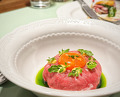
But my dish of the night was a little more unadorned: yellow croaker, a staple in these wet markets, fried until the skin looks brittle and only gently punished while the flesh stayed silky and true. Don’t miss Ma’s take on a beef tartare, resonant with smoked Sichuan oil and a confit egg. Thank you @theforksandspoons852 for the meal and hospitality. Less
Copy the code to embed the post
- Jon Cheng added a new meal Dinner at Quince Restaurant San Francisco at Quince
The menu said “23 Years of Quince,” but the dish I kept thinking about wasn’t on it: four ravioli that looked like sunflowers weathered by a summer without rain, sitting in a shallow but potent pool of corn jus, with its foam gathered around them. Then the chef Michael Tusk lays a flattened husk over the pasta, christening it with one last charge... More
The menu said “23 Years of Quince,” but the dish I kept thinking about wasn’t on it: four ravioli that looked like sunflowers weathered by a summer without rain, sitting in a shallow but potent pool of corn jus, with its foam gathered around them. Then the chef Michael Tusk lays a flattened husk over the pasta, christening it with one last charge of corn.
The ceremony of it all might have seemed a bit much if the ravioli hadn’t been so good.
But they were. Their flavors built steadily: dark caramel first, then something toastier — likely the browned edge of a cob — before settling into the milky sweetness of raw kernels followed by aroma so relentlessly buttery it recalled the popcorn stand at a state fair.
I can count on one hand the corn dishes that have moved me as a food writer. The first cob I ate in Hokkaido, hot enough to melt the cold butter I kept pressing onto it; Cosme’s corn-husk meringue; Jean-Georges’s sweet-corn ravioli in basil fondue; and now these four, which evaded both the printed menu and my camera as I ate them quickly, without ceremony.
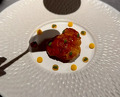
My dinner that began in their renovated dining room before it moved to the kitchen felt at times like a brisk overture of their greatest hits, including the (rightfully) vaunted beetroot spaghetti, stained red to its core and carrying a generous mound of caviar. It’s through this sequence that the prologues, a smoked almond custard brightened with slivered coins of kumquat and geoduck clam crowned over a mound of carosello melon — the cleanest and most precious of the dishes — stand in contrast with the later dishes, which more loudly trumpet Tusk’s style. Because as dinner progressed, so too did his rustic instincts, deepening into dishes like asparagus fished tableside from a cauldron of herbed bouillon (a revelation) and that hypnotically aromatic Watson Farm lamb, cooked at the hearth.
Yes, old signatures will always arrive with their reputations intact, but the better news is that Tusk does not seem especially interested in dining out on them.
Thank you @theandrewcheng for paving the way, @michaeltusk for the meal (to remember), and @davidefra86 for the hospitality.
📍@quince_sf
🍽️ June ‘26 Less
Copy the code to embed the post
- Jon Cheng added a new meal Dinner at Somma at Somma
In Neapolitan tailoring, sprezzatura is shorthand for cool, effortless style, where the shoulder of a softly padded $5,000 blazer is mischievously pleated; the breast pocket curved like a small boat; and the wearer looking as if he had ordered the second-cheapest Barolo with conviction.
At the upper end of dining, this studied nonchalance is refreshing.... More
In Neapolitan tailoring, sprezzatura is shorthand for cool, effortless style, where the shoulder of a softly padded $5,000 blazer is mischievously pleated; the breast pocket curved like a small boat; and the wearer looking as if he had ordered the second-cheapest Barolo with conviction.
At the upper end of dining, this studied nonchalance is refreshing. And @somma.world , housed in the former library of a midcentury-modern school, understands the appeal.
Last year, I (endearingly) took aim at the way Somma choreographed the midpoint between dinner and dark theater. A few of those elements still remain, but the fervent huddle of chefs behind those doors no longer startles; the room feels brighter; and the sermons feel more lived in. What holds today, more clearly now, is that the chef @iammirkofebbrile has turned Somma into one of the most dynamic restaurants in the city.
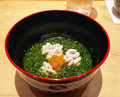
It’s also one of the rare tasting menus that feels more alive on a return visit, as I found in May. “Relaxed” more aptly described the tenor, though Febbrile’s food is still precise and deeply layered. Consider the humble corn husk broth, whose sweetness and nuttiness arrive first, followed by a wash of gently spicy Coratina olive oil that elevates the sip; the manicured asparagus, cooked to a rebellious al dente, paired with a shockingly clean distillation of sugar snap peas, here as ice cream; the deceptively complex pasta course — a full-bore expression of eggplant, whose skins are used with burnt honey and parmesan whey to anoint the water in which the pasta is cooked. Nonchalant is one way to describe its sauce, which is the custardy flesh of the eggplant, loosened with olive oil. Another is unreasonable.
So, too, the lamb: a 3-month-old Pyrenees breed wearing a salt-and-pepper skin as brittle as chicken skin, served simply with spring vegetables. One of the city’s great lamb dishes.
The only slight downer was an unnervingly sweet palate cleanser — Amalfi lemon blighted by Gariguette (!) strawberry — but that shouldn’t detract from the obvious: Somma may still be waiting on a benediction or two from a tire company, but it’s already cooking at that caliber.
📍Somma
🍽️ May ’26 Less
Copy the code to embed the post
- Jon Cheng added a new meal Dinner at Torikaze.hk at Torikaze
One of the naughtier things I learned a decade ago, in London, was to whisper “carte blanche” to a chef. I had just interviewed Mikael Jonsson and hadn’t been to his Michelin-starred Hedone. So I called, emboldened glutton I was: Would Jonsson cook his heart’s desire, price no object? “Come tonight,” he replied. “Alone.”
Three trains... More
One of the naughtier things I learned a decade ago, in London, was to whisper “carte blanche” to a chef. I had just interviewed Mikael Jonsson and hadn’t been to his Michelin-starred Hedone. So I called, emboldened glutton I was: Would Jonsson cook his heart’s desire, price no object? “Come tonight,” he replied. “Alone.”
Three trains later, having crossed from Zone 3 East to Zone 3 West, I found one empty seat and an expressionless Jonsson pulling out a barely skinned hen, its neck as long as a baby’s forearm. “Capon de Bresse,” he announced proudly. His expression shifted when he asked if I’d like black truffles with the capon, and I declined (price no longer an object). But the bird needed no accoutrements. It was glorious, the purest distillation of a prized bird: so silky that it surrendered under a fish knife.
It also added £100 to a £240 menu.
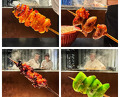
I spent the weeks after being haunted by this bird, as expensive chickens are entitled to do, and I’ve found myself chasing its likeness ever since. Lately, I’m happy to report that at @torikaze.hk, the chicken is alive and well. Poultry purists may argue that this Hong Kong outpost of Tokyo’s famed Torishiki doesn’t use the breed befitting its progenitor, but local three-yellow birds have their virtues, especially with Kishu charcoal and Ryo Matsui, Ikegawa’s protégé, at the grill. The best thing besides savoring the 11-ish skewers — plus the small plates, donabe and dessert — is watching the itamae turn skewers singed and coaxed by charcoal behind three panes of glass, under a beast of a range hood that erases any whiff of gastronomic spelunking on a Monday night, as I did in March, on the 45th floor of an office building in Central.
At times the fattiness gets out of hand, as it did with a few offal pieces. But in almost every regard, the handsome char on the oyster, gizzard, heart, and inner thigh — highlights of the gently-priced $780 HKD omakase — made me swoon, as did the juices gathering beneath blistered skins. The sweet potato and golden beetroot sing, too.
Not every expensive memory deserves a sequel, but this one did. Thank you, @theforksandspoons852 for paving the way.
📍Torikaze
🍽️ Mar ‘26 Less
Copy the code to embed the post
Tonkatsu and I have a troubled history. Over a decade ago, I lived near a gleaming chain known for affordable, heaping bowls of rice crowned with pork that seemed radioactively juiced to oblivion, lacquered in a sticky brown syrup with the medicinal insistence of cough syrup. “Katsu” there was shorthand for leathery pork bound to what looked, and... More

Tonkatsu and I have a troubled history. Over a decade ago, I lived near a gleaming chain known for affordable, heaping bowls of rice crowned with pork that seemed radioactively juiced to oblivion, lacquered in a sticky brown syrup with the medicinal insistence of cough syrup. “Katsu” there was shorthand for leathery pork bound to what looked, and ate, like indestructible sandpaper, with an industrial-grade adhesive completing this unholy trinity. I remember these bowls fondly because they justified the long periods between food adventures, when I made it my mission to conquer London’s Michelin guide as affordably as possible (if only).
This memory largely kept me away from tonkatsu for years. Yes I had serviceable versions, but none that made me cross town. Not until my recent to Tokyo, when I finally understood what tonkatsu could be.
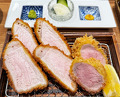
@narikura_minamiasagaya comes easily to mind not only because of its Tabelog eminence, but because the chef Seizo Mitani-san raises fried pork cutlet to the register of the most exacting tempura counters in the region.
Though the batter is almost beside the point — the prized breeds and different loin cuts are the focus — Mitani’s meticulous low-temperature frying yields an ultra-light, ultra-crisp crust around uniformly pink, juicy pork. The first bite barely behaves like fried food at all because the crust yields, then the pork floods in, warm and clean and improbably gentle. Any order permutation will work here. The fillets are tender, delivering equal pleasures alongside his signatures: a fatty-enough ribeye and his “Chateaubriand,” which needs nothing more than a dab of salt and sesame oil.
I’ll return to Narikura should reservations re-materialize. Otherwise, @tonkatsukeita is a worthy alternative, and a more accessible one. It offers a near-elemental showcase of Rokubaku Kurobuta pork, which the owner Keita Aoki-san sources directly from his family farm. The coating on this one is more assertively bound, but the pure, medium-rare cook is a revelation, as is that tall cabbage salad.
🙏 TK and Joe for the recommendations.
📍Tonkatsu Narikura
📍Tonkatsu Keita
🍽️ Feb ’26 Less