Foodle
- 無添 加育ち added a new meal Dinner at Tonkatsu Mange (とんかつ マンジェ) at Tonkatsu Mange (とんかつ マンジェ)
I visited Tonkatsu Mange, a well-known tonkatsu restaurant in Yao, Osaka, that I had been wanting to try. I had heard about their 0830 reservation system, so I arrived at 0750, only to find eight people ahead of me. By the time I registered at 0830, there were about 20 people behind me. As rumored, it’s a popular spot.After a short wait, I received... More
I visited Tonkatsu Mange, a well-known tonkatsu restaurant in Yao, Osaka, that I had been wanting to try. I had heard about their 0830 reservation system, so I arrived at 0750, only to find eight people ahead of me. By the time I registered at 0830, there were about 20 people behind me. As rumored, it’s a popular spot.After a short wait, I received a call to enter the restaurant, and after sitting down with the menu, I waited for about five minutes.The interior has a calm, warm lighting that creates a modern and luxurious atmosphere.I was planning to order either the Tokyo X or Himuro pork, but by the time I entered at 1140, they were already sold out. They open at 1100, and this was during the second round of customers. Since I didn’t come specifically for the brand-name pork, I didn’t mind and chose the signature "Mange Tonkatsu Shoulder Loin 200g" and "Special Fillet 200g" with a set meal for about JPY 4800. This was actually cheaper than ordering the brand-name pork.In front of me, the chef and four staff members were busy at work. The counter allowed me to observe the craftsmanship, and I had a prime seat right in front of the frying area. It was fascinating to see skewers pointing in different directions, a sight I had never seen before.The "Mange Tonkatsu" was quite large and relatively thin. The cross-section showed a thick coating of flour dipped in egg, which had a rich yellow color. The flour seemed to be sprinkled on lightly, creating an airy texture. The thick, crunchy coating was subtly sweet, and the egg-dipping process made it fluffy. As a result, some breadcrumbs spilled out before frying.The key is to fry the meat before the moisture transfers to the coating after applying the breadcrumbs.The cuts were thin, and I had to be careful holding the central part, as the coating could easily come off. It seemed to be fried in lard, giving it a wonderful aroma and a perfect crispiness. The pork had a strong flavor, not overly refined, but I enjoy that classic pork taste—it felt wild and robust.I tried three pieces without any sauce, and the salt and pepper were well-seasoned, making it delicious on its own. After that, I enjoyed it with salt, grated daikon, and sauce in that order. There was olive oil available, but I skipped it since I wanted to eat while it was still hot.The chef calculated the pace of the customers, and as soon as I finished, he promptly served the special fillet. He was frying about five portions at once, which was impressive.The special fillet was a large round cut, sliced in half, revealing a beautiful gradient of red meat towards the center. I noticed that other customers were also enjoying the fillet, and they all had the same color, which was remarkable.The fillet retained an astonishing amount of moisture, and the juiciness was incredible. So that’s why they avoid excess moisture in the coating. Despite its large diameter, it was cooked perfectly. This one had a very refined flavor, making me wonder if I had eaten it in the wrong order.Two pieces of tonkatsu cost about JPY 4000, and I was about 80% full at this point. As someone who prioritizes tonkatsu, I usually think that just the cutlet and cabbage would be enough for me. However, this restaurant seems to focus on quality beyond just the cutlet, aiming for a complete set meal.The rice was sweet and well-cooked, and the miso soup had an indescribably refined taste, likely due to a blend of various flavors. The pickles included turnip, eggplant, and cucumber, providing a refreshing contrast. The white bonito flakes on top added a nice flavor. After eating the cabbage, I was quite full. For JPY 740 for the set meal, it was a great deal.Other customers were enjoying beers, Yamazaki, and Hakushu 12-year whiskey, even though it was still before noon. At around JPY 1400, the drinks seemed incredibly cheap. I came all the way to Osaka just for this restaurant, and I was very satisfied to experience such high-quality tonkatsu. Less
Copy the code to embed the post
- Gerhard Huber added a new tag Italian to Dinner at Dalla Gioconda at Dalla Gioconda with Tomoko Morikawa
Copy the code to embed the post
- Gerhard Huber rated Dinner at Dalla Gioconda at Dalla Gioconda with Tomoko Morikawa with 8
Copy the code to embed the post
- Gerhard Huber added a note to Dinner at Dalla Gioconda at Dalla Gioconda with Tomoko Morikawa
Copy the code to embed the post
- Gerhard Huber added a new meal Dinner at Dalla Gioconda at Dalla Gioconda with Tomoko Morikawa
Dalla Gioconda occupies a spectacular position at the top of Gabicce Monte, overlooking the Adriatic and the borderland between Marche and Romagna. The restaurant opened in 2021 in a former dancing club, created by Stefano Bizzarri and Allegra Tirotti Romanoff together with chef Davide Di Fabio. Sustainability was built into the project from the beginning:... More
Dalla Gioconda occupies a spectacular position at the top of Gabicce Monte, overlooking the Adriatic and the borderland between Marche and Romagna. The restaurant opened in 2021 in a former dancing club, created by Stefano Bizzarri and Allegra Tirotti Romanoff together with chef Davide Di Fabio. Sustainability was built into the project from the beginning: the building achieved LEED Gold certification, the restaurant maintains a natural vegetable and herb garden nearby, and the kitchen emphasizes small local producers and Adriatic fishermen. It subsequently earned both a Michelin star and Michelin Green Star.
Di Fabio has an unusually substantial pedigree. Born in 1985, raised largely in Abruzzo and trained in San Benedetto del Tronto, he joined Massimo Bottura’s Osteria Francescana in 2005 at just 20. He remained for sixteen years, eventually becoming one of the senior figures in the kitchen alongside Takahiko Kondo, before leaving to open Dalla Gioconda.
His stated philosophy is to take the flavour memory of Italian dishes apart and reconstruct it for the present, accepting international influences without, in his words, “betraying the Italian taste.” That tension between Italian identity and outside influences was also one of the most interesting aspects of our dinner.
We chose the current €160 tasting menu, which moved from tomato-water ristretto with black tea and bitter notes through sea lettuce with cucumber, sesame and bottarga; oyster with lemon and bay leaf; scampi with rocket, pine nuts and combava; milk skin with cod; and chilled spaghettini with roasted peppers and red prawns.
The cooking was technically accomplished and frequently very good, although not completely even. The red mullet with Sangiovese was a good example: an interesting idea and attractive composition, but distinctly under-seasoned on our visit, leaving the fish less expressive than it should have been.
By contrast, the chili-glazed morone was excellent—confident, concentrated and one of the clearest successes of the evening. The menu continued with tortelli with apricot and rue and the intriguing pairing of pigeon and tuna belly, before moving into increasingly aromatic and playful desserts.
The broader question concerns Di Fabio’s increasing use of Asian—and particularly Japanese—ideas. The influences bring freshness and excitement, but occasionally feel adopted more through technique and flavour vocabulary than through a deep understanding of the culinary culture behind them. Given Di Fabio’s intelligence and technical ability, this feels entirely correctable: more sustained exposure to Japan and Asia could give these elements greater depth and precision while allowing his fundamentally Italian voice to remain dominant.
Overall, Dalla Gioconda feels like a very strong one-star restaurant moving toward two-star territory. The technical foundation, ambition, setting and best dishes are already at that level; greater consistency in seasoning and a more deeply assimilated approach to its Asian influences could provide the final degree of refinement. Less
Copy the code to embed the post
- Alvin Chen. added a new meal Dinner at La Cime (La Cime) at La Cime (La Cime)
La Cime | Osaka Michelin Guide ★★ Asia’s 50 Best Restaurants World’s 50 Best Restaurants I visited La Cime, a representative French restaurant in Osaka, for the first time. It was a culinary experience filled with surprises and emotions that exceeded my expectations.Starting with the signature amuse-bouche "Boudindog," each dish, featuring... More
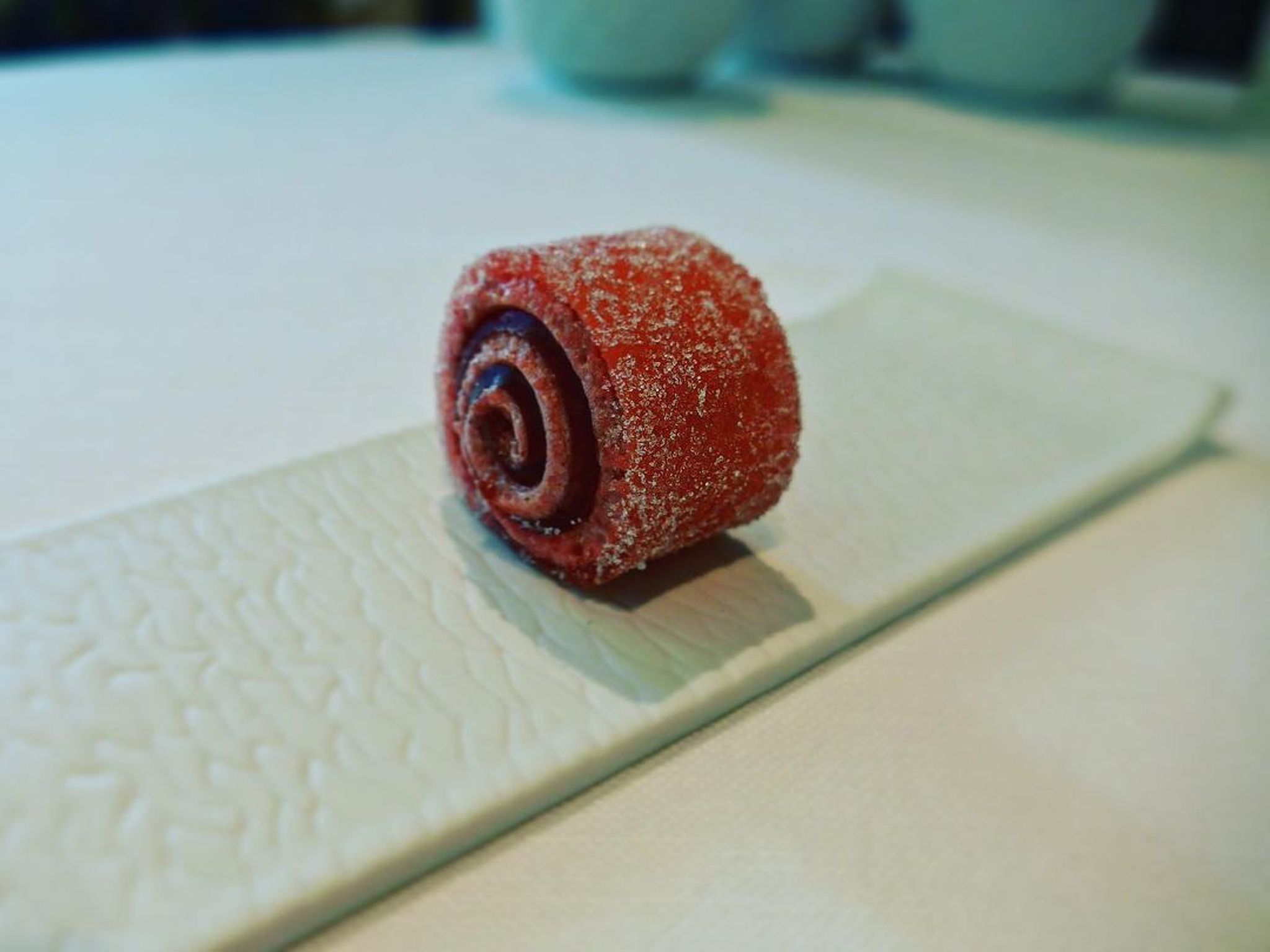
La Cime | Osaka Michelin Guide ★★ Asia’s 50 Best Restaurants World’s 50 Best Restaurants I visited La Cime, a representative French restaurant in Osaka, for the first time. It was a culinary experience filled with surprises and emotions that exceeded my expectations.Starting with the signature amuse-bouche "Boudindog," each dish, featuring seemingly simple pairings like butterbur × Granny Smith, tomato × red sea cucumber, and turnip × sea bream, showcased Chef Yusuke Takada's exceptional skills, creating delicate flavors and beautiful harmony.Particularly memorable were the dishes featuring eel × horsetail, potato × scallop, and crab × shiitake. These dishes beautifully fused the unique characteristics of seasonal Japanese ingredients with the delicate techniques of French cuisine.The dish of red snapper × chrysanthemum was one of the highlights of the evening. The elegant sweetness of the red snapper harmonized with the fragrance of the chrysanthemum, creating an unforgettable seasonal fish dish.The main course, Kagoshima saddleback pork, was moist and tender, with a flavorful fat that did not feel heavy, maximizing the wonderful qualities of the ingredients.The desserts were also very impressive. The blueberry × rice dish featured a contrast of flavors and textures with potato cream, berries, ice cream, and "Shadow Chips." It concluded with kombu × hassaku, leaving a refreshing aftertaste.The petit fours were playful and reflected the spirit of Osaka. One item, which encased homemade mixed juice in white chocolate, burst with nostalgic flavors of Osaka in a single bite. A dessert inspired by Japanese shortcake combined cream made with Japanese sake, macadamia nuts, and strawberry sauce, expressing a mature taste. Finally, a gummy inspired by a character symbolic of Osaka, with the elegant aromas of rose, hibiscus, and rose water, provided a memorable finish.The cuisine at La Cime is not about extravagant presentations but rather cherishes the memories of ingredients, seasons, and the land, expressed through delicate techniques.With refined service, a comfortable dining pace, and dishes that embody Chef Takada's philosophy, this dinner was not just a Michelin two-star experience but a beautiful gastronomic journey where Japanese terroir and French cuisine engage in dialogue.If you visit Osaka, this is a place you should definitely make time to experience. Less
Copy the code to embed the post
- 切り 株さん added a new meal Dinner at PRIMO PASSO at PRIMO PASSO
I visited PRIMO PASSO in Ginza. The fried pizza with prosciutto was amazing. The entire course was very delicious. The cantaloupe and prosciutto granita was also delightful. It seems that you can make a reservation for your next visit if you book about six months in advance.
Copy the code to embed the post
- Naoki Hoshi added a new meal Dinner at Kau Kee at Kau Kee
Copy the code to embed the post
- Bennet Chui added a new meal Dinner at Restaurant boury at Tim Boury