We use cookies on this site to enhance your user experience.
< Back
Overview
Average rating from 8 meals
9.5 / 10
Photo Views: 0
Restaurant Views: 254
Restaurant Views: 254
0 user have this restaurant in their Top list
0 user have this restaurant in their Wish list
Awards
- Tabelog
- 2026 Bronze
Ratings from the web
- Tabelog
- 4.28
Cuisine
Innovative, Auberge
Foodle Reviews
8 / 10
on 01 Aug 2026

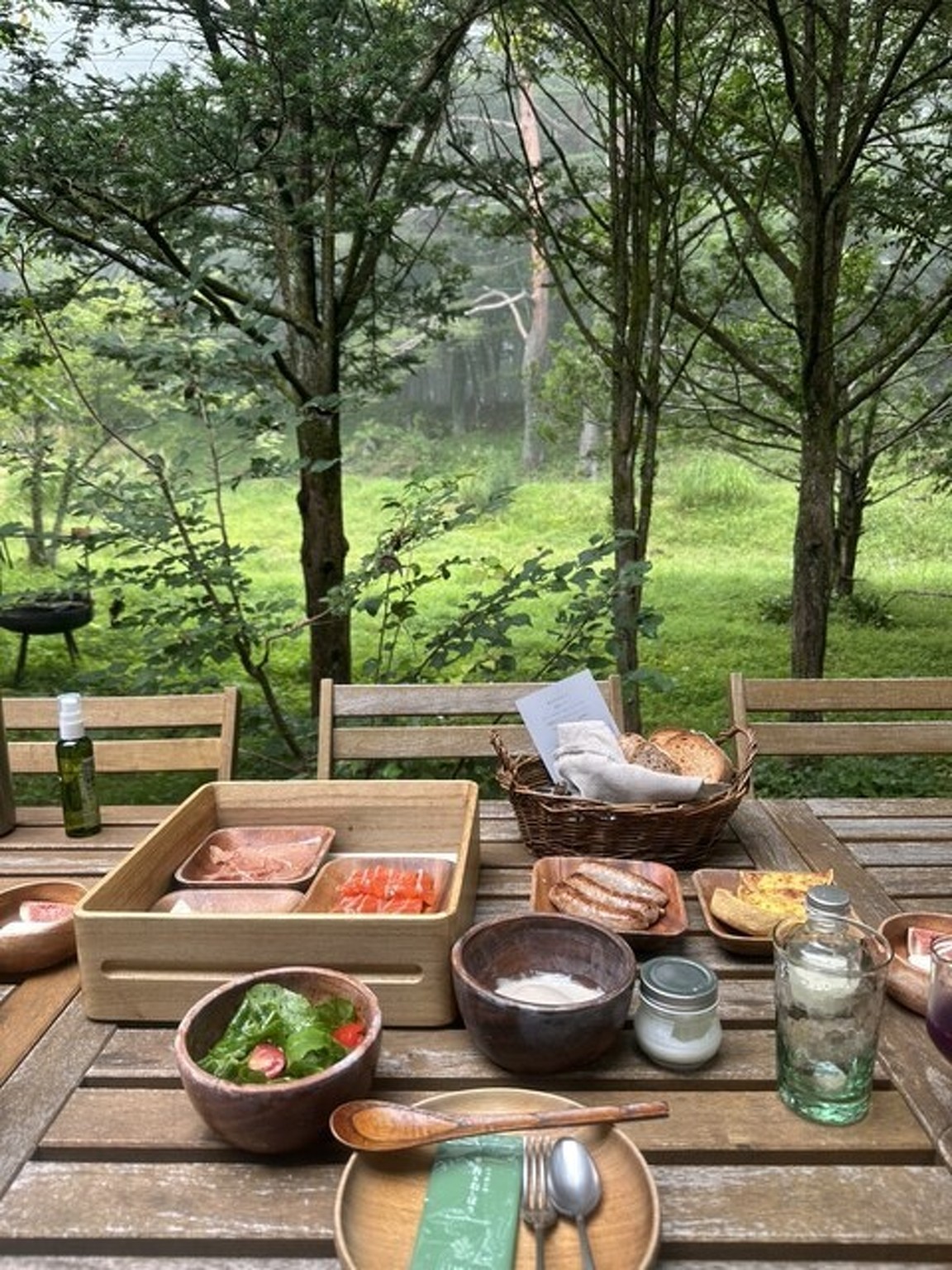
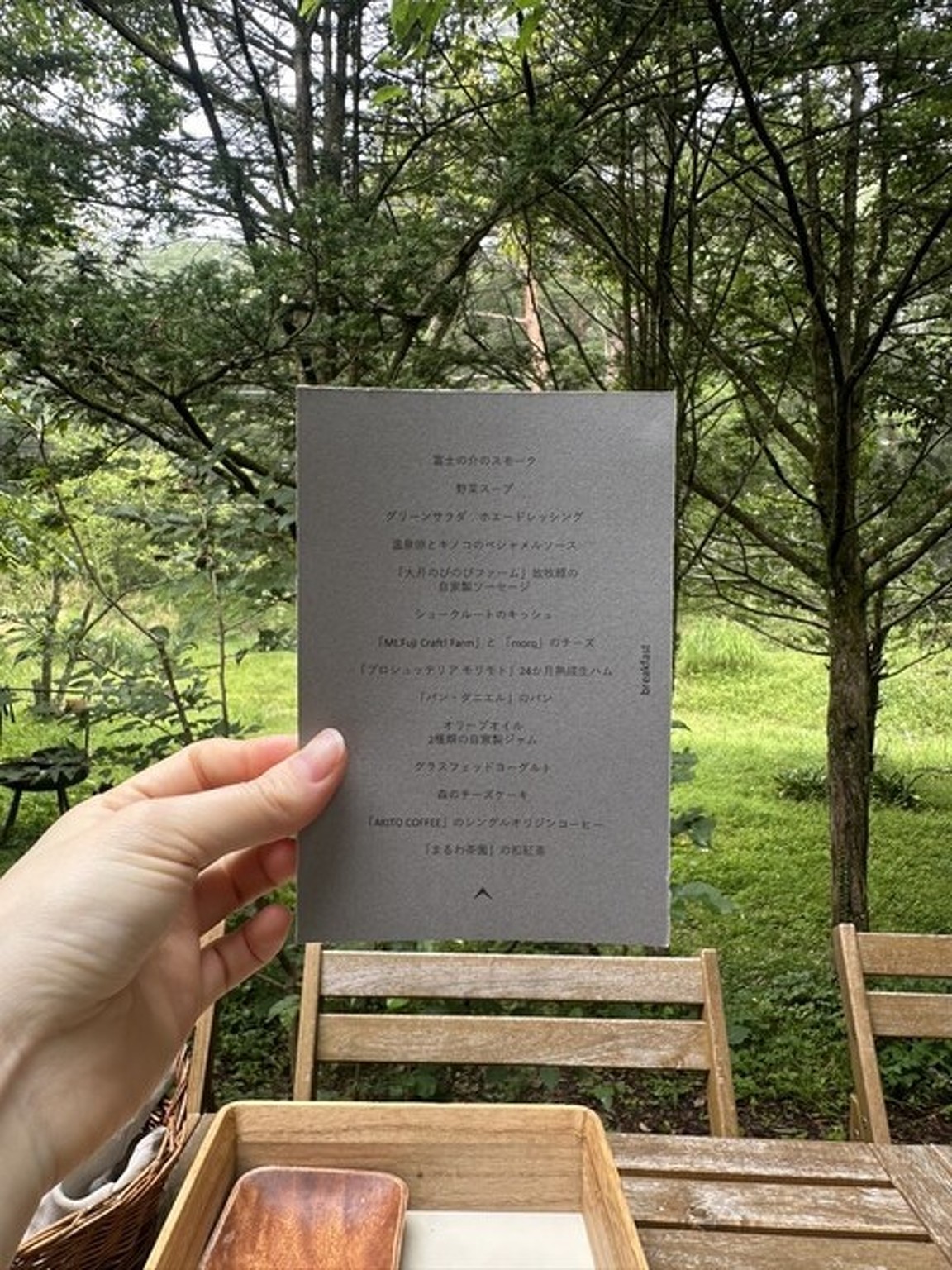
I enjoyed the breakfast available only for guests (optional, JPY 3,500).If the weather is nice, you can have it on the outdoor terrace. It's quite refreshing and delightful to eat while simply gazing at the greenery, something I rarely do.The three-tiered bento box included various items like cheese, ham, sakura masu (cherry salmon), bread, and jam, all made with local Yamanashi ingredients.It felt like a carefully prepared breakfast, perfect for a picnic! It was delicious, and JPY 3,000 is an incredibly... More
I enjoyed the breakfast available only for guests (optional, JPY 3,500).If the weather is nice, you can have it on the outdoor terrace. It's quite refreshing and delightful to eat while simply gazing at the greenery, something I rarely do.The three-tiered bento box included various items like cheese, ham, sakura masu (cherry salmon), bread, and jam, all made with local Yamanashi ingredients.It felt like a carefully prepared breakfast, perfect for a picnic! It was delicious, and JPY 3,000 is an incredibly low price! Less
10 / 10
on 01 Jun 2026
On June 7, 2026, I visited the restaurant for lunch. We had a private reservation for seven people with a booking at 12 PM. It happened to be the first day of the rainy season. Although it started to drizzle, we were able to enjoy a welcome drink on the terrace.Seasonal Course: JPY 30,000 (including tax and service charge) This price includes pairing drinks, which is still an incredible deal.I had a refreshing soda made with locally sourced kiwi and lime, topped with kiwi chips, served in a glass... More
On June 7, 2026, I visited the restaurant for lunch. We had a private reservation for seven people with a booking at 12 PM. It happened to be the first day of the rainy season. Although it started to drizzle, we were able to enjoy a welcome drink on the terrace.Seasonal Course: JPY 30,000 (including tax and service charge) This price includes pairing drinks, which is still an incredible deal.I had a refreshing soda made with locally sourced kiwi and lime, topped with kiwi chips, served in a glass that resembled a flower gently tilting its head.For a starter, we had Kōshū beef bresaola, perfectly salty and flavorful.The menu was presented on washi paper made from wild grapes.The course began with tree sap harvested from walnut trees around March each year, which had a subtle sweetness.Next was a drink made from coniferous trees: a kombucha soda made with cedar, fir, and spruce. It had a distinct kombucha flavor.Oni Kurumi (Japanese walnut) This dish featured the classic Oni Kurumi, presented in a walnut shell with a ball of dough on top. The dough contained chopped Oni Kurumi, and it was garnished with walnut paste and shavings, finished with a syrup made from walnut sap and a leaf of oxalis. It was slightly sweet and pleasantly bitter, with a hint of walnut oil.Young Ayu and Corn This dish consisted of young ayu fish wrapped in a mesh spring roll skin and deep-fried, topped with a black powder made from charred blood orange from Yamanashi Prefecture. With the refreshing aroma of blood orange, I enjoyed the first ayu of the year, from head to tail.A separate sauce was served, made from blended tomatoes, snap peas, asparagus, celery, and cucumber, creating a clear gazpacho. It was topped with oil made from blood orange peel, refreshing and rich in vegetable flavor.The classic Nanbu tea was served, made from lightly steamed tea leaves grown in a special place called Shiratori, infused with lemon myrtle aroma.Amago and Turnip This dish featured amago fish wrapped in cucumber and turnip. It was topped with a jelly made from amago dashi and young spruce shoots that had a grapefruit-like aroma. A white sauce made from fermented turnip juice and amago roe, drizzled with transparent green fig leaf oil, was incredibly delicious. I believe this was the best dish of the day.I enjoyed cold oolong tea made from the Kanaya Midori variety, grown organically by Mr. Watanabe at the foot of Mt. Fuji, infused with wild herbs like kakidooshi and mitsuba.Carp, Boar, and Fuki This dish looked like a traditional Japanese plate. At the bottom was a hint of sansho leaf oil, topped with carp ham wrapped in boar loin, cooked in carp dashi. It was beautifully arranged with thin green onions. On top was a paste made from fermented fuki flower buds and green olives, accompanied by delicate watercress from "Albergo del Otto." Carp dashi was poured over it, making it wonderfully delicious.Finally, a fresh herbal tea was served, made with local sansho leaves, red shiso from my family home, and lavender, offering a fruity aroma and acidity.Hand-Tail Shrimp and Zucchini This dish featured flower zucchini and the large hand-tail shrimp known as "Riku Saku Shingen Ebi." The flower part was stuffed with ricotta cheese and shrimp mousse, then deep-fried. Underneath the zucchini was a puree of grilled zucchini, and the flower was brushed with shrimp miso. It was served with a sauce made from stracciatella cheese and lemon myrtle oil, covered with 24-month aged prosciutto, which added a delightful touch.Using Yume Kaori wheat from Fujiyoshida, the usual brioche was mixed with rosemary and wild kakidooshi, offering a delicious sourness from fermentation.Trout and Beans The trout was shaped into a round form and topped with thinly sliced brioche, baked until crispy. On top was a mixture of sour cream, cream cheese, and chopped salted lemon, along with a medley of snap peas, edamame, and green peas, garnished with pickled crow's foot and young tree shoots. Crispy trout skin chips were served alongside a white sauce made from small diced fermented bamboo shoots bound with butter and green fir oil. It was truly remarkable.A tea made from the perennial fern "Suginasa" and the lemon-scented herb "Four Seasons Tarragon" was refreshing and aromatic.Karin and Sandalwood Plum This was a palate cleanser. A sorbet made from karin (quince) was served with a foam infused with the aroma of sandalwood plum branches native to the area.Black tea from Nanbu Town was infused with the aroma of kuromoji.Budding The signature dish was beautiful as always. The "Kussan" choux pastry, mixed with bamboo charcoal, was shaped like a rugged black eggshell, filled with wild herbs and game meat. Today, it contained grilled deer meat (shin and heart), minced bear and boar meatballs, and braised boar tongue and thigh. Each component was delicious. Underneath was a puree of black garlic and spices, along with a puree of new onions and seasonal wild herbs. There were spicy round fruits, which were said to be the oil-rich fruits available only during this season. The dish beautifully incorporated the essence of spring.Lamb The lamb from Otsuki's Nobinobi Farm was sourced as a half carcass, offering various cuts. On the right was the loin, shaped round after removing the sinew, roasted over wood fire with rosemary. It had a perfect balance of fat and lean meat, cooked rare and incredibly delicious, served over a white fermented potato puree. On the left was minced meat from various cuts, wrapped in shredded potatoes and slowly cooked in clarified butter, topped with fried carrot greens. Underneath was roasted lamb neck and shank, along with young corn roasted whole with its husk. In front was salt from Yamanashi, known as "Shingen's Tears."A drink made from Yamanashi black tea infused with oil-rich grape juice and sansho was served.A bouquet of vegetables from the herb garden was drizzled with olive oil and balsamic from Maeda-ya.Roasted tea made from stem tea from Nanbu Town was served.Vegetable Rice This is a classic menu item. It features 30 varieties of vegetables, including bamboo shoots and corn, prepared in various ways. Unlike local cuisine, it does not include glutinous rice, but instead uses milky queen rice from Fujiyoshida, cooked in a clay pot. The vegetables are placed on top and seasoned with homemade mushroom soy sauce and tomato soy sauce, mixed with fuki oil and wood oil. As always, the texture and flavor were exceptional. It was so delicious that I had a second helping. Accompanying it was a soup made from leftover dashi, a consommé.Rhubarb and Oil-Rich Grape Served in a glass bowl with bubbles. At the bottom was rhubarb puree and chopped fresh cherries. On top was freshly made kuzukiri (starch noodles). Shredded rhubarb compote and oil-rich grape leaf oil, garnished with alyssum flowers and oil-rich grape leaves. A soup infused with the aroma of oil-rich grape branches was poured over it.A fresh herbal tea centered around mint was served.Mochi Grass and Strawberry This dessert featured strawberries and mochi grass (yomogi). On a base resembling a fraisier and shortcake, there was yomogi ice cream, fresh yomogi, and its powder, along with rose geranium cream and a very thin, crispy candy called opaline.For the after-meal drink, I requested coffee.Okukuruma Mugura and Fir On the right was a dessert resembling a juice sphere, coated with cacao butter and filled with a soup infused with the aroma of okukuruma mugura, which has a coumarin scent. On the left was caramel made from urajiro fir, topped with the young shoots of fir that I had eaten earlier. Less
10 / 10
on 25 May 2026
We booked a stay combined with a trip for our anniversary, adding breakfast as an option for JPY 3,500 per person. This restaurant has been selected as a Destination Restaurant 2026 by The Japan Times.Upon entering, the accommodation area is immediately to the left, while the restaurant is to the right.Promoting Fujikofu Cuisine, over 90% of the ingredients are sourced from Yamanashi. The counter seats nine, and the interior is modern and chic, featuring an open kitchen that offers a wide view of... More
We booked a stay combined with a trip for our anniversary, adding breakfast as an option for JPY 3,500 per person. This restaurant has been selected as a Destination Restaurant 2026 by The Japan Times.Upon entering, the accommodation area is immediately to the left, while the restaurant is to the right.Promoting Fujikofu Cuisine, over 90% of the ingredients are sourced from Yamanashi. The counter seats nine, and the interior is modern and chic, featuring an open kitchen that offers a wide view of the cooking area.1. Walnut Sap A subtly sweet and smooth sap with no unpleasant aftertaste. Expectations are high.2. Roasted Walnut Roasted walnuts drizzled with walnut syrup. The fluffy texture and deep umami blend with natural sweetness, creating a dish that seeps into your body. A truly moving dish.3. Young Sweetfish with Fuki Young sweetfish wrapped in fuki leaves, served with a rich egg yolk sauce containing fuki buds. The bitterness and umami of the sweetfish pair beautifully with the sauce, making it very delicious.4. Horse with Fuki Horse sashimi lightly seared over charcoal and served as tataki, accompanied by fuki buds and wild vegetables. The aroma of charcoal is pleasant, and the combination with the vegetables creates a gentle flavor.5. Hime Masu A deep flavor combining Hime masu (a type of trout) with wild vegetables and shiitake mushrooms.6. Bamboo Shoot and Wild Udo Tagliolini Here comes the pasta. The richness of the bamboo shoot and butter is intense, and the handmade tagliolini has a wonderful texture.7. Brioche Freshly baked brioche made from Yamanashi's Yume Kaori wheat. An exquisite taste with sweetness and a fluffy texture that makes it hard to stop eating. Refills are available. No bakery can compete with such high-level bread served fresh.8. Trout with Beans Trout paired with green peas and fresh cedar shoots. The trout's flavor combines with the refreshing yet complex taste of the vegetables, making it very delicious.9. Kiwi and Sanbai Kiwi sorbet paired with a foam made from wild herbs that have a plum-like aroma. A refreshing dish.10. Budding The restaurant's signature dish. On this day, it contained stewed venison and boar, combined with wild herbs, evoking a sense of life's breath. A complex flavor that offers a unique experience. Very delicious.11. Houbou Chicken Slowly roasted Houbou chicken over charcoal. The deep flavor pairs excellently with the red wine sauce.12. Vegetable Rice An arrangement of a local dish made by the chef's mother, featuring over 40 types of Yamanashi vegetables. Paired with a slightly sweet sauce, it is very filling and incredibly delicious. Refills are available.13. Rhubarb and Aburachan A dessert of rhubarb and aburachan (a type of wild yam) cut into noodles. It has a refreshing taste reminiscent of Nordic restaurants. Roasted hojicha tea was also served on the spot.14. Strawberry and Mochikusa A cake combining strawberries and mochi grass (yomogi) ice cream. The candy decoration adds a delightful texture. Extremely delicious.15. Mulberry Leaves and Saffron Chocolate balls made from mulberry leaves and saffron rusk. A complex flavor even until the end.This course, utilizing local ingredients that cannot be found elsewhere, is remarkable. The incorporation of wild herbs like kuromoji, aburachan, and cedar shoots is done so elegantly and attractively.Combining so many ingredients is necessary in a landlocked prefecture, as individual ingredients may lack punch. When I asked if it was difficult, the chef mentioned that he enjoys cooking and does it as a routine. I found this spirit to be truly wonderful.The pairing wines, mostly natural wines from Yamanashi, matched perfectly. I was very satisfied with the inclusion of after-dinner drinks as well.The service was kind and attentive, with detailed explanations of the dishes.Breakfast also featured handmade jams combining Yamanashi ingredients and wild herbs, making it very fulfilling—definitely something to look forward to.The surprise and excitement here surpass even Michelin-starred restaurants in Tokyo. If you love delicious food, this is truly a destination restaurant worth traveling for.I absolutely want to come back! It was a great meal! Less
8 / 10
on 21 May 2026
This was my third visit! This time, I came to celebrate my nephew's special occasion. It was truly wonderful! The weather was perfect, and we started with craft beer and beef prosciutto on the terrace...I won't say more, as it might spoil the surprise! The atmosphere and the food made me feel like I was invited to a lovely relative's vacation home... It was an extraordinary and relaxing day. In my personal Michelin guide, this place definitely deserves three stars!
on 17 May 2026
Today, I started my day here. This is a place I personally love for its flavors. I stopped by while visiting Kawaguchiko for golf. The service was excellent, and the dishes were not only visually appealing but also delicious. I believe it's worth coming all the way to Yamanashi for this. I will definitely return. I highly recommend everyone to give it a try!
10 / 10
on 13 May 2026
I visited nôtori, a place recommended by acquaintances for some time. The auberge opened by two brothers who have made their mark globally is a healing space surrounded by greenery. The room's lighting, curtains, and sofa are all unique pieces crafted by local artisans, making it truly one-of-a-kind. The restaurant features only a counter, and the view of the trees through the picture window is absolutely lovely. While fully enjoying the charm of visiting a rural area, I was able to experience the... More
I visited nôtori, a place recommended by acquaintances for some time. The auberge opened by two brothers who have made their mark globally is a healing space surrounded by greenery. The room's lighting, curtains, and sofa are all unique pieces crafted by local artisans, making it truly one-of-a-kind. The restaurant features only a counter, and the view of the trees through the picture window is absolutely lovely. While fully enjoying the charm of visiting a rural area, I was able to experience the passion the two brothers have for their restaurant and the essence of nôtori as the course began.The wine and dishes are all locally sourced, offering a very gentle and refined flavor. I felt a sense of inspiration that I hadn't experienced in a while. This is a wonderful place I would love to visit each season.Ingredients:- Japanese walnut- Young sweetfish with filtered oil- Horse meat with wild vegetables- Char with canola flowers- Bamboo shoots with udo- Trout with beans- Kiwi fruit with sandalwood plum- Budding shoots- Hōrōhō bird- Vegetable rice- Rhubarb with oil pitch- Strawberry with mochi grass- Mulberry leaves with saffron Less
10 / 10
on 09 May 2026
Revisit. Second time.Oshino Village, Yamanashi Prefecture.The genre is Innovative.This time, I visited with a friend, making it a party of two.We took a taxi from Fujisan Station, which cost about JPY 2,000.Last time, we were the only guests, but this time there were three groups totaling six people, including one group from overseas.The sommelier greeted us in fluent English.I was impressed not only by the chef's brother's extensive culinary skills but also by the sommelier's deep knowledge of beverages... More
Revisit. Second time.Oshino Village, Yamanashi Prefecture.The genre is Innovative.This time, I visited with a friend, making it a party of two.We took a taxi from Fujisan Station, which cost about JPY 2,000.Last time, we were the only guests, but this time there were three groups totaling six people, including one group from overseas.The sommelier greeted us in fluent English.I was impressed not only by the chef's brother's extensive culinary skills but also by the sommelier's deep knowledge of beverages and excellent service.This restaurant, created by the two brothers, was just as amazing this time as it was during my last visit.We enjoyed the seasonal course with paired drinks (JPY 30,000).Since it was the season for wild vegetables, the course featured a generous amount of them.However, the wild vegetables were used in a way that didn’t overwhelm the dish, allowing their flavors to subtly shine through.The taste was unlike anything I’ve had before—truly original.This is likely why it falls under the "Innovative" category, but it’s not just a haphazard innovation; it’s well-calculated and effective.The excitement continued throughout the course, making the three-hour meal feel like it flew by.Simply remarkable.Here’s a rundown of the course:(1) Amuse Bouche 1: Demon Walnut(2) Amuse Bouche 2: Catfish, Koshiabura(3) Cold Appetizer: Horse, Wild Vegetables(4) Warm Appetizer: Hime Masu, Canola Flower(5) Pasta: Bamboo Shoot, Udo(6) Fish: Trout, Beans(7) Palate Cleanser: Kiwi Fruit, Dancobai(8) Meat 1: Sprouts(9) Meat 2: Pheasant(10) Rice: Vegetable Rice(11) Dessert 1: Rhubarb, Abura-chin(12) Dessert 2: Strawberry, Mochikusa(13) Petit Fours: Mulberry Leaves, Saffron(14) CoffeeBelow are my thoughts on the dishes. Feel free to skip this as it’s just a personal note.(1) Amuse Bouche 1: Demon WalnutA dumpling made of walnut paste lightly sprinkled with cheese.Topped with syrup made from walnut sap.While walnuts have a strong flavor, this dish was lightened up, requiring a conscious effort to seek out the walnut taste in your mouth, which serves as good training for enjoying the subsequent courses.(2) Amuse Bouche 2: Catfish, KoshiaburaI learned that Koshiabura is written as "漉し油" in kanji.The catfish is wrapped in Koshiabura leaves and deep-fried.The black powder is made from charred blood orange.There are two sauces: aioli (with herbs) and tofu sauce (with Koshiabura stems).This was incredibly delicious.The umami of the catfish forms a solid base, while the green taste of Koshiabura lightly spreads throughout, enhancing the catfish's flavor, further expanded by the two sauces.In particular, the tofu sauce with Koshiabura stems was outstanding.This is a sauce that should be incorporated into Japanese cuisine.(3) Cold Appetizer: Horse, Wild VegetablesEssentially, it’s a salad of horse meat and wild vegetables, but the flavor is anything but simple.The horse meat includes loin and mane. The loin is lightly seared tataki, while the mane is salted.Accompanied by wild garlic pickled in miso.Topped with eight types of wild vegetables (garlic chives, fern, wild garlic, kogomi, sansho, hongo, ugo, etc.).Two sauces (fermented red turnip + white plum vinegar, fig leaf oil).The wild vegetables are pre-prepared by boiling or frying, ensuring they are in the best condition on the plate.Despite the variety of flavors, the two sauces beautifully harmonize everything together.(4) Warm Appetizer: Hime Masu, Canola FlowerA layered dish.At the bottom, there’s canola flower, topped with pan-fried Hime Masu and shiitake mushrooms, and then a salad of mustard greens on top.In the previous dish, the wild vegetables were the star, with horse meat as a side, but in this dish, Hime Masu takes center stage, with the vegetables playing a supporting role.The Hime Masu is prepared with shiitake mushroom puree sandwiched in between.There’s also charcoal-grilled shiitake mushrooms underneath.This combination allows the Hime Masu to thoroughly absorb the shiitake flavor, which pairs excellently.The canola flower and its puree add a green and spicy note, tightening the flavors of the Hime Masu and shiitake.The raw mustard greens on top also contribute to the flavor’s refinement.(5) Pasta: Bamboo Shoot, UdoHomemade tagliatelle (thin flat pasta).Topped with four types of wild vegetables (bamboo shoots, taranome, koshiabura, yamaudo).Two sauces (udo puree, fermented bamboo shoots + butter).Additionally, it’s garnished with leaves of Japanese pepper, flower pepper, and Hitorishizuka (wildflower), adding a touch of elegance.The tagliatelle plays a completely supporting role. I wonder if there’s anywhere else that serves tagliatelle with such an abundance of wild vegetables.The diverse flavors of the wild vegetables come together beautifully without clashing, making it delicious.(X) BreadFreshly baked brioche made from Yamanashi's Yumekaori wheat.This brioche, which was also served last time, is incredibly delicious.It’s tasty on its own, but it becomes even better when used to scoop up the remaining sauce from the dishes.(6) Fish: Trout, BeansKai Akane trout (rainbow trout).The flesh is prepared medium-rare, and the skin is deep-fried. Additionally, homemade trout dashi is used to create the sauce.For the side, there’s sautéed brioche slices, sour cream, salted lemon, cream cheese, and three types of beans (green peas, snap peas, fava beans), along with fried new cedar shoots and trout skin, completing a superb rainbow trout dish.I whimsically tried the fried trout skin on its own, but it wasn’t very tasty by itself; however, when combined with various ingredients, it became incredibly delicious. A remarkable dish.(7) Palate Cleanser: Kiwi Fruit, DancobaiA sorbet made from kiwi juice and syrup of eight types of dried herbs.Foam infused with the aroma of the roots of Dancobai (a fragrant wood).(8) Meat 1: SproutsThree types of game (deer shintama, minced boar, boar tongue) grilled over wood and then charcoal-grilled.Wrapped in bamboo charcoal dough with simmered hole-bear belly.Two types of puree (black garlic + spices, Jerusalem artichoke). Topped with 15 types of wild herbs.This is a slightly altered version of the chef's specialty I had last time.I think the previous one was tastier.(9) Meat 2: PheasantFour cuts of pheasant grilled over wood (tenderloin, white liver, thigh, breast).Served with green onions and two sauces (fermented potato puree, red wine + wild grape + pheasant dashi).Shingen's tears (hot spring salt).Mmm, it’s irresistible. Delicious. I’ve had pheasant dishes at various restaurants recently, but this pheasant has an exceptional quality.(10) Rice: Vegetable RiceA staple closing dish at this restaurant.The vegetables change with the seasons, so the taste is never the same.Mixed rice made with two types of homemade sauces (shiitake, tomato) and over 40 seasonal vegetables and wild plants.So delicious! Even though I was full, I ended up asking for seconds.Additionally, a consomme soup made from leftover meat and vegetables was served, which was also very tasty.Pouring this consomme soup over the vegetable rice to enjoy it like ochazuke was delightful.(11) Dessert 1: Rhubarb, Abura-chinKuzukiri (starch noodles). This is flavored with the aroma of Abura-chin (a fragrant wood).Also includes rhubarb puree and compote, along with Abura-chin oil and soup.This Abura-chin was used last time as well and seems versatile for various dishes.The aromatic impact is tremendous.(12) Dessert 2: Strawberry, MochikusaFraisier (strawberry cake). Yomogi (mugwort) ice cream.Topped with herb cream and opaline (candy rice cracker).(13) Petit Fours: Mulberry Leaves, SaffronVegan chocolate balls made from mulberry leaves. Saffron rusk.(14) CoffeeIt was wonderful.The course was a full-on effort from start to finish.I can only express my gratitude for such an experience.I will definitely return. Less
10 / 10
on 05 May 2026
RevisitI had an exceptional impression during my first visit last December, so I inquired about the delicious wild vegetables and made a reservation for a weekday dinner after Golden Week, five months in advance via Instagram.I entered at 18:25, being the last customer of the day, with a total of six guests.I was seated at the same table as last time.Before starting the meal, I requested a pairing focused on spirits (with an alcohol content of 40% or higher), and they wonderfully accommodated my... More
RevisitI had an exceptional impression during my first visit last December, so I inquired about the delicious wild vegetables and made a reservation for a weekday dinner after Golden Week, five months in advance via Instagram.I entered at 18:25, being the last customer of the day, with a total of six guests.I was seated at the same table as last time.Before starting the meal, I requested a pairing focused on spirits (with an alcohol content of 40% or higher), and they wonderfully accommodated my request.After a welcome drink made from walnut sap, the following dishes were served:**Menu****Drinks**★ Additional Notes1. **Amuse-Bouche 1: Demon Walnut** A ★ Walnut, walnut paste, and a croquette made from walnut dough, drizzled with a syrup made from cheese and walnut sap.2. **Amuse-Bouche 2: Catfish, Strained Oil** A (refill...) ★ Fried catfish wrapped in orange strained oil (Koshiabura), served with two sauces (aioli and tofu white miso).3. **Cold Appetizer: Horse, Wild Vegetables** B ★ Horse loin sashimi with wild garlic miso marinade, salted pork fat, topped with seven types of wild vegetables (garlic chives, bracken, wild garlic, kogomi, sansho leaves, hango grass, and ugo) and two sauces (fermented red daikon + white plum vinegar, and oil from fig leaves).4. **Warm Appetizer: Hime Masu, Canola Flower** C ★ Canola flower, canola flower puree, mustard greens salad, charcoal-grilled shiitake mushrooms, and a pan-fried Hime Masu stuffed with shiitake puree, topped with mustard greens salad and canola flowers.5. **Pasta: Bamboo Shoot, Udo** D ★ Homemade tagliatelle with four types of wild vegetables (bamboo shoots, taranome, strained oil, and wild udo), served with two sauces (udo puree and fermented bamboo shoots + butter), topped with Japanese pepper leaves, flower pepper, and Hitorishizuka (wild grass).- **Bread** Freshly baked Boulangerie made from Yamanashi's Yumekaori wheat.6. **Fish: Masu, Beans** E ★ Sautéed Kai Akane Masu (rainbow trout) with sliced Boulangerie, served with sour cream, salted lemon, cream cheese, and three types of beans (green peas, snap peas, and fava beans), with two sauces (homemade masu dashi + snow peas, and cedar oil), topped with cedar sprouts, fried trout skin, and wild pea shoots.7. **Palate Cleanser: Kiwi Fruit, Dancoubai** ★ Sorbet made from kiwi juice and an unknown syrup, with the aroma of Dancoubai (fragrant wood) root in espuma form.8. **Meat 1: Sprouting** F ★ Charcoal-grilled game meat (venison, minced boar + tongue), bamboo charcoal dough wrapped with stewed badger belly, served with two purees (black garlic + spices, and Jerusalem artichoke), topped with 15 types of wild grass.9. **Meat 2: Korokke Chicken** G ★ Four cuts of Korokke chicken grilled over fire (breast, white liver, thigh, and tenderloin), served with green onions and two sauces (fermented potato puree, red wine + wild grape + chicken dashi), and Shinshu salt (onsen salt).10. **Rice: Vegetable Rice** H ★ Rice mixed with two types of homemade sauces (shiitake and tomato) and over 40 seasonal vegetables + wild vegetables, with meat and vegetable scraps consomme.11. **Dessert 1: Rhubarb, Oil Pitch** I ★ Kuzu noodles with the aroma of oil pitch (Aburachan), rhubarb puree + compote, and oil + soup from oil pitch.12. **Dessert 2: Strawberry, Mochikusa** J ★ Fraisier (strawberry cake), yomogi ice cream, herb cream, topped with opaline (candy rice cracker).13. **Petit Fours: Mulberry Leaves, Saffron** K ★ Vegan chocolate balls made from mulberry leaves and saffron rusk.**Drinks** A: Fuefuki: Lumiere: KAKITSUBATA (Sparkling) B: Fujiyoshida: Tokeru Gin: Rose Geranium *Produced by Ethical (Kuramae)* C: Kofu: GEEKSTILL: Butterbur D: Same as above: Japanese Pepper E: Same as above: Anise + Nectarine *No photo* F: Gotemba: Kirin Fuji (Highball) G: NZ: BALD HILLS: Pinot Noir 2016 H: Roasted Tea I: Herbal Tea J: Yamanashi: Kizuyama Distillery: La Fruityist (Brandy) K: Coffee Total stay was three hours. With a larger number of dishes, the waiting time felt shorter, around just over two hours. Here are my impressions of the meal:- The ingredients were primarily sourced from Yamanashi, making it one of the symbolic restaurants worth visiting for local specialties.- While there were no so-called luxury ingredients, the local produce was more than enough to provide enjoyment.- At JPY 30,000 including tax, it’s not cheap, but compared to other restaurants, it felt reasonable and amazing, especially with the drinks included.- Compared to my last visit, the addition of wild vegetables enhanced the depth and structure of the meal, which I preferred.- The following three dishes stood out this time: 3: The cooking method highlighted the flavors of the wild vegetables through charcoal grilling and frying. I was instructed to mix it with horse sashimi, but I found it more enjoyable to savor each ingredient separately. 6: The umami and depth of flavor from the homemade masu dashi and the rich soup were exquisite, perfect for soup lovers. The quality of the masu dashi was impressive, and I hope for more variations on my next visit. 7 & 11: Though subtle, the dishes utilizing Dancoubai and oil pitch felt refreshing. While black文字 is typically famous, I noticed that other restaurants I visited the next day also used oil pitch and Kamishiba (Tamusiba), which could become a theme.- The gin pairing included four drinks: B + E: Floral flavors C: Bitter compatibility D: Connection to Japanese pepper I was surprised by the selection of rare, small-batch gins.- The only dishes that were the same as my last visit were 1 and the bread. Dishes 8 and 10 had seasonal ingredient changes. Other dishes will not be made again once the season ends, as they do not keep recipes...Next time, I’ll visit during mushroom season. Less
10 / 10
on 01 May 2026
Recently, I visited nôtori in Oshino Village. The expansive view of lush greenery through the large windows and the serene atmosphere left a strong impression on me, making it feel like I was spending a special time in a hidden retreat within the forest. Each dish, crafted with local ingredients from the Fujikuro area, was surprising and delightful, and the attentive explanations from the staff added to the experience. This restaurant was truly memorable, offering not just exquisite cuisine but... More
Recently, I visited nôtori in Oshino Village. The expansive view of lush greenery through the large windows and the serene atmosphere left a strong impression on me, making it feel like I was spending a special time in a hidden retreat within the forest. Each dish, crafted with local ingredients from the Fujikuro area, was surprising and delightful, and the attentive explanations from the staff added to the experience. This restaurant was truly memorable, offering not just exquisite cuisine but also an enjoyable space and story. Less
on 19 Feb 2026
富士北麓料理「notori」
9歳年の離れた兄弟が、山梨の幸を紡ぎます。
#notori #mountfuji #yamanashigroumet
Address
3192-8 Shibokusa, Oshino, Minamitsuru District, Yamanashi 401-0511, Japan
Hours
Monday: 17:30 - 22:00
Tuesday: Closed
Wednesday: Closed
Thursday: 17:30 - 22:00
Friday: 17:30 - 22:00
Saturday: 11:30 - 15:00; 17:30 - 22:00
Sunday: 11:30 - 15:00; 17:30 - 22:00
Tuesday: Closed
Wednesday: Closed
Thursday: 17:30 - 22:00
Friday: 17:30 - 22:00
Saturday: 11:30 - 15:00; 17:30 - 22:00
Sunday: 11:30 - 15:00; 17:30 - 22:00
Price Range
Based on country average
$$$$ (¥10,000+)