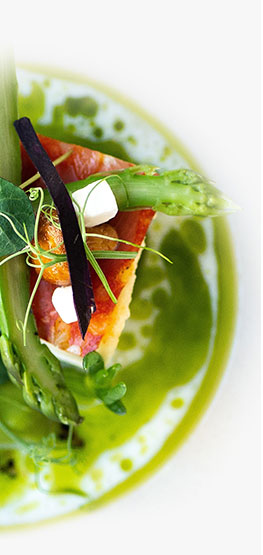
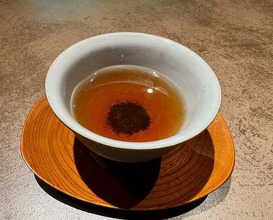
On June 7, 2026, I visited the restaurant for lunch. We had a private reservation for seven people with a booking at 12 PM. It happened to be the first day of the rainy season. Although it started to drizzle, we were able to enjoy a welcome drink on the terrace.Seasonal Course: JPY 30,000 (including tax and service charge) This price includes pairing drinks, which is still an incredible deal.I had a refreshing soda made with locally sourced kiwi and lime, topped with kiwi chips, served in a glass that resembled a flower gently tilting its head.For a starter, we had Kōshū beef bresaola, perfectly salty and flavorful.The menu was presented on washi paper made from wild grapes.The course began with tree sap harvested from walnut trees around March each year, which had a subtle sweetness.Next was a drink made from coniferous trees: a kombucha soda made with cedar, fir, and spruce. It had a distinct kombucha flavor.Oni Kurumi (Japanese walnut) This dish featured the classic Oni Kurumi, presented in a walnut shell with a ball of dough on top. The dough contained chopped Oni Kurumi, and it was garnished with walnut paste and shavings, finished with a syrup made from walnut sap and a leaf of oxalis. It was slightly sweet and pleasantly bitter, with a hint of walnut oil.Young Ayu and Corn This dish consisted of young ayu fish wrapped in a mesh spring roll skin and deep-fried, topped with a black powder made from charred blood orange from Yamanashi Prefecture. With the refreshing aroma of blood orange, I enjoyed the first ayu of the year, from head to tail.A separate sauce was served, made from blended tomatoes, snap peas, asparagus, celery, and cucumber, creating a clear gazpacho. It was topped with oil made from blood orange peel, refreshing and rich in vegetable flavor.The classic Nanbu tea was served, made from lightly steamed tea leaves grown in a special place called Shiratori, infused with lemon myrtle aroma.Amago and Turnip This dish featured amago fish wrapped in cucumber and turnip. It was topped with a jelly made from amago dashi and young spruce shoots that had a grapefruit-like aroma. A white sauce made from fermented turnip juice and amago roe, drizzled with transparent green fig leaf oil, was incredibly delicious. I believe this was the best dish of the day.I enjoyed cold oolong tea made from the Kanaya Midori variety, grown organically by Mr. Watanabe at the foot of Mt. Fuji, infused with wild herbs like kakidooshi and mitsuba.Carp, Boar, and Fuki This dish looked like a traditional Japanese plate. At the bottom was a hint of sansho leaf oil, topped with carp ham wrapped in boar loin, cooked in carp dashi. It was beautifully arranged with thin green onions. On top was a paste made from fermented fuki flower buds and green olives, accompanied by delicate watercress from "Albergo del Otto." Carp dashi was poured over it, making it wonderfully delicious.Finally, a fresh herbal tea was served, made with local sansho leaves, red shiso from my family home, and lavender, offering a fruity aroma and acidity.Hand-Tail Shrimp and Zucchini This dish featured flower zucchini and the large hand-tail shrimp known as "Riku Saku Shingen Ebi." The flower part was stuffed with ricotta cheese and shrimp mousse, then deep-fried. Underneath the zucchini was a puree of grilled zucchini, and the flower was brushed with shrimp miso. It was served with a sauce made from stracciatella cheese and lemon myrtle oil, covered with 24-month aged prosciutto, which added a delightful touch.Using Yume Kaori wheat from Fujiyoshida, the usual brioche was mixed with rosemary and wild kakidooshi, offering a delicious sourness from fermentation.Trout and Beans The trout was shaped into a round form and topped with thinly sliced brioche, baked until crispy. On top was a mixture of sour cream, cream cheese, and chopped salted lemon, along with a medley of snap peas, edamame, and green peas, garnished with pickled crow's foot and young tree shoots. Crispy trout skin chips were served alongside a white sauce made from small diced fermented bamboo shoots bound with butter and green fir oil. It was truly remarkable.A tea made from the perennial fern "Suginasa" and the lemon-scented herb "Four Seasons Tarragon" was refreshing and aromatic.Karin and Sandalwood Plum This was a palate cleanser. A sorbet made from karin (quince) was served with a foam infused with the aroma of sandalwood plum branches native to the area.Black tea from Nanbu Town was infused with the aroma of kuromoji.Budding The signature dish was beautiful as always. The "Kussan" choux pastry, mixed with bamboo charcoal, was shaped like a rugged black eggshell, filled with wild herbs and game meat. Today, it contained grilled deer meat (shin and heart), minced bear and boar meatballs, and braised boar tongue and thigh. Each component was delicious. Underneath was a puree of black garlic and spices, along with a puree of new onions and seasonal wild herbs. There were spicy round fruits, which were said to be the oil-rich fruits available only during this season. The dish beautifully incorporated the essence of spring.Lamb The lamb from Otsuki's Nobinobi Farm was sourced as a half carcass, offering various cuts. On the right was the loin, shaped round after removing the sinew, roasted over wood fire with rosemary. It had a perfect balance of fat and lean meat, cooked rare and incredibly delicious, served over a white fermented potato puree. On the left was minced meat from various cuts, wrapped in shredded potatoes and slowly cooked in clarified butter, topped with fried carrot greens. Underneath was roasted lamb neck and shank, along with young corn roasted whole with its husk. In front was salt from Yamanashi, known as "Shingen's Tears."A drink made from Yamanashi black tea infused with oil-rich grape juice and sansho was served.A bouquet of vegetables from the herb garden was drizzled with olive oil and balsamic from Maeda-ya.Roasted tea made from stem tea from Nanbu Town was served.Vegetable Rice This is a classic menu item. It features 30 varieties of vegetables, including bamboo shoots and corn, prepared in various ways. Unlike local cuisine, it does not include glutinous rice, but instead uses milky queen rice from Fujiyoshida, cooked in a clay pot. The vegetables are placed on top and seasoned with homemade mushroom soy sauce and tomato soy sauce, mixed with fuki oil and wood oil. As always, the texture and flavor were exceptional. It was so delicious that I had a second helping. Accompanying it was a soup made from leftover dashi, a consommé.Rhubarb and Oil-Rich Grape Served in a glass bowl with bubbles. At the bottom was rhubarb puree and chopped fresh cherries. On top was freshly made kuzukiri (starch noodles). Shredded rhubarb compote and oil-rich grape leaf oil, garnished with alyssum flowers and oil-rich grape leaves. A soup infused with the aroma of oil-rich grape branches was poured over it.A fresh herbal tea centered around mint was served.Mochi Grass and Strawberry This dessert featured strawberries and mochi grass (yomogi). On a base resembling a fraisier and shortcake, there was yomogi ice cream, fresh yomogi, and its powder, along with rose geranium cream and a very thin, crispy candy called opaline.For the after-meal drink, I requested coffee.Okukuruma Mugura and Fir On the right was a dessert resembling a juice sphere, coated with cacao butter and filled with a soup infused with the aroma of okukuruma mugura, which has a coumarin scent. On the left was caramel made from urajiro fir, topped with the young shoots of fir that I had eaten earlier.
We use cookies on this site to enhance your user experience.