If @wingrestaurant_hk has a dish that threatens to become its shorthand, as the chaud-froid egg has for L’Arpège, it’s the spring roll. Yes it sounds reductive until you realize it is, in fact, a vehicle for sea cucumber, which lies cocooned inside a wrapper so swollen and brittle that it splinters beneath a cleaver, giving way to something... More
If @wingrestaurant_hk has a dish that threatens to become its shorthand, as the chaud-froid egg has for L’Arpège, it’s the spring roll. Yes it sounds reductive until you realize it is, in fact, a vehicle for sea cucumber, which lies cocooned inside a wrapper so swollen and brittle that it splinters beneath a cleaver, giving way to something trembling and uncloyingly rich. At sister restaurant Vea, the chef Vicky Cheng crisps the sea cucumber itself and cushions it in French saucing; here, the crispness migrates outward.
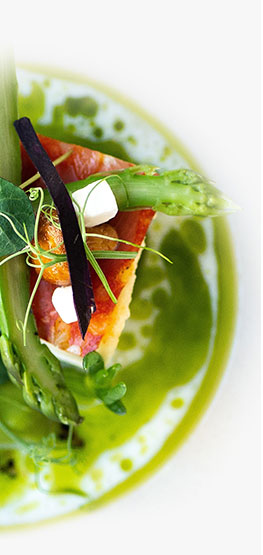
This distinction took me longer than one dinner to understand, which is why I’ve waited a year and three seasonal menus to write about Wing. Chinese restaurants can be tricky to judge from a single visit, and this one asks you to embrace the philosophy of a Hong Kong-born, Canadian-raised, French-trained chef who learned much of Chinese cuisine’s professional grammar later in his career. You should. While many of these flourishes show (well) at Wing, just as compelling were dishes with less spectacle: sweet peas against dried bamboo and salted pork; or asparagus resonant with green Sichuan pepper.
The dishes that do announce themselves are no less memorable too: gently-smoked, intensely-aromatic sugarcane pigeon; dry-aged crispy chicken honed through over 80 trials; a crystal century egg glowing amber over springy Okinawan peanut jimami tofu; and steamed tilefish prepared traditionally but whose scales are pelted with hot oil, shielding its silky flesh with a crisp skin that somehow refuses to soften. Does everything reward that scrutiny? Though the oft-served king crab with cheung fun has its pleasures (sweet crab, richer sauce, appealingly chewy rice rolls), it reveals nearly everything it has to say in the first bite.
No matter: three meals in, I’m less interested in whether Cheng is “reinventing” Chinese food than in his instinct for where to intervene. It’s why sea cucumber can be transformed without smoothing away what makes it difficult; why choy sum can carry as much weight as lacquered pigeon; why now, more than ever, Wing has become one of the Hong Kong restaurants I measure others against. Thank you to those who paved the way. Less