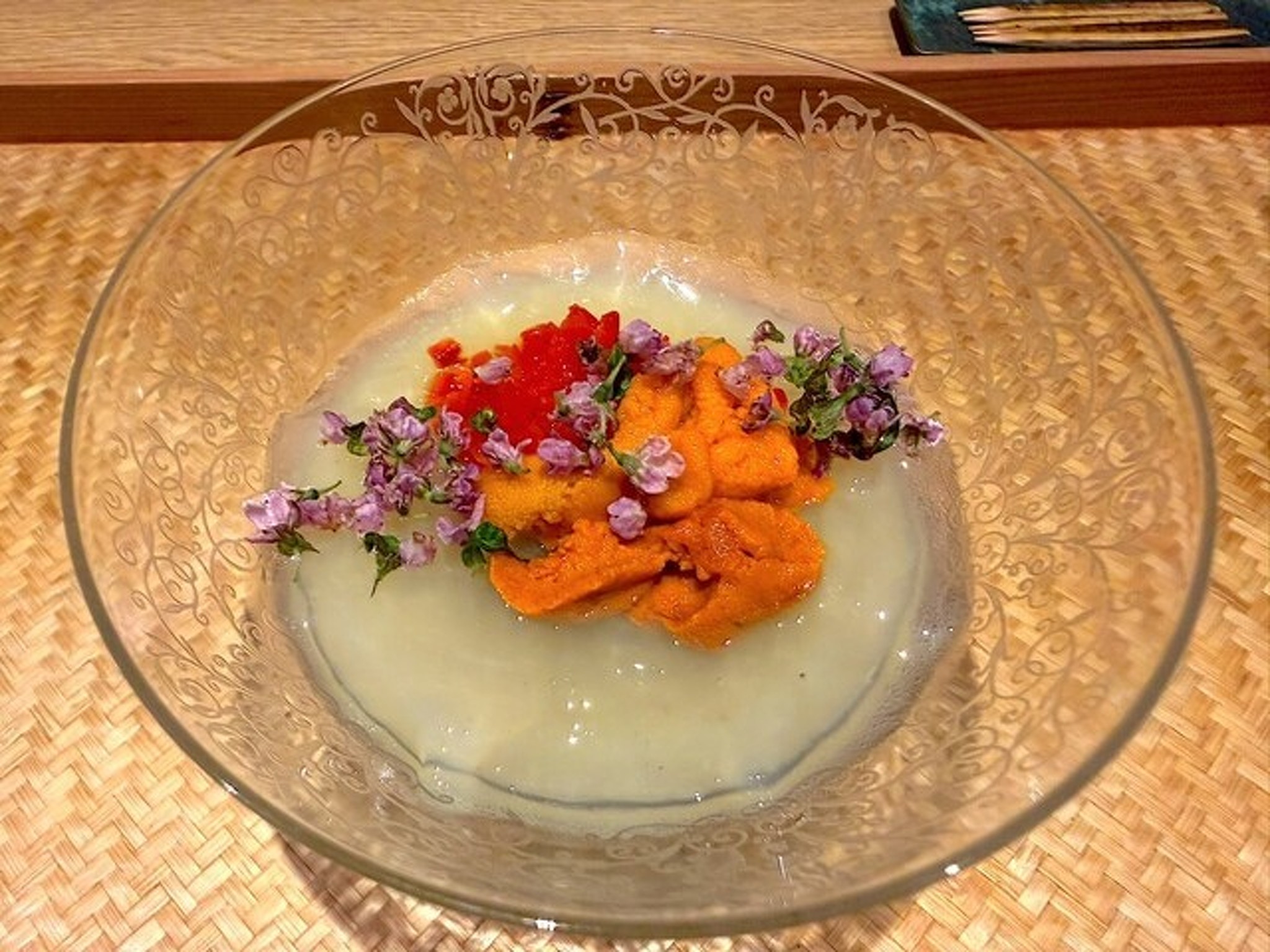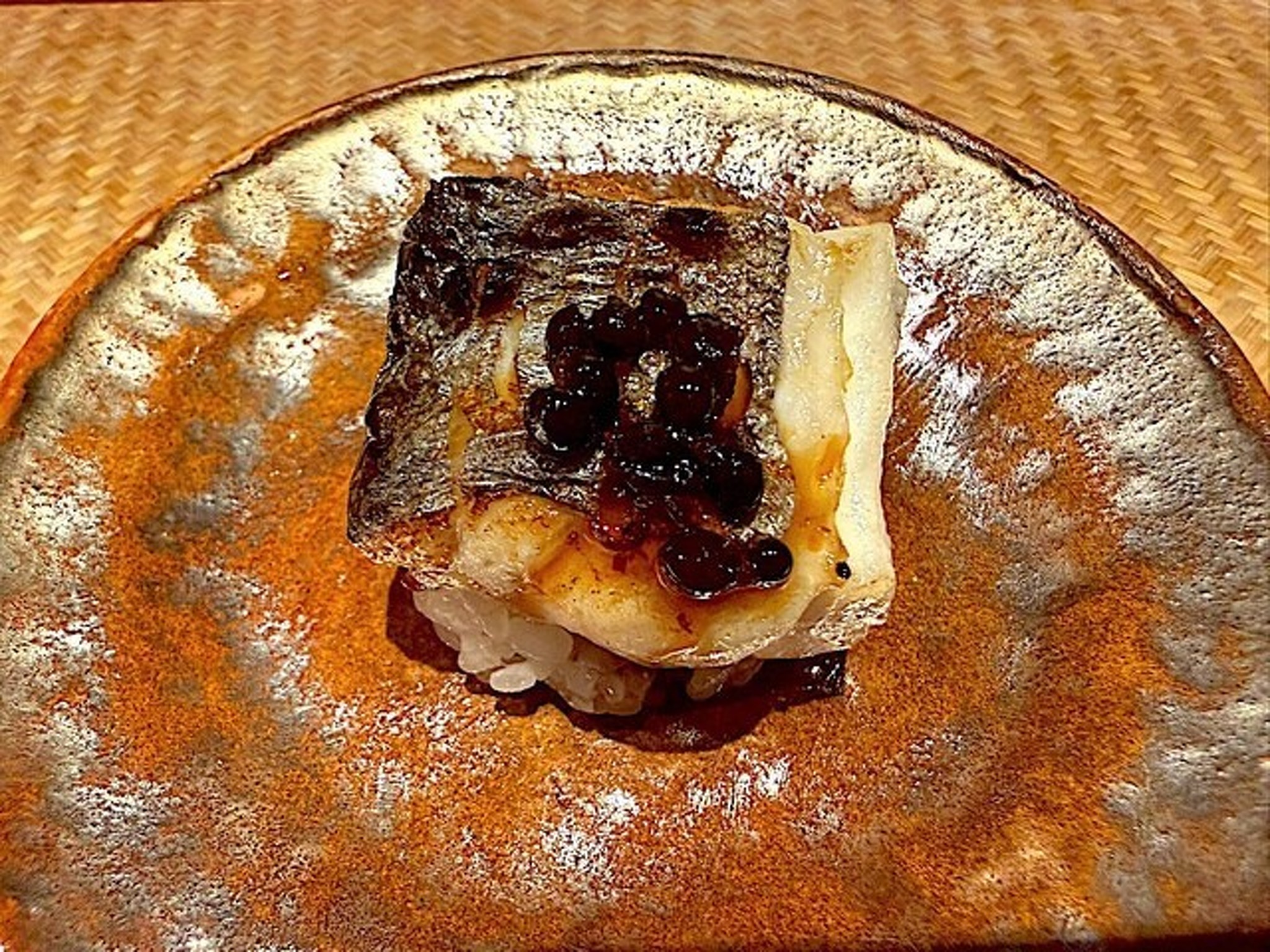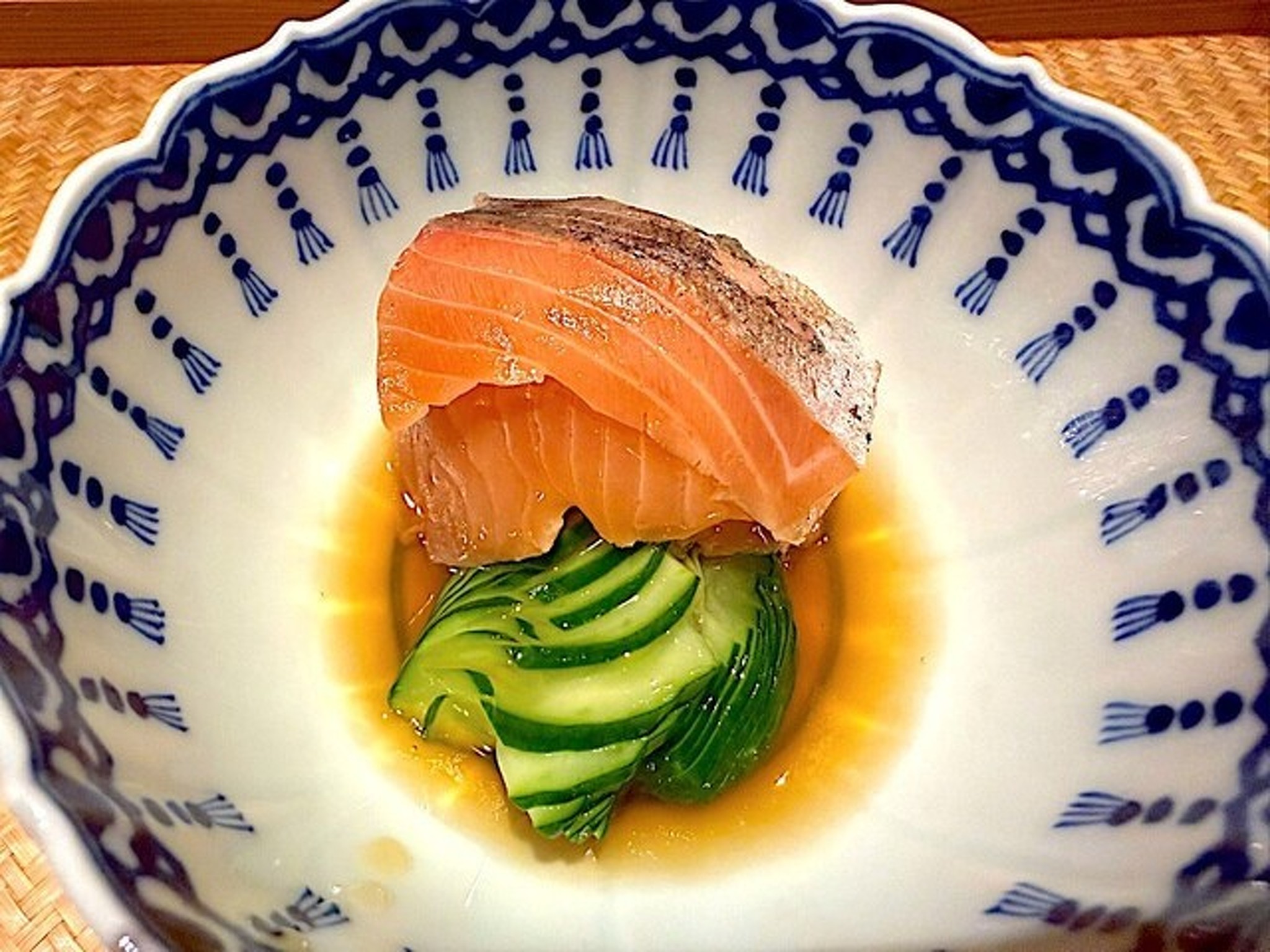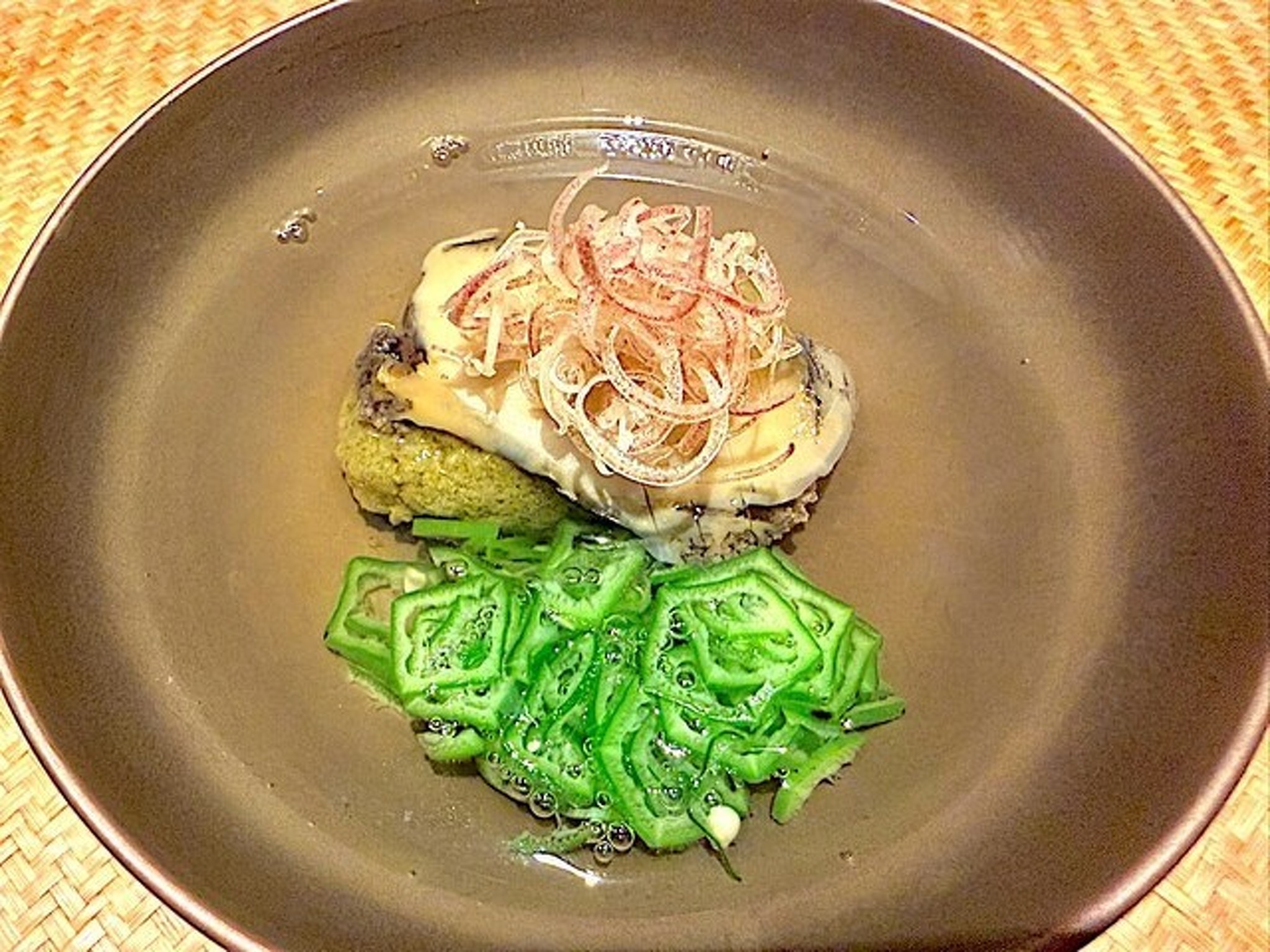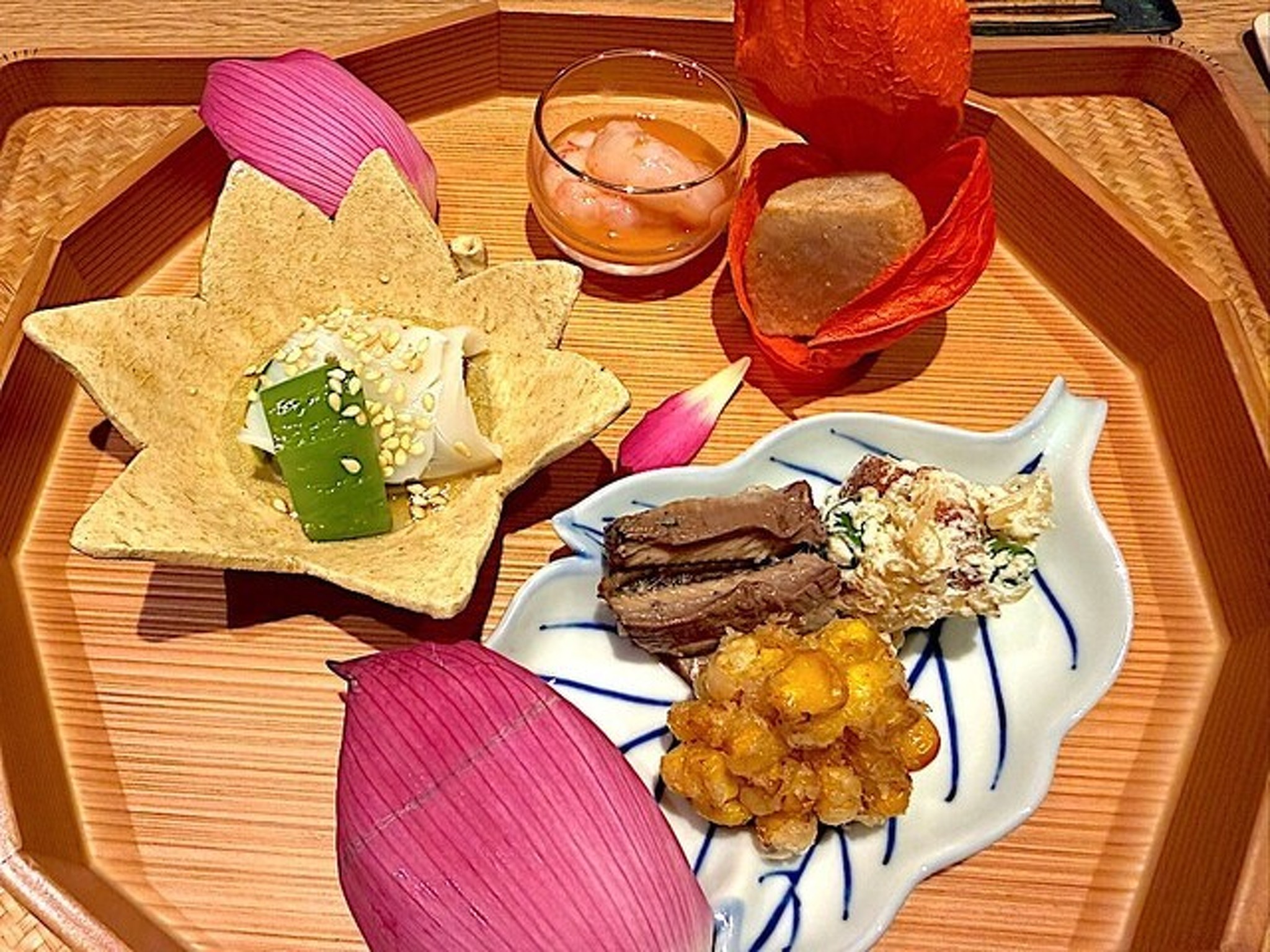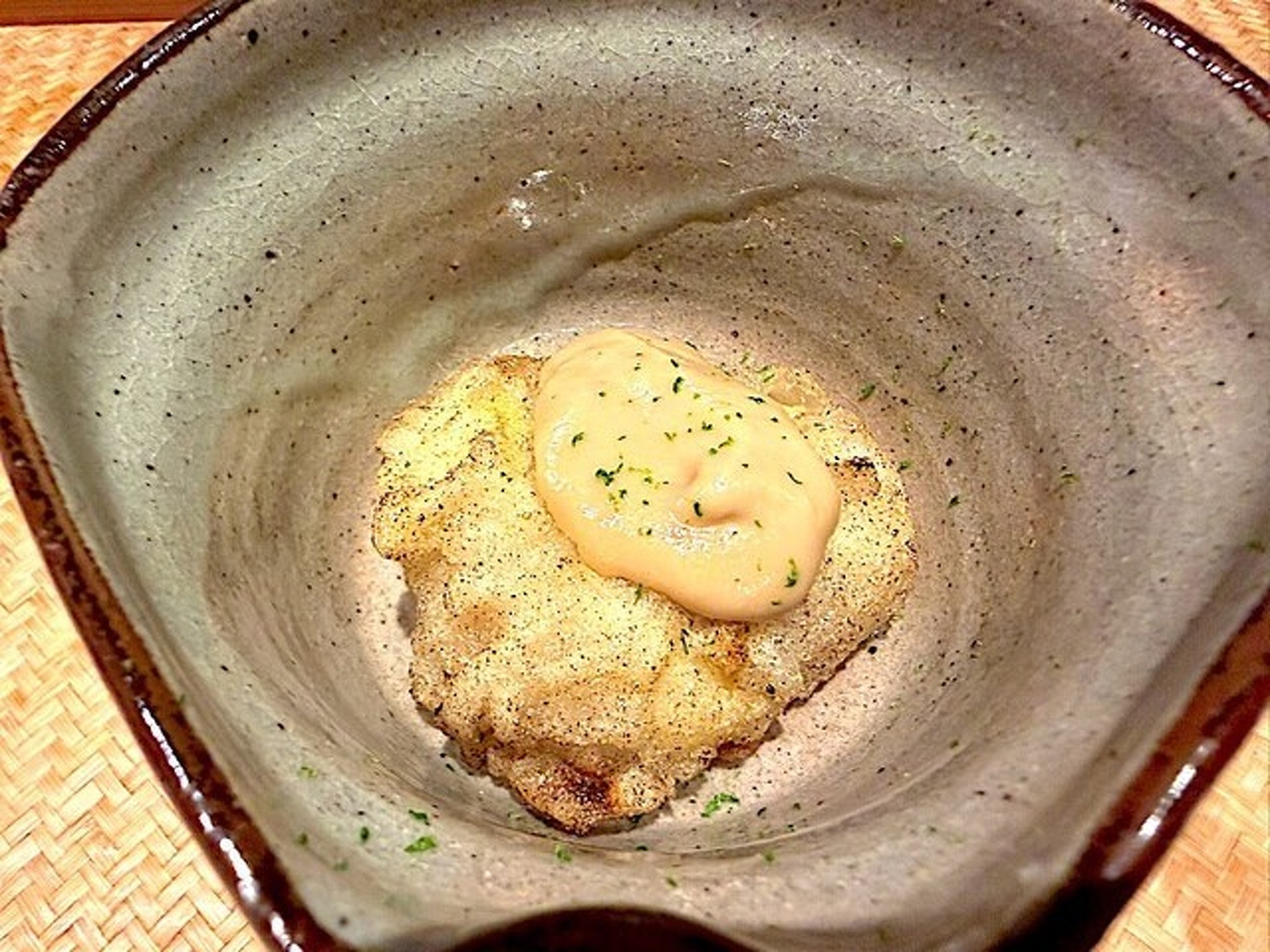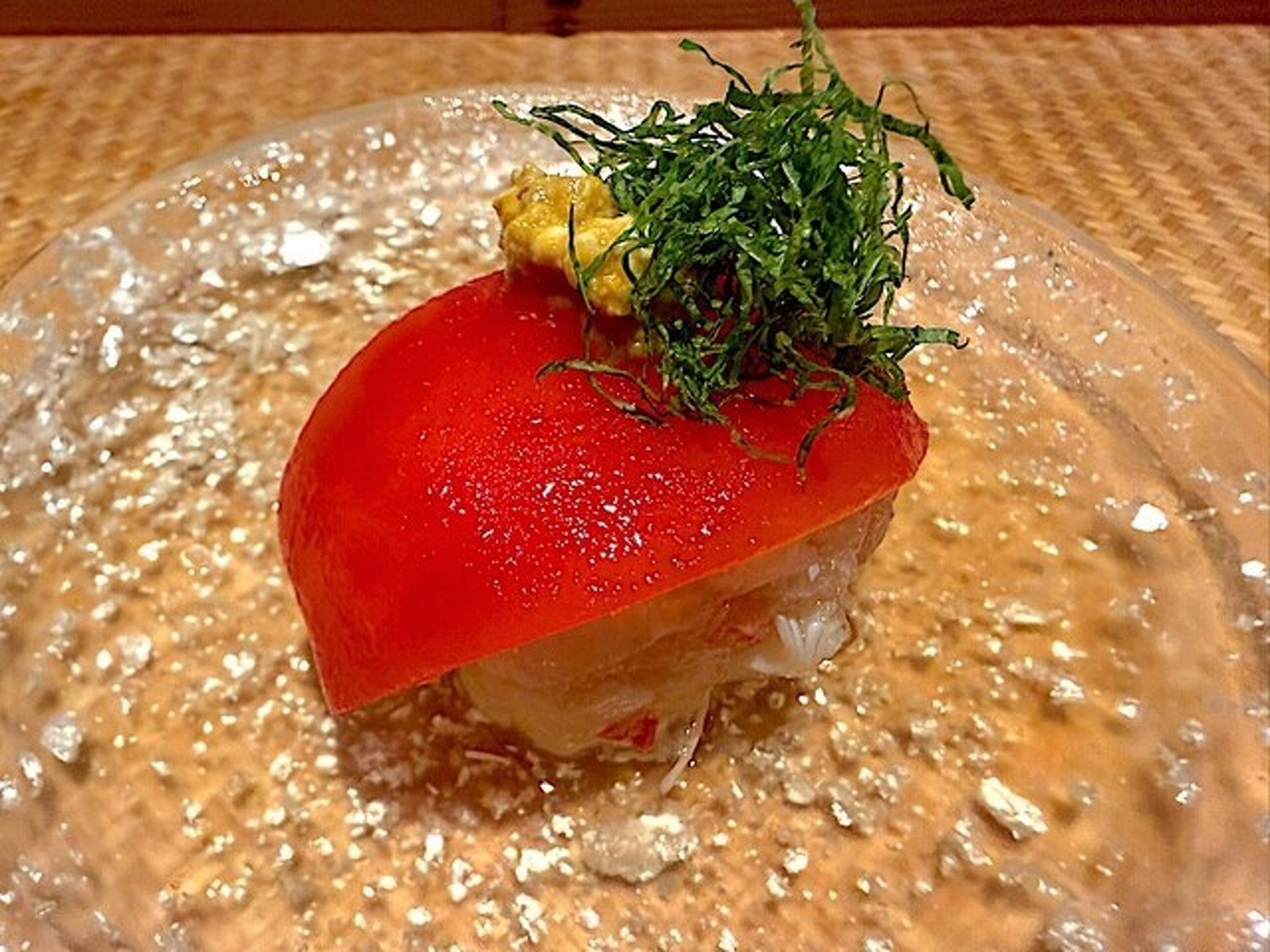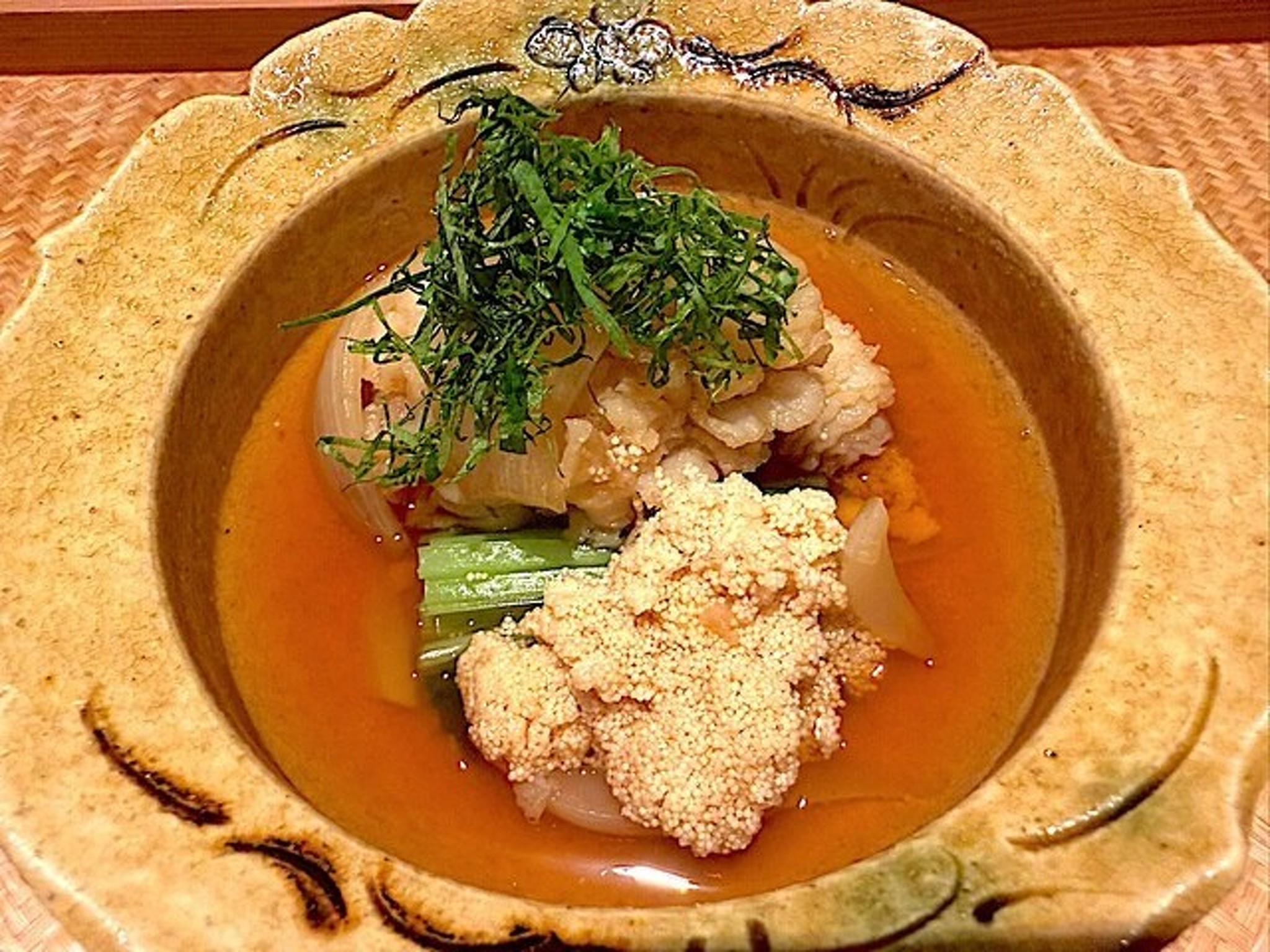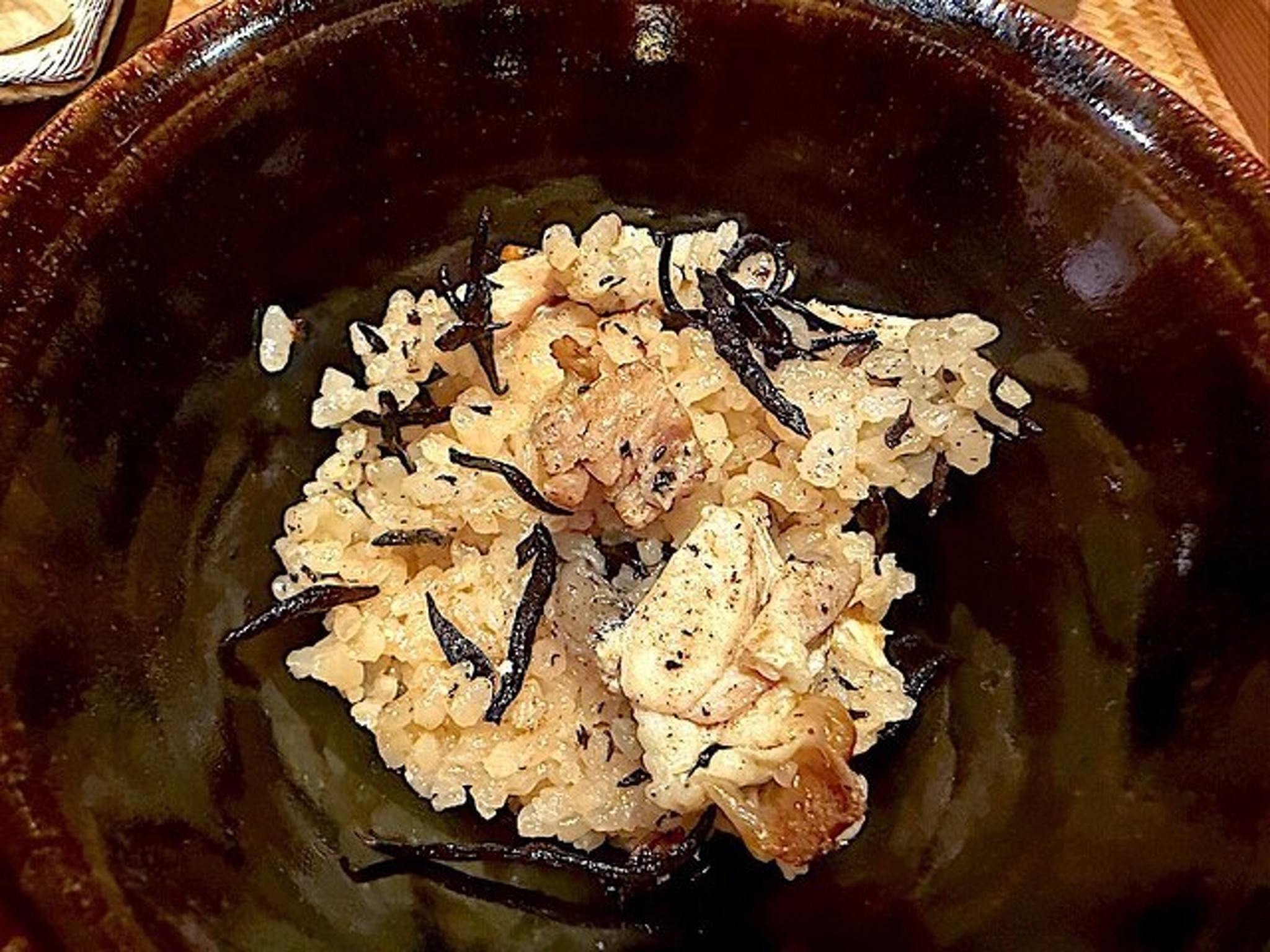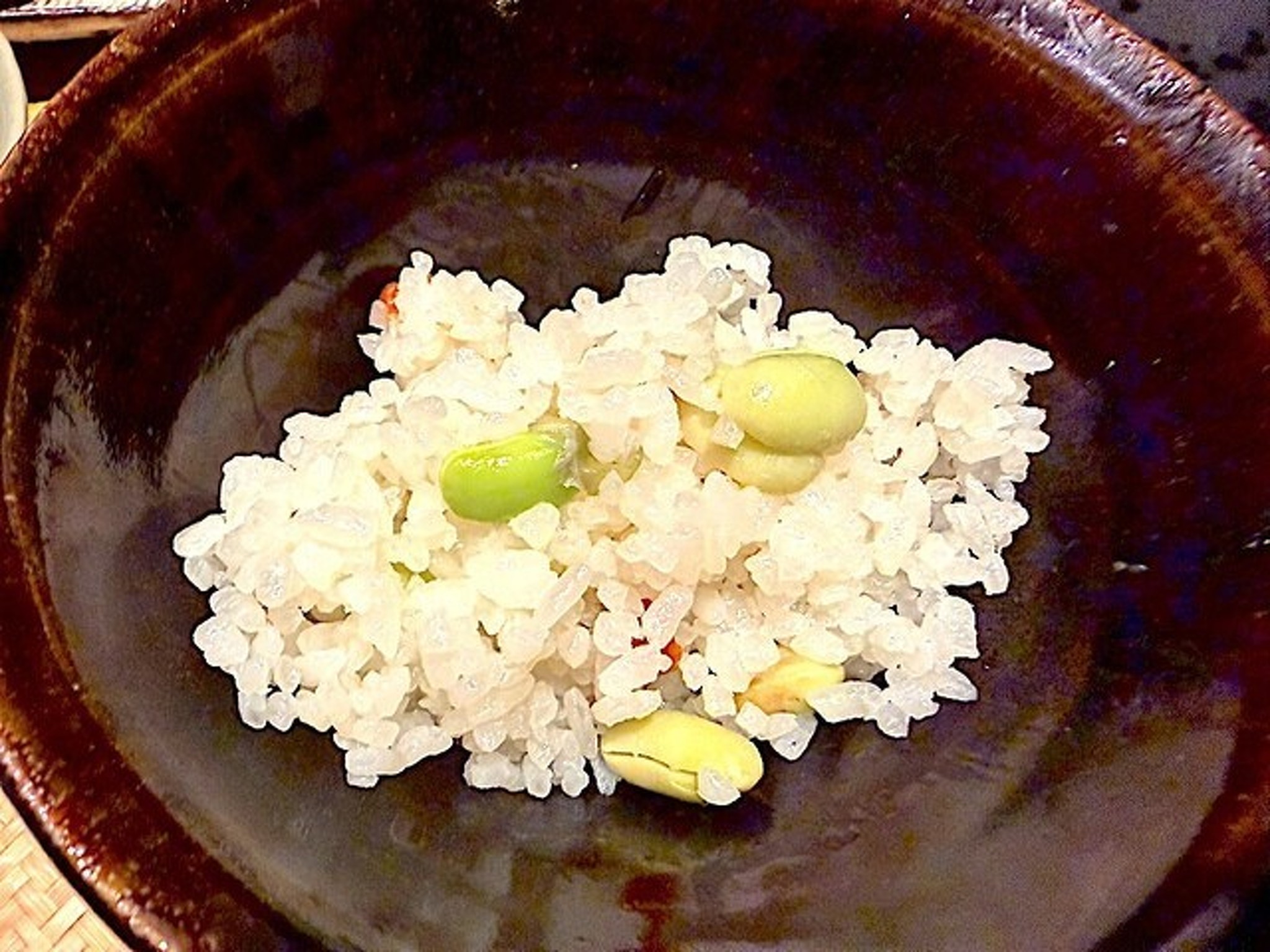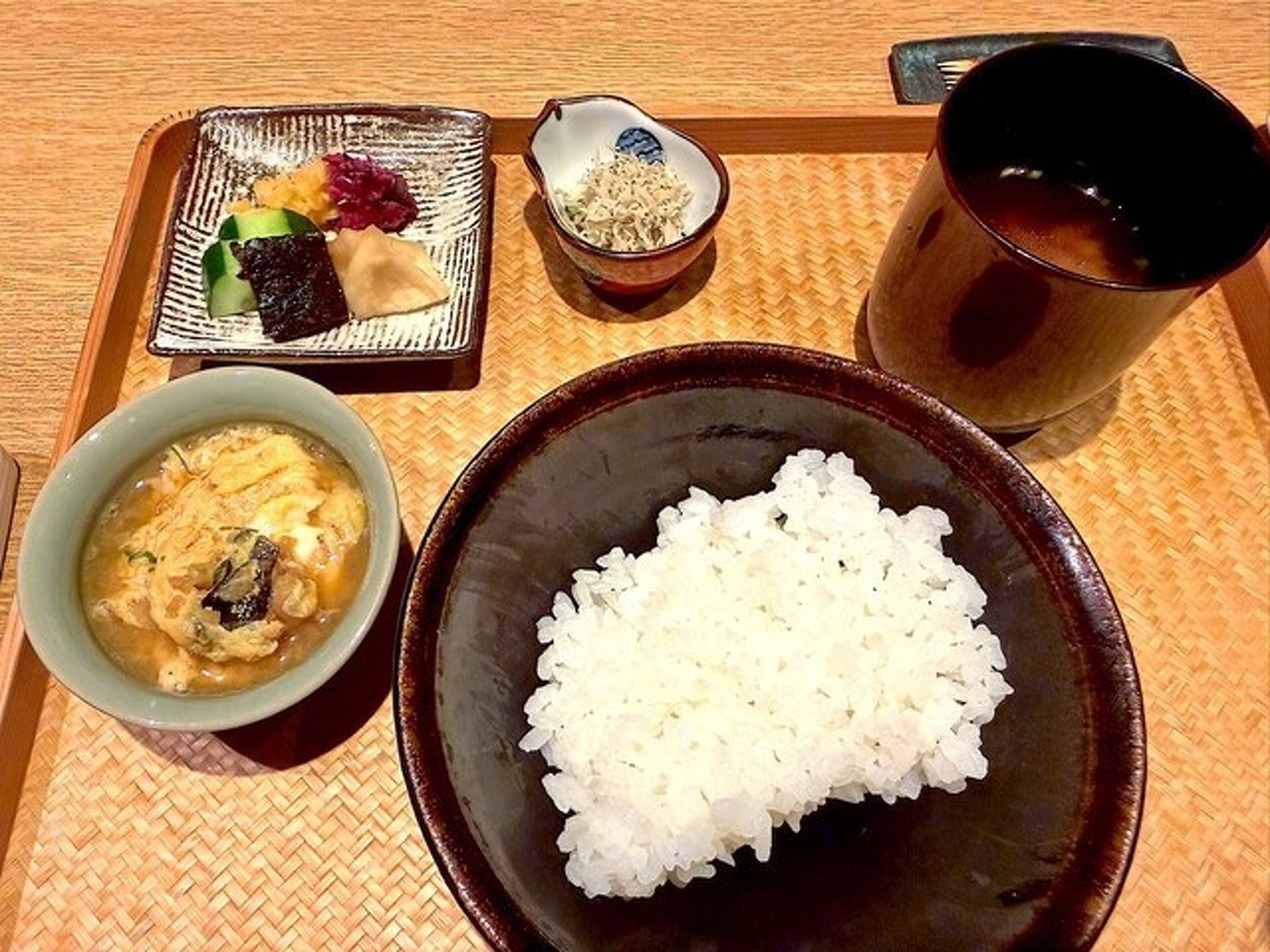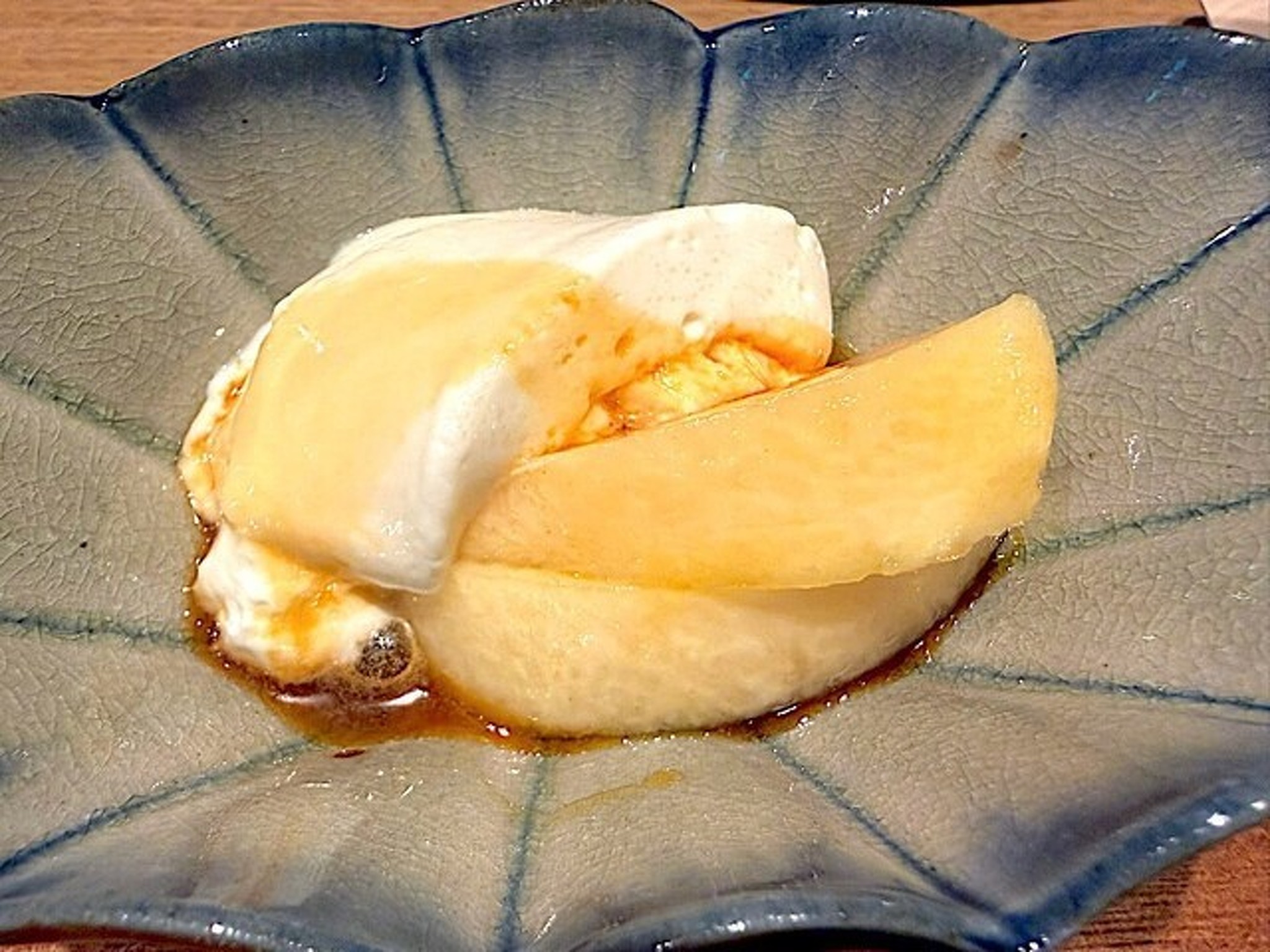
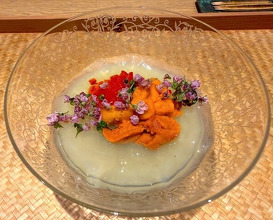
I visited Goko Machi Tagawa, a Japanese restaurant located in the southern part of Kyoto.Opened in 2017, the owner, Yoshitaka Tagawa, hails from Mie Prefecture.His background is quite unique; he originally worked as an engineer before entering the culinary world at the age of 25. After honing his skills at renowned establishments such as Masago Saryo in Yokohama, Gion Maruyama in Kyoto, and Azabu Komura in Tokyo, he eventually became independent.In the year following its opening, the restaurant earned a Michelin star in the "Michelin Guide Kyoto Osaka 2018" and has continued to receive high praise, including the Tabelog Award Bronze for many years, making it one of Kyoto's representative Japanese restaurants.The interior, renovated from a traditional Kyoto townhouse, features a counter where diners can closely observe the chef at work.Tagawa places great importance on the flow of the entire course, carefully considering which ingredients to highlight from the day's selection and how to construct the dishes accordingly.The course I enjoyed included an abundance of summer ingredients such as conger eel, abalone, sea urchin, biwa trout, corn, figs, and hairy crab.What struck me most after finishing the meal was how each ingredient's flavor was preserved while skillfully combining them to enhance their deliciousness.We began with cold-brewed tea, which had a sweet and clear taste, perfectly preparing my palate for the upcoming dishes.The first appetizer featured a smooth puree of Kamo eggplant topped with okra, Hokkaido sea urchin, and Manjyu pepper.The natural sweetness of the Kamo eggplant paired beautifully with the rich umami of the sea urchin. The texture of the okra and the Manjyu pepper added depth, ensuring the dish was not just sweet but also had a rich and defined flavor.Next came the sushi made with swordfish.This was delicious.The fluffy swordfish was served with slightly sweet rice.Grilled over charcoal, the cooking technique was superb, giving the surface a smoky aroma while keeping the inside tender.The richness of the fish's fat complemented the sweetness of the rice perfectly.The sashimi featured biwa trout, served with kombu-cured cucumber and ponzu sauce.The biwa trout had a silky texture and a delightful aroma.Pairing it with the kombu-cured cucumber not only changed the texture but also highlighted the trout's delicate umami.Rather than simply serving the fish alone, the accompanying ingredients supported the main star beautifully.One of the standout dishes of the day was the black abalone.Served with its liver, okra, and myoga ginger, the abalone was incredibly tender, releasing its umami as I chewed.The richness of the liver added depth, while the okra's creaminess tied everything together, and the myoga ginger balanced the aftertaste.The broth was gentle, allowing the abalone's natural flavor to shine through, enhanced by the richness of the liver.Being from Mie Prefecture, Tagawa values the abalone sourced from ama divers in Toba as one of his key ingredients.His dish featuring tender abalone simmered with liver sauce is one he proudly highlights, and it was indeed one of the most memorable dishes of the course.Next was the hassun, featuring corn tempura.The corn itself was very sweet, and the saltiness of the batter accentuated that sweetness.With each bite, the aroma and sweetness of the corn burst forth.Then came the sardine, which was fragrant with ginger and served refreshingly despite its richness.The sand beans were prepared in a gentle white miso dressing, offering a light and airy flavor.Sweet shrimp were served with crab salad, where the shrimp's sweetness was drawn out by careful cooking, leaving a sticky sweetness and umami impression.Each small dish in the hassun had different aromas, textures, sweetness, and acidity, allowing for a delightful progression of flavors.Another favorite of mine was the fried figs, paired with sesame miso and yuzu.This was incredibly delicious.The sweetness and creamy texture of the cooked figs were enhanced by frying, yet the oil was surprisingly light, leaving no heaviness.The sesame miso added a rich depth to the figs' sweetness, while the yuzu's fragrance elevated the dish.Rather than pairing sweetness with sweetness, the combination of sesame's richness and yuzu's aroma made the figs' sweetness feel more dimensional.The pairing of ingredients was exceptionally well done, making this one of the most impressive dishes of the day.The hairy crab from Hokkaido was served with nagaimo (Japanese yam), tomato, and Tosa vinegar.Crab miso and shiso were also included.The crunchy texture of the nagaimo complemented the soft meat of the hairy crab.The richness of the crab miso, along with the acidity of the tomato and Tosa vinegar, balanced the dish beautifully.While hairy crab is a strong-flavored ingredient, the addition of nagaimo's texture and tomato's acidity kept the dish light and refreshing.This, too, felt quintessentially Tagawa.Next was the summer dish of conger eel.Served with onion and mitsuba leaves, the conger eel was fluffy and tender, with a refined umami.The sweetness of the onion melted into the broth, creating a simple yet delicious composition where the flavors connected beautifully.Rather than overpowering the conger eel with strong flavors, the sweetness of the onion enhanced its delicate umami.Then came the rice.Edamame and bachiko rice.The aroma of the edamame was delightful, and the bachiko added a nice texture.The rice itself was also delicious.Next was chicken and hijiki rice, which had a lovely broth flavor.Then came plain white rice with conger eel.Finally, another serving of conger eel.The fluffy conger eel was enriched by the egg's richness, which was perfectly complemented by the white rice.Despite the abundance of rice dishes in the latter part of the course, I surprisingly found myself still able to eat.In fact, each dish offered a different way to enjoy the rice, keeping my chopsticks moving until the end.For dessert, there was peach mousse with fromage and caramel sauce.The peach was sweet and tender.The fromage was smooth, and its richness and mild acidity paired beautifully with the peach.The blancmange had a gentle sweetness balanced by the slight bitterness of the caramel.From the dishes to the rice and dessert, everything came together beautifully.After experiencing the entire meal, I felt that Tagawa's cuisine does not hide the ingredients' flavors by adding something but rather enhances them through thoughtful combinations.Pumpkin and sea urchin.Biwa trout with kombu-cured cucumber.Black abalone with liver, okra, and ginger.Figs with sesame miso and yuzu.Hairy crab with nagaimo, tomato, and Tosa vinegar.Conger eel with onion.Looking back, many of the memorable dishes did not stand alone with a single ingredient.There was always a star ingredient, complemented by other ingredients with sweetness, acidity, aroma, texture, and richness.Yet, the impression left in the mouth was not complex but rather straightforward."The black abalone was delicious," "the conger eel was delicious," "the figs were delicious"—these flavors remained as clear memories of the ingredients.This sensation is fascinating.The broth and seasoning were overall gentle, not leaving a strong impression through force.However, the abalone had the richness of its liver, the figs had the aroma of sesame miso, and the hairy crab had the crab miso and Tosa vinegar.Essential flavors and aromas were present where needed, ensuring the dishes were not merely bland.Most impressively, despite enjoying so many dishes and substantial rice, I did not feel fatigued by the meal until the end.This is Japanese cuisine that reveals its excellence when experienced from start to finish, rather than isolating a single dish.My favorites included the black abalone, fried figs, hassun, and the final rice dishes.Even with layered ingredients, what lingers after eating is the deliciousness of the ingredients themselves."The more you layer, the clearer the ingredients become."This impression lingered with me after dining at Goko Machi Tagawa.
We use cookies on this site to enhance your user experience.