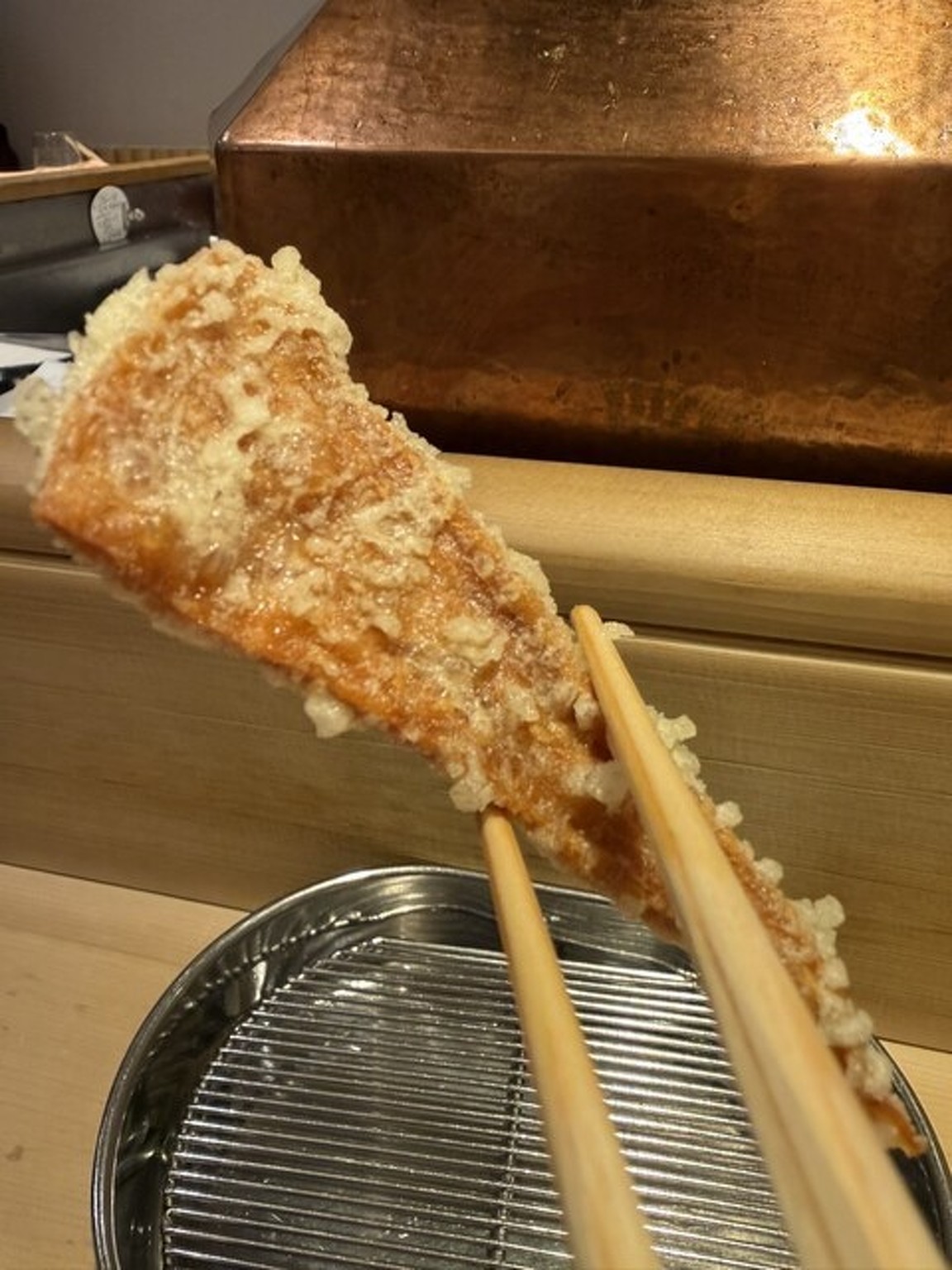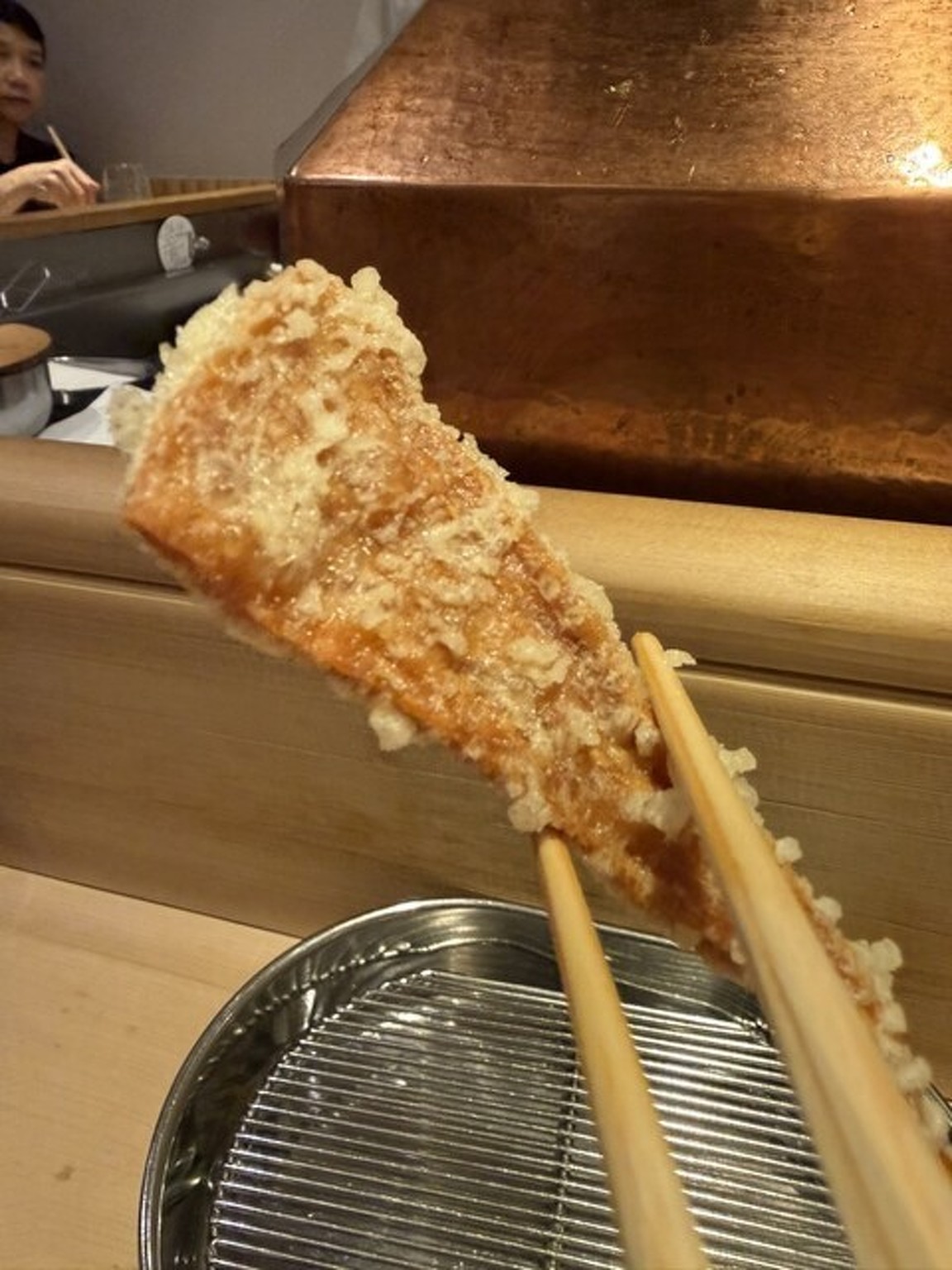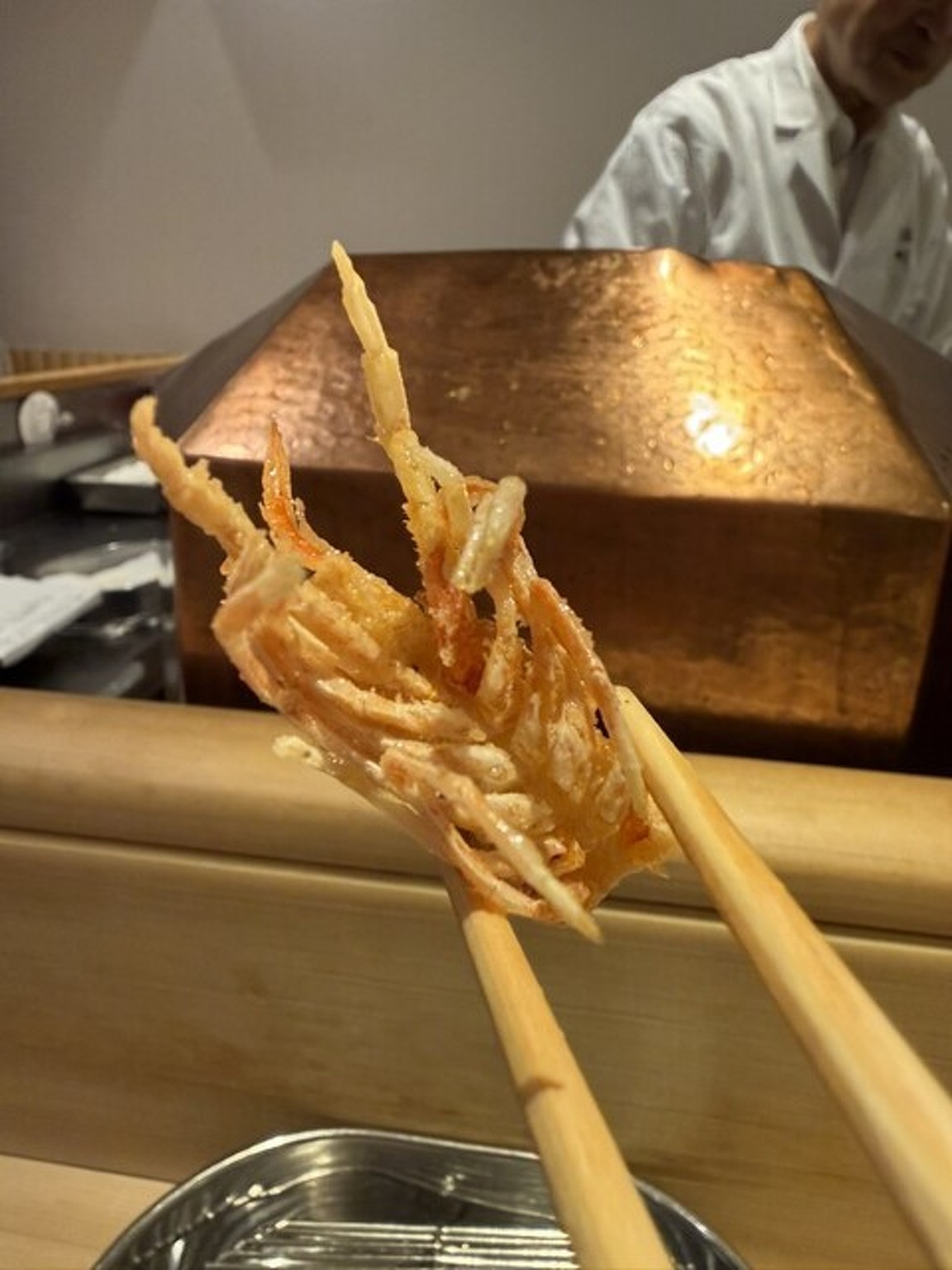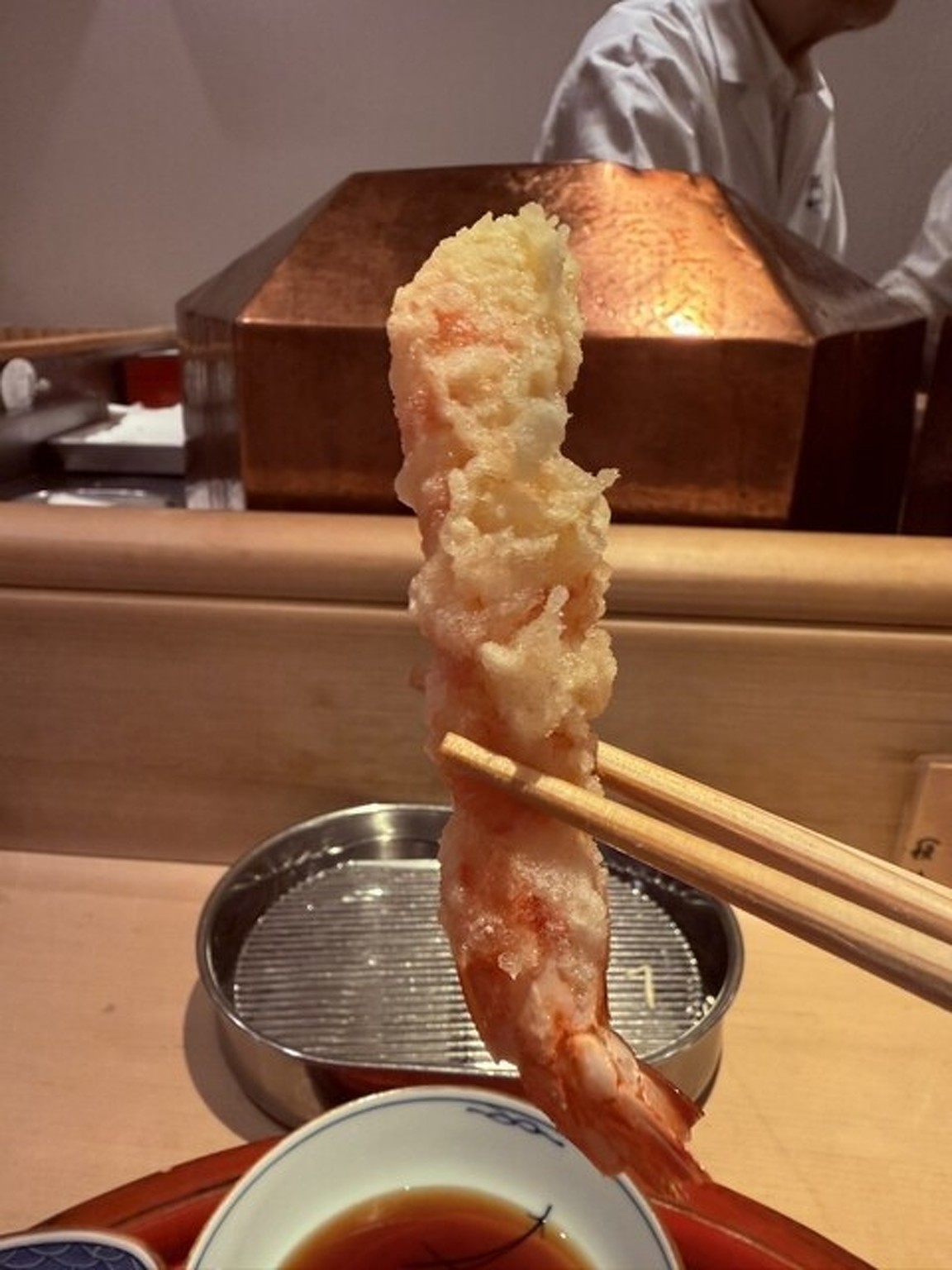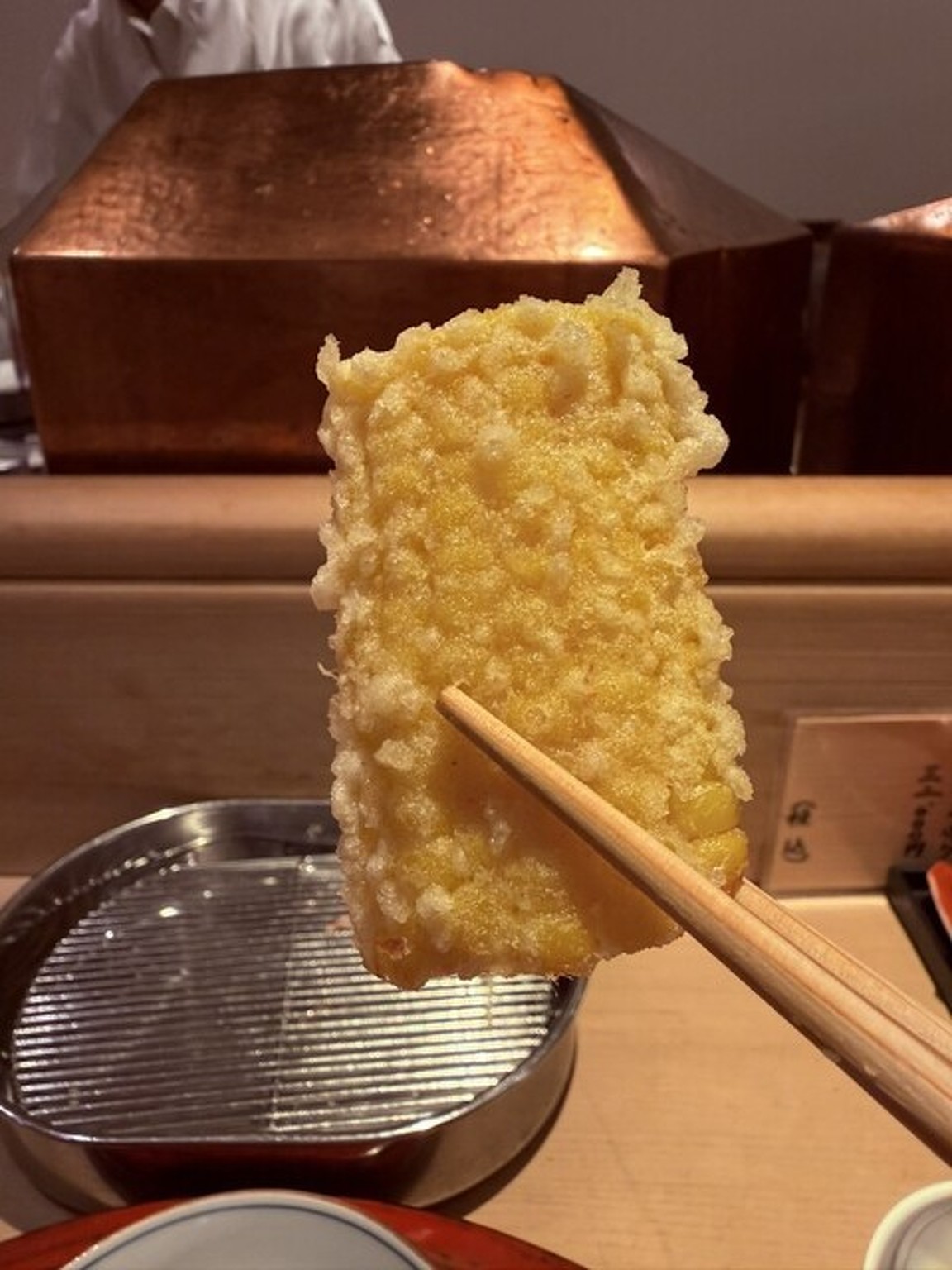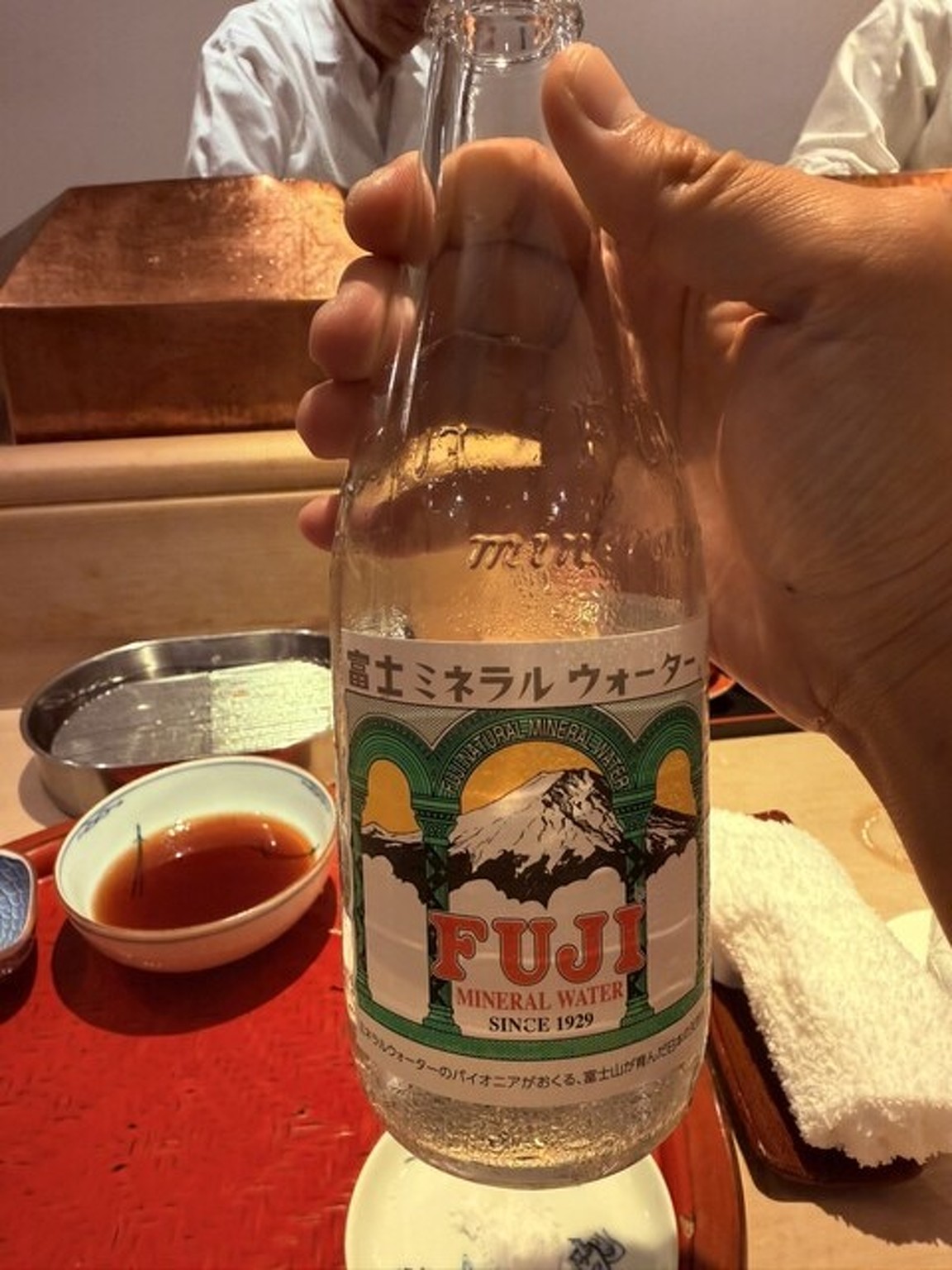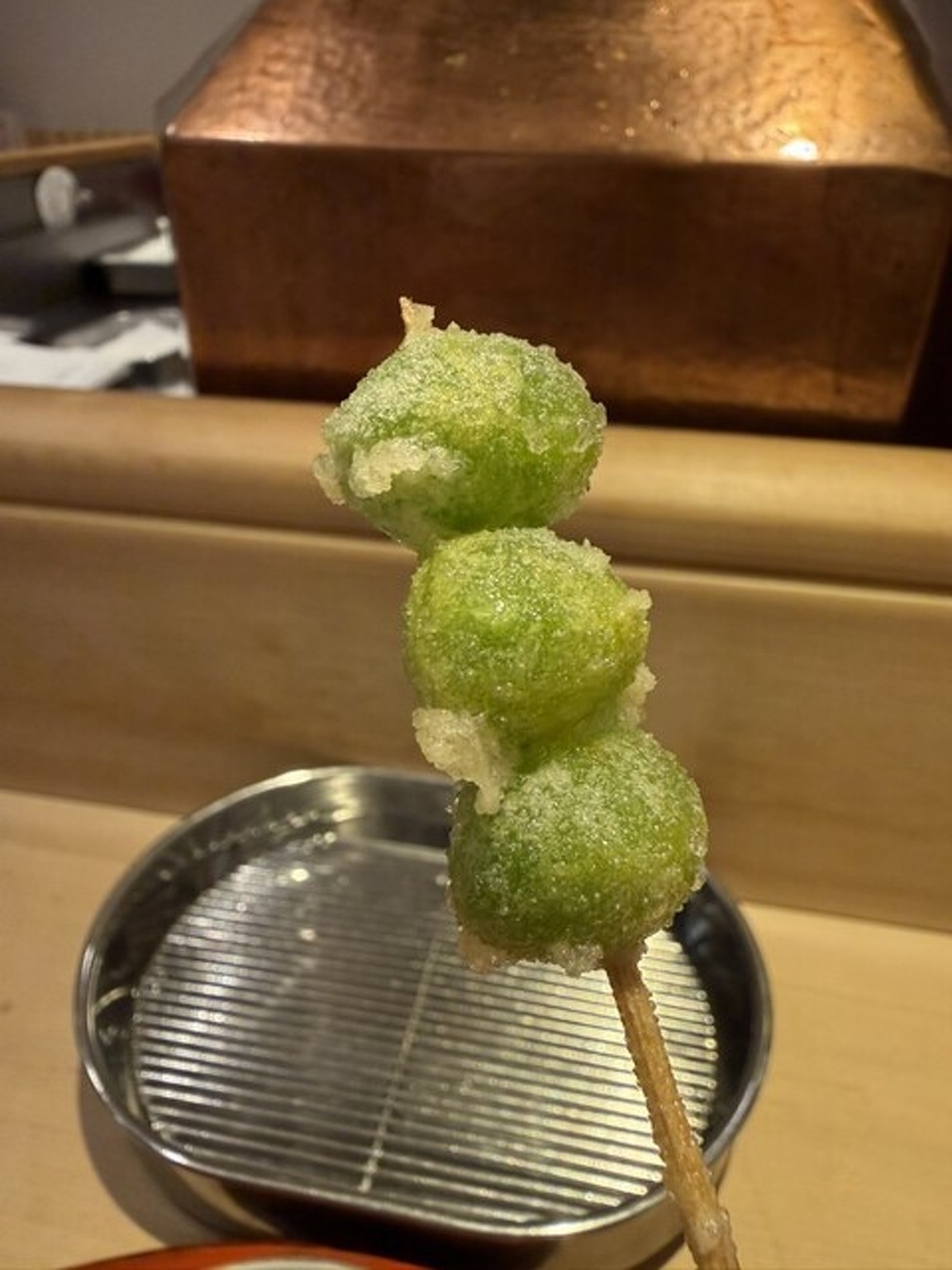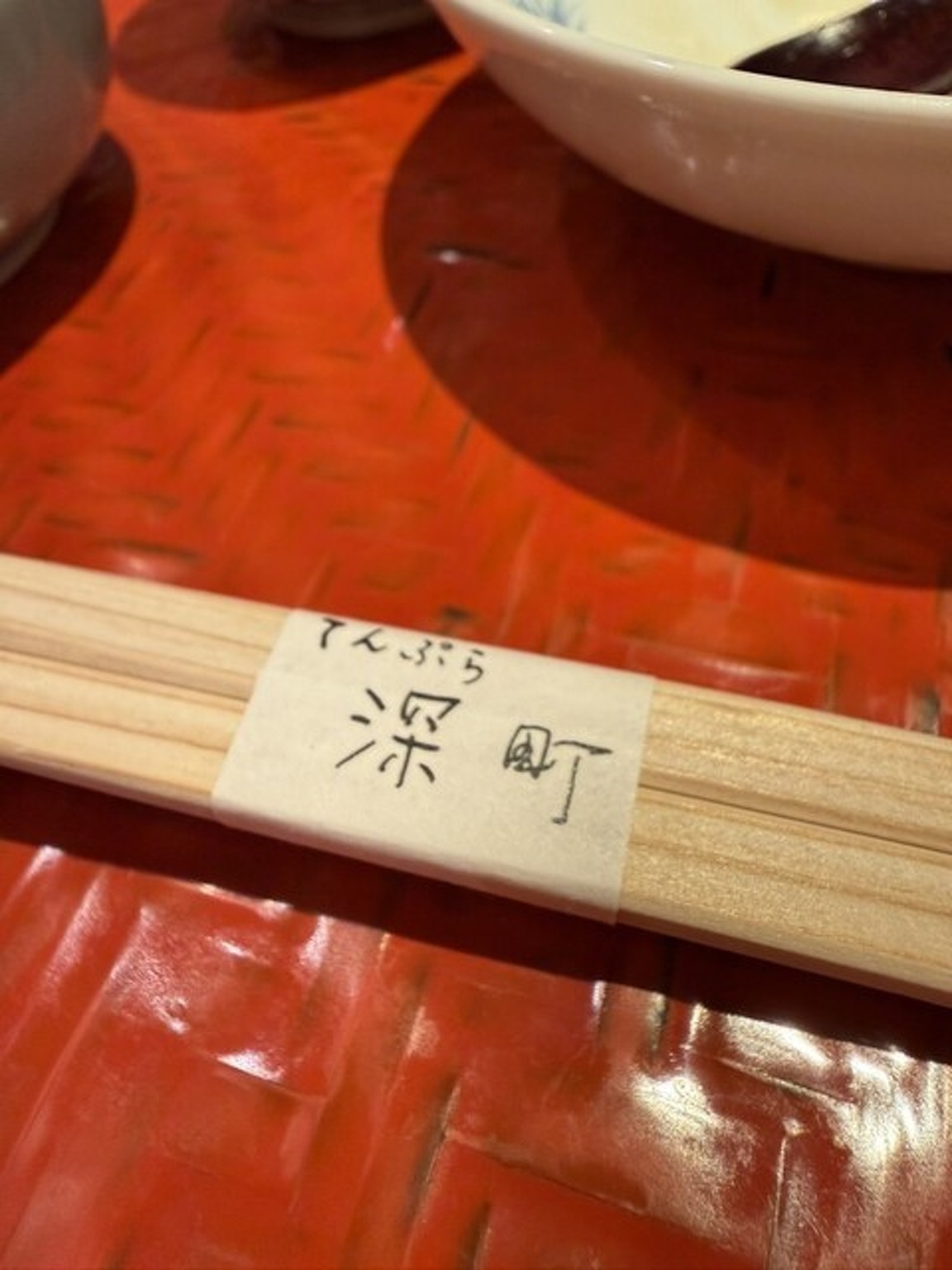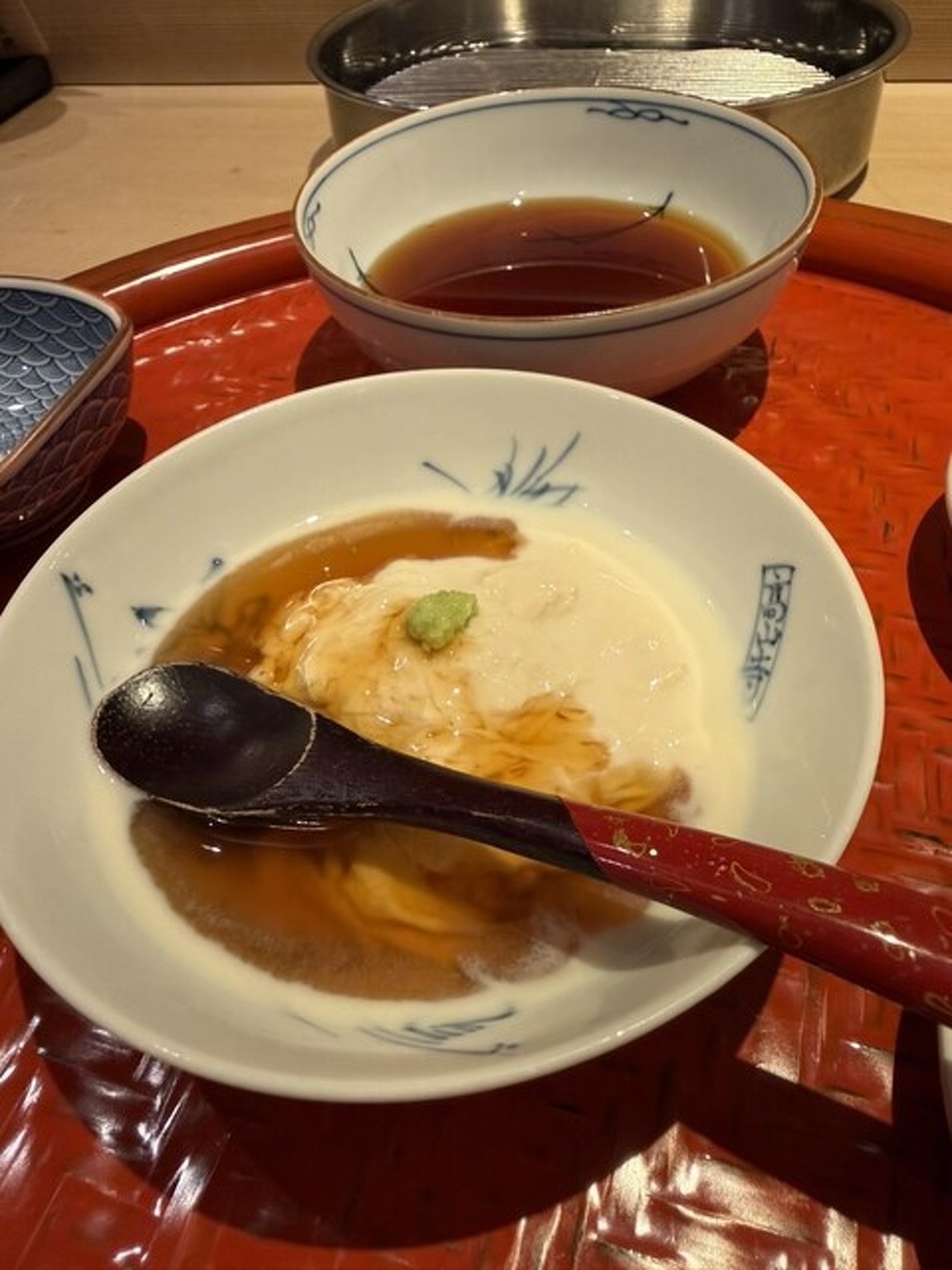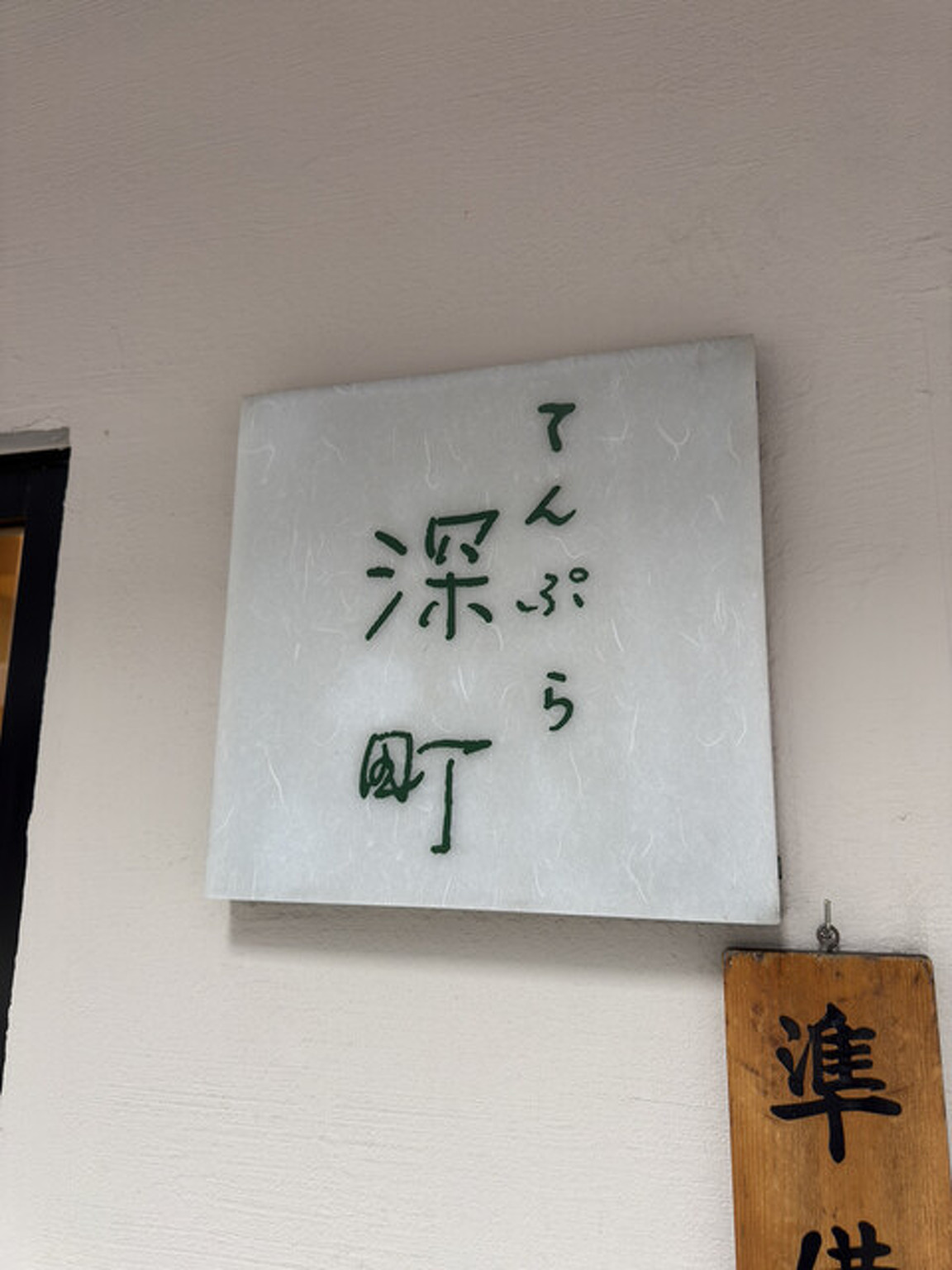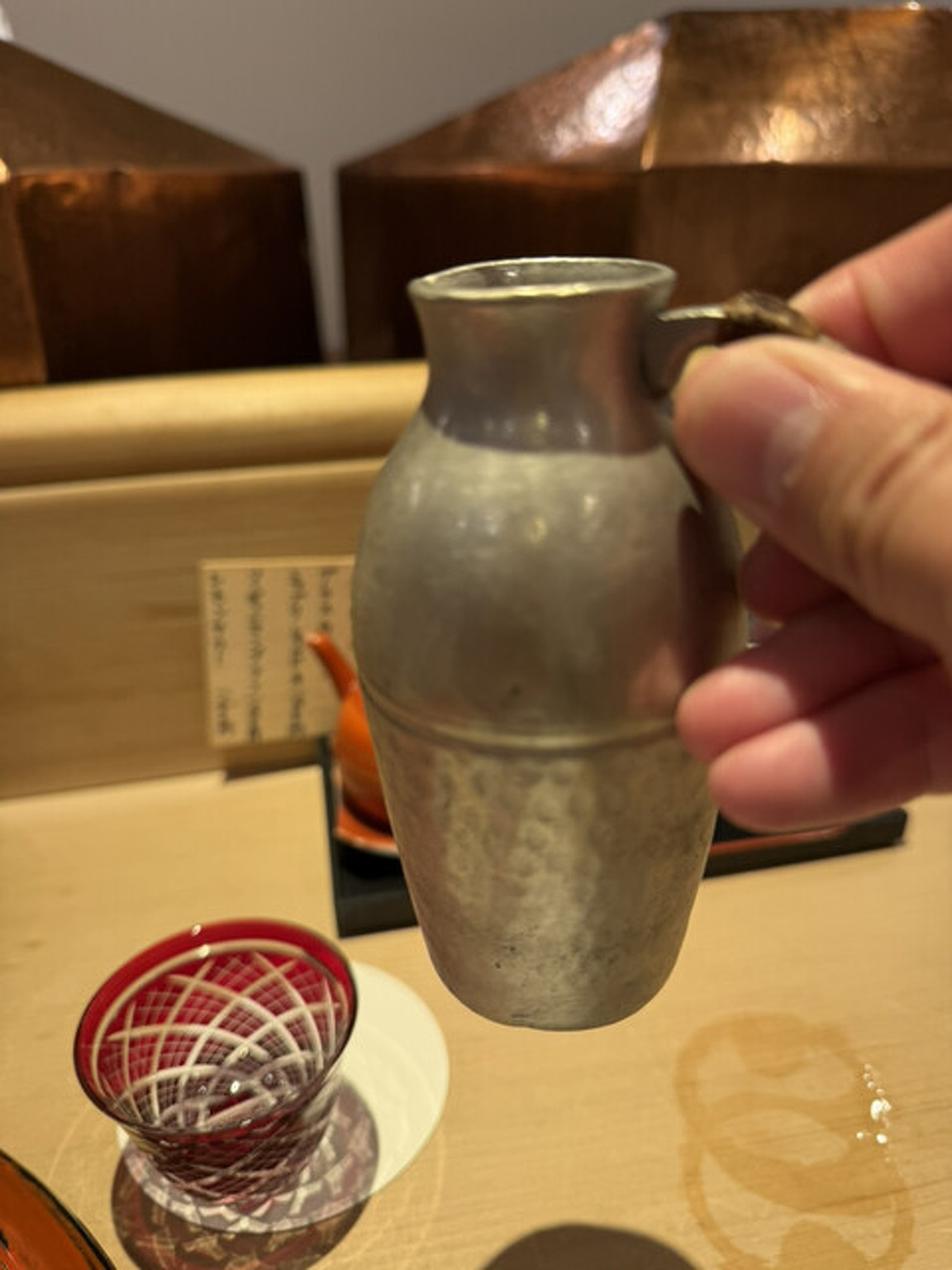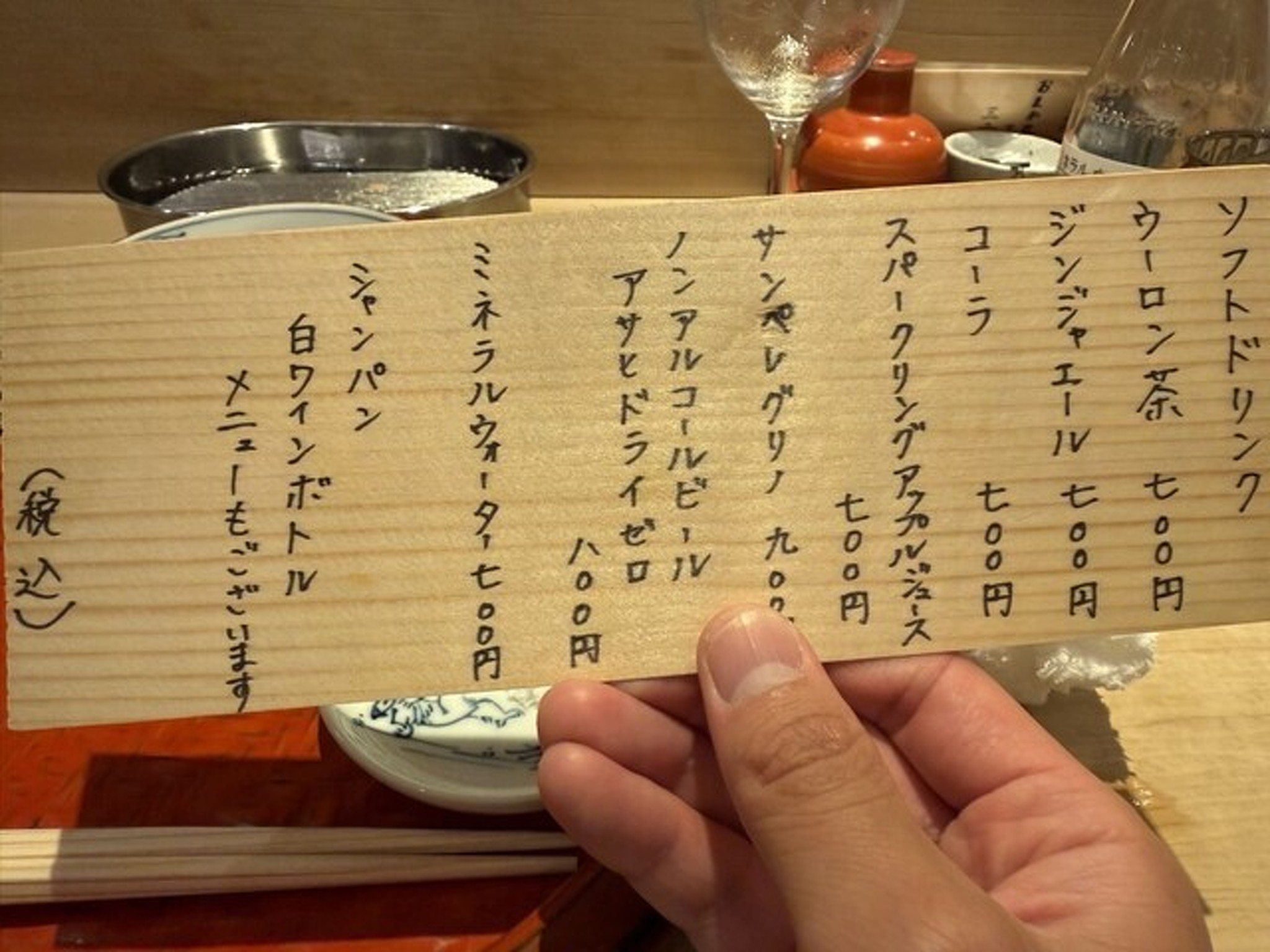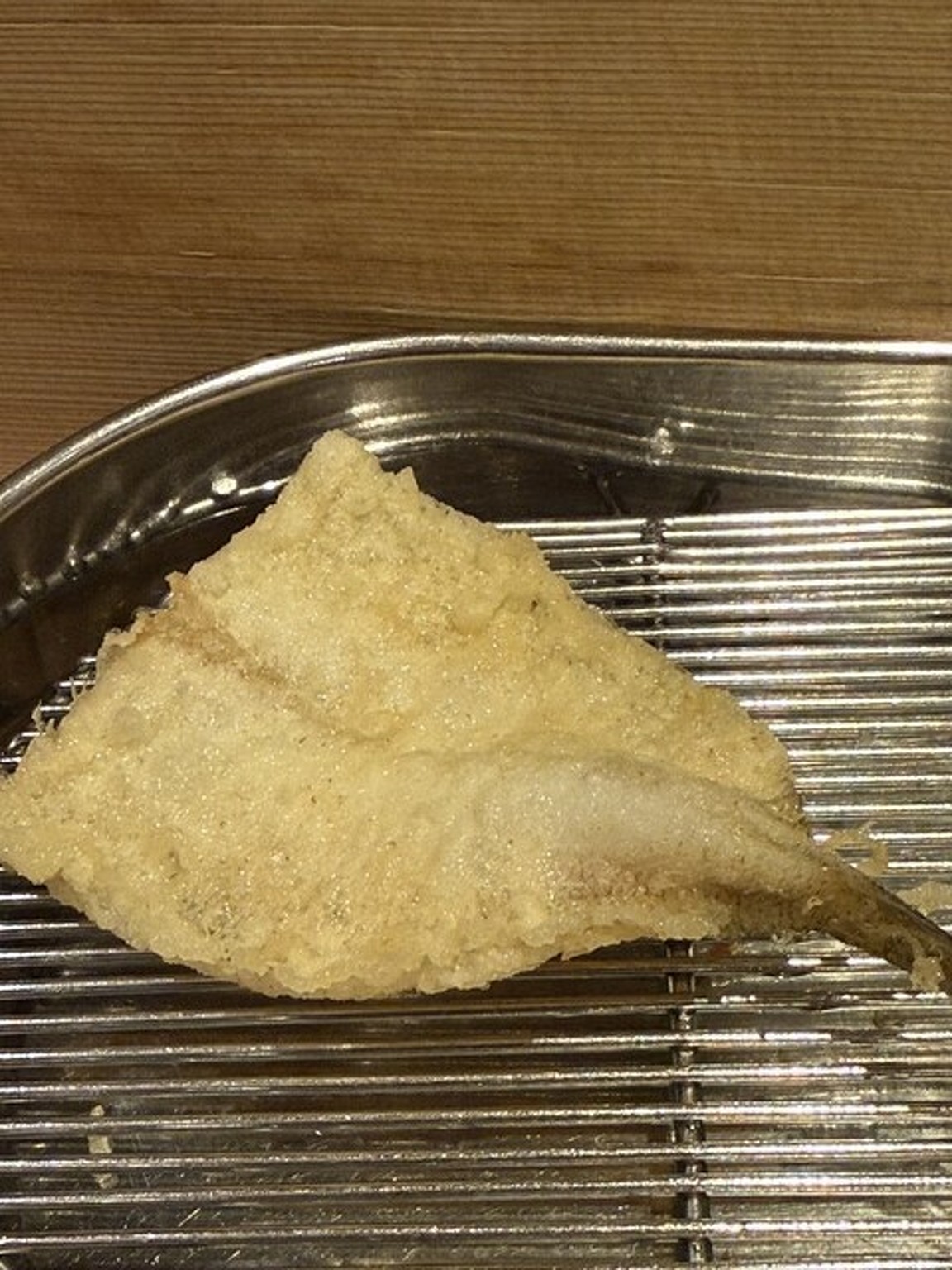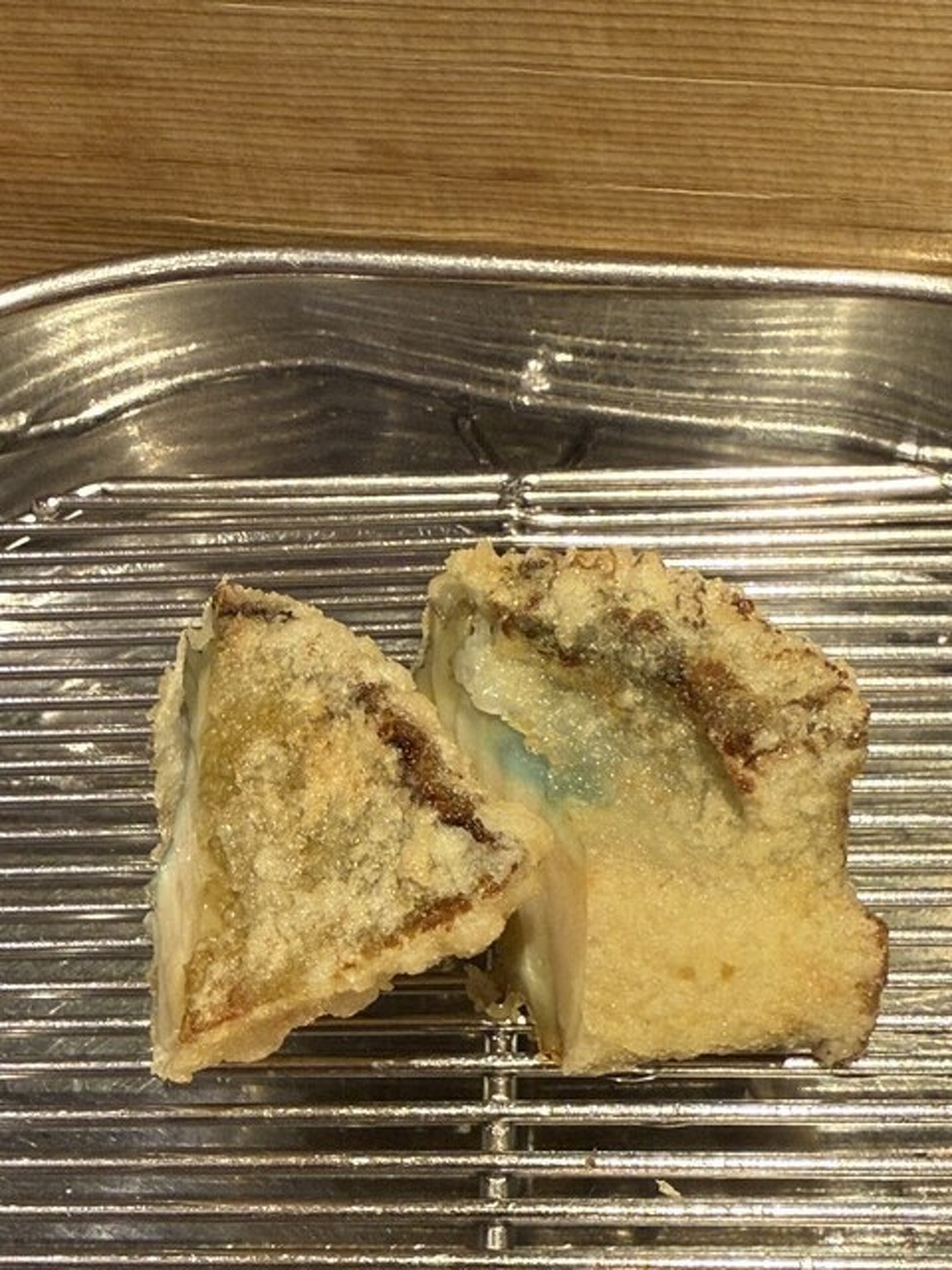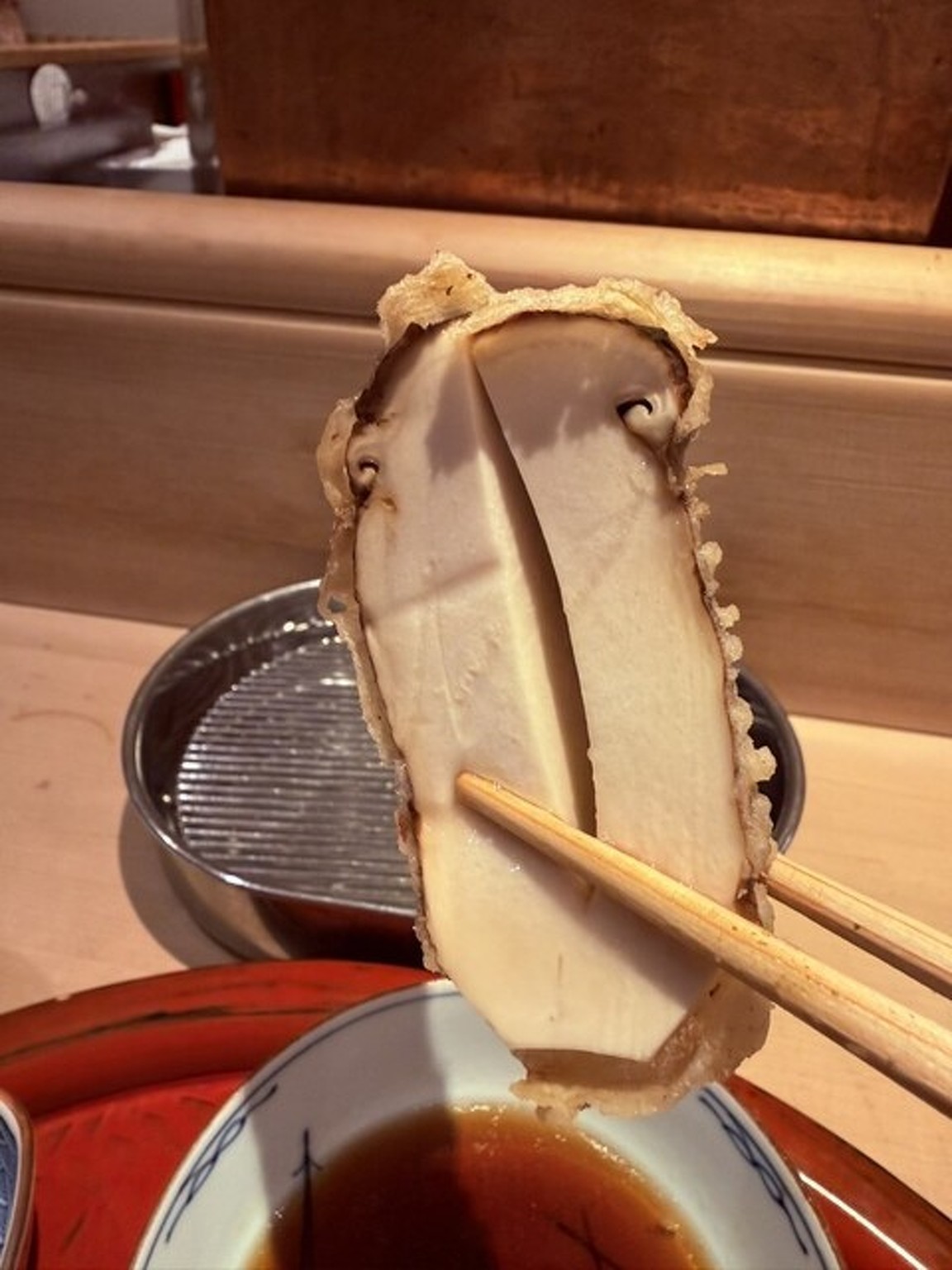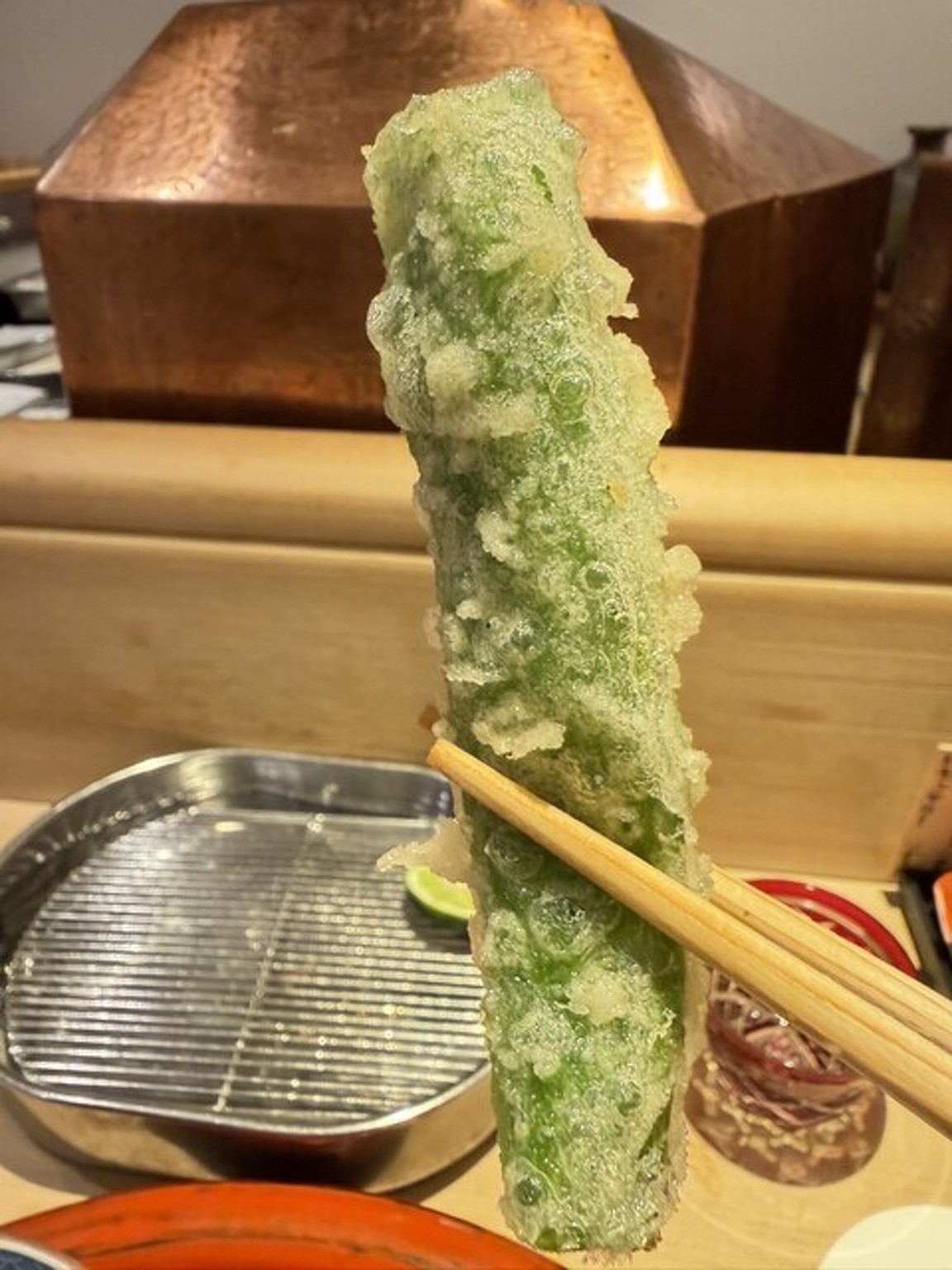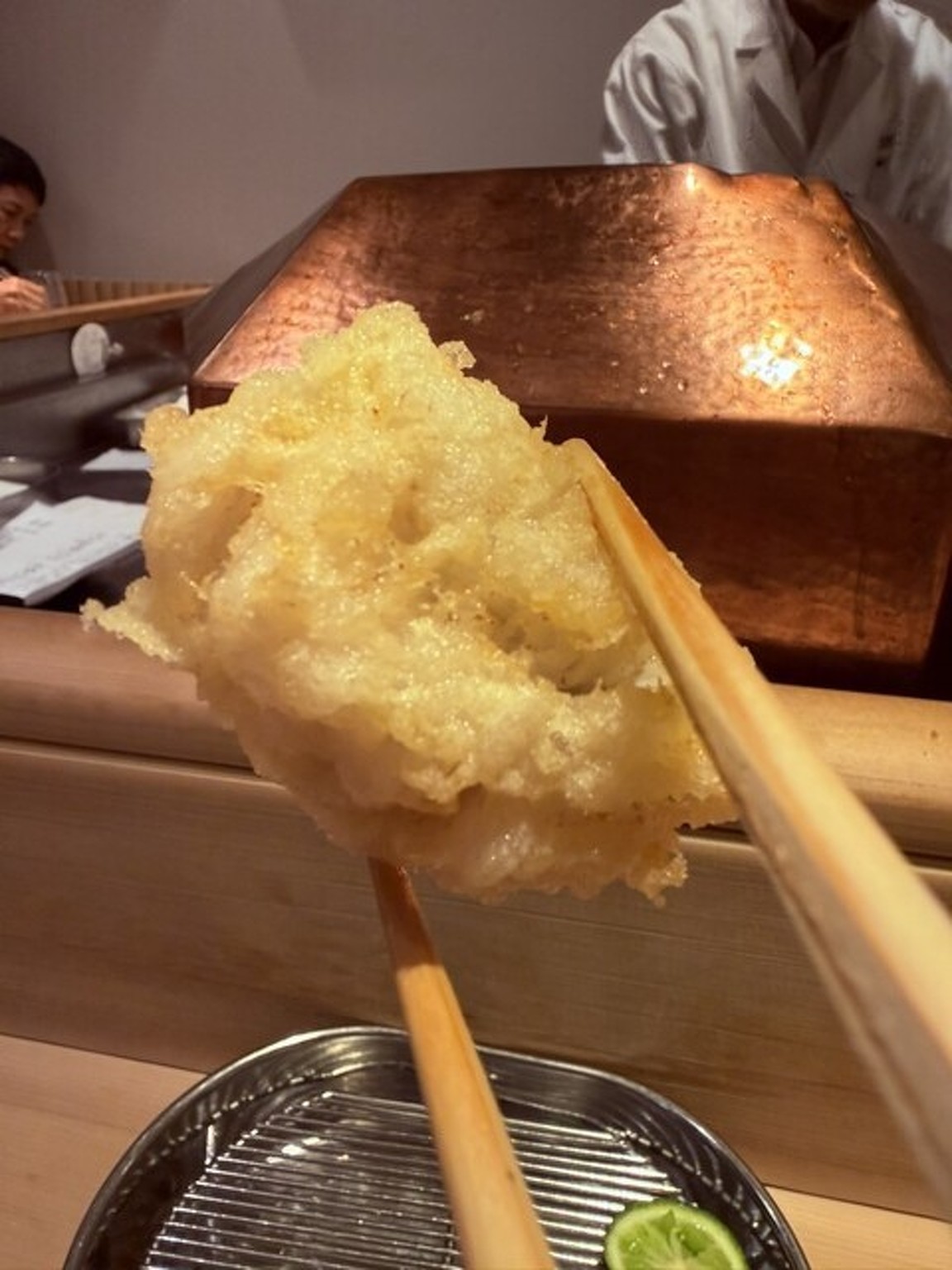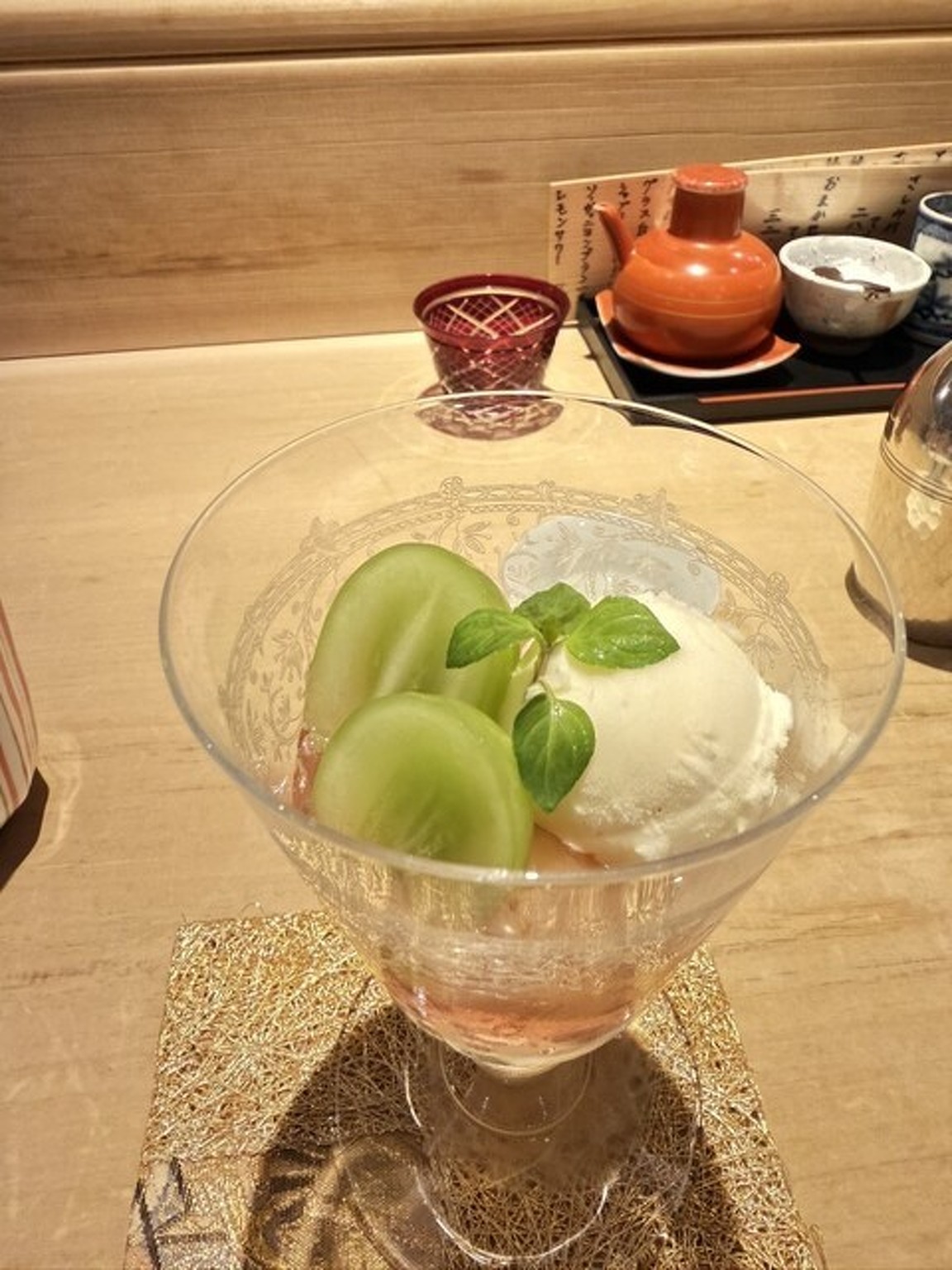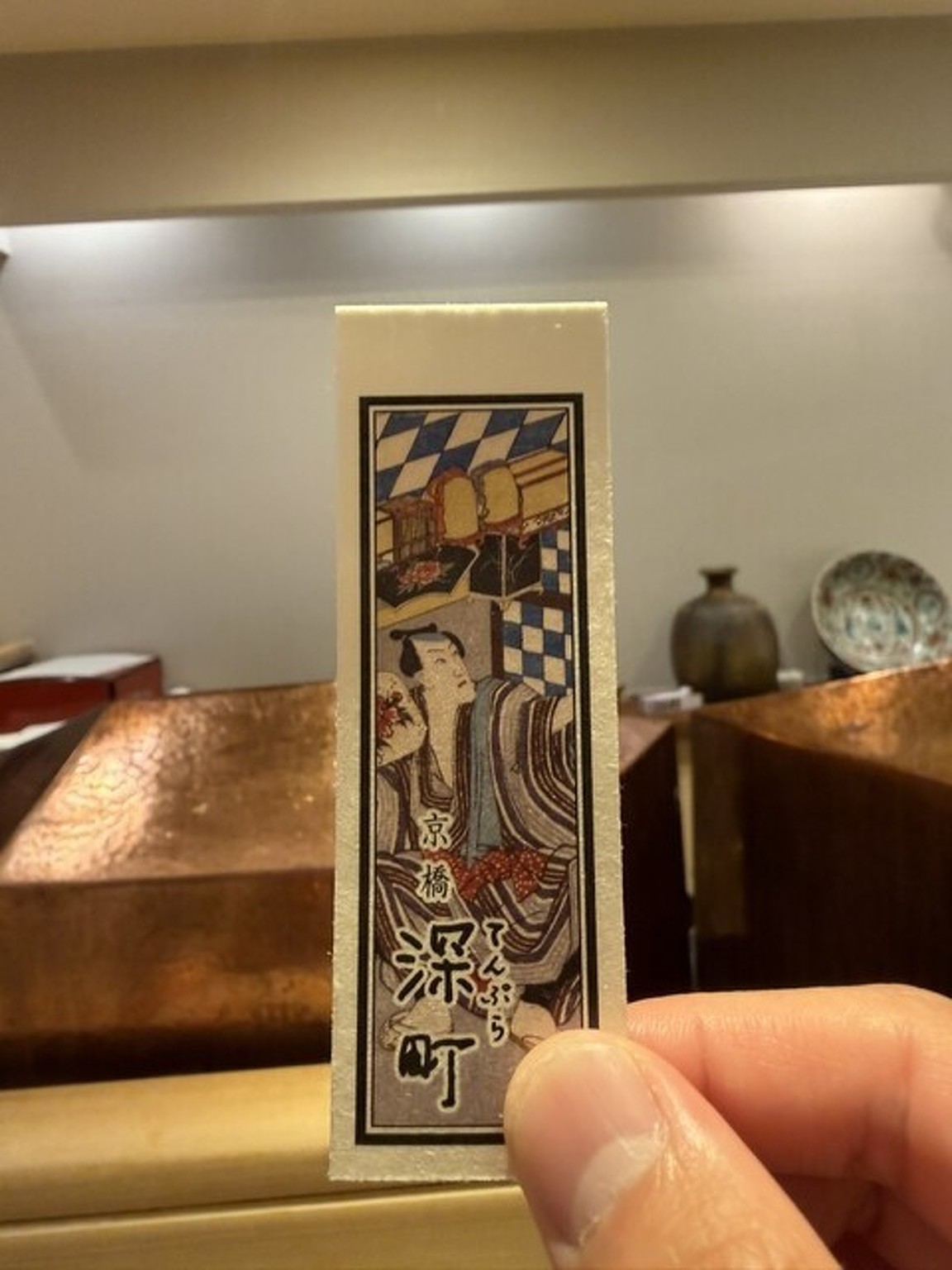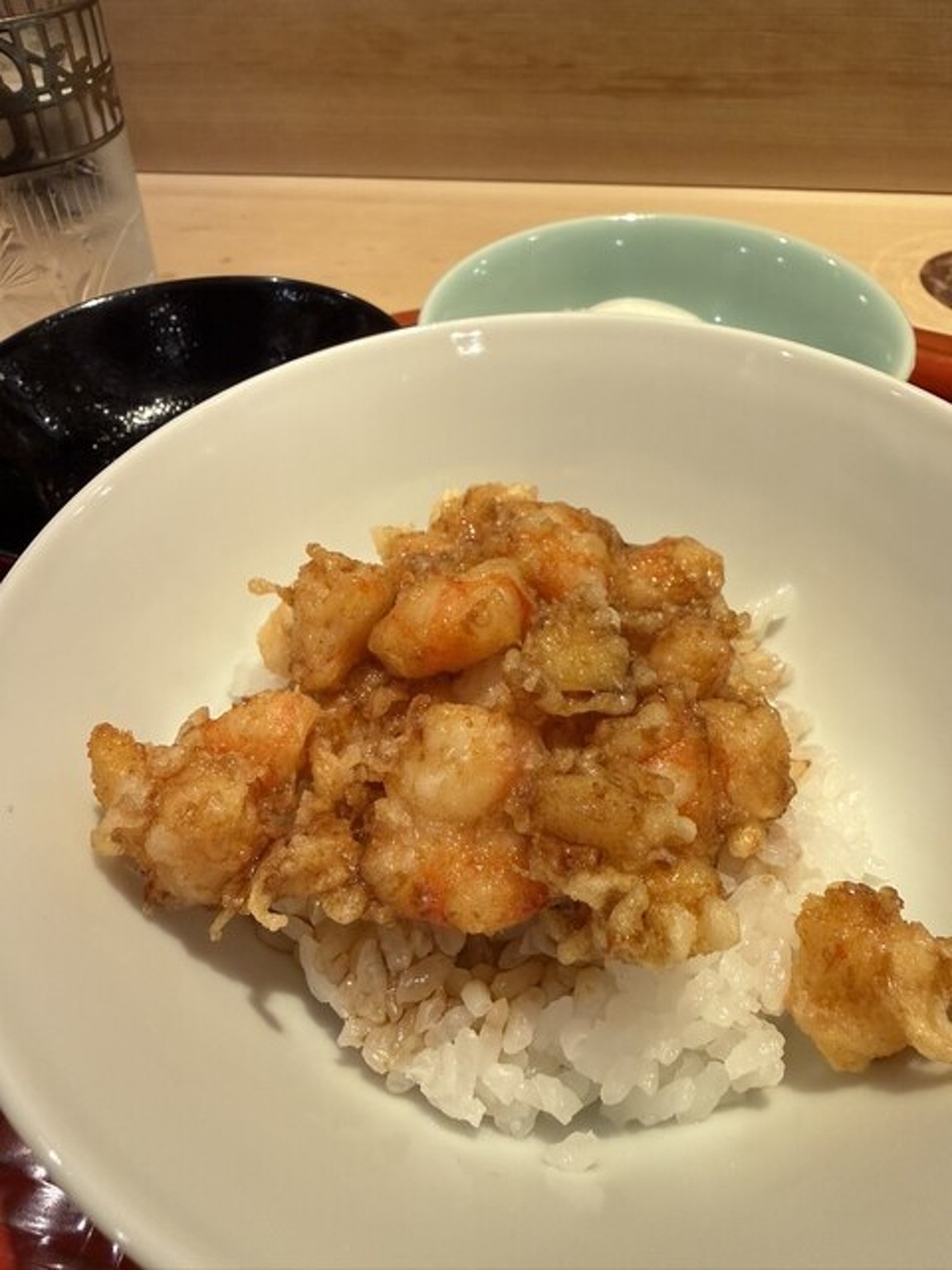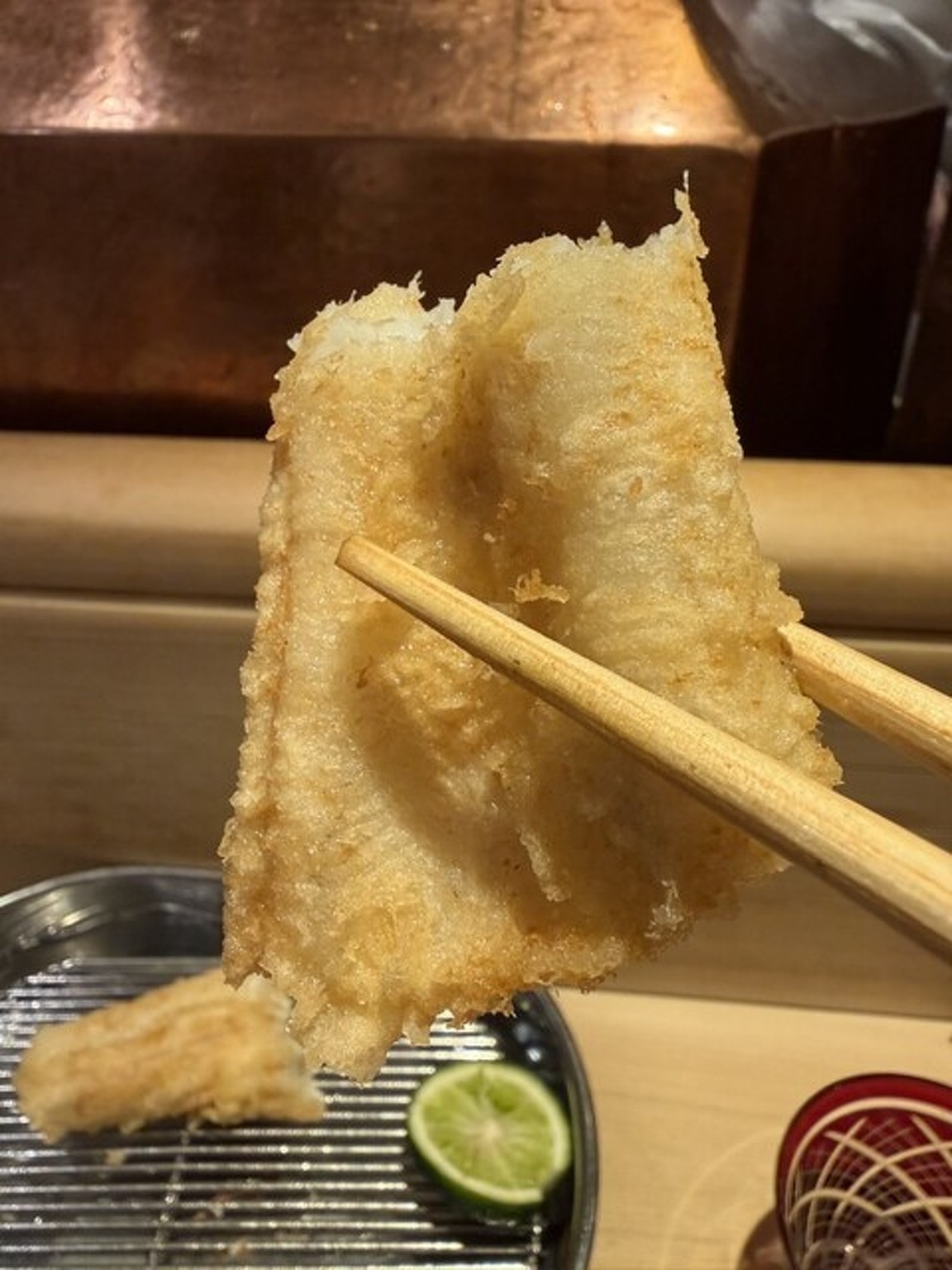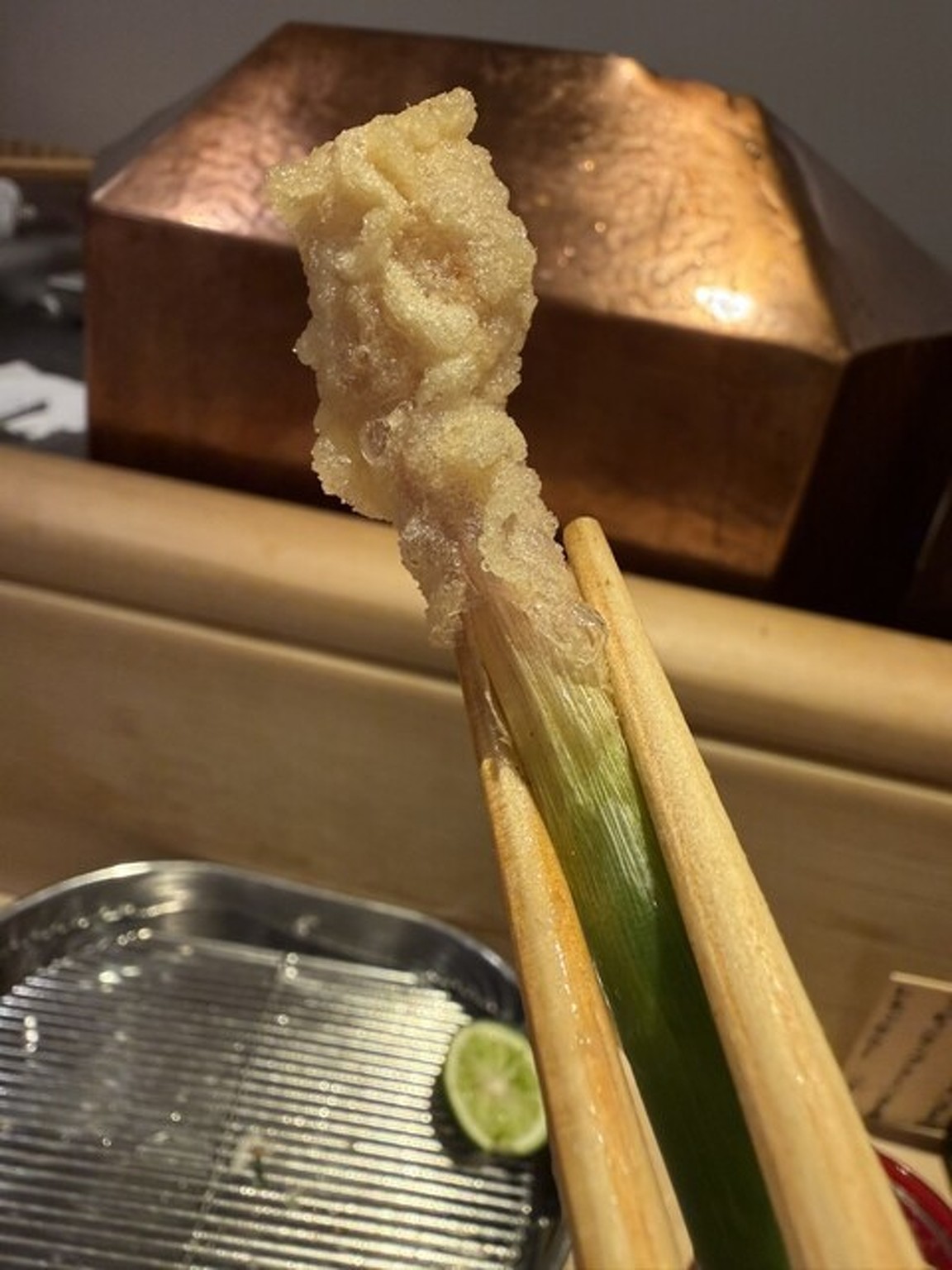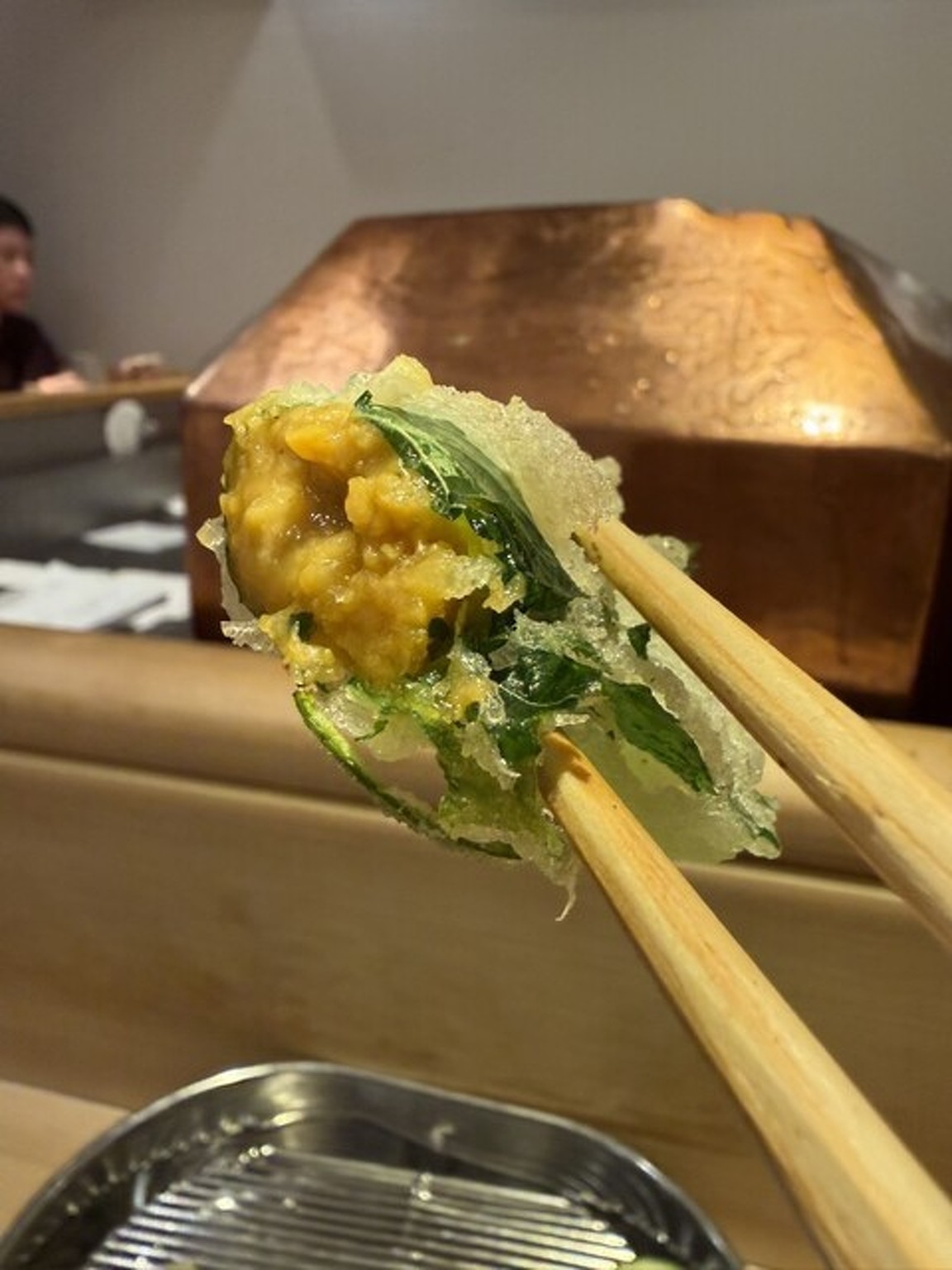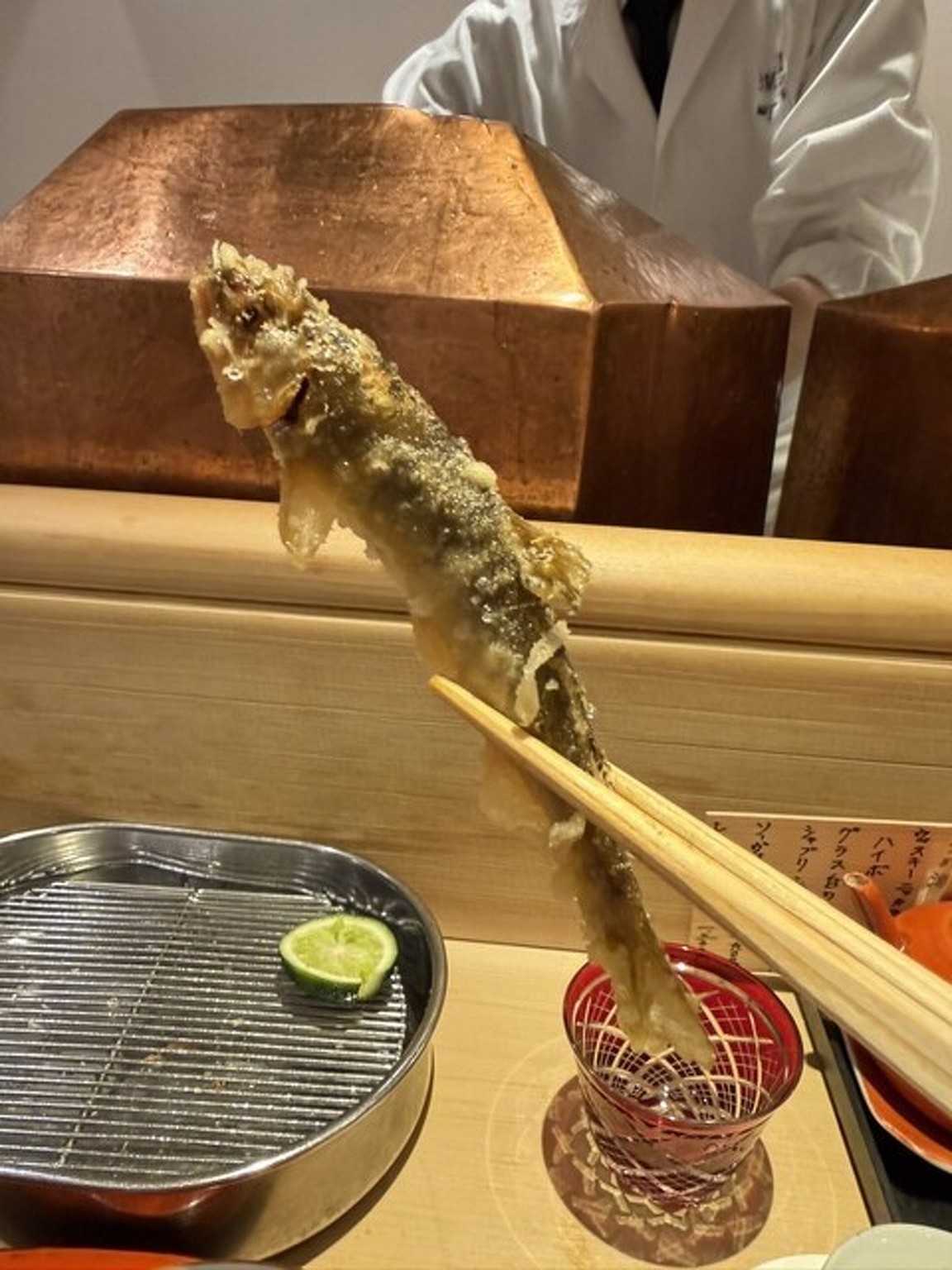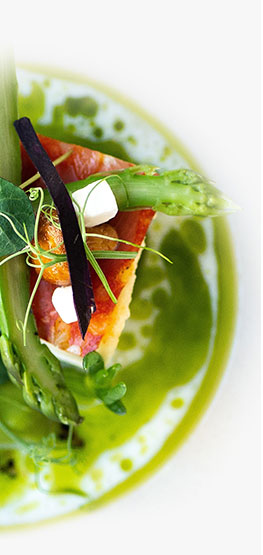
To Tempura Fukamachi.After finishing my meal, I had one clear thought: it was the best tempura I’ve ever had.Simply saying the batter was light and the oil was well-drained doesn’t quite capture it. What impressed me most at Fukamachi was how each ingredient didn’t converge into a single flavor of "tempura." For seafood, there was juiciness; for vegetables, sweetness; and for fragrant ingredients, their aroma stood out. Each ingredient’s strengths were enhanced through frying.This time, there were particularly memorable dishes.First up was the fresh ginkgo nuts. This was my first time trying fresh ginkgo. The vibrant jade color visible through the thin batter was beautiful, and the taste was completely different from the ginkgo I usually eat. While it had the characteristic chewiness of ginkgo, I was surprised by its juiciness. It had a youthful aroma and a hint of sweetness, with a refreshing quality that overshadowed any unique bitterness. I was immediately moved from the very first dish.I thought to myself, "Is ginkgo this delicious?"Next was the sweet shrimp, which was also remarkable. The batter was so light that it didn’t hide the ingredient, and when bitten into, the shrimp’s firmness and sweetness were clearly present. What was particularly interesting was the head that was served afterward. The body offered a juicy sweetness, while the head provided a crispy shell texture, a toasty flavor, and rich umami. Though it was the same shrimp, it felt like two completely different dishes.The white fish tempura was light on the outside and fluffy on the inside. As soon as I bit into the batter, the softness and moisture of the fish emerged. It wasn’t just that it was crispy and delicious; it felt like the batter and oil were used to bring out the fish at its most delicious state.This time, the biggest shock for me was the Bachiko. This was my first experience with Bachiko. Honestly, before tasting it, I thought it would just be a chance to try something unusual. However, after one bite, my impression completely changed. Within that small piece, the ocean’s umami, saltiness, and rich depth were packed with incredible density. Moreover, frying it added a toasty flavor, and the aftertaste lingered long after swallowing.It was shockingly delicious.And it paired perfectly with Japanese sake. After taking a bite of Bachiko, I sipped some sake. Instead of the sake washing away the umami, it actually complemented the saltiness and richness, extending the aftertaste even further. I went back to the Bachiko. This cycle was irresistible. Even though it was my first encounter with this ingredient, I instantly fell in love with it.Another unforgettable item was the Dake corn. Visually, it looked like a perfectly shaped board, but the sweetness when bitten into was quite intense. The kernels retained moisture and sweetness, bursting in one bite. It wasn’t just sweet; it had a corn-like aroma and richness, and the thin batter and oil enhanced the ingredient’s sweetness.It was my first time being so moved by corn tempura.And then there was the matsutake mushroom. Here, it was more about the overwhelming aroma than the taste. From the moment I brought the freshly fried piece close to my mouth, the matsutake’s characteristic fragrance wafted up, and as I bit into it, the heat released the aroma into my nose. It retained a pleasant crunch, and the oil didn’t overpower the matsutake. Rather, it felt like the batter trapped the heat and aroma, releasing it the moment I bit into it. Fresh ginkgo was juicy. Bachiko was concentrated umami. Dake corn was sweet. Matsutake was aromatic.These four dishes particularly moved me, each with a different point of surprise. This is the greatness of Fukamachi.The smooth appetizer served at the beginning was also impressive. With gentle dashi and wasabi, it prepared my palate for the fried dishes to come.In front of the counter was a striking copper frying station. Ingredients entered the oil, and the chef skillfully timed the frying, delivering the finished dishes almost immediately. Tempura is a matter of seconds from the moment it’s placed down. I wanted to take photos, but I also wanted to eat quickly. That inner conflict was enjoyable. As I finished one dish, the next was being fried. The rhythm was pleasant, and the time spent at the counter became part of the overall dining experience.This time, what I’ll particularly remember are the fresh ginkgo, my first Bachiko, Dake corn, and matsutake. And the combination of Bachiko and Japanese sake.I’ve had delicious tempura before. But in one meal, to repeatedly think, "Is there such deliciousness?" is a rare experience.At this point, I have no doubts. It was the best tempura I’ve ever had.RatingFood/Taste: 5.0The points of surprise vary completely depending on the ingredient. Especially the fresh ginkgo, Bachiko, Dake corn, and matsutake left a strong impression.Frying/Cooking: 5.0Not only the lightness of the batter but also the moisture, aroma, sweetness, and texture of each ingredient had a different landing point.Pairing with Japanese sake: 5.0Especially the Bachiko. An unforgettable combination from this meal.Atmosphere/Experience: 4.9Enjoying each dish at the perfect timing while watching the copper frying station. The experience itself was luxurious.Desire to revisit: 5.0I want to visit again in a different season to try another seasonal ingredient.Overall rating: 5.0Not because it’s high-end or a famous restaurant, but simply because it was the most delicious I’ve ever eaten. Moreover, this time I discovered new flavors with the fresh ginkgo and Bachiko, and was overwhelmed by the power of seasonal ingredients with Dake corn and matsutake. Not only delicious but also memorable tempura. For me, Fukamachi has become such a place.
We use cookies on this site to enhance your user experience.