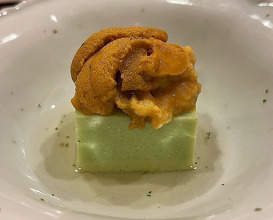
On a Friday night, I had the pleasure of revisiting Oryori Terasawa, led by the renowned chef Hayato Terasawa, a prominent figure in the Japanese culinary scene in Iwate. As the first customer at 6 PM, I stepped through the noren curtain and took my usual seat at the counter, refreshing my dry throat with a glass of Yukinochikara, an unfiltered white beer that carries the DNA of my favorite Ginga Kogen Beer.This time, I opted for the 15,000 yen course. The first dish was a generous serving of fresh sea urchin atop edamame tofu. Two different types of edamame were used; one was finely ground to a smooth texture, while the other was coarsely ground to enhance the sweetness and aroma of the beans. The dish showcased the chef's boldness, featuring high-quality sea urchin, which is nearly double the usual price this year.Following the traditional kaiseki sequence, the next dish was grilled anago (conger eel) from Sanriku, beautifully charred over binchotan charcoal, served with yamatoimo rice and fragrant aonori seaweed. I paired this with a small bowl of anago and tororo (grated yam) rice, reminiscent of unadon, complemented by "Hama Musume," a junmai sake from the Iwate-exclusive Akabu brewery.The highlight of the meal was a delicate soup featuring "Hotate Shinjo" (scallop dumpling) in a kombu dashi broth, garnished with yuzu, and accompanied by a substantial "Ezo Abalone" and okra. The umami of the broth and the tender abalone, with its unique chewy texture, were exceptional.For the sashimi, I enjoyed three types: akami (red meat) of honmaguro (bluefin tuna), madai (sea bream), and aburi ayu (grilled sweetfish), served with a choice of dipping sauces—shoyu and seasoned sake. The honmaguro was medium-sized and surprisingly rich in fat, while the grilled ayu was outstanding in flavor. However, the Sanriku madai fell short compared to its western counterpart. I paired this with "Nishiyoeimon" summer ginjo namagenshu.The next course featured Sanriku "Hishigani" (blue crab) and "Fukahire" (shark fin) spring rolls with zucchini and harusame (glass noodles). Although it had a Chinese culinary influence, the flavors remained firmly rooted in Japanese cuisine, delivering a delightful taste.For a palate cleanser, I had cucumber rolls with "Hirame" (flounder) and enjoyed them with moringa and tosa vinegar, elevating the dish into a luxurious experience when paired with honkarashi (Japanese mustard).To accompany the fried and vinegared dishes, I sampled two premium junmai daiginjo sakes: "Tamashii no Taiyaku," made from 100% Yamada Nishiki rice with a polishing ratio of 35%, and "Gokujou no Kiru," brewed with Iwate-grown Yuki no Ka rice polished to 35%. I savored the differences between these flagship sakes.The highlight of the course was the hassun, presented in an Italian style, featuring seasonal vegetables and the finest Iwate beef, known as Iwate-gyu, wrapped in fern, along with young corn, wine-poached green plums, broad beans, octopus with plum miso, shishito peppers, abalone liver, and mussel roe—an array of sake-friendly dishes enjoyed with a glass of "Kikuzakari Yuki Onna" junmai nigori sake brewed locally in Kitakami.As a substitute for nimono (simmered dishes), I had a small pot of "Tsukinowaguma" (black bear) meatballs made from a bear hunted by the chef's classmate, served with junmai (water shield) and itadori (Japanese knotweed).To finish, I enjoyed a rice dish of octopus and edamame cooked together, served with homemade nukazuke (pickled vegetables) and miso soup, followed by a dessert of fig and sesame ice cream monaka, concluding with mulberry leaf tea. The leftover rice was made into onigiri (rice balls) for breakfast the next day.This omakase kaiseki course at Oryori Terasawa offered a slightly different approach than usual, prioritizing rich flavors, and left me feeling deeply satisfied.
We use cookies on this site to enhance your user experience.