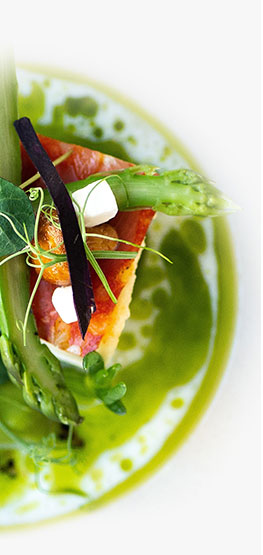
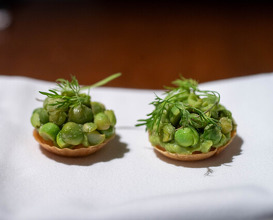
2,711 characters ★Chef's Omakase Course (JPY 18,150, tax included) Duration: Approximately 2 hours and 20 minutesThe chef, Masakazu Hirai (born in 1979) from Chofu City, showcases his skills at this restaurant (4.06). After honing his craft at the legendary Akka in Hiroo (which later relocated to Okayama Prefecture), he became independent in 2012. You can enjoy the dinner course for lunch on weekends and holidays (lunch reservations are only available by phone, not online).The restaurant has about 15 to 17 table seats. On the table, you will find a towel, napkin, fork, knife, and cold water. The restaurant is run by a team of four, including three men and one woman, along with the chef. The restroom features a TOTO washlet.- Alcohol Pairing (JPY 12,100) 1. Beans | Sardine 2. Bonito 3. Bamboo Shoot 4. Firefly Squid 5. Asparagus 6. Shellfish 7. Lamb 8. Pizza 1. Burgundy Aligoté Sparkling 2. Friuli Capriva D'Amiani 2019 Orange 3. Aramasa 2023 4. Loire White 5. Mead 6. Rice Shochu with Tea (Shizuoka's Gyokuro) 7-1. Barolo 7-2. Craft Beer from Montpellier 8. Choose (Wine or Craft Beer or Lemon Sour or Various Non-Alcoholic Options) I chose a lemon sour based on barley shochu from Oita Prefecture.- Chef's Omakase Course (JPY 18,150) 01. Green Peas 02. Sardine 03. First Bonito 04. Bamboo Shoot 05. Firefly Squid 06. White Asparagus 07. Vongole Bianco 08. Lamb 09. Pizza 10. Sage Here are my impressions of the dishes I had, with individual ratings in brackets. The displayed prices include tax.【3.9】Green Peas A small tart made with Italian green peas. It also features smoked cherry salmon and prosciutto. The addition of smoky aroma and moderate acidity balances the dish, preventing the green peas from being too plain.This small finger food serves as an amuse-bouche, but the overall volume of the course is modest, with the pizza at the end providing a volume adjustment. The alcohol pairing offers a variety of interesting drinks, but the overall volume is lacking, reminding me that Chofu City, while outside the 23 wards, is still part of Tokyo.【3.9】Sardine This dish pays homage to the sardine dishes the chef often enjoyed in Italy. It features brioche baked over a wood fire, fermented butter, Spanish anchovies, and sardines marinated in red wine vinegar, warmed over a wood fire and served as bruschetta.The sardines retain a rare quality while being slightly warm, making them delicious. The gentle acidity typical of high-end restaurants is well-executed. However, the crispy texture of the brioche felt a bit out of place, and I wished for a softer bread, but it was still tasty.【4.3】First Bonito This dish combines pickled pearl onions, maple syrup, marjoram oil, roasted nuts, and a powdered dressing made with gorgonzola and apple vinegar. It’s a dish of "addition" that enhances the rich flavor of the bonito, making it even tastier than the returning bonito.Since I had the GV (Gastroback) bonito at Sakurashi Presents (4.46), I was impressed by the bonito served in Italian cuisine.【3.7】Bamboo Shoot A cheese risotto made with bamboo shoots from Aomori City and beef shank braised in red wine. It’s garnished with gremolata and flower pepper. This is said to be an arrangement of Milanese veal stew.The beef shank is sourced from Sakaiya and is Omi beef, but since it’s braised in red wine, its unique characteristics were not very noticeable. Nonetheless, the risotto was overall mild and easy to eat. The rice was perfectly cooked, feeling firm without being hard.【3.7】Firefly Squid Toyama firefly squid steamed with finely sliced potatoes, reminiscent of Chinese cuisine. The new potatoes are boiled, sautéed, and rapidly cooled, then mixed with Korean sesame oil, chili, and vinegar. The sauce is Trapani-style, using basil, roasted nuts, and fermented koji water instead of tomatoes.The new potatoes have a strong acidity, making the dish light overall. As the chef mentioned, it serves as a "palate cleanser." While firefly squid is usually better when cooked over a wood fire, the choice to steam it likely adds variety to the course.【3.8】White Asparagus Whole white asparagus fried. It’s served with a sauce made from poached chicken liver pâté, soft-boiled egg, and browned butter.The crispy coating contrasts with the tender white asparagus. As seen with the sardine bruschetta, the chef may enjoy contrasting textures.This is quite an unconventional way to enjoy white asparagus. Personally, I prefer to enjoy it boiled directly, but it was an interesting presentation unique to this restaurant.【4.0】Vongole Bianco Essentially made with clams, but topped with one Mie prefecture clam. It uses spaghetti or a pasta that resembles dried noodles. There’s a pistachio paste at the bottom that you mix in later for a flavor change.The pasta is cooked al dente without being hard, just like the risotto. The sauce, rich in clam flavor, was also delicious.【3.8】Lamb Lamb chop cutlet with arrabbiata sauce. The meat is pounded, fried, and then simmered in tomato sauce for one minute. It’s topped with new onions, sheep cheese, and flower pepper.As the chef mentioned, the appeal of Italian cuisine lies in the thorough cooking, and while the lamb is well done, it was still a delicious lamb dish.【3.5】Pizza You can choose one pizza from eight options for two people. You can select from small, medium, or large sizes, and half-and-half is also possible. I chose shirasu and quattro formaggi.The dough is made with Japanese wheat, whole wheat flour, onion water, and whey, with minimal salt. It appears thick but has a mild flavor. The toppings are generous. Personally, I prefer pizzas that are saltier and greasier, but that may not suit the end of the course.【4.2】Sage The post-meal drink (coffee or tea or herbal tea) is an optional paid item, which I declined. For a JPY 18,150 course, I would have preferred it to be included by default, but Chofu is still part of Tokyo. The dessert is sage ice cream served with non-heated salted lemon jam.The sage has a strong aroma, and the fluffy texture is sensual. The non-heated preparation allows the aroma, acidity, and bitterness of the lemon to provide a nice accent. This flavor is far superior to that of the ice cream and gelato from the top 100 shops, showcasing the quality of a high-end restaurant.
We use cookies on this site to enhance your user experience.