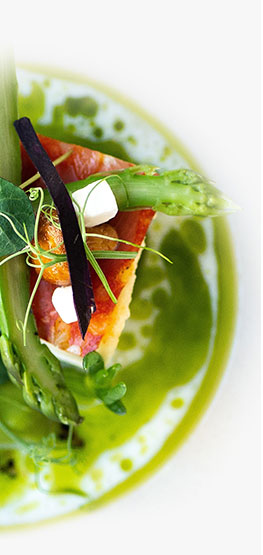
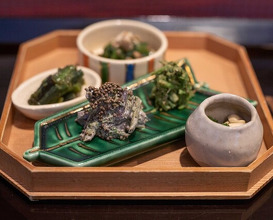
2,774 characters ★Seasonal Course (JPY 22,000, tax included) Duration: Approximately 1 hour 50 minutesI traveled from Tokyo to Niigata Prefecture.The Yamagai brothers (older brother Shinsuke and younger brother Ryota) showcase their skills at this restaurant (4.35). Founded in 1868, this historic kappou was completely destroyed by fire in 2005. Rebuilt by the brothers, it combines the atmosphere of a traditional establishment with modern design, serving dishes that emphasize local ingredients, embodying the "Murakami Terroir."I found an available slot on the online reservation site Pocket Concierge and decided to visit.The interior features a straight counter with 4 seats facing a live kitchen and 2 tables for 4 (there are also private rooms). On the table, there are towel oshibori, hot roasted tea, black lacquer trays with chopsticks, chopstick rests, and napkins. The brothers and the proprietress manage the restaurant with a total of three staff members. The restrooms are separated by gender and equipped with Inax shower toilets. Below is a summary of what I ate and drank, with a total bill of JPY 29,000.- Japanese Sake Omakase (9 varieties JPY 7,000)1. Niigata Prefecture, Murakami City, Miyao Brewery, Shimeharitsuru Murakami Festival UNESCO Registered Sake2. Niigata Prefecture, Murakami City, Taiyo Brewery, UNESCO Intangible Cultural Heritage Registered Sake Nishinami Taiyozaka3. Niigata Prefecture, Murakami City, Taiyo Brewery, Junmai Daiginjo Usunigori Honjozo Shiun Taiyozaka4. Niigata Prefecture, Murakami City, Taiyo Brewery, Musou Shinjika5. Niigata Prefecture, Murakami City, Miyao Brewery, Shimeharitsuru Jun Junmai Ginjo6. Niigata Prefecture, Kashiwazaki City, Abe Brewery, Abe Green7. Niigata Prefecture, Murakami City, Miyao Brewery, Shimeharitsuru Ginjo Namachozou8. Niigata Prefecture, Kamo City, Kamonishiki Brewery, Hahata Sake Gesshaku 2025 BY9. Niigata Prefecture, Murakami City, Taiyo Brewery, Kyōjō Taiyōzakari Junmai Ginjo Namagenshu- Seasonal Course (JPY 22,000)01. Red Kogomi, Shiode, Harigiri, Momijigasa, Warabi 02. Ara 03. Kue, Uruoi, Kinome 04. Mahi Hata 05. Sakuramasu 06. Koshia Bura Chawanmushi 07. Anago Rice 08. Palate Cleanser 09. Tsuki no Waguuma, Kakuma, Gyoja Garlic 10. Bamboo Shoot 11. Sakuramasu 12. Amadai, Ukogi 13. Yama Udo Ganmodoki, Inoshishi, Azami 14. Meal 15. Seasonal FruitThe evaluations of the dishes I had are as follows, with individual scores in brackets. The displayed prices include tax.【4.2】Red Kogomi, Shiode, Harigiri, Momijigasa, Warabi 1. Red Kogomi with Sesame Dressing 2. Shiode with Soy Sauce and Egg 3. Harigiri and Peanuts with Miso Dressing 4. Momijigasa Stir-fried with Oil and Walnuts 5. Warabi with Dressing A beautiful assortment of five types of wild vegetables as an appetizer. Each dish showcases a variety of preparations that hint at the chef's skill.【3.9】Ara Salted high-end fish "Ara" from the Suzuki family, served with various fish jelly. The effect of the salting gives it a somewhat fatty flavor, which is both good and bad, but it is delicious with a rich umami.【4.1】Kue, Uruoi, Kinome This is Kue, a high-end fish from the Hata family. Like the previous dish, it is salted and lightly blanched for the soup. It is accompanied by Uruoi leaves and carrots.The salting gives it a flavor reminiscent of Shimaaji, but the rare cooking enhances its umami, leaving a better impression than the Ara. The broth has a refined taste typical of high-end kappou.【4.4】Mahi Hata Rarely cooked Mahi Hata, served with a sauce of plum, arare, and wasabi leaves. The fillet was sandwiched with daikon and grilled over charcoal, seemingly to only char the skin without cooking the sides. The mild acidity and prominent umami of the sauce enhance the Mahi Hata.【4.3】Sakuramasu Sakuramasu lightly cooked to retain the gelatinous skin without crisping it. Like the Mahi Hata, it was sandwiched with daikon and only the skin was grilled. The tender flesh is directly delicious.【4.0】Koshia Bura Chawanmushi The smooth and creamy custard (the chawanmushi itself) showcases the chef's skill. The Koshia Bura sauce is also smooth and creamy, but made without dairy, only using kombu dashi.【3.5】Anago Rice About 1kg of Ma-anago, cut and cooked. Served over rice with mochigome and anago eggs, topped with Yamamitsuba. The Anago is prepared soft like Kanto-style eel, but personally, I prefer the grilled version.【3.8】Palate Cleanser Not listed on the menu, but the palate cleanser is a kuzu mochi made with fuki no tou. The aroma of fuki no tou is mild, with no bitterness, resulting in an unexpectedly refined taste.【3.9】Tsuki no Waguuma, Kakuma, Gyoja Garlic A salad-style dish made with low-temperature cooked bear meat. Served with Kakuma Kogomi (green kogomi), Gyoja garlic, and roasted rice. The thinly sliced, fluffy texture is reminiscent of prosciutto. There are no gamey flavors, and you wouldn't guess it's bear meat unless told.【4.0】Bamboo Shoot Grilled bamboo shoots and bamboo shoot puree. The puree, made with bamboo shoots, kombu dashi, and salt, is incredibly creamy. As with the Koshia Bura, the restaurant excels at making rich purees that highlight the kombu dashi.【3.8】Sakuramasu Charcoal-grilled Sakuramasu. In contrast to the first Sakuramasu, the skin is crispy while the flesh is moist. Served with a tangy daikon oroshi on the side for your preference. As a rare fish lover, I rated the first one higher.【3.9】Amadai, Ukogi Salted Amadai, served with a refreshing vinegar jelly containing Ukogi sprouts.【3.9】Yama Udo Ganmodoki, Inoshishi, Azami Ganmodoki with Yama Udo, Inoshishi belly meat, and Azami stir-fried and simmered together.【4.0】Meal 1. Sakuramasu Pressed Sushi 2. Hot Roasted Tea 3. Tara no Me Rice (refillable / available for takeout) 4. Inoshishi Thigh Meat Arare Fried 5. Iwafune Fu Miso Soup 6. Mahi (Aji) with Egg Yolk Soy Sauce 7. Pickles (Mizu)The Sakuramasu pressed sushi, cooked rare, includes Akebi sprouts and Jerusalem artichokes. It is accompanied by Yama Udo gari. The pressed sushi, elevated by the combination of rice and wild vegetables, deserves a score of 4.4. It is one of the top two dishes of the day alongside the Mahi Hata.The Tara no Me rice is finely chopped, so the unique chewy texture of the Tara no Me is not fully enjoyed, but the aroma and umami are present, making it a delicious 4.0. The meal is lavishly accompanied by Inoshishi and Mahi.The pickles made with Mizu (a slippery, crunchy wild vegetable) are also a nice touch.【4.0】Seasonal Fruit Ice cream made from Hamaboufu with sweet red bean paste. It is fluffy, smooth, and creamy, with the unique aroma of Hamaboufu standing out. It is a bold choice, but far more delicious than the top 100 ice cream and gelato shops.The adzuki beans are sourced from Hokkaido, but it is possible to use Murakami beans depending on the season. The ingredients of the day were all sourced from Murakami, showcasing the Murakami Terroir (excluding the wasabi, which is likely from elsewhere). The fact that ingredients typically found in high-end restaurants in Tokyo, priced at JPY 50,000, are available here is a testament to the benefits of local production for local consumption. Until now, I hadn't fully appreciated the quality of Niigata's ingredients, but I was truly impressed by the satisfaction derived from the terroir of Murakami.
We use cookies on this site to enhance your user experience.