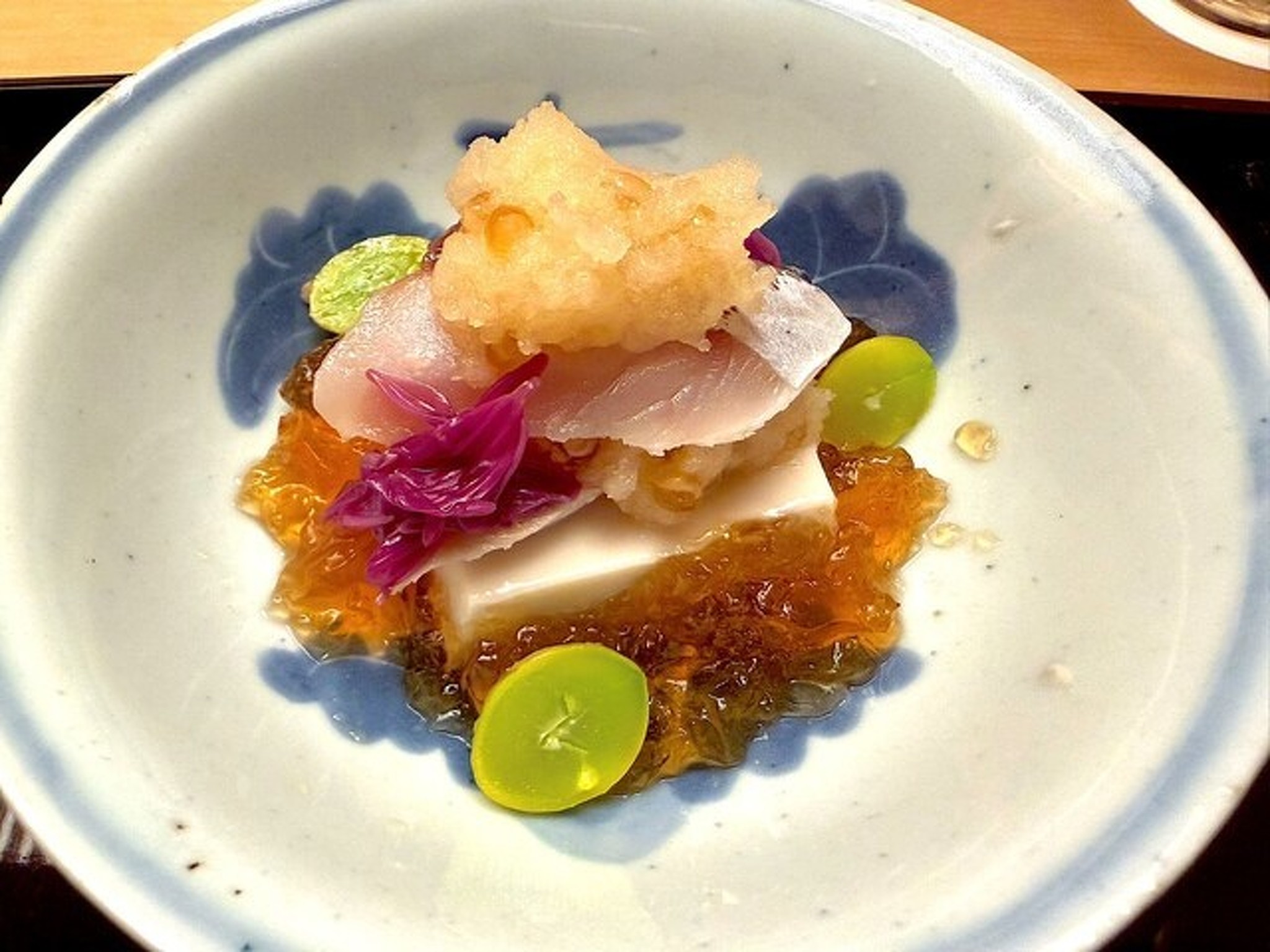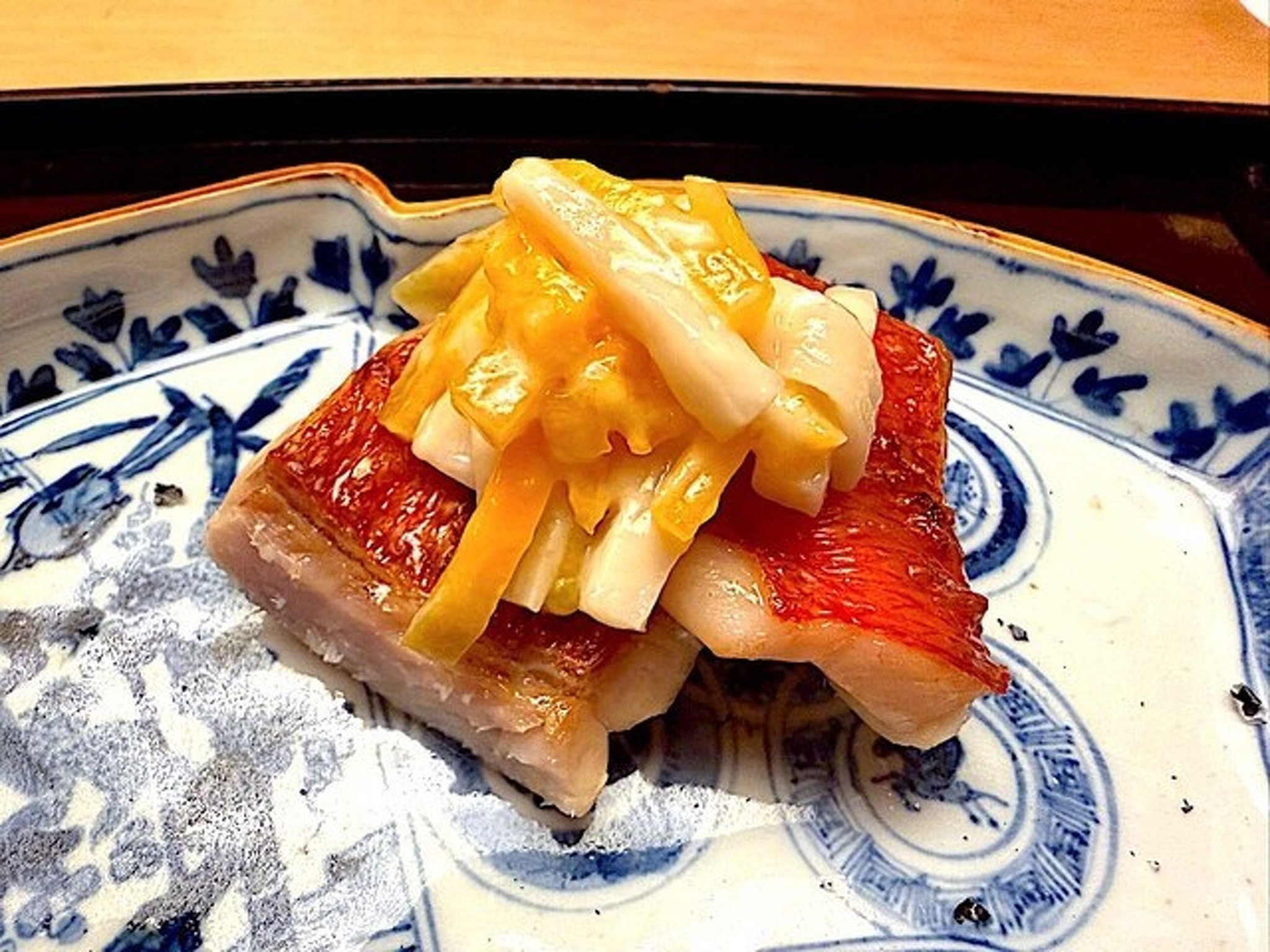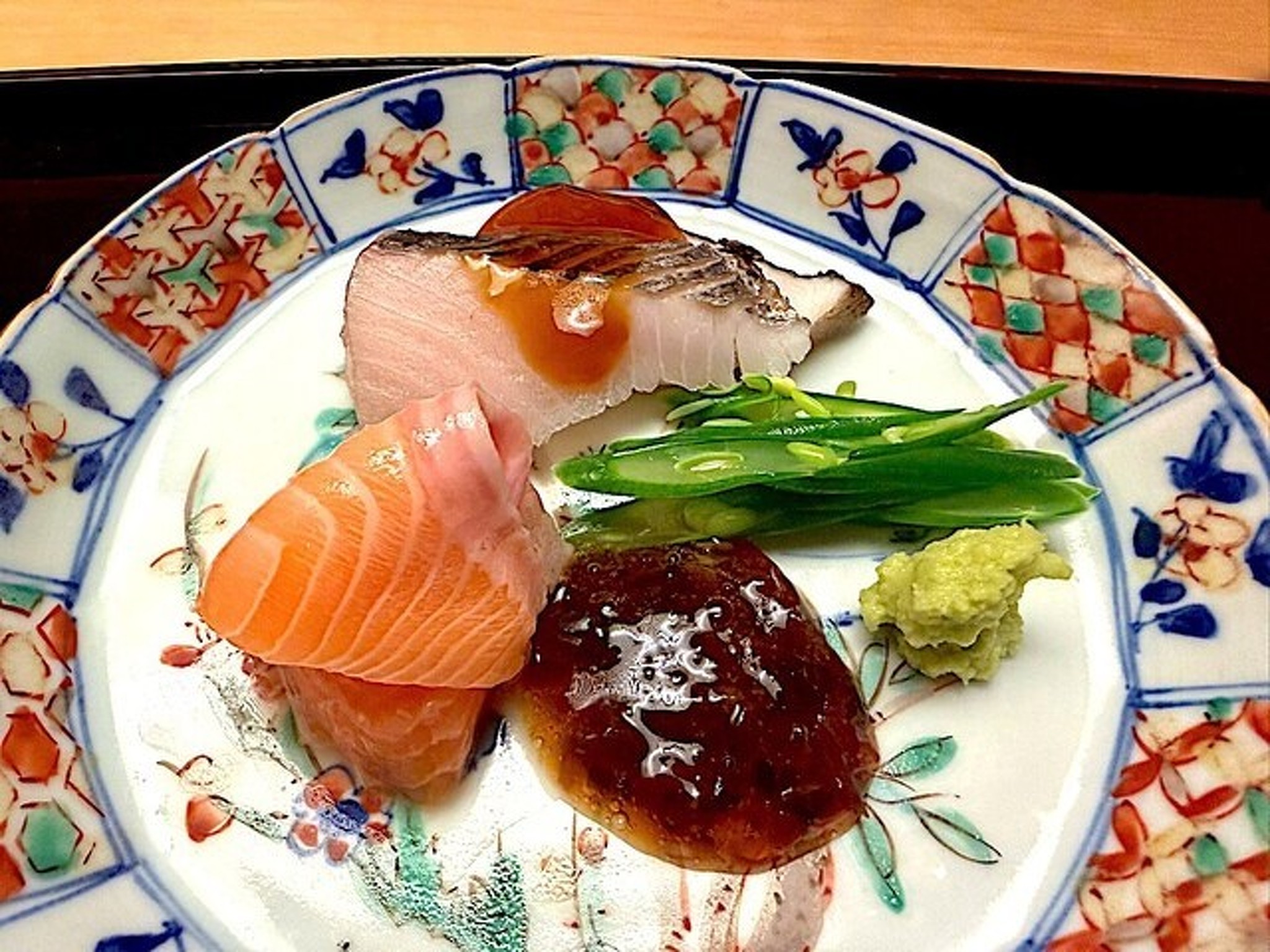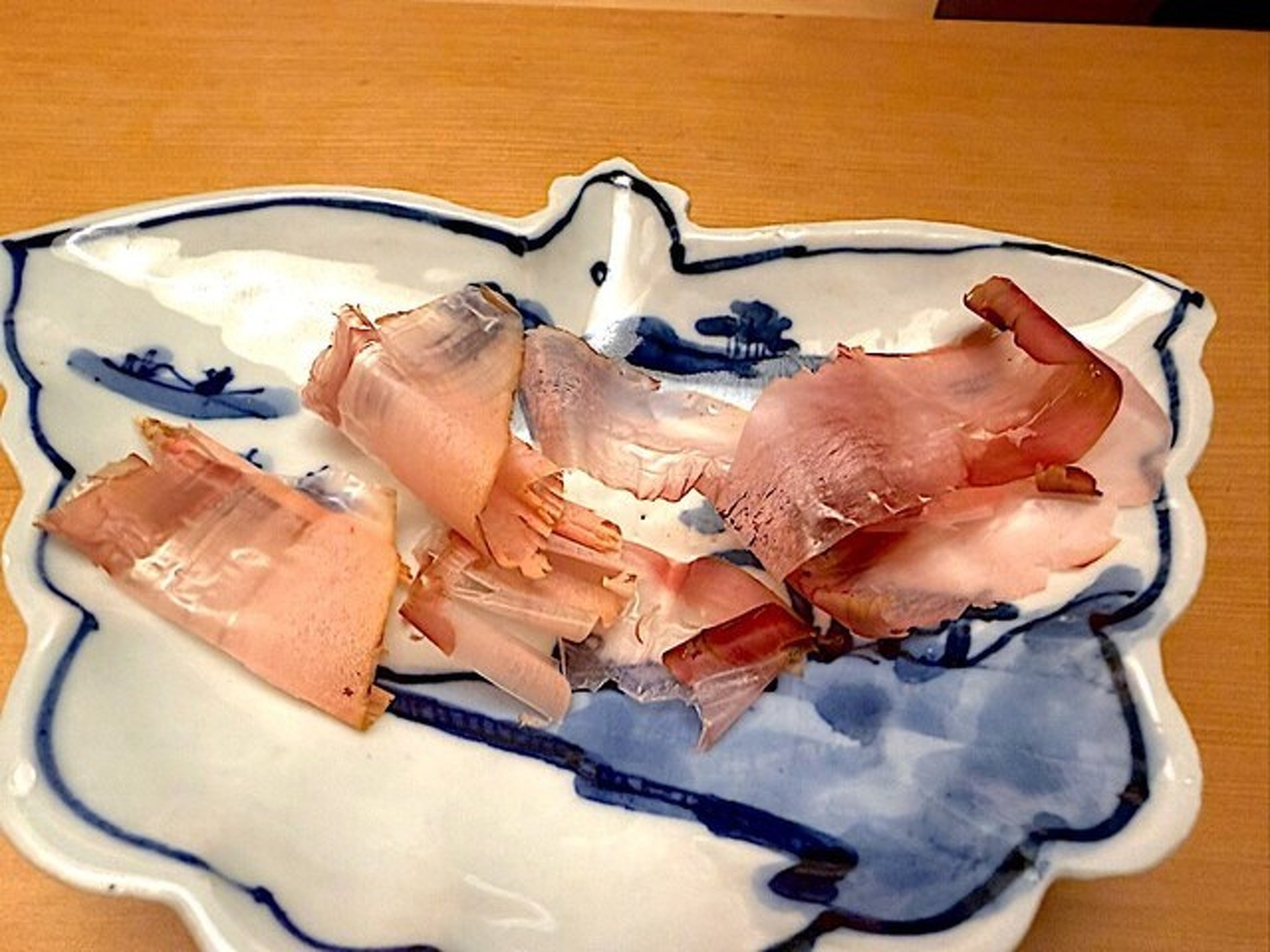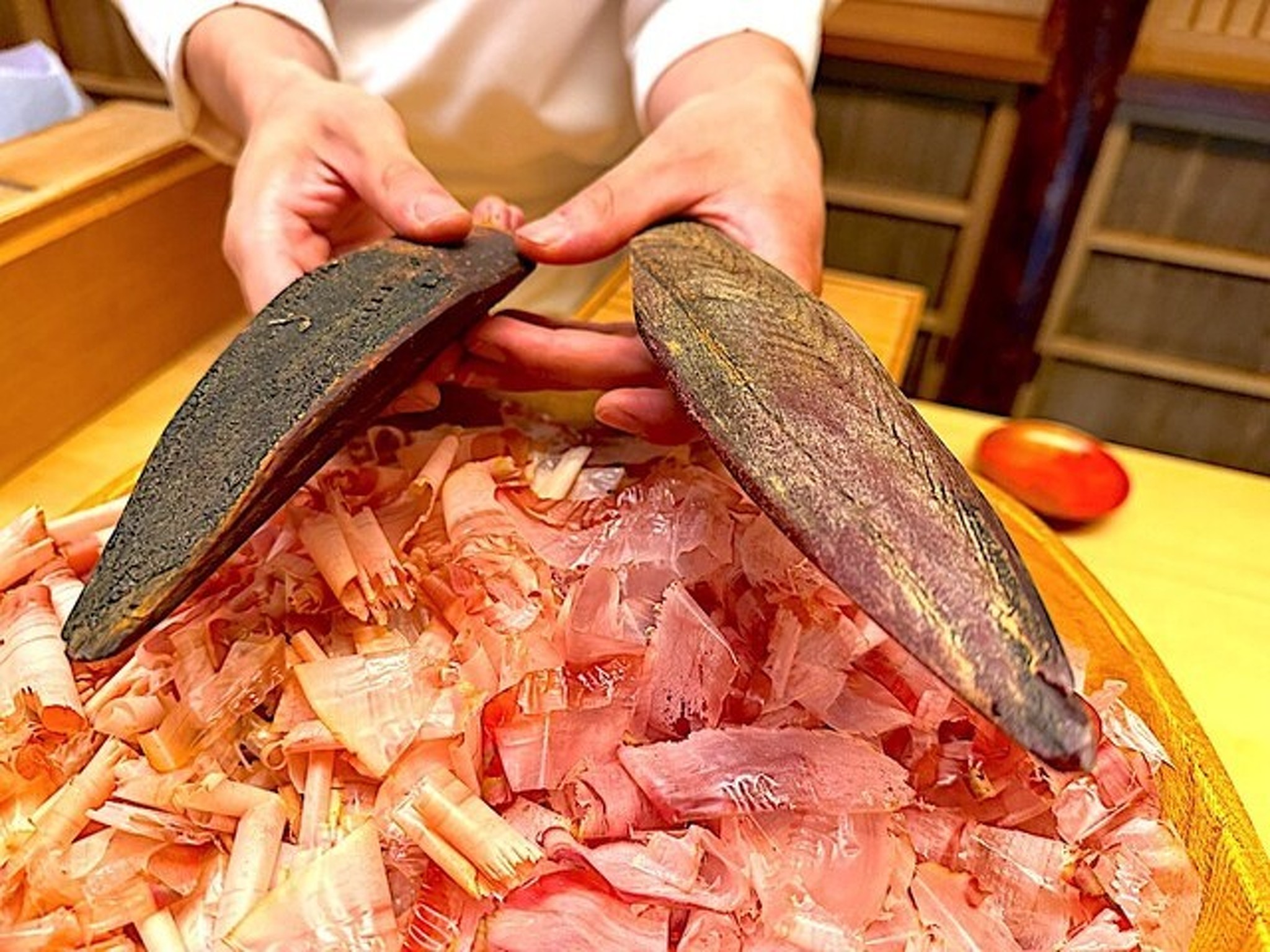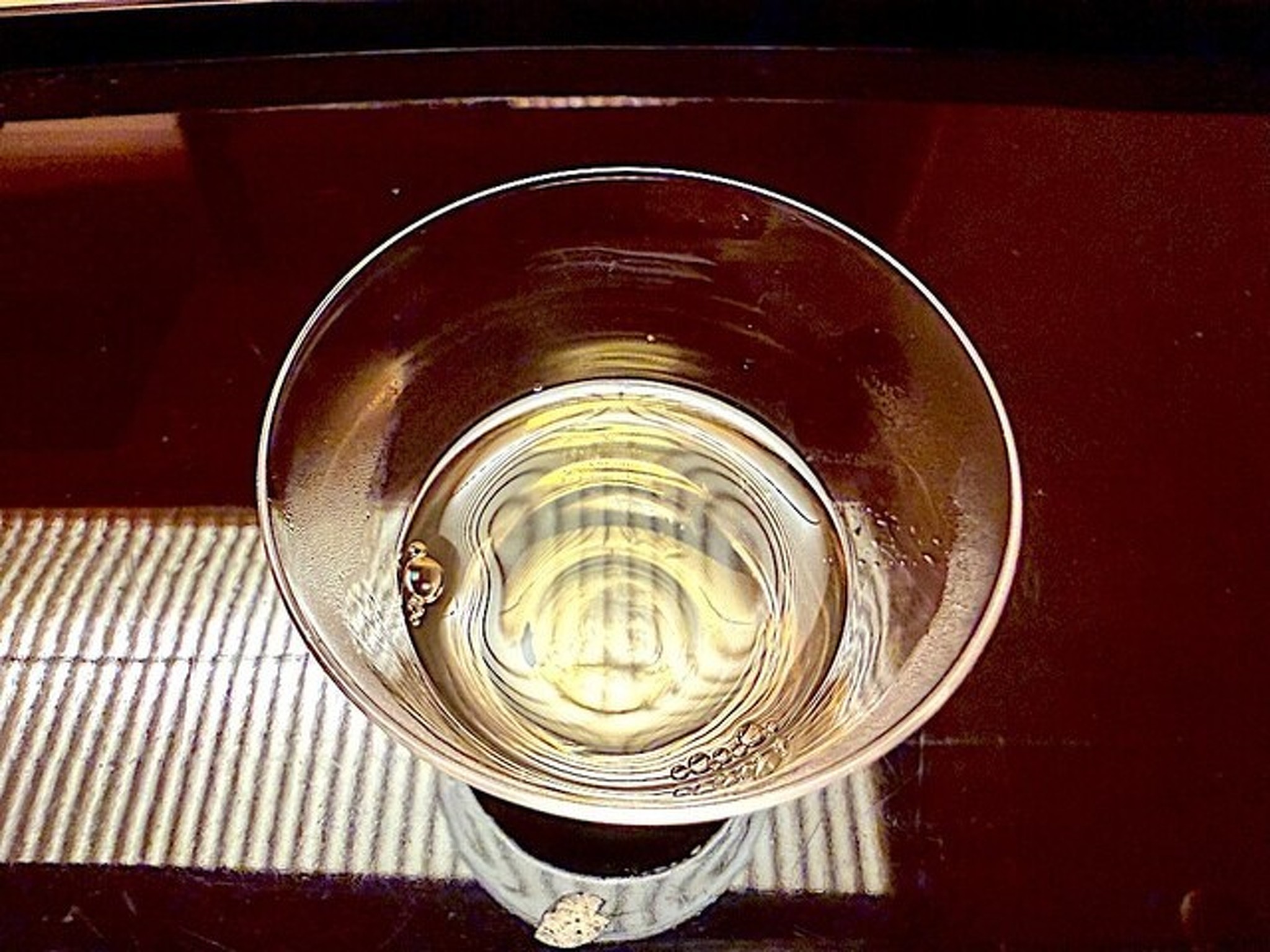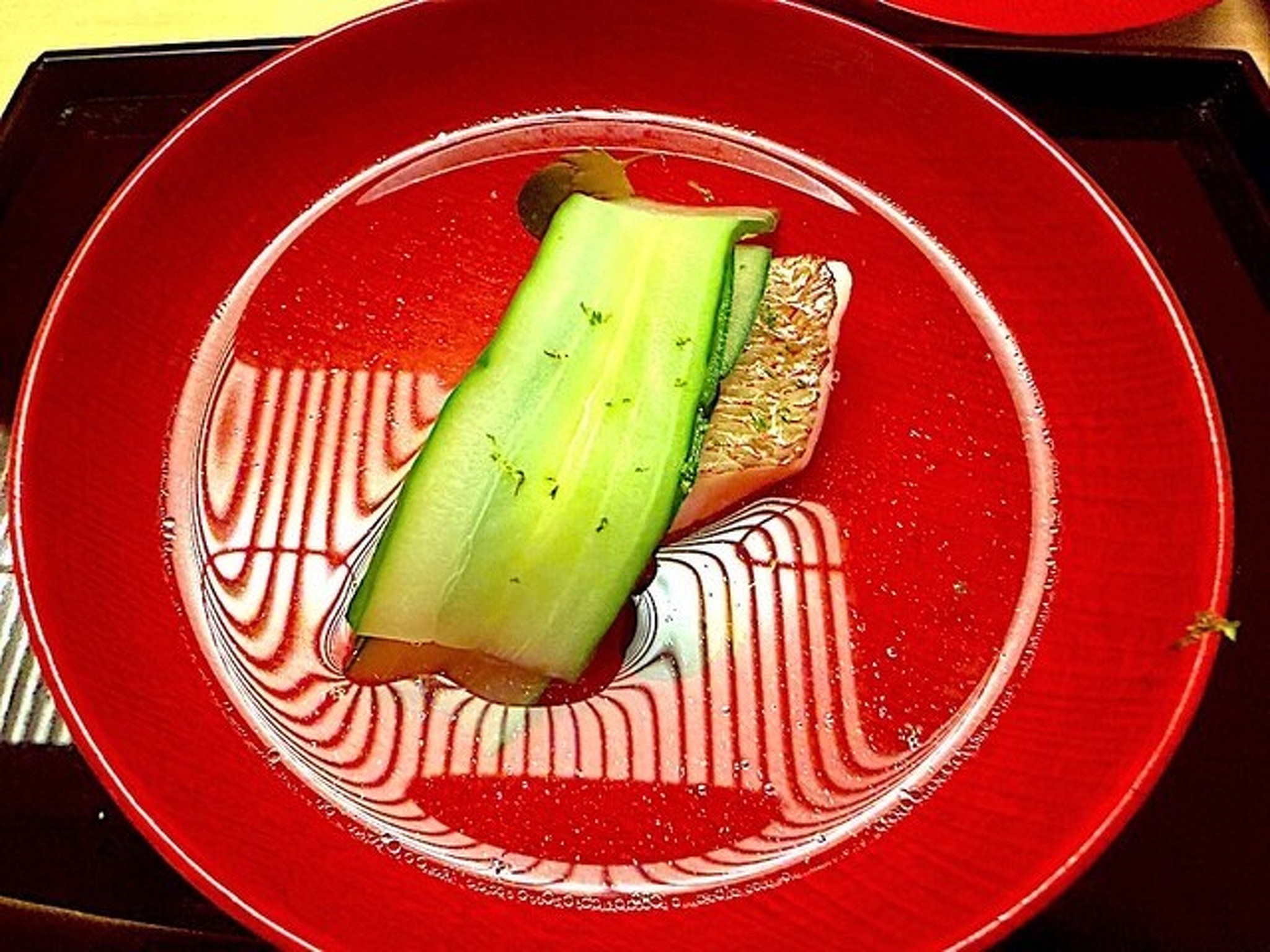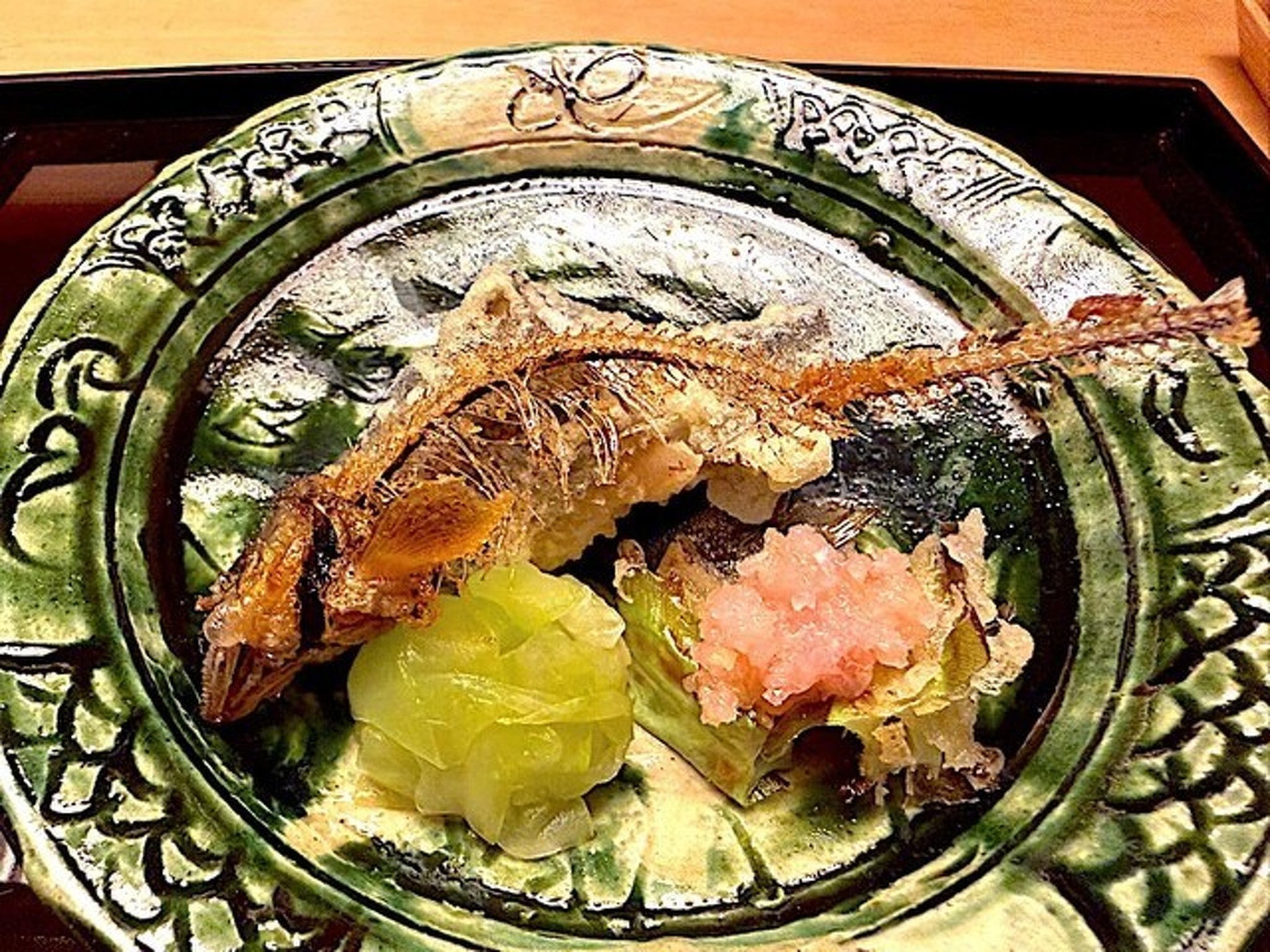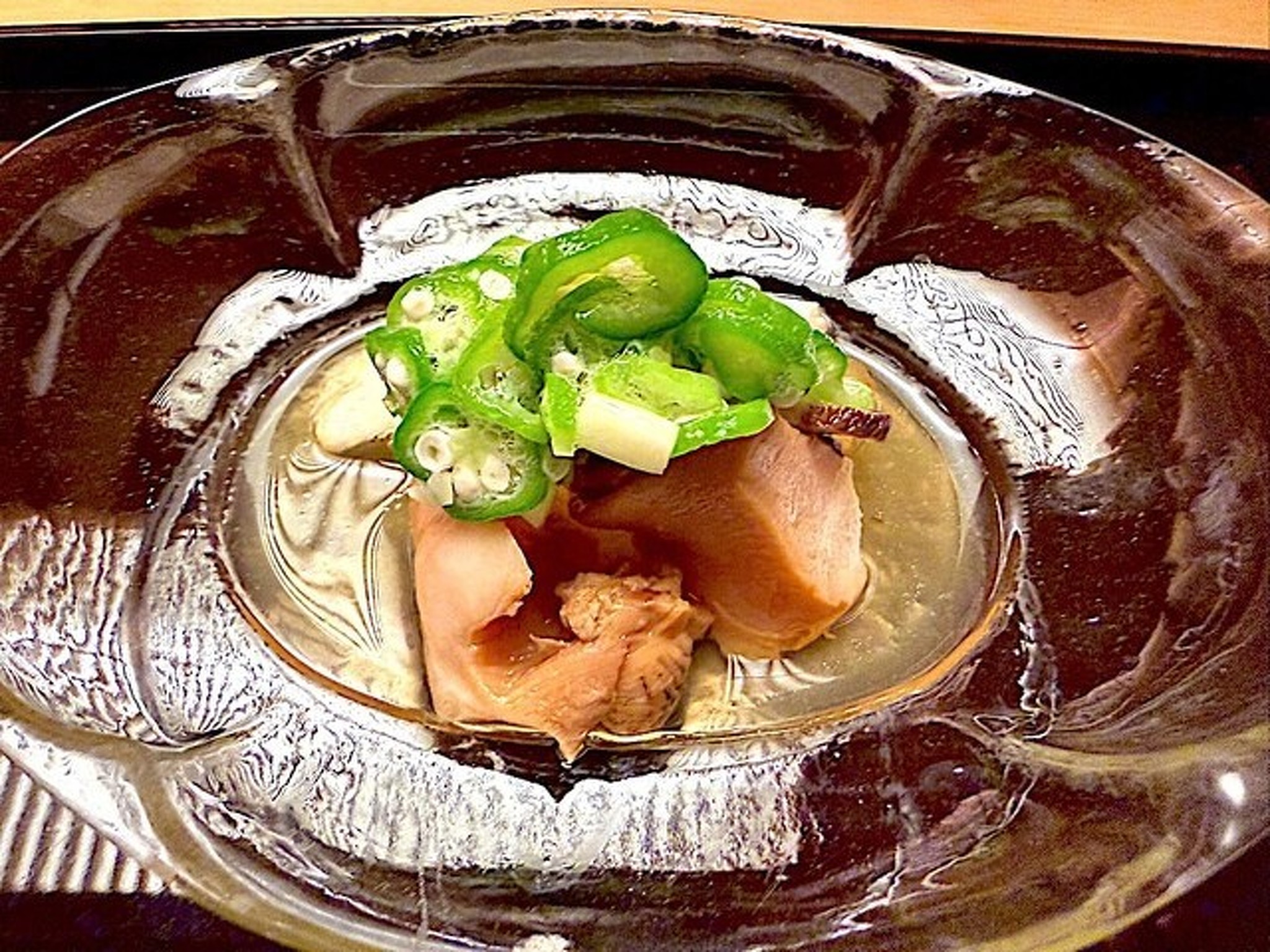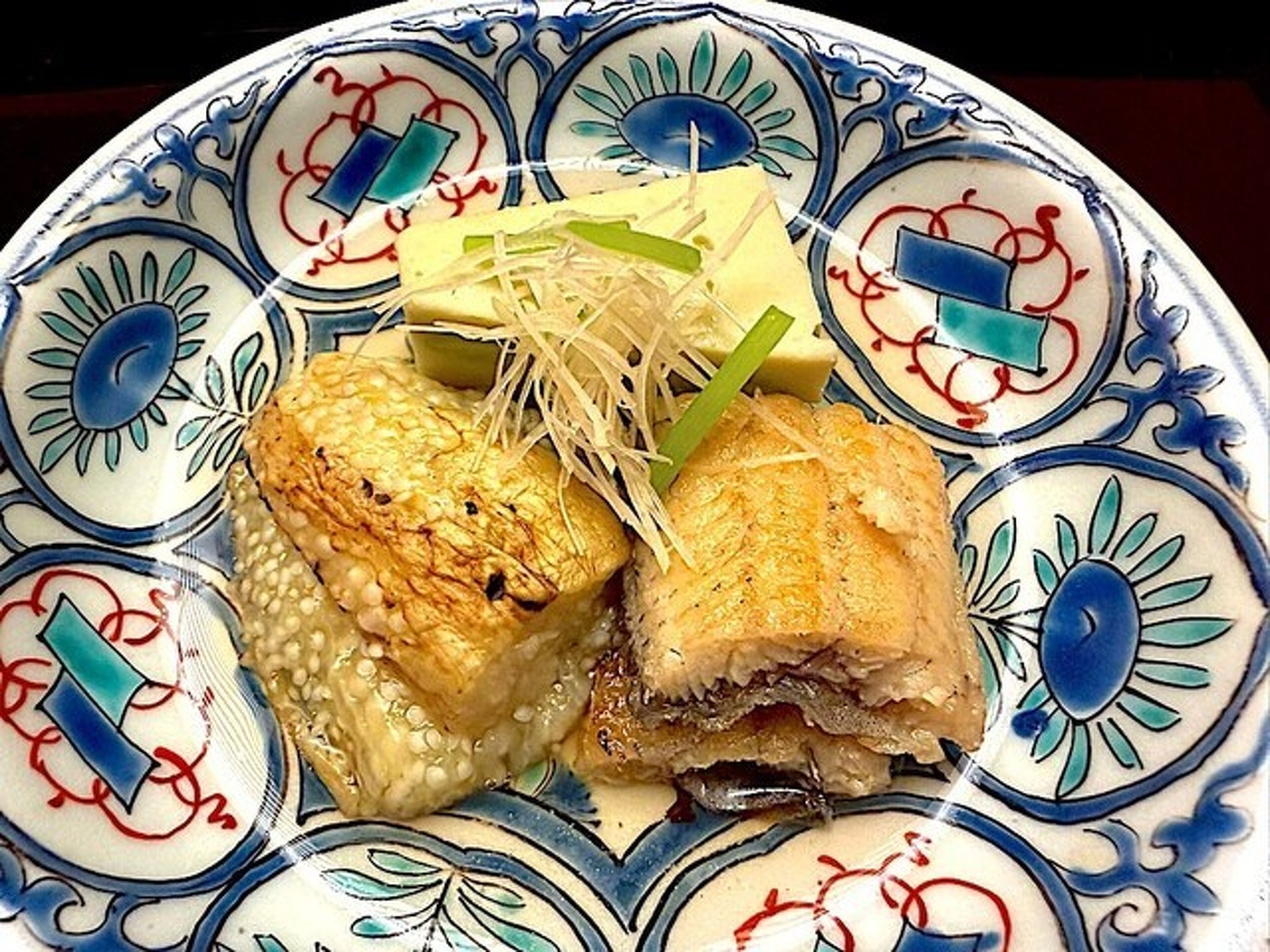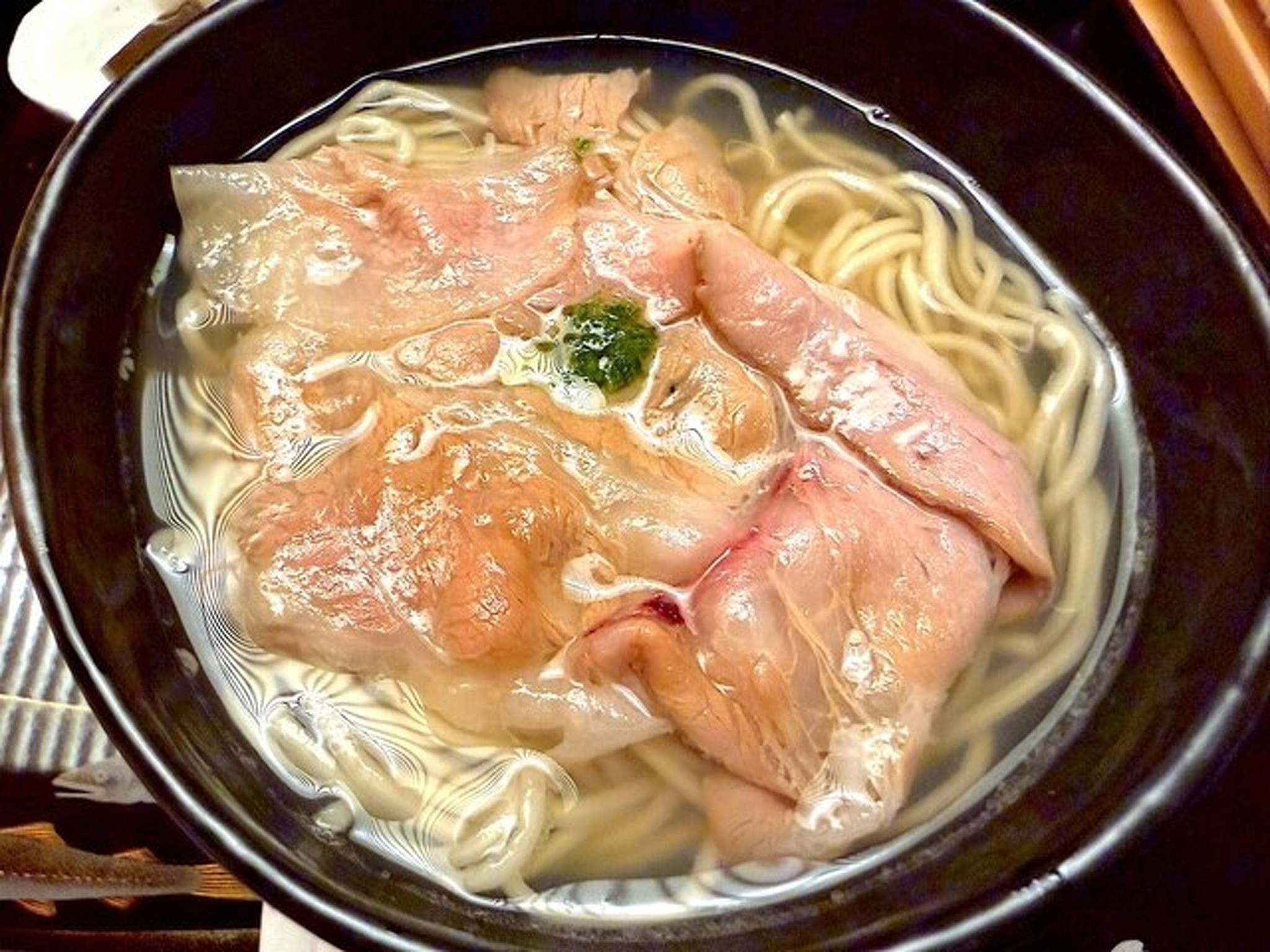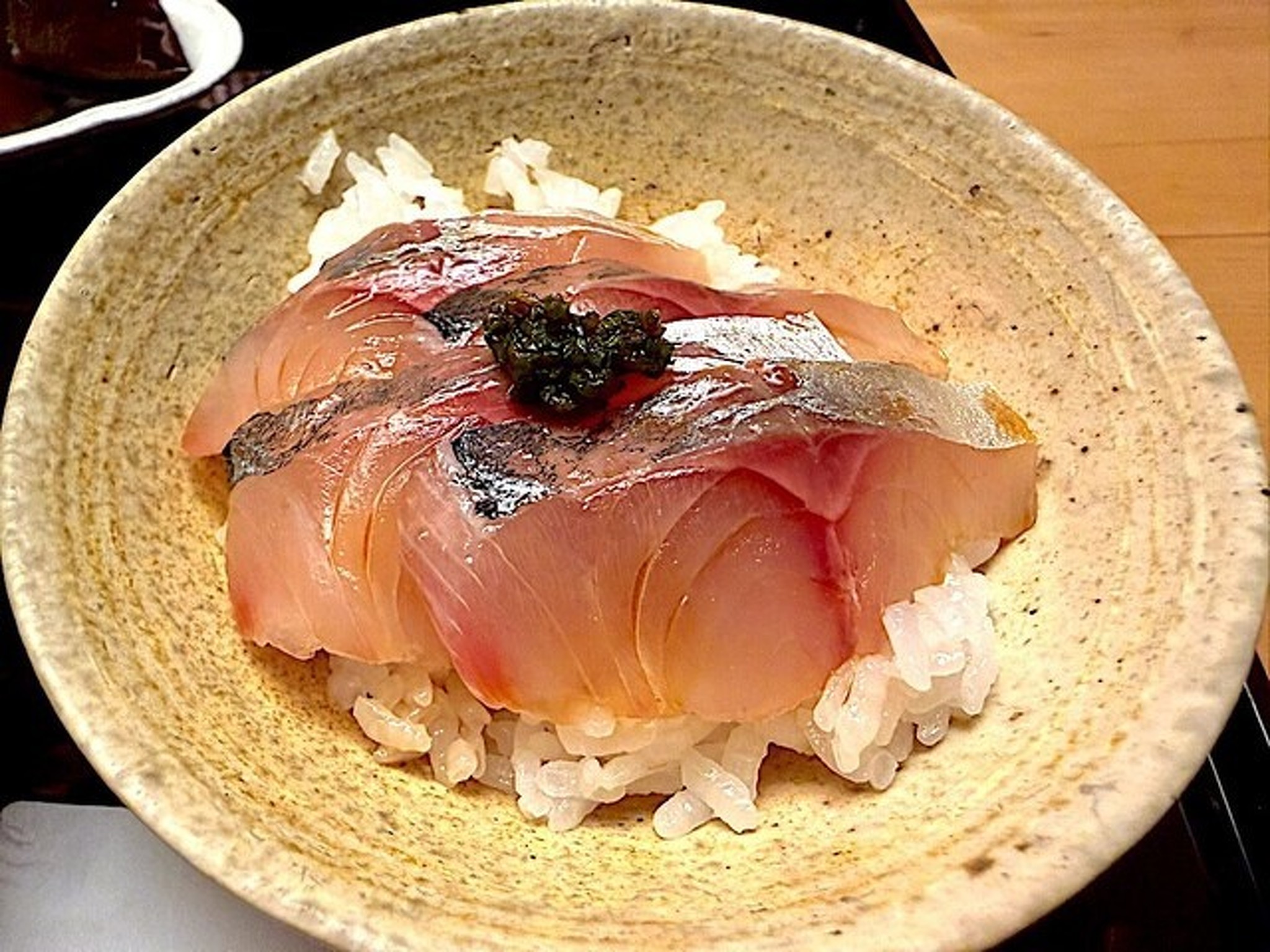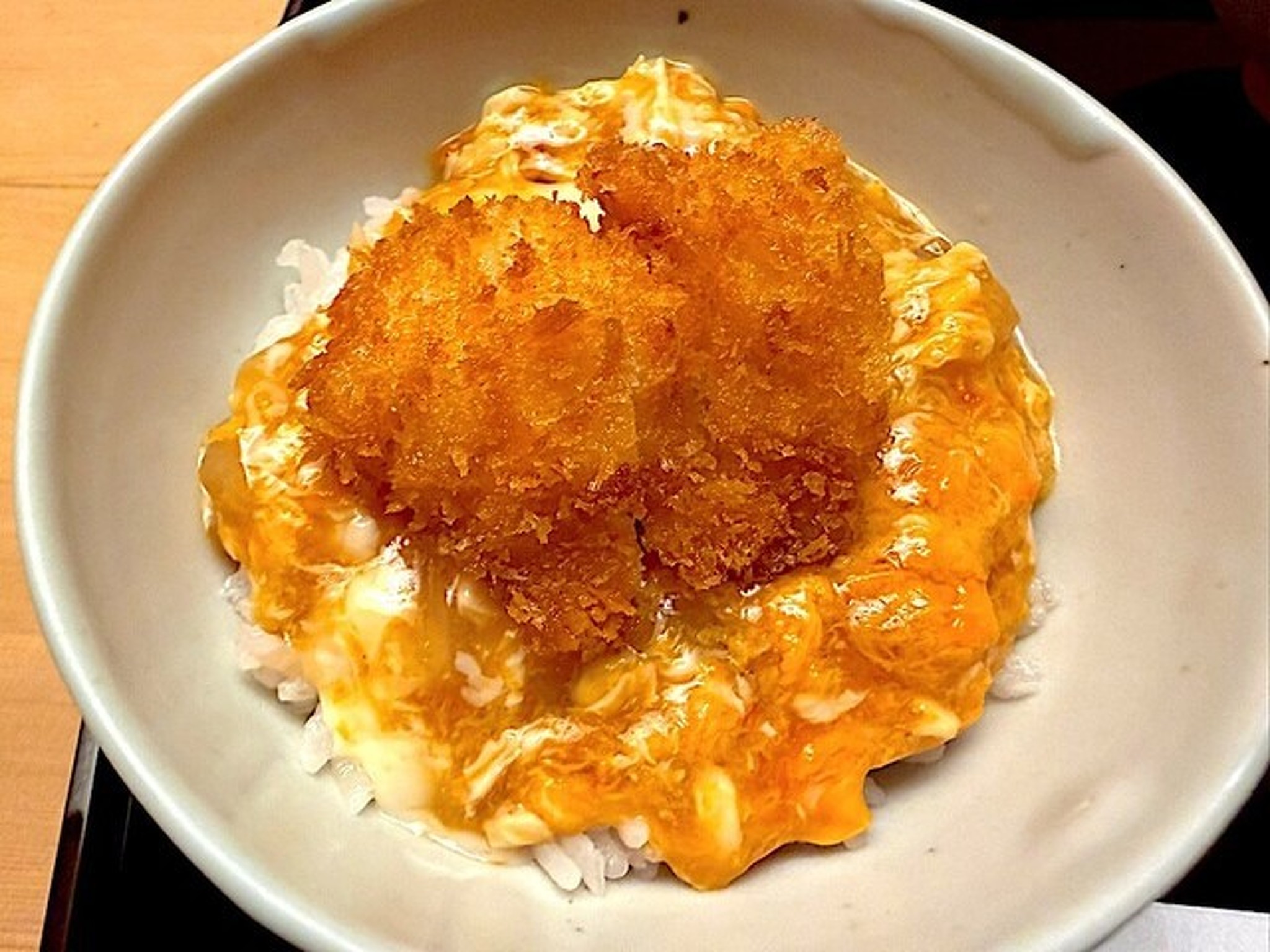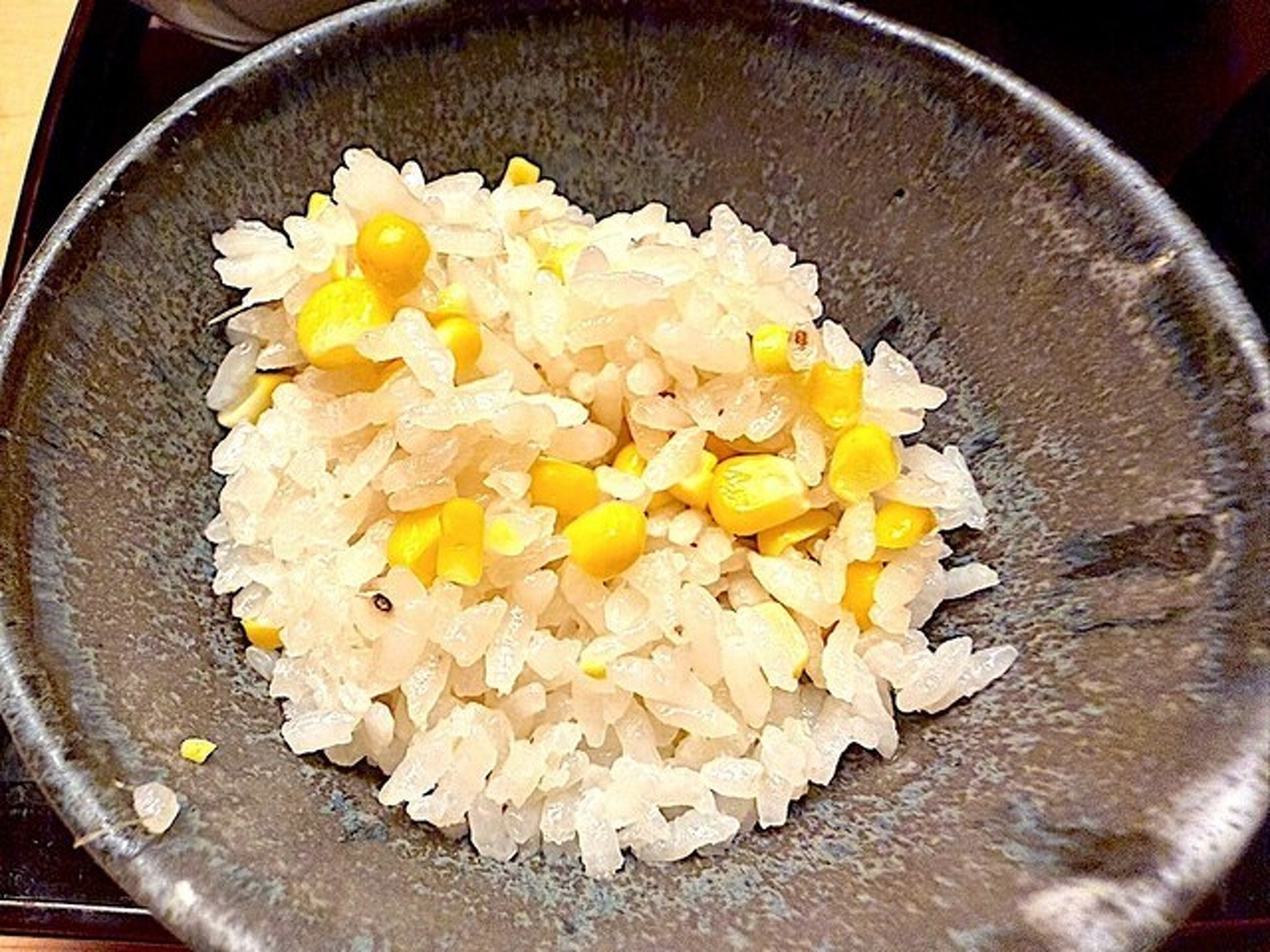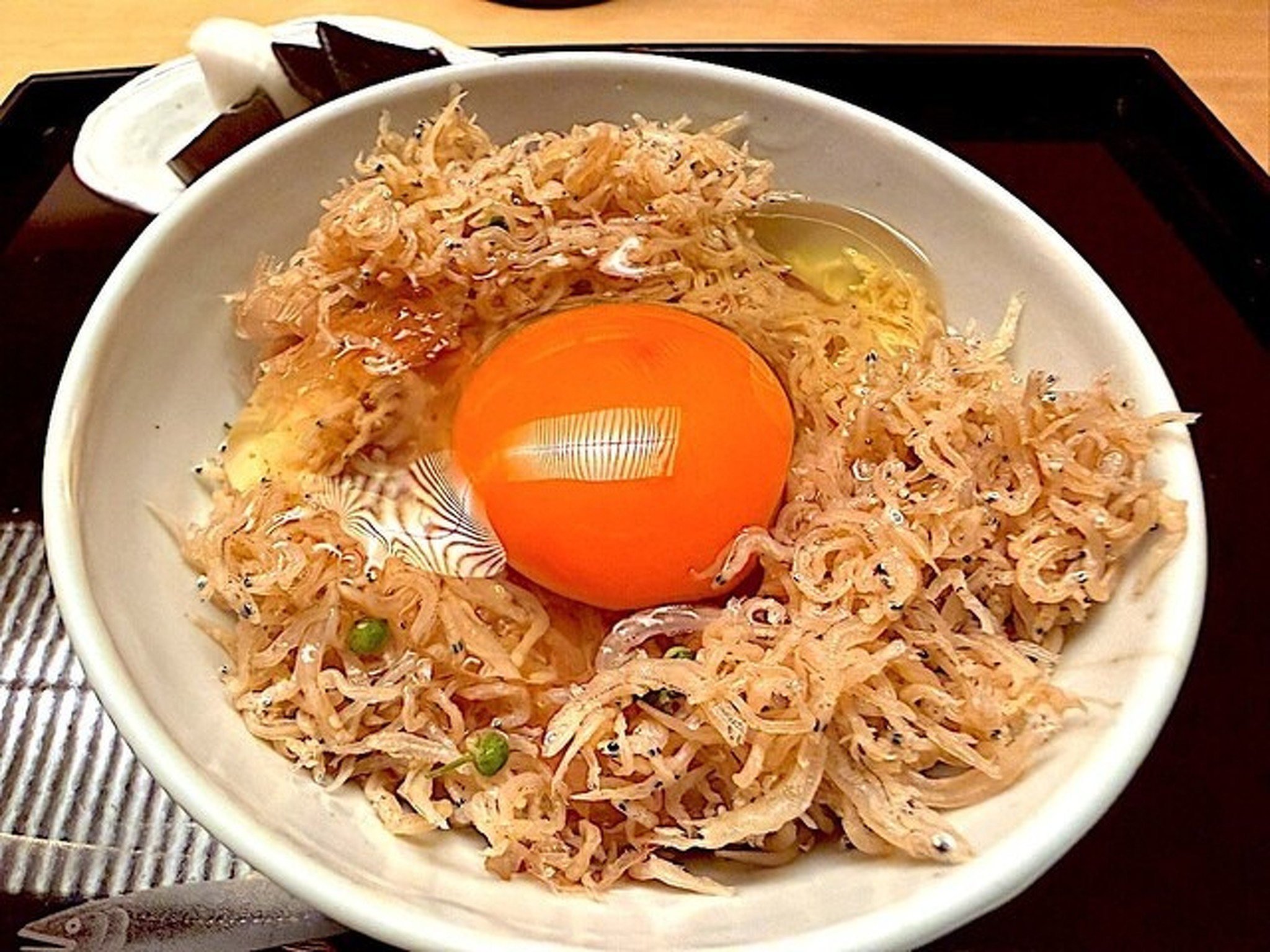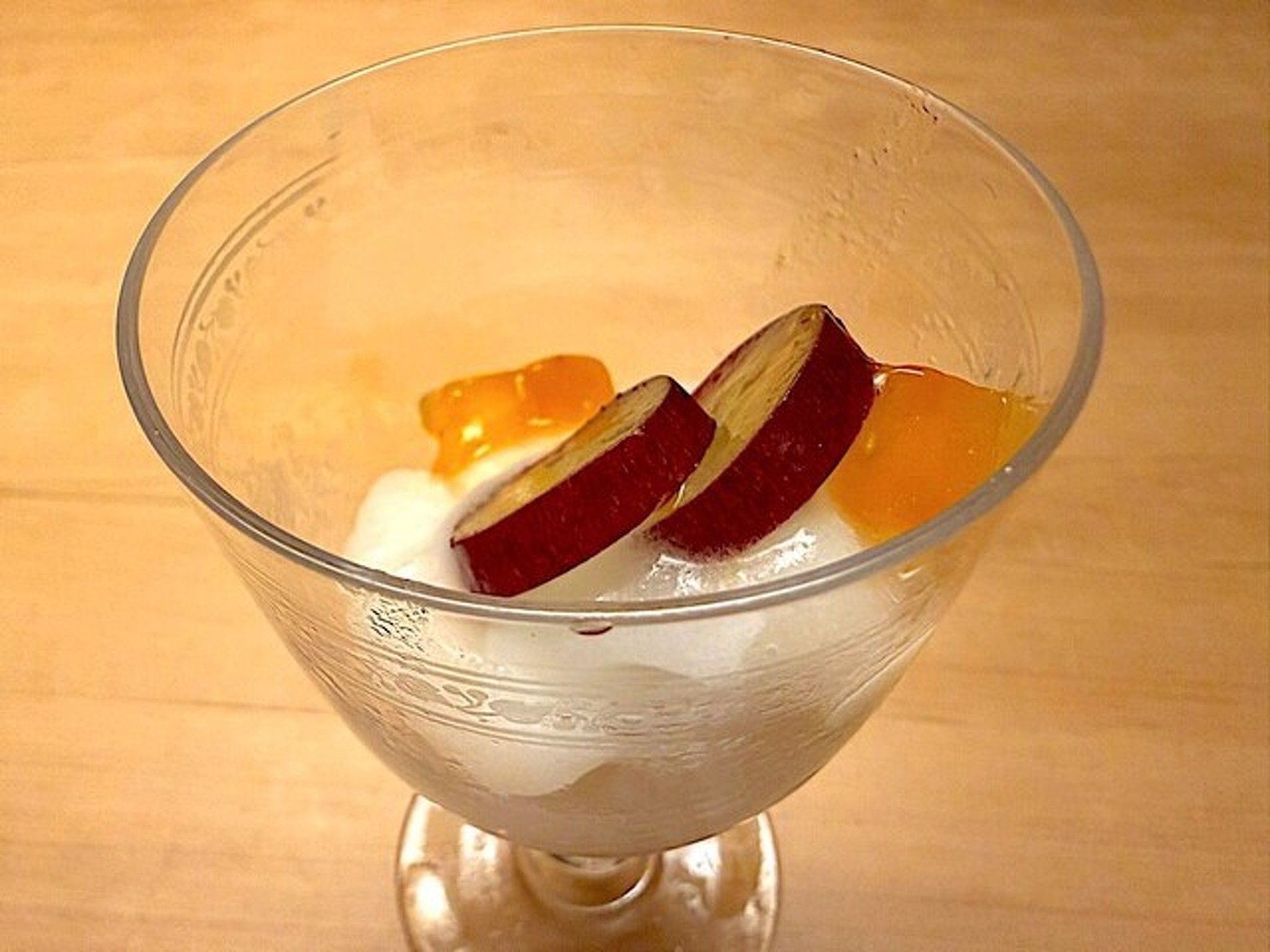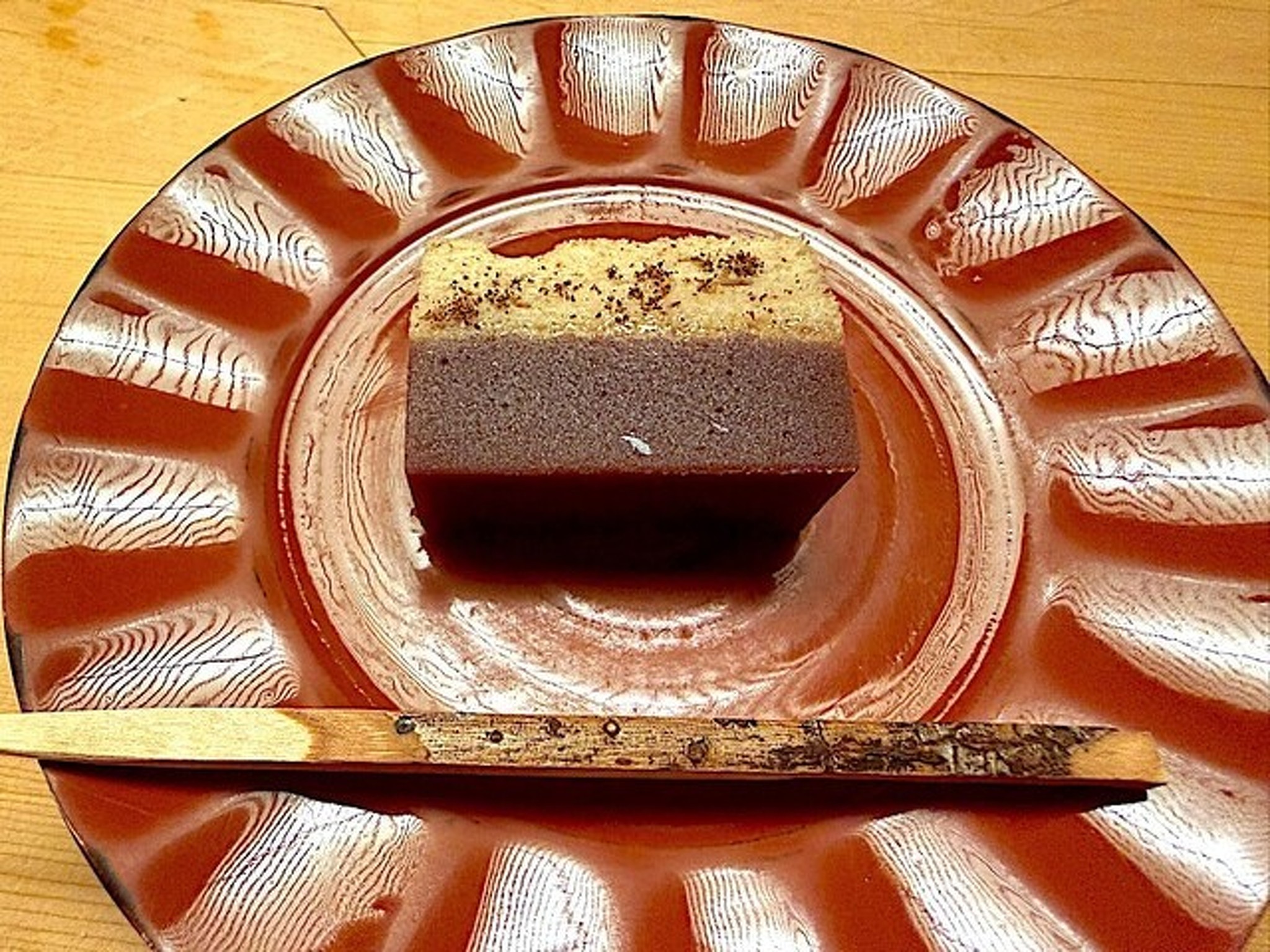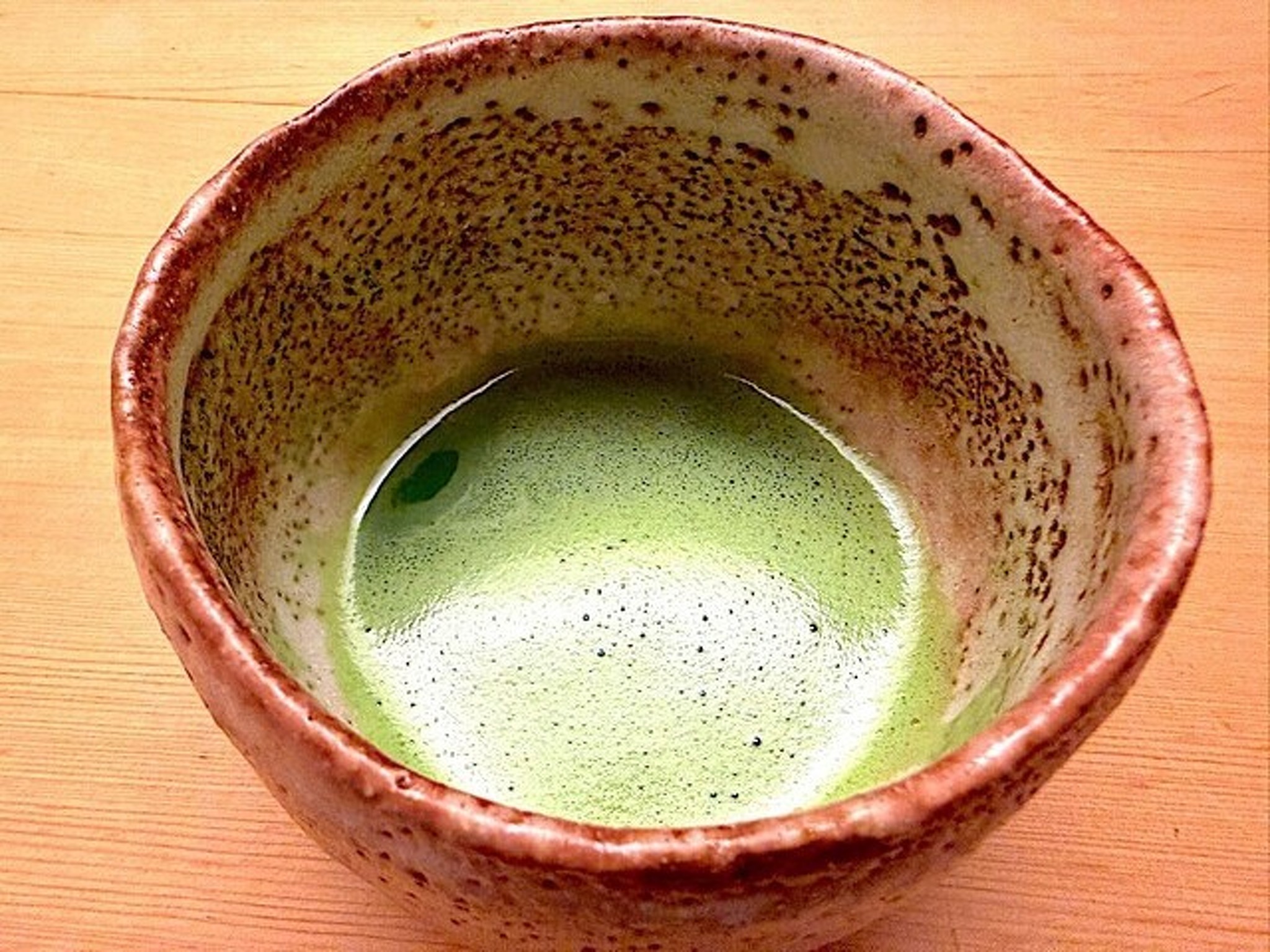
At the Japanese restaurant "Kiyama" in Goshonai, Kyoto.The cuisine at Kiyama begins with water.The owner, Yoshihiro Kiyama, hails from Gifu Prefecture. After honing his skills at Wakuden for many years, he went on to establish "Hashitate" and served as the head chef at Kyoto Wakuden before becoming independent in 2017. When he opened his current location, a well-digger told him there was a good water vein, and upon digging, high-quality water sprang forth. This encounter with the water inspired Kiyama to make "dashi" (broth) the cornerstone of his cooking.Thus, the first course features warm shiroyu (white hot water) drawn from the well on the premises.Before tasting the dishes, you drink the water that will be used to prepare them.This water is very soft and ideal for extracting the umami from kombu kelp. Considering the dashi that will be served later, the course begins with this first cup.The first dish includes marinated mackerel, kuzutofu (kuzu tofu), and ikura (salmon roe) with grated daikon, along with chrysanthemum greens.The marinated mackerel has a perfect balance of umami and acidity, and the ikura with grated daikon is simply delicious.Next is grilled kinmedai (red snapper) with ponzu sauce, accompanied by suzuki pumpkin, Manganji peppers, and makomotake (a type of bamboo shoot).The kinmedai is tender and rich in flavor, and the acidity of the ponzu lightens the richness of the fish.The sashimi includes sago fish and biwa trout.The sago fish has excellent quality fat, and its umami lingers beautifully. The biwa trout has a sweetness to its fat, allowing you to appreciate the differences in flavor and texture between the two types of fish.Then comes the dashi, which symbolizes Kiyama.In front of the guests, Kiyama shaves katsuobushi (dried bonito) and prepares the first dashi using well water and kombu. You can taste the katsuobushi itself, confirming its flavor, and finally savor the freshly made first dashi. Kiyama adjusts the dashi according to the season, monitoring the state of the water.This process is incredibly enjoyable.Typically, dashi is served in a finished bowl, but here you can taste each component in order.Immediately after enjoying the first dashi, you receive a bowl.The bowl contains hanadai (sweetfish), pressure-cooked burdock, and cucumber.The hanadai has a gentle sweetness that gradually dissolves into the broth. The burdock is cooked to softness while retaining its earthy aroma, complemented by the fresh scent of cucumber.Having just tasted the first dashi, it’s fascinating to notice how the flavor of the broth changes with the addition of the ingredients.Next is tempura of ayu (sweetfish), square beans, and green cucumber.The ayu is delicious with its rich sweetness. The addition of square beans and green cucumber retains the freshness of the season, even in a fried dish.For the next course, there are bivalves, nagaimo (Japanese yam), grilled shiitake mushrooms, deep-fried winter melon, yellow chives, and okra.The bivalves are tender and rich, absorbing the umami of the dashi. The nagaimo brings an earthy aroma, while the delicate flavor of the winter melon, along with the textures and scents of the yellow chives and okra, harmonize beautifully.The simmered dish features eel, edamame hanpen (a type of fish cake), and grilled eggplant.The hanpen is soft, releasing the umami of the edamame. The eel is fluffy and rich in flavor, while the grilled eggplant absorbs the dashi.Then comes the final course.First, ramen. It has a rich umami from seafood that leaves you wanting more.Next is a rice bowl topped with marinated horse mackerel. The umami of the horse mackerel is strong, pairing excellently with the rice.The hamo (pike eel) katsu rice bowl features the sweetness of the egg and hamo, complemented by the aroma of the breadcrumbs, along with the umami of the dashi.The corn rice is simply delicious, highlighting the sweetness of the corn itself.The course, which has been elegantly centered around dashi, concludes with ramen and rice bowls, showcasing Kiyama's unique charm.For dessert, there’s pear sorbet, persimmon, and grapes.It’s refreshing and delicious.Next is yokan (sweet bean jelly) with Nepali sansho (Japanese pepper).The refined sweetness of the yokan is enhanced by the aroma of sansho, creating a strangely rich nuance reminiscent of castella (sponge cake). The sweetness doesn’t linger but fades away smoothly.Finally, matcha (green tea).Looking back, what remains strongly in my memory is the flow from the well water to the bowl.Drinking the well water as shiroyu, tasting the katsuobushi, watching it being shaved, and then savoring the first dashi. Immediately after, you enjoy the bowl with hanadai and burdock.Water → Kombu and katsuobushi → First dashi → Bowl.In a typical Japanese culinary experience, the process is completed in the kitchen, but here, the diner follows the steps in order.The water you first drank meets the kombu and katsuobushi to become dashi, which then supports the fish and vegetables, returning to you as a dish.The reason dashi remains so memorable at Kiyama is that, along with its flavor, you feel as if you’ve experienced how "this cup" was created.
We use cookies on this site to enhance your user experience.