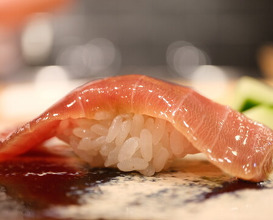
I once believed that the pinnacle of sushi was the cold, restrained kind found in places like Ginza, where the ocean's flavors are encapsulated in vinegared rice. However, the moment I stepped through the noren of "Ten Zushi," I was unexpectedly greeted by the warmth that has been hidden in Kyushu's winds for 80 years.Founded in 1939, the first owner, Koichi Amano, did not intend to merely replicate Edo-style sushi when he first crafted sushi in Kokura. The coastal waters of Kyushu are rich in seafood, but pairing them with strong soy sauce would mask the pure flavors nurtured by the waves. Instead, he drew out the umami with salt, enhanced freshness with citrus juice, and created a unique taste of Kyushu sushi, which later became known as "Kyushu-mae."The current owner is the second-generation Koichi Amano, who continues to uphold the rules passed down from his father: no alcohol is served, and no side dishes accompany the meal. In this intimate space with only six seats, he hopes diners will sharpen their senses and appreciate the heartfelt offerings presented before them.In front of each seat is a handwashing station that allows guests to feel the warmth of the sushi in the most direct way. The fatty tuna reaches its peak right from the start, melting on the tongue with a cloud-like aroma. The signature dish, squid, is cut with petal-like slits, topped with rich sea urchin and glossy salmon roe, creating a plate that sparkles like stardust. The sweetness of the squid, the creaminess of the sea urchin, and the pop of the salmon roe burst in the mouth, evoking the vividness of the Genkai-nada waves.The most surprising piece during the meal was the marinated tuna belly, which shone like high-end ham, releasing a richness and floral aroma reminiscent of summer flowers upon tasting. This "instant kill" flavor can only be achieved with the finest tuna from "Yamakou," which is exclusively provided to VVIPs.The chef is fluent in English and has a gentle demeanor, engaging in casual conversation. When we mentioned the restaurants we had booked in Kyushu, he jokingly warned us about "Sushi Sakai" and "Yakitori Torira," both of which are run by his friends, saying, "Those two places have extensive drink menus, so be careful not to overindulge!" He treats us not as distant customers but like family, always pouring us perfectly warm tea.From the Showa era to the Reiwa era, this second-generation chef has maintained the six-seat counter, expressing the freshness of the seas of Kitakyushu in a unique way without succumbing to the mainstream sushi aesthetics. He neither allows umami to be stolen by common soy sauce nor flaunts complex techniques; instead, he uses only salt, citrus juice, and homemade soy sauce to highlight the inherent flavors of each piece of fish caught nearby, delivering them directly to the diner's palate.By the time I left the restaurant, the sky had turned completely dark. The chef came out to bow deeply and see me off, and as I felt the lingering freshness on my fingertips, I realized that the pinnacle of sushi is not a lofty work of art but the heartfelt sincerity upheld by two generations for 80 years. It is the unwavering kindness kneaded into each piece of vinegared rice, shaped by the waves and coastal winds of Kyushu.It was a great meal.
We use cookies on this site to enhance your user experience.