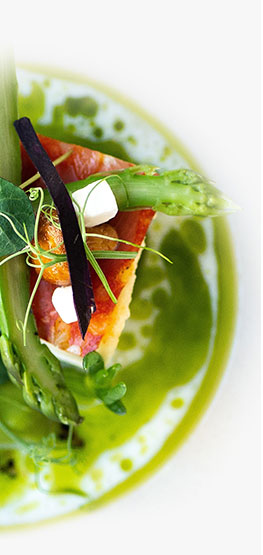
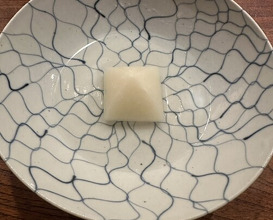
This restaurant is often described as "simple" or embodying the "aesthetic of subtraction," perhaps because it allows you to taste the ingredients directly. However, I felt the opposite; in a sense, it’s more about addition.For example, when other restaurants prepare ingredient A, they enhance it by adding ingredients B and C, resulting in a cooking method like A + (B + C) = A’. In contrast, here, they elevate ingredient A using A itself. In other words, it’s A + A + A. Therefore, rather than subtraction, I truly felt the essence of addition.Take the sashimi of Aori Ika (spear squid) as an example. While it is usually served with wasabi and soy sauce, here it is paired with salt—not just any salt, but salt made from squid. They dry and grind the squid’s tentacles into a powder to create this unique salt. So, instead of regular salt, you’re actually using powdered squid. Eating the squid sashimi with squid powder is an overwhelming experience, as the flavor of the squid is incredibly rich and concentrated.The only dish that might represent subtraction was the turnip, which was simply cooked with salt and water. The sweetness of the turnip gently permeated my body.After that, the dishes followed the A + A + A method, combining the ingredient itself with a concentrated version of it. The flavors were never bland; in fact, they were quite intense. It wasn’t about the taste of soy sauce or dashi made from bonito or kombu, but rather the rich flavor of the ingredients themselves. Every dish was truly moving.Following the turnip, I was served abalone, a soup with shiitake mushrooms and striped jack, a dish of striped jack and lotus root, a purée of crab and peas, young sweetfish, fresh water shield and ginger, young corn and baby spear squid fried in squid ink dough, young corn husks, ju-wari soba (100% buckwheat noodles), clams and asparagus, duck, duck meatballs, clay pot rice with accompaniments, and dessert.My favorite dish of the day was the young sweetfish. It was served on a thin omelet made with white egg yolks, layered with glutinous rice, topped with one tempura young sweetfish and two grilled young sweetfish, all wrapped with sweetfish fish sauce and leaves of tatsoi. Chef Nakamura’s philosophy that sweetfish should be enjoyed with its bitterness was expressed in every bite, from the first to the last, and it was truly impressive.Additionally, the soba served with saltwater, resembling seawater, was exceptional, allowing me to experience the power of nigari (magnesium chloride). The strong bitterness of the nigari stimulated my saliva, enhancing the sweetness and aroma of the soba, which was a remarkable experience. Even the highball I drank afterward tasted better, which surprised me.Recently, I had been questioning the role of dashi and the umami in cooking, and the answers provided by Myoujyaku were very clear, reflected in every dish. This answer is a proposal; no one knows the absolute truth, but at least I was deeply moved.
We use cookies on this site to enhance your user experience.