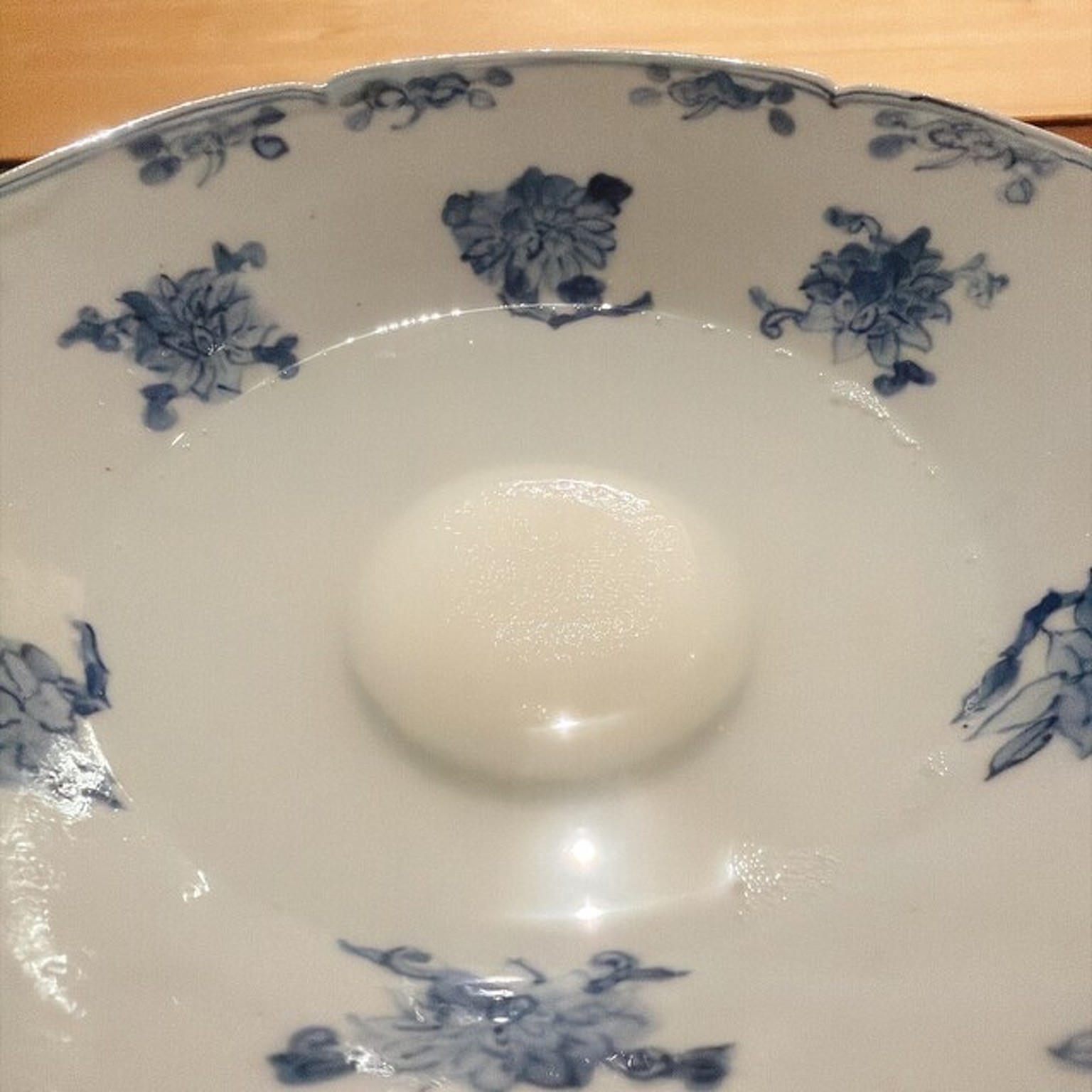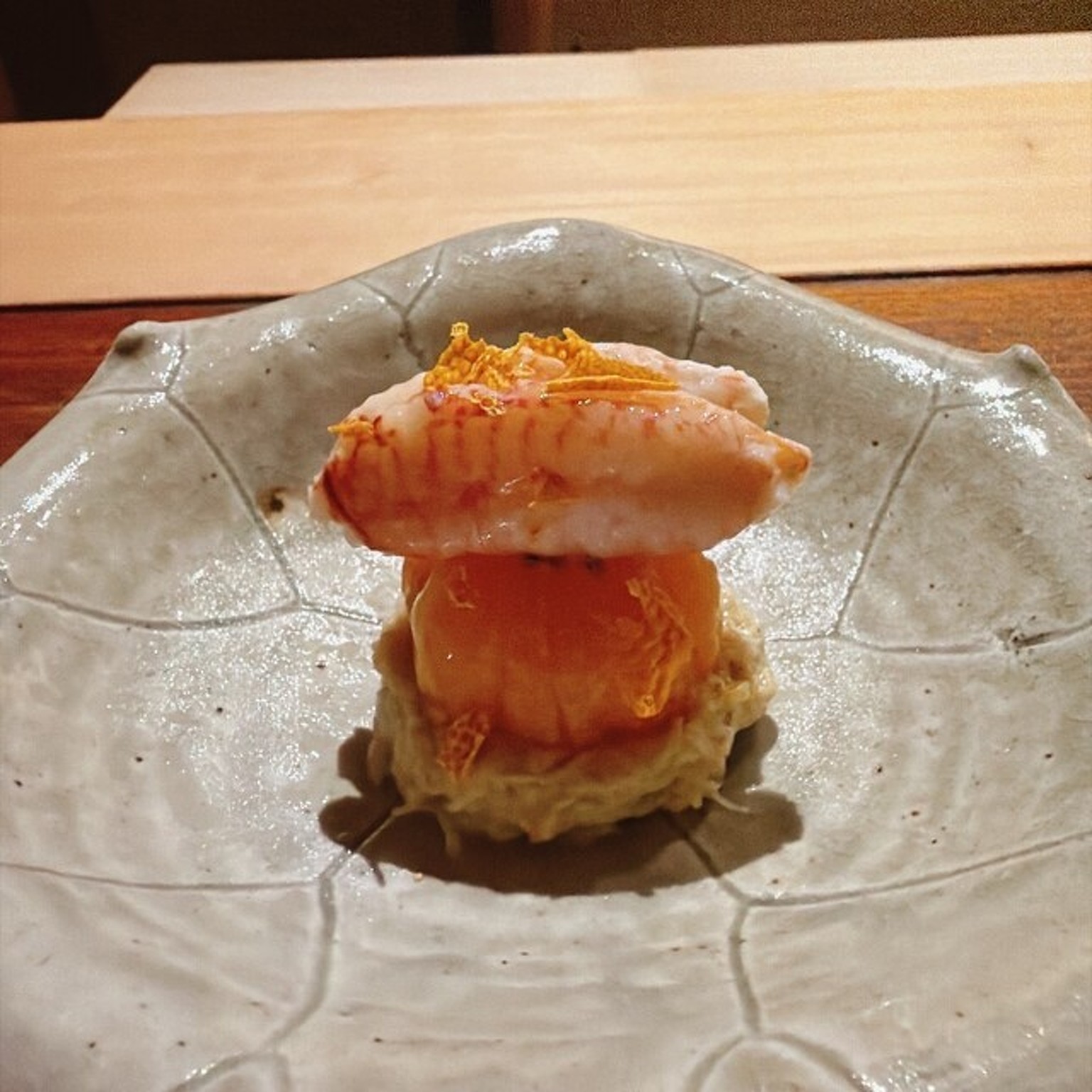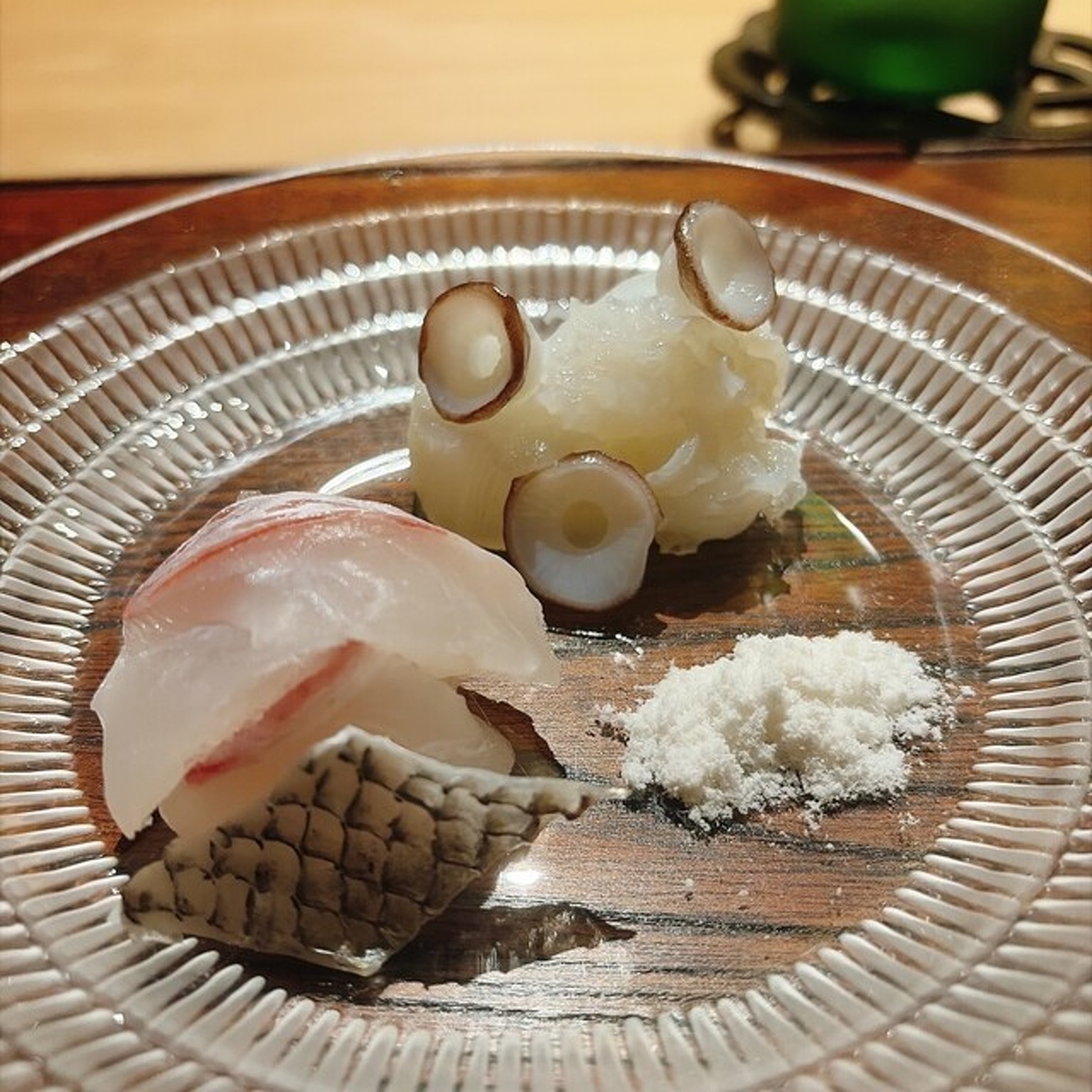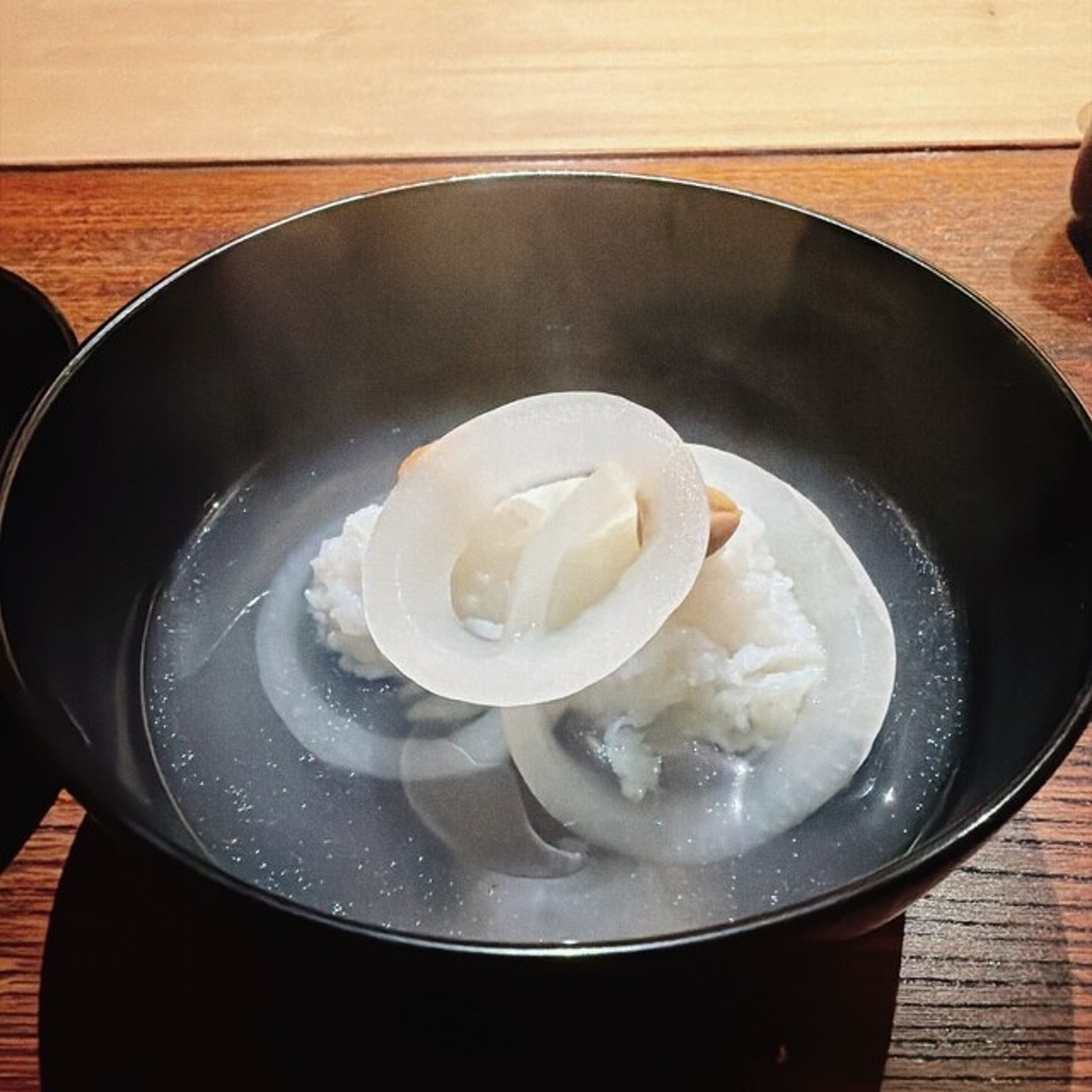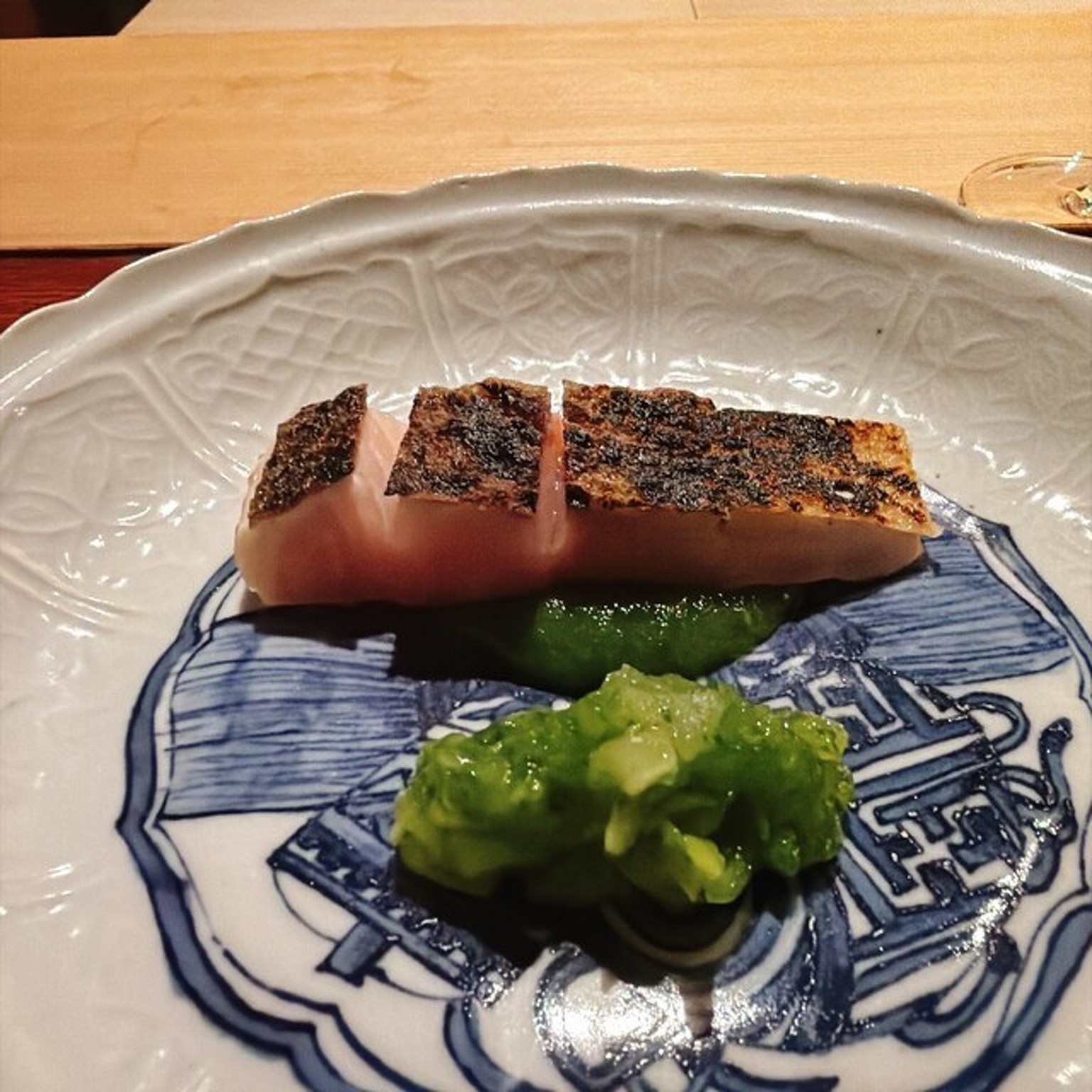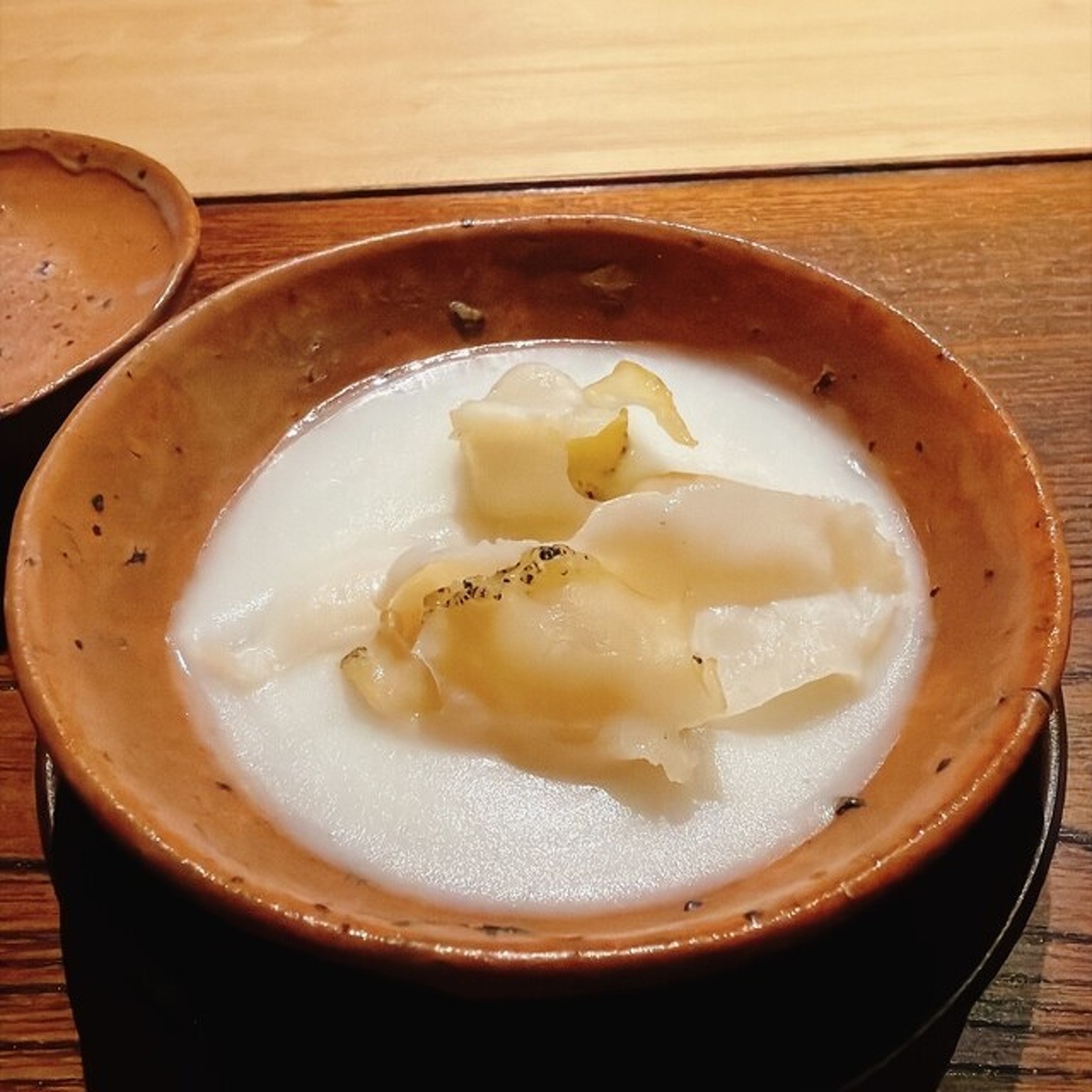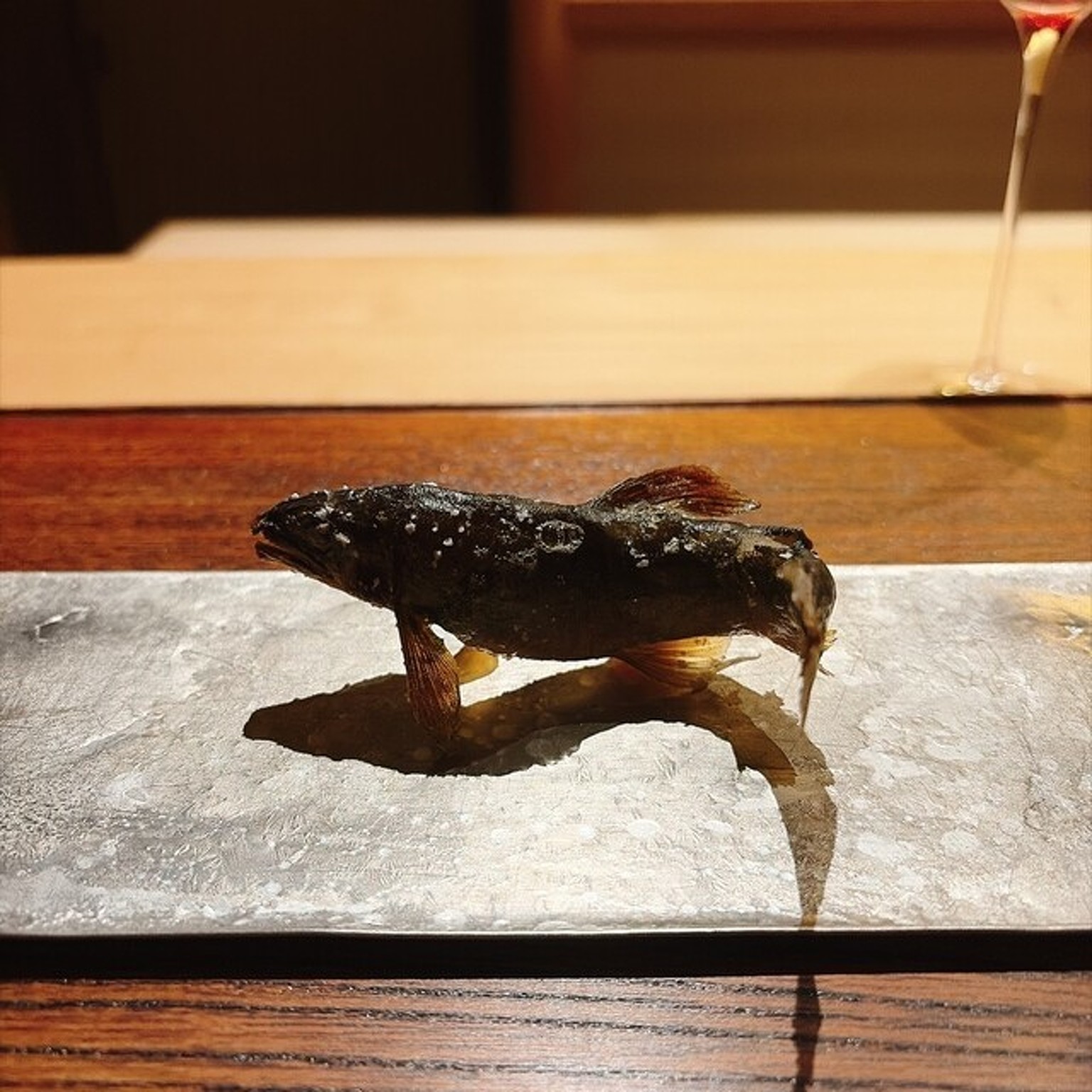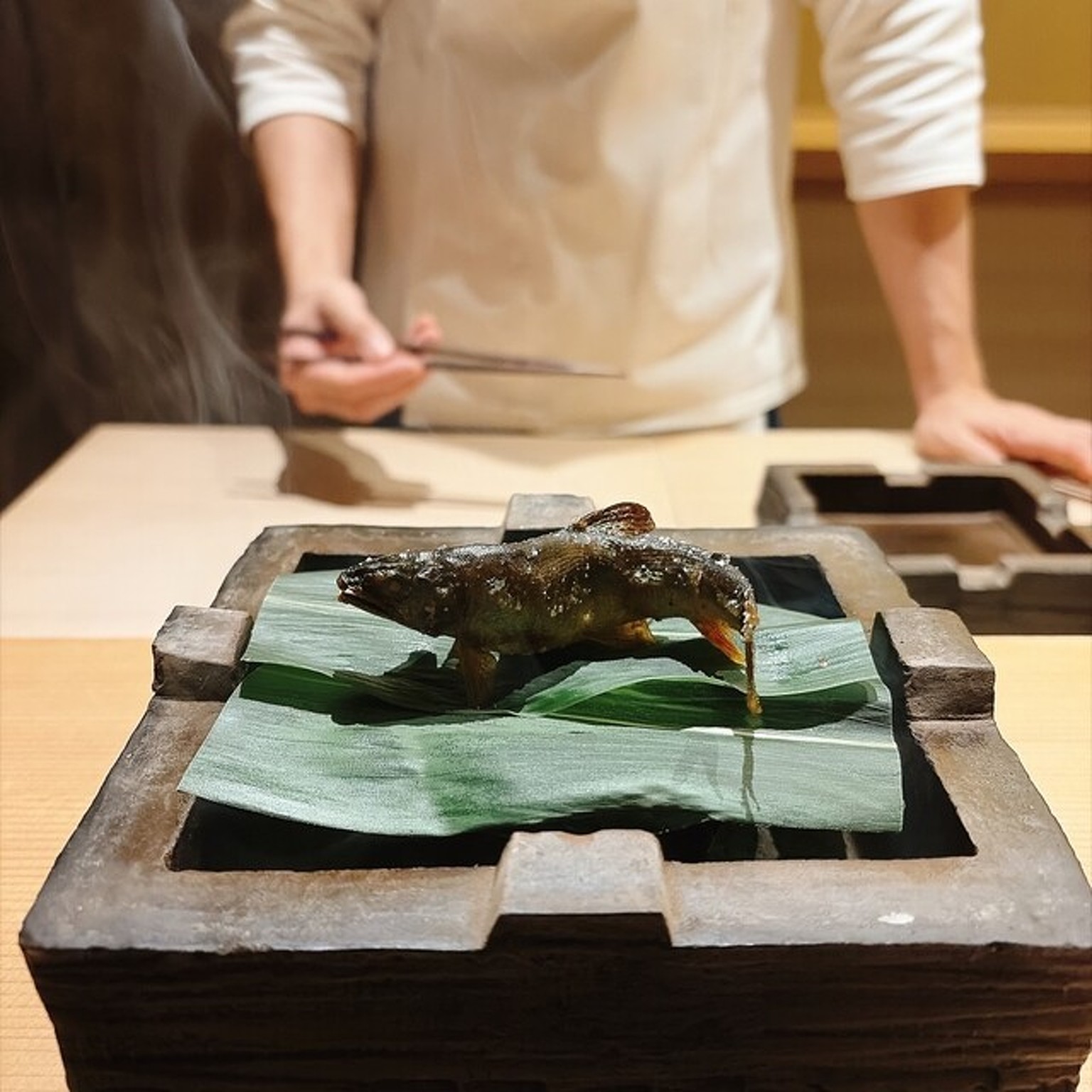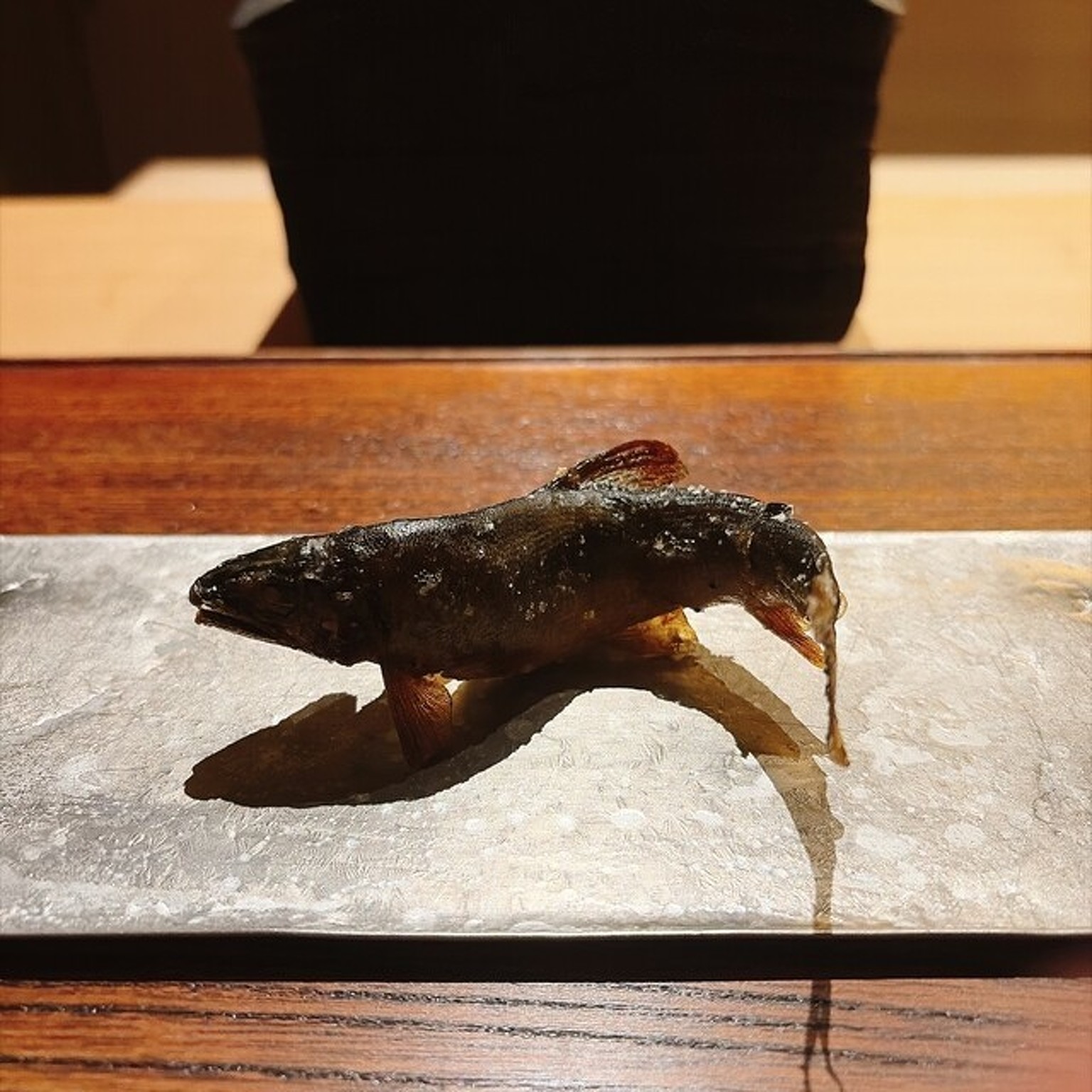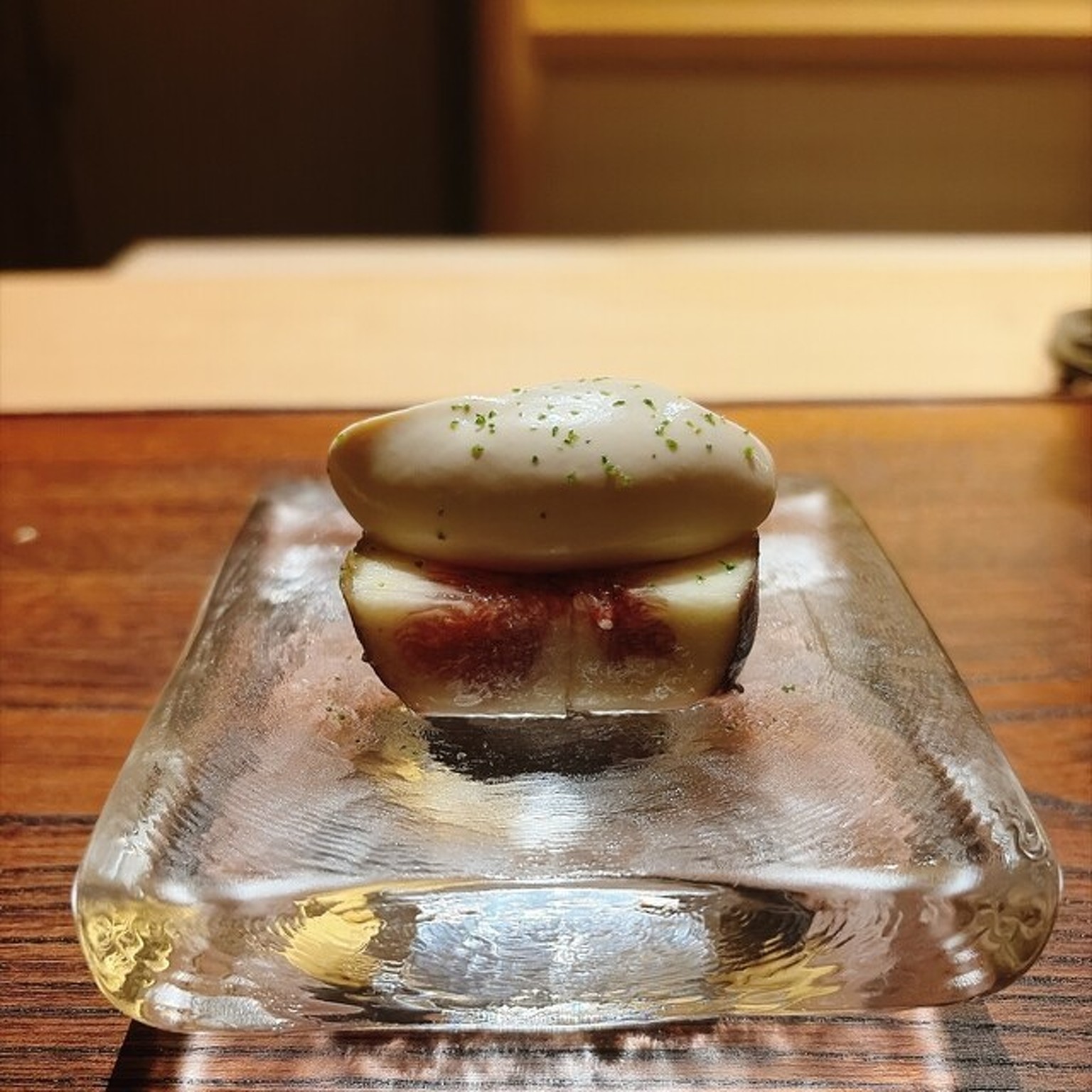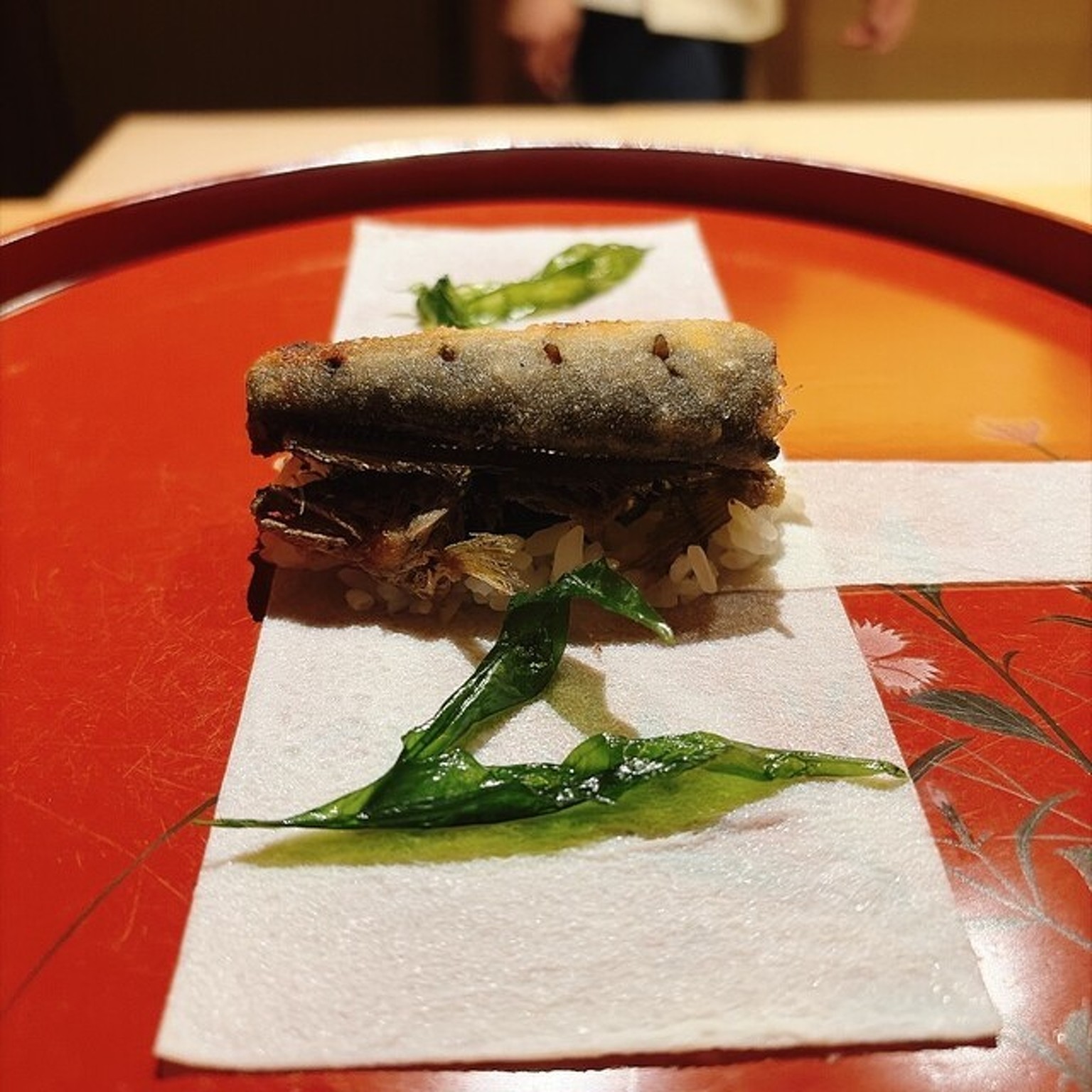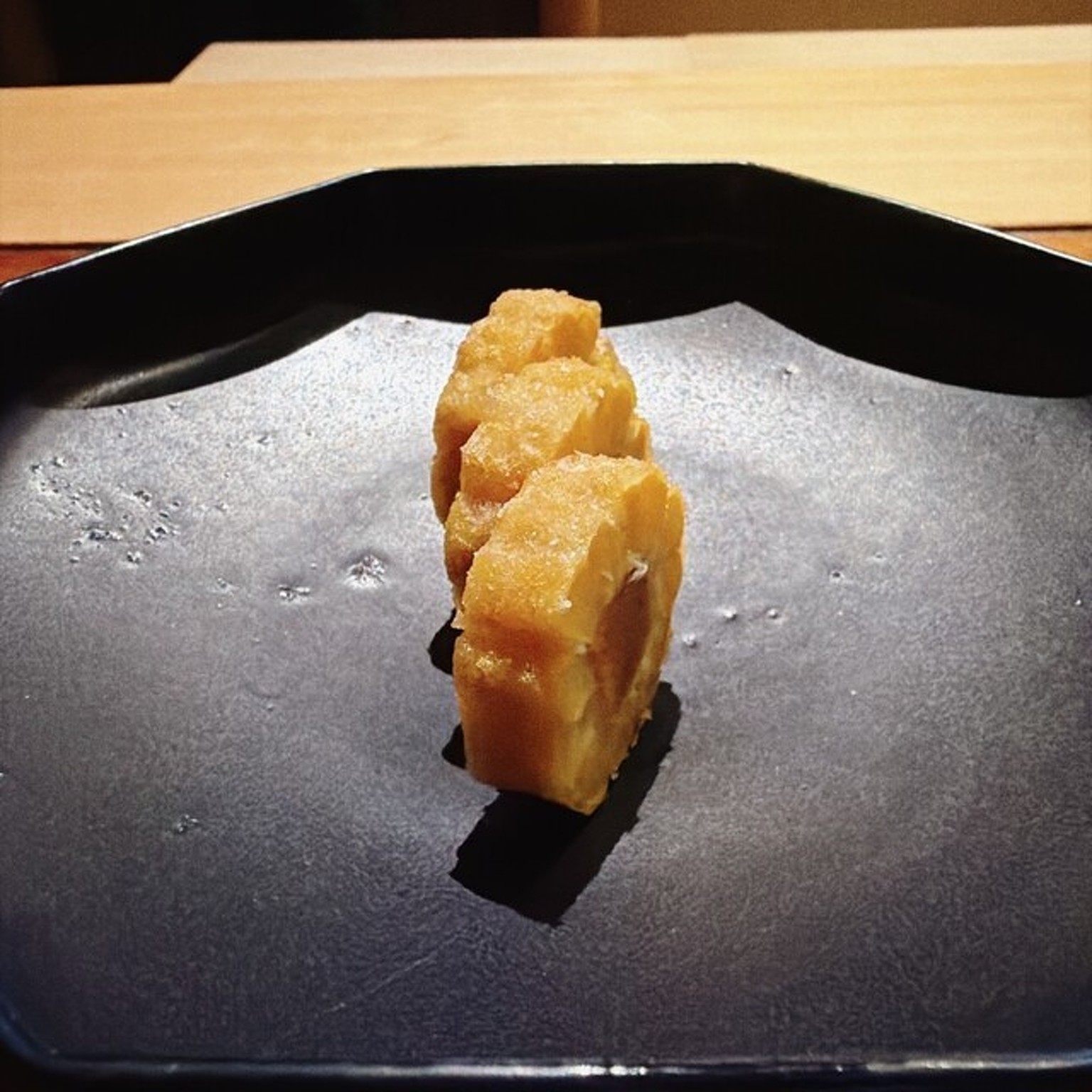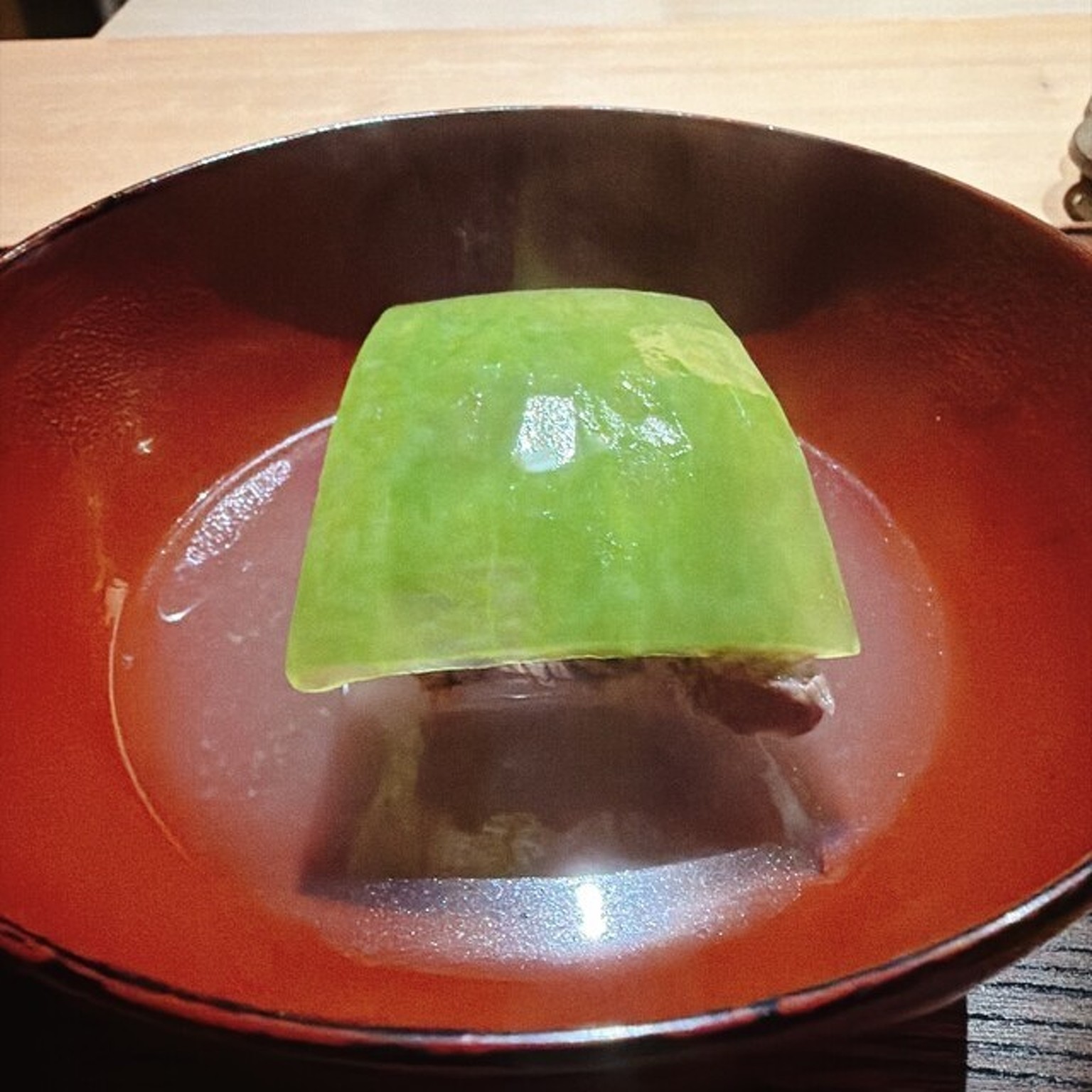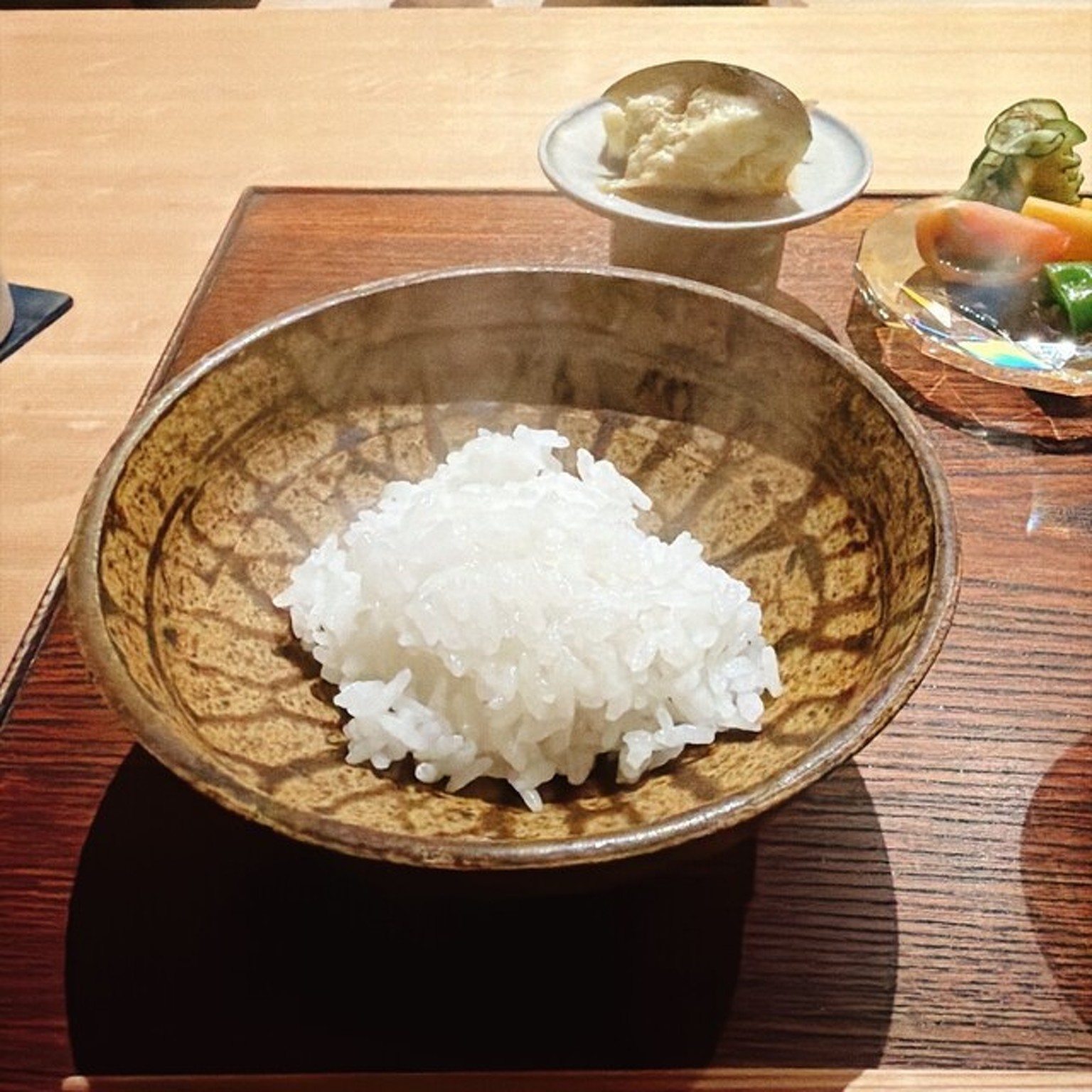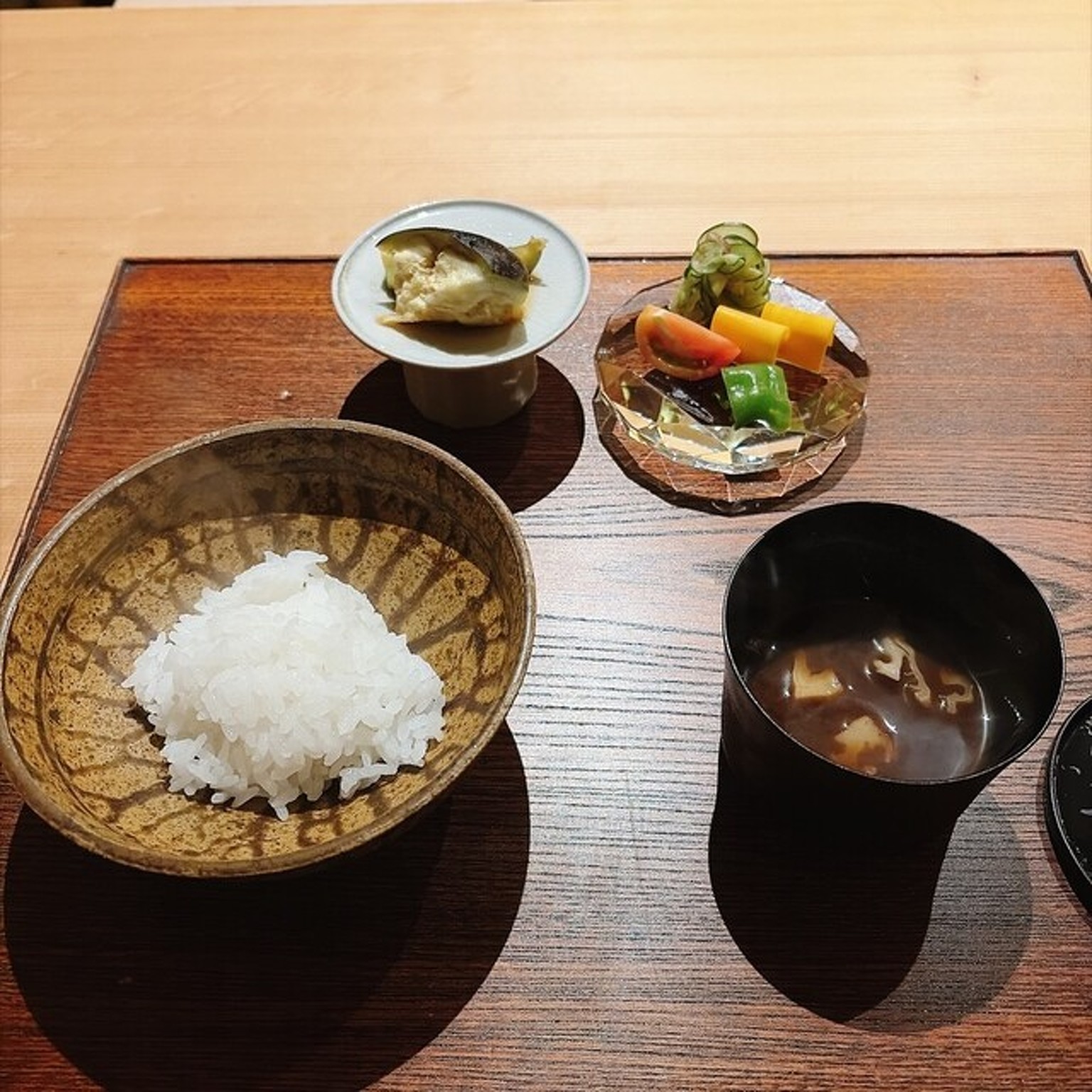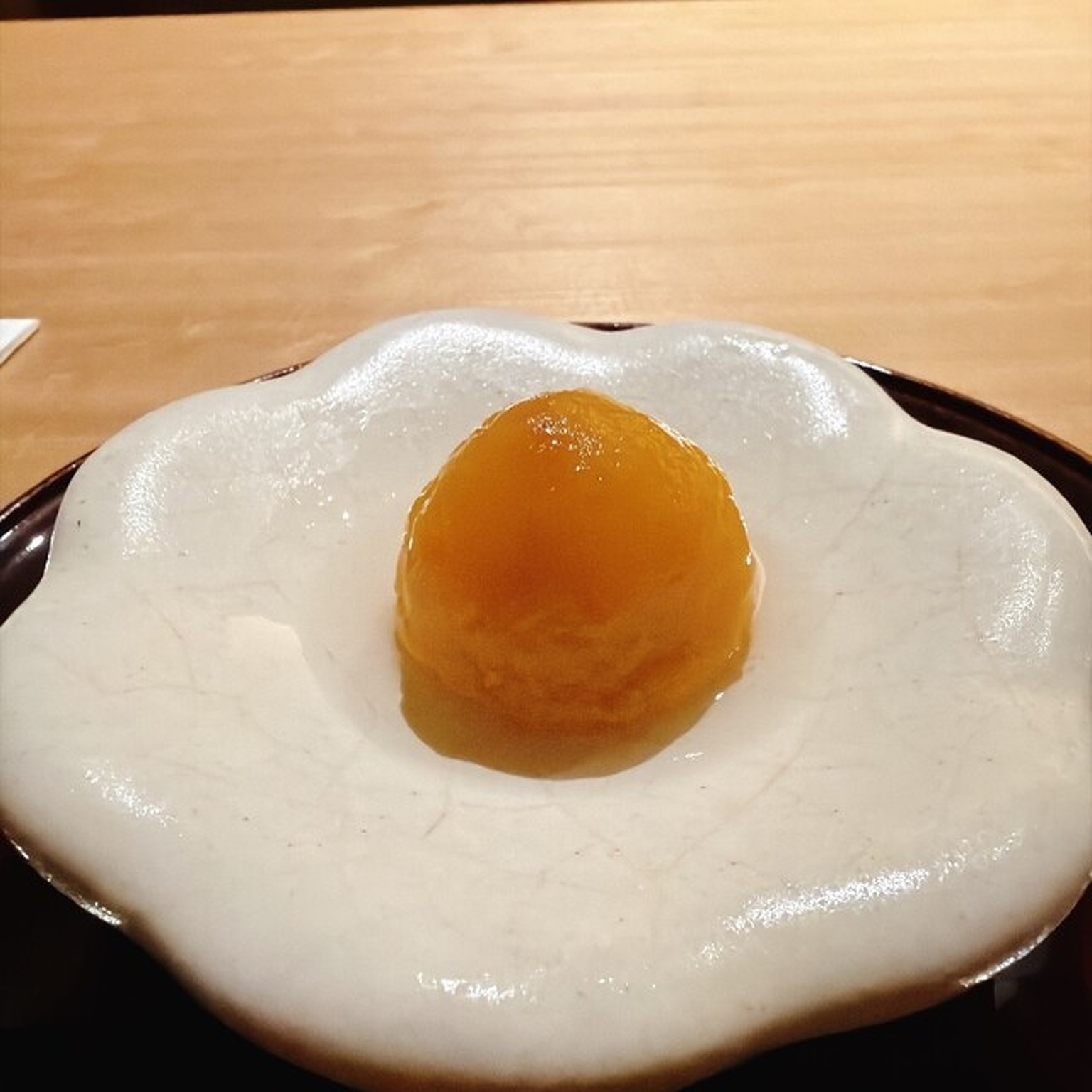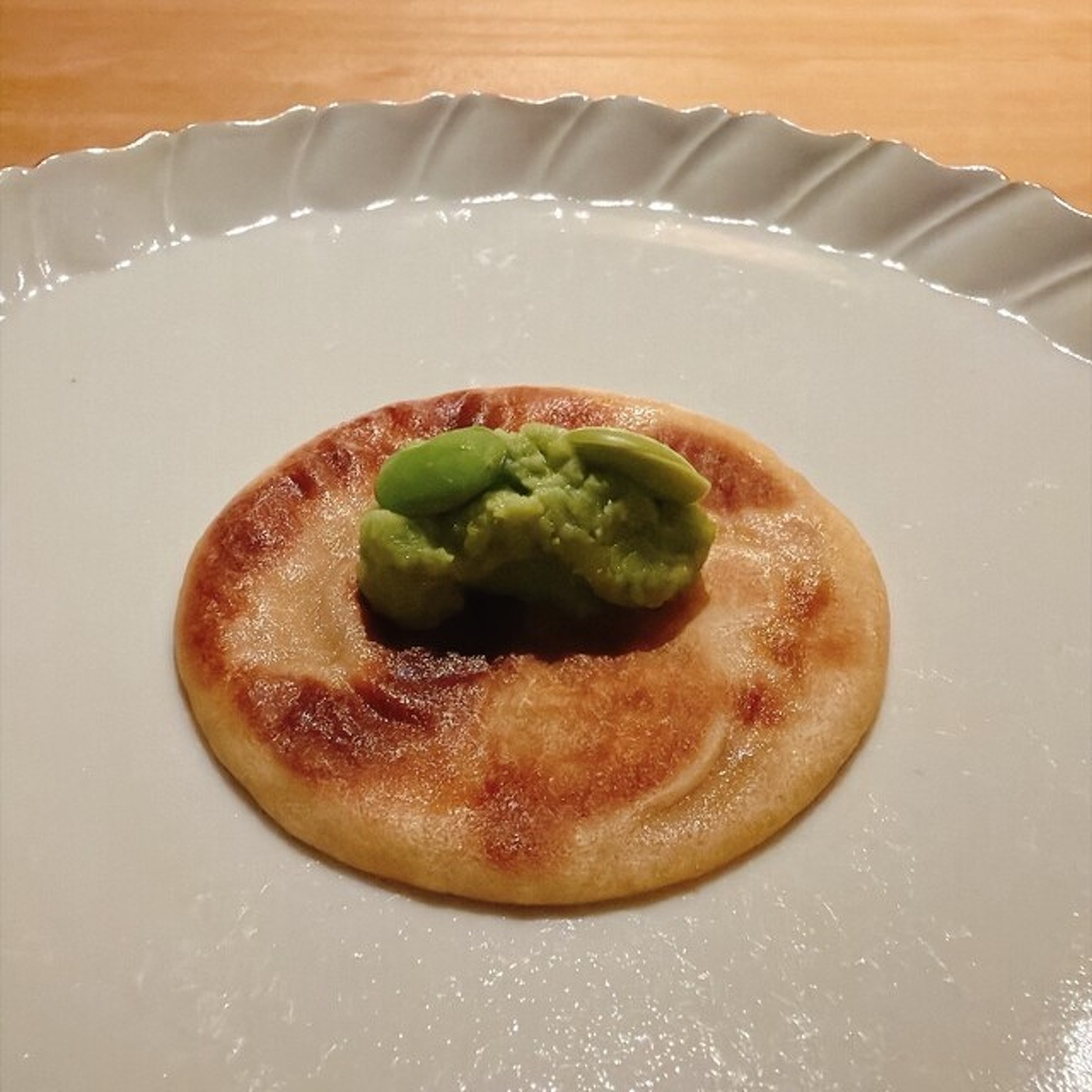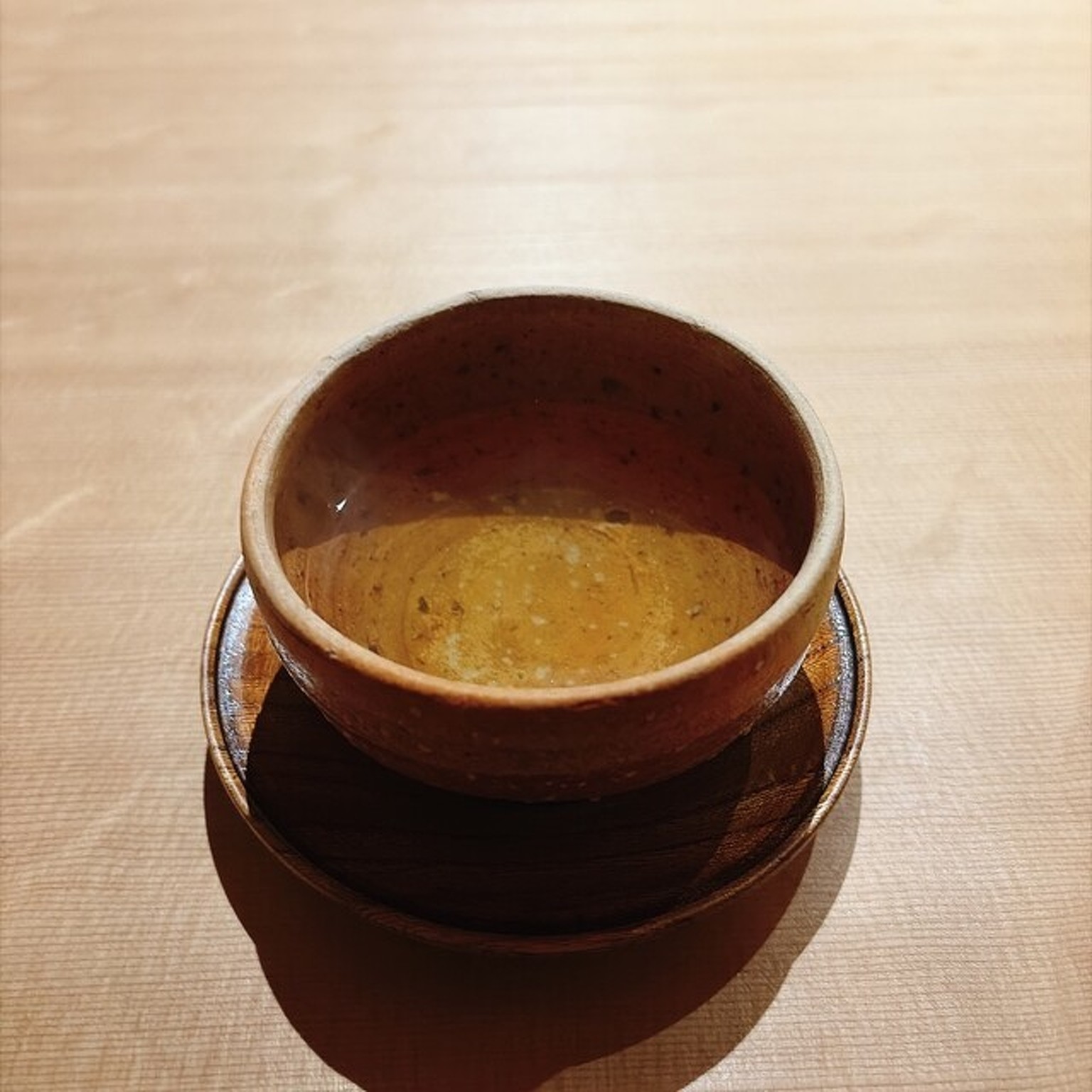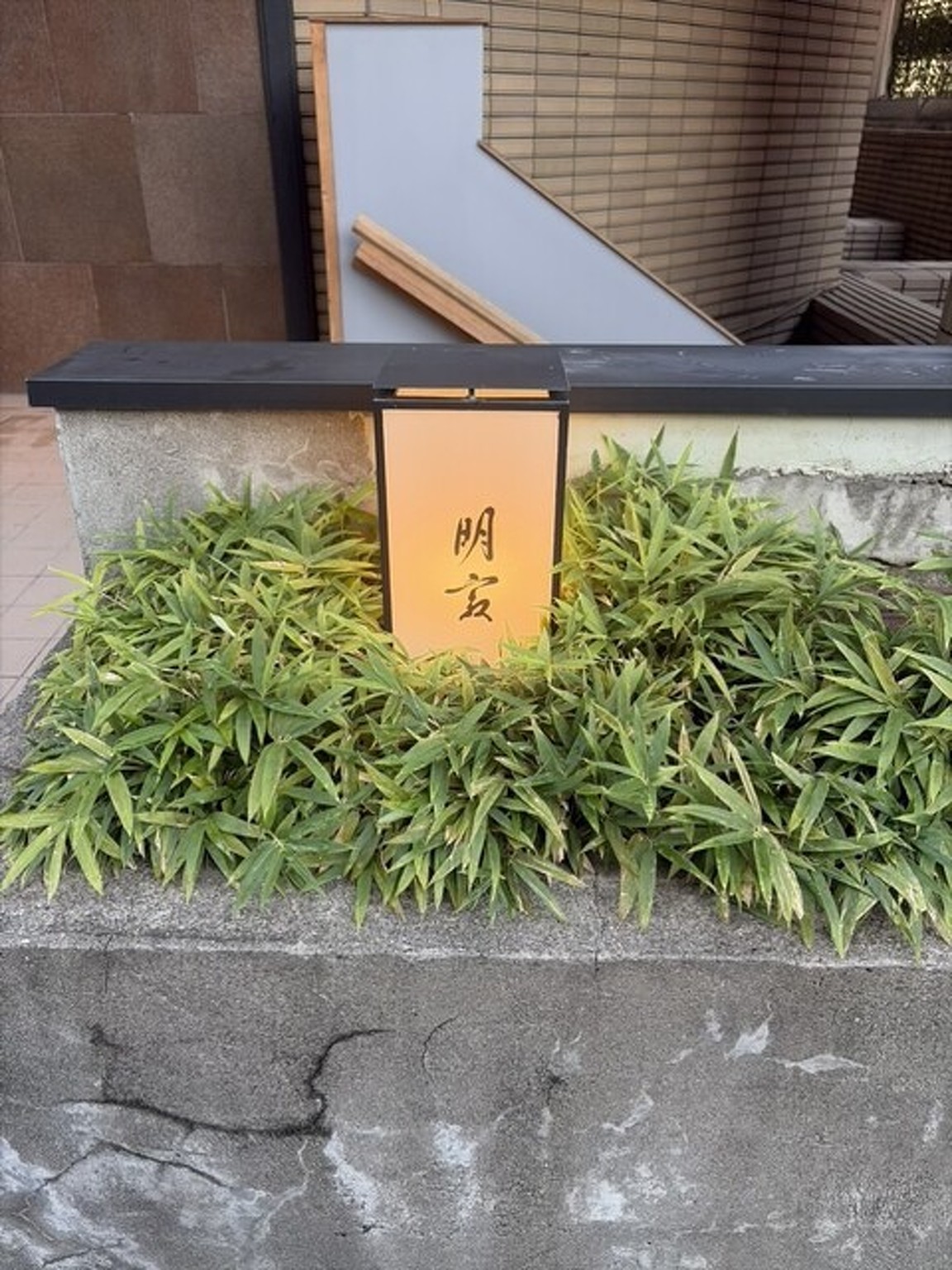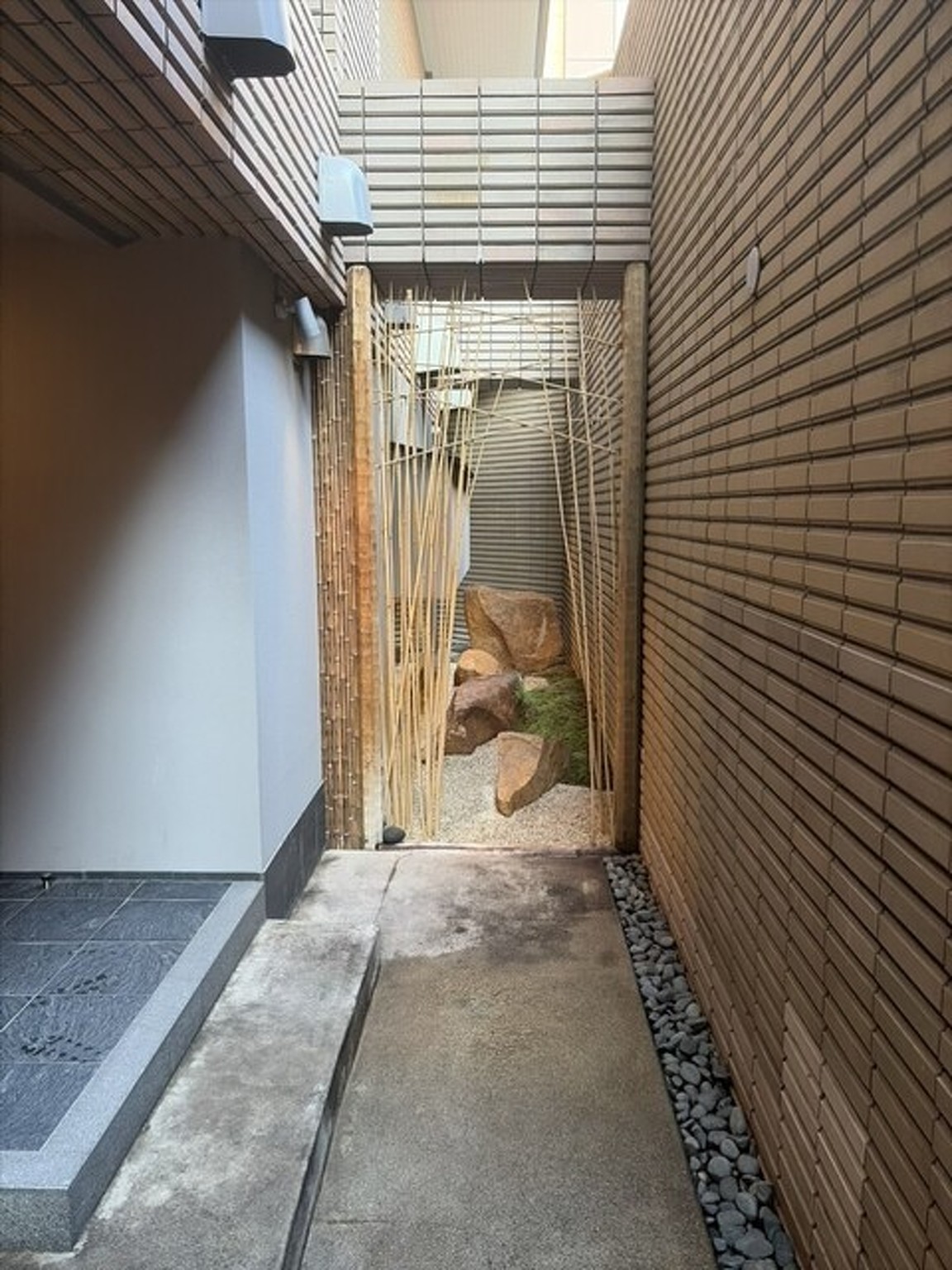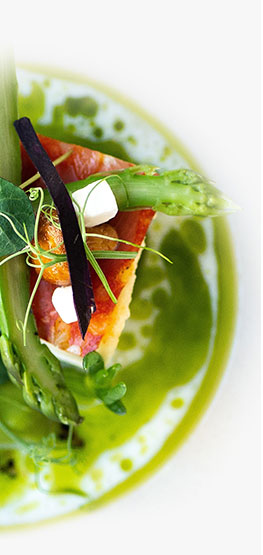
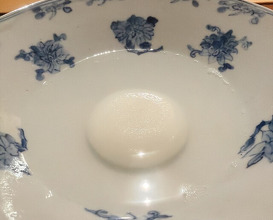
On a night in August 2026,I enjoyed a Japanese dinner in Roppongi. A friend managed to secure a reservation in a notoriously difficult-to-book spot and invited me along.I always thought that dashi (broth) was the essence of Japanese cuisine, but this restaurant aims to create dishes using only the ingredients, water, and salt, without relying on the flavors of katsuobushi (dried bonito) and kombu (kelp). While this might lead to a more subtle taste, I was both excited and anxious to see how they would achieve it.The restaurant is located on the basement floor of a building roughly halfway between Roppongi and Nishiazabu. The building is somewhat old, but the interior has a warm wooden design and dim lighting that creates a dignified atmosphere.Upon being seated, I noticed the chef and two cooks behind the counter, along with a couple of women who took drink orders. The counter has about eight seats, but the staff is plentiful.◇ Nagaimo (Japanese yam) simmered in saltSimmered with just water and salt, the nagaimo retains its natural sweetness with a hint of pleasant skin flavor. The warm broth seeps into the body.◇ Crab with mikan (Japanese citrus)Hair crab served with Sagan mikan pickled in lemon and sansho pepper. At the bottom, there’s crab miso. It’s said that sansho pairs well with crab, and they finish it with a sprinkle of powdered sansho. The peppery kick indeed enhances the sweetness of the mikan.◇ Sashimi- Akashi Tai (Sea Bream) with salt- Tako (Octopus) with saltThe salt for the sea bream is made from the broth extracted from its bones, while the octopus salt is made from dried octopus that has been salted and ground. It’s surprising how much the flavor of the octopus comes through.◇ Soup- Hamo (Pike Conger)- Onion- Umeboshi (pickled plum) pitA clear soup made by separately extracting broth from onion and hamo, combined together. The acidity comes from the cooked pit rather than the ume flesh, resulting in a rounded flavor.◇ Grilled dish- Biwa Masu (Lake Biwa trout)- Perilla seeds and white cucumberThe biwa masu is grilled and served with perilla seeds and white cucumber. The delicious fat from the skin is refreshing and enhances the dish.◇ Turban shell- Turnip and clam pureeThe turnip puree is combined with clam broth for richness, topped with the turban shell. This turnip puree is incredibly delicious.◇ Ayu (sweetfish)- Grilled and smokedThe first fish is simply grilled over charcoal, while the second is skewered and grilled over an open flame to infuse it with smoke. The aroma is stunning, elevating the typical grilled ayu to a new level.◇ Fig with white miso and yuzuA white miso dish with fig, garnished with yuzu peel for an extra refreshing taste. It beautifully resets the palate after the ayu.◇ Ayu from Gifu Takahara River, brushed with ayu fish sauce, wrapped in rice paperThe third ayu is a wild catch from Gifu Takahara River. After frying, it’s brushed with ayu fish sauce and grilled for a fragrant finish, then served on a bed of rice and wrapped in a thin omelet.◇ Eggplant somenThinly sliced eggplant somen, a refreshing summer dish.◇ Corn with homemade tarako (cod roe) fried in mochi flourCorn kernels are removed and filled with homemade tarako, then fried. Even before the main dish, this one demands to be paired with Japanese sake.◇ Iwate Short-Horned Beef with winter melon skinFinally, a dish that uses the traditional dashi made from katsuobushi and kombu appears. The combination of short-horned beef and katsuobushi broth is a powerful pairing.◇ White riceThe meal concludes not with seasoned rice but with plain white rice. The accompanying side dishes are so delicious that you’d want to eat them every morning.◇ Sweets- Nanko plum sweet- Zunda (edamame) wrapped in fragrant skinThe first sweet is a plum sweet with a refined sweet and sour flavor. The second is zunda paste wrapped in a crispy skin.◇ Sencha (green tea)The initial anxiety before the meal was completely resolved by the middle of the course. They skillfully draw out the umami of the ingredients without relying on katsuobushi and kombu.Each dish has a subtle seasoning, yet the flavors are distinct, allowing the faint notes hidden within the ingredients to shine through. The presentation is simple.However, despite my overall impressions of each dish, I found myself wishing for a bit more punch after finishing, perhaps because I love the flavors of katsuobushi and kombu.It was a great meal.
We use cookies on this site to enhance your user experience.