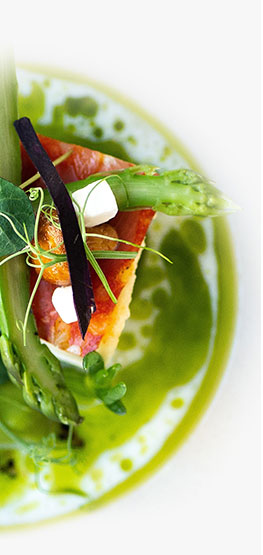
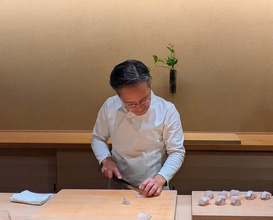
This time, I didn't hear the keyword "sea water" even once. Perhaps due to the difficulty in using sea water (as mentioned in my previous review), it seems to have shifted to just "salt and water," resulting in a milder flavor compared to sea water (or is it just my imagination?). On the other hand, the main dish (meat course) no longer used kombu and katsuobushi dashi, reaching a point where neither kombu dashi nor katsuobushi dashi was used at all. Below is my repeat comment.Our restaurant embodies the ultimate subtraction, completely eliminating kombu and katsuobushi dashi. Of course, this doesn't mean we don't use dashi; rather, we utilize the dashi from the main ingredients, allowing the umami of the ingredients to shine through. Additionally, the atmosphere created by the owner is delightful. During opening hours, the owner spends more time on customer service than cooking, treating both regulars and newcomers equally, engaging everyone in discussions about the dishes rather than trivial matters with regulars, creating an environment where guests can focus on and enjoy the food.[Genre] Kaiseki Cuisine (Kyoto-style)[Chef] Eiri Nakamura (Michelin 3 stars)[Price] JPY 45,000 (tax excluded)[Menu] None[Atmosphere] The counter seats are arranged in a neat row, exuding cleanliness. While not all guests are quiet, there is a generally calm atmosphere due to the presence of many subdued patrons.[Tempo] Medium pace.[Service] The owner handles the service, while a sommelier manages the drinks, providing gentle and composed service.[Usage Scene] Since it’s a counter, it’s suitable for one or two people; if you want to enjoy a lively group experience, you should opt for a private room.[Wine] In my previous visits, I had Japanese sake, then wine, and this time non-alcoholic options. Summarizing these experiences, I believe that if you consider the pairing with the dishes, you should choose wine carefully. To put it bluntly, wine can be too strong and overpower the flavors of the dishes; even champagne can be too much, and beer is definitely out of the question. Only a very dry type of Japanese sake can barely work, and even green tea needs to be extremely light. I think gyokuro (high-grade green tea) is perfect for the first half of the course.(1) Wine: A decent selection of bottles is available, and glasses are offered for pairing and separate tasting. The pairings are a mix of Japanese and Western styles, making it suitable for those who enjoy a variety of wines. Since the dishes are designed to be enjoyed without interference from the drinks until you finish each plate, achieving a good pairing can be challenging. However, when I communicated my preferences to the sommelier and left it to them, they successfully bridged the gaps between the dishes (pass).(2) Japanese Sake: Affordable and pairs well with the food, making it a safe choice. Just communicate your preferences to the sommelier and let them handle it.(3) Non-Alcoholic: This time, I started with gyokuro. I believe starting with gyokuro was the right choice, but it didn’t have the flavor of cold-brewed or low-temperature first infusion; it tasted more like hot water and third infusion, which was disappointing. After that, I tried Kaga bocha (a type of roasted green tea) and homemade ginger ale, which were both affordable and paired well with the food, making the non-alcoholic options quite enjoyable.1. Turnip in Salt Broth… A classic salt broth, a kaiseki-style detox water made with just salt and water. It feels lighter than during the sea water era.2. Abalone Salad… Steamed abalone with liver and a puree of fresh abalone underneath.3. Aori Ika and Tentacle Salt, Sea Bass with Fish Sauce… A classic sashimi dish, not just simple slices, but one that the owner has been meticulously preparing since the restaurant opened. The knife work enhances the texture and aroma, and the attention to detail in the salt and soy sauce is exceptional.4. Shiitake and Ainamé Soup… A clever dish where the flavor of the broth changes as you progress through the shiitake, broth, Ainamé, and broth sequence.5. Grilled Shima Aji… Underneath the Shima Aji is a sauce made from fresh lotus root and lemon juice, with marinated fresh lotus root as a side.6. Crab Dumpling… Underneath the meat of the hairy crab is shredded crab meat and a puree of green peas.7. Young Sweetfish Sushi Wrapped in Silk… The sweetfish in front is tempura, while the one at the back is fried and brushed with sweetfish fish sauce before being grilled over charcoal. Wrapped with fried wasabi leaves, it’s meant to be enjoyed in four bites. Tempura is the cooking method that preserves the most flavor, so the fourth bite, which includes the head of the tempura, is the most bitter. The construction of flavor changes over the four bites is impressive.8. Raw Junsai and New Ginger Salad.9-1. Baby Yari Ika and Young Corn Grilled in Squid Ink… An innovative dish presented on a black plate with a black object.9-2. Young Corn Silks… After finishing the young corn, the silks are served. With a rich corn flavor, this also feels innovative.10. Whelk, Clam, White Asparagus, and Clam Broth… The shellfish were a bit tough.11. Eggplant Somen… Although no kombu dashi was used, it has a flavor reminiscent of kombu dashi.12. Grilled Duck… Lightly seasoned with salt.13. Duck Tsukune… Without any binding agents, it melts in your mouth.14. Rice, Red Miso Soup, Pickles, and Side Dishes… The side dishes include katsuobushi, dried sardines, tai (sea bream) jelly, and furikake. However, the red miso soup was too strong (×).15. Blueberry Sorbet and Sweet Red Bean Soup.16. Dorayaki… A dorayaki filled with edamame zunda (sweetened mashed edamame) made from glutinous rice (△).17. Souvenir… The leftover rice is made into onigiri (rice balls) for you to take home. When I tried it the next morning, it was fluffy and incredibly delicious.
We use cookies on this site to enhance your user experience.