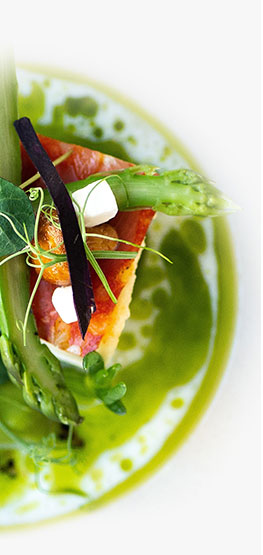
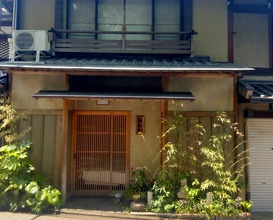
Tsukioka in Front of Shoren-in Monzeki Temple, KyotoThe saying *"Kyoto is home to truly exceptional cuisine"* could not be more accurate.Kappo Tsukioka stands quietly across from the serene grounds of Shoren-in Monzeki temple, nestled at the foot of Kyoto's Higashiyama area. The first floor features a striking single-slab whitewood counter with just eight seats, while the second floor offers a traditional tatami room. The counter was fully occupied, with an even mix of Japanese and international guests.The chef attentively watched over every guest, the elegant proprietress clad in kimono welcomed everyone with Kyoto's signature grace, and the young staff moved about efficiently, creating a warm yet refined atmosphere.As soon as we were seated, we were served an exquisite cup of sencha. From that very first sip, I knew the meal would be outstanding.The hassun (seasonal appetizer platter) was beautifully arranged with ingredients celebrating Kyoto's spring. Since I visited in May, it featured plump firefly squid at their seasonal peak, *chimaki* rice dumplings in honor of Children's Day, and fresh green maple leaves inspired by the famous gardens of Shoren-in.The tableware was equally impressive. Distinctive Kyoto ceramics, along with pieces by Rosanjin, were used generously, enhancing the beauty of each dish.Dessert included a creative interpretation of *so*, an ancient dairy delicacy said to have been served during the Heian period, adding yet another layer of enjoyment to the culinary experience.To conclude the meal, the chef personally prepared a bowl of matcha for each guest. The tea was served in remarkable bowls, including precious examples of Karamono (Chinese imports), Kōraimono (Korean wares), and antique Kyō-yaki (Kyoto pottery) and Shigaraki wares.Both the chef and the proprietress explained each dish and the accompanying tableware in English for their international guests, allowing them to appreciate not only the cuisine but also the cultural significance behind every element.This was far more than an exceptional meal. It was a delicious form of cultural entertainment—one that beautifully conveyed Japan's four seasons, traditions, and aesthetic sensibilities through the art of food.
We use cookies on this site to enhance your user experience.