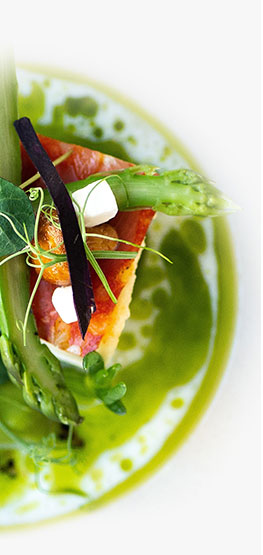
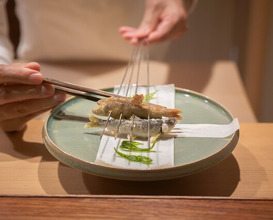
Located in Nishiazabu, Tokyo, the Japanese restaurant "Myoujyaku" has garnered significant attention since its opening in 2022, earning three Michelin stars in the Tokyo 2026 guide.The theme set by the owner, Mr. Nakamura, is the pursuit of "Umami" that maximizes the inherent flavors of the ingredients without relying on dashi or excessive seasoning. The dishes, composed solely of water, salt, and the ingredients themselves, reflect the vitality of the ingredients.Known for its difficulty in securing reservations, I was fortunate enough to book a spot on a holiday and enjoyed the omakase course.The restaurant is about a 10-minute walk from Roppongi Station, nestled in a quiet area just off the main road, providing a serene atmosphere that makes you forget the hustle and bustle of the city.Upon entering, you are greeted by a refined space that exudes warmth from the wood. The seating consists of only eight counter seats arranged in a single row, allowing for an intimate experience where you can closely observe the chef's techniques.During my visit, I surprisingly noticed no inbound tourists; the clientele was exclusively Japanese. In this calm and tranquil setting, Mr. Nakamura warmly welcomed us, and the course began.■Omakase Course (JPY 49,500)★ denotes particularly favored dishes. - Simmered Turnip - Abalone with Liver Sauce ★ - Sashimi ★ - Sea Bass and Shiitake Mushroom Soup ★ - Grilled Bonito - Crab Dumpling - Silk-Wrapped Sushi ★ - Vinegared Dish - Fried Young Corn and Stuffed Spear Squid ★ - Soba - Clams and Asparagus Hot Pot ★ - Grilled Duck - Duck Meatball - Rice - Dessert●1. Simmered Turnip This dish symbolizes Myoujyaku's philosophy, featuring turnips cooked solely with water and salt, then soaked in the cooking liquid. The turnips, cooked slowly, are astonishingly tender and fall apart in your mouth. Despite the absence of dashi, the natural sweetness and umami of the turnips are pronounced, beautifully highlighted by the salt.●2. Abalone with Liver Sauce Next is the abalone dish. The carefully cooked abalone is paired with its liver and served with a smooth sauce made from the abalone's cooking liquid and grated abalone. The abalone achieves a perfect balance of tenderness and resilience, releasing concentrated umami with each bite. The standout element was the smooth sauce, where the rich umami and fresh scent of the ocean filled the mouth, enhanced by the salt.●3. Sashimi The sashimi features Aori Squid and Sea Bream from Akashi. The Aori Squid is served with "Ika Shio," a powder made from dried tentacles. The squid has a sticky texture and strong sweetness, bursting with flavor as you chew. Pairing it with the Ika Shio creates a synergistic effect, amplifying the squid's flavor. The Sea Bream is complemented by a saltwater made from its head and bones, enhancing its elegant umami and aroma, making the fish's contours feel more pronounced. Testing the seasonings, I found that the Ika Shio was perfect for the squid, while the saltwater was ideal for the sea bream, showcasing Myoujyaku's commitment to optimal flavor expression for each ingredient.●4. Sea Bass and Shiitake Mushroom Soup This soup is made from the bones of the sea bass and shiitake mushrooms, seasoned only with water and salt. Taking a sip reveals a deep umami from the shiitake, and after tasting the mushroom, the flavor of the sea bass emerges. The unique structure allows the presence of the shiitake and sea bass to alternate based on the order of tasting. This dish exemplifies how such flavors can be achieved with just water, ingredients, and salt—truly enlightening.●5. Grilled Bonito The bonito is grilled over charcoal until the skin is fragrant, finished with new lotus root, lemon, and a "Chiri-su" sauce. The moist and tender bonito is flavorful yet light. The aroma from the straw grilling is subtle, perfectly preserving the ingredient's natural taste. The elegant acidity from the lemon adds a refreshing finish.●6. Crab Dumpling This steamed dish features hairy crab and green peas. The crab dumpling is made from the meat and legs of the hairy crab, mixed with crab miso. One bite fills your mouth with the rich umami and sweetness of the crab, enveloped by the gentle flavor of the green peas.●7. Silk-Wrapped Sushi Unlike typical sushi rolls, this sushi is wrapped in ultra-thin omelet instead of seaweed. The eggs come from chickens raised on rice, resulting in a beautiful pale yolk. Accompanying it are tempura sweetfish from the Tenryu River and fried wild pepper. The sweetfish is grilled with fish sauce for a fragrant finish, served with a crab dashi sauce. Taking a bite of all three at once creates a harmonious blend of flavors: the umami from the fish sauce, the sweetness of the sweetfish, the slight bitterness of the wild pepper, and the crisp texture.●8. Vinegared Dish This dish features new junsai paired with a new ginger sauce. The junsai has a unique slippery texture and a pleasant popping sensation. The pale pink ginger sauce has a gentle aroma, harmonizing with the refreshing acidity of sudachi, delicately enhancing the junsai's flavor. The dish is served in an Old Baccarat glass, showcasing a meticulous aesthetic in both the dish and its presentation.Here, I enjoyed some Japanese sake. I paired it with "Echigo Tsuru Kame 12 Stamps," a unique sake brewed with wine yeast. The glass released a subtle floral aroma, and upon tasting, a gentle acidity and umami spread across the palate. The balance of acidity, sweetness, and umami offers a light drinking experience distinct from traditional sake.●9. Fried Young Corn and Stuffed Spear Squid This dish features young corn and stuffed spear squid fried in squid ink batter. The young corn is crispy on the outside while retaining its juiciness and natural sweetness inside. The simple preparation highlights the quality of the ingredients. The spear squid bursts with flavor as you chew, and the unique texture of the stuffed squid adds depth, enhanced by the squid ink flavor. Additionally, fried corn silk is served separately, offering a light texture with a soft bite and a delightful aroma.As a palate cleanser, I was served salt made from seawater, composed solely of salt, water, and bittern, reinforcing Myoujyaku's philosophy of building flavors with just ingredients, salt, and water.●10. Soba The meal featured handmade ju-wari soba, made solely from buckwheat flour. The soba has a robust flavor, releasing a rich aroma with each bite. While not flashy, it embodies Myoujyaku's commitment to conveying the inherent charm of the ingredients.●11. Clams and Asparagus Hot Pot Next was a hot pot featuring clams and white asparagus. The ingredients included clams, turban shell, and white asparagus, with a broth made from shijimi and asari clams. Remarkably, this broth contains no salt. Yet, the umami from the clams is pronounced, harmonizing beautifully with the sweetness and aroma of the white asparagus. I was amazed at how such a high-quality flavor could be achieved solely from the ingredients' natural umami.●12. Grilled Duck The duck is grilled to a fragrant finish on the outside while remaining moist inside. With each bite, the rich umami and sweetness of the duck fat spread, complemented by the lingering aroma of charcoal.●13. Duck Meatball Continuing with the duck theme, the duck meatball is served next. Made without any binders, the meatball is surprisingly tender, crumbling effortlessly in your mouth. This dish showcases the allure of duck in a different form than the grilled version.●14. Rice The course concludes with rice. The first serving includes pickles, such as nuka-zuke, snap peas, yamatoimo, burdock, and young bamboo shoots. Despite being nuka-zuke, the strong aroma typical of nuka is almost absent, resulting in a refined finish that highlights the vegetables' natural flavors. Accompanying the rice are shako seasoned with sansho, tai no nikogori, and squid salted. The squid salted was particularly impressive, with a pleasant yuzu aroma that avoids the heaviness and peculiarities often found in typical salted squid.●15. Dessert The meal concludes with two desserts. First is chilled sweet summer citrus soup, featuring sweet summer citrus flesh, sorbet, juice, and white bean paste. Topped with finely chopped dried citrus peel, this dish offers a light and refreshing taste, quite different from the rich sweetness of typical soups, providing a pleasant finish to the meal.Next is dorayaki, made with mochi flour instead of wheat flour, filled with mugwort and sweet red bean paste. The mochi-like texture is strikingly different from typical dorayaki, with a delightful aroma of mugwort that lingers pleasantly.The world of "Umami" that maximizes the power of the ingredients without relying on dashi or excessive seasoning. This was my first experience with such a profound exploration of ingredient flavors, leaving me eager to return in a different season.It was a great meal.
We use cookies on this site to enhance your user experience.