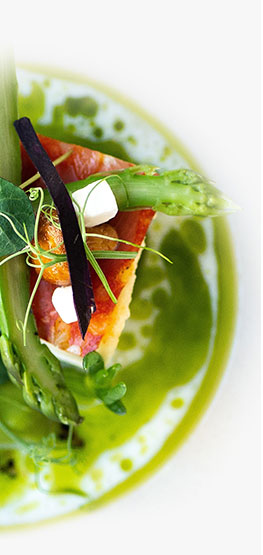
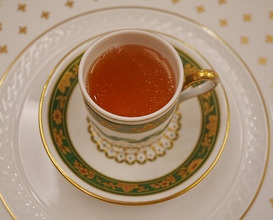
Nestled in a residential area of Ebisu, the intimate restaurant "PELLEGRINO" features just six seats. Established in Nishiazabu in 2009, it relocated to its current location in 2015. Chef Hayato Takahashi focuses on the traditional cuisine of Emilia-Romagna, which he studied in Parma. The kitchen and dining area are seamlessly integrated, allowing him to personally deliver each dish, ensuring that every plate captures its most delicious moment. This meticulous approach is the hallmark of the restaurant.The course menu is divided into two parts. The first part showcases seasonal ingredients and precise cooking techniques. The second part highlights the manual slicer, diving deep into the world of prosciutto and salumi. Rather than simply serving prosciutto as an appetizer, it is presented as an independent chapter. This bold structure embodies the unique world of Takahashi.The first part begins with "Brodo."A clear broth made from a whole Kanagawa Danza black chicken, simmered with just water. While it appears crystal clear, the depth of flavor is astonishingly rich. Instead of aggressively stimulating the palate, it quietly seeps into the body. By sharpening the contours of the ingredients without adding anything unnecessary, it sets the stage for a focused tasting experience."Paprika" features Shizuoka-grown paprika paired with Scamorza Dolce and French wild mushrooms, San Jorge. The slowly cooked paprika exudes a sweetness reminiscent of fruit rather than vegetables. This is complemented by a creamy dairy flavor and earthy aromas. The contrasting elements come together harmoniously in the mouth."Shiro Amadai" is served with flower zucchini and Taggiasca olives from the Bungo Suido region. The use of binchotan charcoal enhances the delicate sweetness of the fish. The slight bitterness of the flower zucchini and the saltiness of the olives provide a perfect accent, while the charcoal aroma elevates the fish's flavor without overpowering it."Botan Ebi" from Hokkaido's Furubira is rich and sweet, layered with the bitterness of artichokes and the acidity of fruit tomatoes. The sweetness is not overwhelming; instead, the bitterness and acidity enhance the shrimp's flavor, creating a multi-dimensional taste."Kitakuri Clam" from Hokkaido's Osakikamijima is cooked to a medium doneness, showcasing a pleasant elasticity upon biting, followed by a gradual release of sweetness. The fresh aroma of French asparagus sauvage and vibrant salsa verde intersect with the clam's sweetness, leaving a light, refreshing aftertaste."Tagliolini" features a combination of Karuga caviar and basil. With a simple yet bold composition of pine nuts, basil, and salt, the generously piled caviar delivers bursts of saltiness and umami. The fresh aroma of basil, the chewy texture of the pasta, and the sensual finish of the caviar create a delightful experience without feeling heavy."Yazawa Beef" is a fillet from Hokkaido's Biei, served with Kamo eggplant from Ayabe, Kyoto. The beautifully grilled red meat releases its juices and umami with each bite, while the Kamo eggplant complements it with its own sweetness.The "Amaama Musume Soup" that appeared in between is unforgettable. Made with just water and salt, it does not merely showcase the sweetness of corn but carefully extracts the underlying aromas. Despite its richness, the aftertaste is surprisingly light—a testament to the skill of a chef who fully trusts his ingredients.And now, the second part.The signal for the next course rings out, and the manual slicer in front of me begins to move quietly. This is Chef Hayato Takahashi's stage."Bresaola" is made from the Nakaniwa cut of Yazawa beef. Comparing different thicknesses reveals a surprising variety of expressions from the same ingredient. The ultra-thin slices dissolve instantly upon contact with the tongue, while slightly thicker pieces showcase the meat's fibers and aging aroma. When layered on bread spread with fermented butter, the dairy flavor and meat's umami create a new dimension. The act of slicing here becomes a form of cooking in itself."Mortadella" is sliced so thin that it is almost translucent. The moment it falls onto the back of my hand, the fat begins to react to my body temperature. Once in my mouth, the sweetness of the meat and the aroma of pistachios dissolve almost effortlessly. When layered on freshly fried "Torta Fritta," the heat, fat, and light texture combine, accelerating the deliciousness.And then, the "Kintoa Black Pig Prosciutto."Here, the experience speaks louder than words. The ultra-thin slice placed on my hand releases its aroma before I even eat it, and once on my tongue, the fat melts away, leaving a lingering taste of aging and salt. Paired with melon, the sweetness of the fruit and the saltiness of the prosciutto intersect, elevating the classic "prosciutto e melone" to another dimension. The combination with rice is equally surprising; the warmth of freshly cooked rice melts the fat, intertwining the sweetness of the rice with the aging aroma. This is a blissful handshake between Italy and Japan. If such "prosciutto e melone" or "prosciutto rice" exists, what have I been eating until now?Prosciutto has long been synonymous with this restaurant. However, with the two-part structure, its allure has become even more vivid. The first part showcases the precision of ingredients and cooking techniques, while the second part stirs the palate through the act of slicing alone. The subtle differences in thickness, temperature, and accompanying ingredients create entirely different experiences from the same meat. It feels less like dining and more like witnessing the thought process of Chef Hayato Takahashi up close. This is an experience everyone should have at least once in their lifetime. No, once is not enough. It was a great meal.
We use cookies on this site to enhance your user experience.