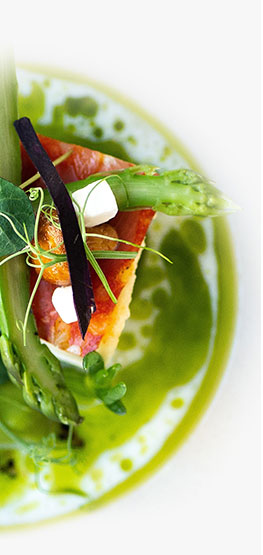
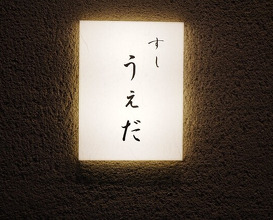
Nestled quietly in Motomachi, Kobe, is "Sushi Ueda," which opened on November 25, 2018. The chef, Masamichi Ueda, hails from Awaji Island and specializes in sushi that highlights the sea of Hyogo. With the calm waters of Akashi and Awaji facing the Seto Inland Sea, and the rich fishing grounds of the Japan Sea to the north, Hyogo is a region brimming with sushi potential. Ueda's experience at "Sushi Wataru" on Awaji Island, combined with his deep connection to his roots, drives his focus on local ingredients. Instead of showcasing star ingredients from across the country, he shines a light on local fish, expressing the essence of the sea through his sushi. This is the defining characteristic of his establishment.The appetizers showcase the power of local ingredients. The "Sea Bream" is a dish that embodies a clean texture with a robust umami flavor. The "Bonito" is lightly seared, infused with the aroma of straw and binchotan charcoal, resulting in a crispy exterior and a moist, glossy interior. This contrast in cooking is impressive, as it enhances the fish's natural fat rather than overpowering it with smoky flavors, reflecting the chef's intent.The "Scallop and Asparagus" dish features a generous amount of mentaiko (cod roe) that connects the sweet scallops with the fresh aroma of asparagus. The idea of using mentaiko with the fish is intriguing, leaving a light, lingering finish that complements the umami of the roe. The "Stone Bream" showcases a delightful texture typical of freshly caught fish, enhanced by a preparation reminiscent of namerou (a minced fish dish), allowing the umami to expand. This dish is designed to reveal its flavors as you chew, rather than relying solely on the fish's freshness.A standout was the "Firefly Squid." The aroma of young leaves filled the counter, and the act of mixing it with the rice became part of the aromatic experience. The richness reminiscent of soy sauce-marinated egg yolk combined with the squid created a dish akin to firefly squid over rice. The use of local eggs further emphasizes the philosophy of encapsulating the essence of the region in a single plate. Following this, the "Chawanmushi" (savory egg custard) features Awaji Island eggs layered with raclette cheese and the sweetness of the local onions. The richness of the eggs, the saltiness of the cheese, and the sweetness of the onions come together, capturing the blessings of Awaji Island in a small dish.Moving on to the nigiri, the rice has a strong acidity that pairs beautifully with the fatty toppings. Interestingly, it also has a fascinating effect on white fish. The fish with a good texture melds with the rice's acidity as you chew, slowly creating a harmonious blend in your mouth. The initial impression is refined, with the acidity defining the shape, and the sweetness of the fish returning in the aftertaste. The perfection of the nigiri lies in this time lag.The "Mako Flounder" quietly draws out the umami of its pristine white flesh with the rice's acidity. The "Rockfish," aged for five days, interestingly retains a muscular texture reminiscent of fresh fish. The deepening umami from aging coexists with a delightful bounce, slowly connecting with the rice's acidity as you chew. The "Cuttlefish" has a remarkable texture, with the aroma of sudachi (a citrus fruit) tightening its profile. The "Spanish Mackerel" boasts a beautiful balance of soft fat and lingering acidity. The "Sea Bream" symbolizes the restaurant's philosophy of using local ingredients—not bland, but delicious with each bite.The flow of tuna is also impressive. The "Otoro" (fatty tuna) from Sado is perfectly balanced by the rice's acidity. The "Akami Zuke" (marinated lean tuna) leaves a sticky umami on the tongue, while the "Chutoro" (medium fatty tuna) has a texture that allows the layers of fat to dissolve. Enjoying the fat without heaviness is undoubtedly due to the power of the rice. The "Small Horse Mackerel" is just starting to come into season, yet it already has a surprising amount of fat. The freshness typical of morning catches combines with the aroma and sweetness of the blue fish, achieving a delightful balance of lightness and satisfaction. The "Purple Sea Urchin" from Awaji not only offers sweetness but also leaves a lingering taste of the sea.In the final stages, the "Anago" (sea eel) shines with its meticulous deboning, melting in your mouth. The "Toro-Taku" (fatty tuna hand roll) bursts with the aroma of nori (seaweed), the fat of the tuna, and the texture of pickled daikon. The "Makimono" (rolls) combine shiitake mushrooms, shrimp oboro (finely chopped), and anago, creating a classic blend of sweetness, umami, and aroma that somehow returns to the essence of Hyogo. Ending with the "Tamago" (egg), the tension of the entire course gently dissipates.The charm of "Sushi Ueda" goes beyond mere local sourcing. The goal is not just to use local fish, but to convey the vitality that these fish possess. Straw, binchotan charcoal, aging, aroma, and lingering acidity—all serve as means to present the sea of Hyogo in a three-dimensional way. It is rare to find a restaurant that can bring the potential of Hyogo's rich seas to life at a counter in Kobe. Rather than just wanting to eat here again, I yearn to experience that vitality once more. It was a great meal.
We use cookies on this site to enhance your user experience.