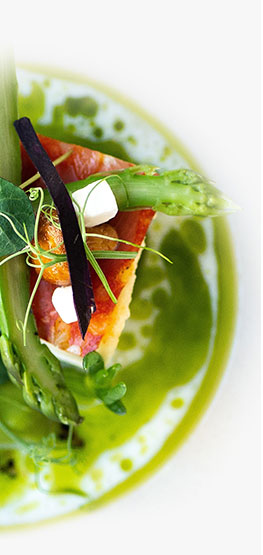
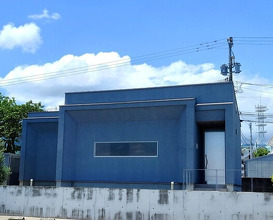
This is an innovative restaurant located in Baba-cho, Shimabara.Facing the Ariake Sea and Shimabara Bay, Chef Takahiro Inoue offers a unique dining experience called "Satohama Gastronomy" using local ingredients.Customers travel from afar for this one-of-a-kind culinary experience that cannot be found elsewhere.Opened in October 2014, the restaurant relocated to its current location in August 2018, becoming a "Satohama Gastronomy" restaurant.The restaurant is about a 13-minute walk from Shimabara Station.Head right on Route 251, turn right at the first intersection, and continue along the seaside or the road one block in, where you will find a grayish-blue house nestled between both roads.The menu features only a lunch omakase course (JPY 33,000, tax included, plus a 10% service charge).Depending on the ingredients of the day, there may be an additional charge of around JPY 2,000.Reservations are only accepted online, and with only six seats, it can be difficult to secure a spot.I visited for lunch.For the past 5-6 years, I had been checking the reservation site for available dates, but could only find openings last minute, making it hard to plan.Recently, advance availability information has been released, and I made a reservation about two months in advance.Finally, my long-awaited trip to Shimabara was here, and I hoped for good weather...On the day of my visit, I arrived in front of the restaurant around 11:50 AM to align with the 12:00 PM start time, and the doors opened at 11:55 AM.I was warmly welcomed by the Madame and entered the restaurant.The establishment is run by Chef Inoue and his wife, along with three staff members.Everyone was friendly and cheerful, creating a pleasant atmosphere.The seating included tables near the entrance with framed windows offering views of the Ariake Sea, and counter seats in the back.I was seated at the counter, where I could see the cooking process unfold right in front of me, adding to the excitement.The explanations provided when each dish was served were thorough, enhancing my understanding of the ingredients and dishes.The first water served was "Iwatono Spring Water" from Nishigo, Unzen City.Next, I was served "Shirocha" from Higashi-Konan Town, which was hand-picked by the chef.It had a refreshing bitterness that was delightful.For a drink to accompany the meal, I ordered the non-alcoholic "Sparkling (Yomogi)" (JPY 1,700).It had a refreshing aroma of yomogi.Although it was non-alcoholic due to circumstances, the dishes served were perfectly paired with alcohol.The dishes I enjoyed were as follows:◇ Satohama Gastronomy Course● "Stroll on the Beach"Starting with four amuse-bouches from the concept food "Etari.""Etari" is a local dialect term for sardines.Long ago, when the local fishermen (grandfathers) were young, the treat for children was steamed sweet potatoes topped with "Etari" salted fish.This dish reflects Chef Inoue's nostalgic memories.It was served on a glass box resembling a sandy beach.- "Etari Tart"A tart topped with sweet potato paste and "Etari" salted fish butter, dusted with "Etari" powder.The slight sweetness of the sweet potato paired with the saltiness of the "Etari" created a nostalgic flavor.- "Purple Sea Urchin Pie"A pie crust topped generously with "Purple Sea Urchin" and a paste made from Shimabara kombu.The crispy and light pie crust combined with the sweet "Purple Sea Urchin" was a delightful combination that brought happiness.Served on a black, round basalt stone, this dish was inspired by local cuisine.- "Igisu"Composed of "Igisu" (seaweed said to be from England), cheese, karasumi, and a paste made from young sea bream.It seemed like a perfect match for wine.- "Snap Peas and Green Peas"Hot snap peas and green peas cooked to match their size.Tossed with a sherbet-like pea paste and olive oil at the bottom of the dish, it was enjoyed hot and cold.The peas were fresh and sweet, embodying the taste of early summer.● "Like Ripples"Under the "Kombu Foam" sauce was a salad of rice (Minami Nishiki, ancient rice).The salad included "Okose" and its liver puree, "Uni," marinated "Tengunishi" (Tengu shell), fish sauce, and olive oil.Mixing it all together released the flavor of kombu, and the rice, reminiscent of sushi, paired well with the "Okose" and shellfish.● "Aftertaste"A soup made with "Iwa Oyster," fragrant mushrooms, prosciutto, and kombu.When the lid of the bowl was opened, the aroma of kombu and oysters wafted up.It had a comforting taste.Half of the "Iwa Oyster" was served in the soup, and the other half was grilled.It was plump and delicious.● "Fish & Ham"29-month-aged "Prosciutto" (produced by Fukutome Komakijo in Kanoya, Kagoshima).I tasted the freshly cut piece first.It melted in my mouth.Next, I was served fried "Magochi" on top of "Ichiban Nori" from Kawachi Town, along with the "Prosciutto."The idea was to sandwich the fried "Magochi" and "Prosciutto" with the "Nori" and eat it by hand.Here we go!The crispy "Nori" was full of umami, and the "Magochi" was fluffy.The heat from the fry made the "Prosciutto" melt... this was delicious.● "Gane Somen"Seasonal "Watarigani" (blue crab) caught in the Ariake Sea, with the inner crab meat included.It consisted of the inner crab, crab meat, and somen mixed with the crab extract.After tasting the inner crab and meat, I mixed it with the somen.The texture of the cold somen coated in the inner crab and meat was delightful.● "Octopus Bouquet"A beautiful salad of male "Tako" (octopus) arranged like a bouquet with its suckers.The suckers and other parts were prepared separately and plated together.It included suckers, flowers, cilantro, marinated red onion, gelatin oil, and marinated raw octopus.The vibrant green around the suckers highlighted the purple color of the octopus.As the name suggests, it was as beautiful as a flower!Here we go!The suckers had a nice texture, and when chewed, they had a moderate elasticity and umami.The acidity of the marinade combined with the aromas of green onion and cilantro made me want to pair it with white wine.I was thrilled that the dish met my expectations.This dish using male "Tako" is available until September.I was glad to visit during this season...The main dish "In the Garden" featured the "Kue" fish, which was revealed.The "Kue" weighed 20 kg and was steamed with fig and lemon leaves grown on the restaurant's premises.● "Flavor"A "Kutsuzoko" (red tongue sole) coated with black rice (ancient rice) and sansho, fried to a crispy finish, served with shredded bamboo shoots, and topped with "Iriko Soup" poured at the table.The "Kutsuzoko" was fragrant, and the spicy sansho added a nice accent.It paired well with the aromatic "Iriko Soup."● "In the Garden"The steamed "Kue" was plated.At the table, a soup made from "Kue" and a sauce made from new onions fermented with koji were poured over it.Accompanied by chopped zucchini and yellow zucchini.The "Kue" was firm and plump.The tangy new onion sauce complemented it perfectly, making it enjoyable.- "Red Rice Bread"Freshly cut hot bread was served right in front of me.The crust was slightly bitter and fragrant, while the moist dough had a hint of acidity and was fluffy.The sprinkled salt added a nice touch.It was delicious on its own or dipped in the sauce from the "Kue."Since the next dish was the final "Ojiya," I enjoyed it modestly while still wanting more.● "One Pot"The "Ojiya" made with the broth, seafood, spices (cumin, fennel, saffron, etc.), and rice was simmered in a clay pot.The texture of the octopus, fish, and shellfish, along with the rice soaked in the broth, was as delicious as expected.The "Ojiya" was topped with a spicy sauce made with egg.If I had room in my stomach, I would want to eat a mountain of it...Finally, for dessert:● "Nostalgia"- "Kanzarashi"Chef Inoue arranged the traditional Shimabara sweet "Kanzarashi."Small white rice dumplings and raspberries floated in a cold syrup made from brown sugar and honey harvested from the vegetable garden.The refreshing sweetness of the syrup felt elegant with the richness of the brown sugar, and the rice dumplings were chewy.This was a completely different experience from the "Kanzarashi" I had 15 years ago at a famous restaurant, completely overturning my image of it.For my post-meal drink, I ordered coffee.- "Coffee (Honduras)"It had a good balance of bitterness and acidity, with a refreshing aftertaste.It was a coffee that suited my taste.- "Jersey Cow Gelato"Gelato made with vanilla from Jersey cows and orchids.(The "vanilla" is from the orchid family.)It had a smooth texture like fresh cream and a rich milk flavor.I was even more surprised to learn that no fresh cream was used.The portion sizes were just right.The total time spent was about 3 hours and 20 minutes.The dishes were meticulously crafted to bring out the flavors of the main ingredients, and I was impressed with each one!It was a time to feel the richness of Shimabara and the Ariake Sea.The comfortable atmosphere of the dining space, along with the journey to Shimabara and the views of the Ariake Sea, made for a memorable experience.This is a restaurant that makes you want to visit Shimabara as a destination.
We use cookies on this site to enhance your user experience.