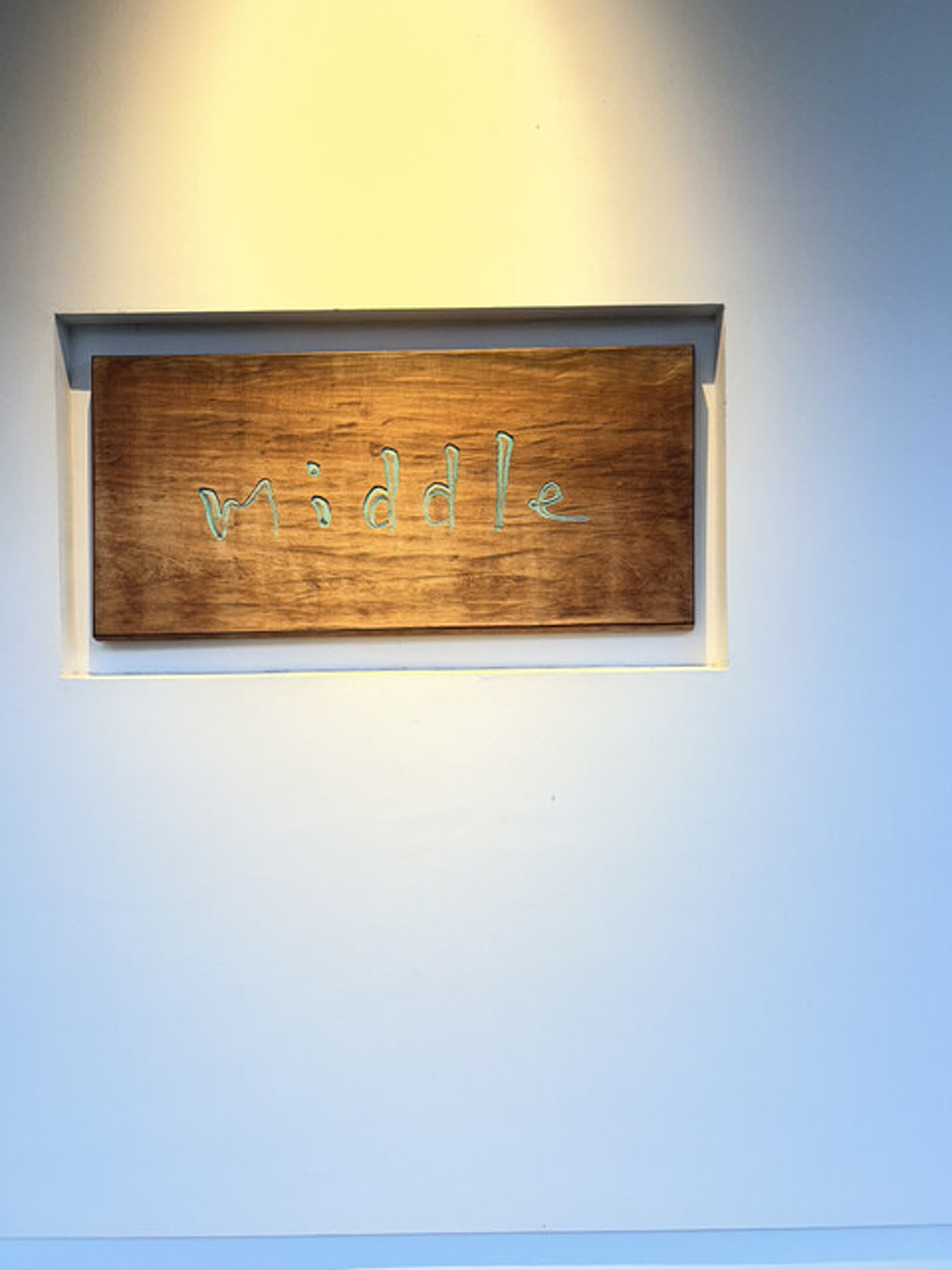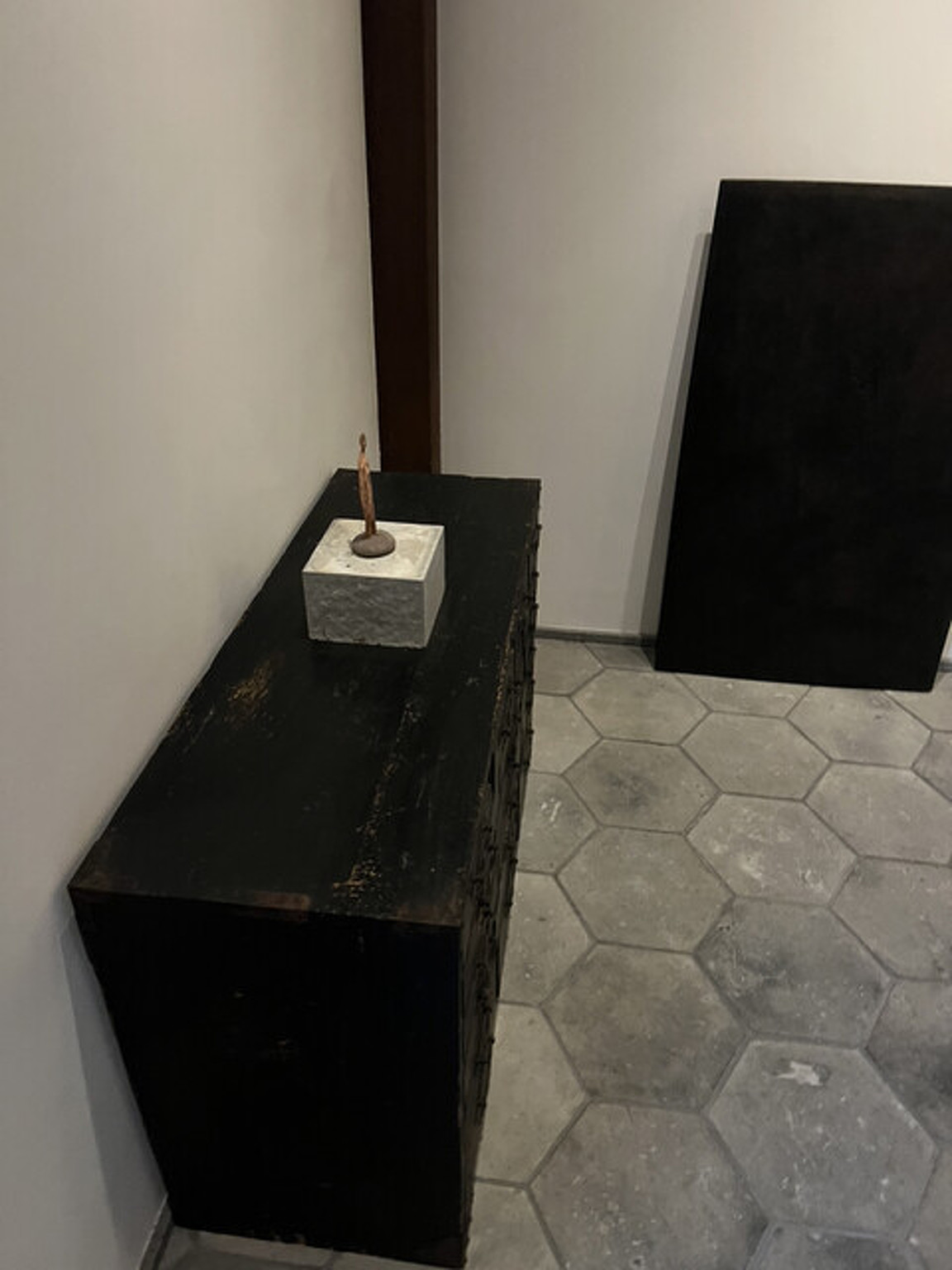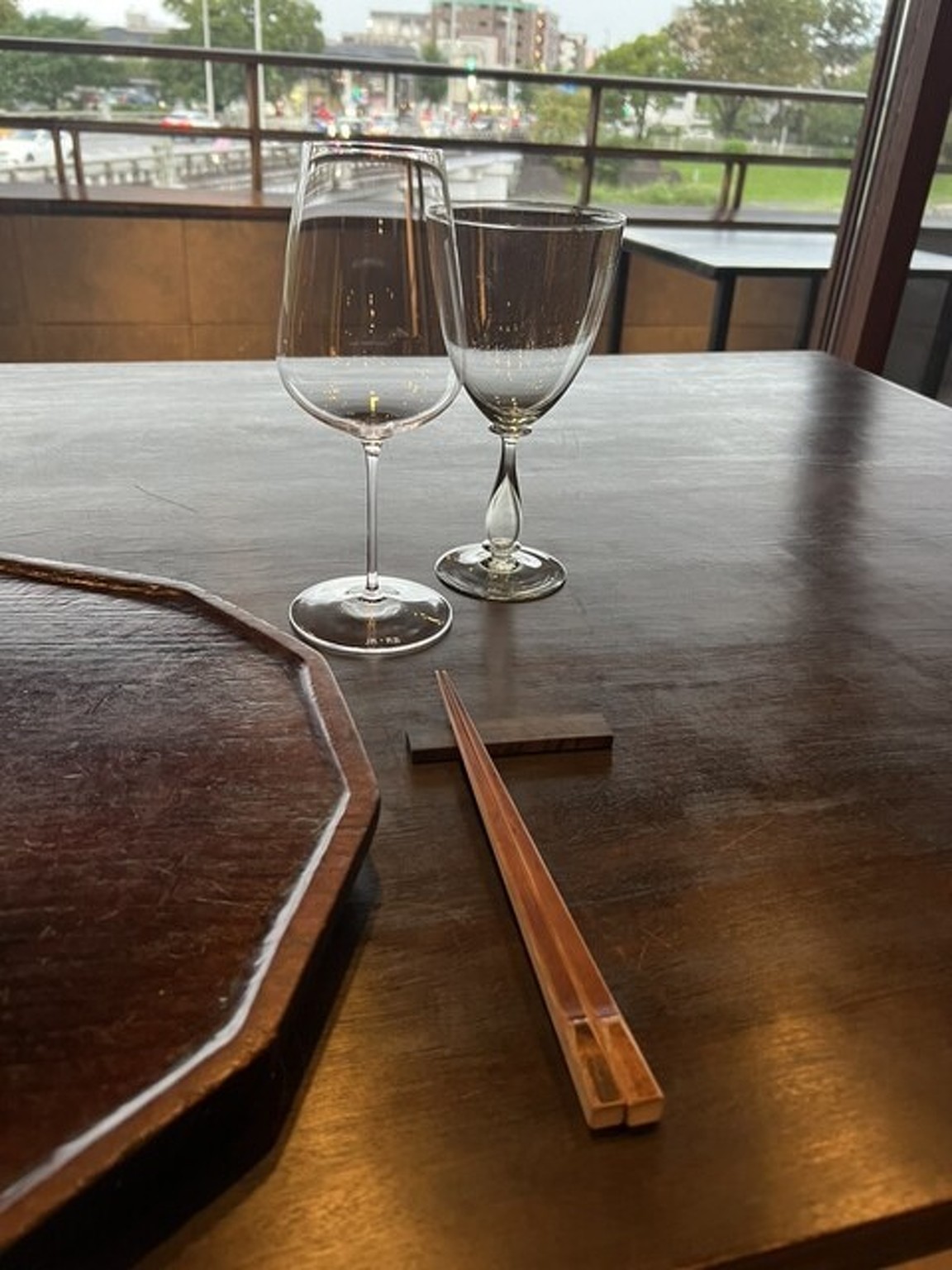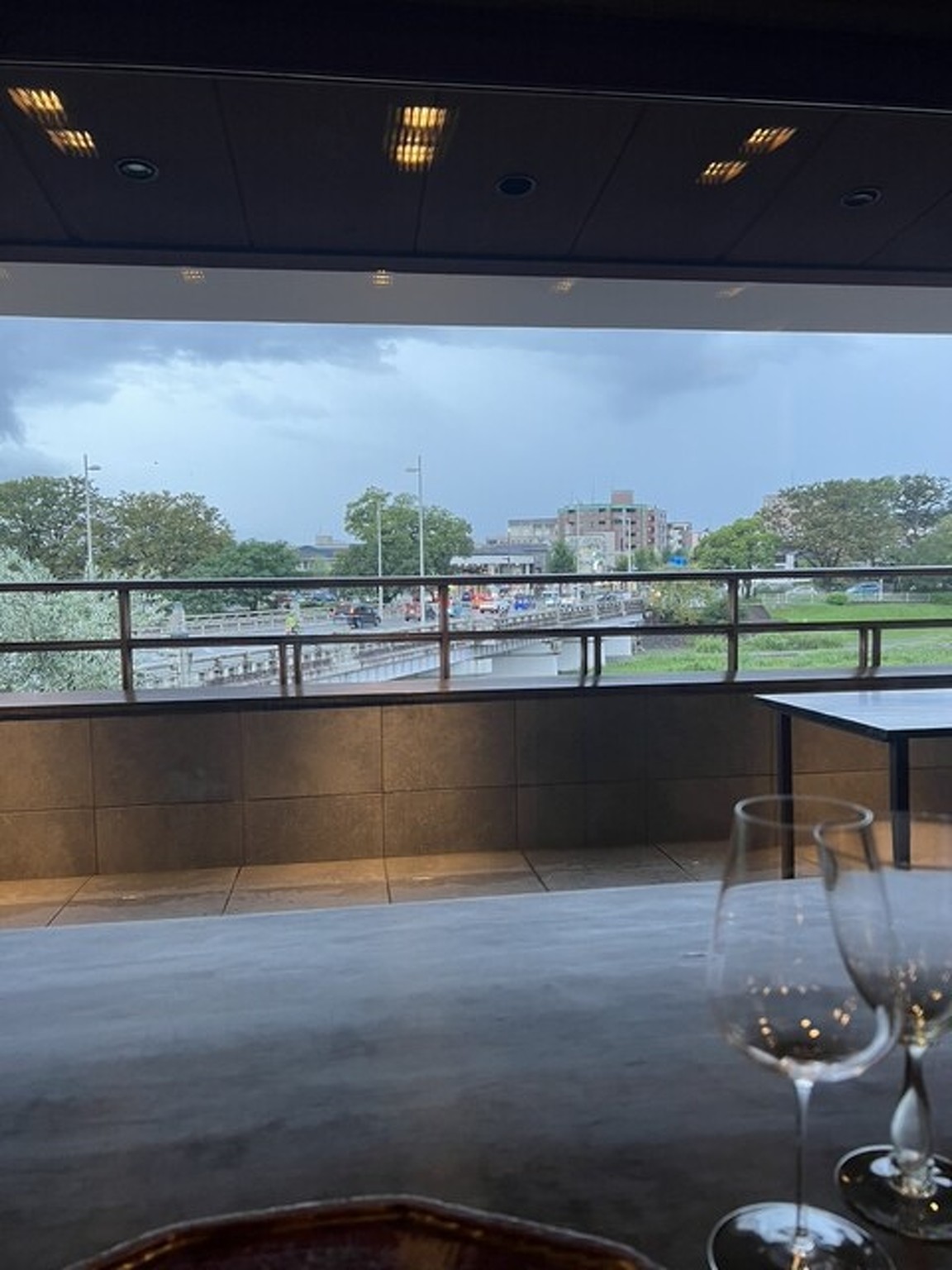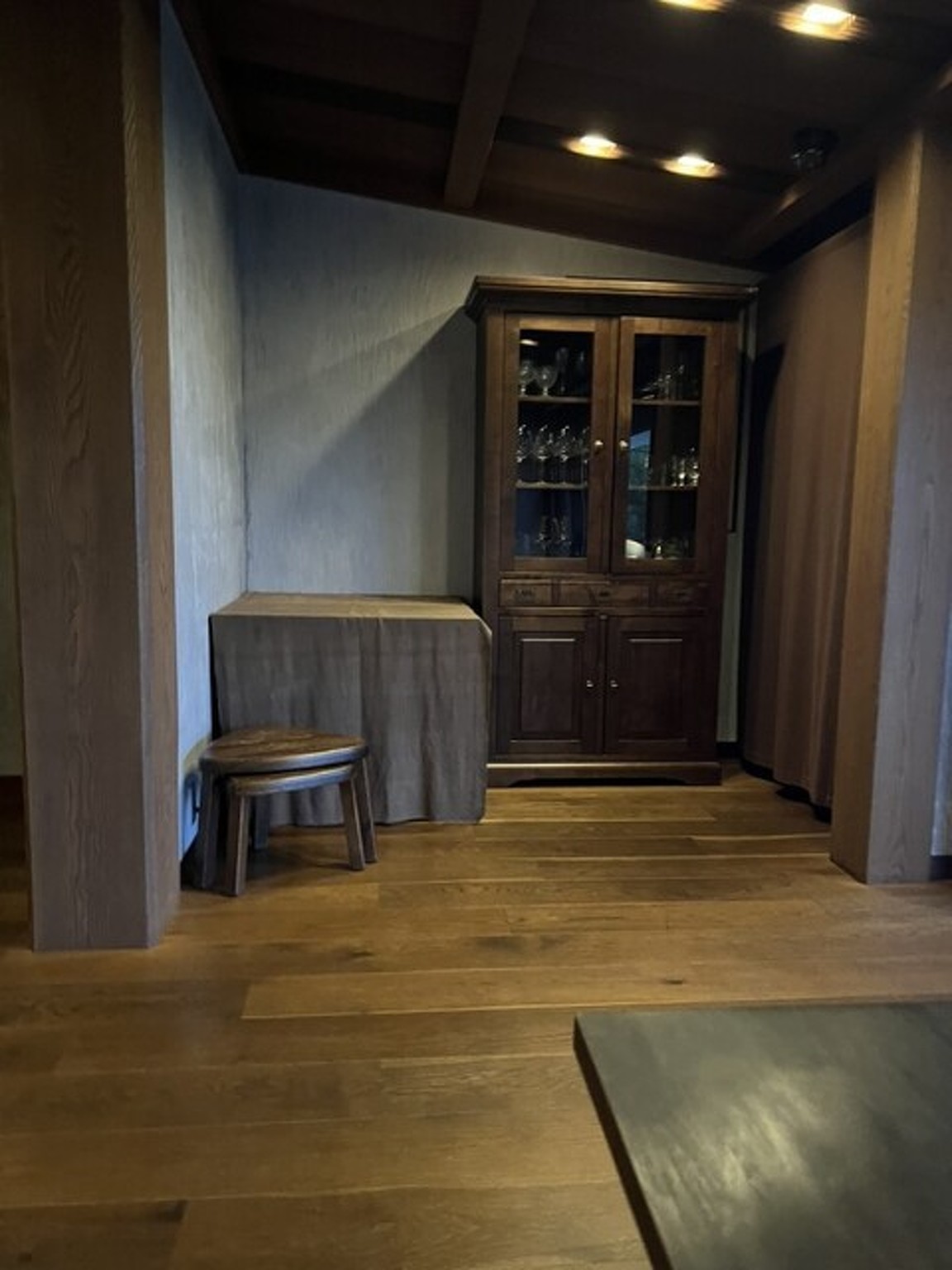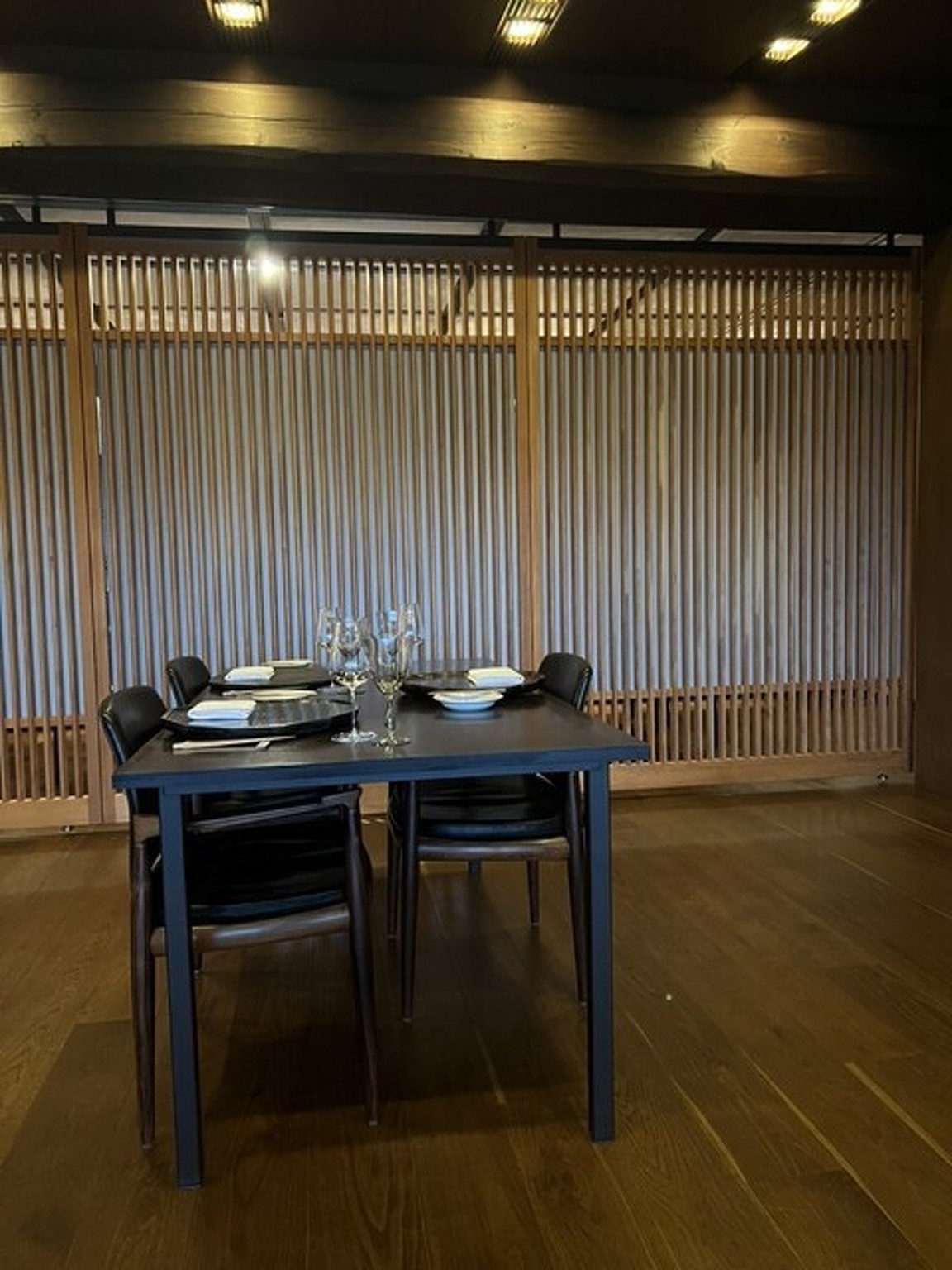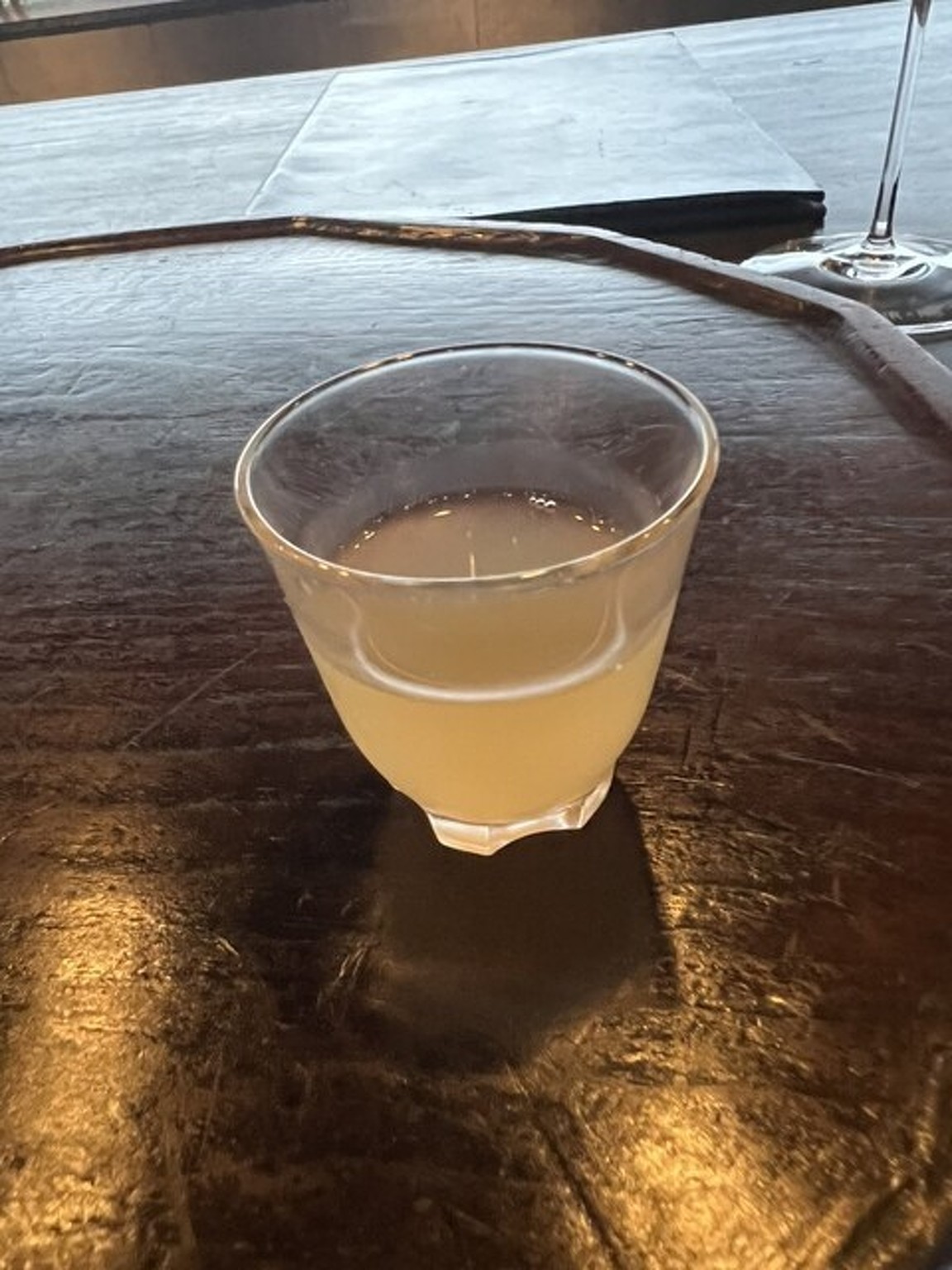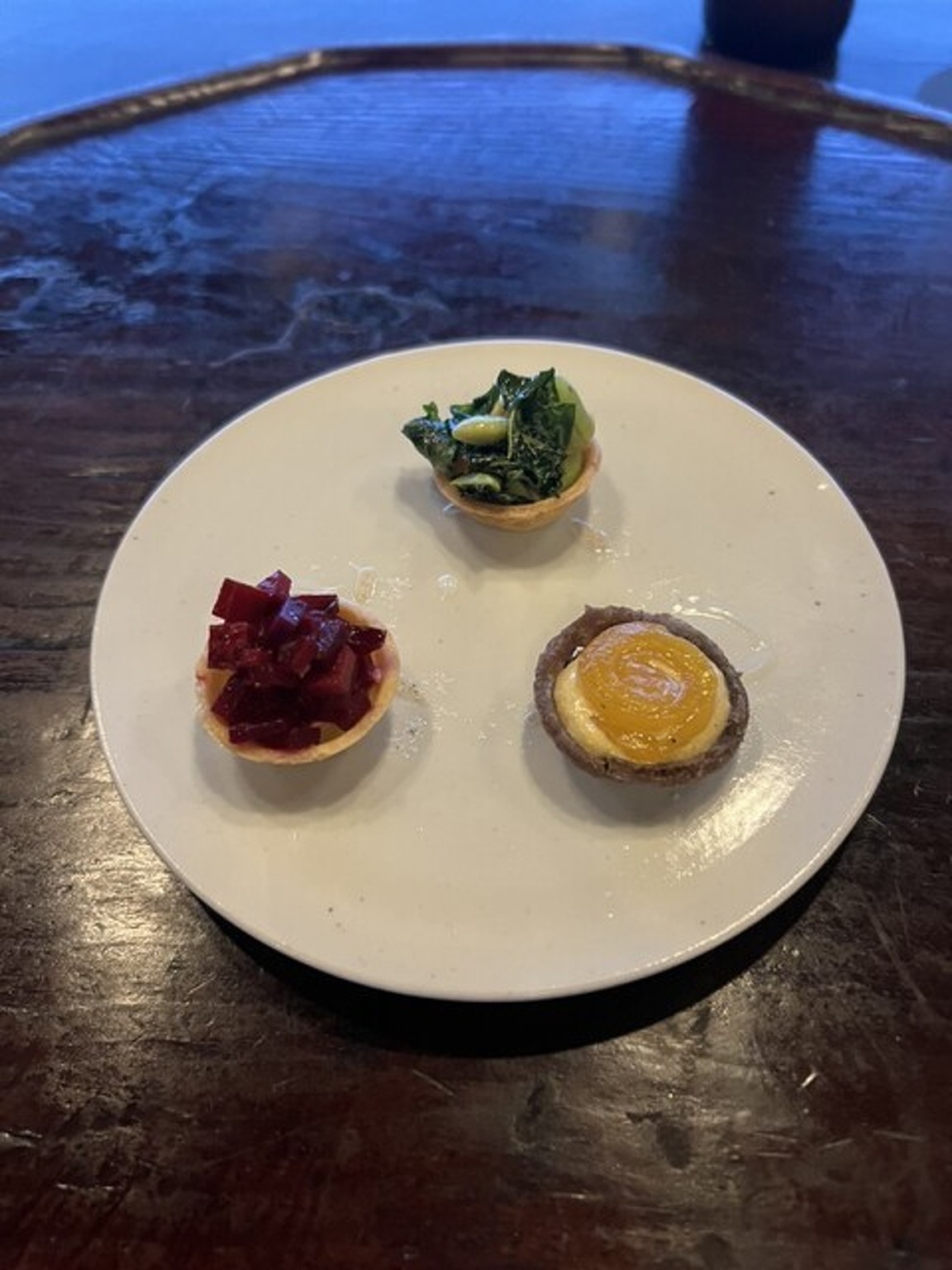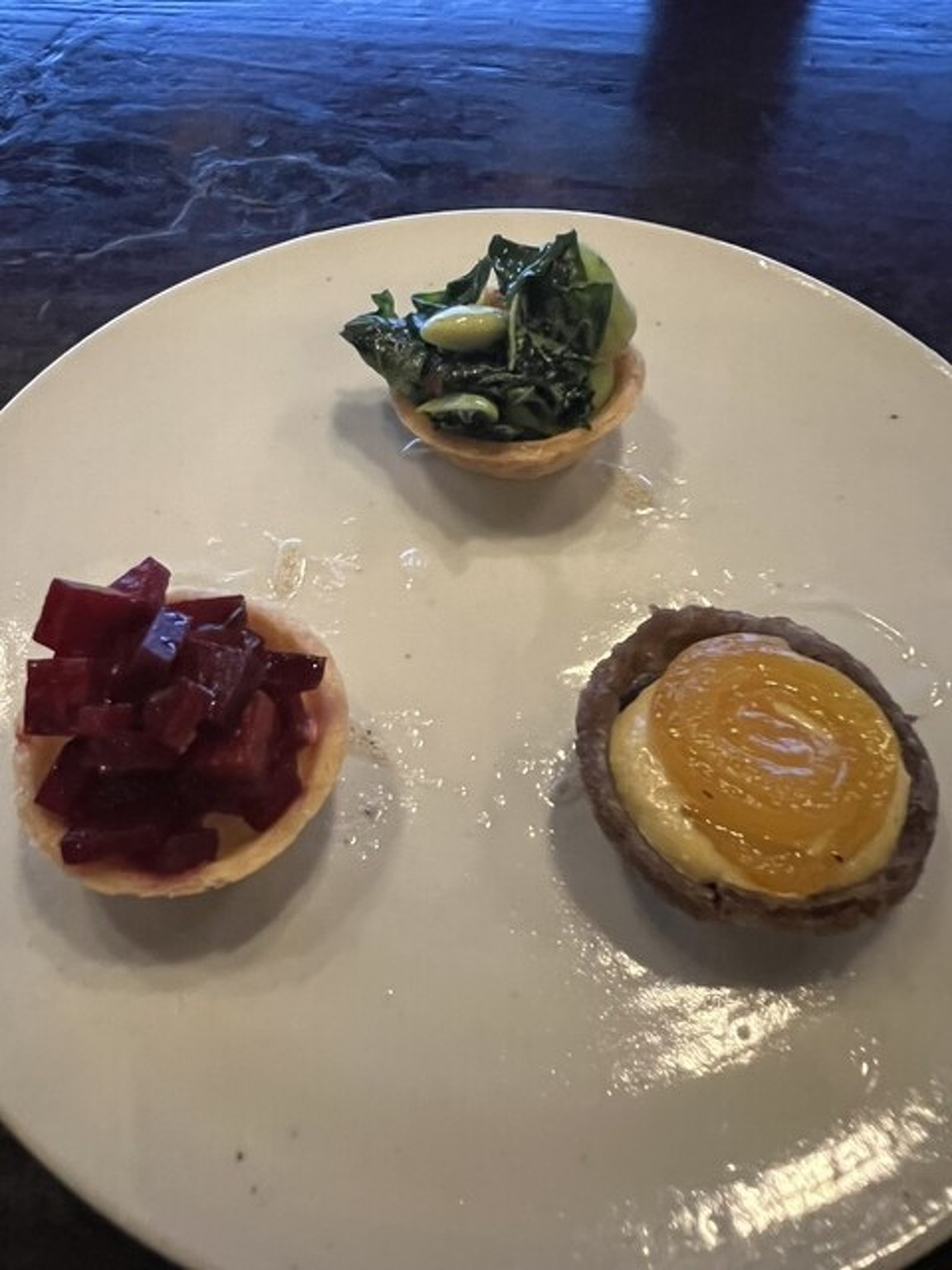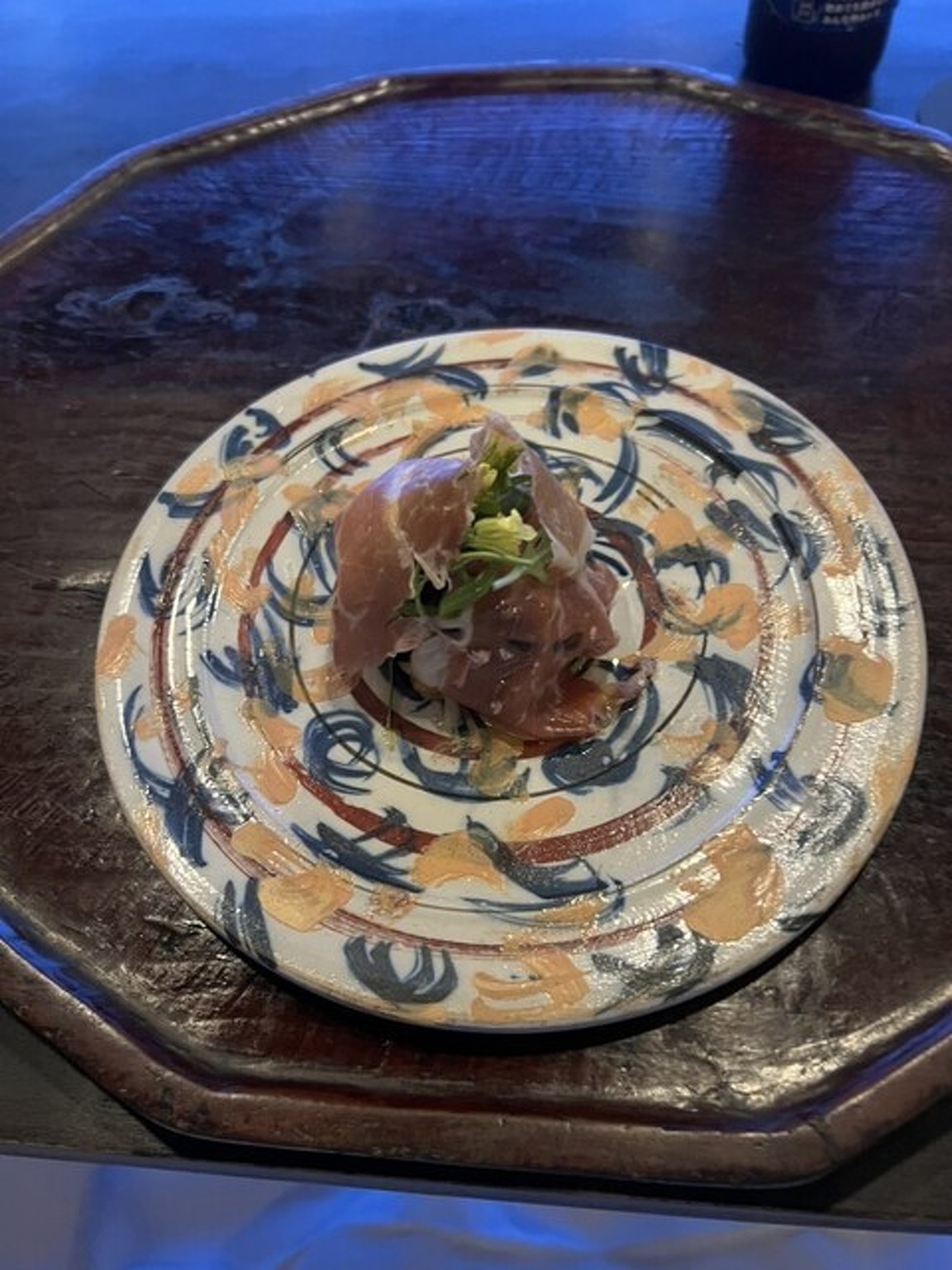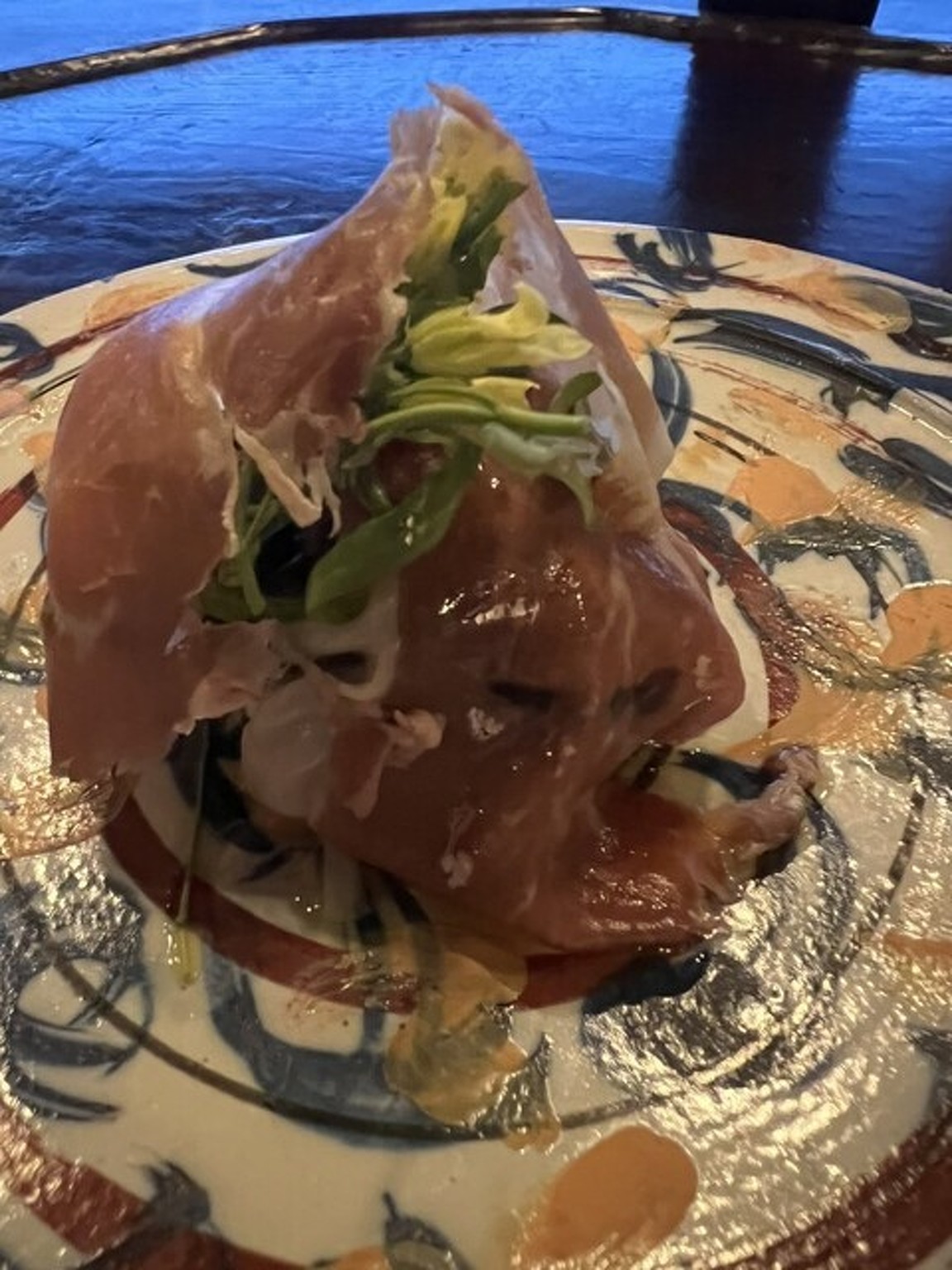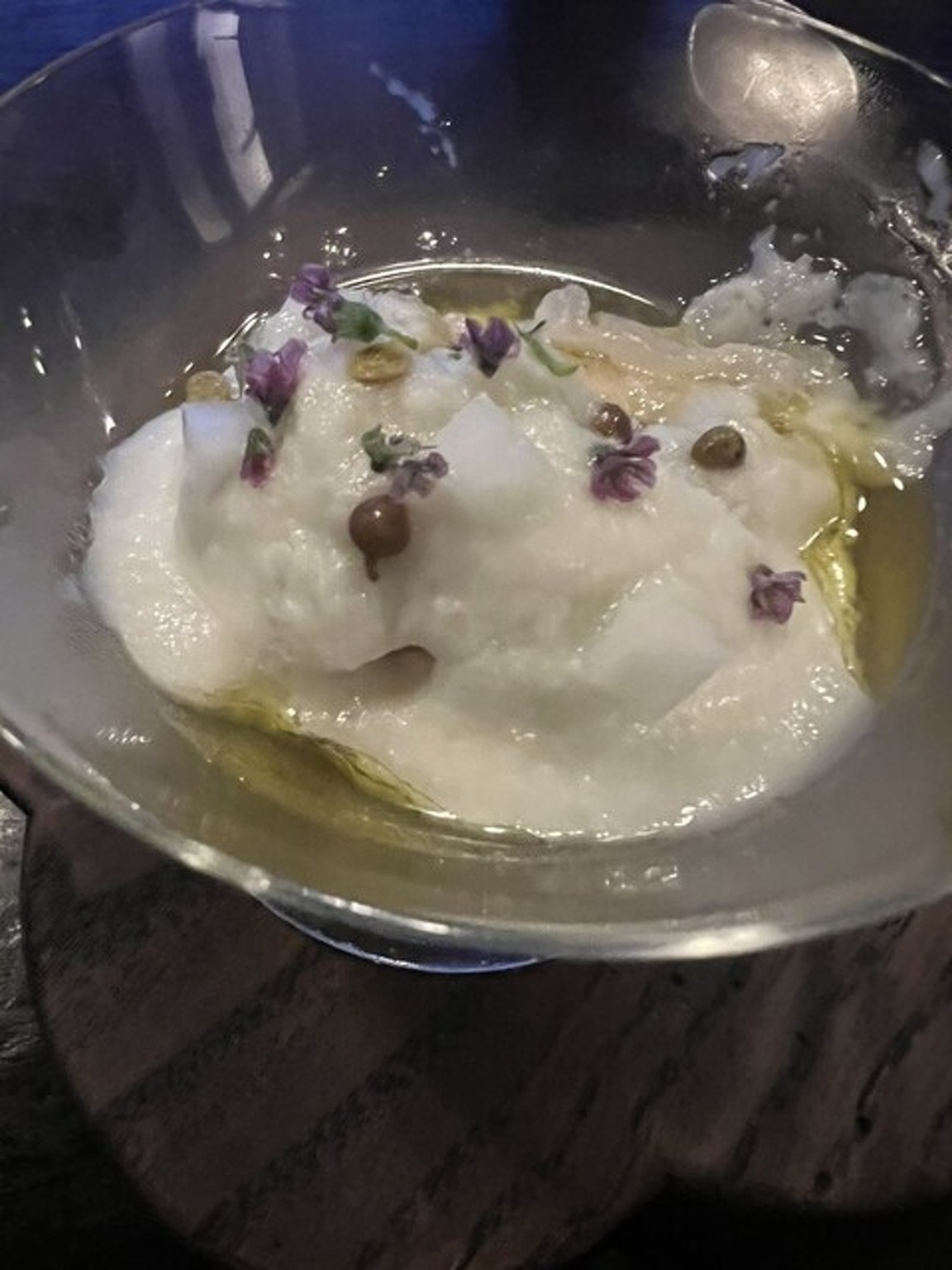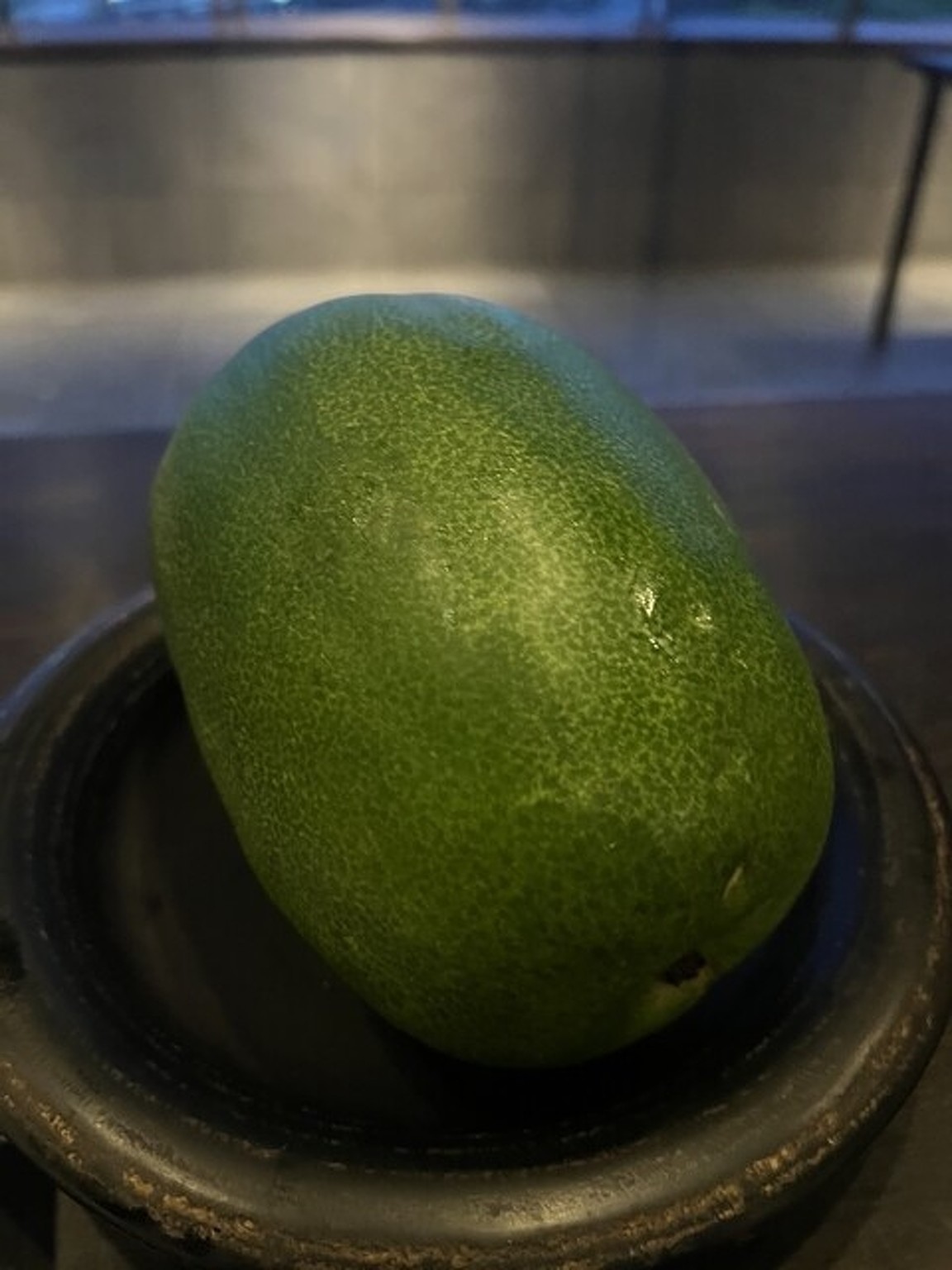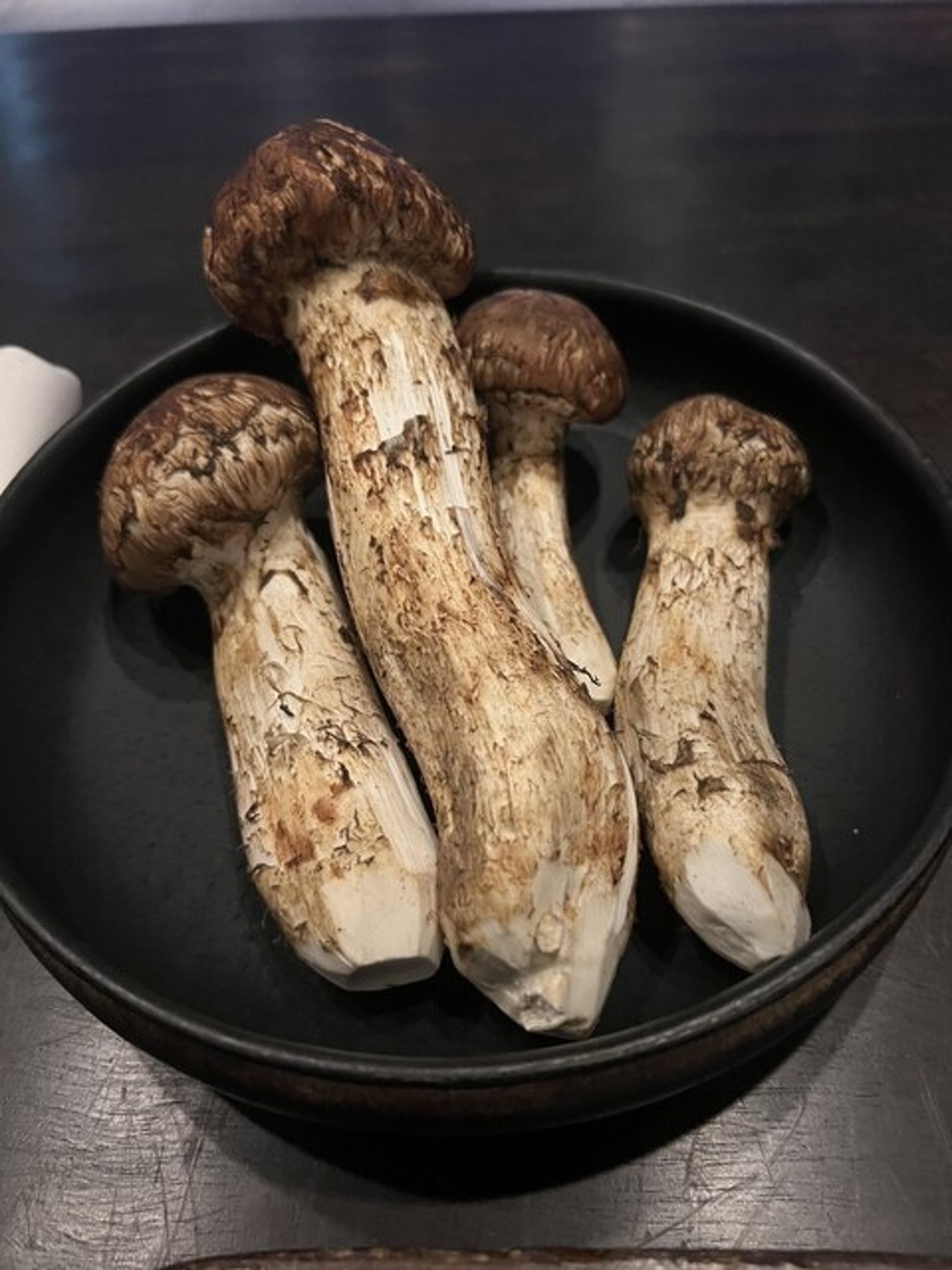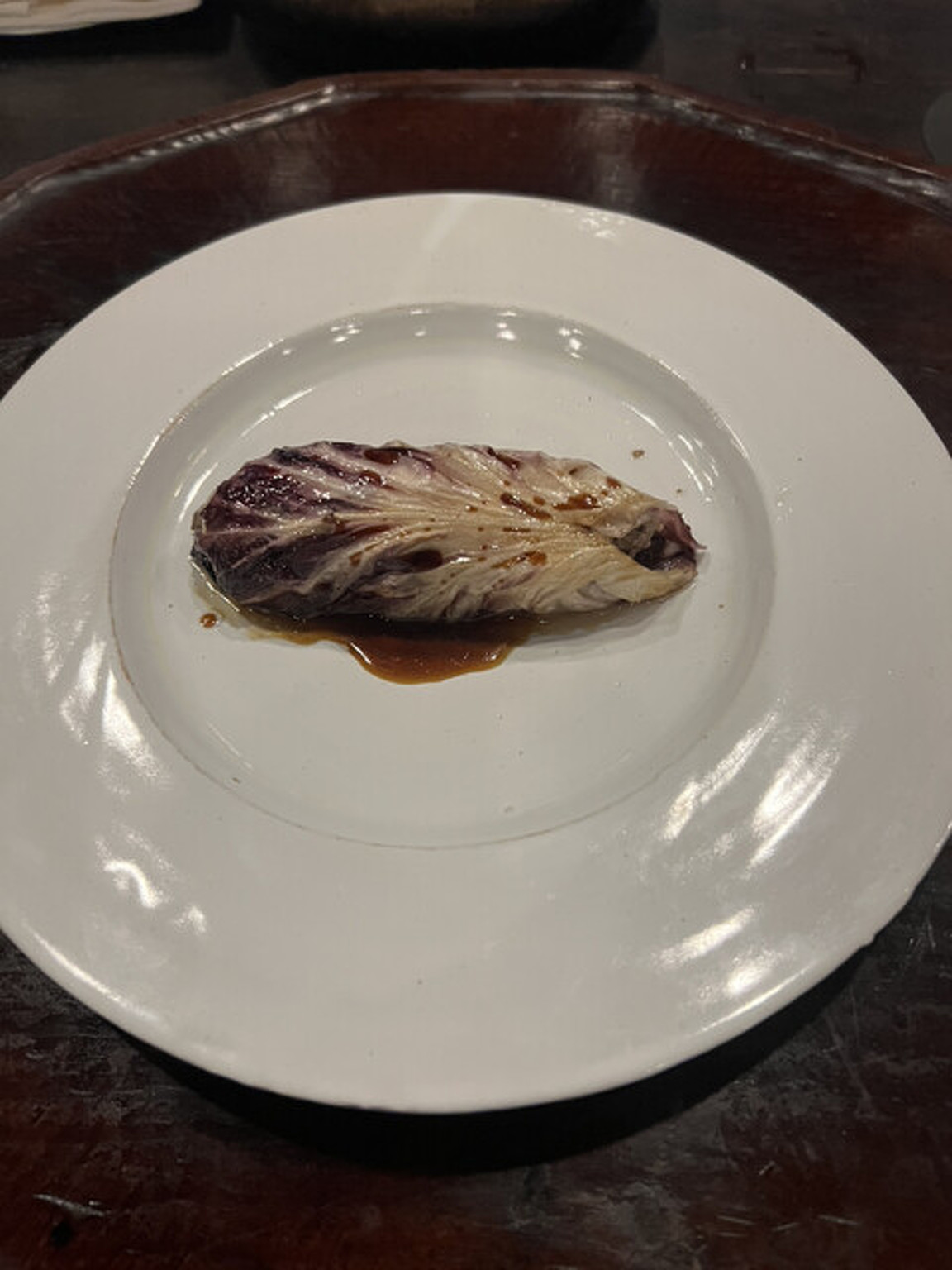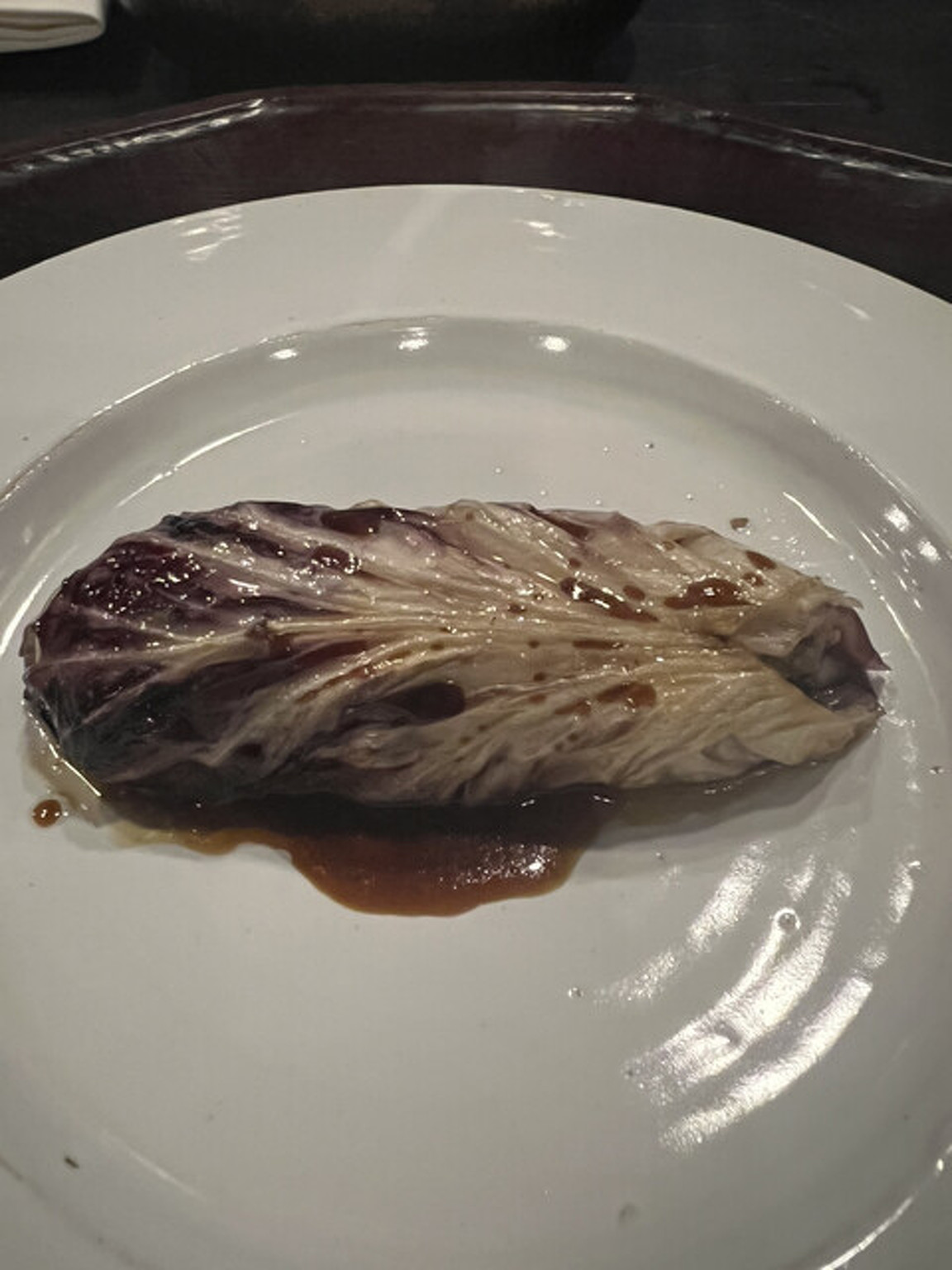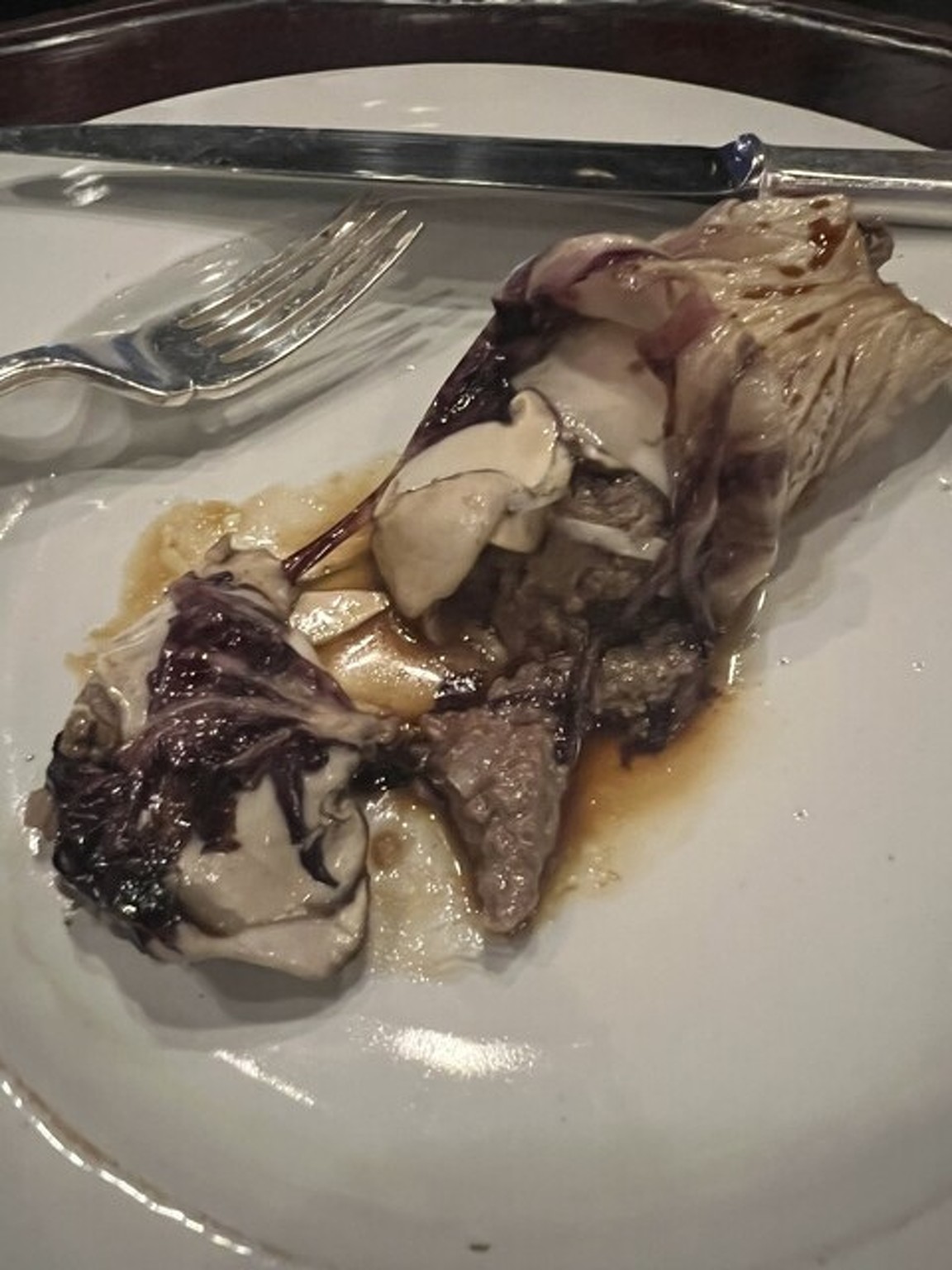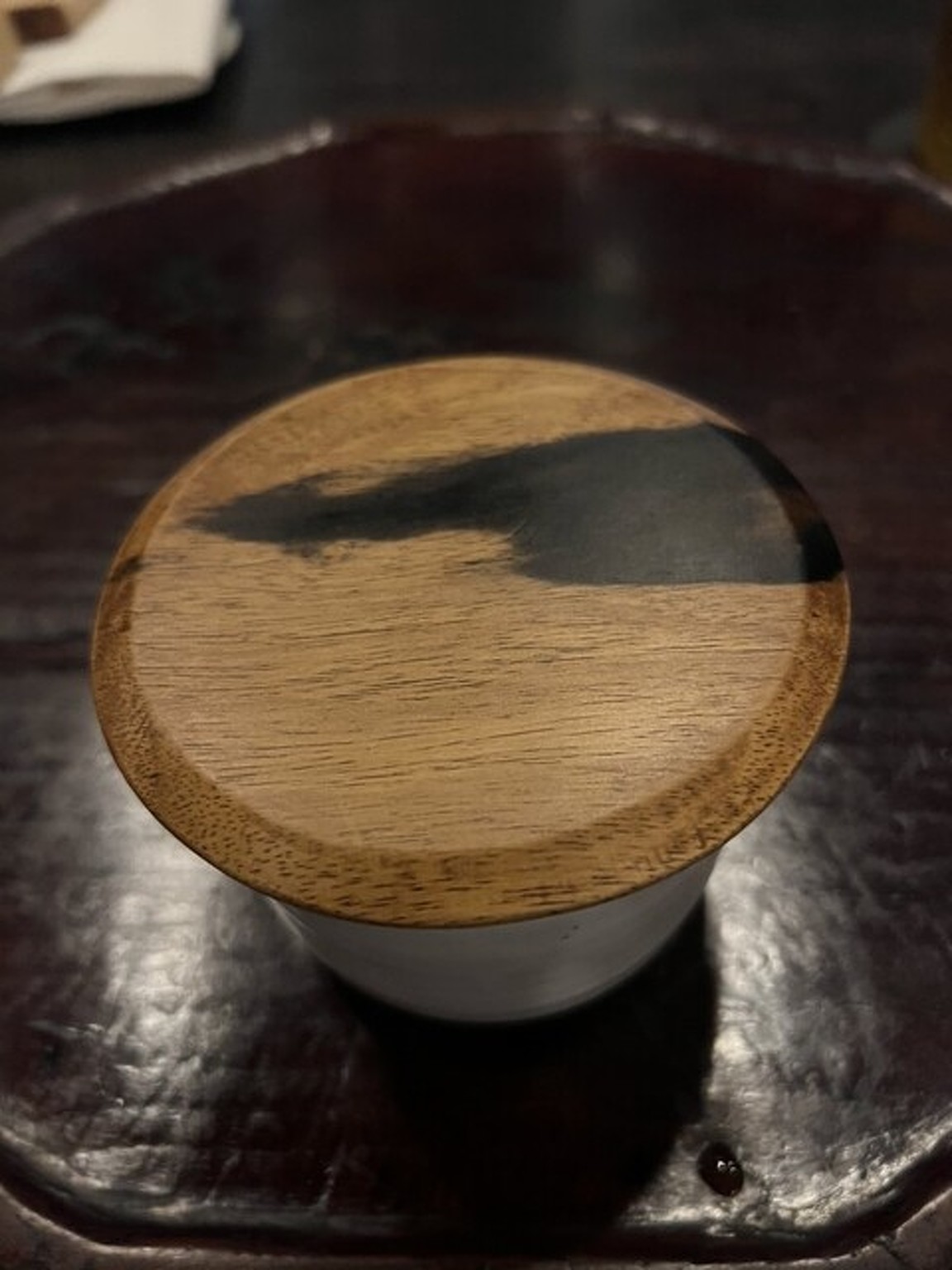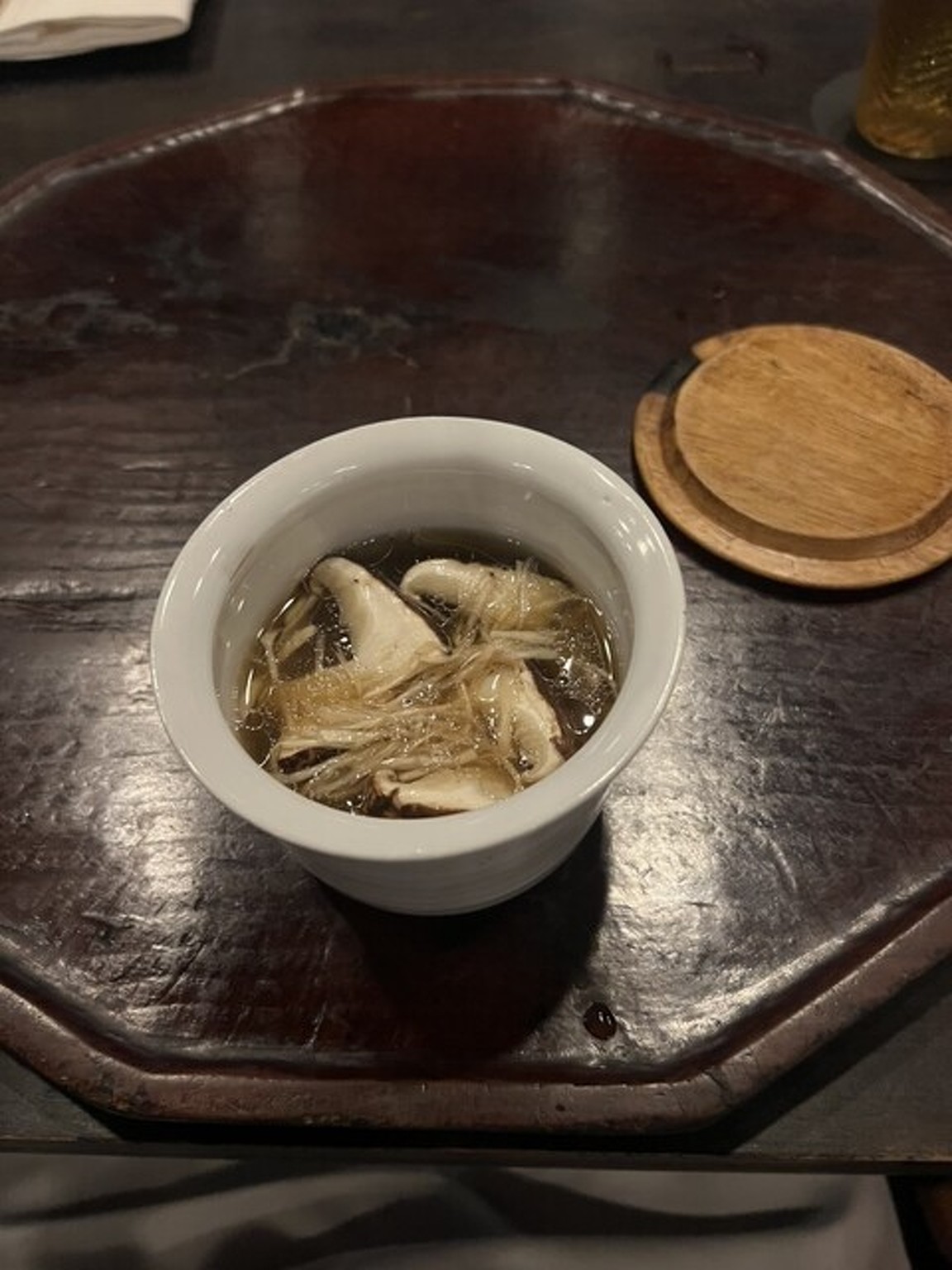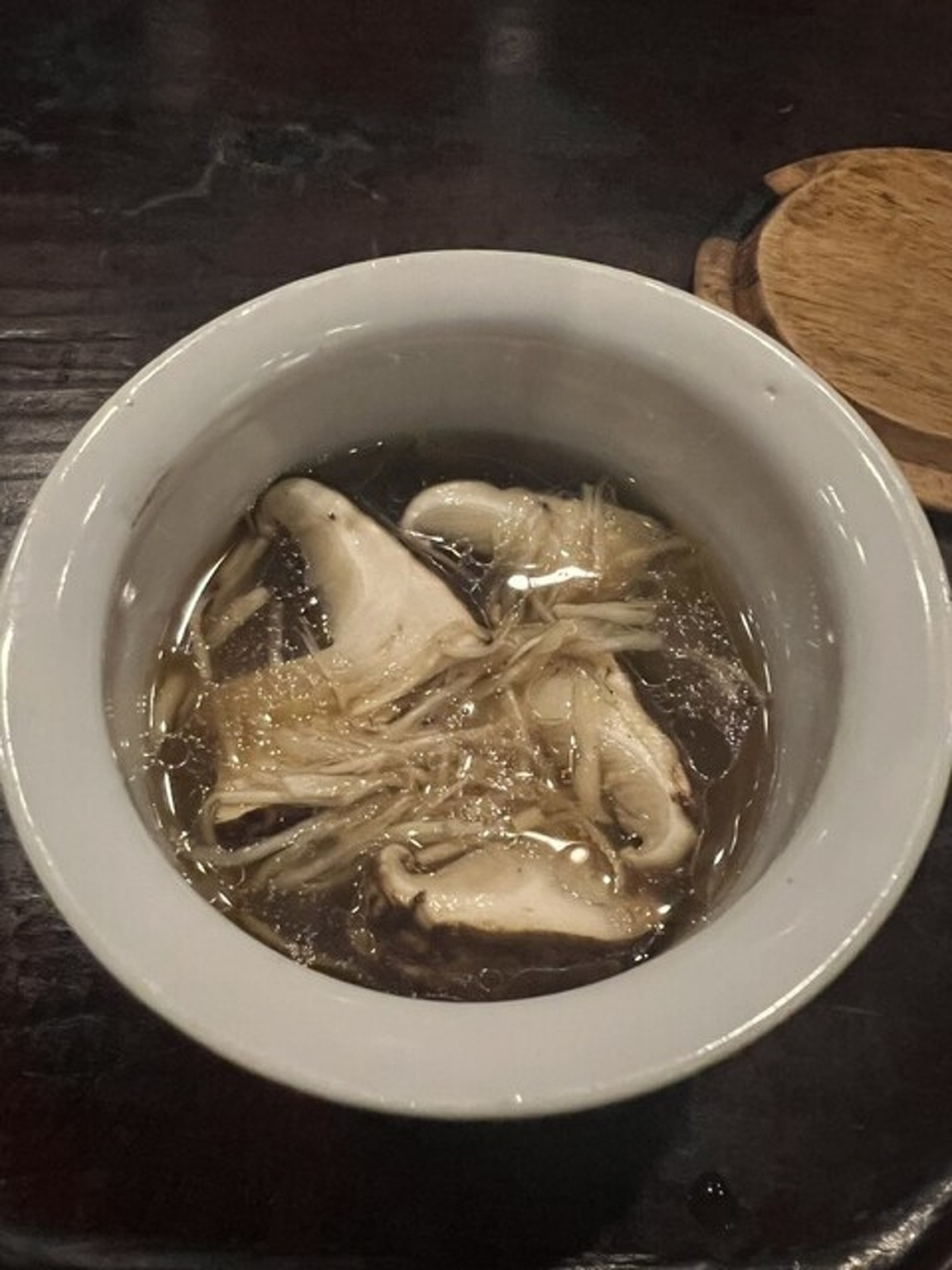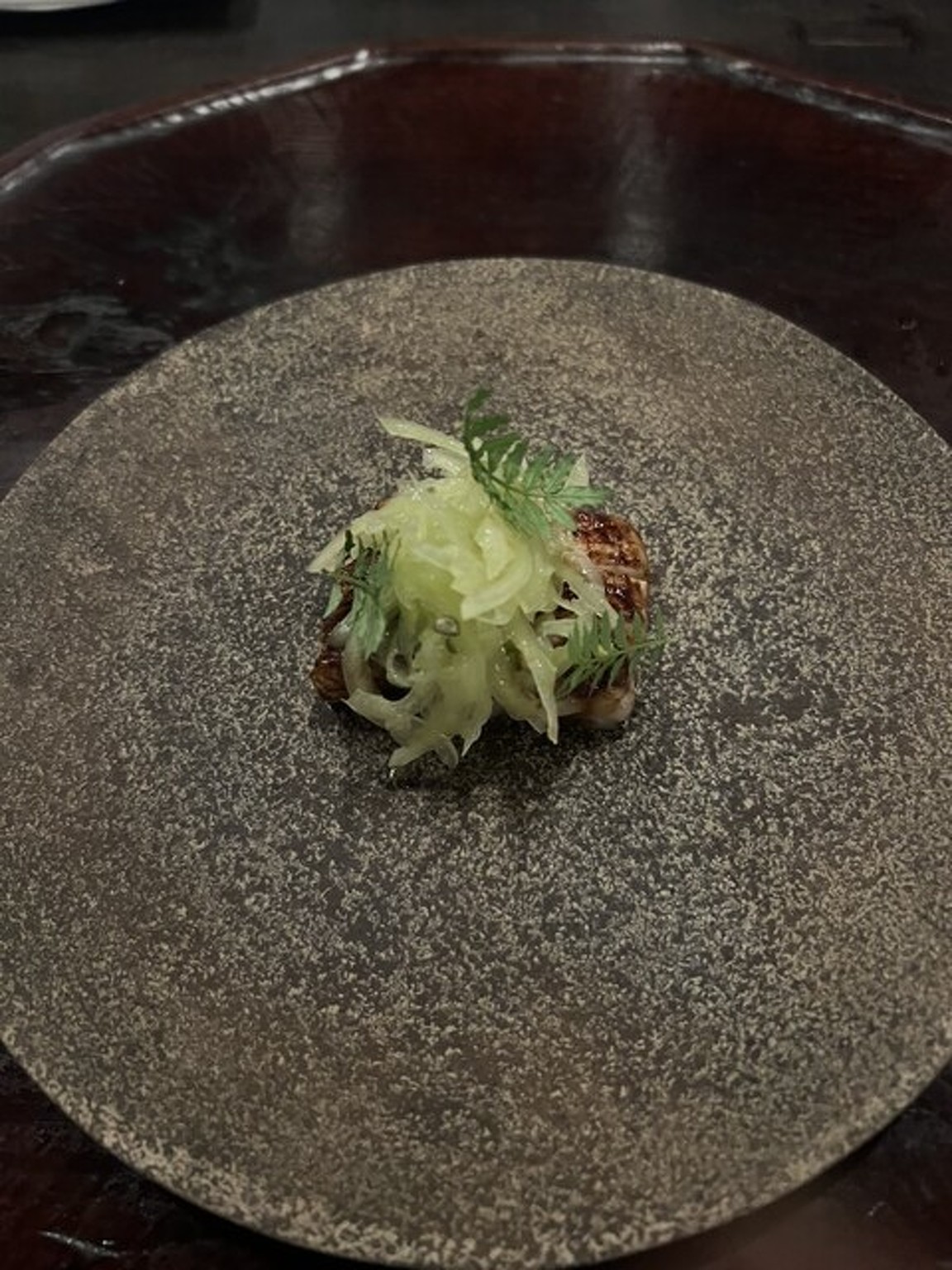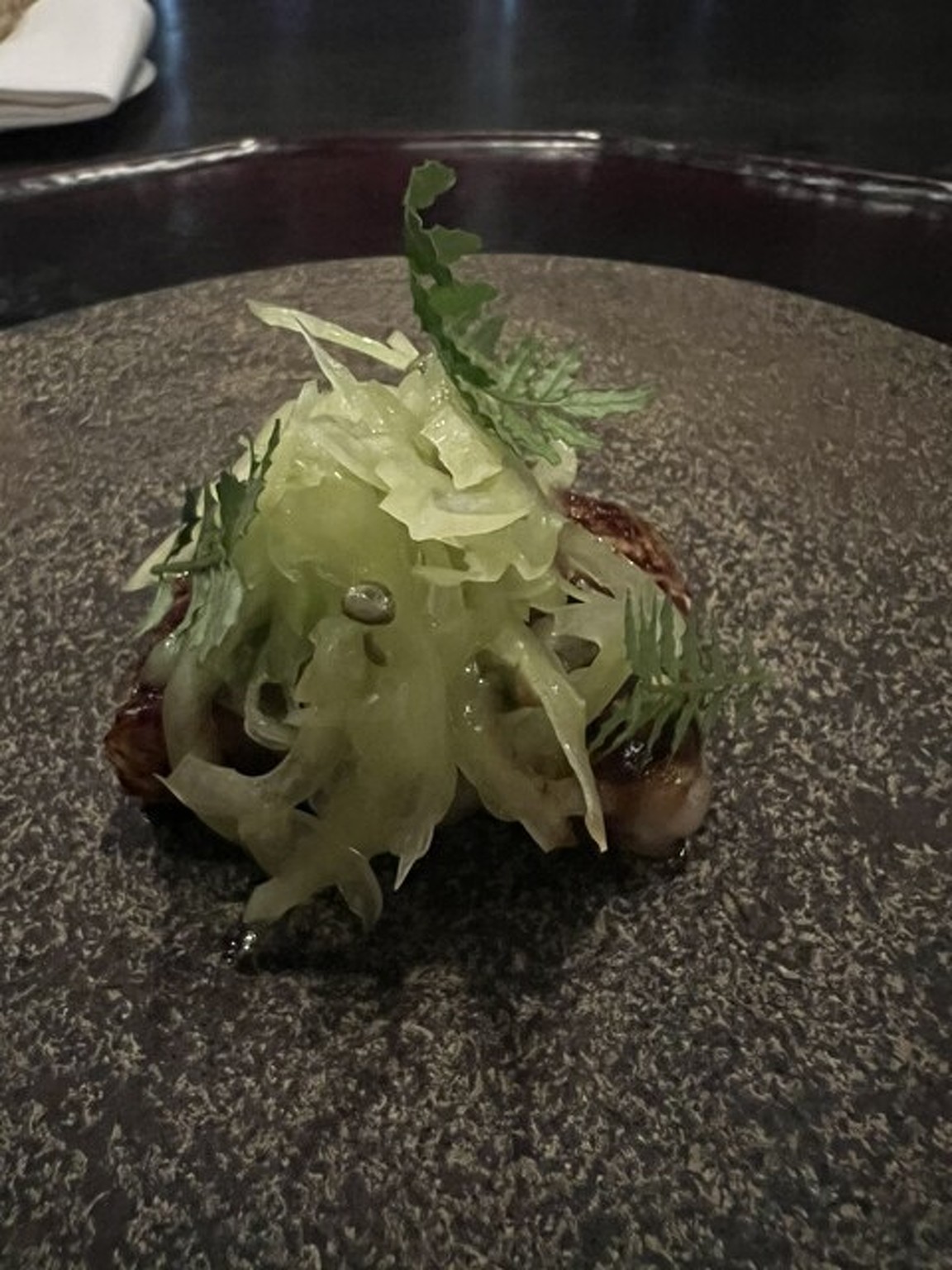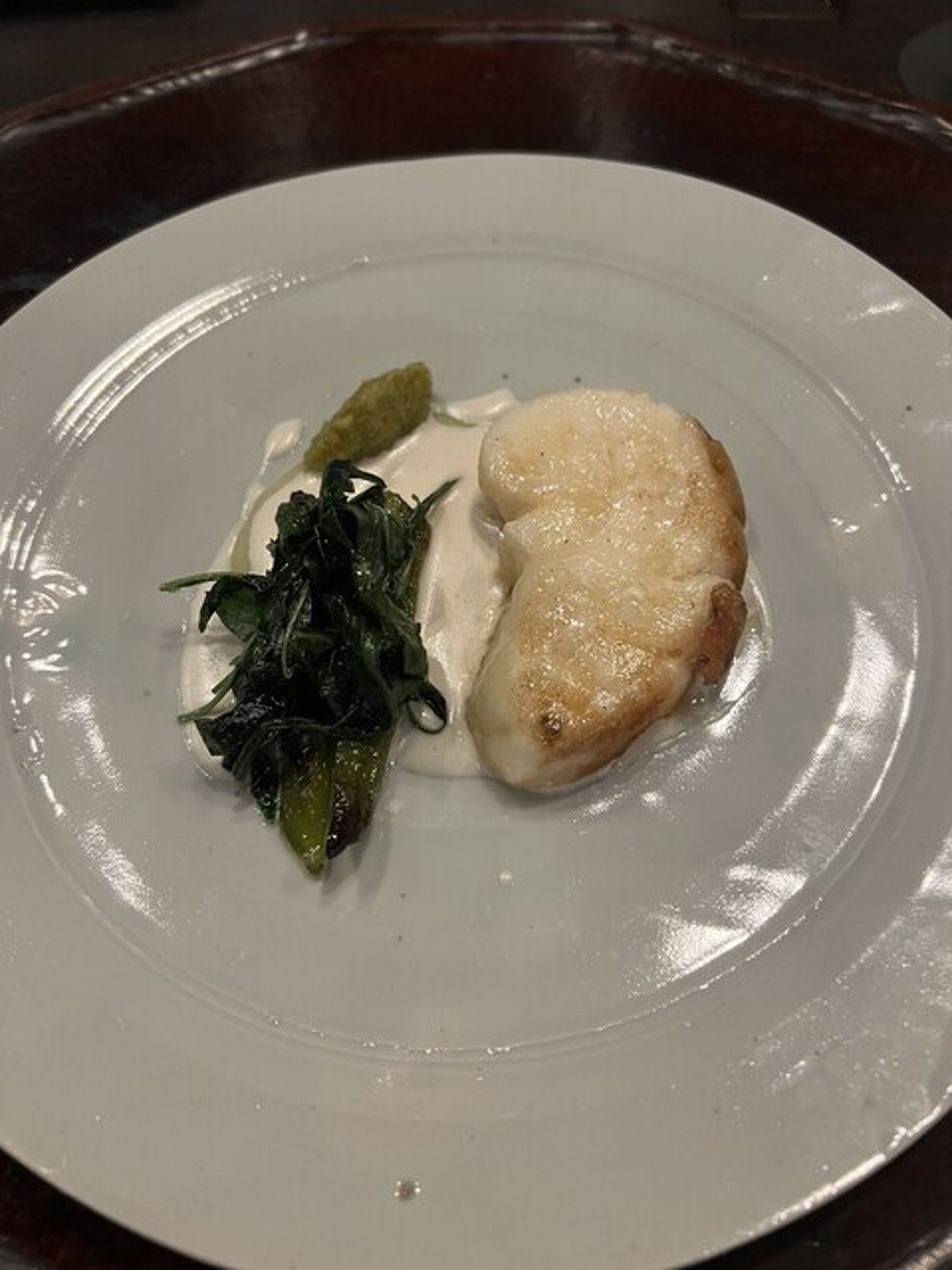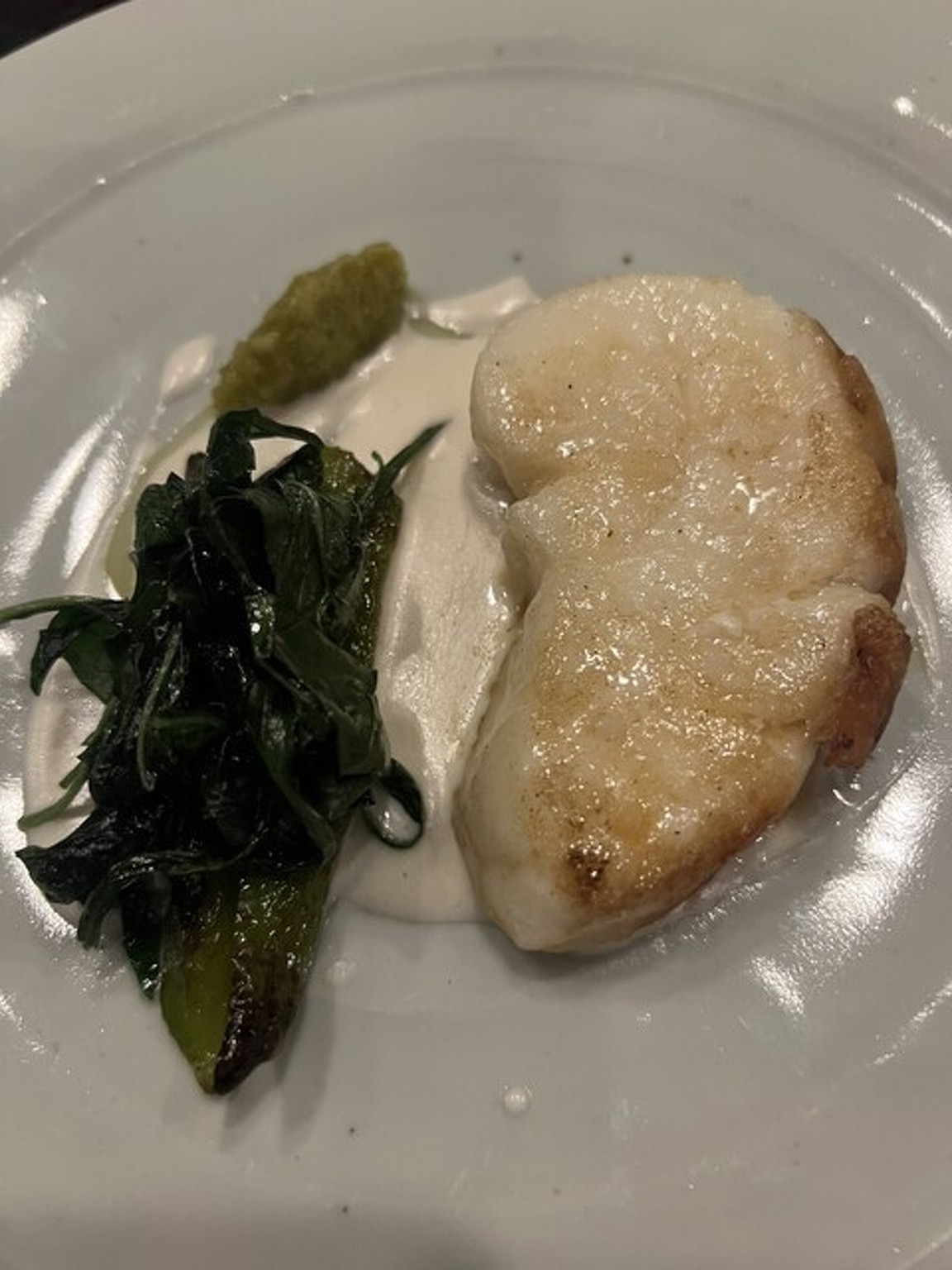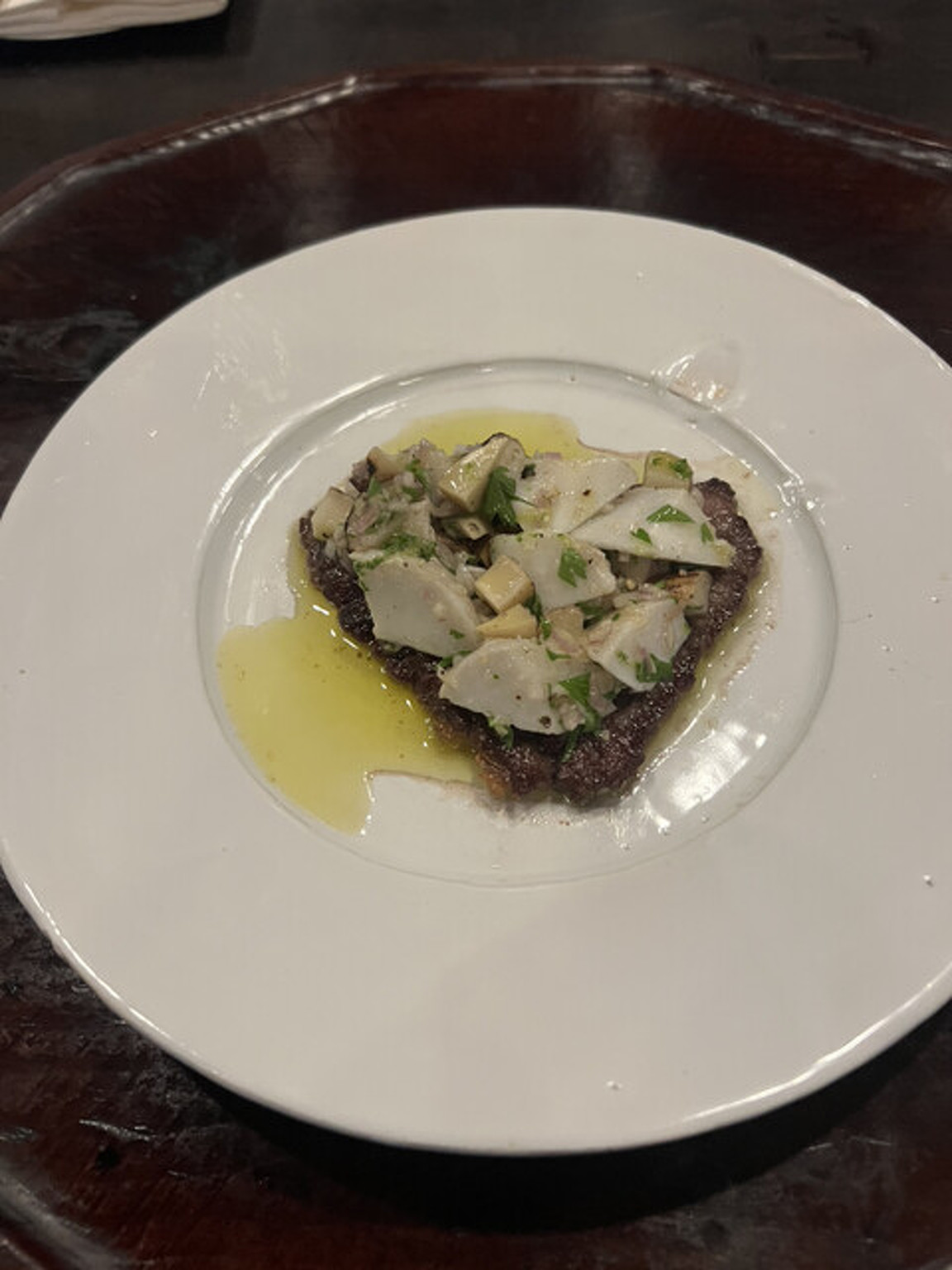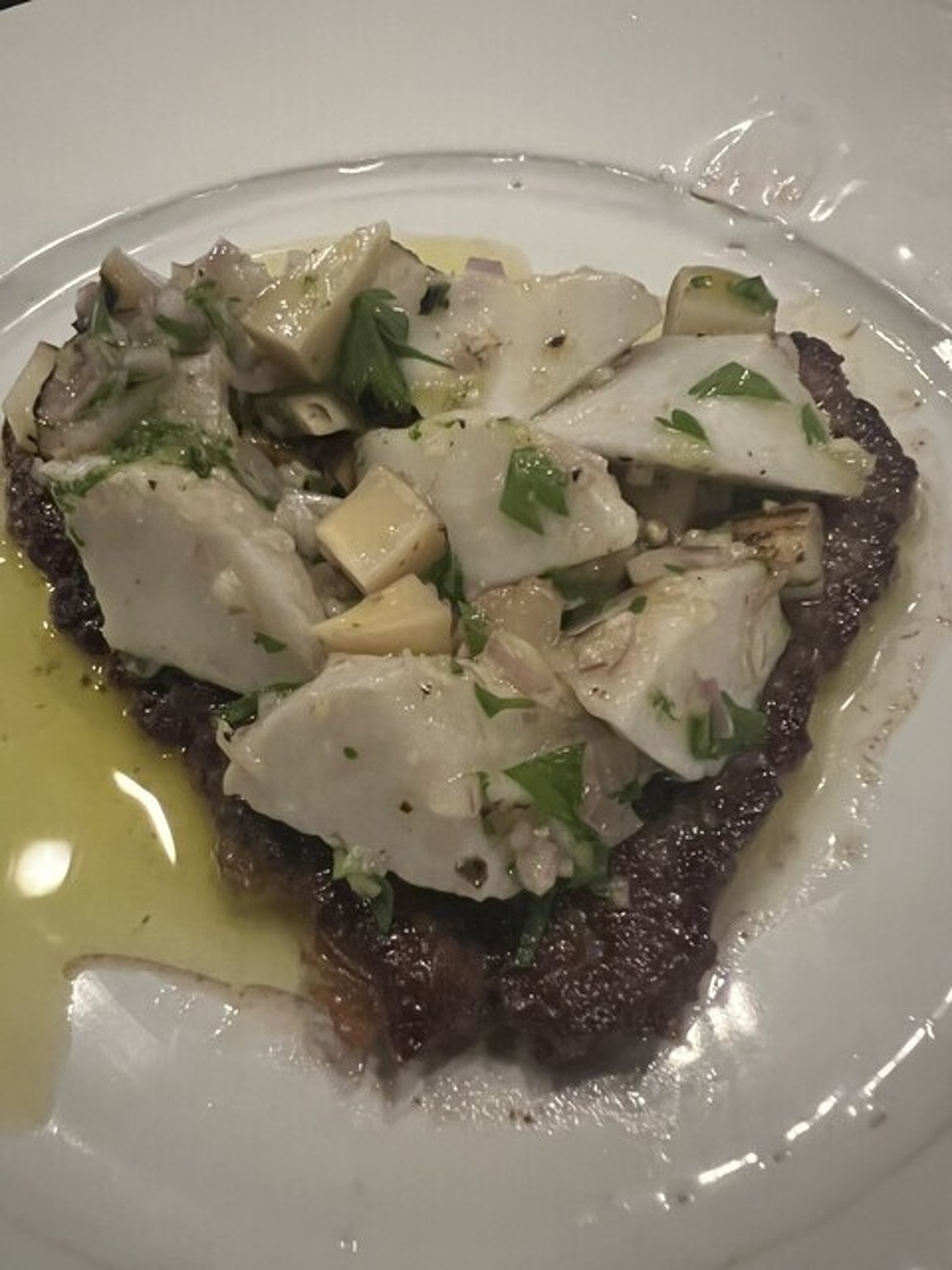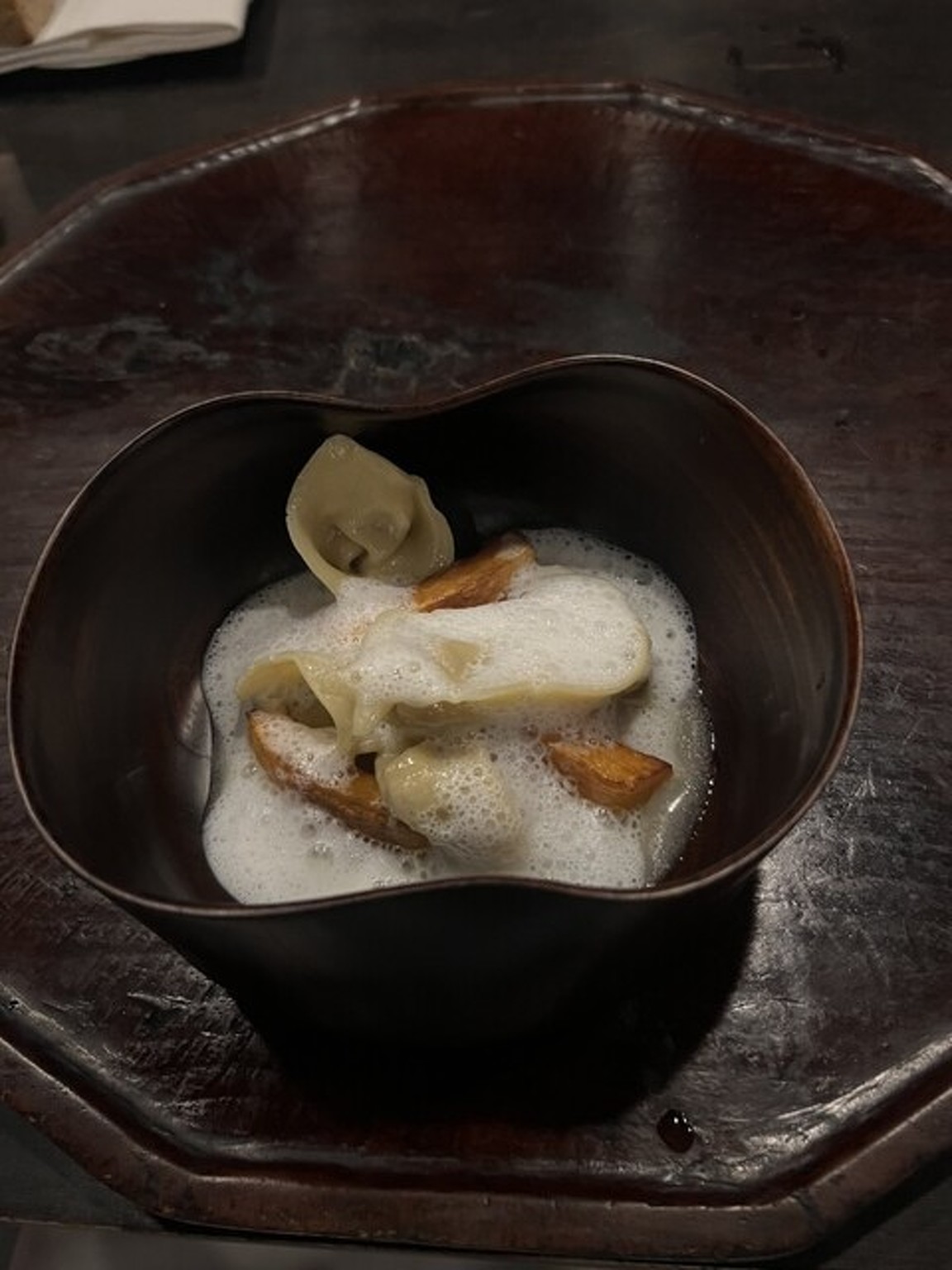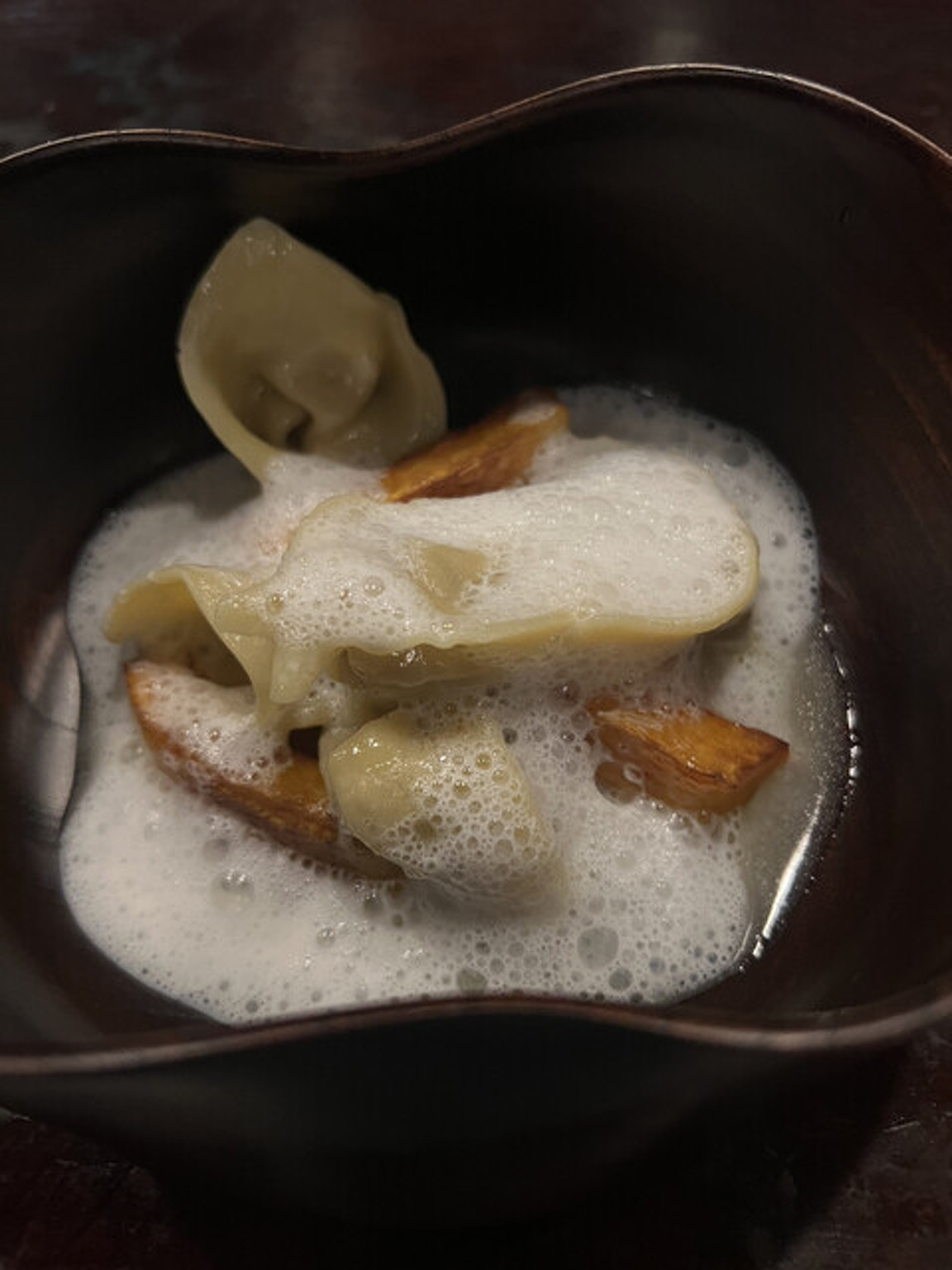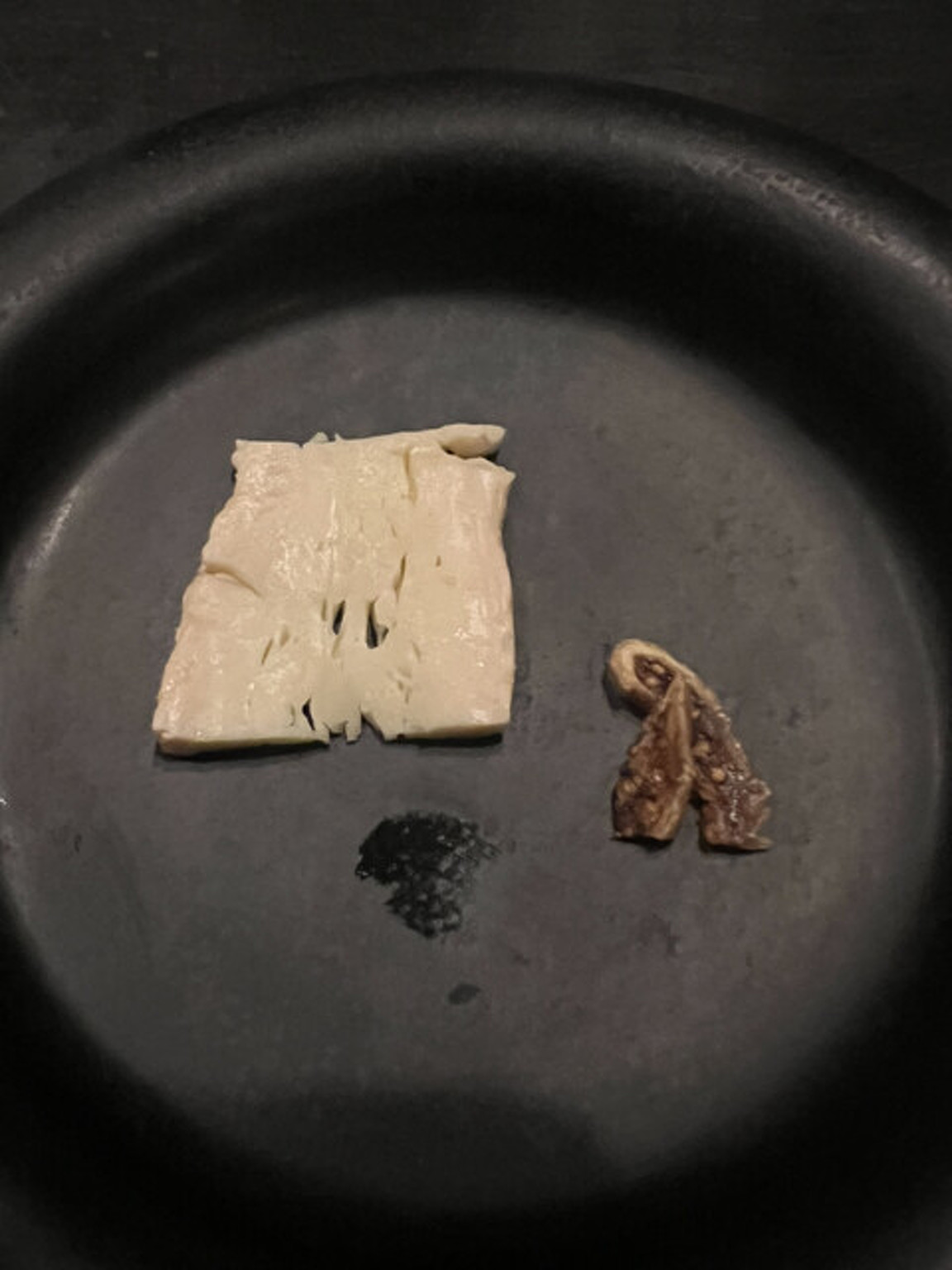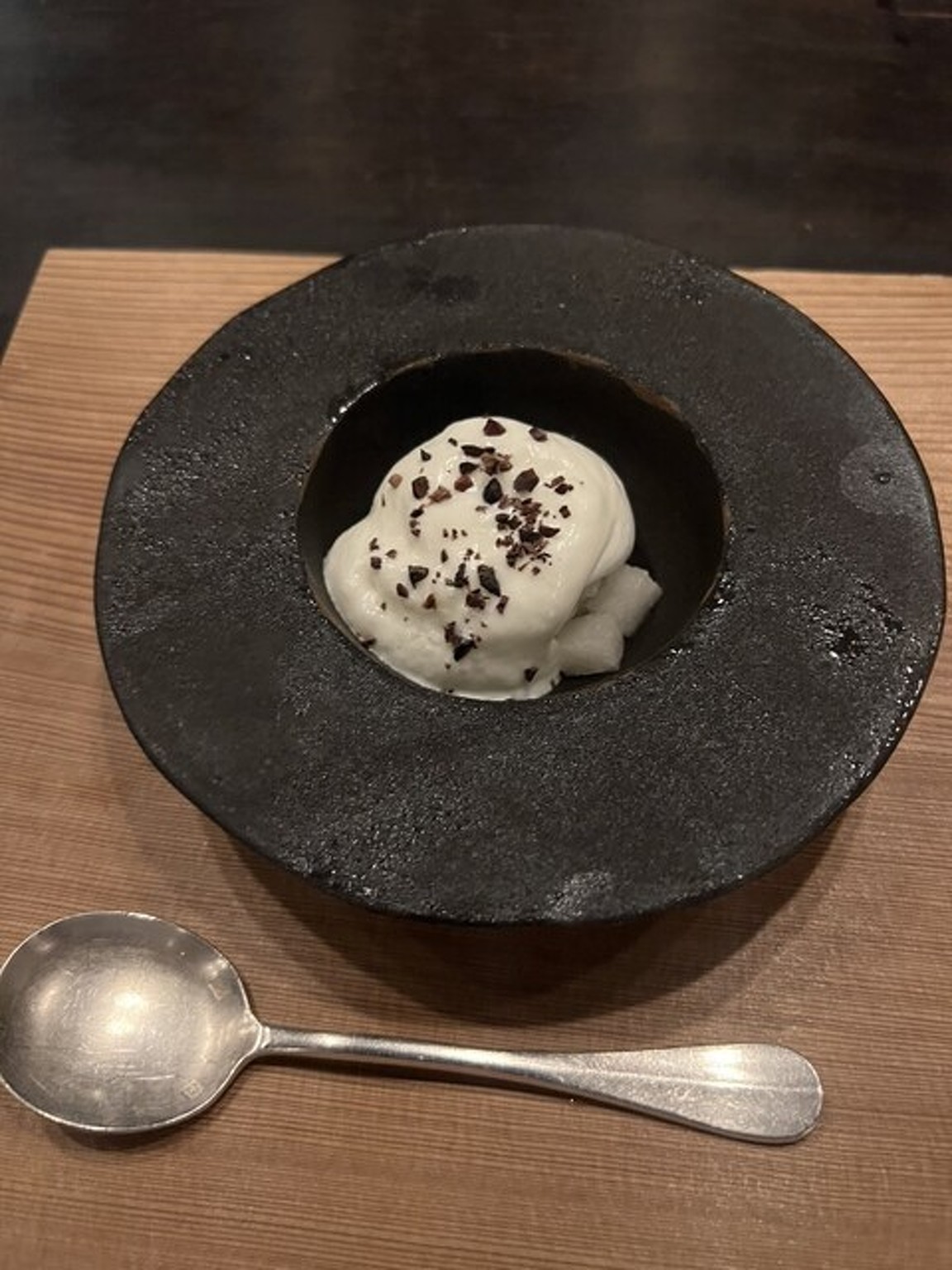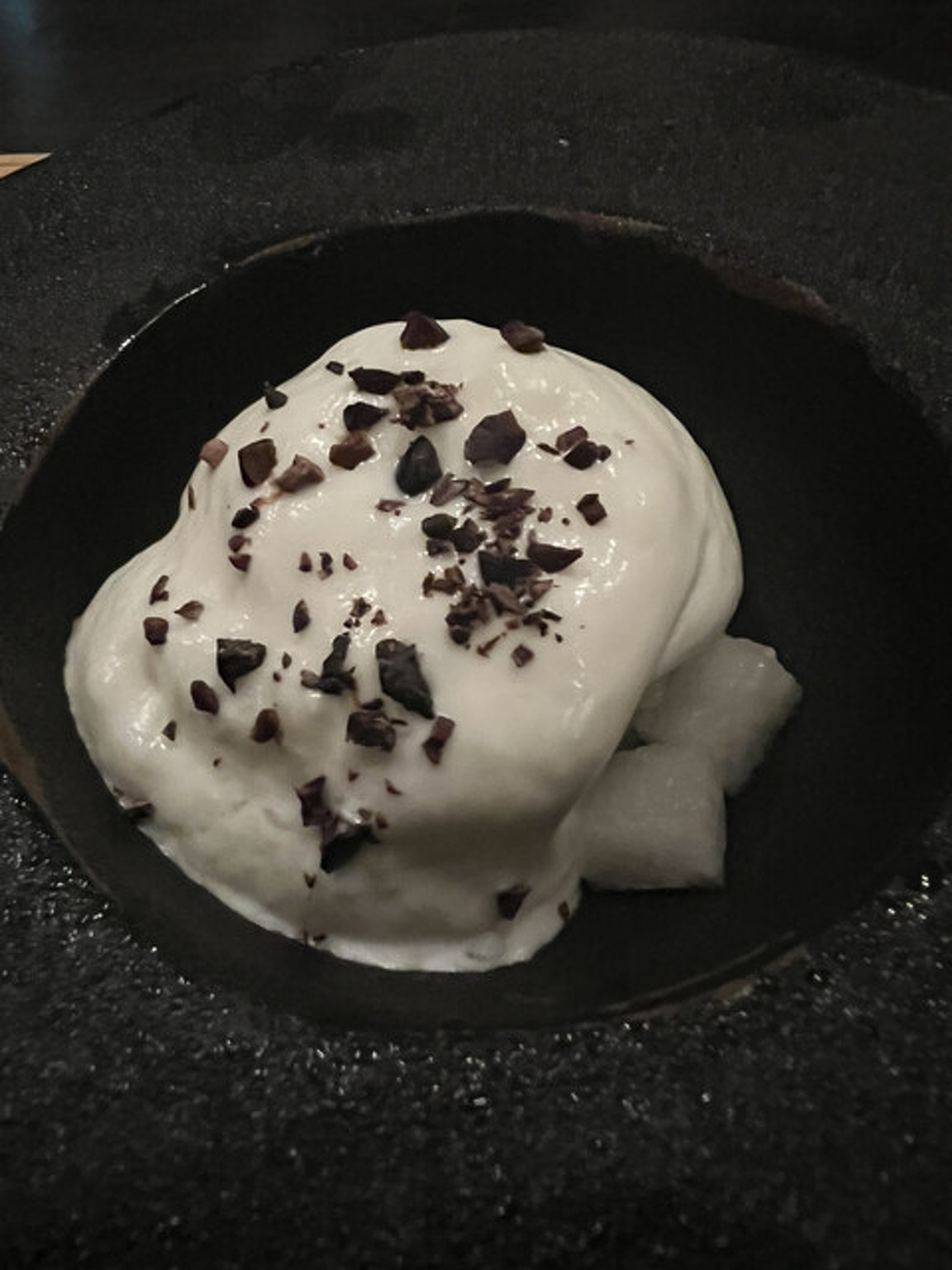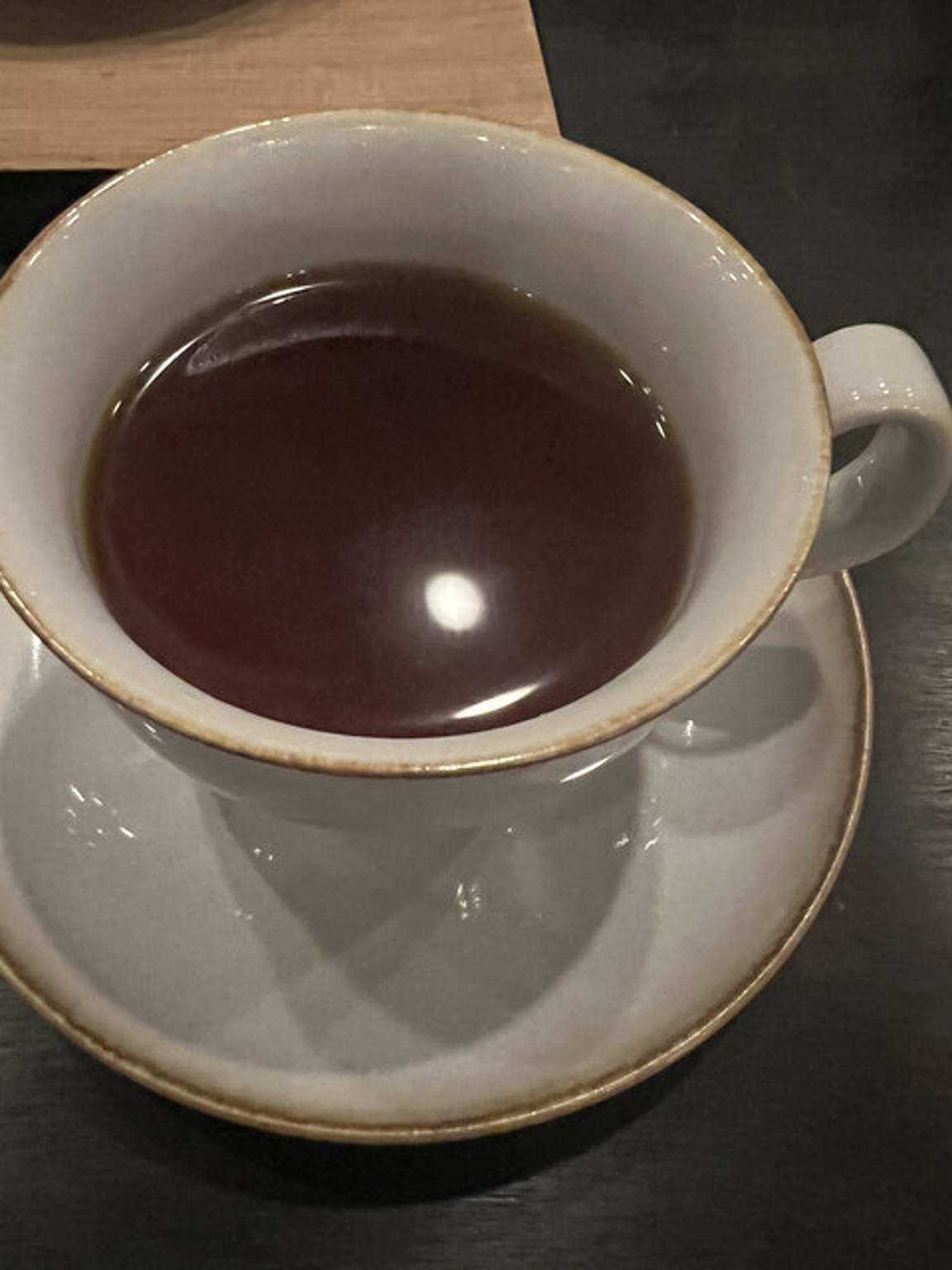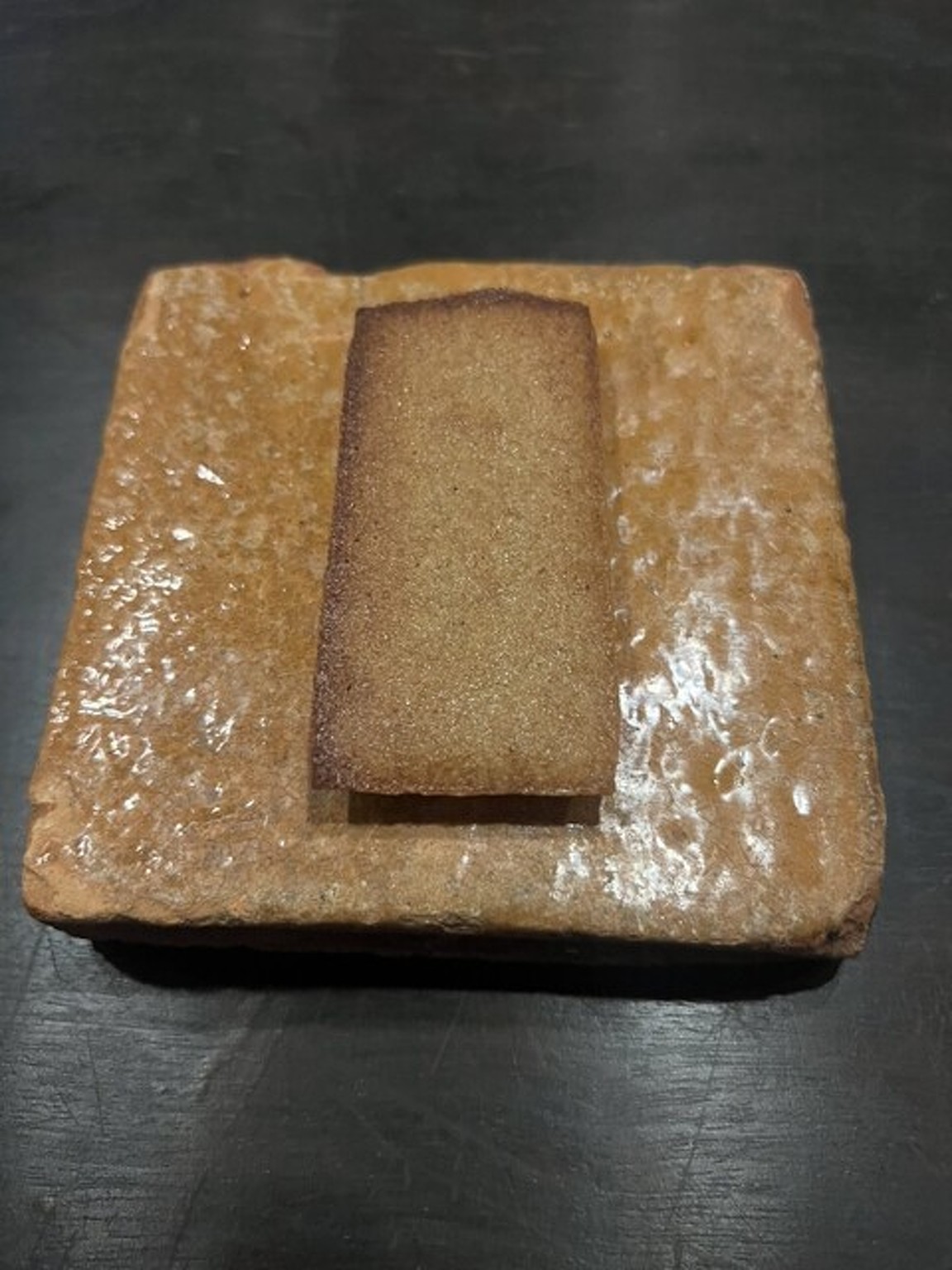
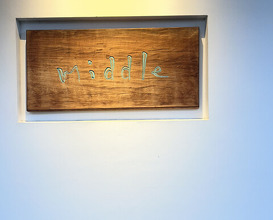
Nestled along the Kamo River, I visited middle for the fourth time. Each year brings new discoveries. This time, they served a miso made from leftover bread as a spread with butter (I forgot to take a photo). During my last visit, they created a homemade fermented seasoning for their dishes, and now they’ve made miso from leftover bread.They offered cold drinks made from green tea, herbs, and kombucha. This kombucha isn’t the kelp tea but rather a fermented drink made from black or green tea, resembling a mushroom. It starts with a refreshing sweetness and acidity, accompanied by herbal aromas.**Amuse Bouche: Three Types of Tart** A mousse made from yellow bell pepper, a cream made from edamame and the rice of funazushi, and beets with fermented sour cream. These are to be eaten in that order, with sweetness, acidity, and saltiness unfolding in succession. The use of the rice from funazushi was also present in the previous dish.**Nagano Prefecture Black Pork Prosciutto with Arugula** This dish includes prosciutto, arugula, figs, walnuts, and homemade ricotta cheese. While it sounds like a salad, when I cut into it, I encountered something hard. To my surprise, the surface of the figs was caramelized. This dish doesn’t use dressing; instead, the ricotta is whipped into a creamy texture. The caramelized sweetness and slight bitterness provide a nice accent, balancing the saltiness and umami of the prosciutto, the light acidity of the ricotta, and the nuttiness of the walnuts.Here, they served homemade country bread and white bread, along with the aforementioned miso butter. The miso made from leftover bread has a surprisingly gentle flavor. Both the country bread and white bread contain rye, giving them a subtle acidity. Once paired with the miso butter, it becomes irresistible! (I took some home.)**Sashimi of White Sweet Sea Bream and Red Clam** As the name suggests, it’s served as sashimi. The chef trained in Kyoto, so he can prepare Japanese dishes, but the sashimi is presented in a French style. On top of the sashimi, there’s a puree made from green cucumber called Katsura, and beneath it is a puree of grilled eggplant. The puree has a soft saltiness, acidity, and sweetness that doesn’t overpower the flavors of the white sweet sea bream and clam.Next, they presented a magnificent Matsutake mushroom from Iwate Prefecture. Three dishes featuring Matsutake are served. This year, the quality of Matsutake is reportedly excellent, likely due to the frequent rain. While it’s great that Matsutake is abundant, the vegetable harvest has been poor, so it’s a mixed blessing.**Matsutake Wrapped in Treviso with Shiina Beef** Shiina beef comes from Shiina Farm in Chiba Prefecture, a crossbreed of black-haired Wagyu and Holstein. The meat is made into a tartare and wrapped around the Matsutake, then wrapped in Treviso. It’s finished with a sherry vinegar sauce, which complements the strong aroma of the Matsutake. The tartare of red meat has a great flavor, and since it’s paired with Matsutake, the red meat works well. The sherry vinegar sauce is mild, enhancing the aroma without overpowering it.**Matsutake Flan** On top of the flan, they pour a consomme made from Matsutake and Shiina beef. The moment I opened the lid, the aroma of Matsutake wafted out. The consomme is superb, with a restrained saltiness but a strong umami flavor, making it just right. The flavor of the flan is also excellent, pairing perfectly with the consomme and Matsutake. By the way, last year it was a flan made with Tamagokake mushrooms. I hope this flan dish becomes a regular offering.**Grilled Natural Eel from Lake Biwa** Interestingly, I had grilled sea eel just yesterday, so having eel again was unexpected! This natural eel has a firm texture, likely due to its active lifestyle. The flesh is plump. It’s served with banana peppers, kinome (young leaves of the sansho plant), and sansho pepper. The banana pepper, as the name suggests, has a banana-like shape and a yellowish color. It lacks the bitterness and astringency of regular peppers and has a hint of sweetness. The sauce is relatively spicy. When paired with the sweet pepper, it complements the dish beautifully. The aromas of kinome and sansho linger pleasantly. Since it’s sansho pepper, it gives a slight tingling sensation on the tongue. However, I find this plump eel quite delightful.**Grouper with Pil Pil Sauce** The main fish dish features grouper. Having tasted the elusive grouper at Rumidi, I can’t compare, but the sauce is outstanding. The pil pil sauce is made using all parts of the grouper combined with cream. You can savor the full flavor of the grouper. This dish exemplifies Chef Fujio’s philosophy of utilizing every ingredient. Additionally, there’s a puree made from fermented Manjanji peppers and wasabi served alongside. The garnish is Manjanji peppers. When you combine the puree with the sauce, it creates a completely different flavor. The subtle acidity of the wasabi and fermented seasoning pairs beautifully with the grouper. This is truly impressive.**Beef Shoulder with Matsutake and Small Potatoes** This beef comes from Iwate Prefecture, a crossbreed of short-horned and black-haired cattle. The shoulder meat is thinly sliced, pounded, and seared. The shoulder meat is a hearty red meat. As you chew, the flavor of the meat expands. This type of meat allows you to truly savor its taste. Topped with sautéed Matsutake and small potatoes, there’s no sauce—just olive oil, salt, and spices. This means it’s a dish designed to let you enjoy the pure flavor of the meat. You can sense the chef’s intention to highlight the natural taste of the meat, complemented by the aroma and texture of the Matsutake and the creamy sweetness of the small potatoes.**Final Dish: Shamo Chicken Ravioli from Kyoto** This final dish is why I held back on the bread. The ravioli is made with minced shamo chicken, accompanied by sautéed butternut squash. The sauce is a rosemary-scented espuma. The ravioli itself is rich in flavor, with the sweetness of the butternut squash and the aroma of rosemary. I ended up eating quite a bit.**Cheese: Maroilles** I thought I’d skip the cheese since I was full, but I couldn’t resist trying a slice of the washed-rind Maroilles. It has a strong aroma and saltiness but isn’t overly pungent. It’s not as strong as Époisses or Livarot, making it accessible for anyone.**Dessert: Yogurt Mousse with Pear** Diced pear topped with yogurt mousse and sprinkled with cacao nibs for aroma. After such a meal, desserts are usually refreshing. The aroma of cacao nibs pairs surprisingly well with the yogurt.**Mignardises: Rice Flour and Rice Bran Financier** The addition of rice bran enhances the nuttiness. Served warm, they are incredibly delicious.**Coffee** Every time I visit, Chef Fujio’s dishes evolve. He often uses fermented seasonings and cooking techniques, likely stemming from his commitment to utilizing ingredients fully. The miso butter made from leftover bread is something I honestly wish they would sell! While it’s French cuisine, it incorporates elements of Japanese cooking. It’s not about consciously adding Japanese elements; rather, it’s about recognizing that the best cooking method for the ingredients is often Japanese, leading to the inclusion of those elements. I look forward to seeing what dishes will be presented on my next visit.
We use cookies on this site to enhance your user experience.