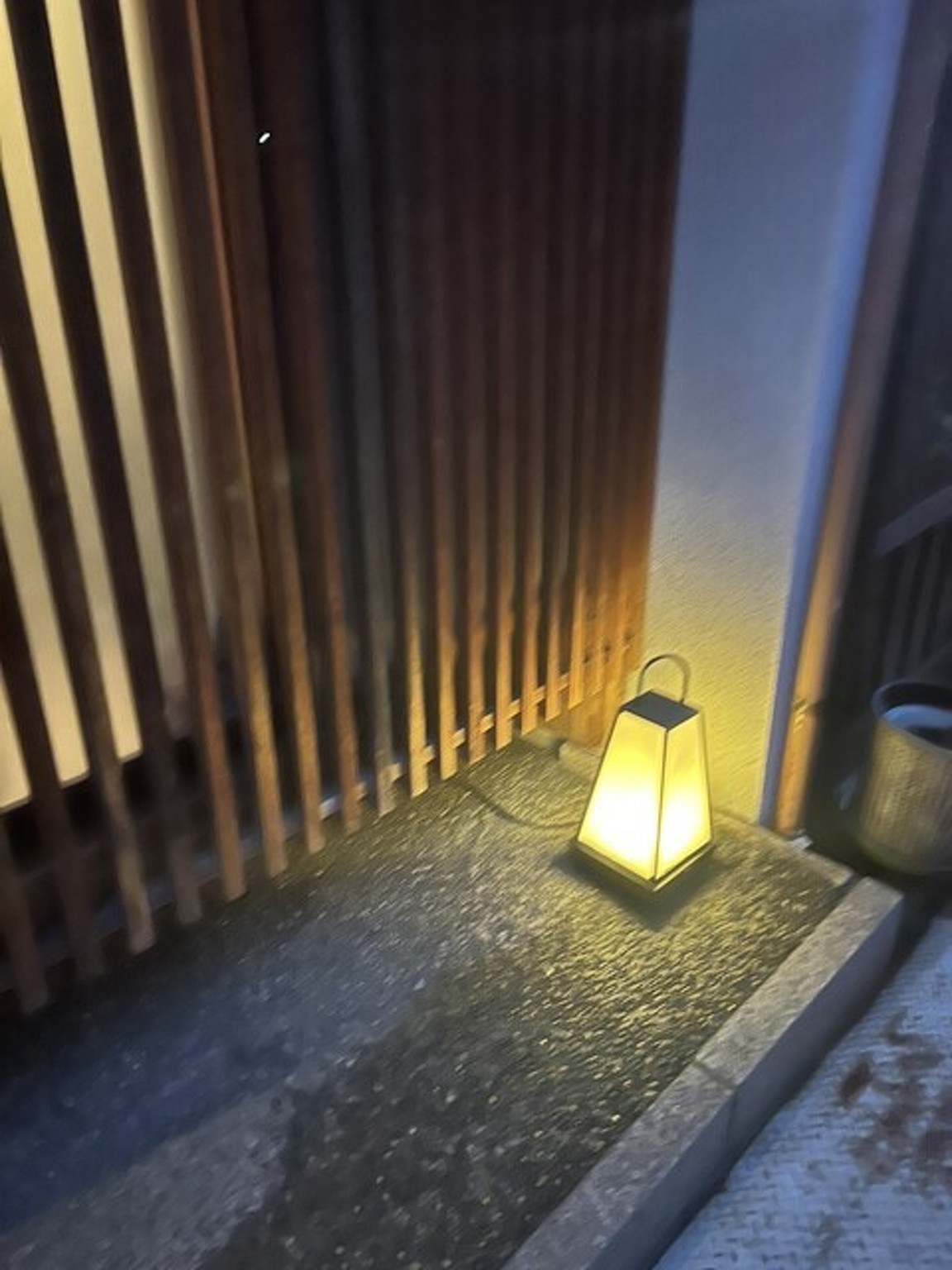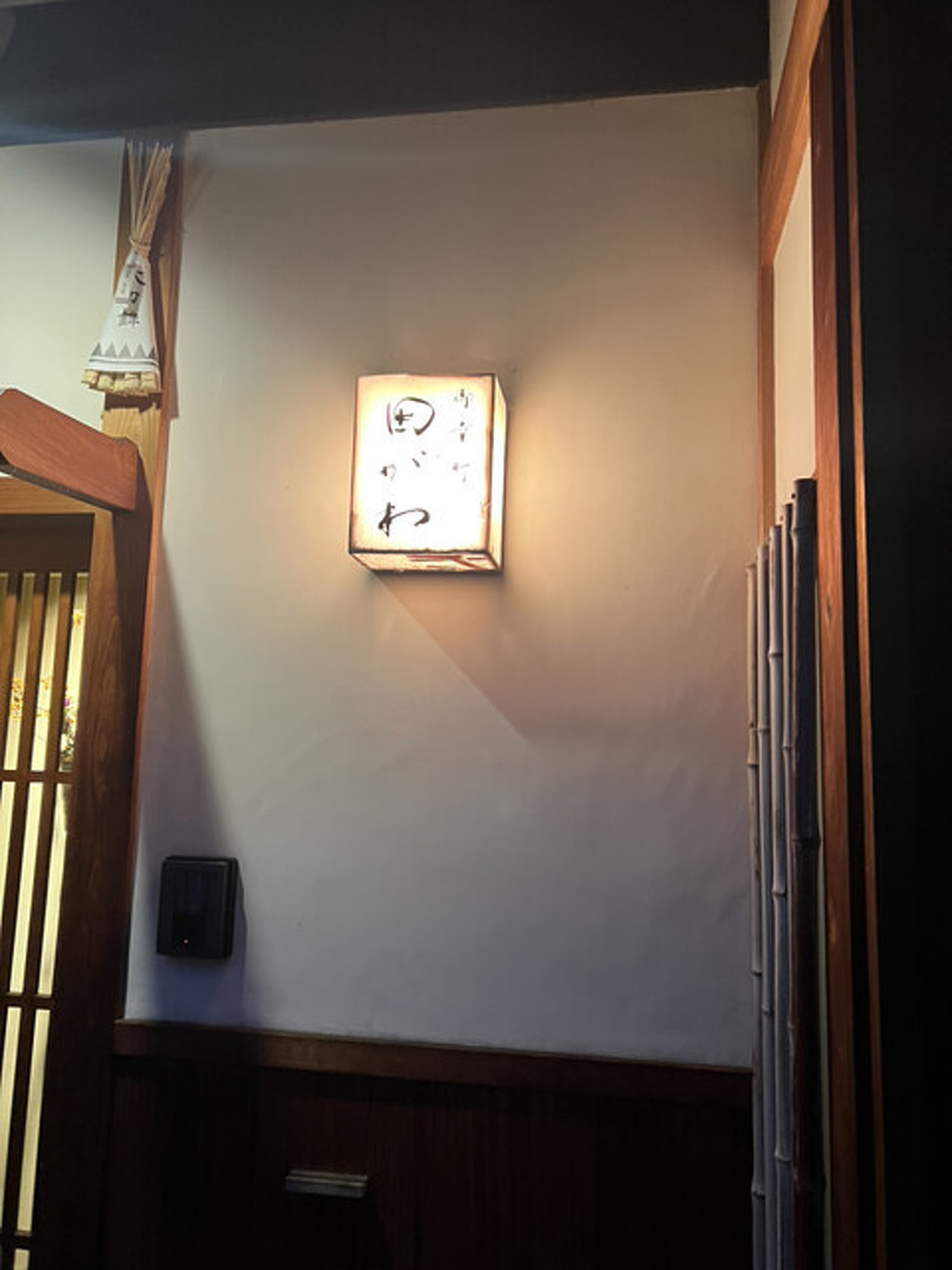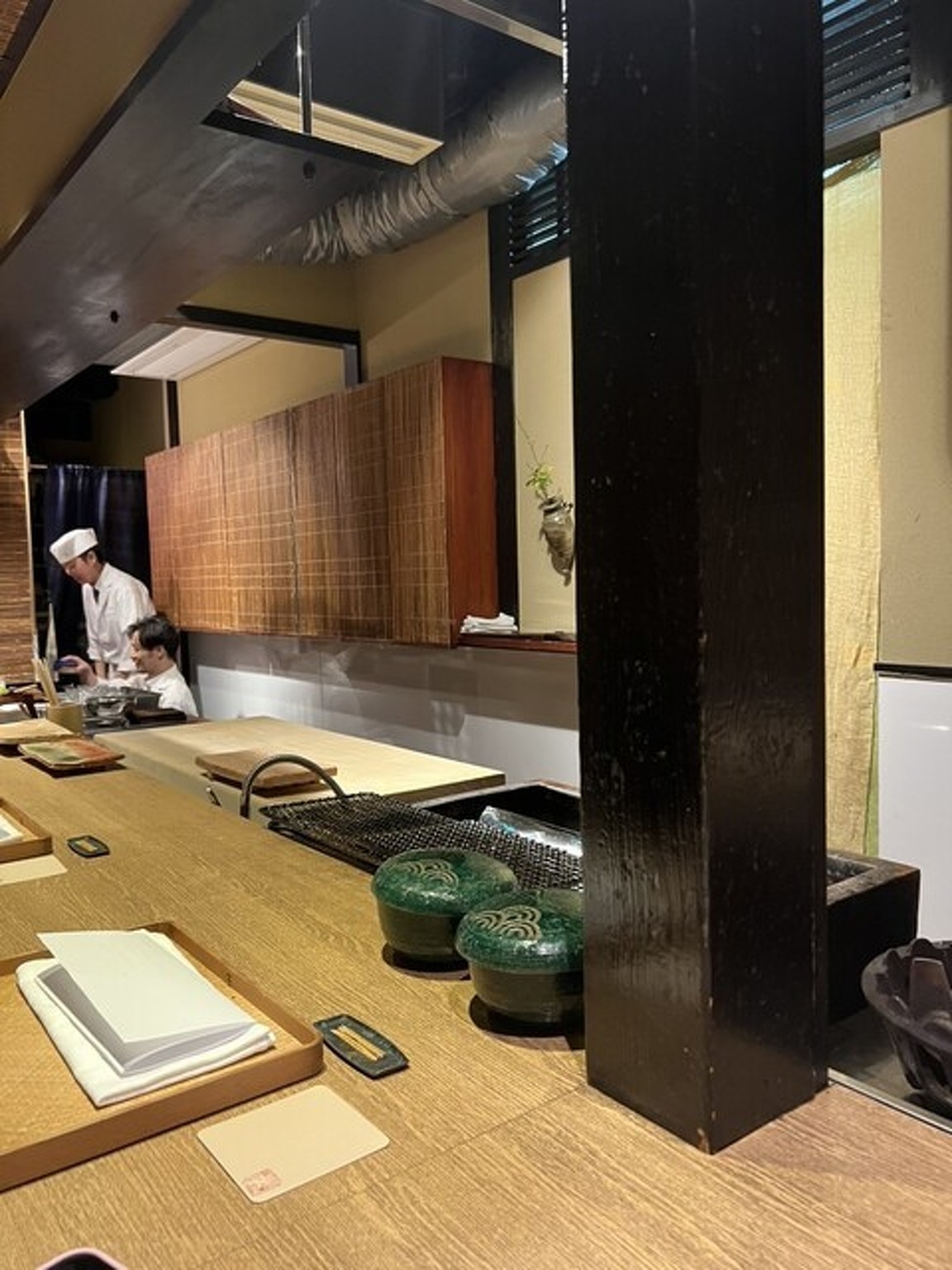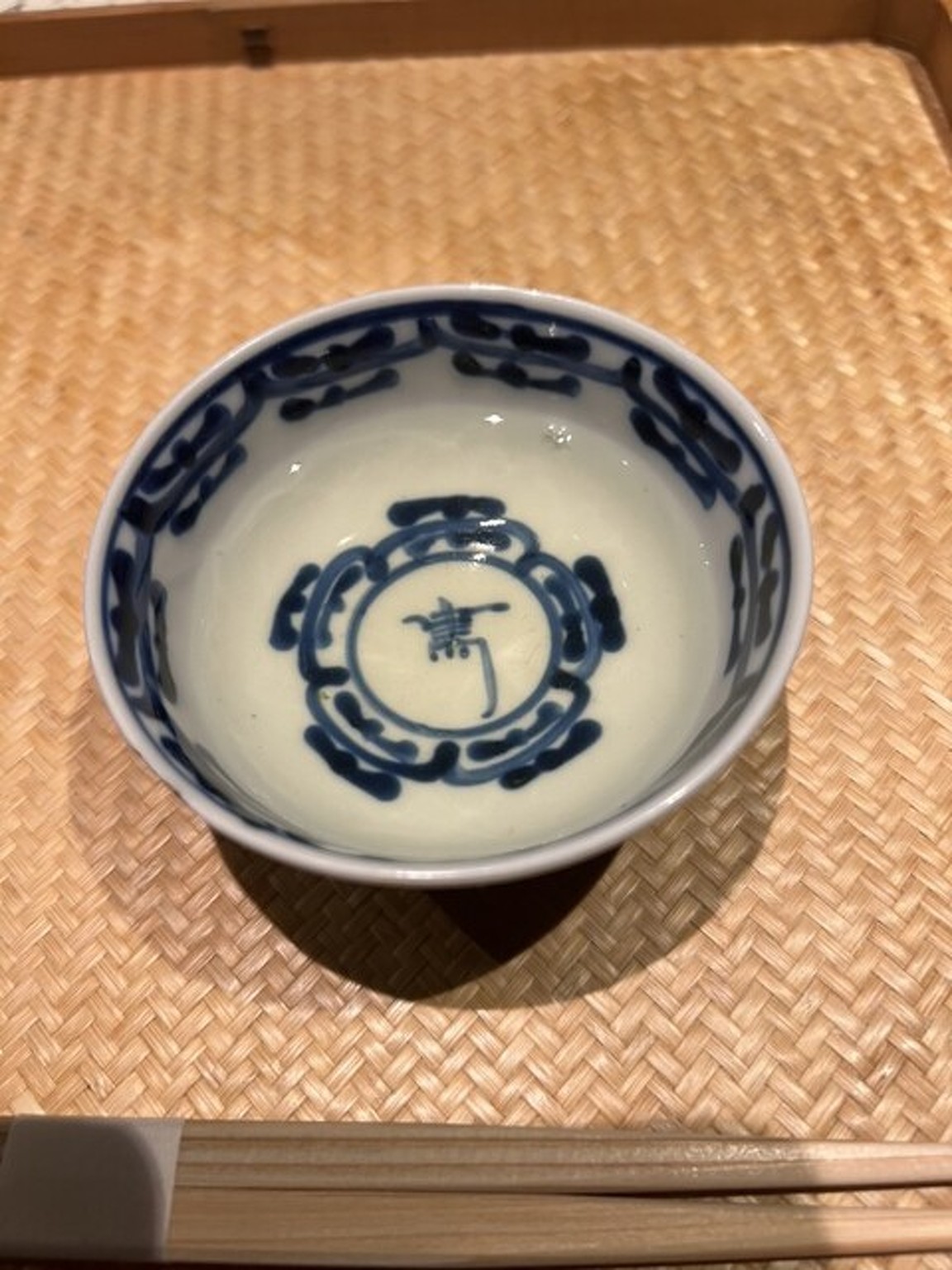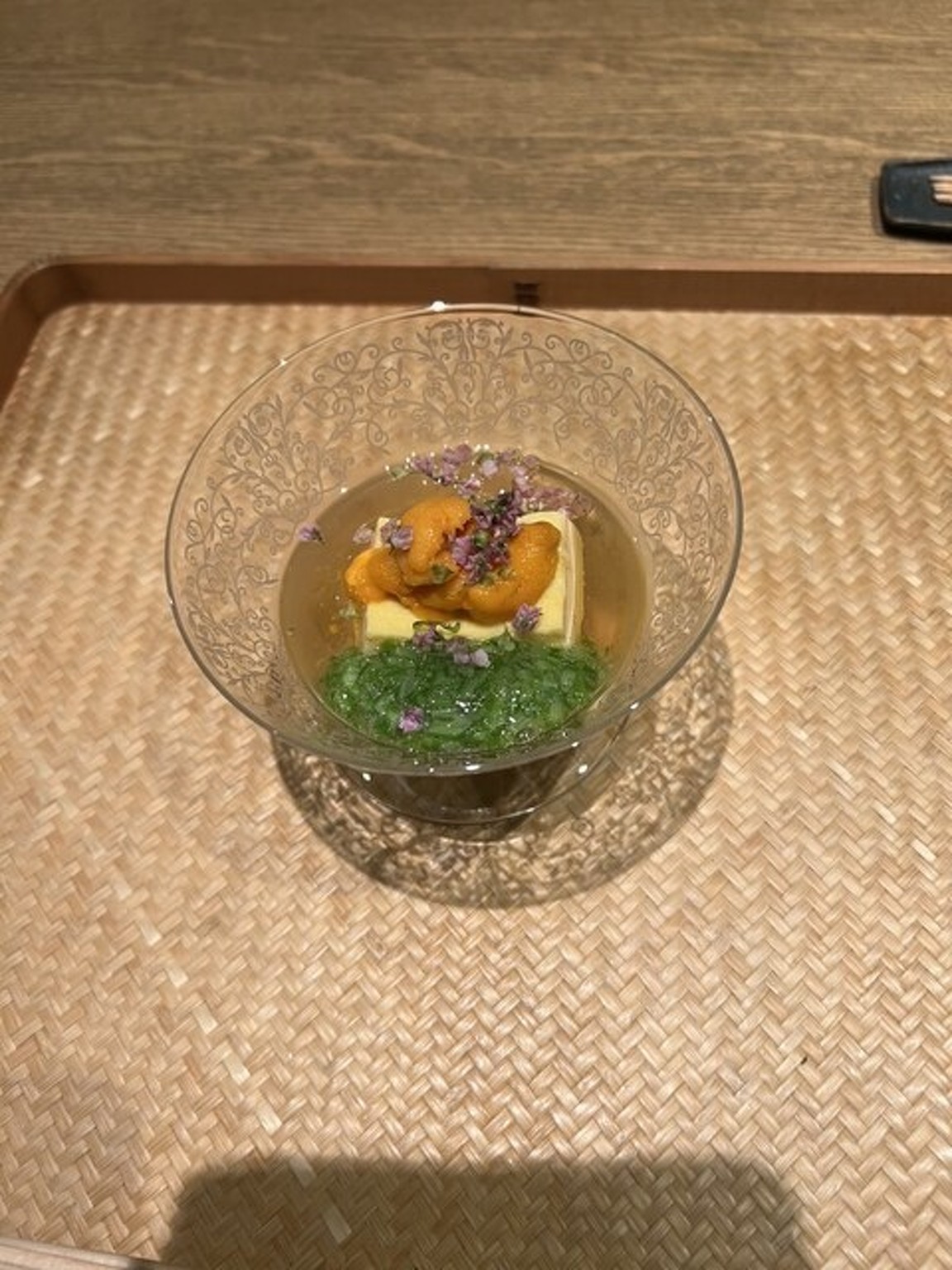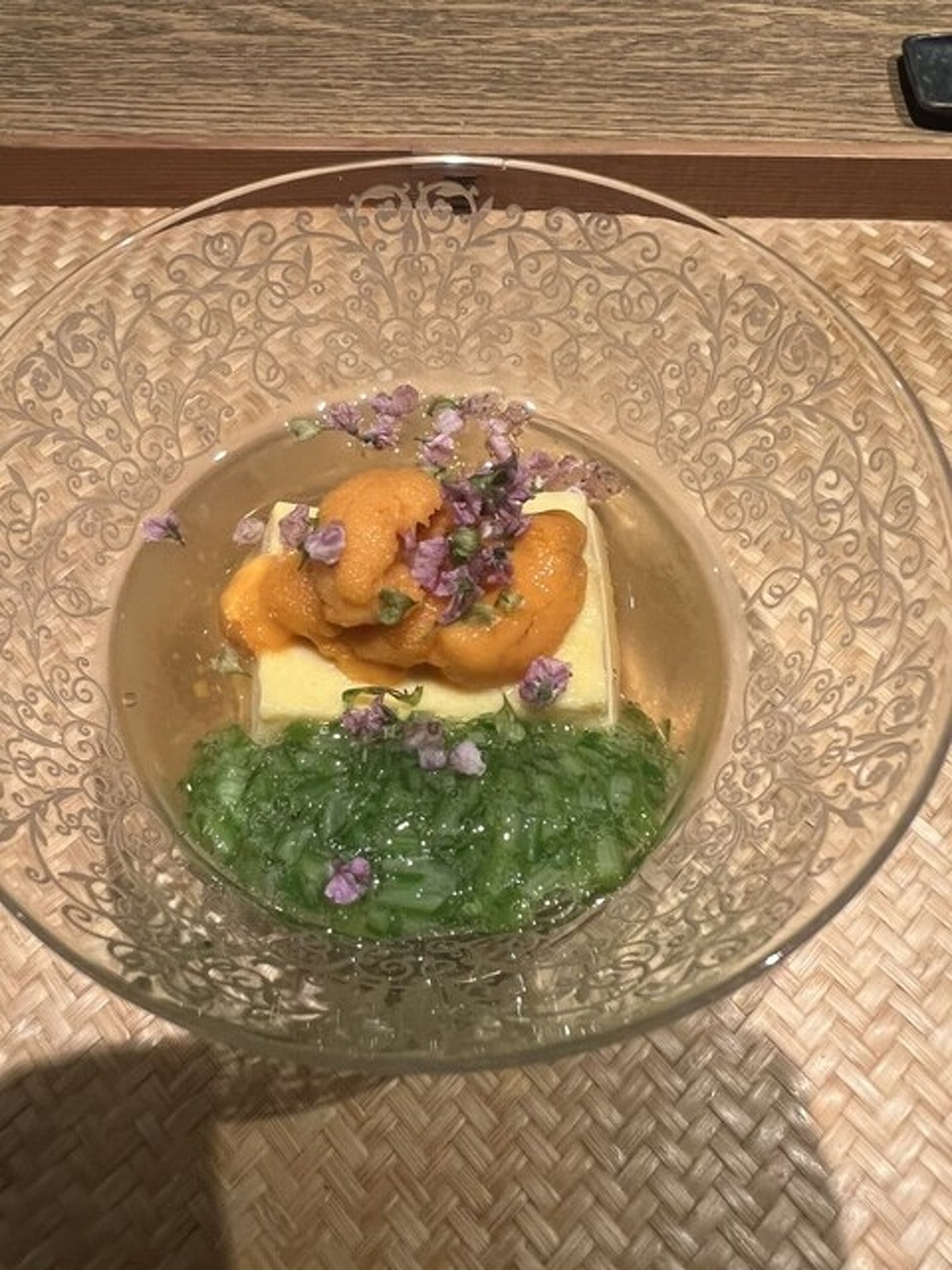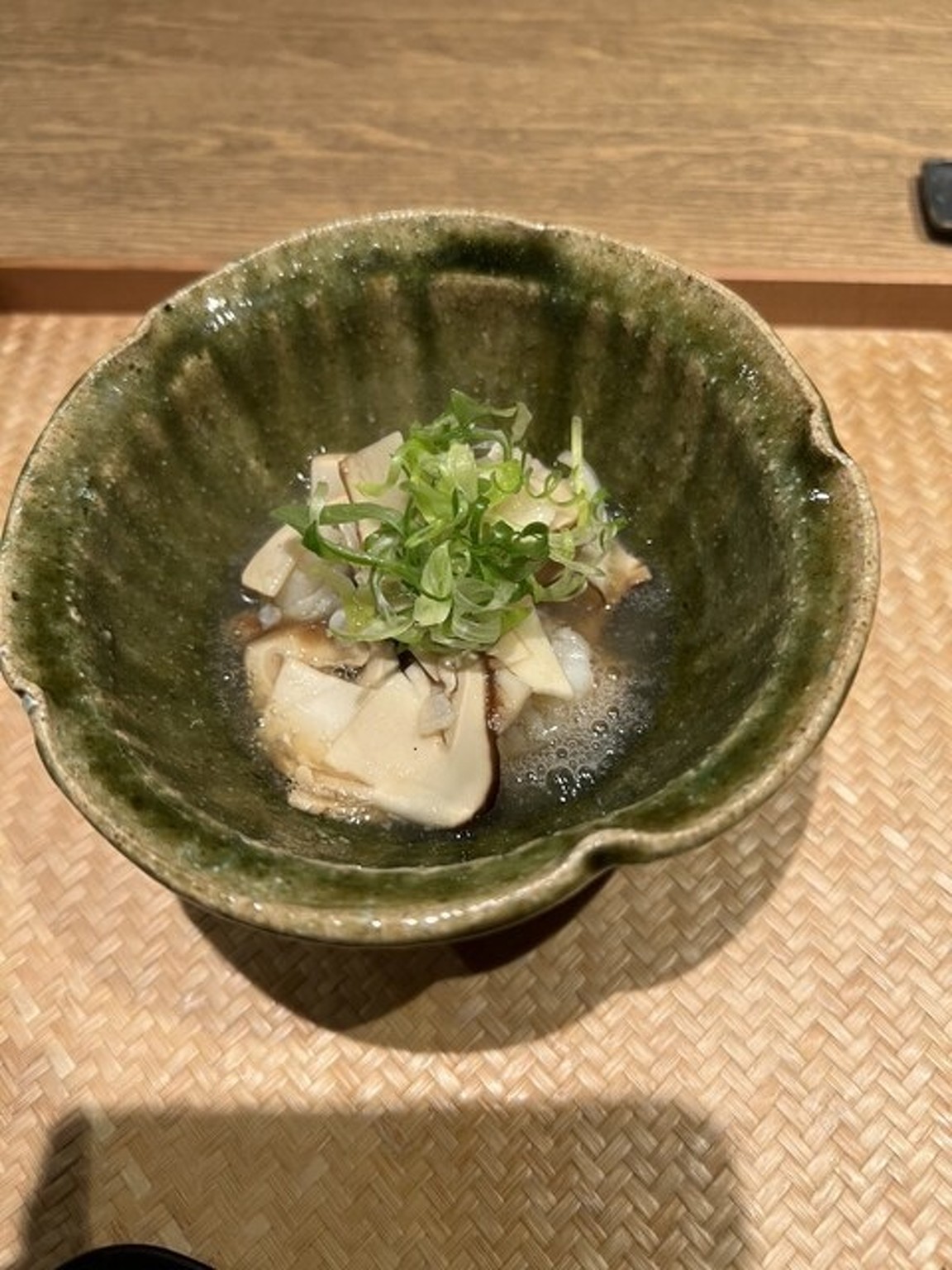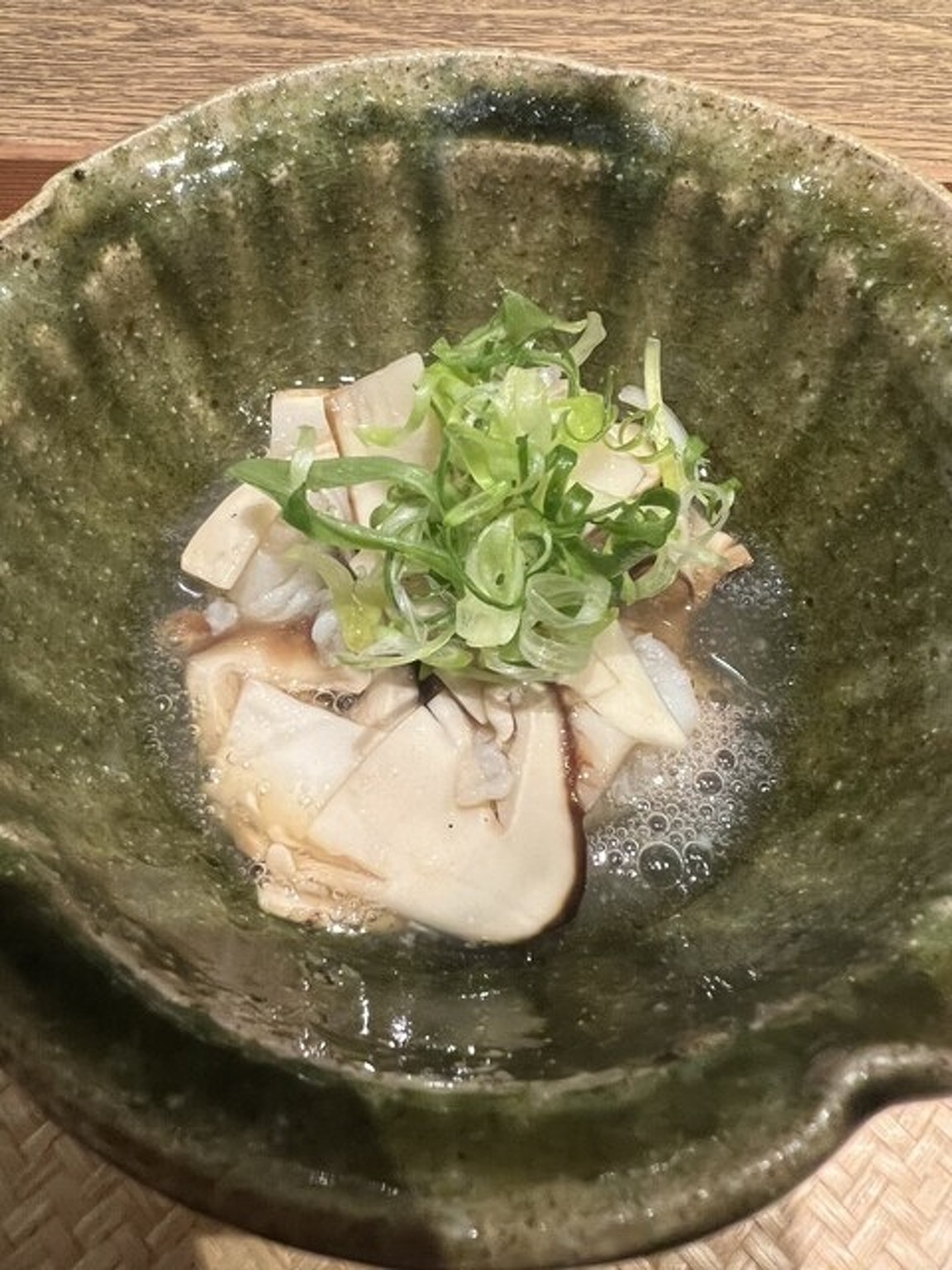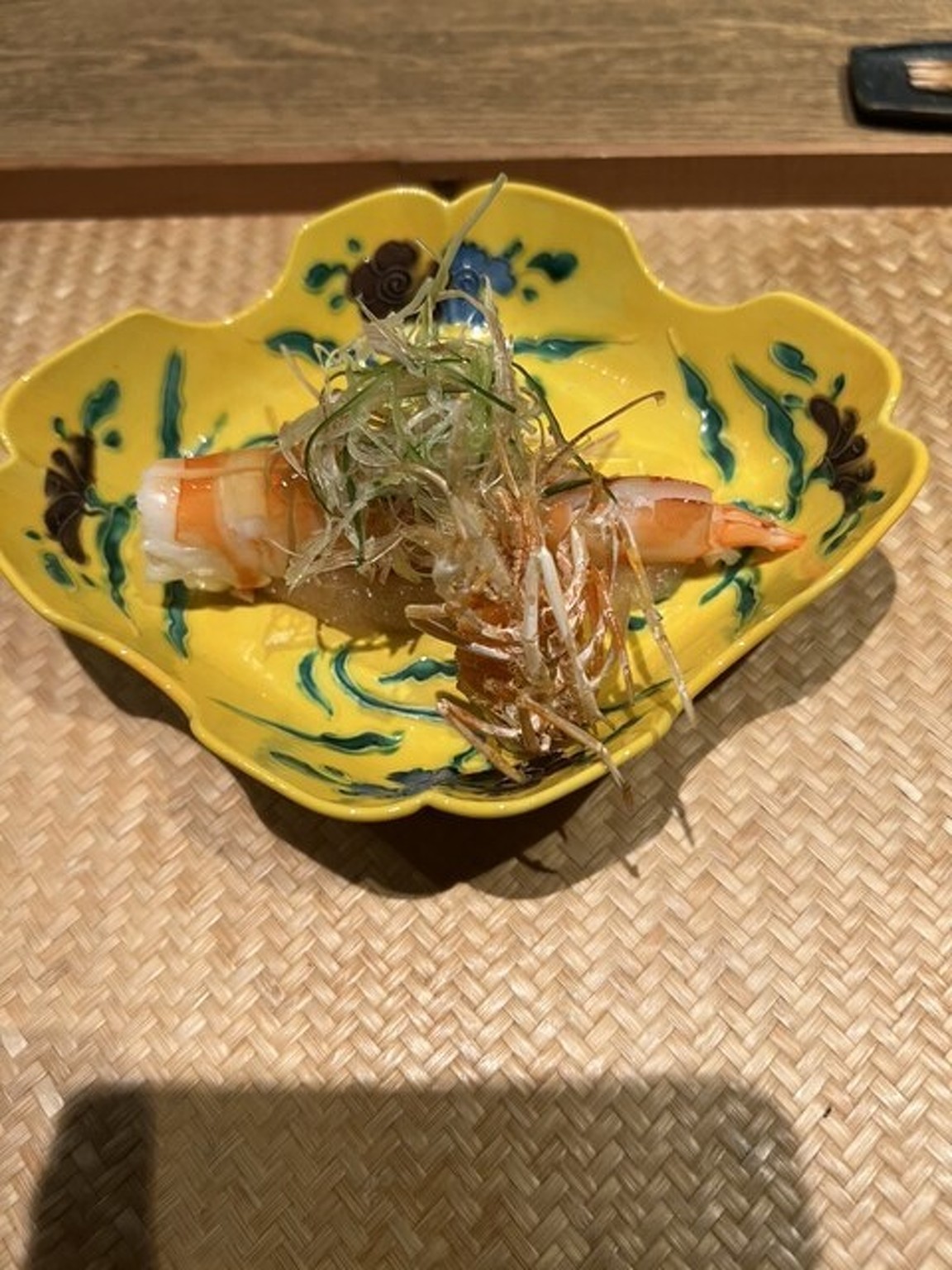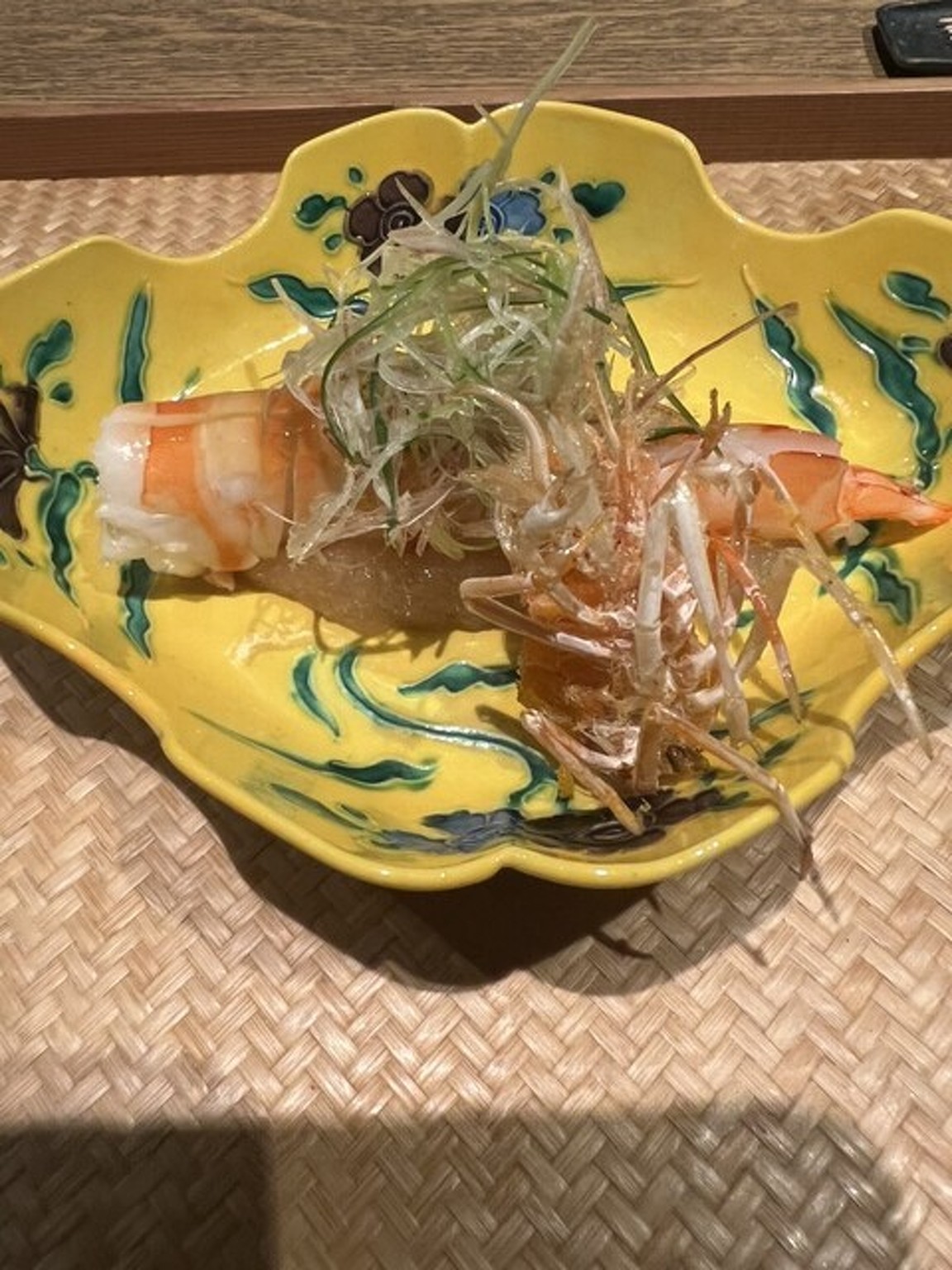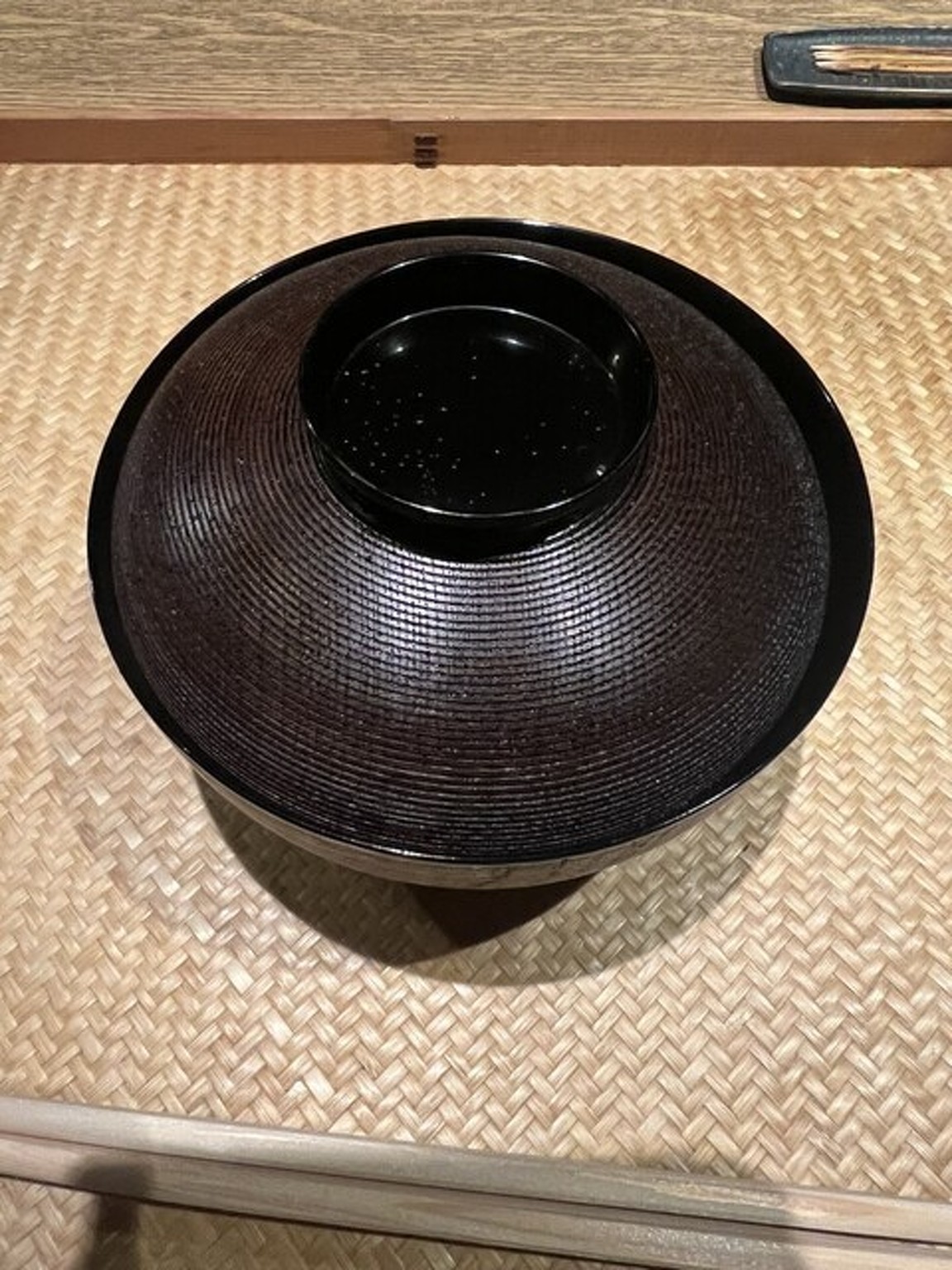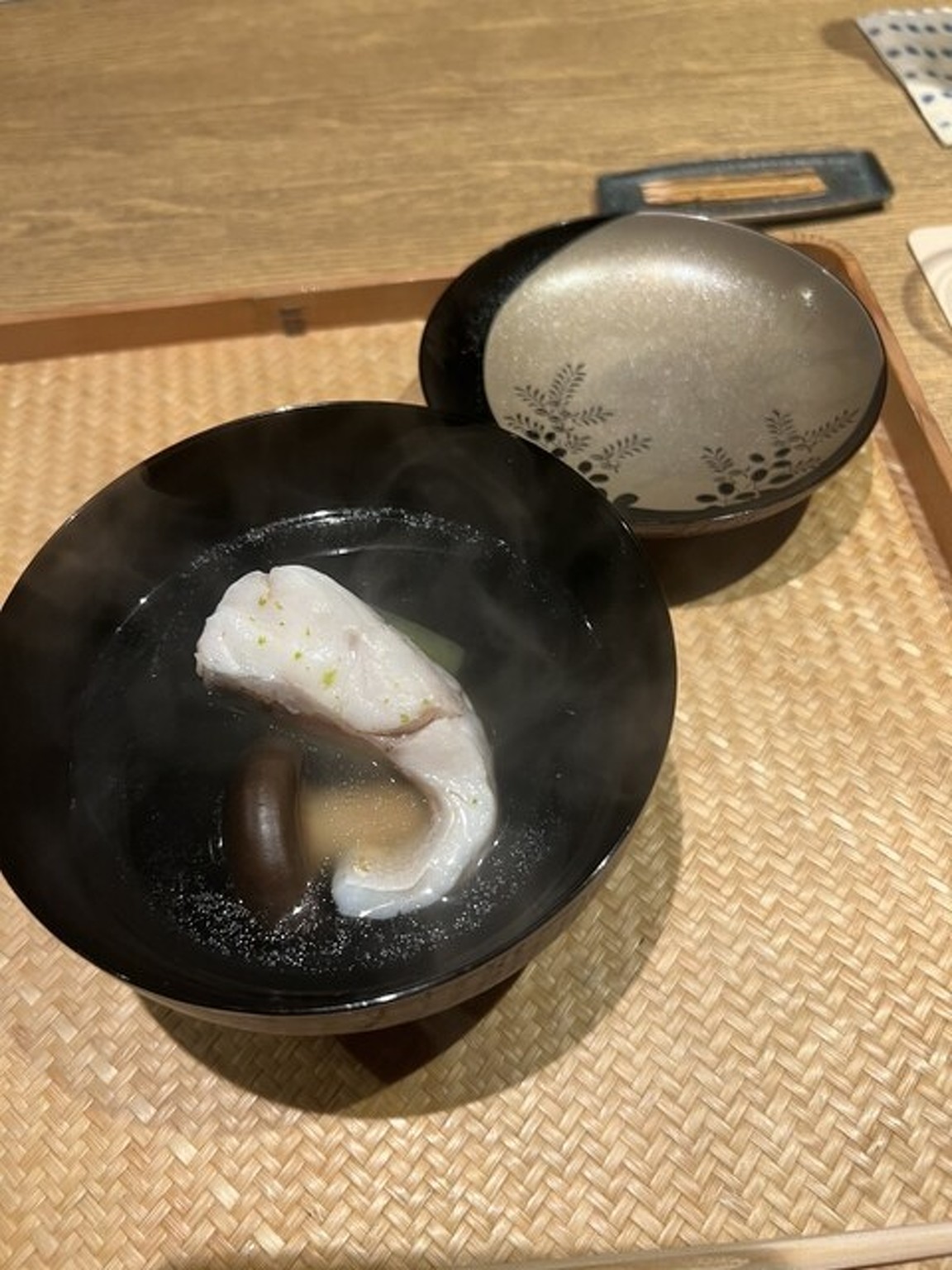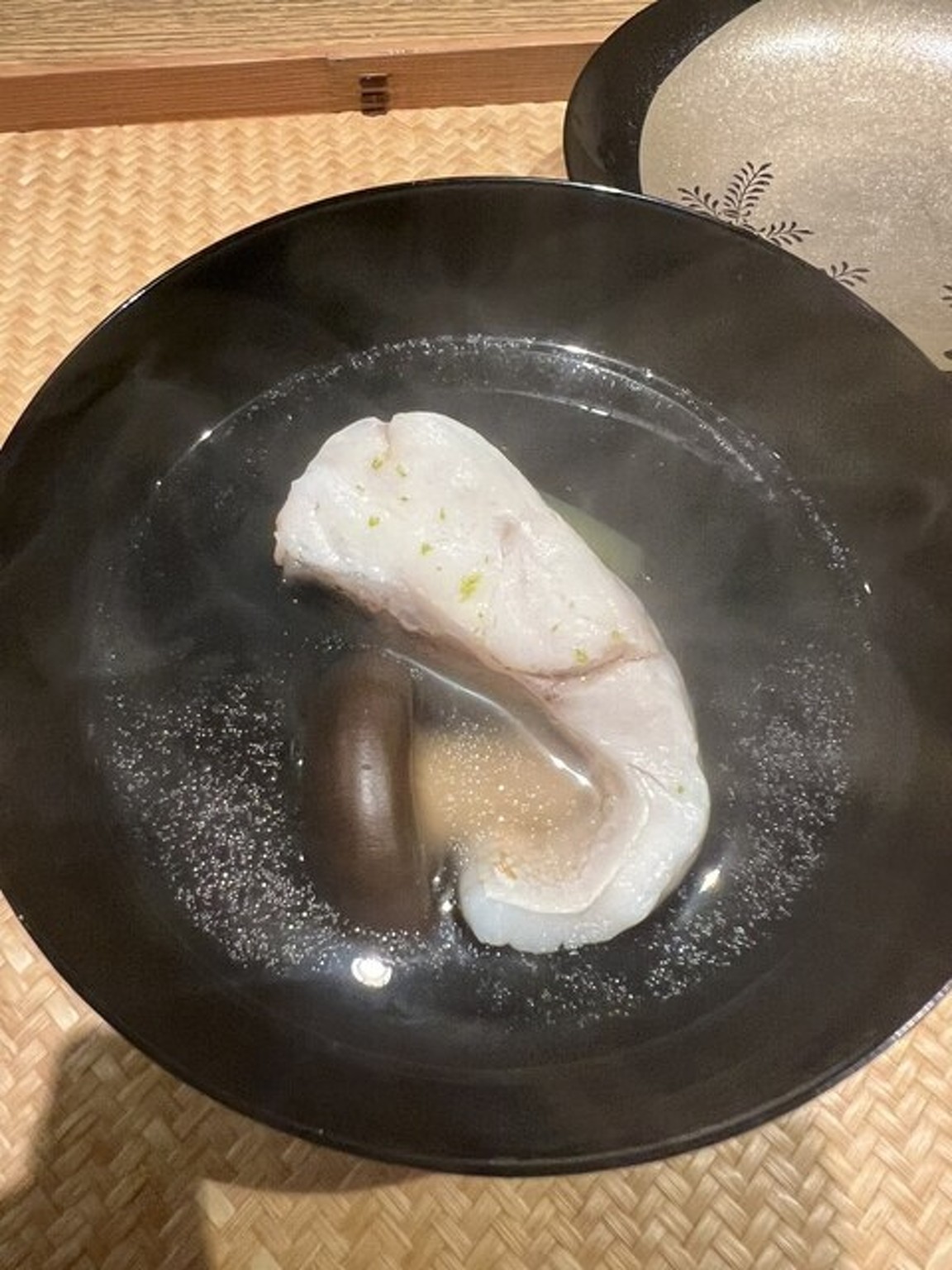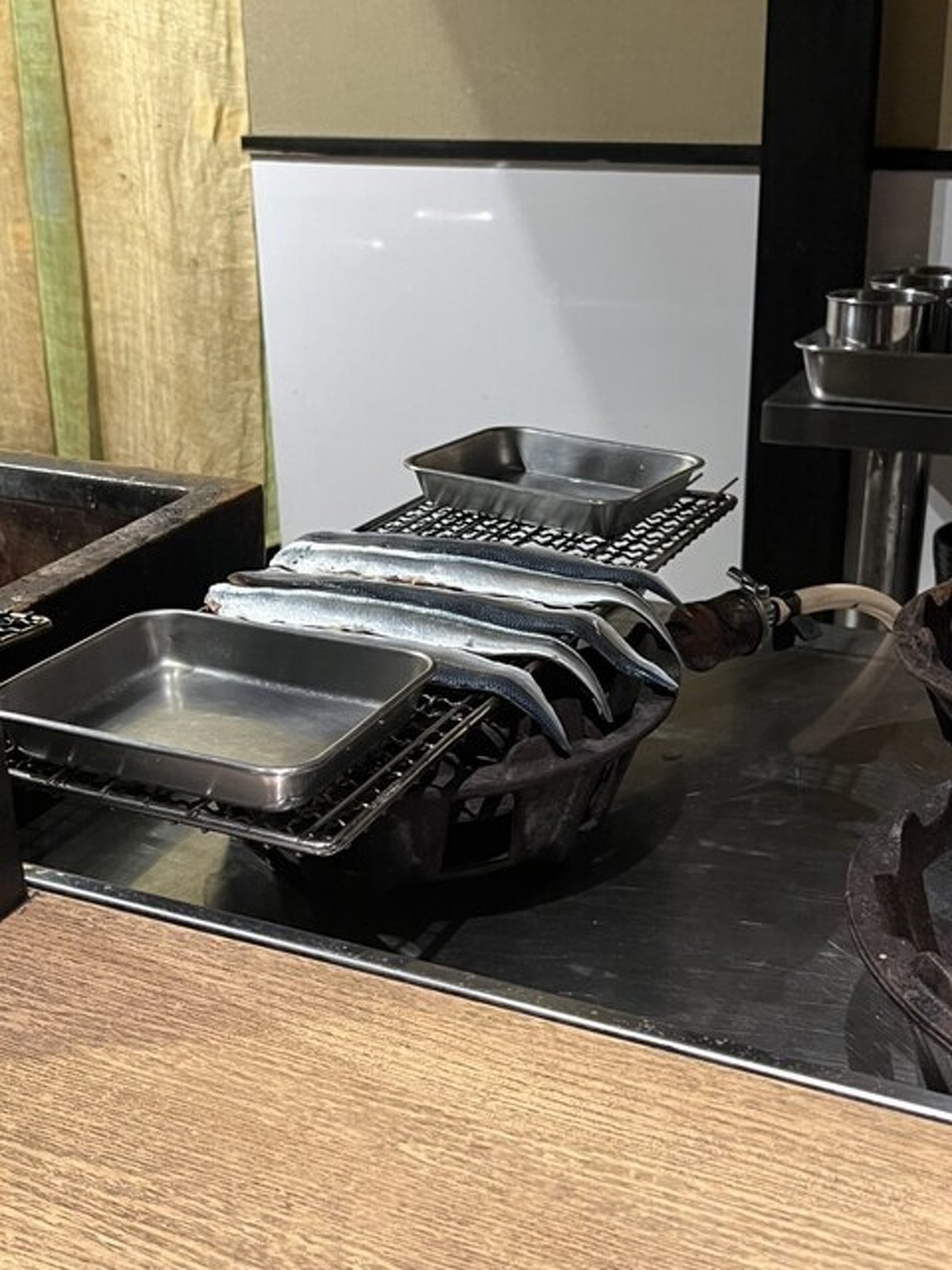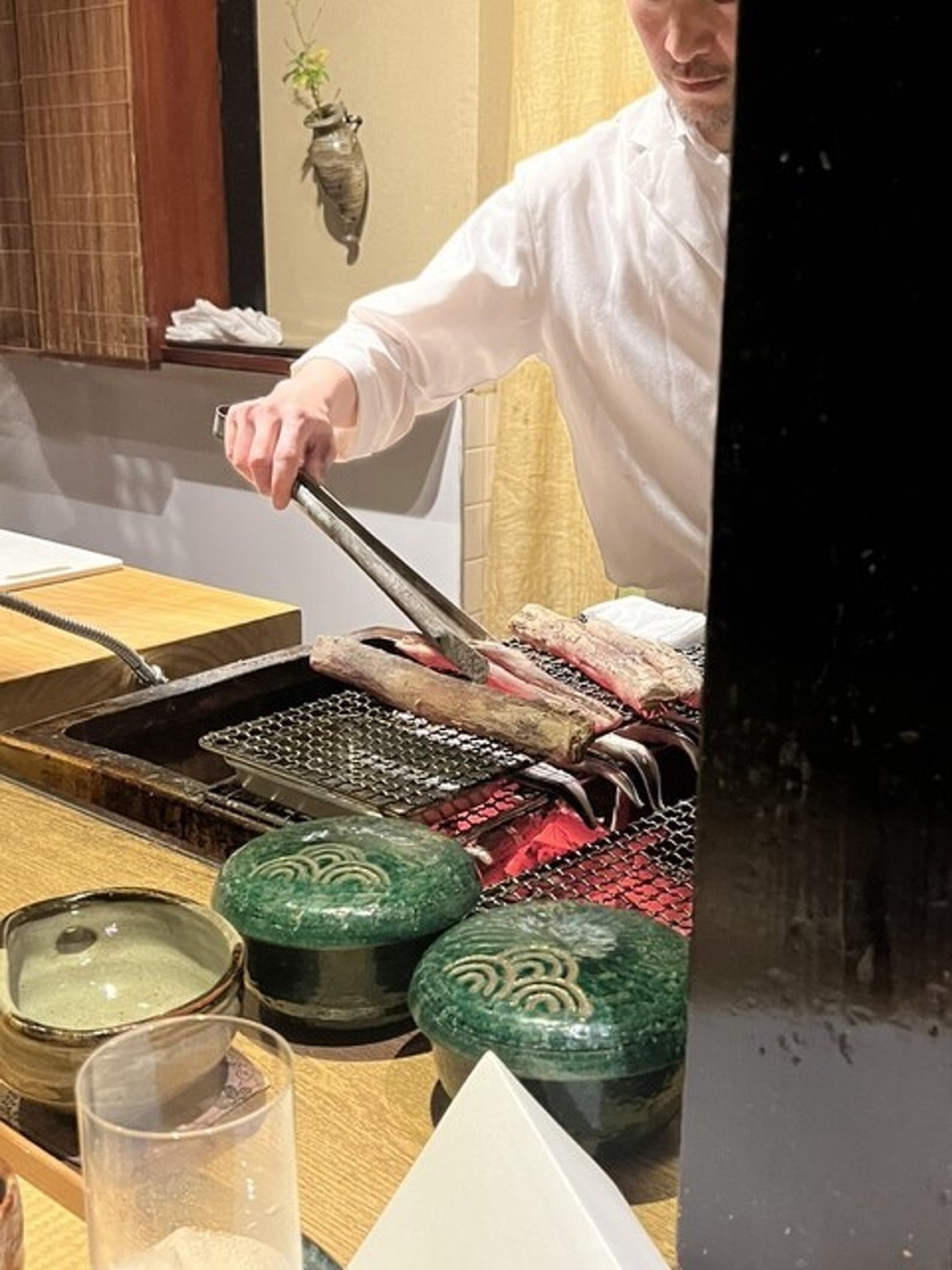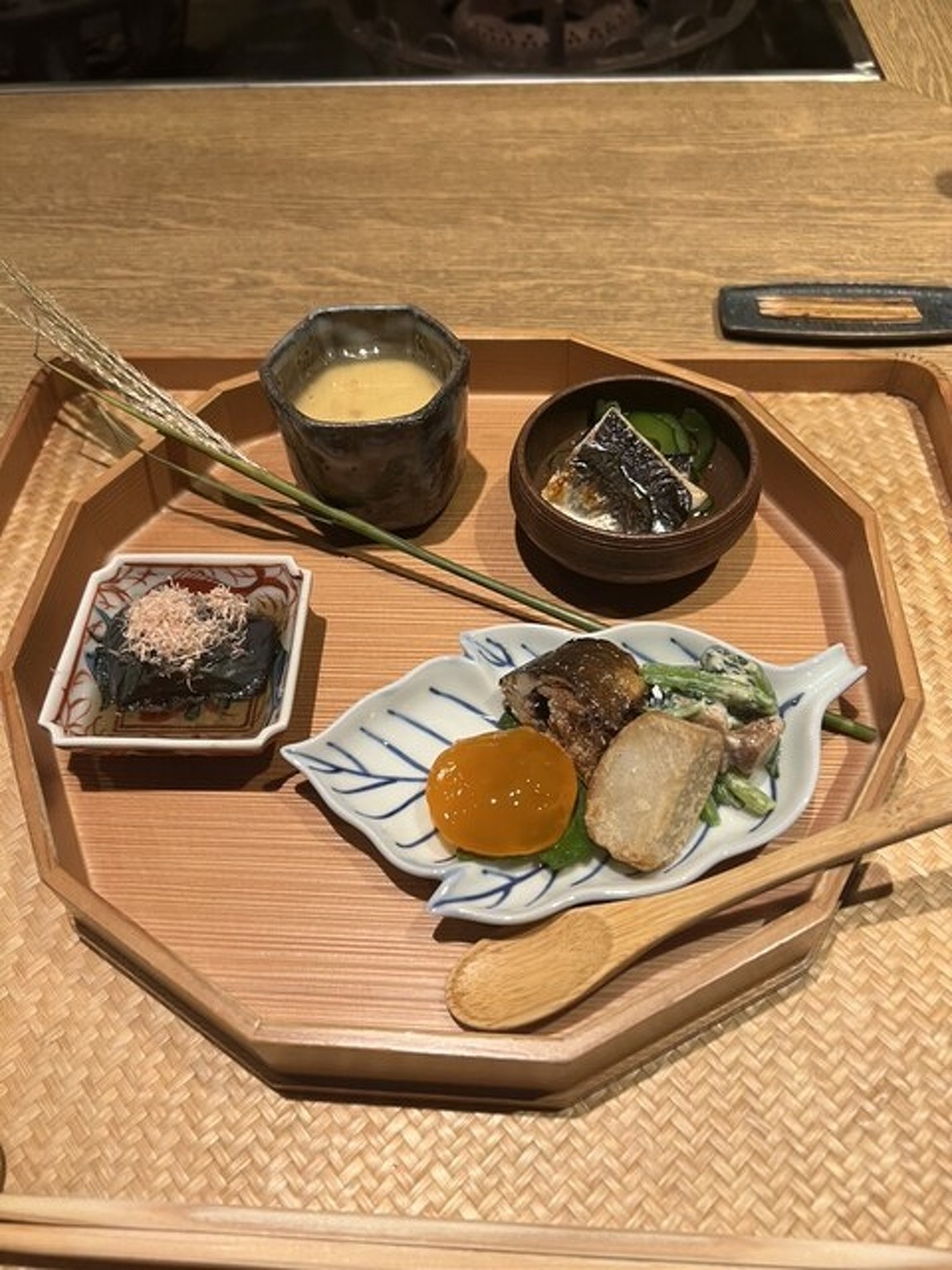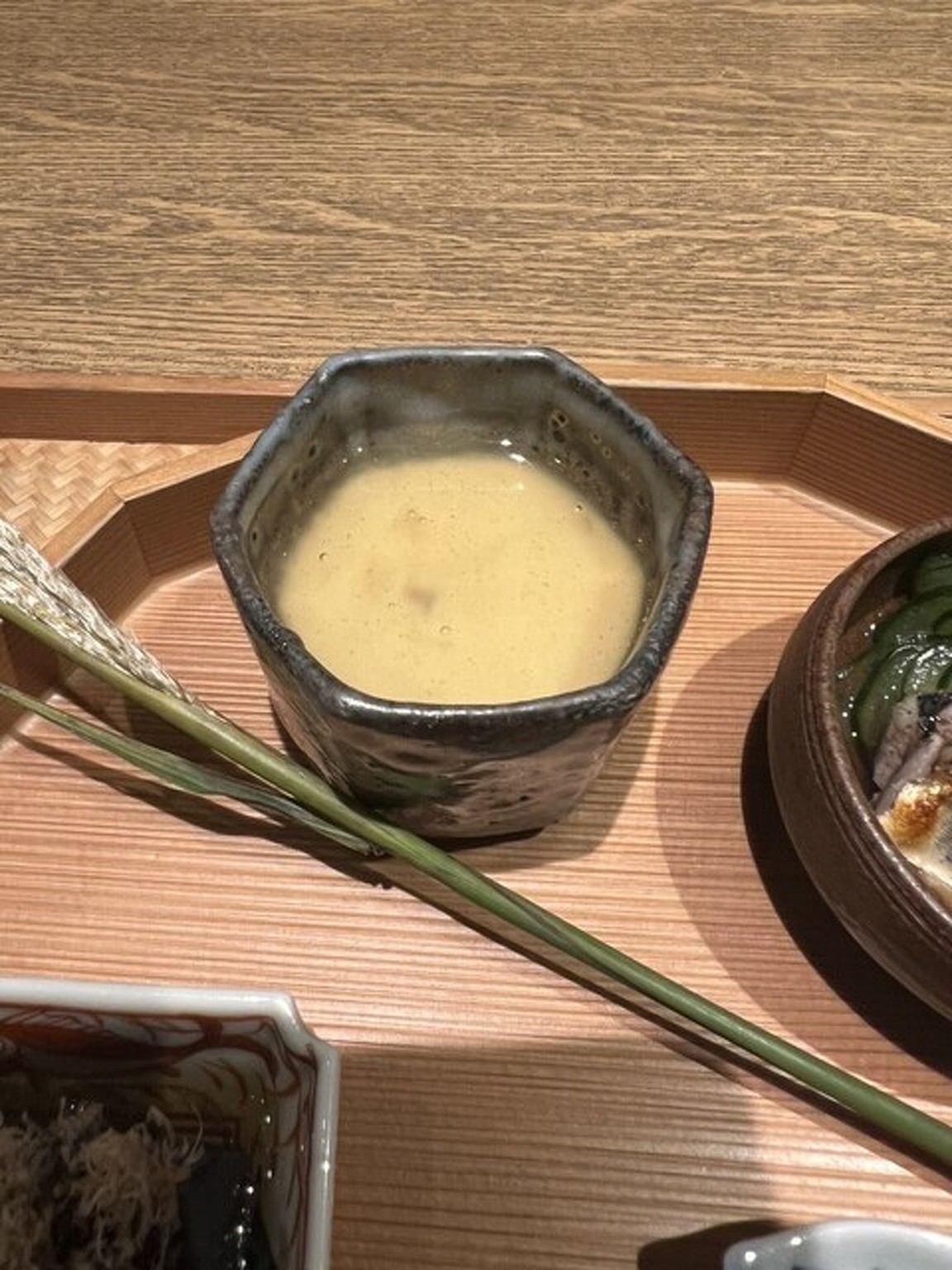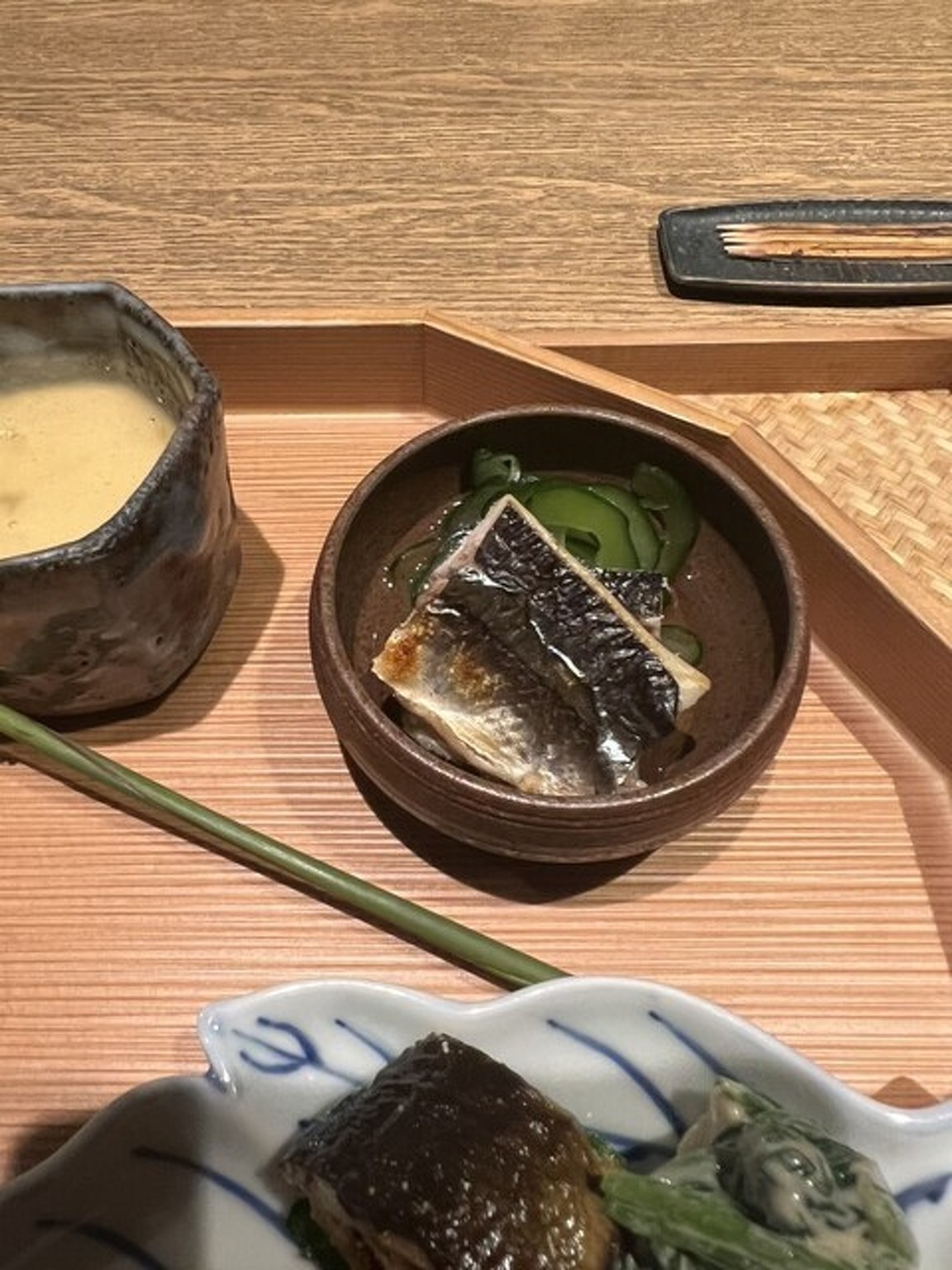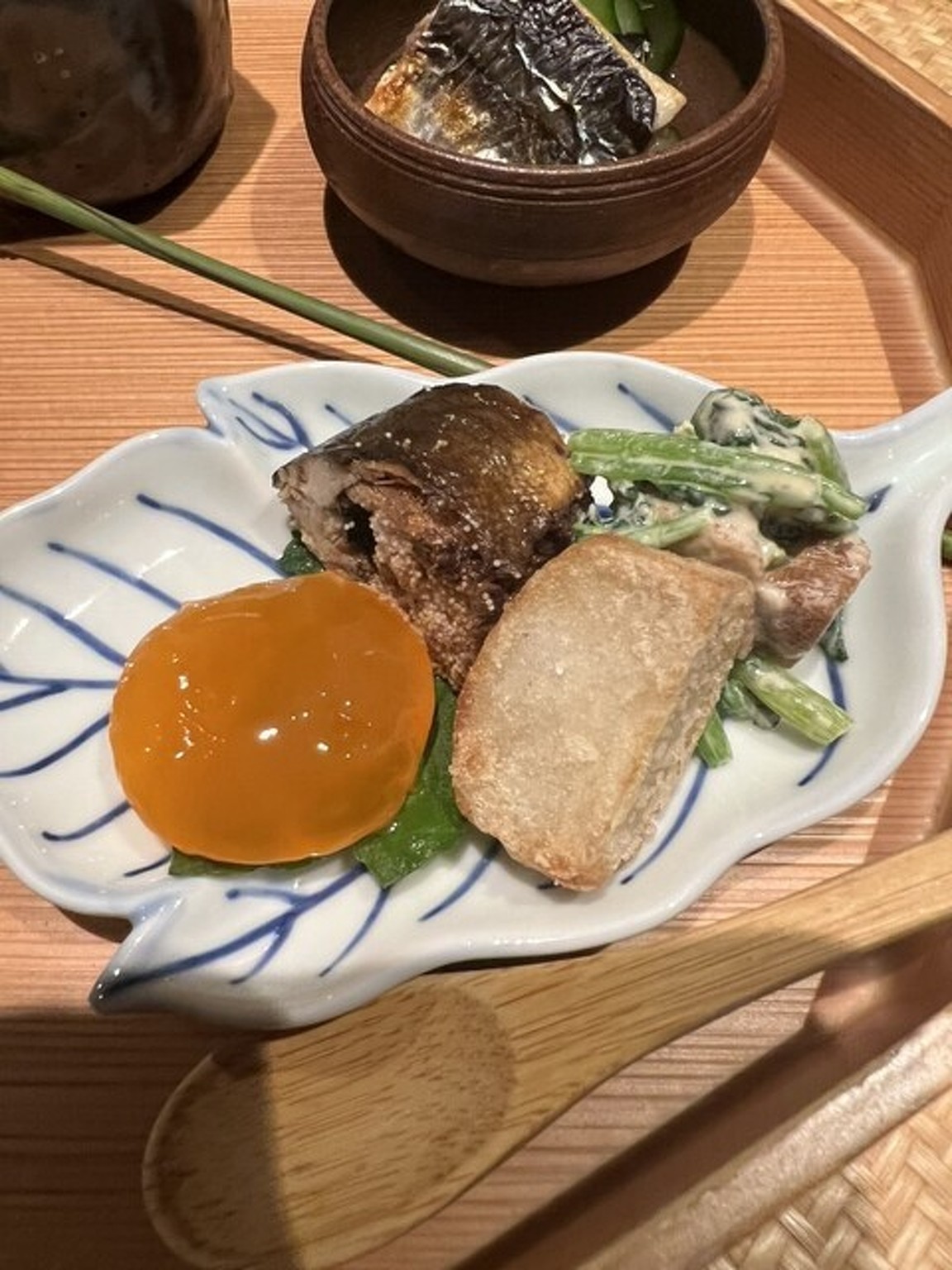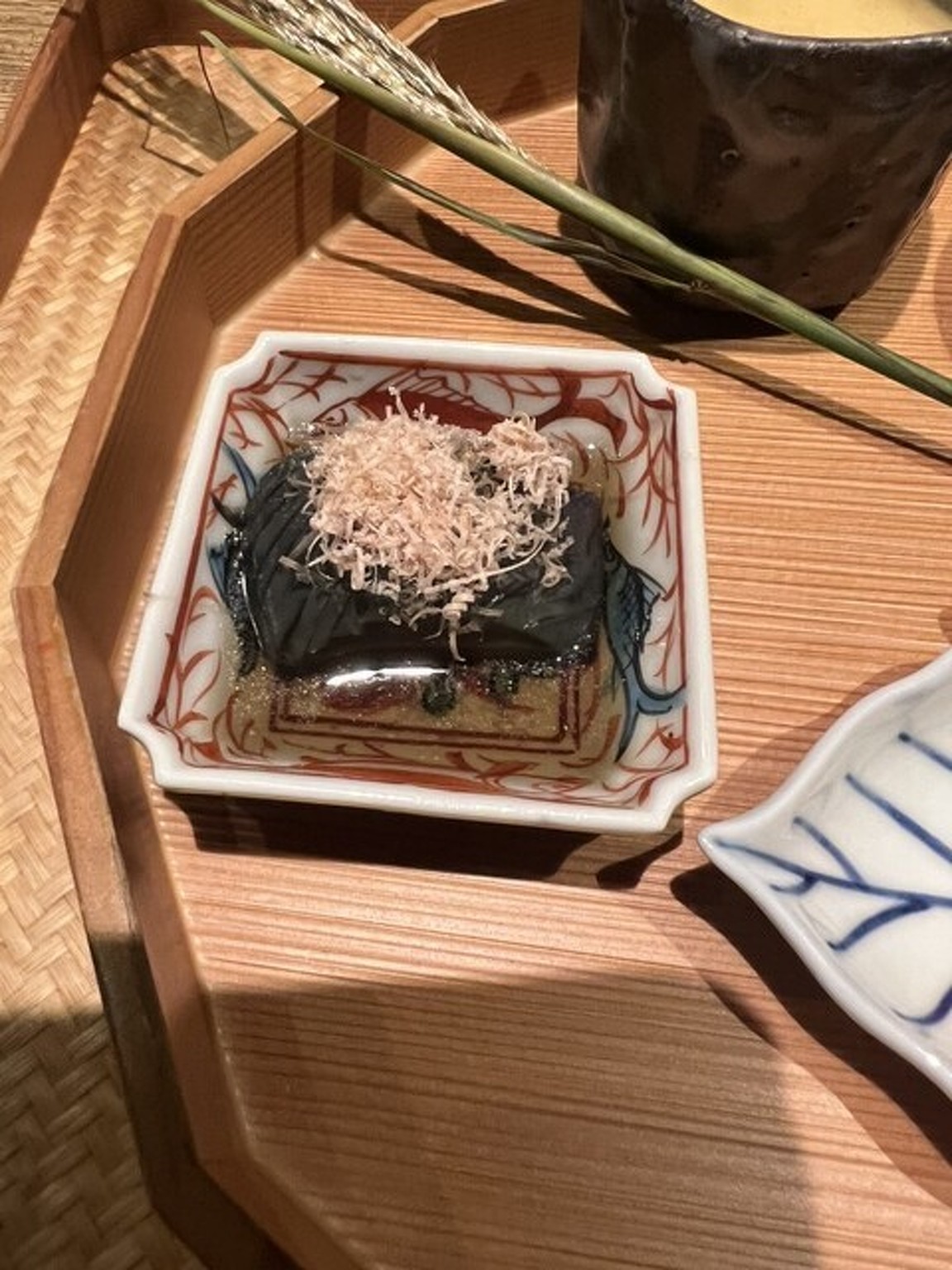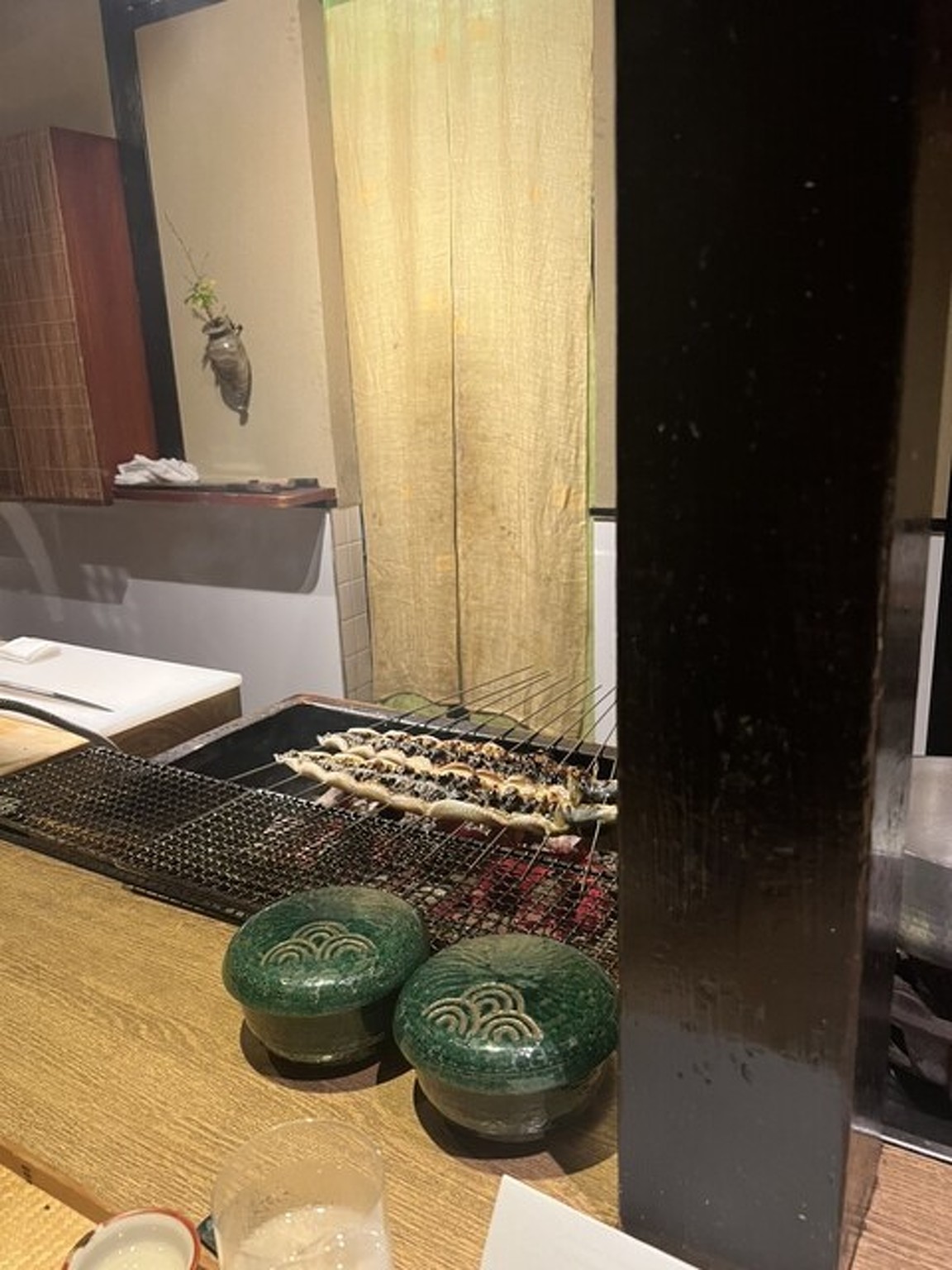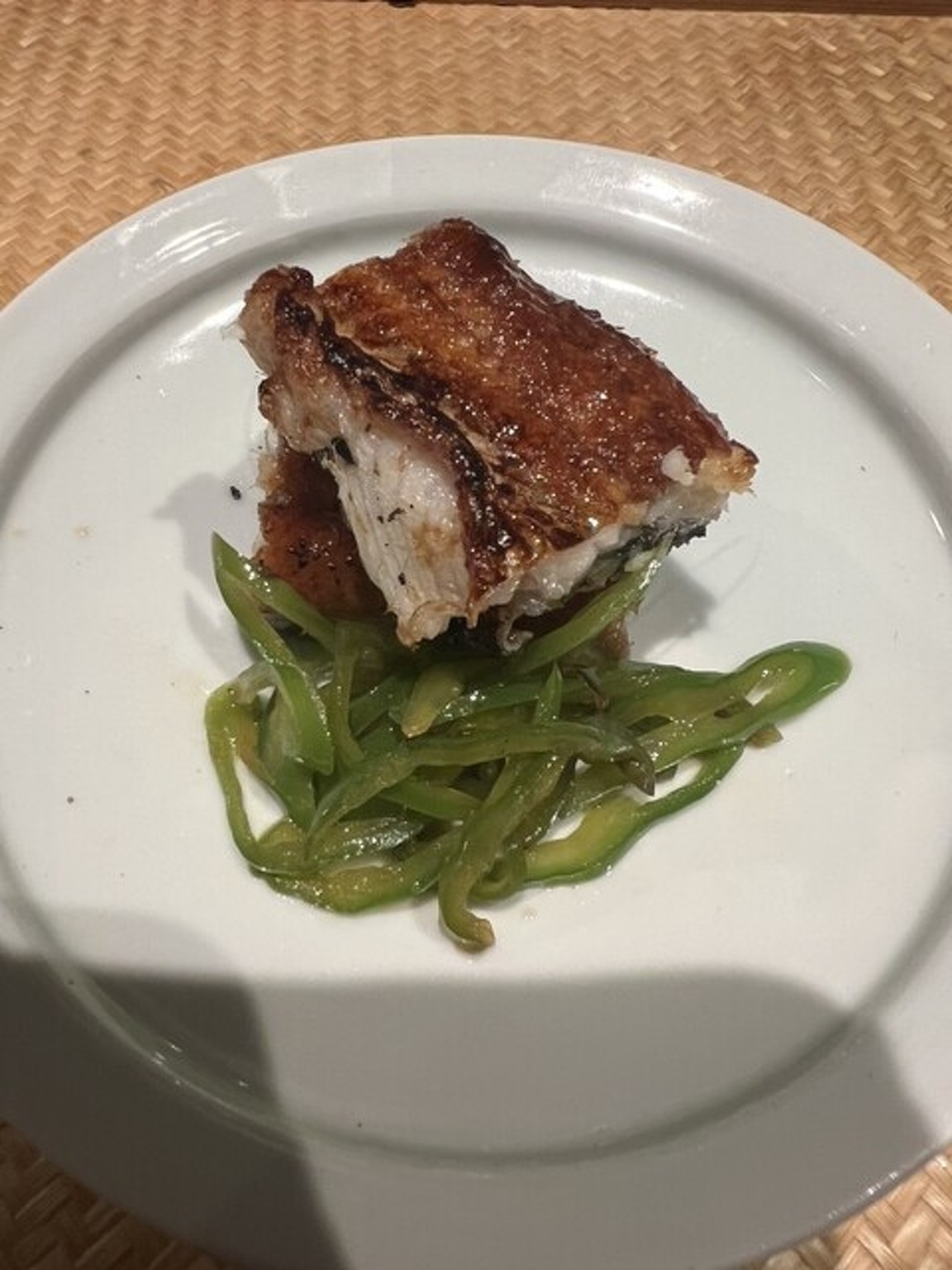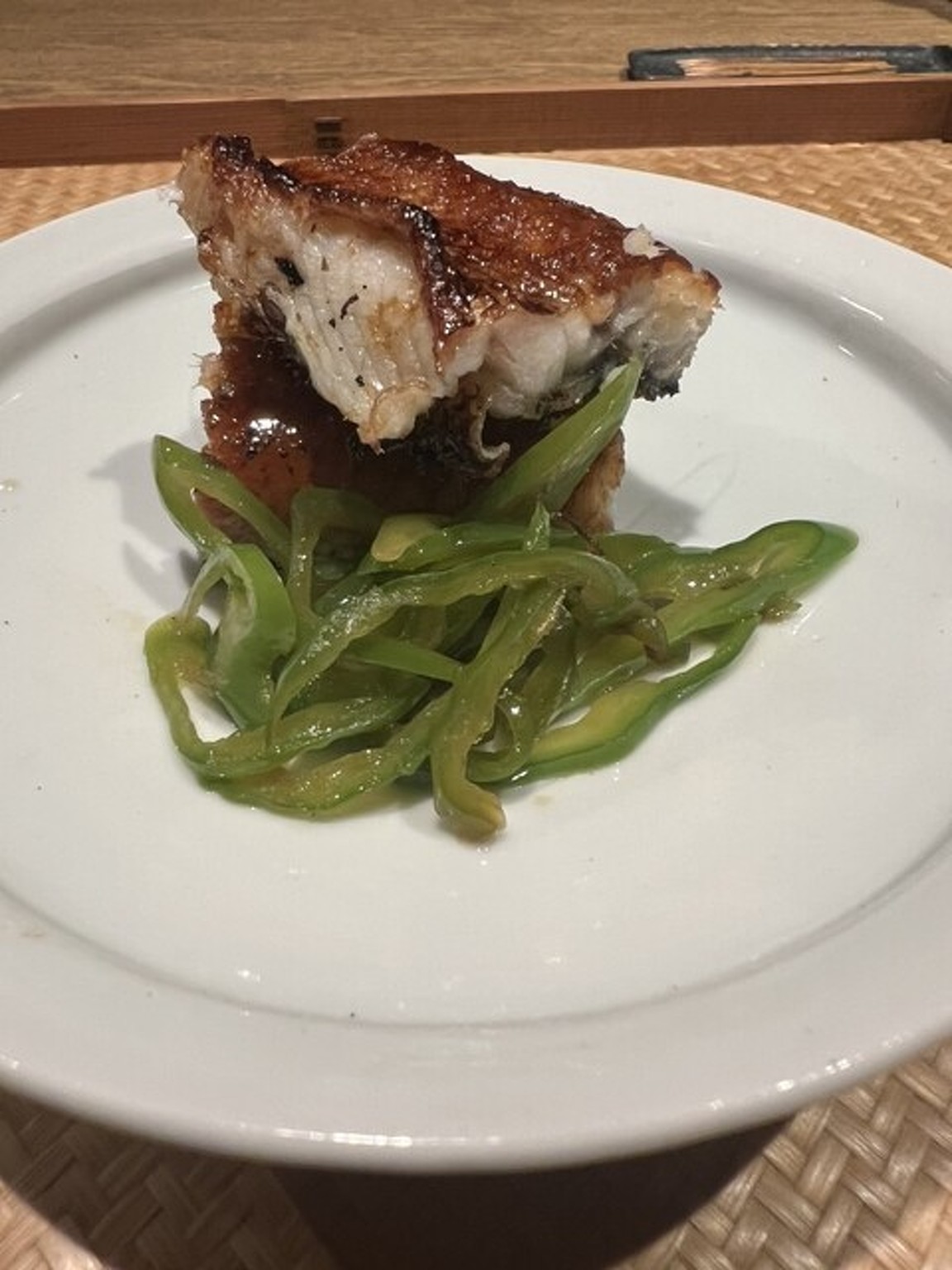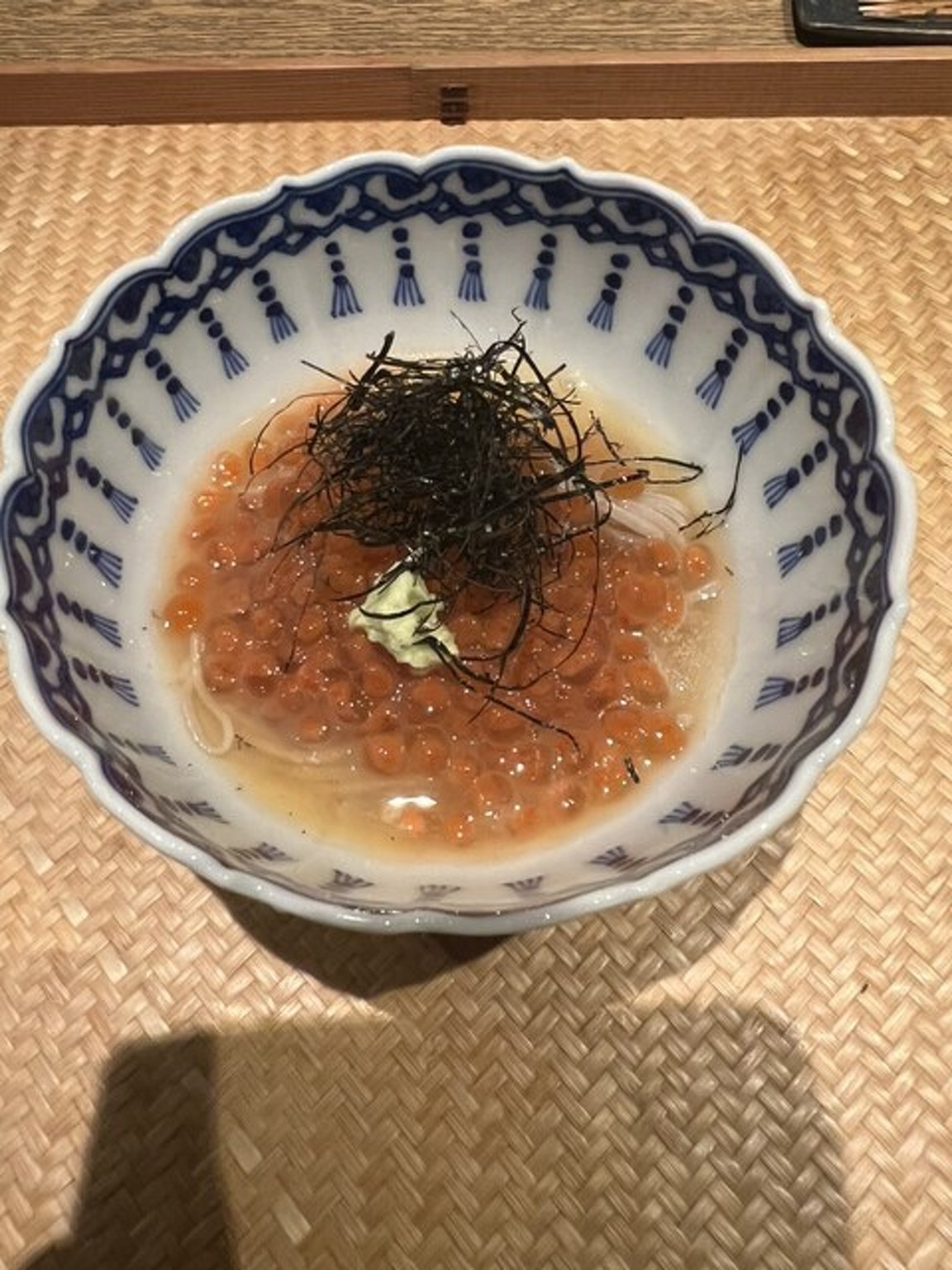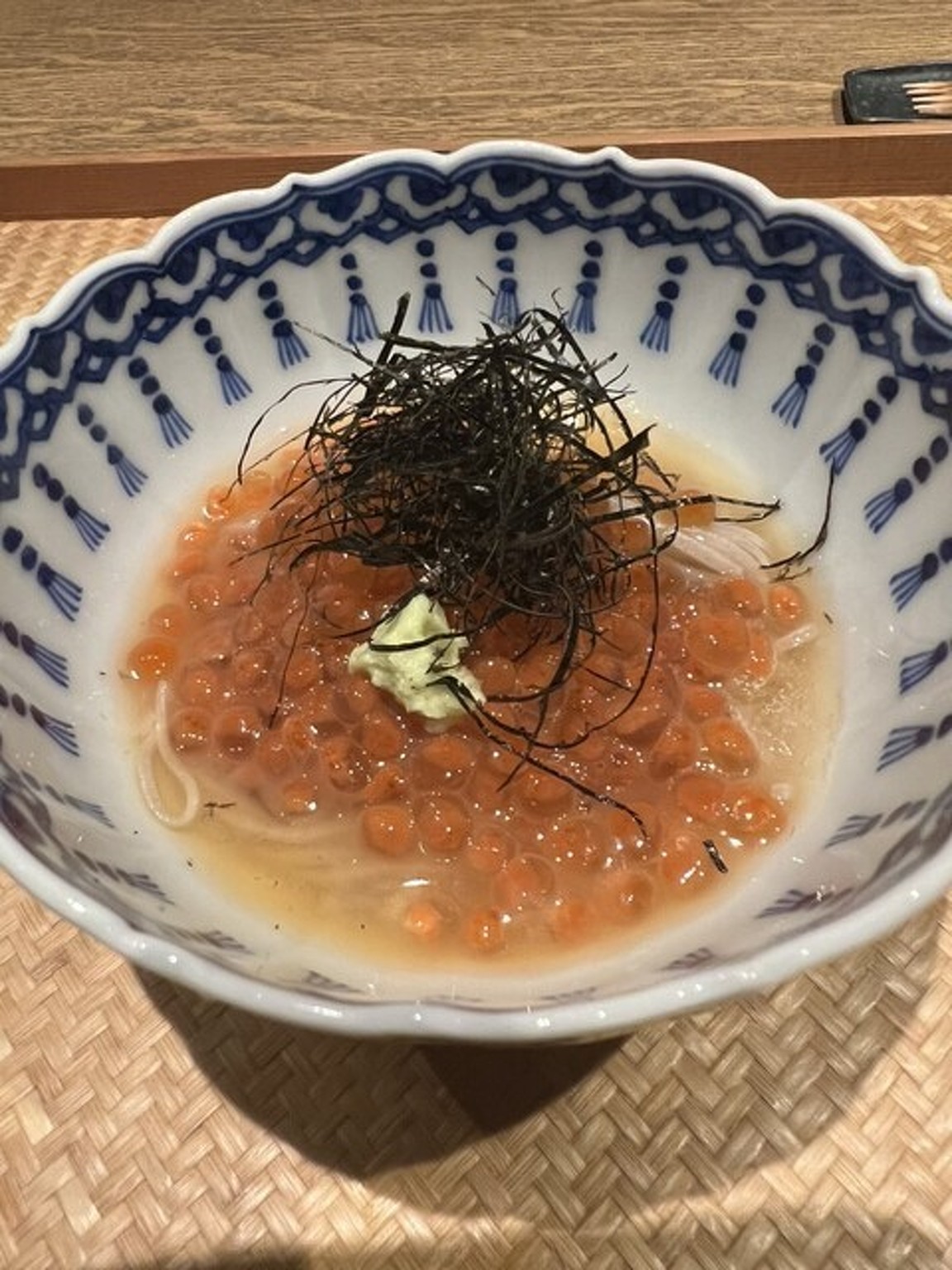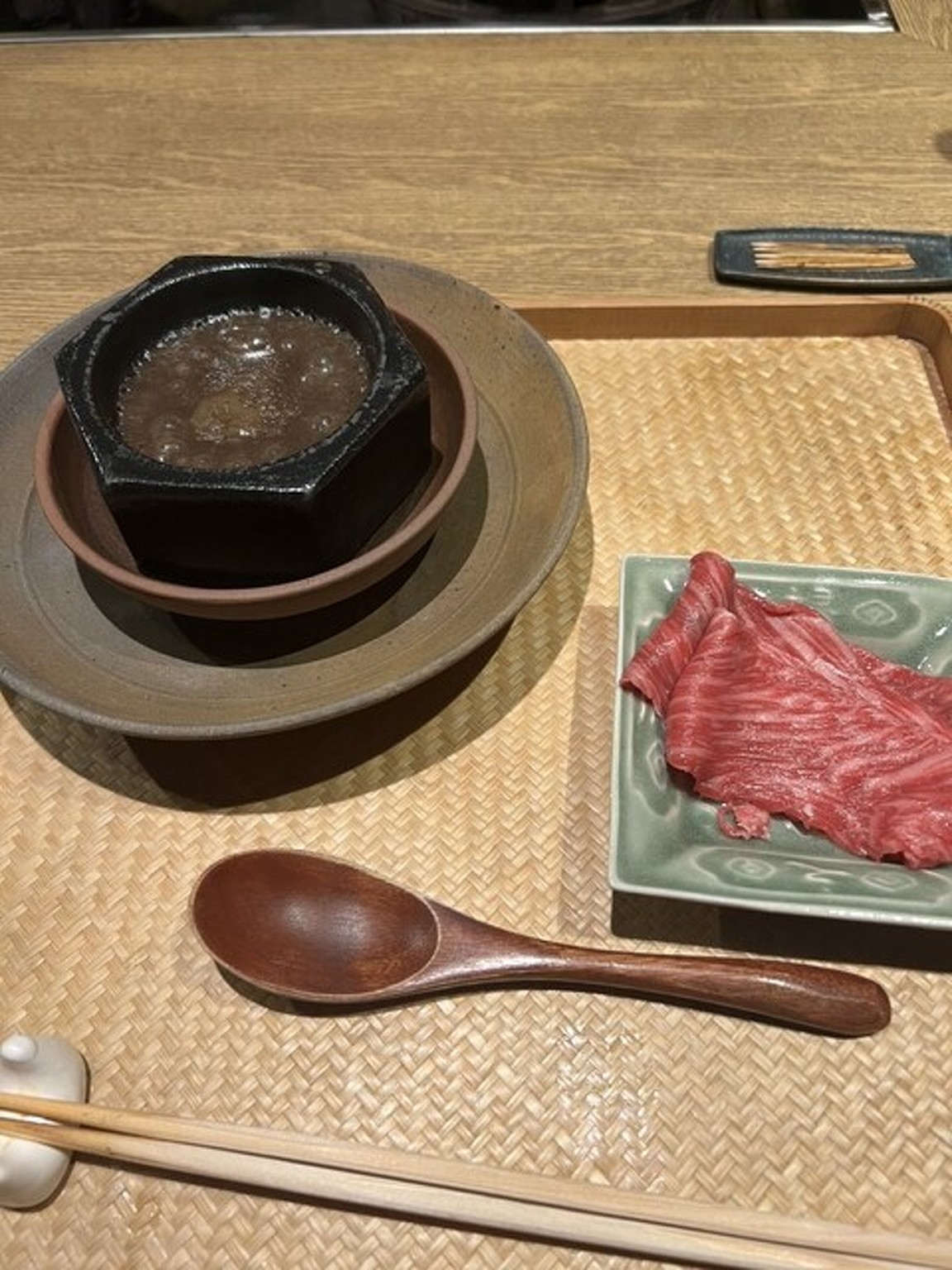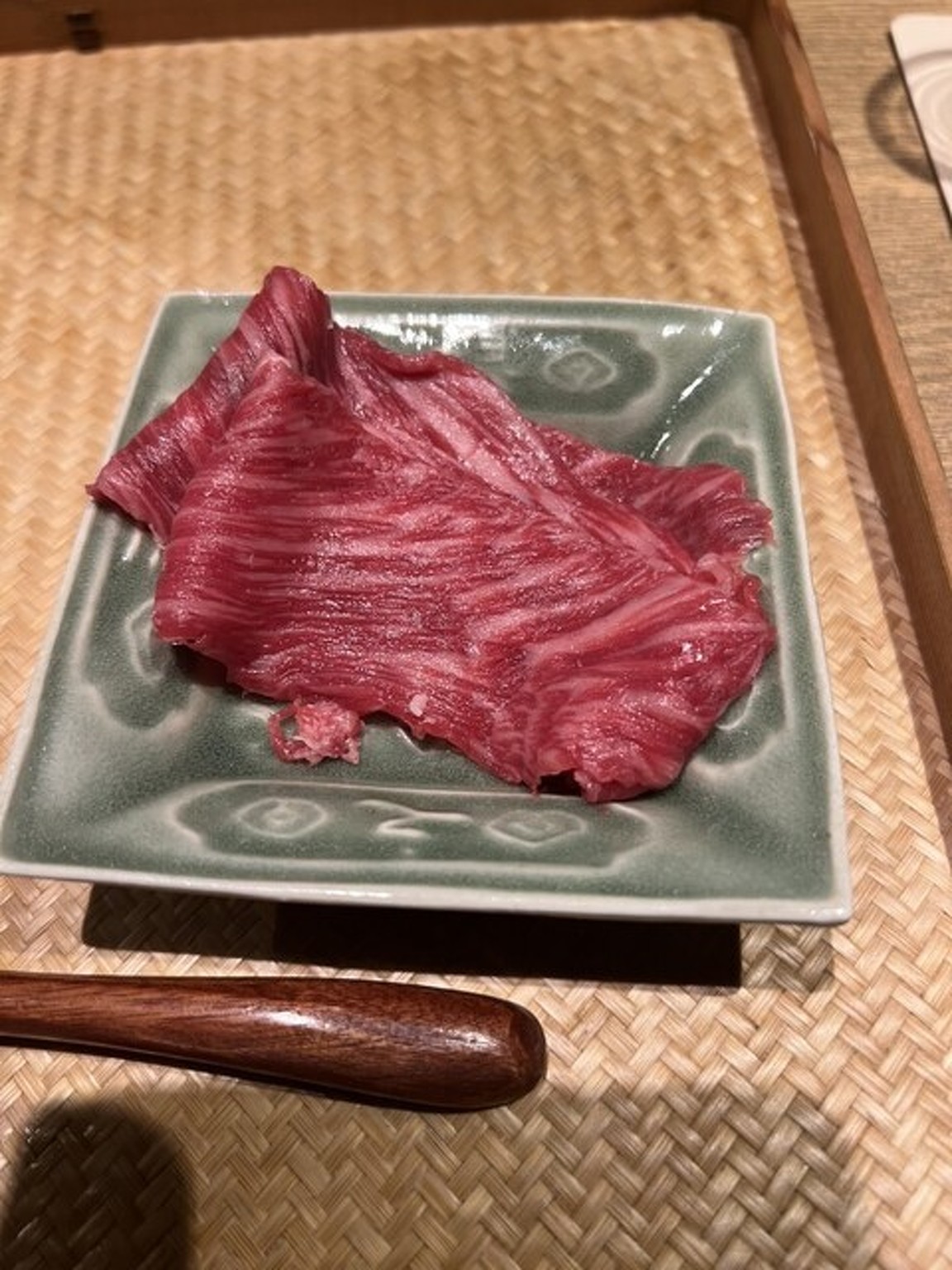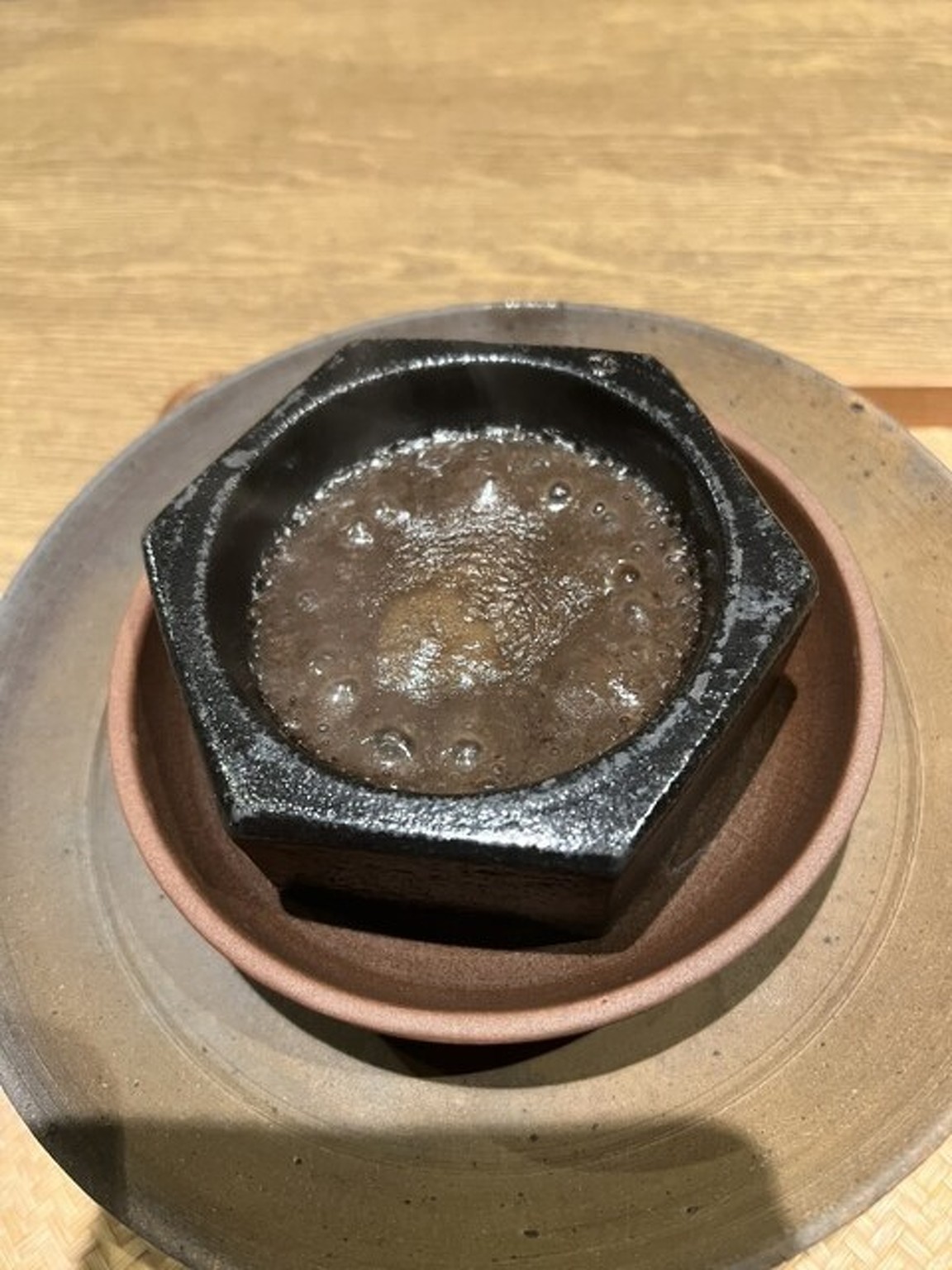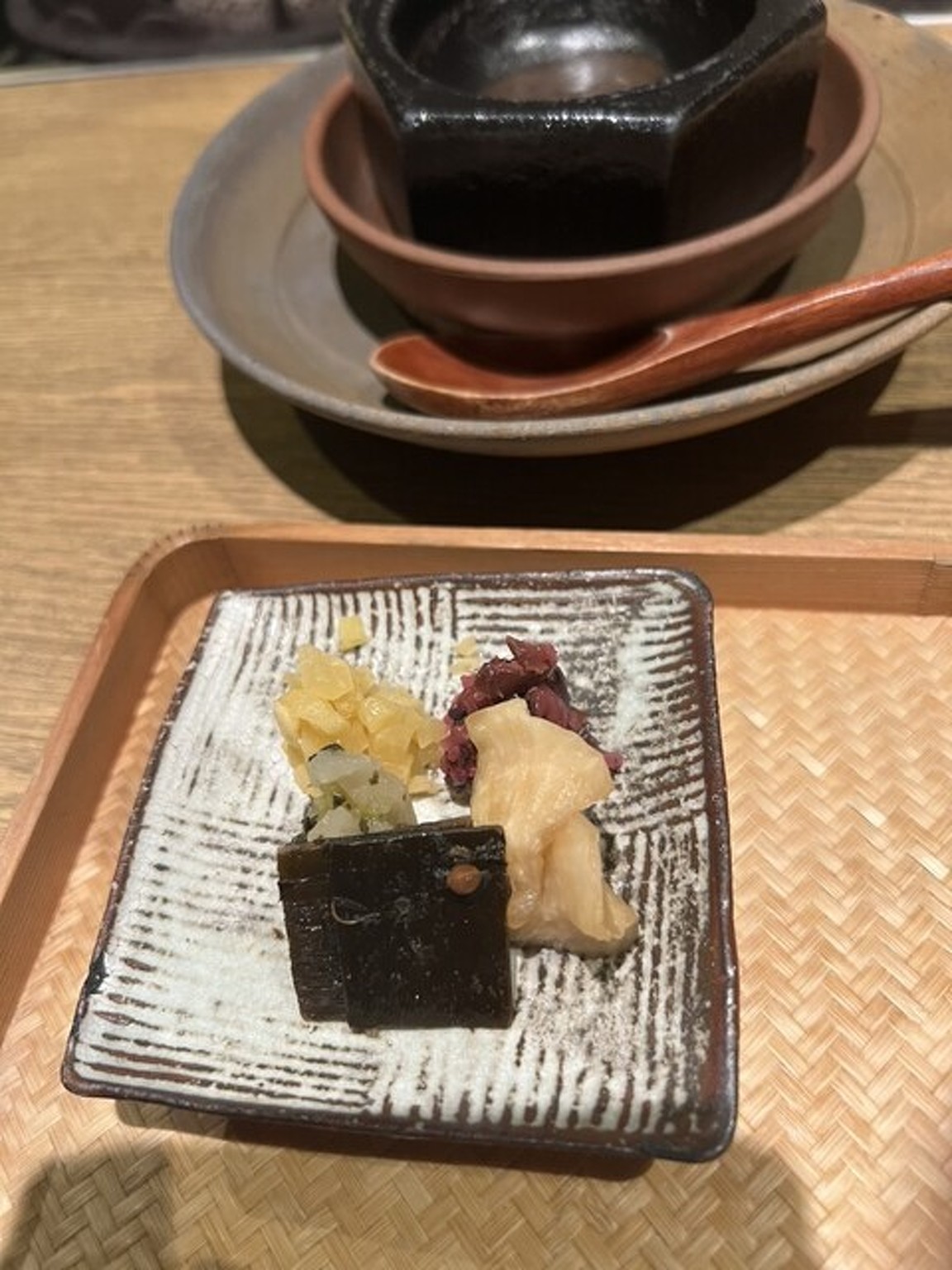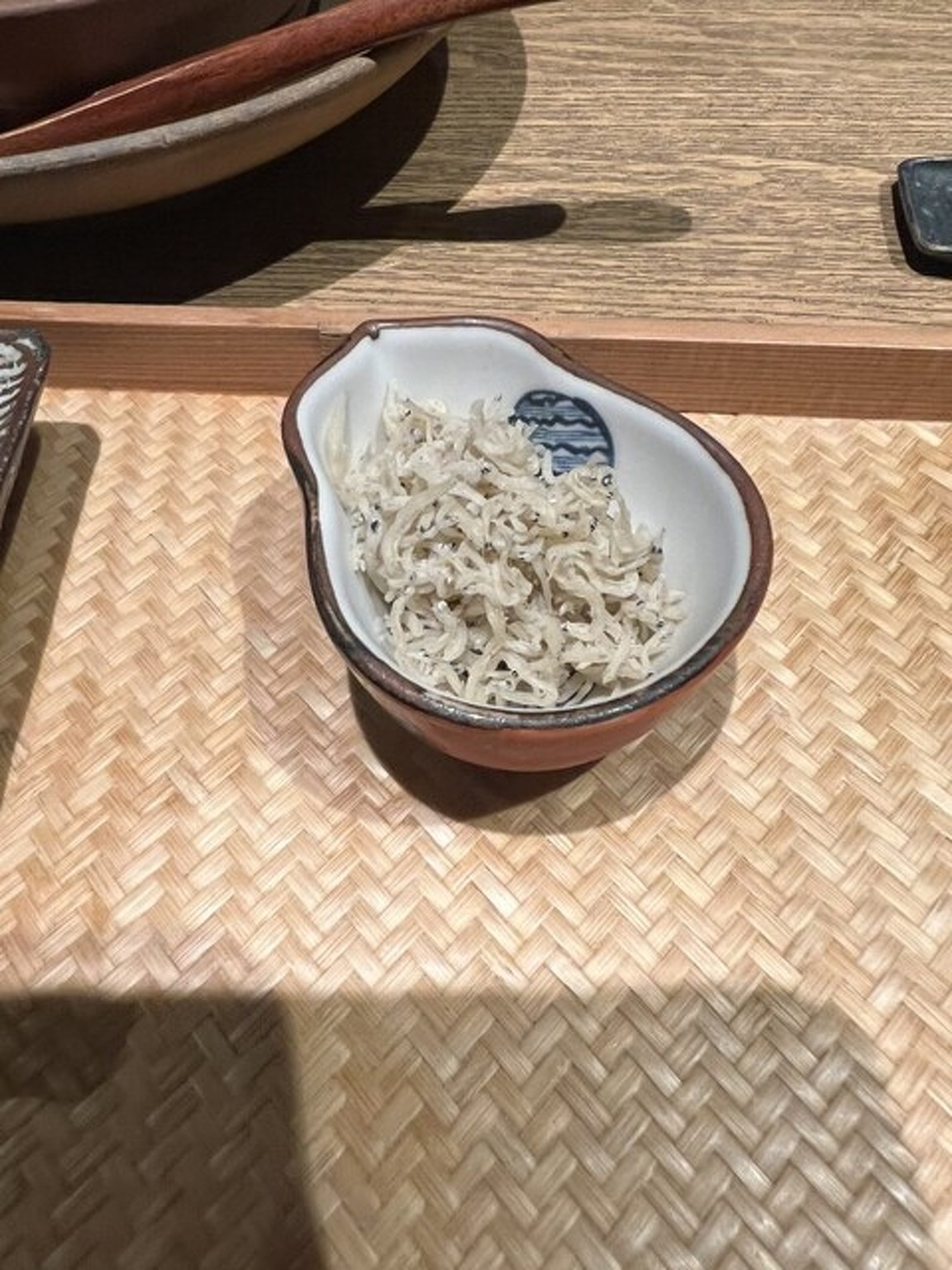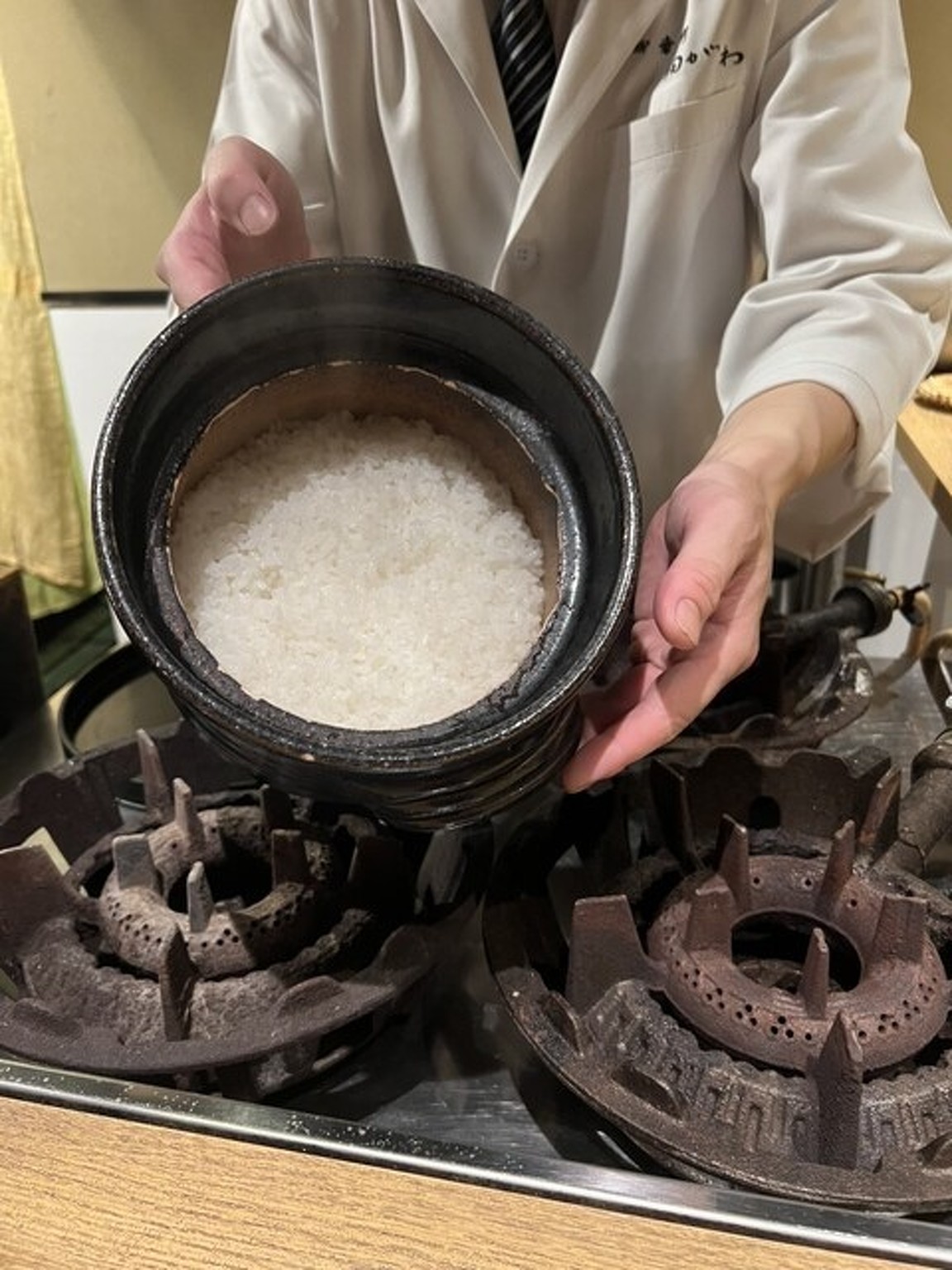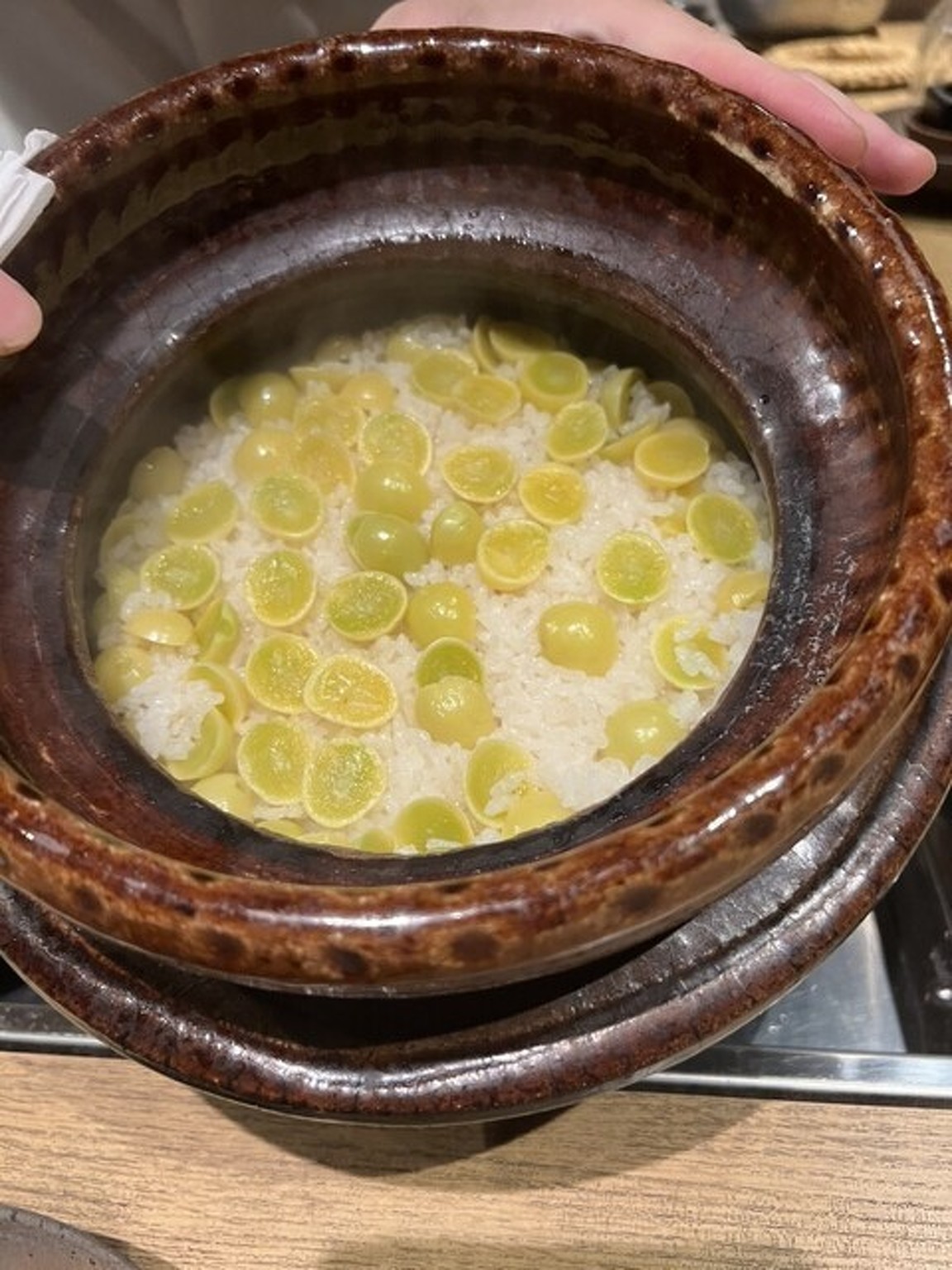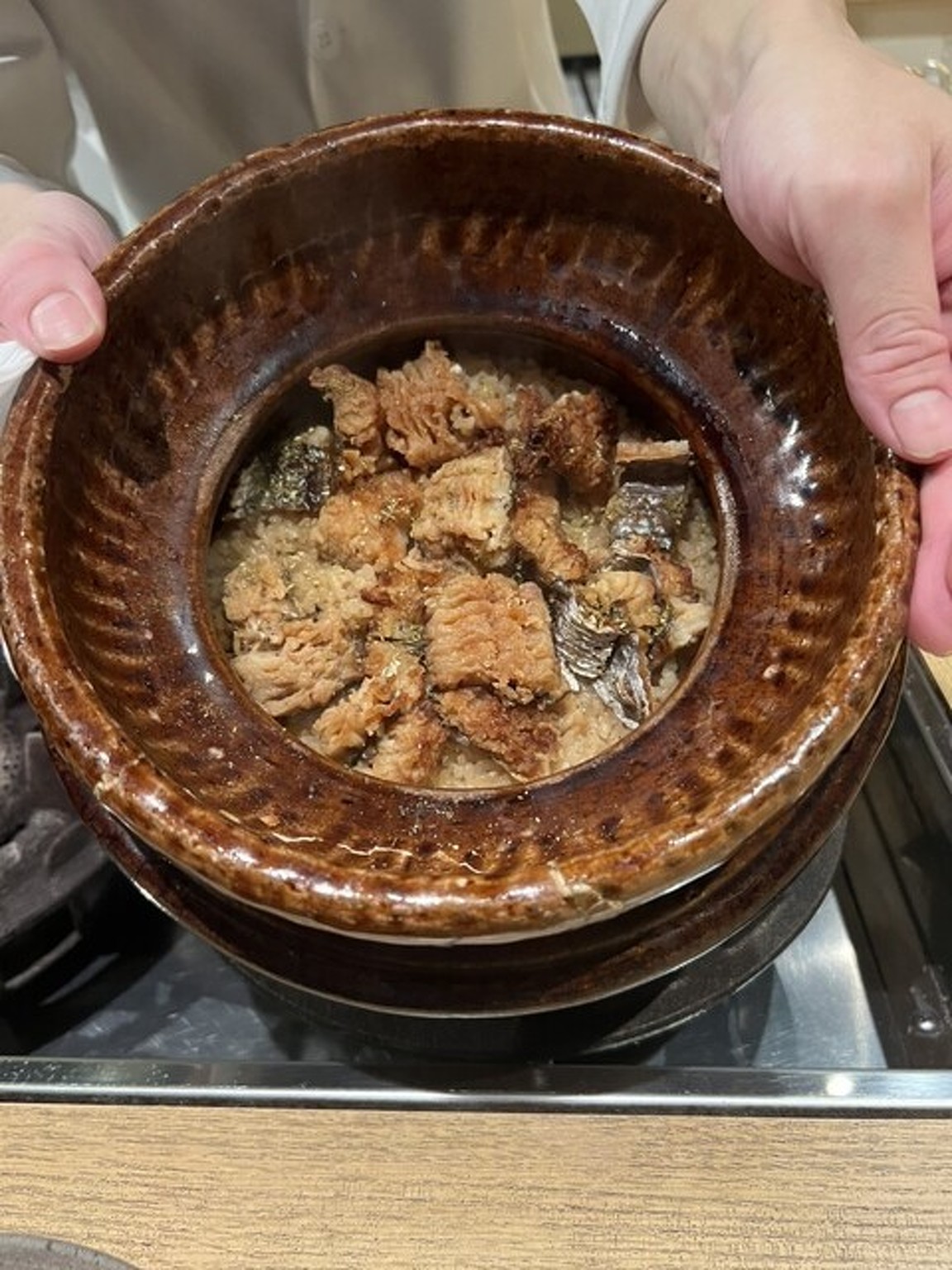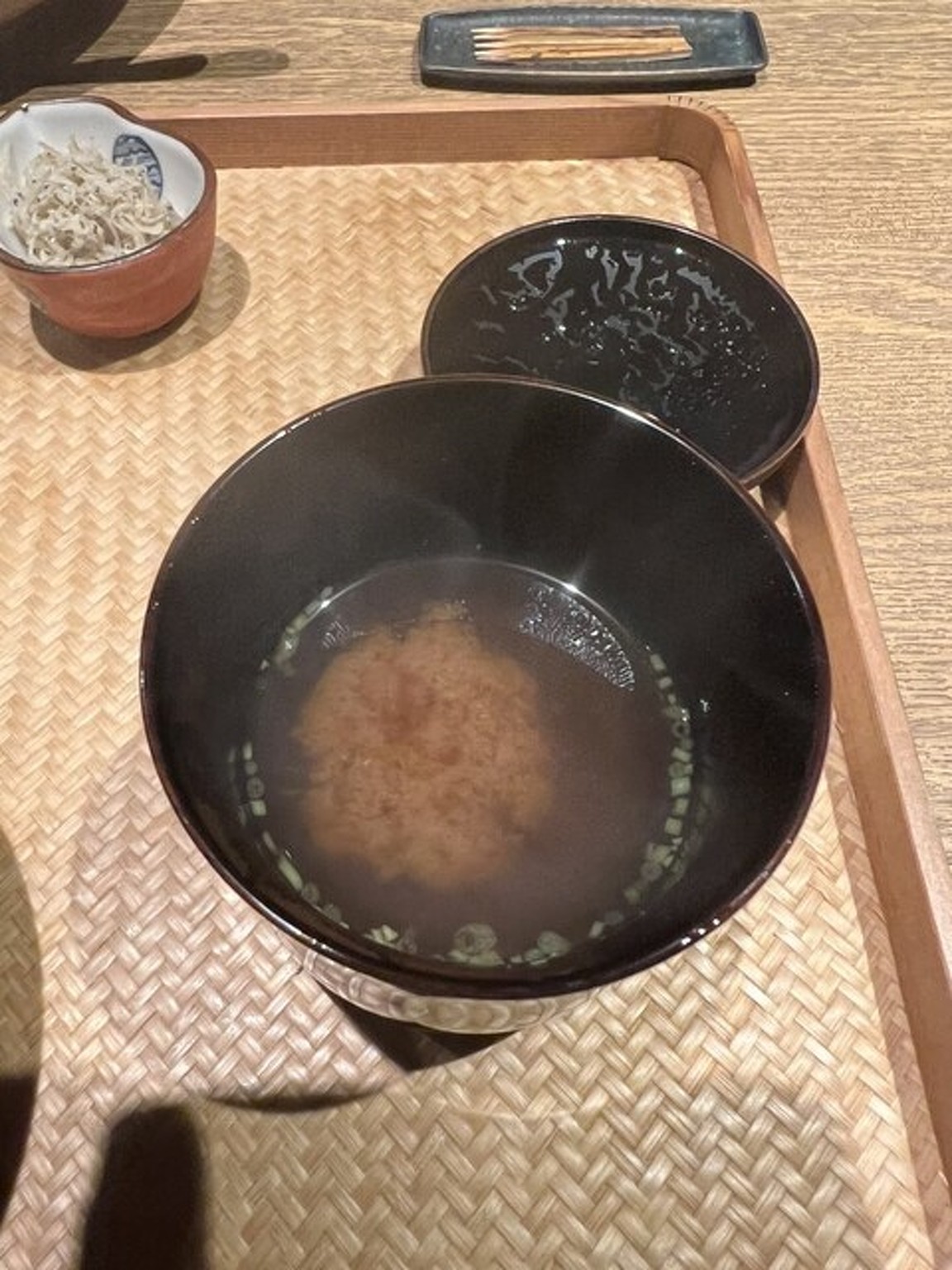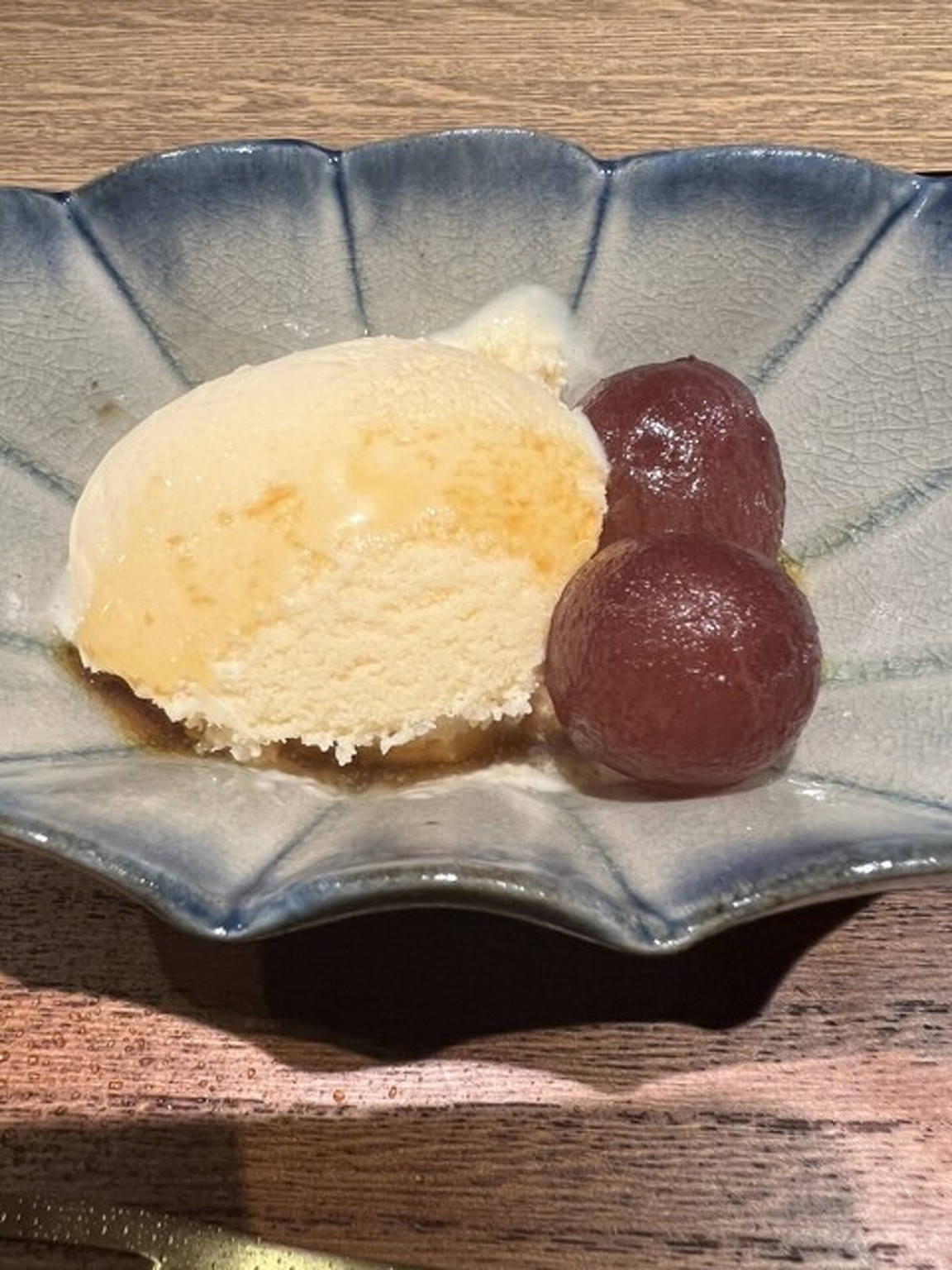
Dining at Goko Machi Tagawa always makes me realize how the chef adapts cooking methods based on the ingredients. For instance, this time, we had new Pacific saury, and the chef mentioned that this year's fish lacks fat, so instead of slow-roasting it, he quickly grilled it using both top and bottom charcoal heat. Indeed, when grilling saury over charcoal, the fat usually drips off and creates a lot of smoke, but this time, there was hardly any smoke. It’s true that ingredients are natural, and they aren’t always at their best, especially in unusual weather like this year.I can imagine how challenging it must be for the chefs.We started with cold gyokuro tea, which was sweet and delicious.- **Appetizer: Corn Tofu** Corn tofu served with dashi and topped with bafun uni and chopped okra. The sweet aroma of corn pairs beautifully with the sweetness of the bafun uni. Interestingly, the chopped okra brings everything together; if we had just served whole okra, it would have been eaten separately.- **Matsutake and Hamo** Aomori matsutake and hamo (pike eel) that have been deboned and blanched. The dashi is thickened with potato starch and garnished with green onions. This dish represents late summer beautifully, with fragrant hamo and exquisite dashi. It truly is a luxurious dish.- **Kuruma Ebi (Tiger Prawn)** The kuruma ebi is cooked to a perfect medium-rare and served with ponzu and grated daikon underneath, topped with cucumber and myoga. Additionally, the prawn legs are deep-fried and served alongside. The kuruma ebi is sweet, and it pairs perfectly with the ponzu and daikon. The aroma of myoga is delightful, and the crispy fried legs add a sweet, savory balance to the dish.- **Amandai Soup** Amandai (sweetfish), winter melon, and shimeji mushrooms served in dashi with a hint of yuzu. The dashi is delicious, and the fat from the amandai enhances its flavor. The winter melon absorbs the dashi well, making it rich in taste.- **Hassun (Seasonal Dishes)** - Soft-shelled turtle chawanmushi (savory egg custard) - Simmered eggplant - New Pacific saury and cucumber salad - Egg yolk marinated in miso - Fried small potatoes - Sesame-dressed vegetables - Sweetfish with roe in sweet soy sauce The new Pacific saury is mixed with cucumber, and it really shines when dressed with a vinegar sauce. The soft-shelled turtle chawanmushi is exceptional, with the flavor of the turtle spreading in the mouth. The egg yolk miso marinated dish lightly enhances the miso flavor while highlighting the sweetness of the yolk. Each dish is a delightful balance of rich and refreshing flavors.- **Grilled Sea Eel with Sauce** Fukui-produced sea eel grilled over charcoal while being brushed with sauce, accompanied by shredded Manganji pepper. Unlike river eel, sea eel is more active, resulting in firmer flesh. Because it’s so firm, the sauce doesn’t penetrate easily, but the texture is surprisingly chewy and plump, making it delicious in its own right. Thanks to thorough preparation, there’s no unpleasant odor, and the flavor is lighter compared to river eel. The aroma of sansho pepper is well-balanced, and the accompanying Manganji pepper salad serves as a nice palate cleanser.- **Noodle Course: Ikura Soba** Using high-quality salmon roe, homemade soy-marinated ikura is served with soba. The ikura is accompanied by grated daikon, wasabi, and shredded nori. The soy flavor of the ikura is gentle, making it a perfect match with the soba.- **Kyoto Black Wagyu** The meat is served raw, and you dip it into hot sauce made with fragrant mushrooms. If you prefer it cooked, you can leave it in the sauce longer for a medium-rare finish. However, it’s delicious even raw, so a quick dip is recommended. Even so, the marbled parts get slightly cooked and melt in your mouth. The flavor of the sauce is outstanding, and it pairs well with rice, so it’s suggested to save a bit for that.- **Rice** Kyoto Koshihikari, ginkgo rice, and hamo rice. I really enjoy the rice here. I used to love Sasanishiki, and the Kyoto Koshihikari has a flavor profile similar to it, being slightly lighter than Uonuma Koshihikari. It’s delicious on its own or with accompaniments. When drizzled with sauce, it’s simply irresistible. The ginkgo rice, being early-season ginkgo, lacks the typical bitterness and is just fragrant and sweet. The rice is lightly salted, and the hamo rice is cooked with the grilled hamo and sauce, finished with a sprinkle of sansho. It’s easy to imagine how delicious this would be, and it lived up to my expectations.- **Dessert: Lemon Ice Cream and Kyoho Grapes** Lemon ice cream drizzled with brandy-flavored caramel sauce, served with Kyoho grapes on the side. The dessert here is crafted with great care. The chef wants to present Japanese cuisine with the same level of dedication as French desserts. It’s a fitting conclusion to a well-prepared meal.The chef transitioned from the IT industry to the world of Japanese cuisine. However, his approach is not about surprising dishes; he values the basics of dashi and focuses on how to bring out the best flavors from the ingredients. Since ingredients are natural and can vary with the climate, he ensures that the cooking is done meticulously. He remains true to the fundamentals while providing dishes with a unique touch. As a Michelin one-star Japanese restaurant, the prices are quite reasonable. Although it’s becoming harder to make reservations due to the increasing number of foreign guests, it’s definitely one of the places I want to visit at least once a year.
We use cookies on this site to enhance your user experience.