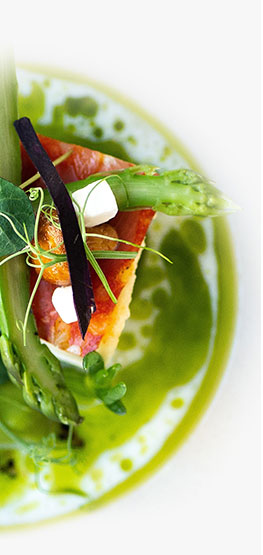
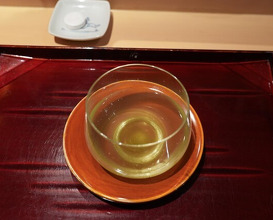
I've been a patron of Shinohara since the Omi era, and this autumn marks my 10th year since moving to Tokyo. I've visited around 50 times, averaging five visits a year, though recently it's been three times a year. It's one of the restaurants I want to keep coming back to. At Shinohara, I can truly appreciate the beauty of Japanese cuisine. From the very first dish, the presentation is exquisite, reflecting seasonal traditions. While it carries the essence of traditional kaiseki cuisine, the flavors are well-balanced and delightful. Despite the already extensive menu, the hassun (seasonal appetizer platter) features about ten items, which must be quite a task to prepare. Each dish is carefully seasoned and delicious. There are very few Japanese restaurants that present food in such a manner, and among them, Shinohara stands at the pinnacle.◆ Edamame puree ◆ Kaji leaf, sweet shrimp, red sea urchin from Wakinohura, cucumber, and carrot with wasabi vinegar ◆ Sweetfish and winter melon noodle stew ◆ Kyushu eel, octopus, and bluefin tuna with plum sauce and miso soy sauce ◆ Grilled sweetfish sushi with ginger soy sauce from Gujo Hachiman ◆ Grilled eel sushi ◆ King crab (additional) ◆ Sweetfish head ◆ Hassun: Five colored threads on bamboo leaves, Hairy crab and scallop vinegared dish, Yamamomo (Japanese peach) marinated in red wine, Ham jelly, Fried squid with shinjo (fish paste), Dutch-style simmered eggplant, Awa-fu (wheat gluten) with Rikyu miso, Grilled duck skewers, Corn tofu ◆ Fried sweetfish with caviar ◆ Foie gras, butter, dried persimmon, and rum raisin monaka ◆ Fried abalone, potato stew, and corn temari ◆ Soft-shelled turtle rice porridge ◆ New ginger rice, ◆ Omi beef tenderloin cutlet (additional) ◆ Tanba's Dainagon red bean jelly ◆ Matcha (green tea)
We use cookies on this site to enhance your user experience.