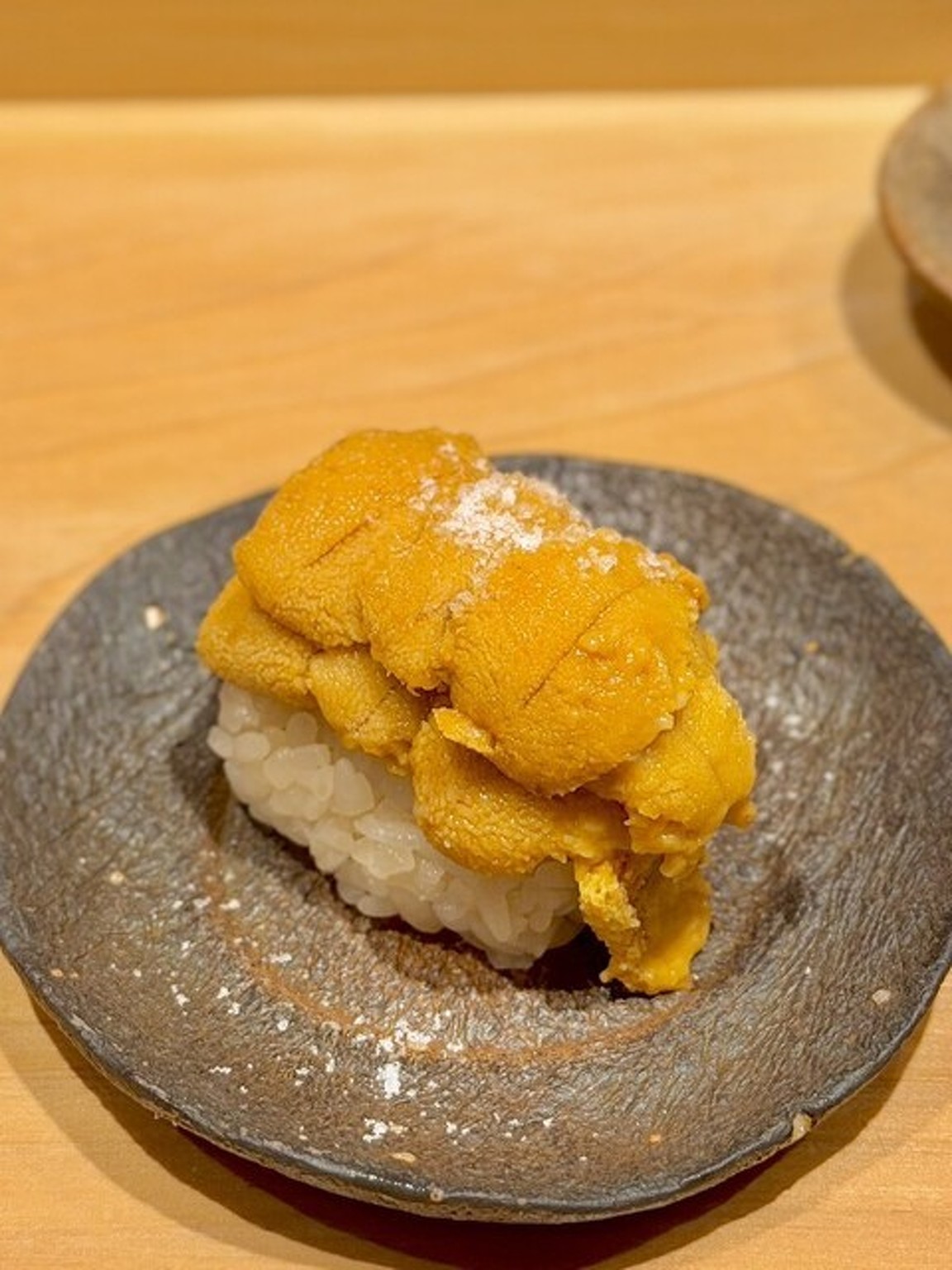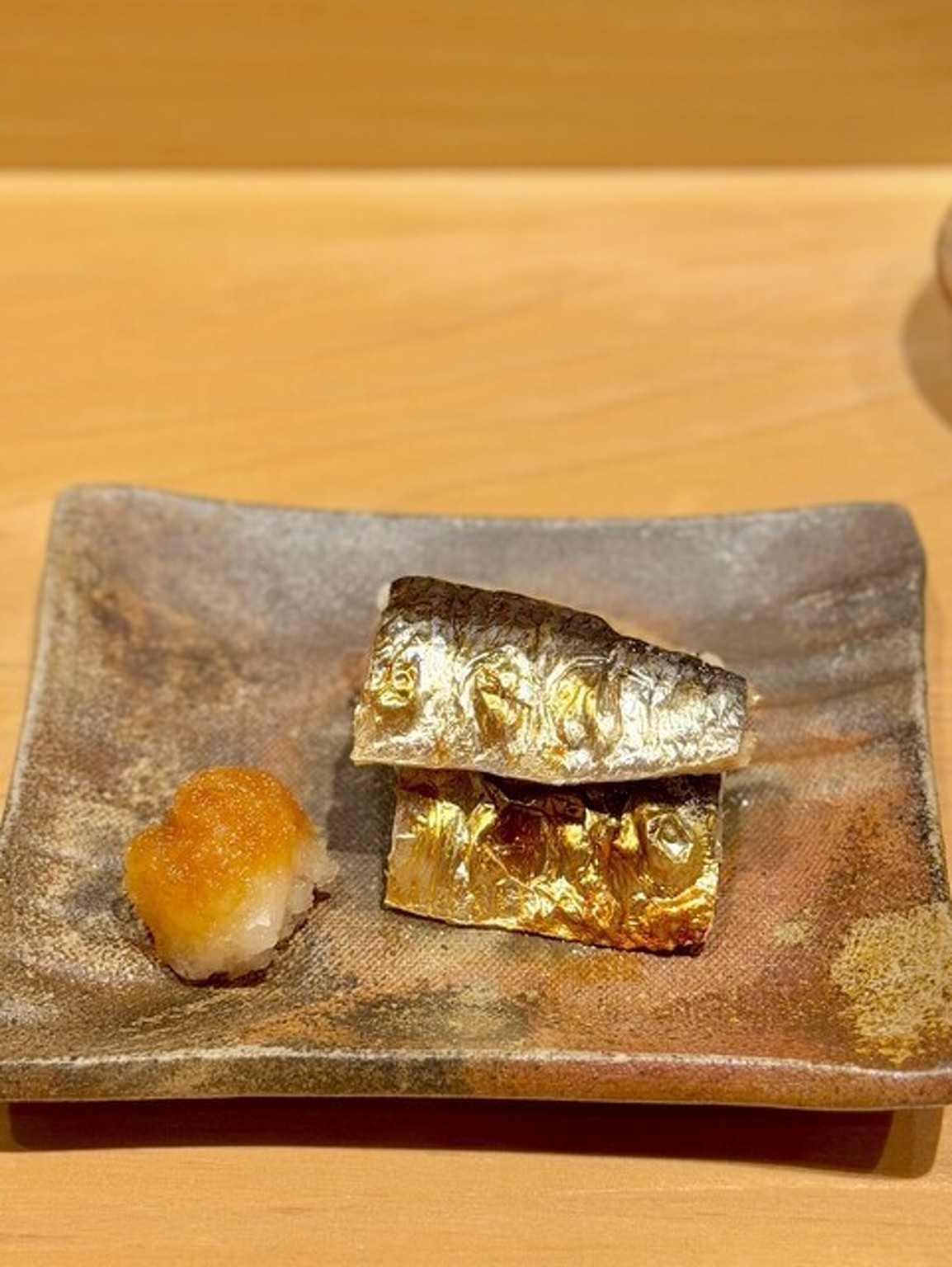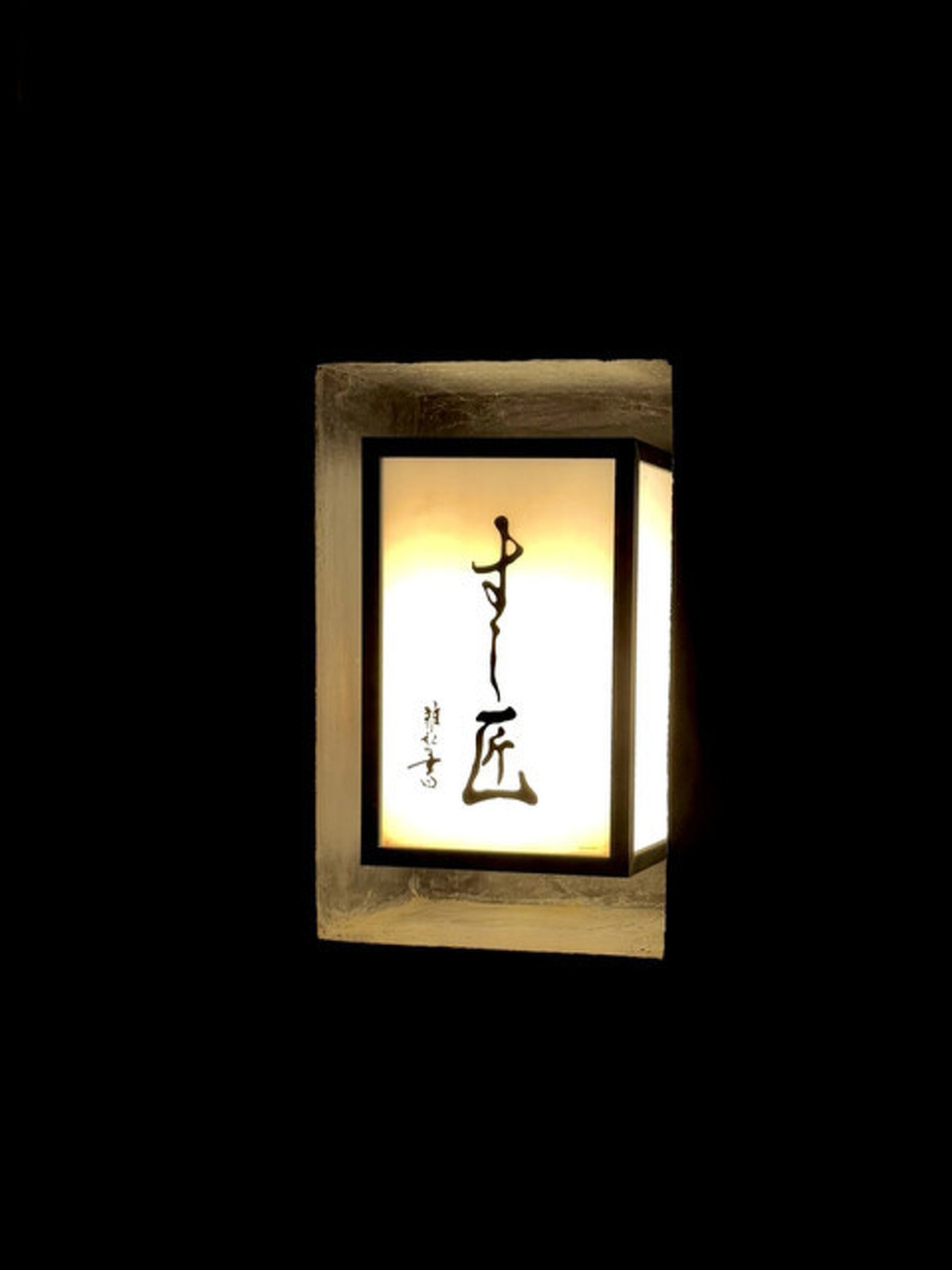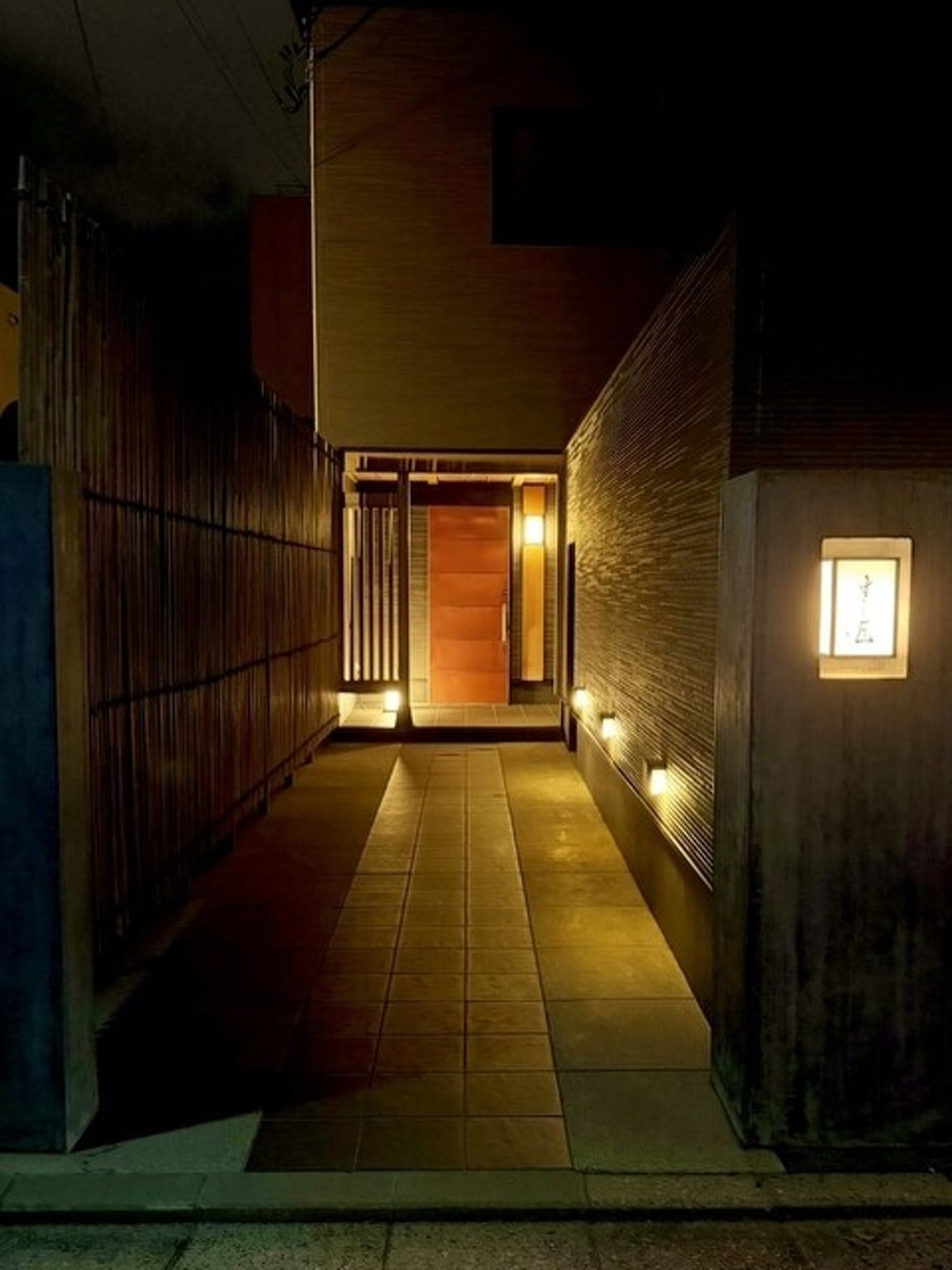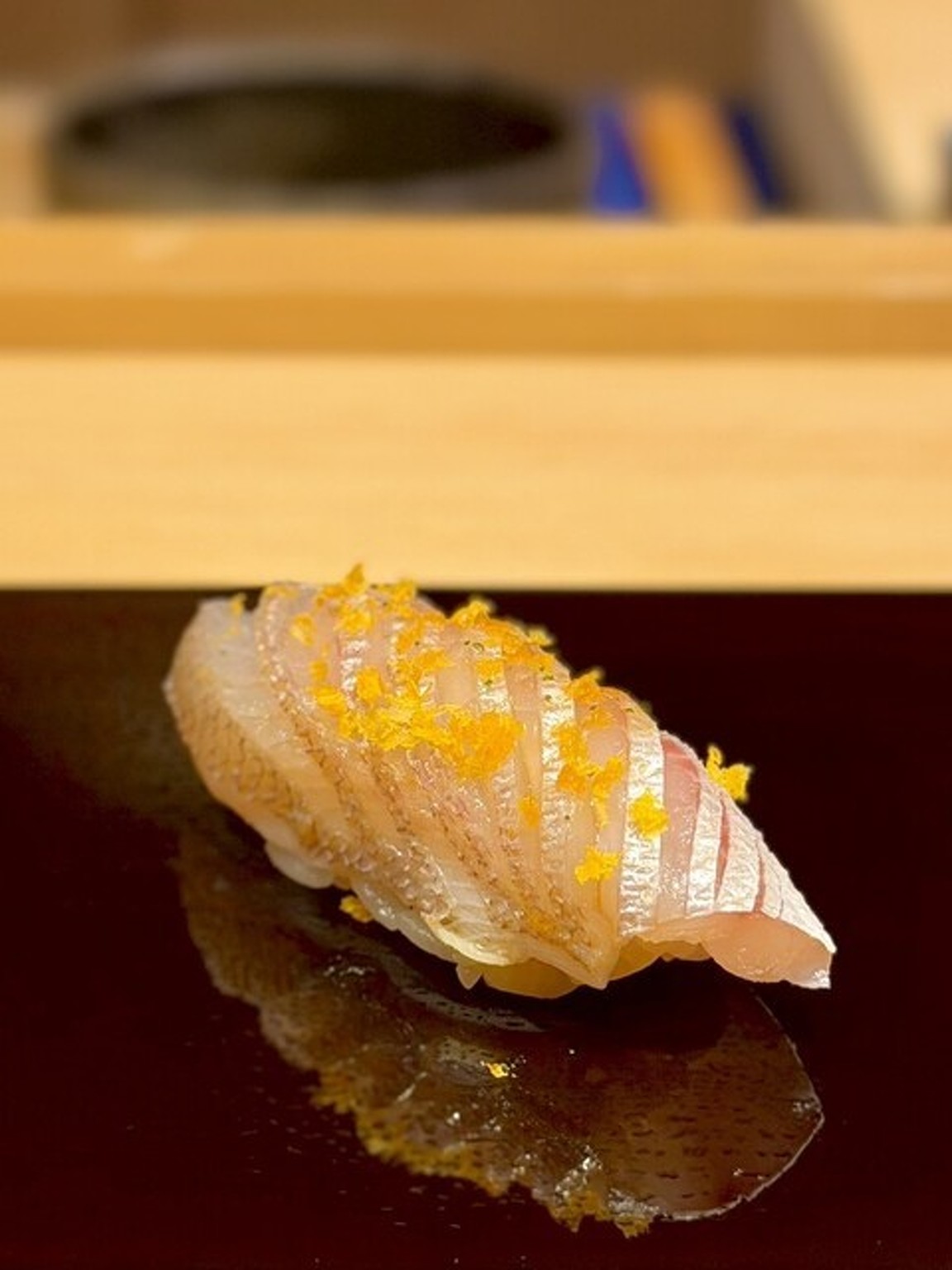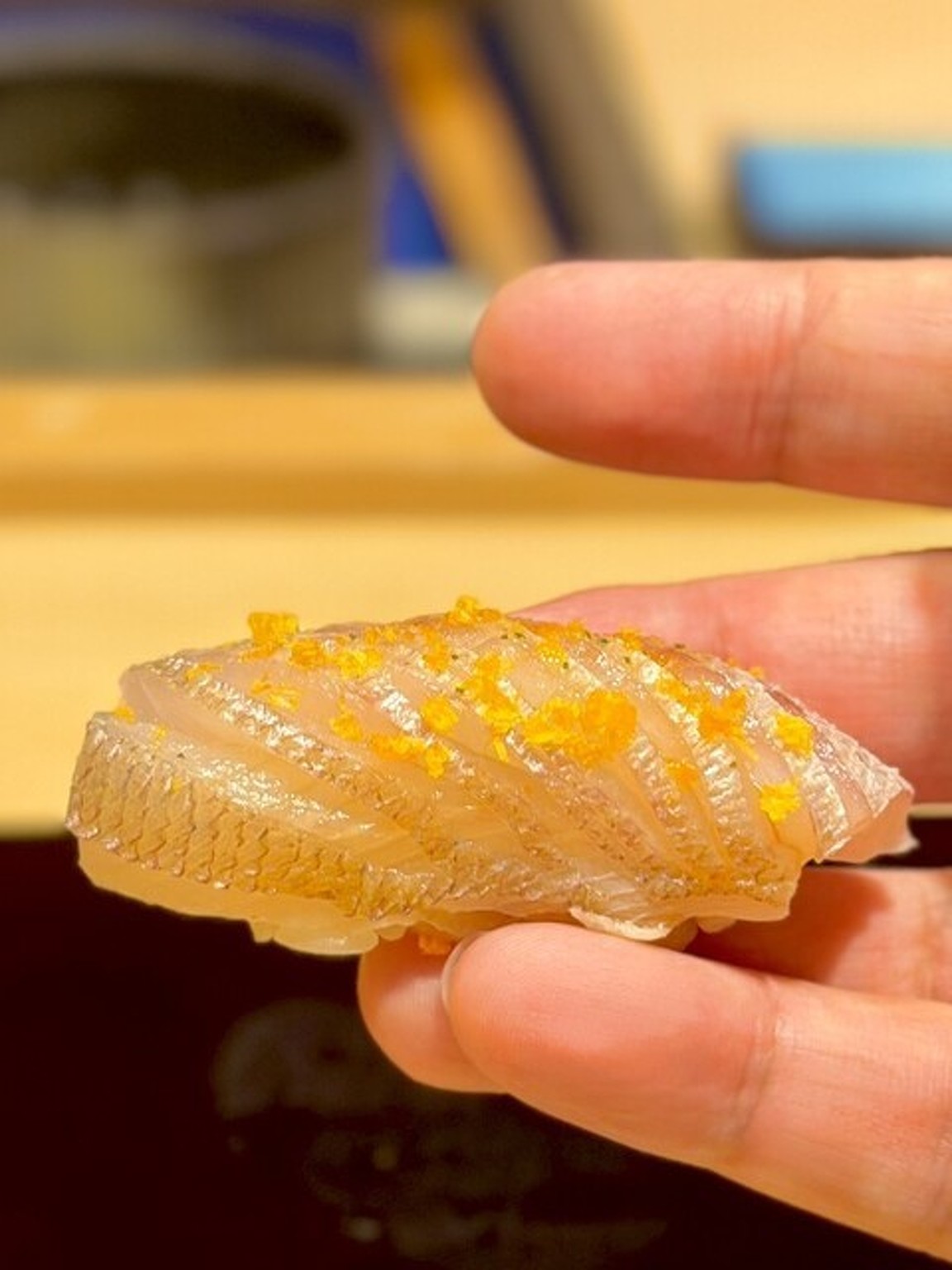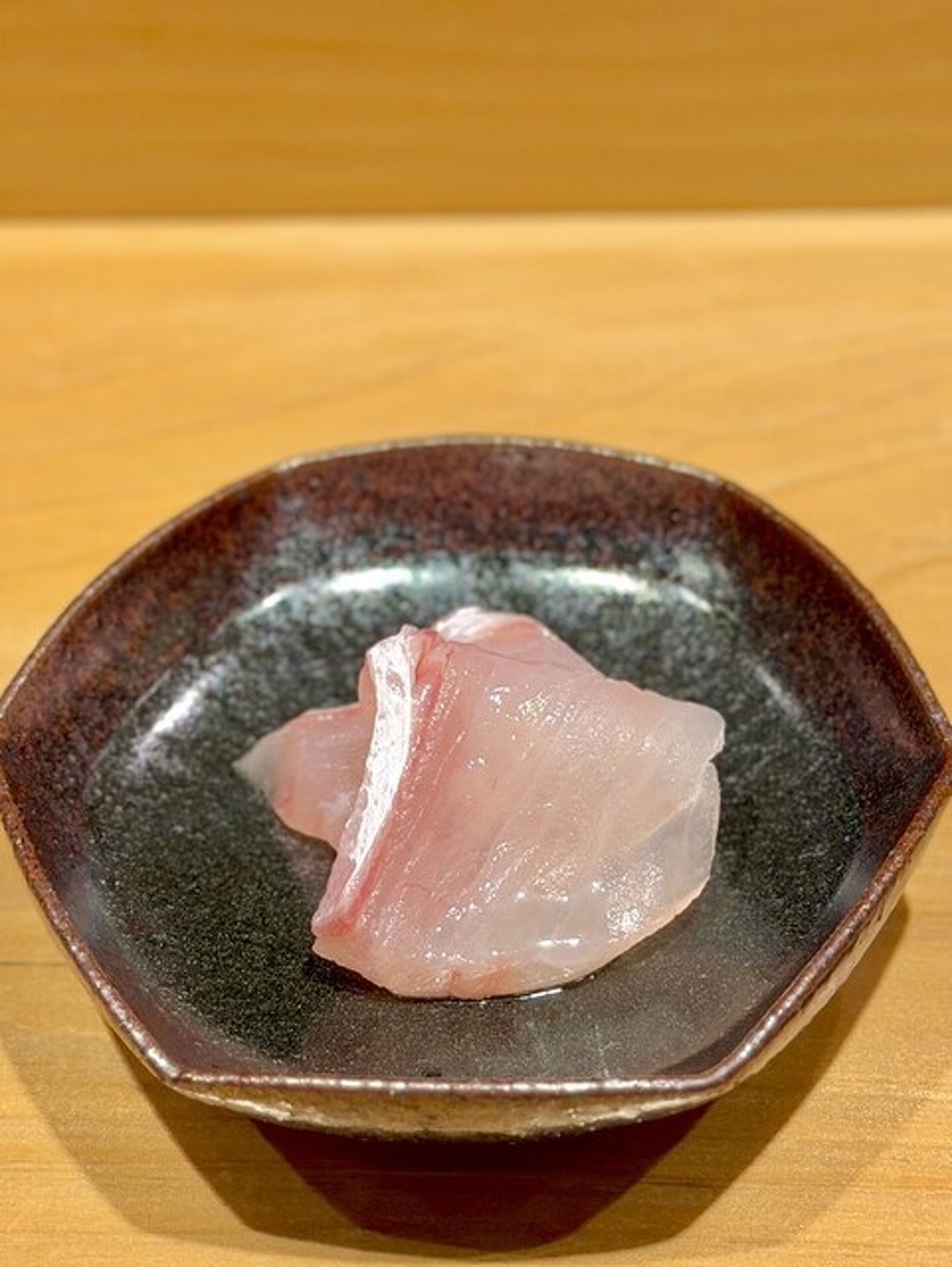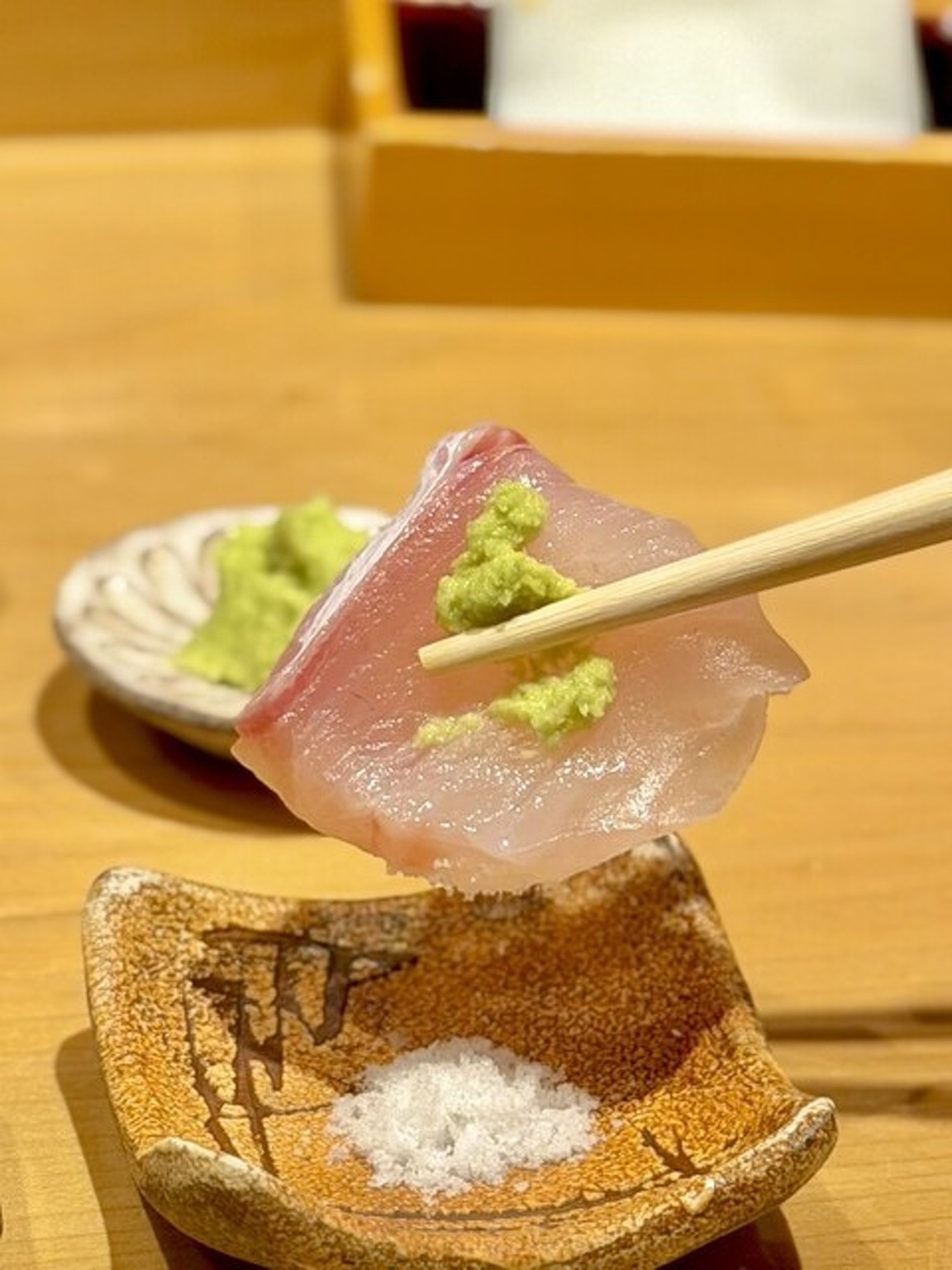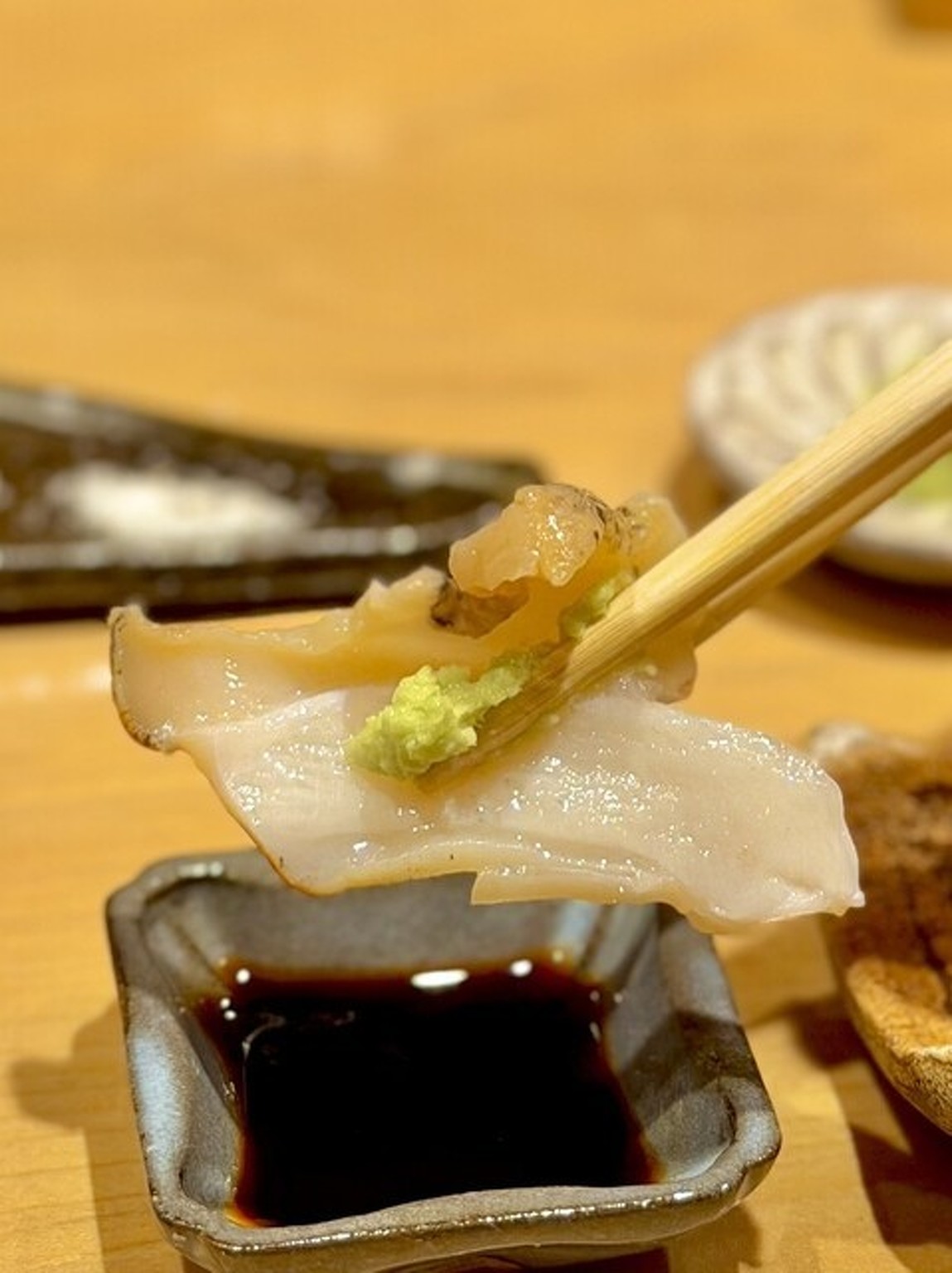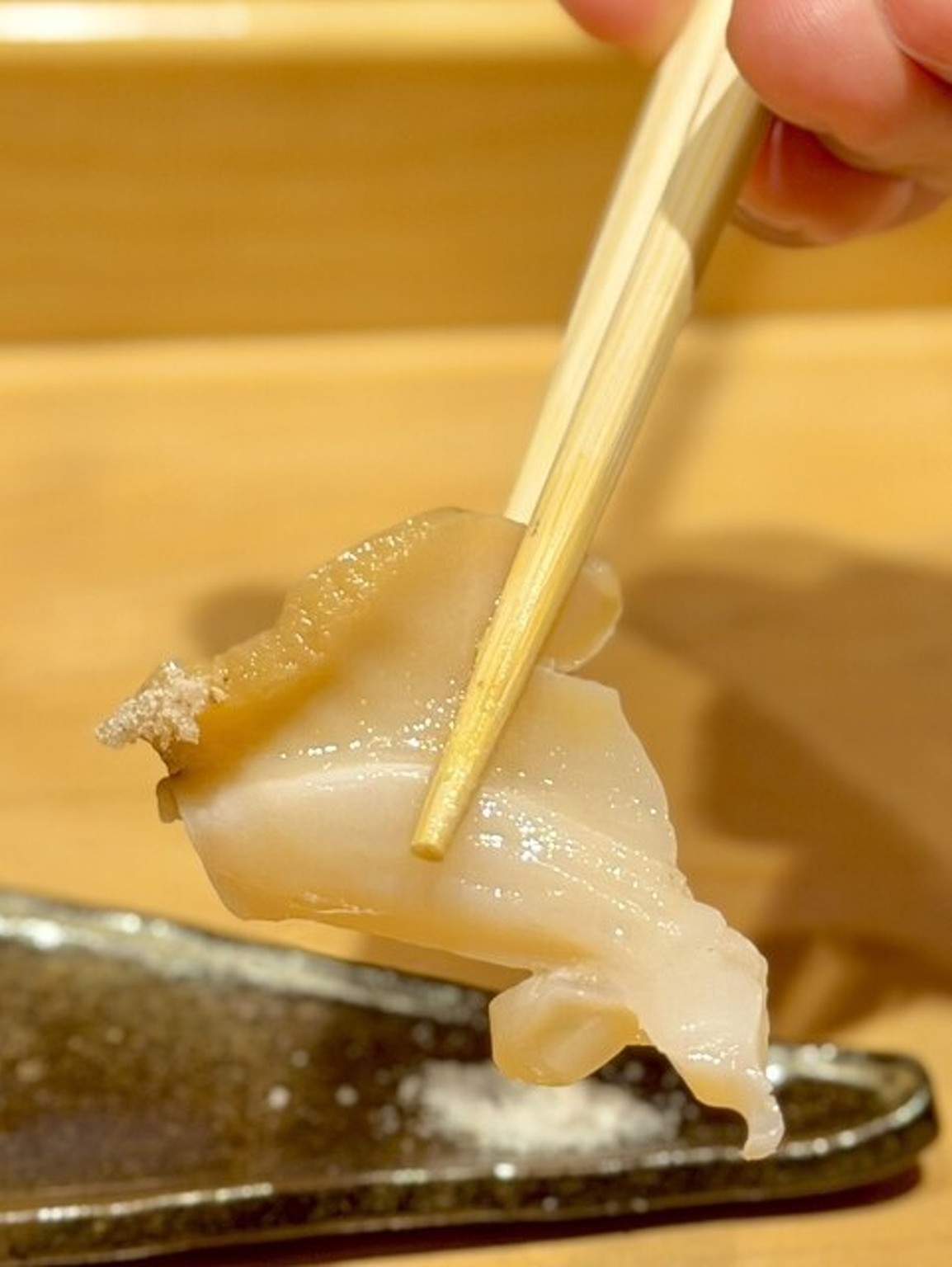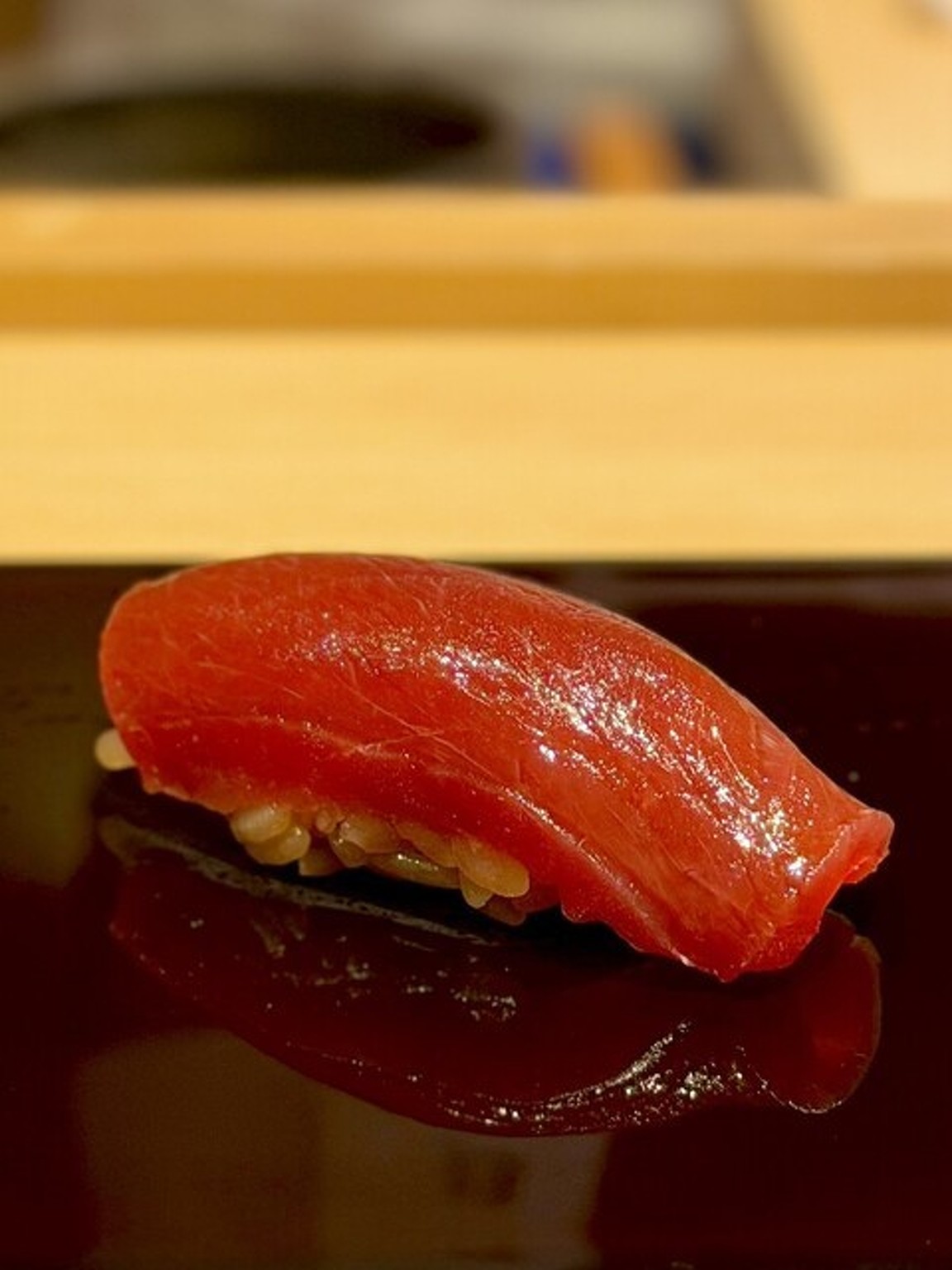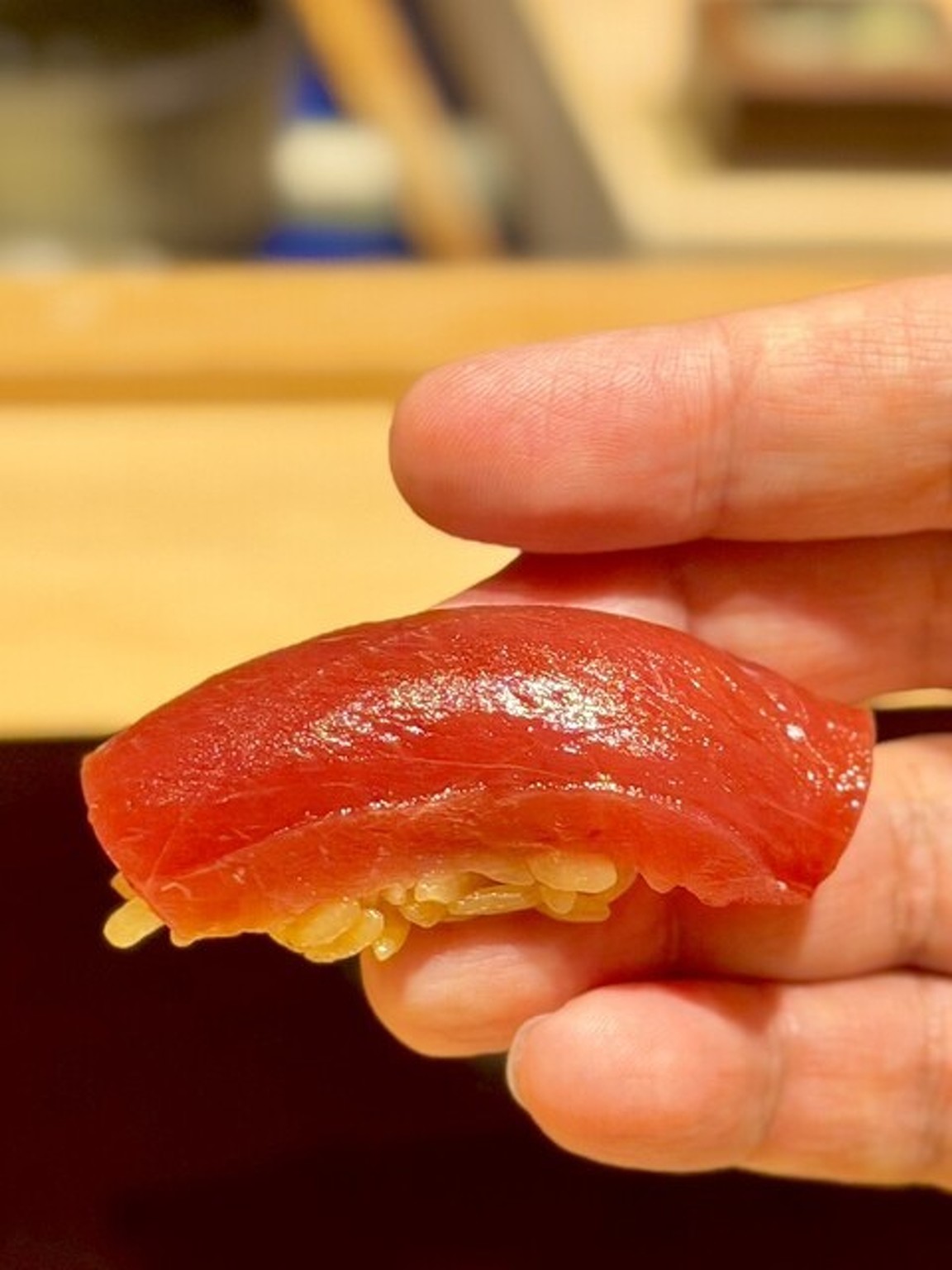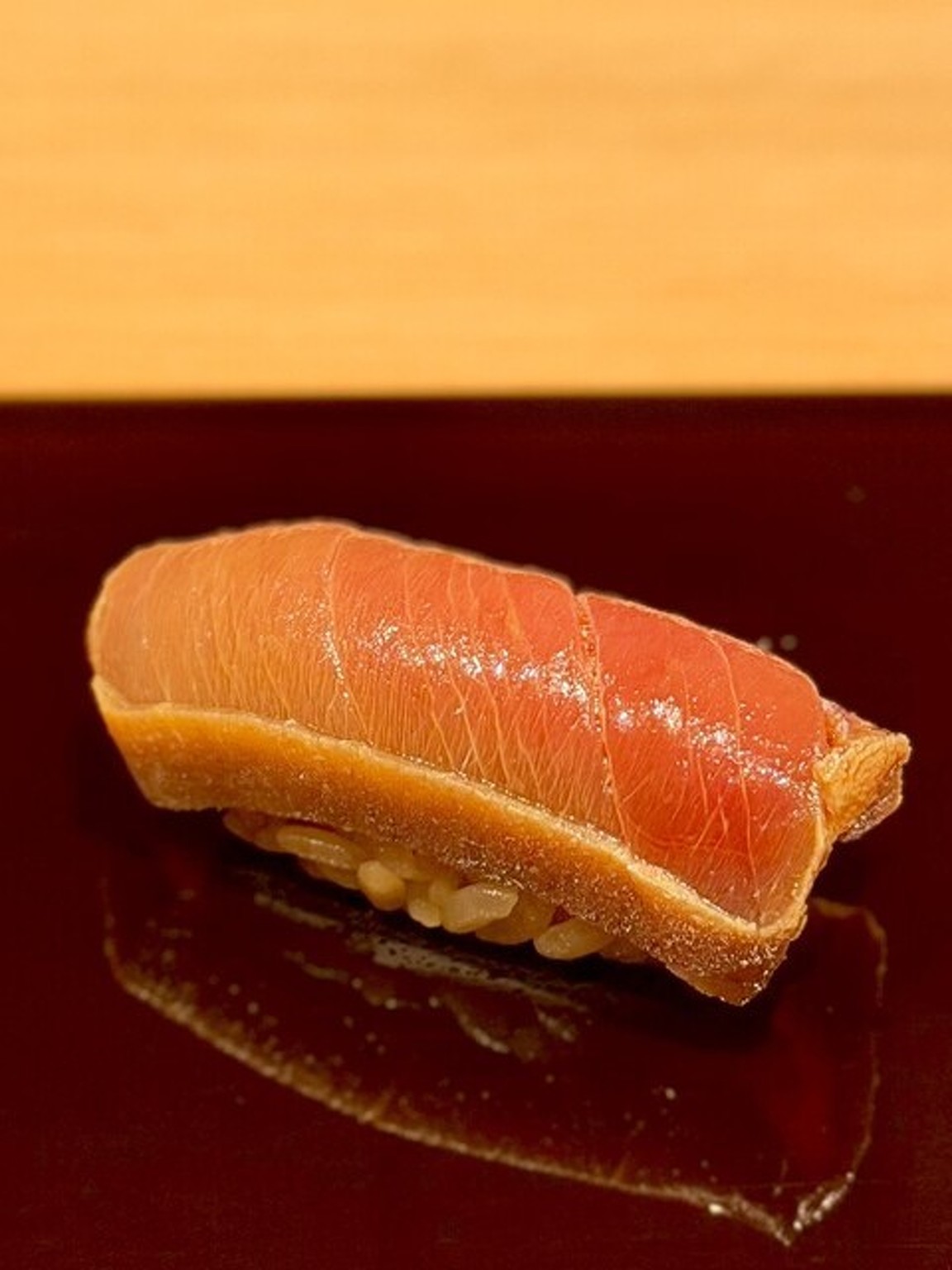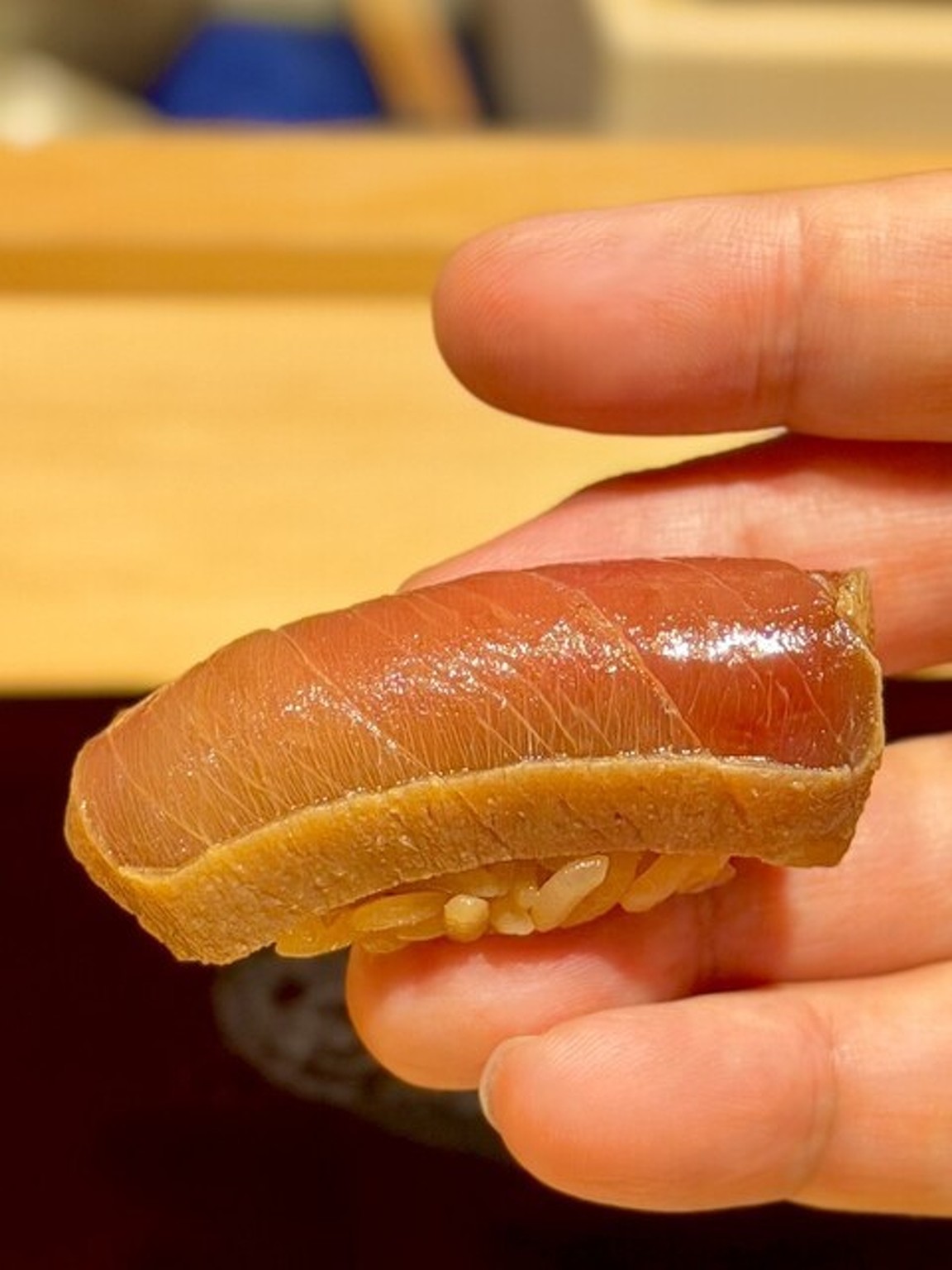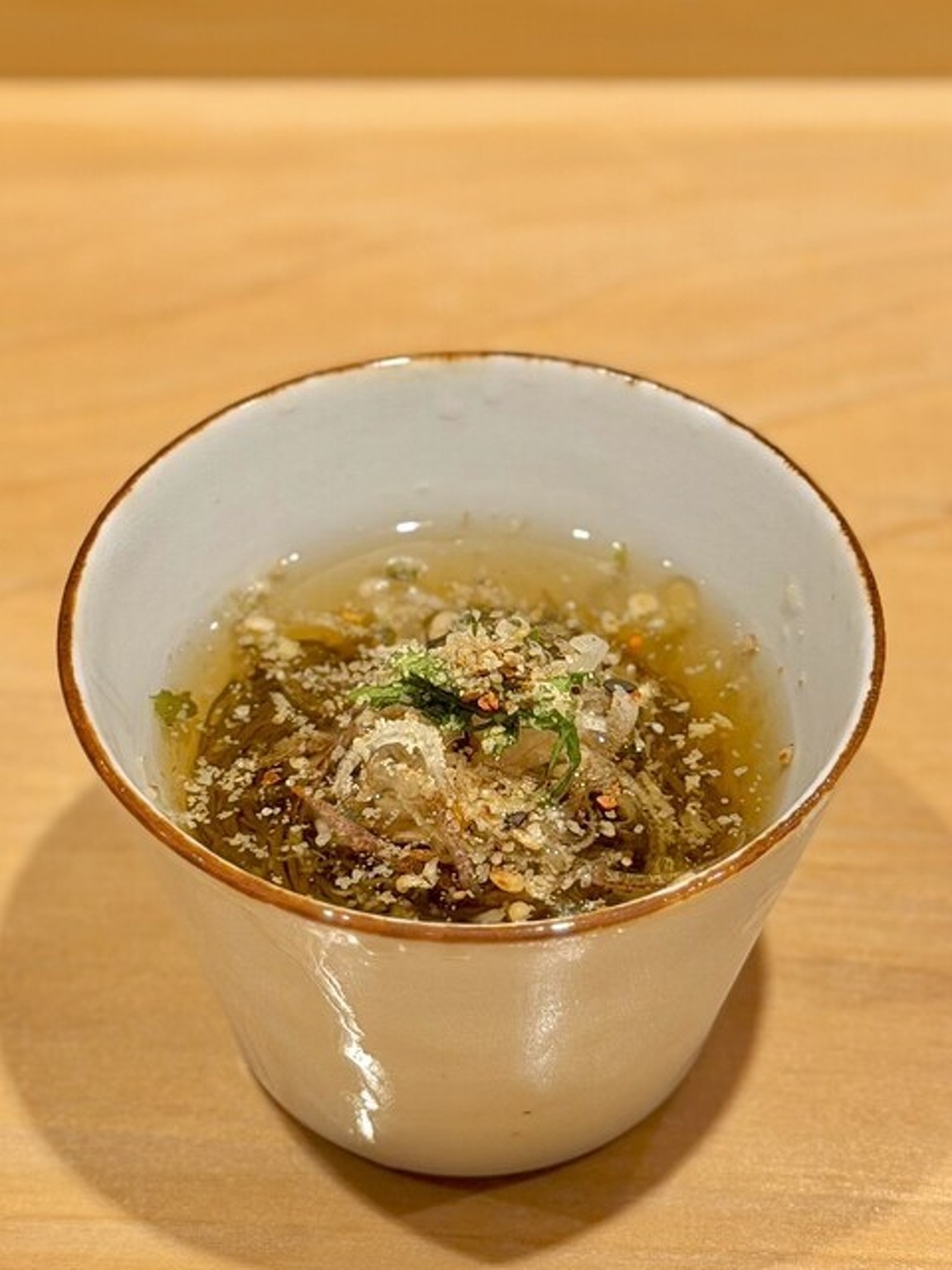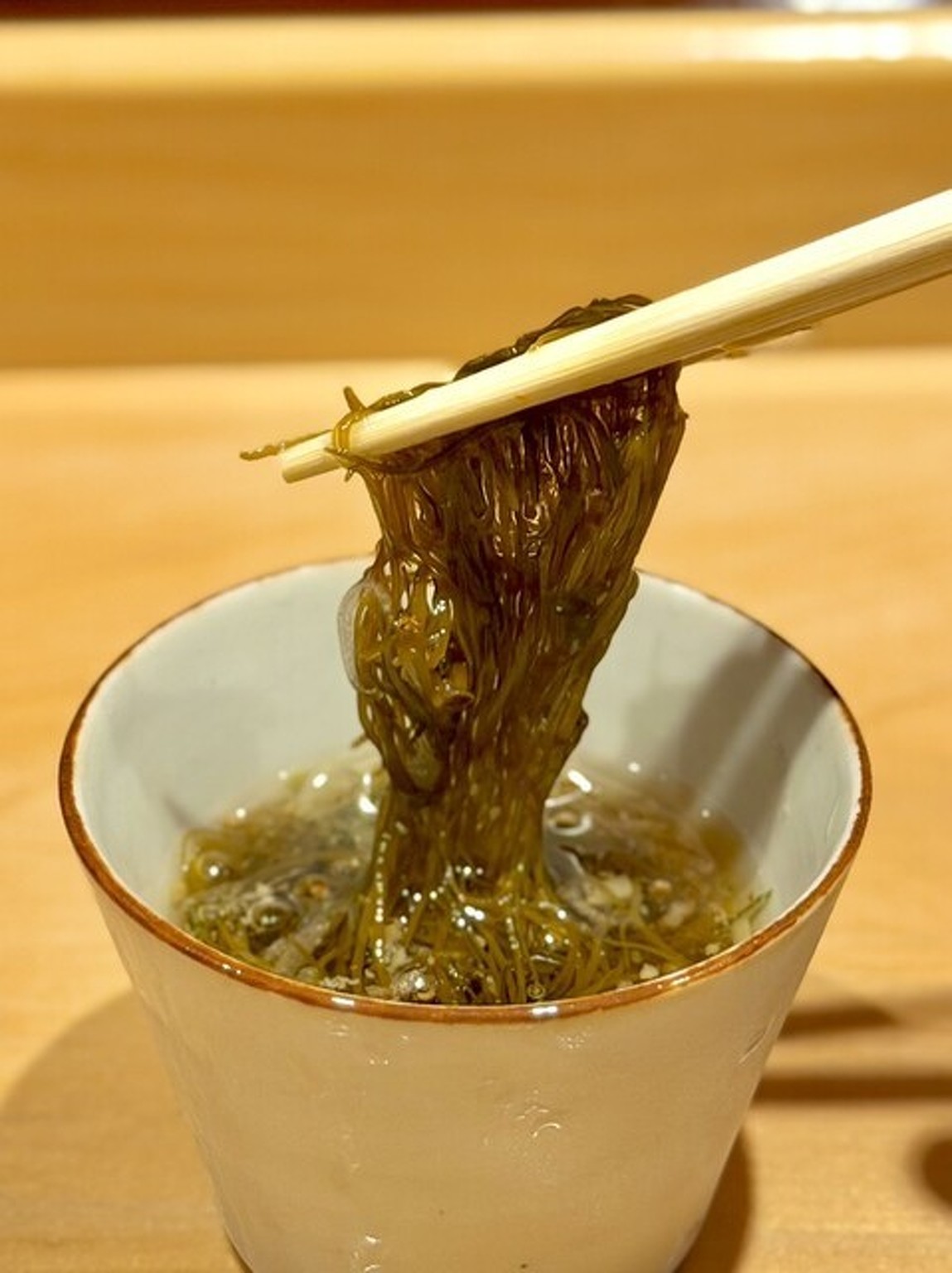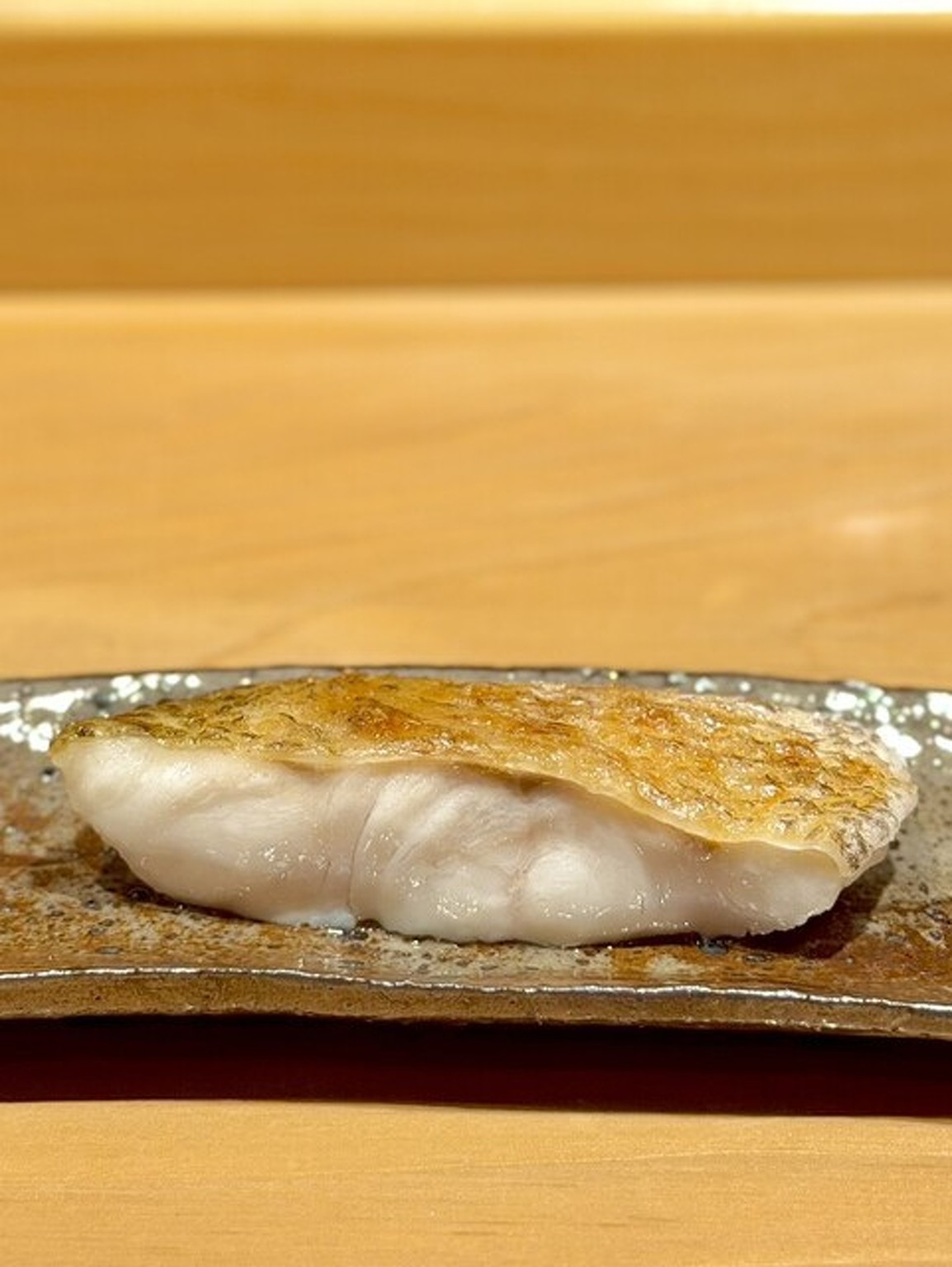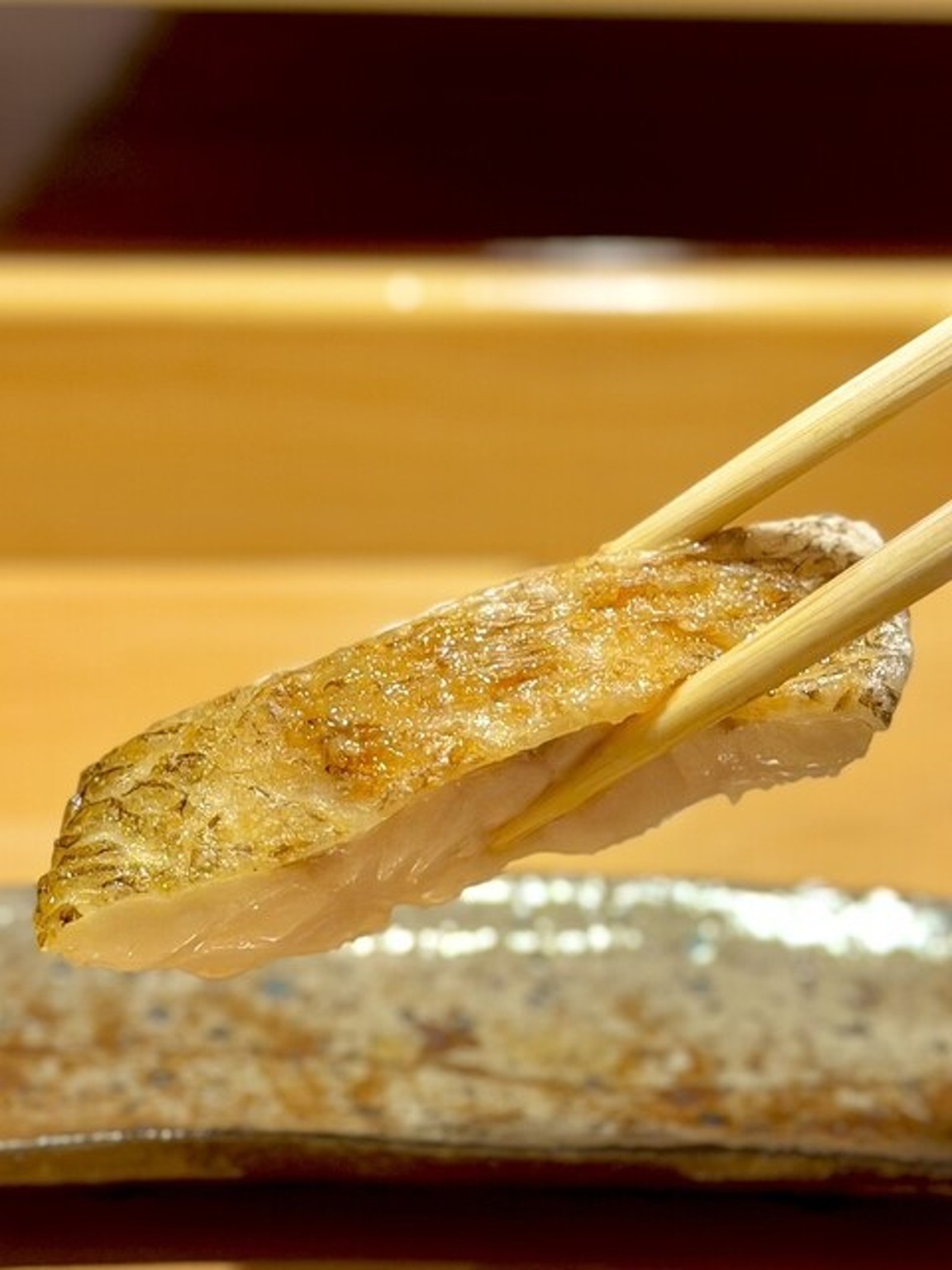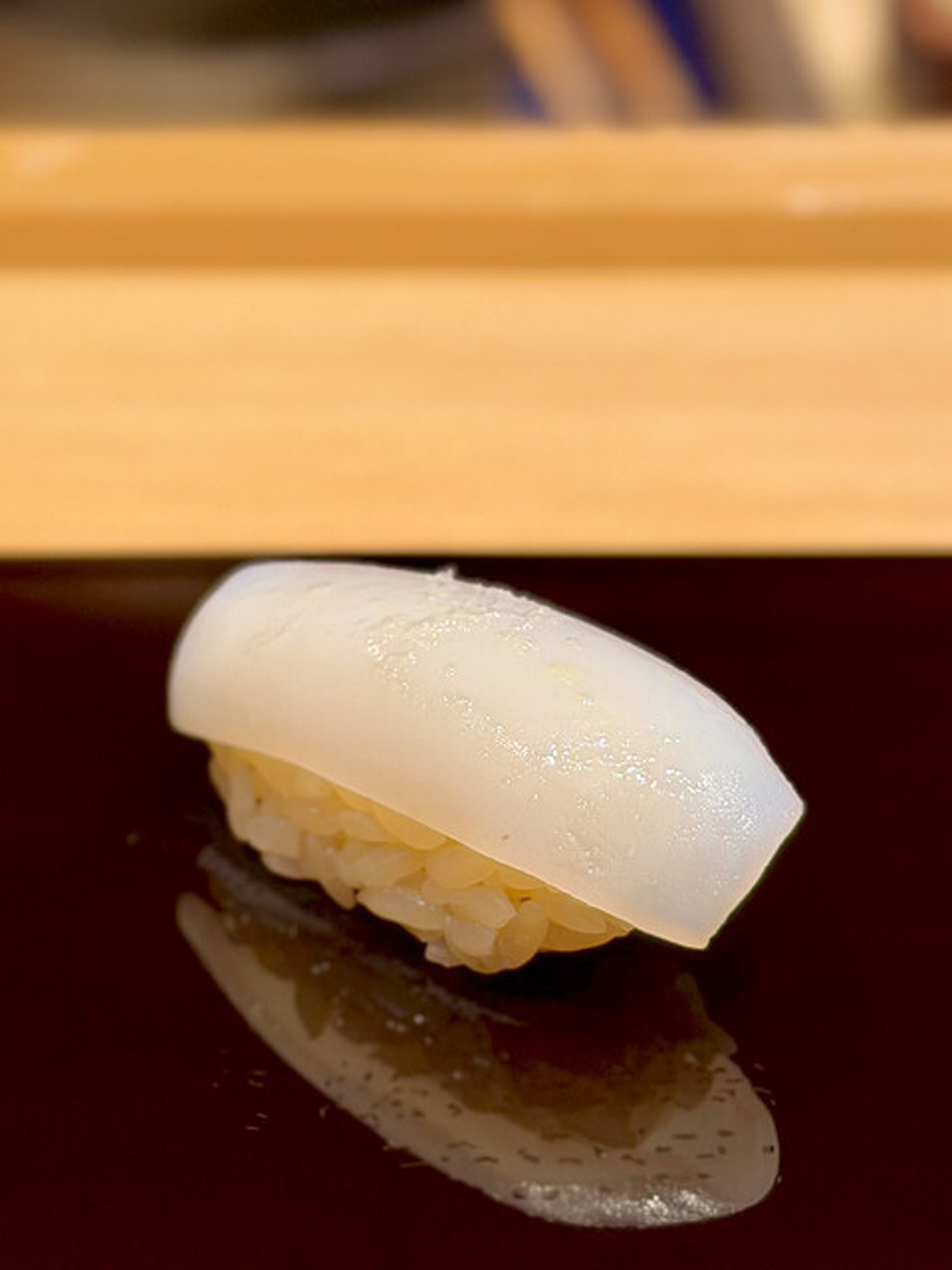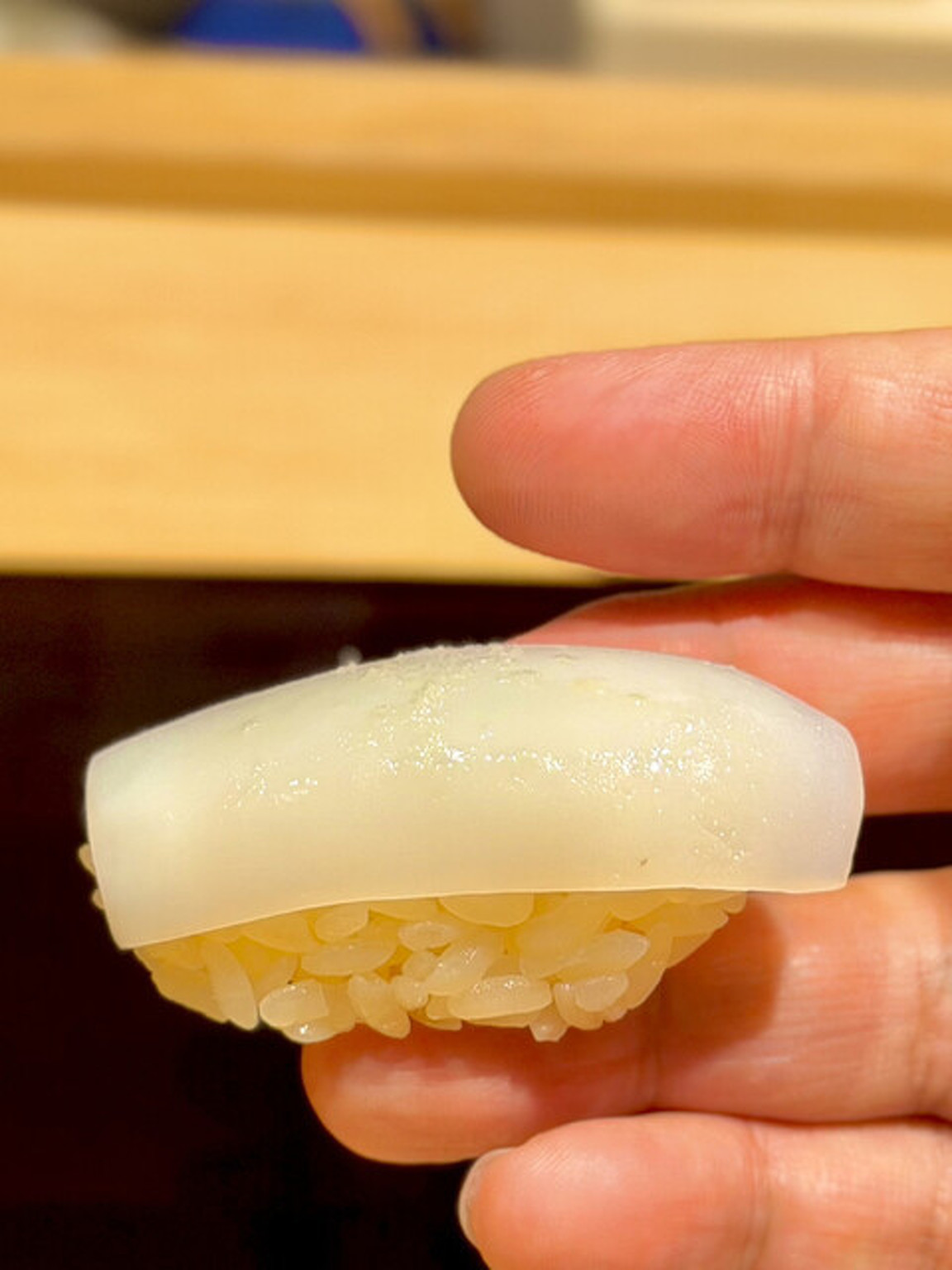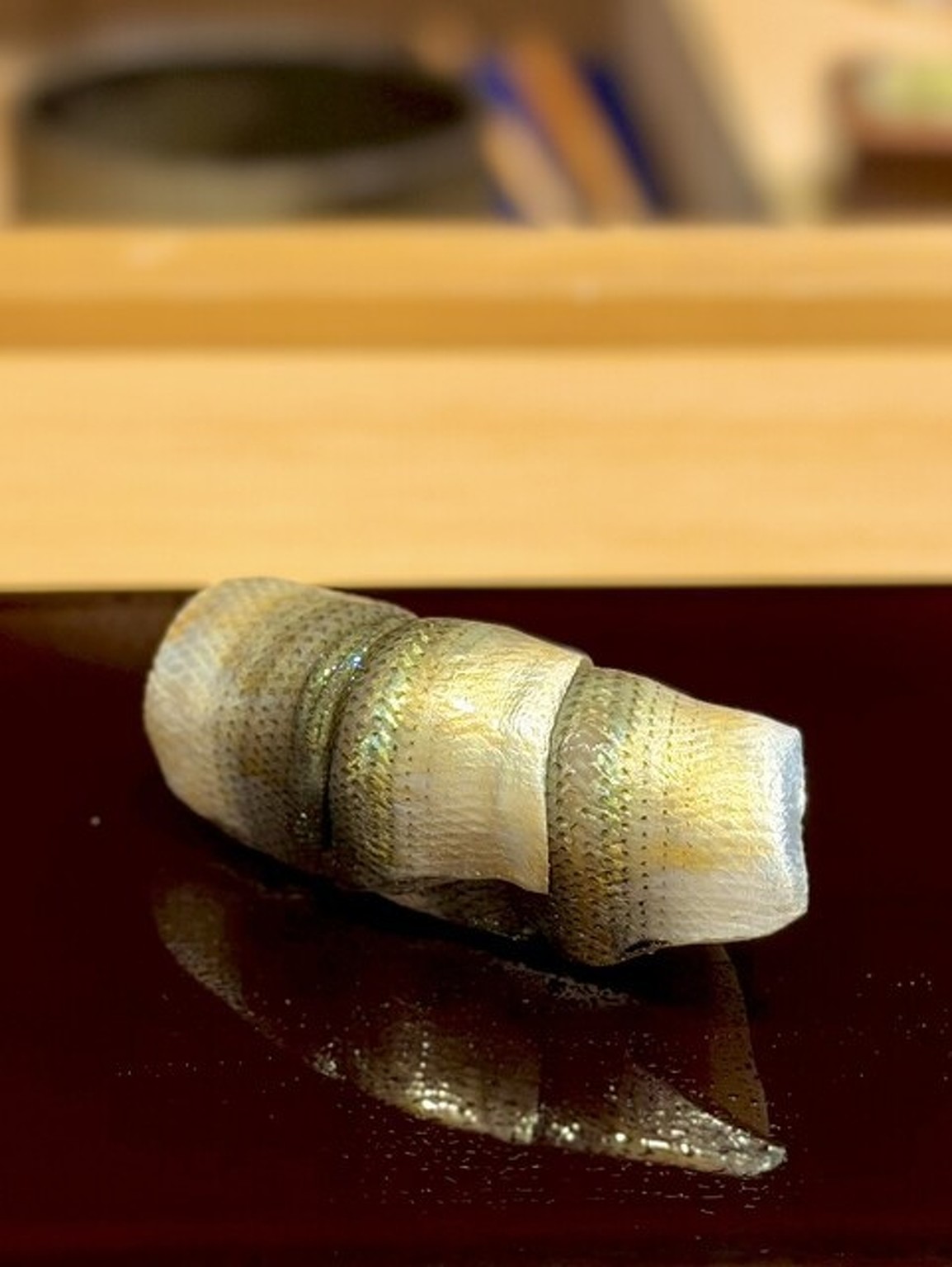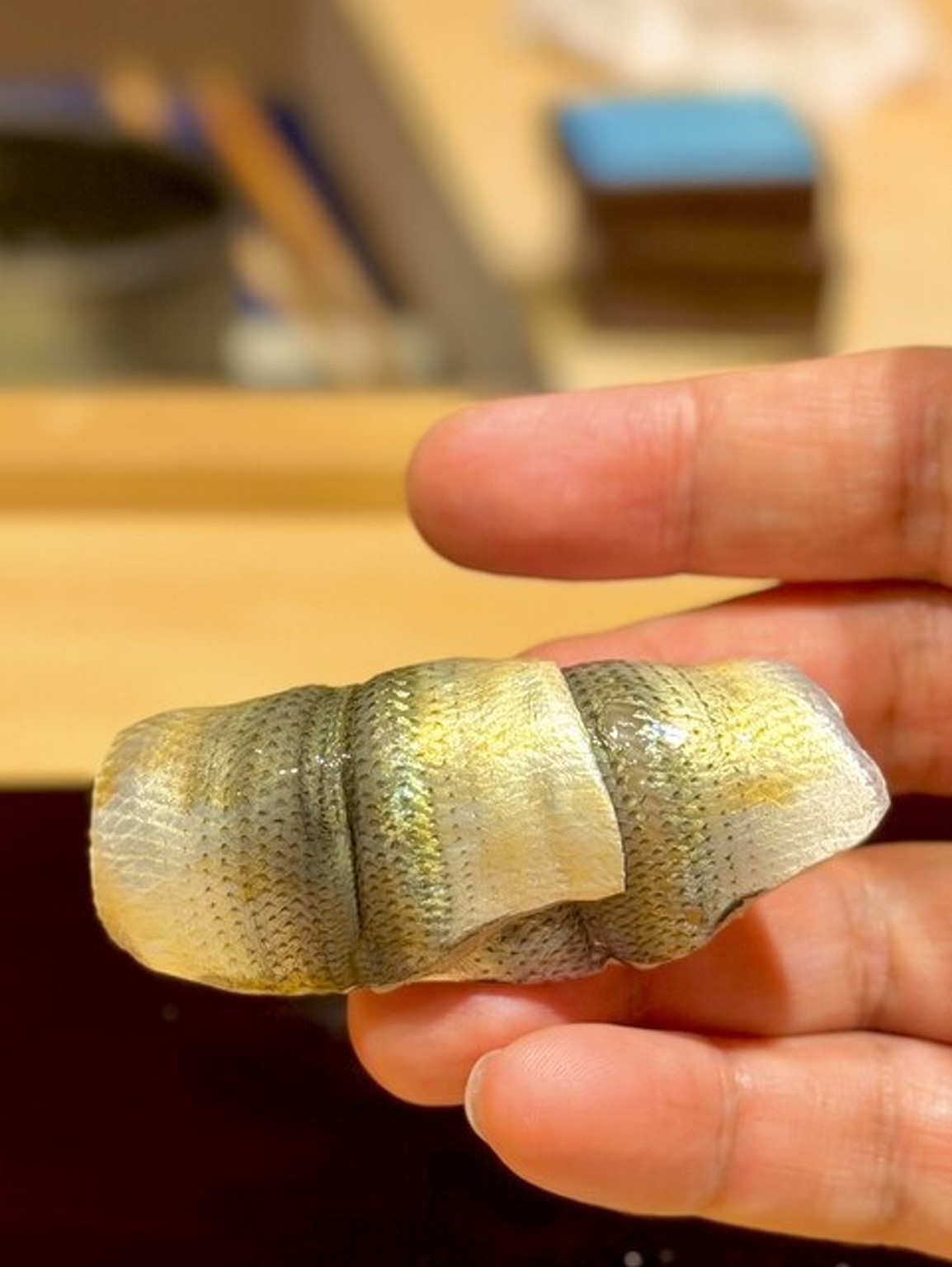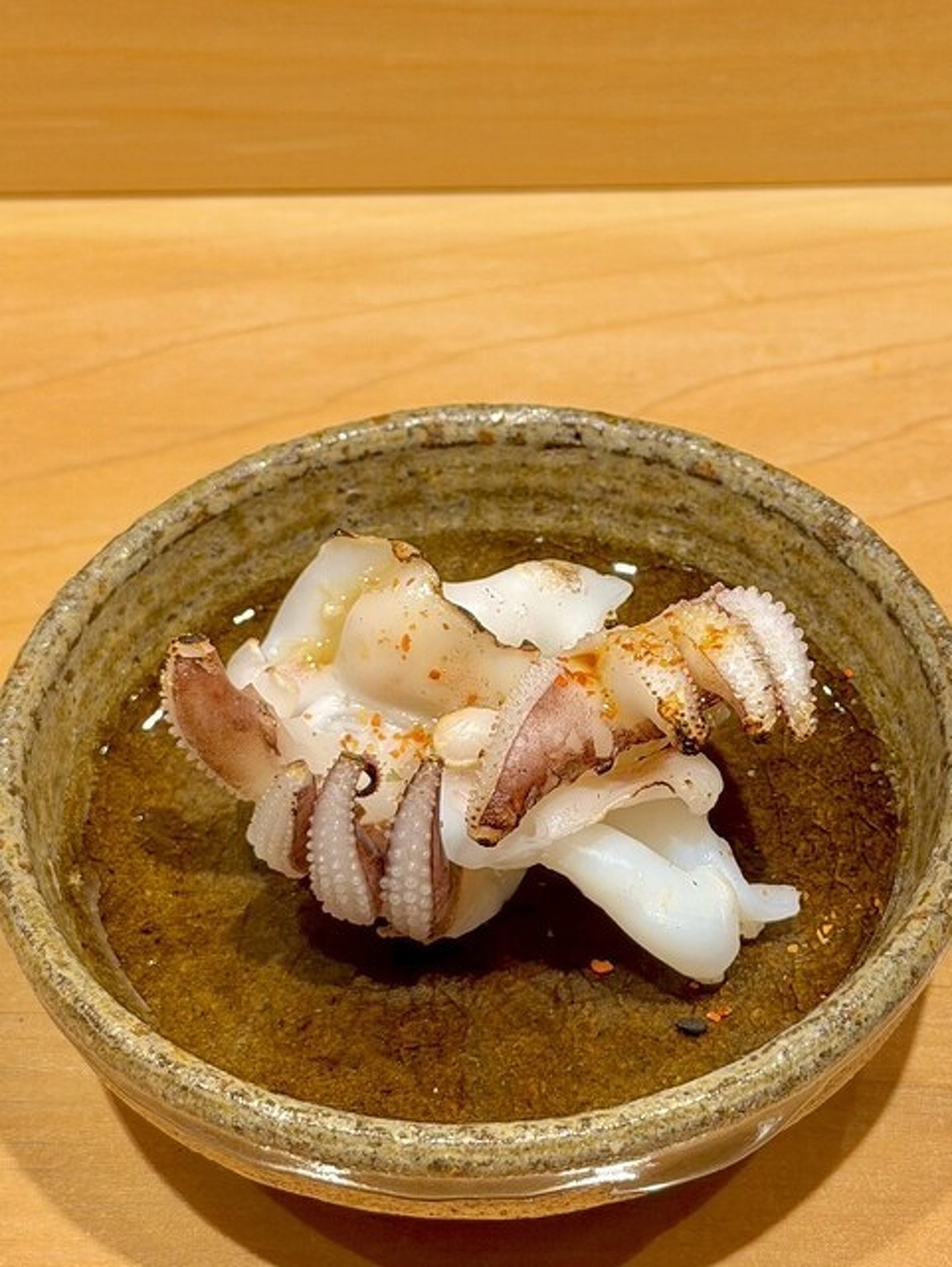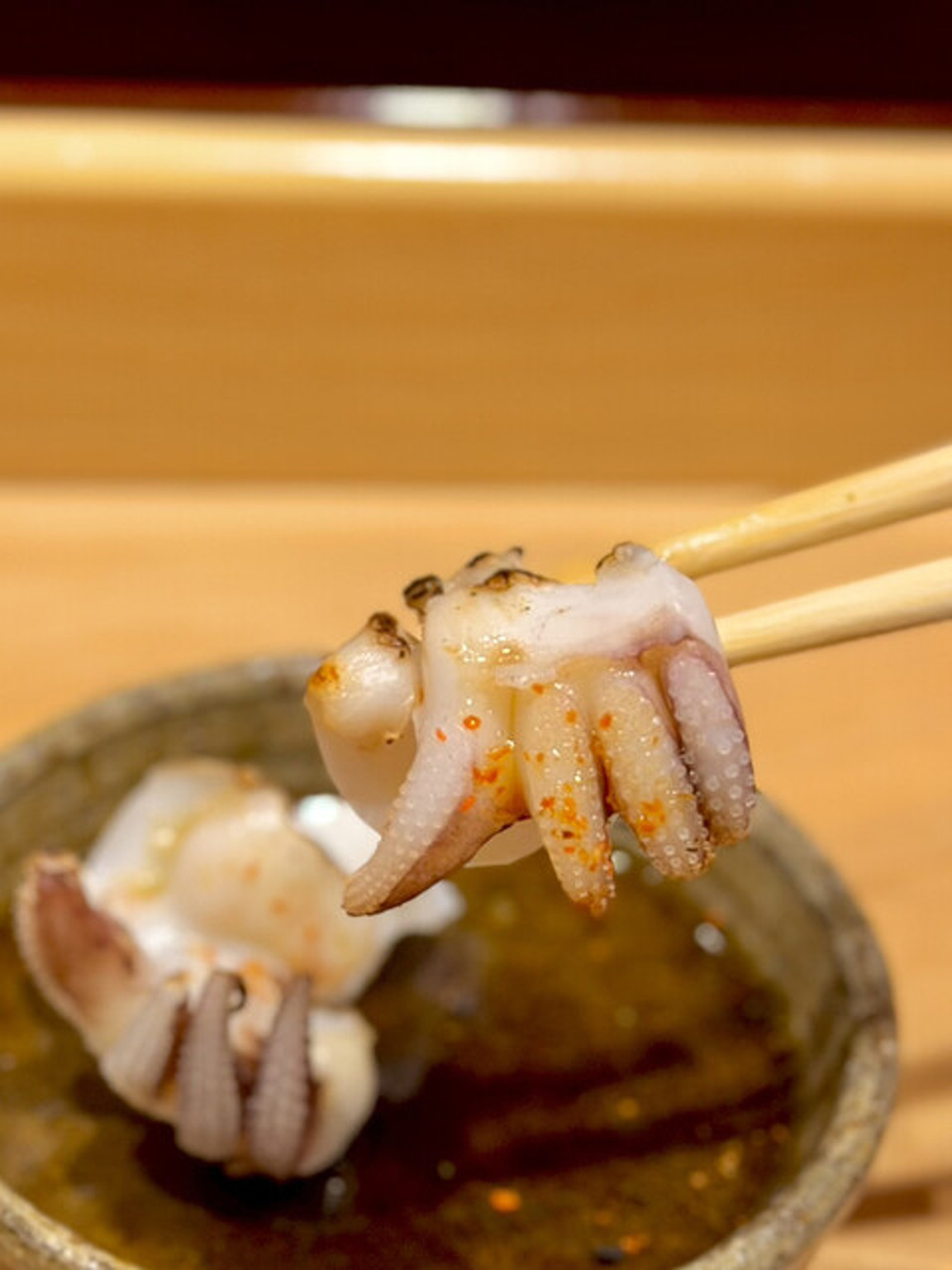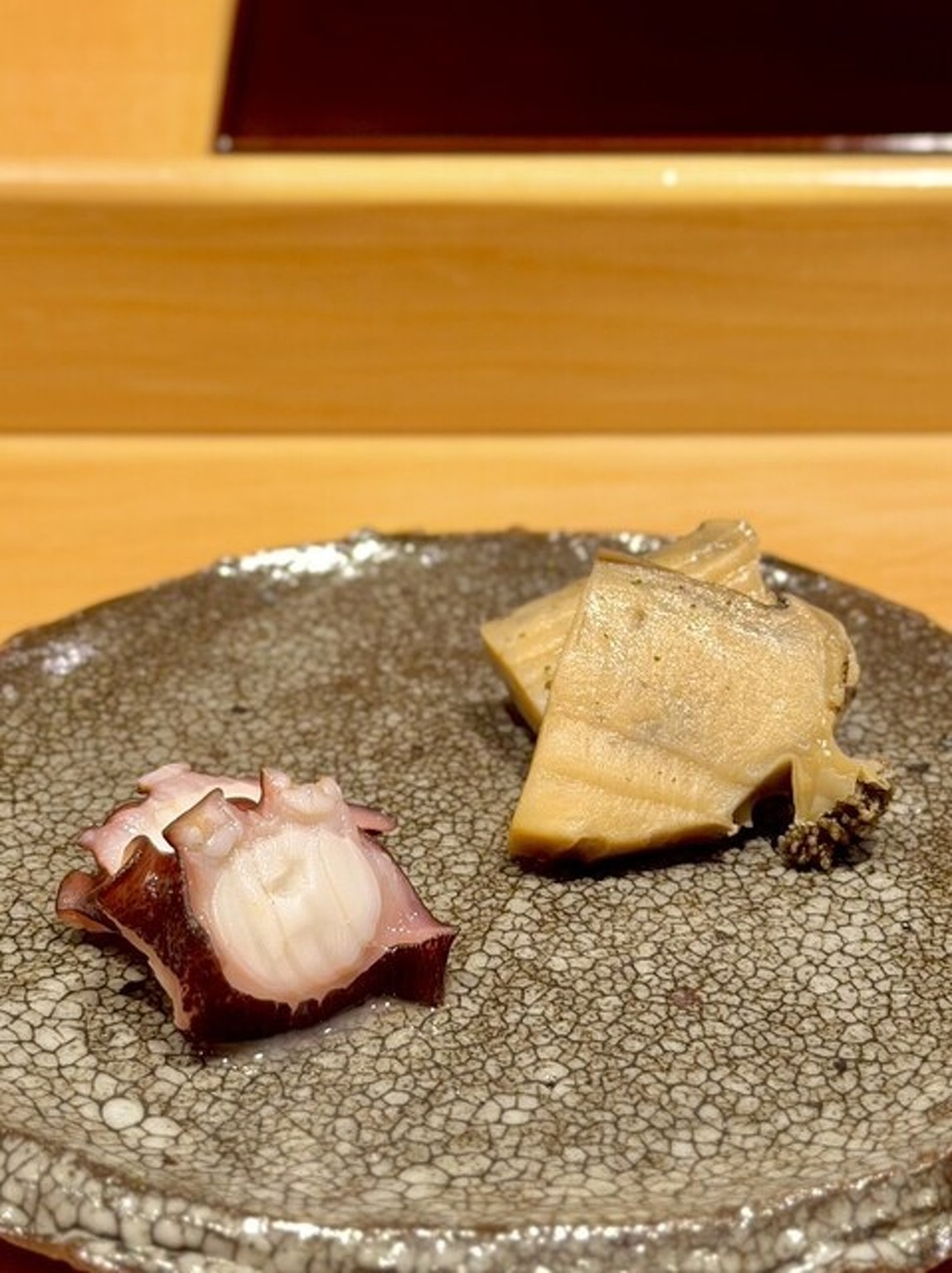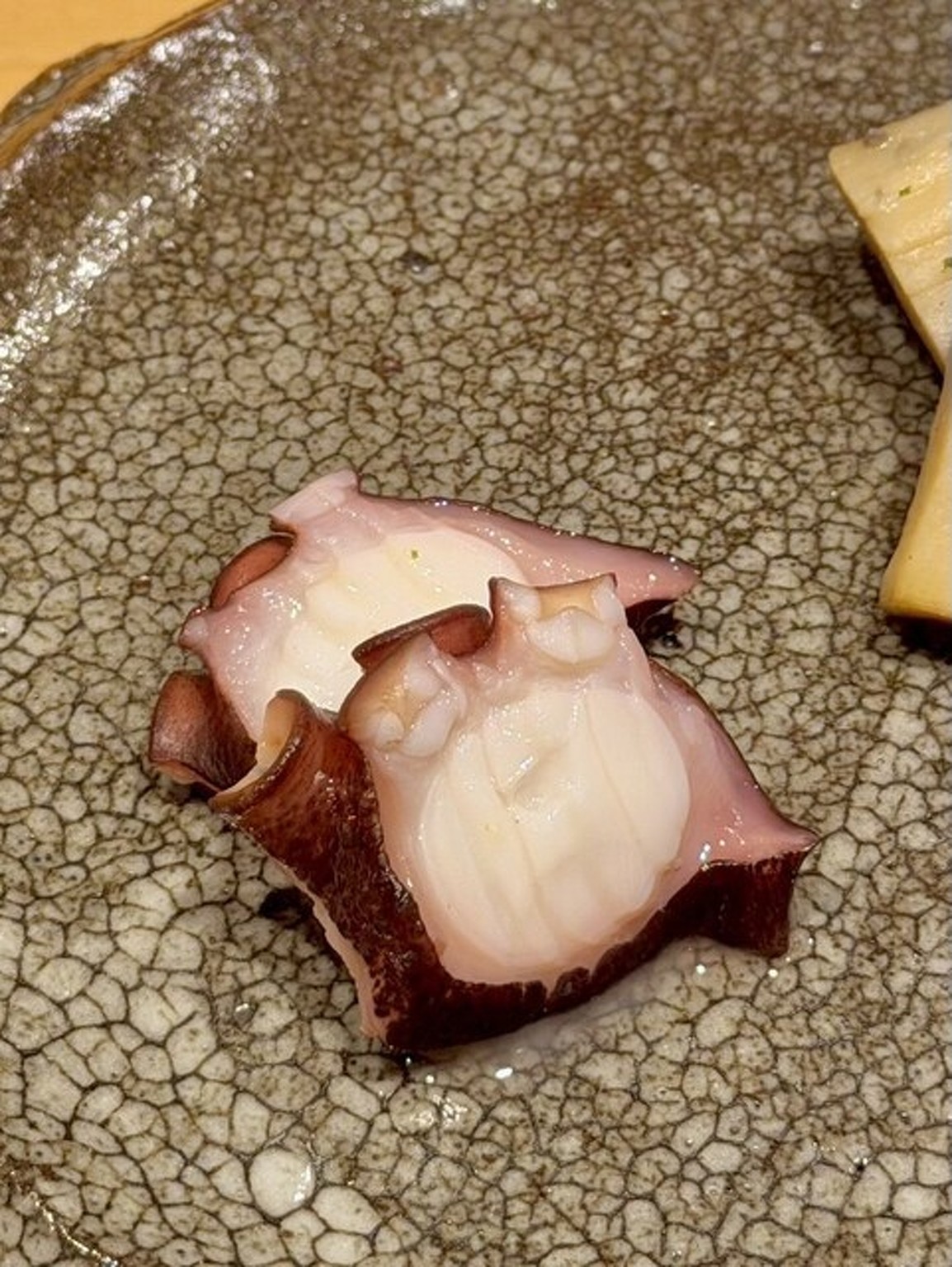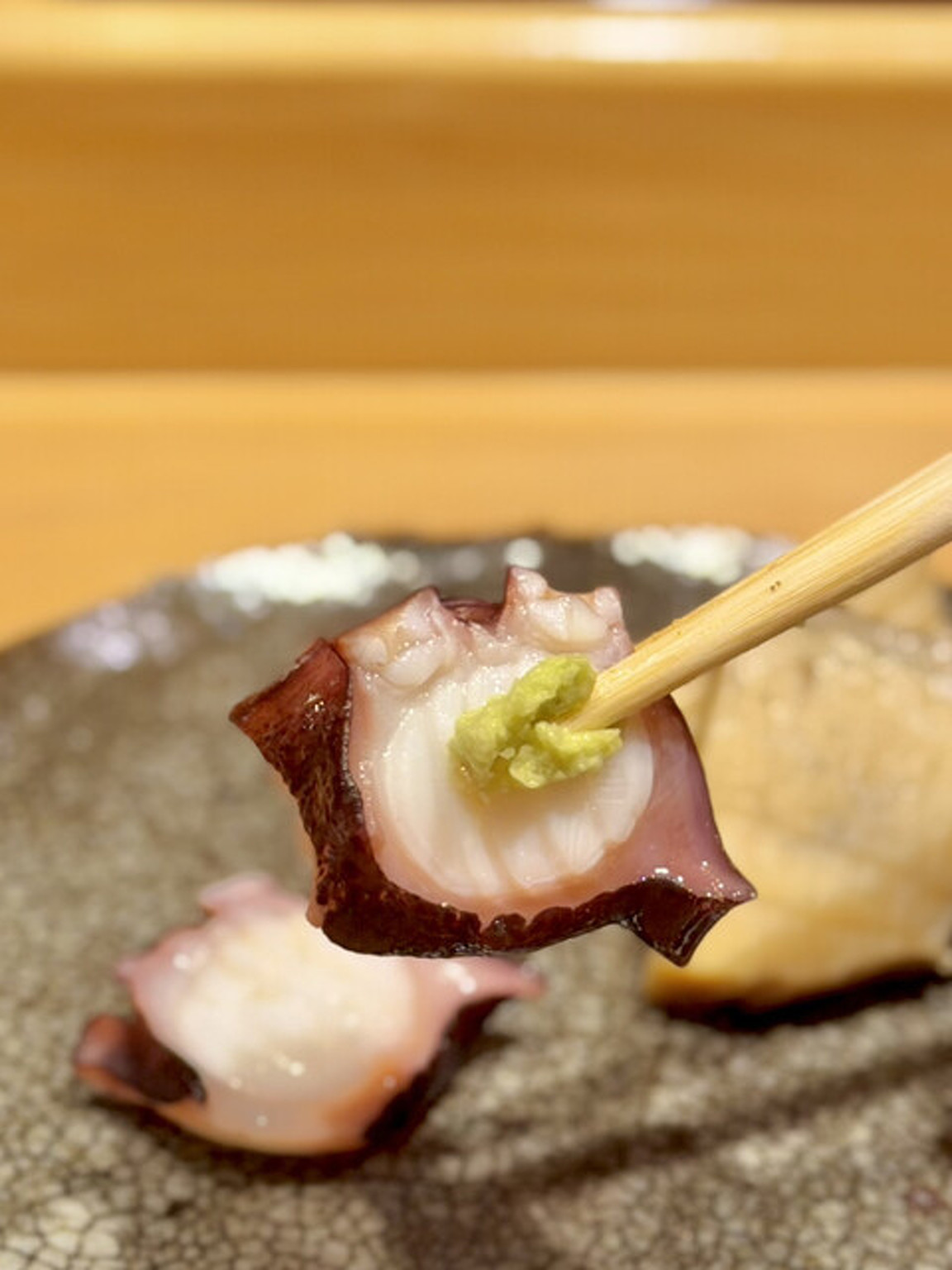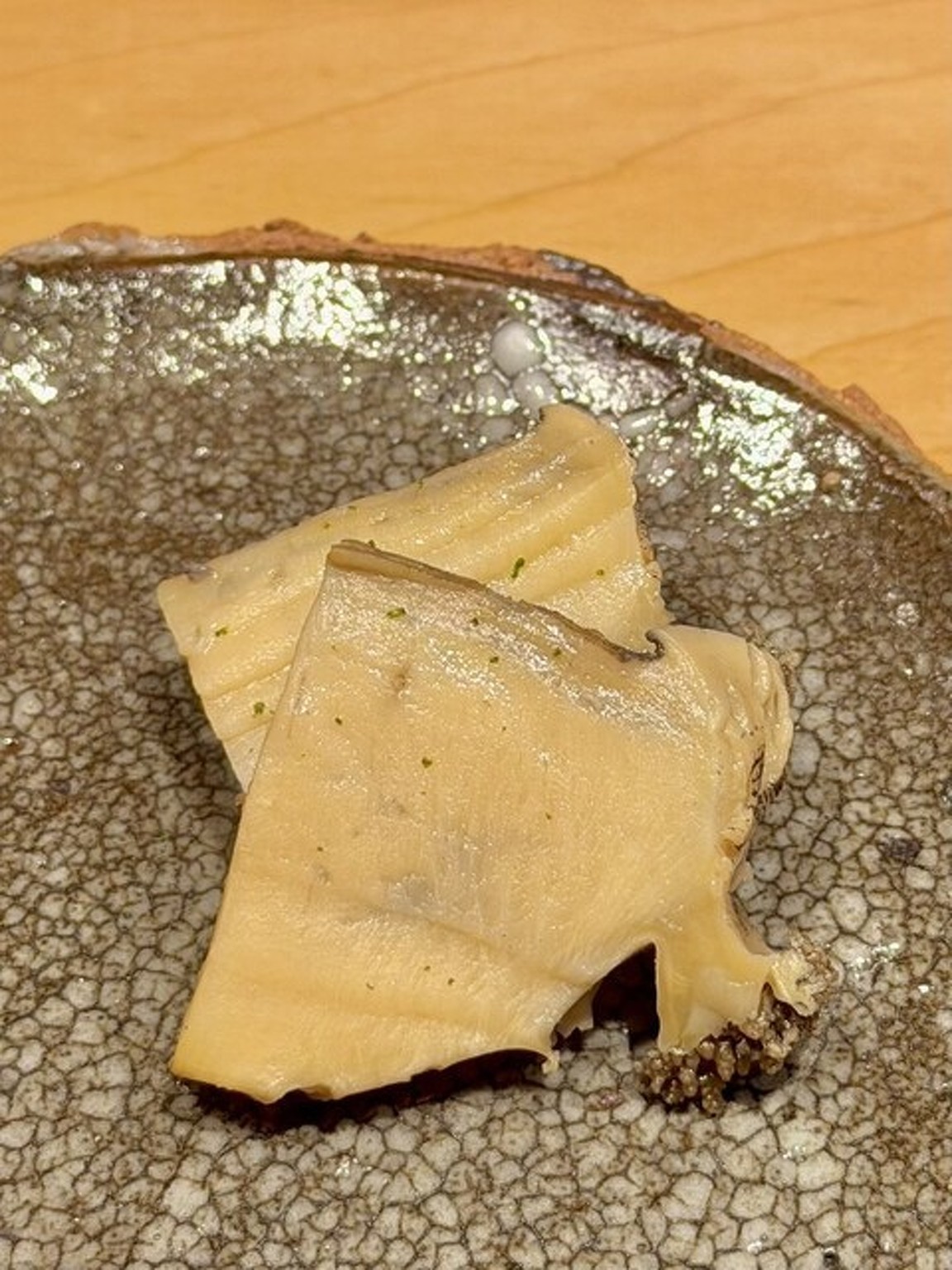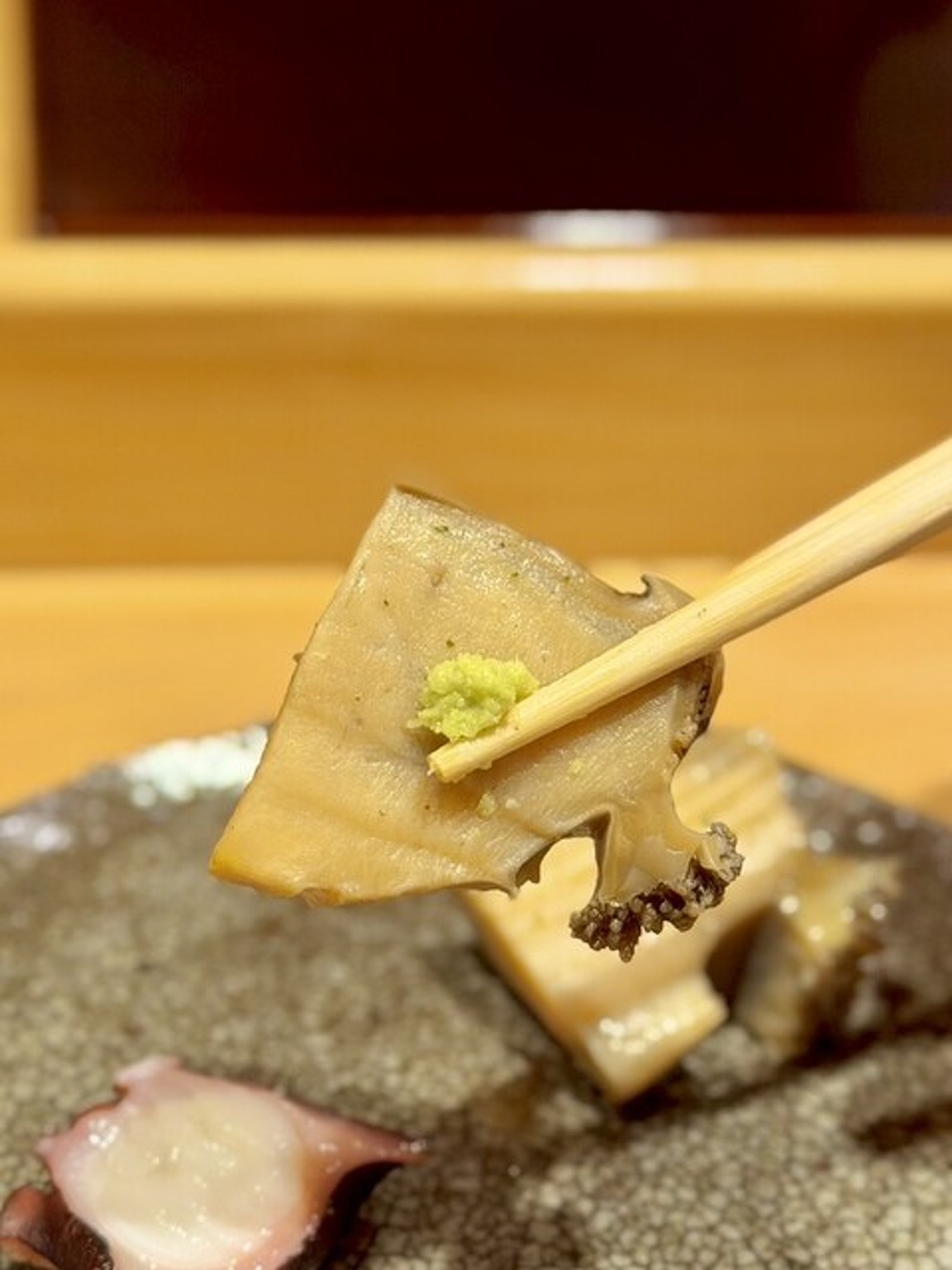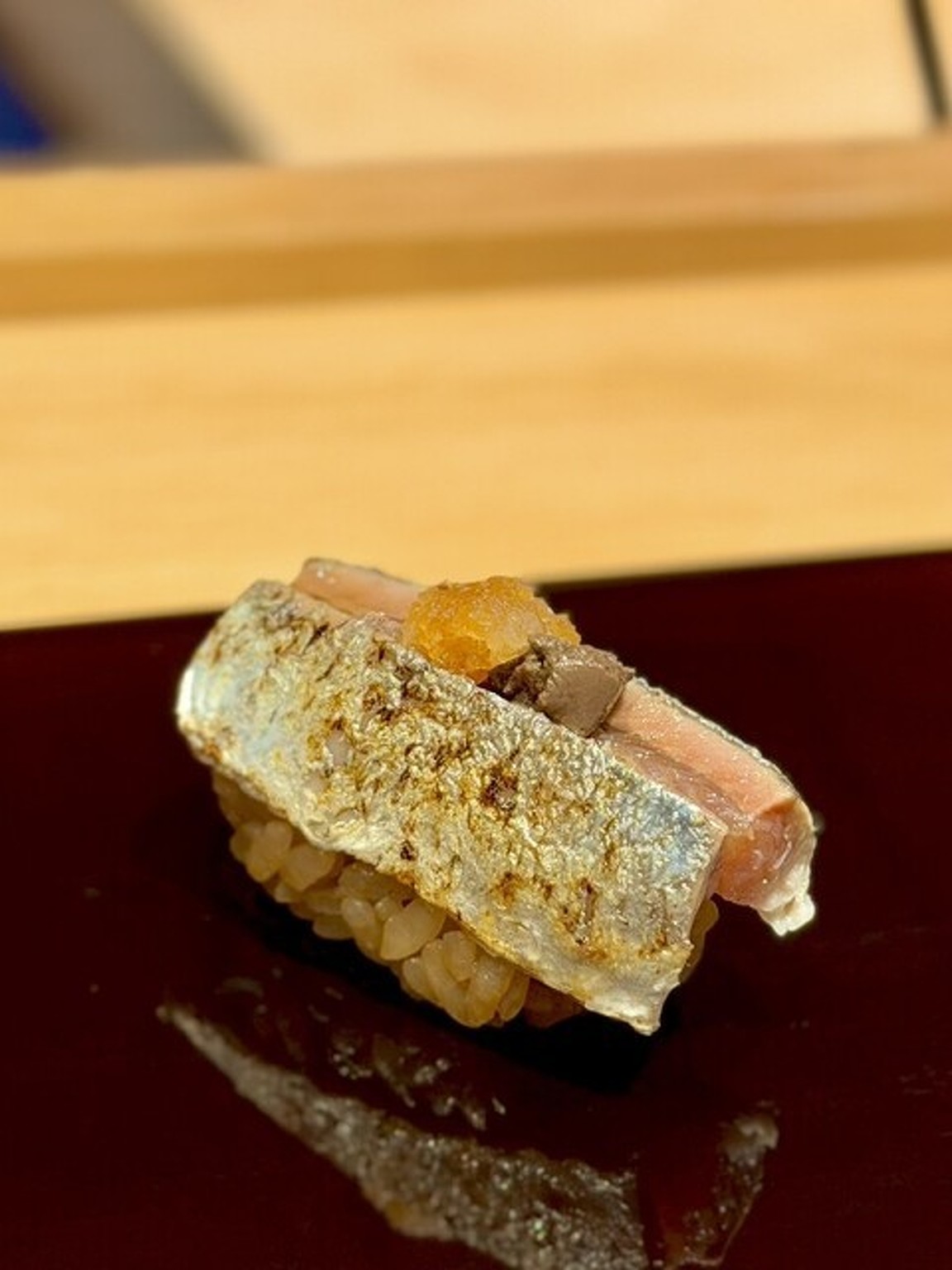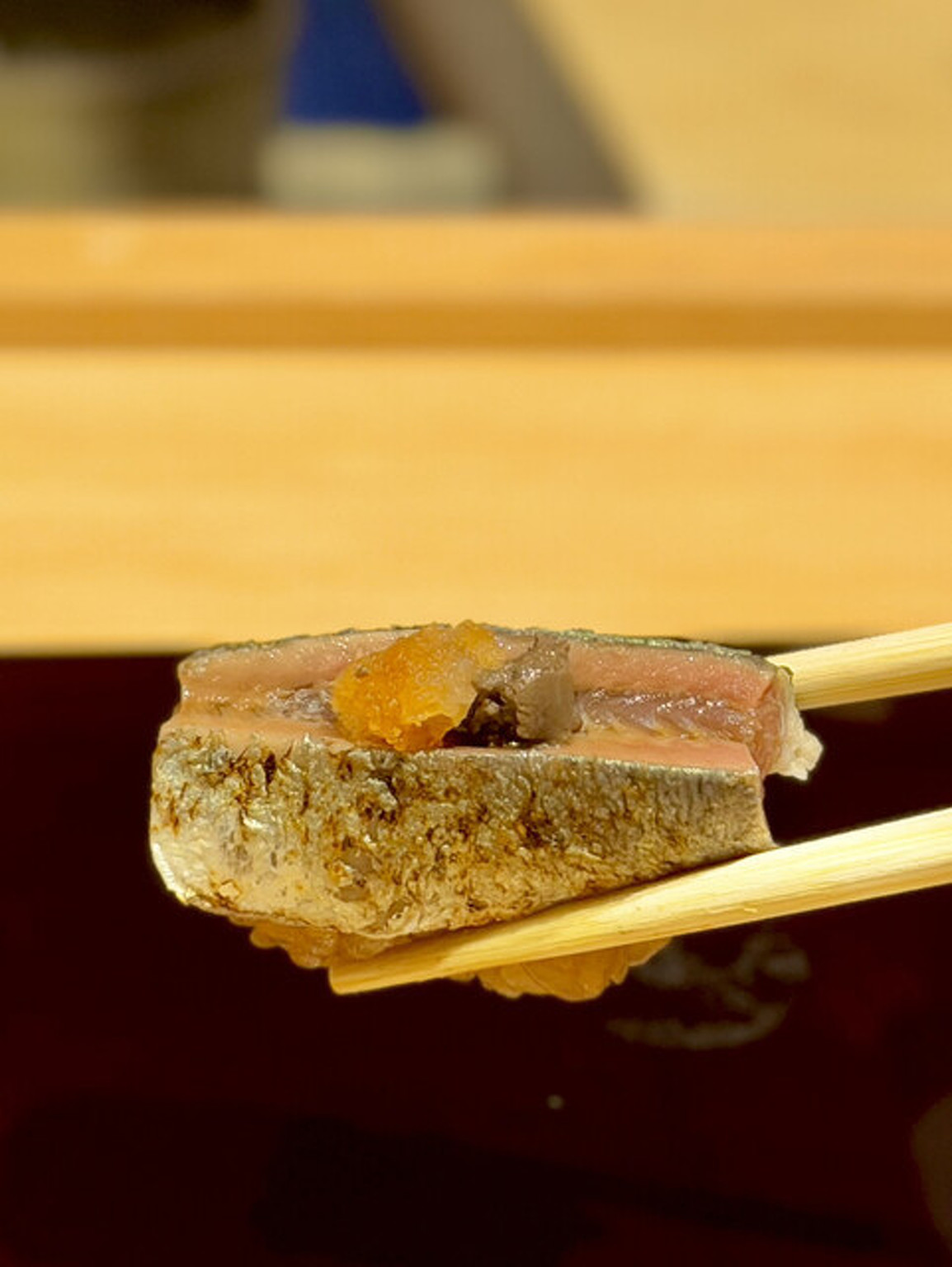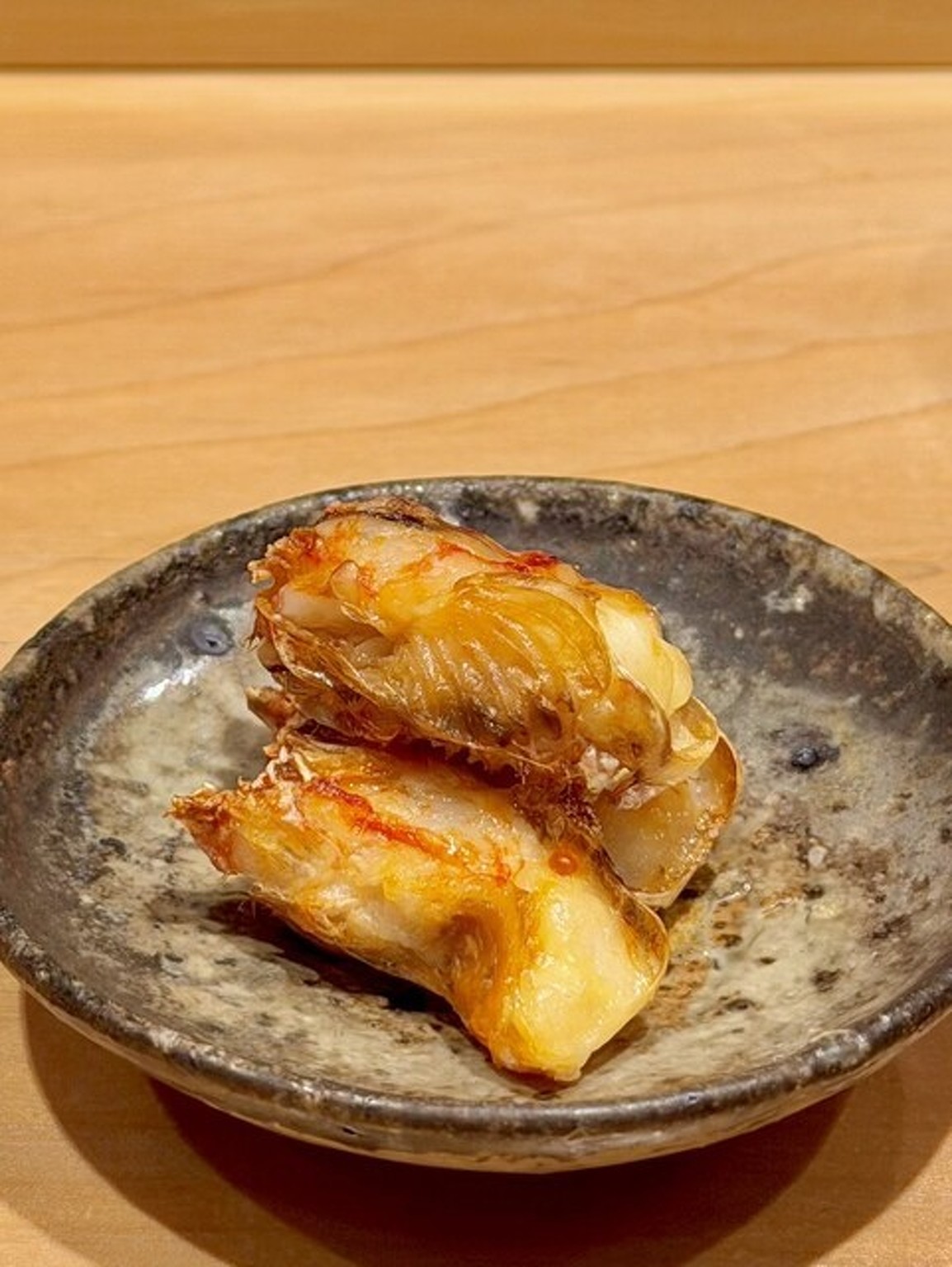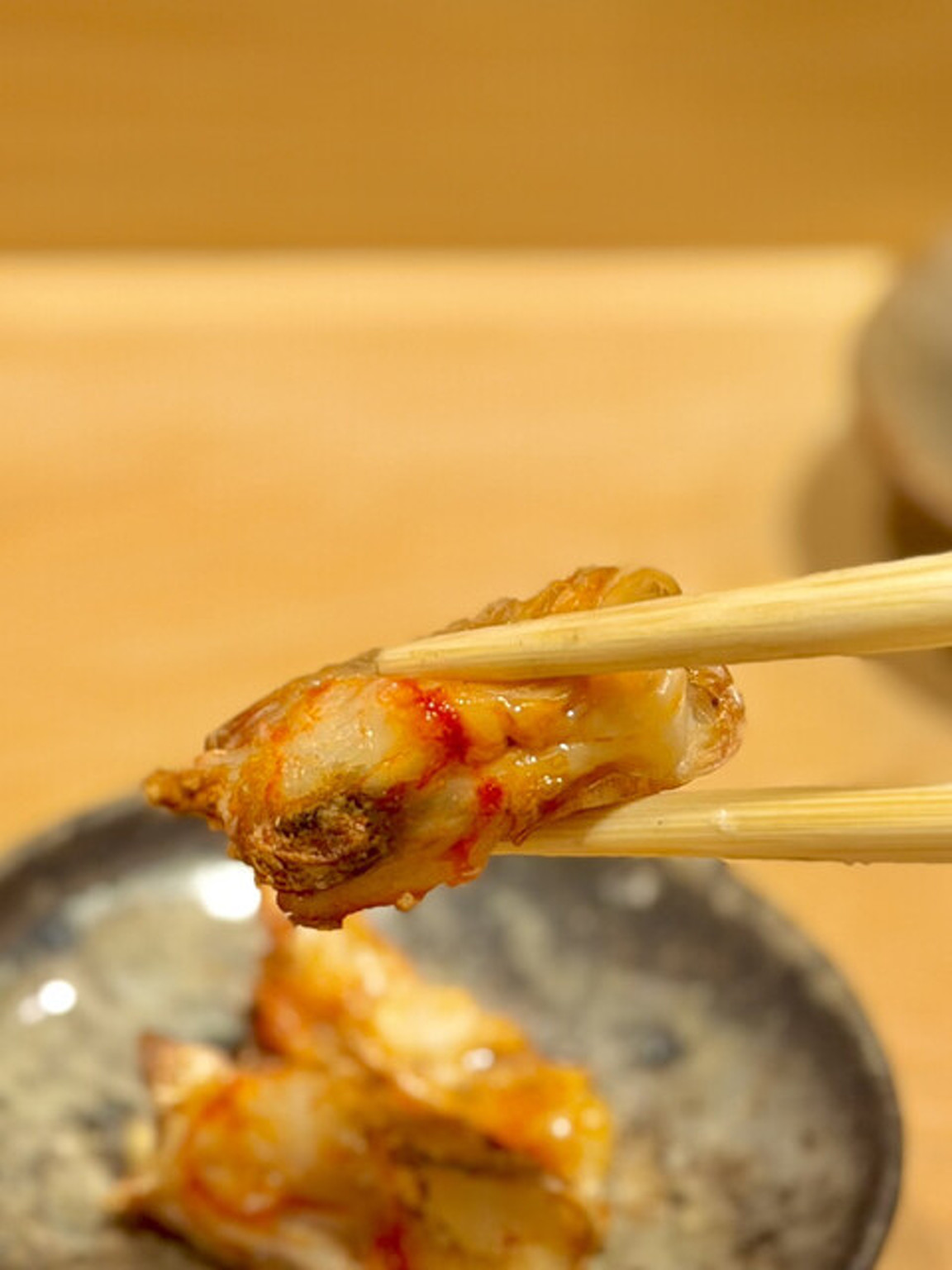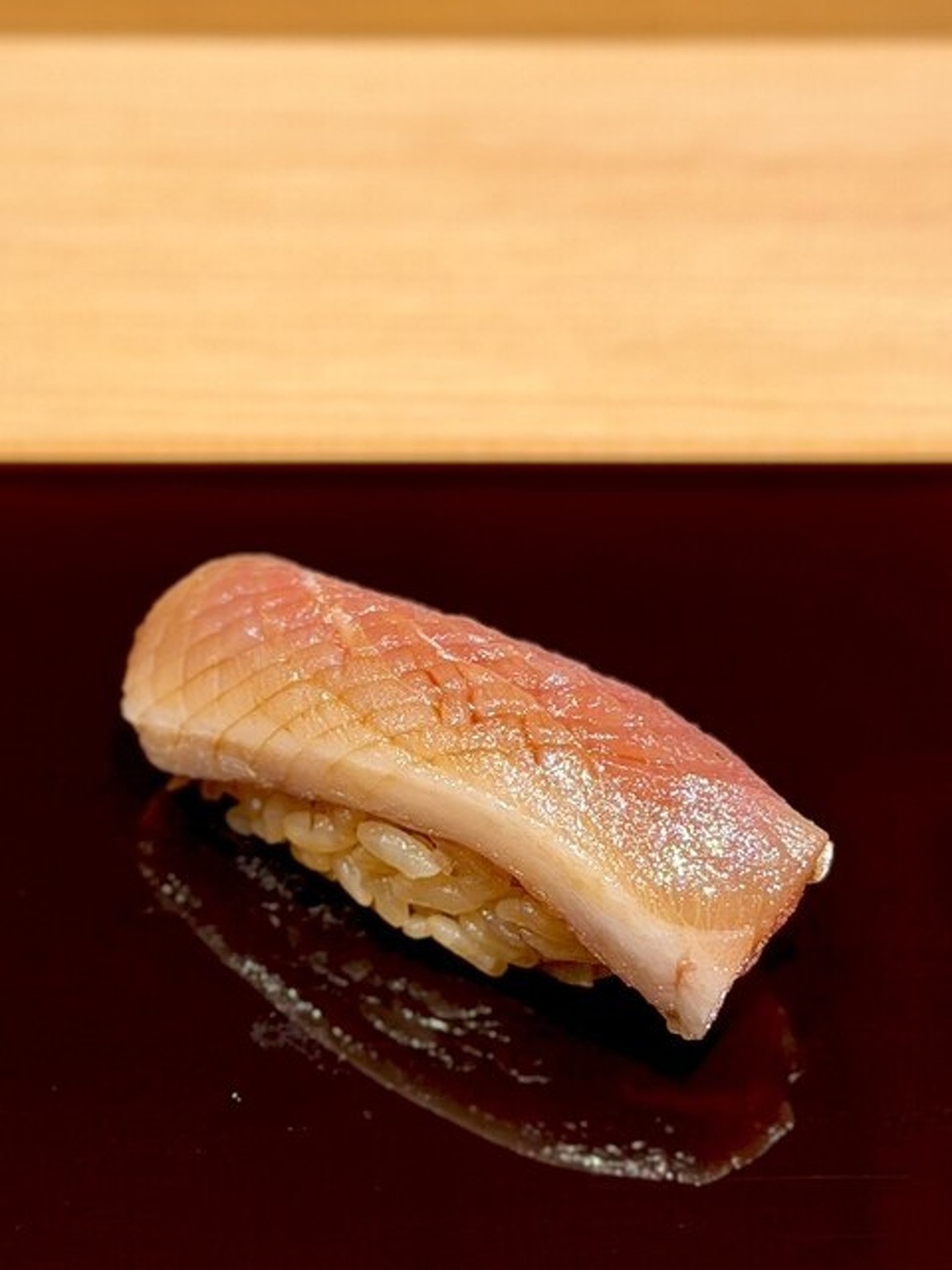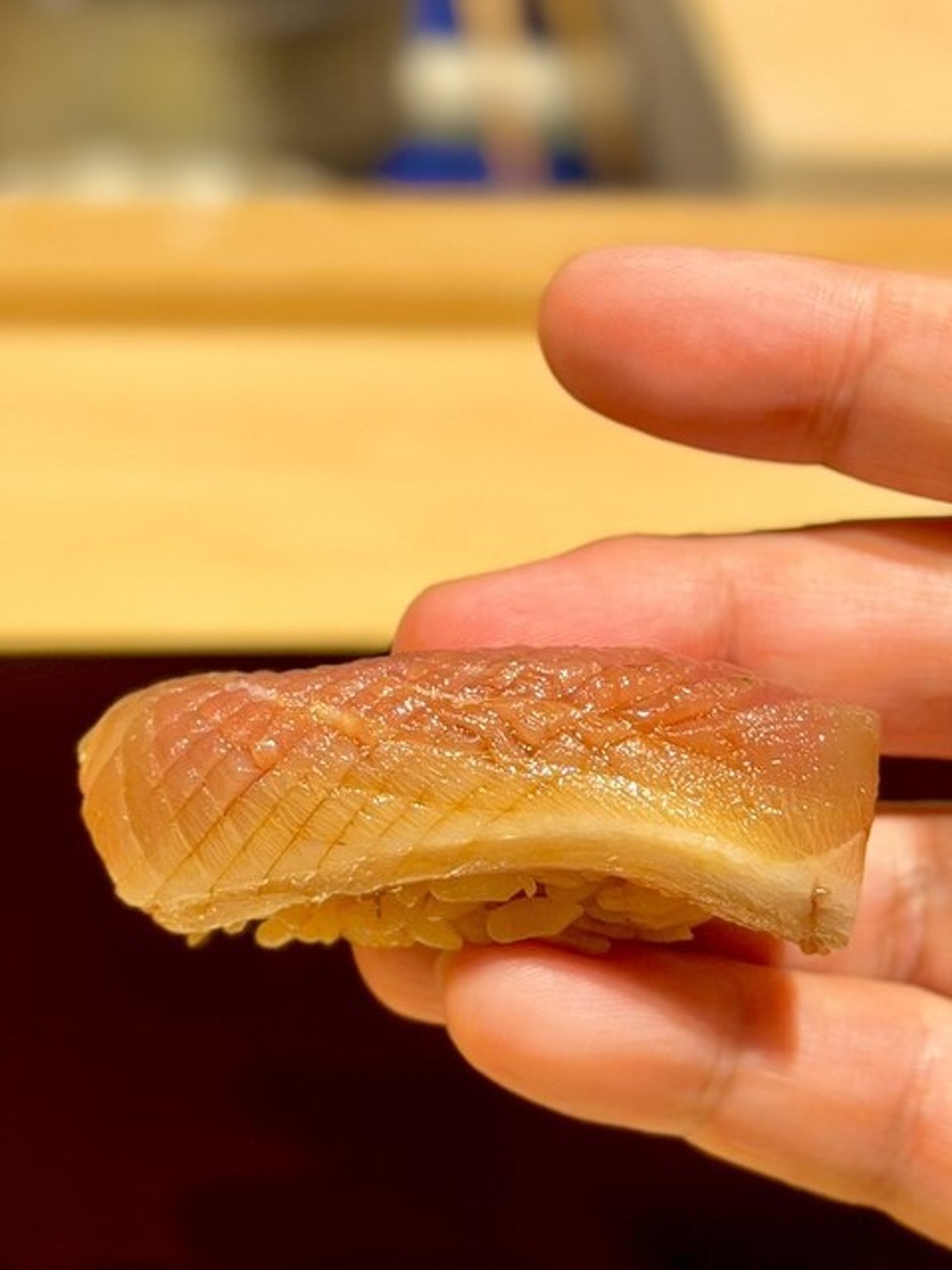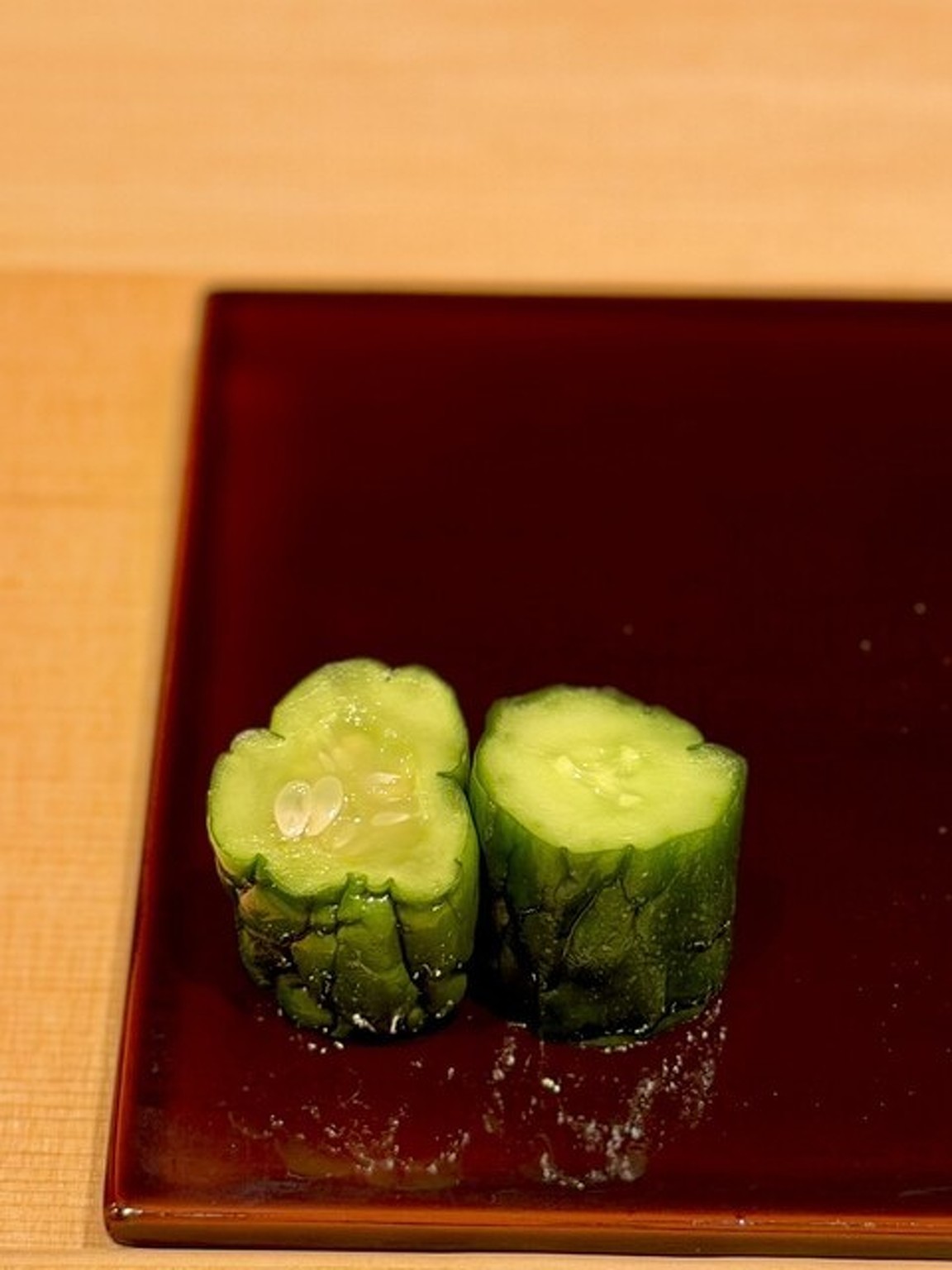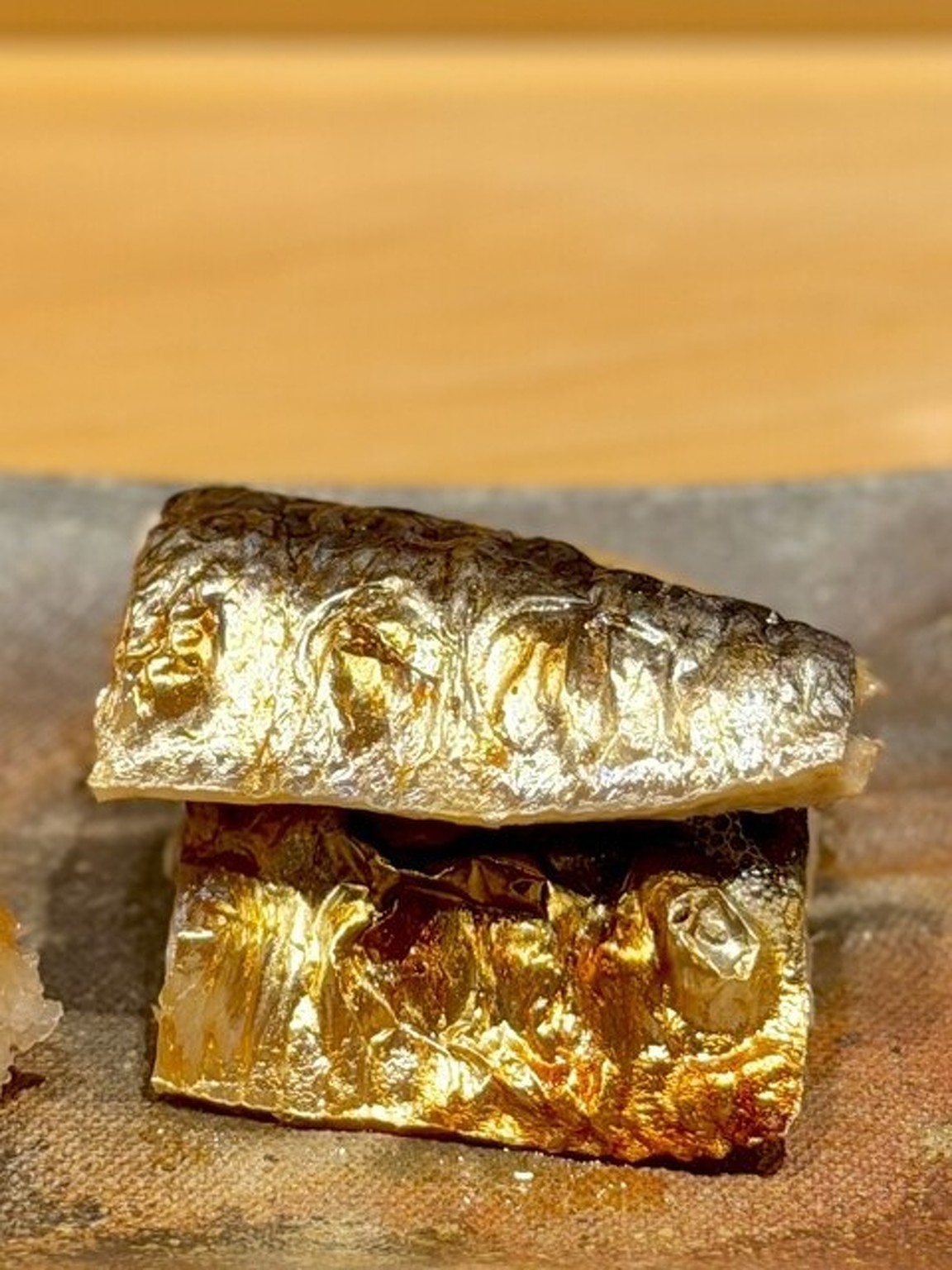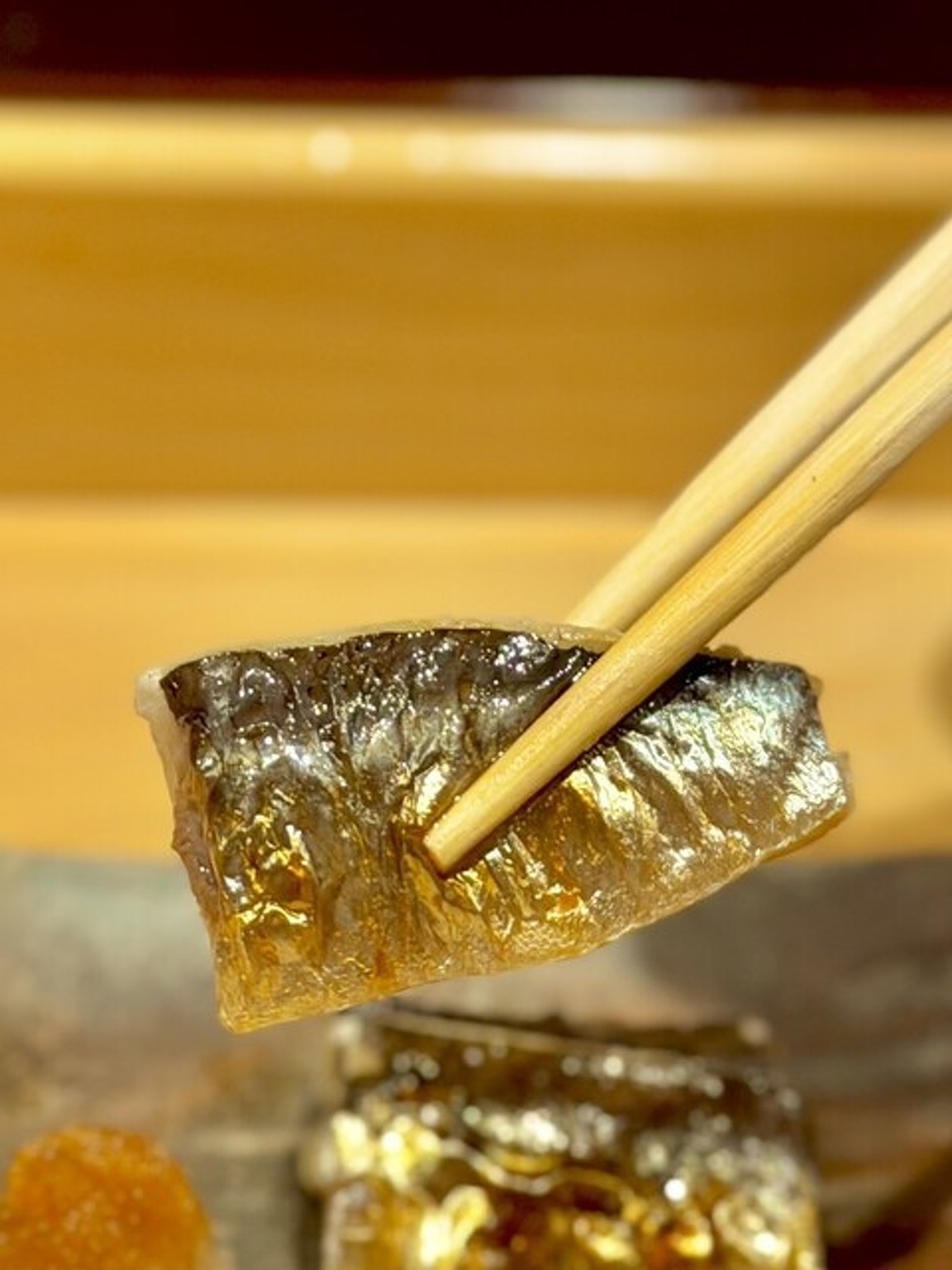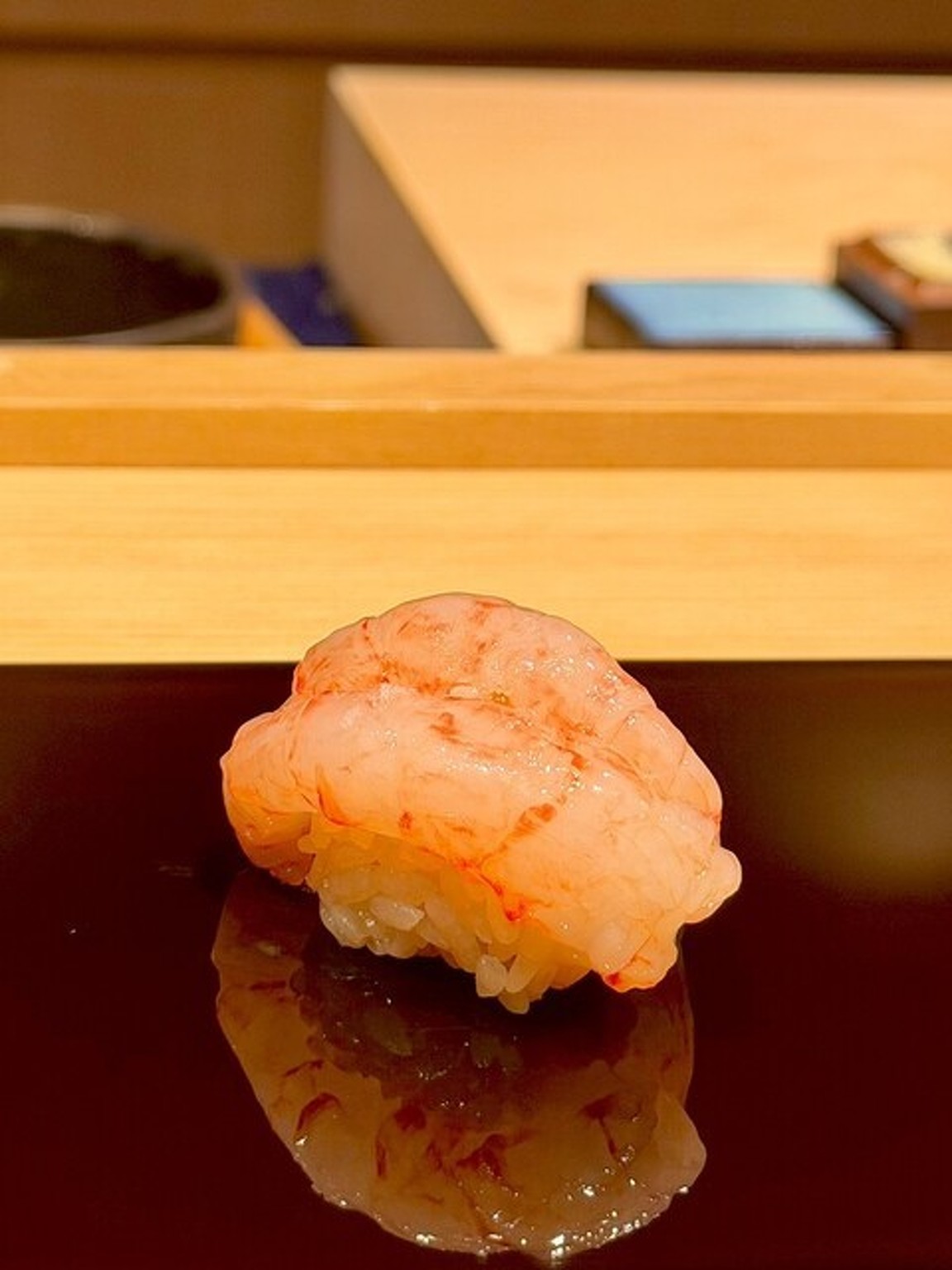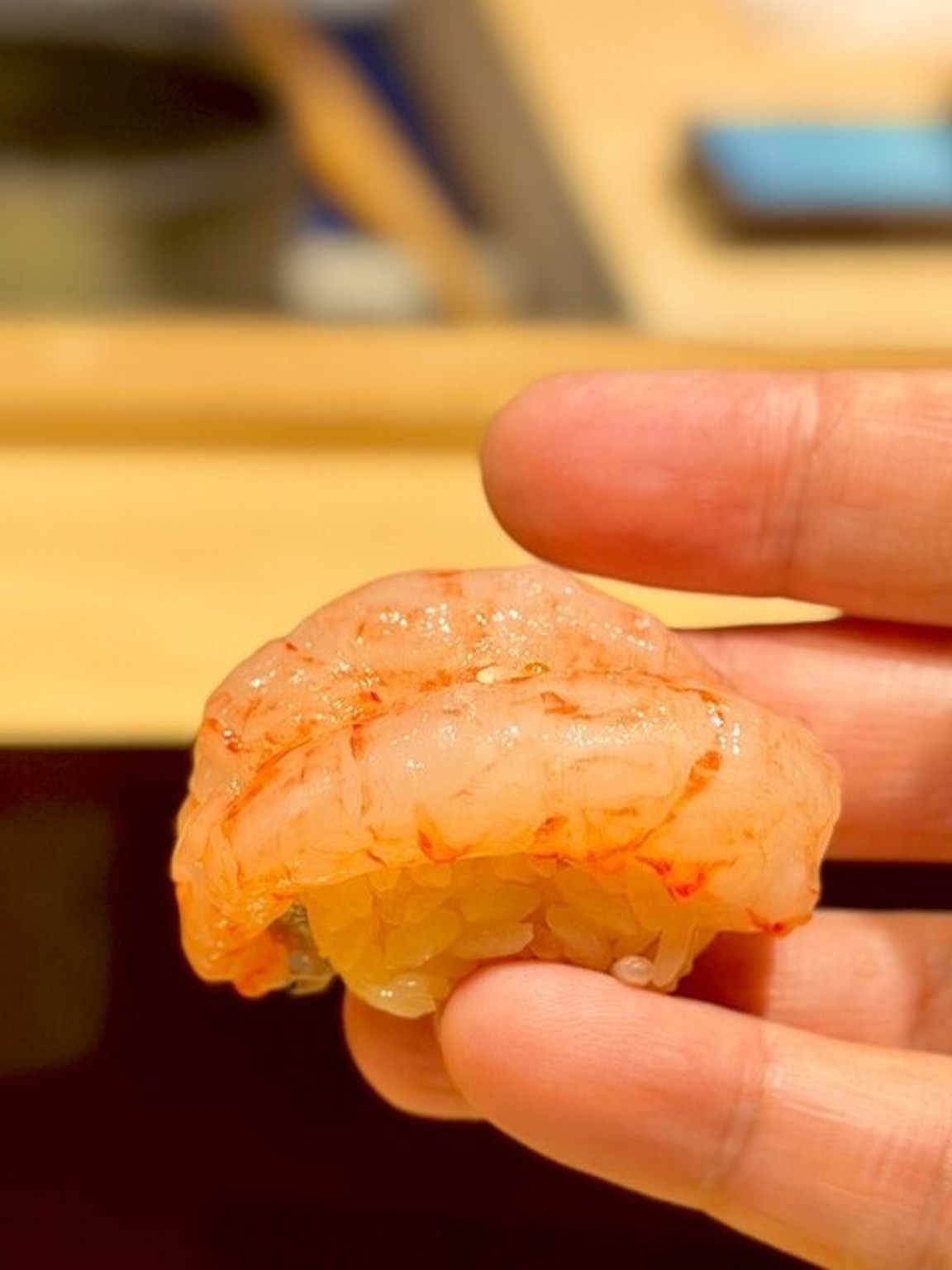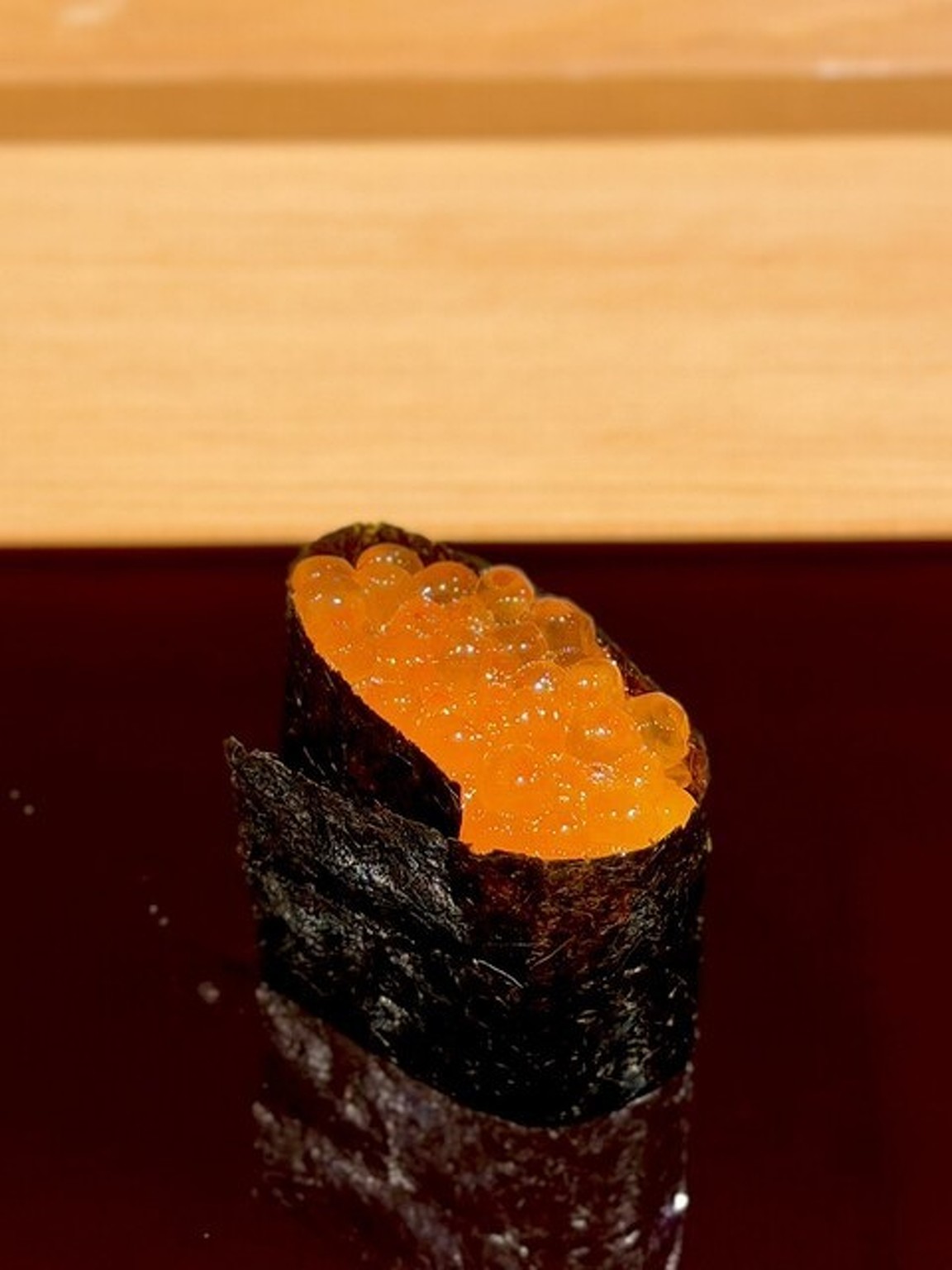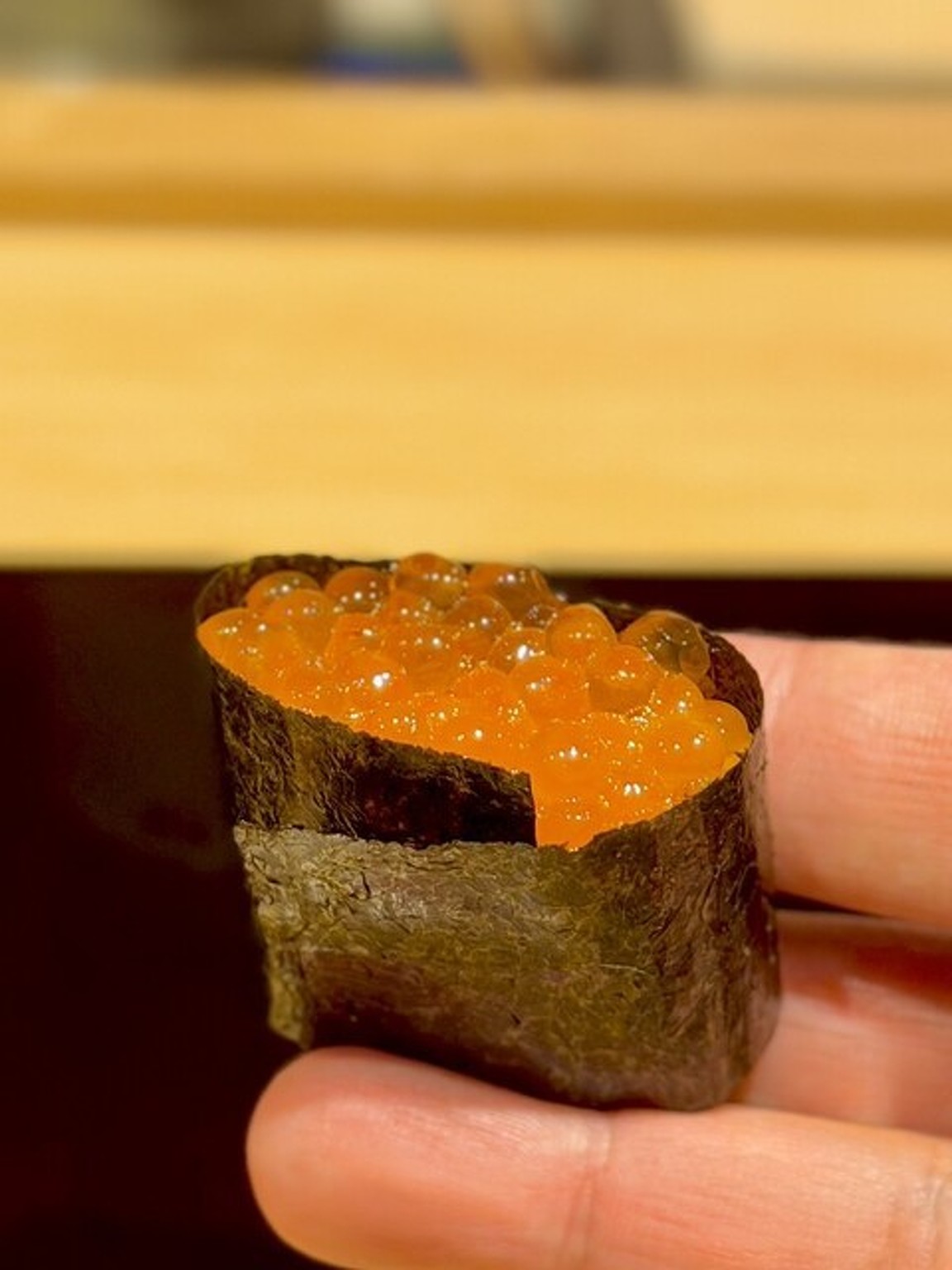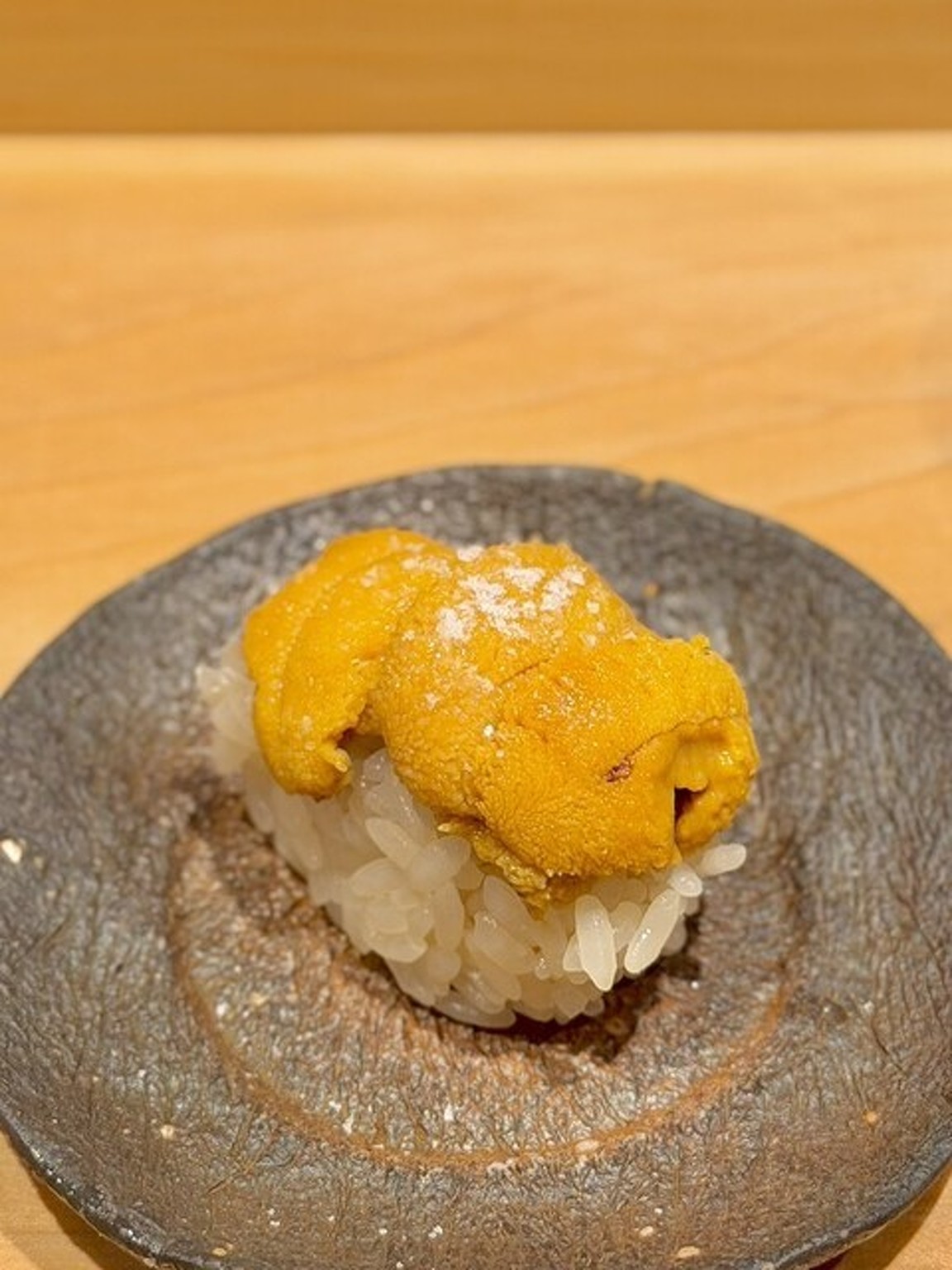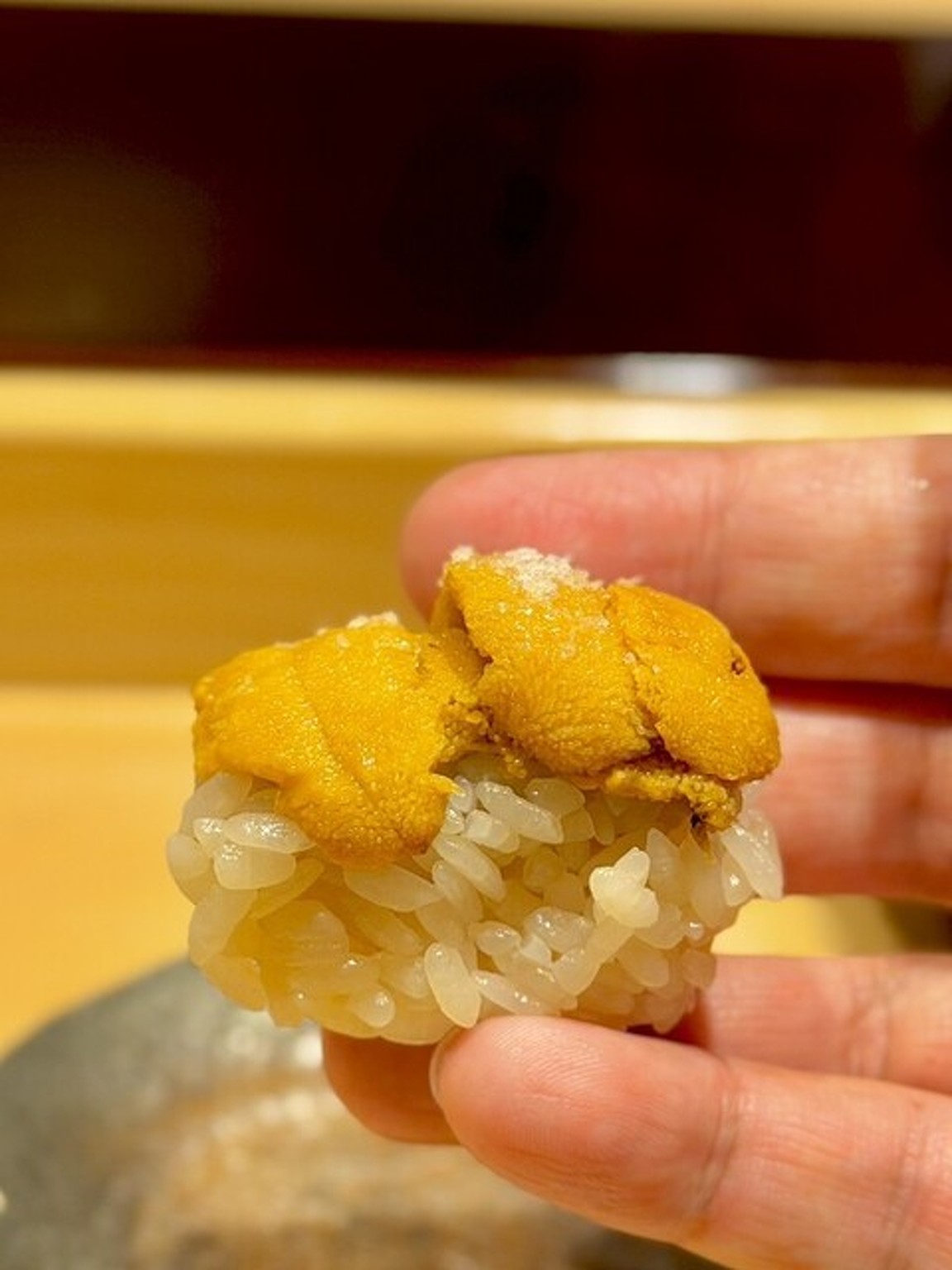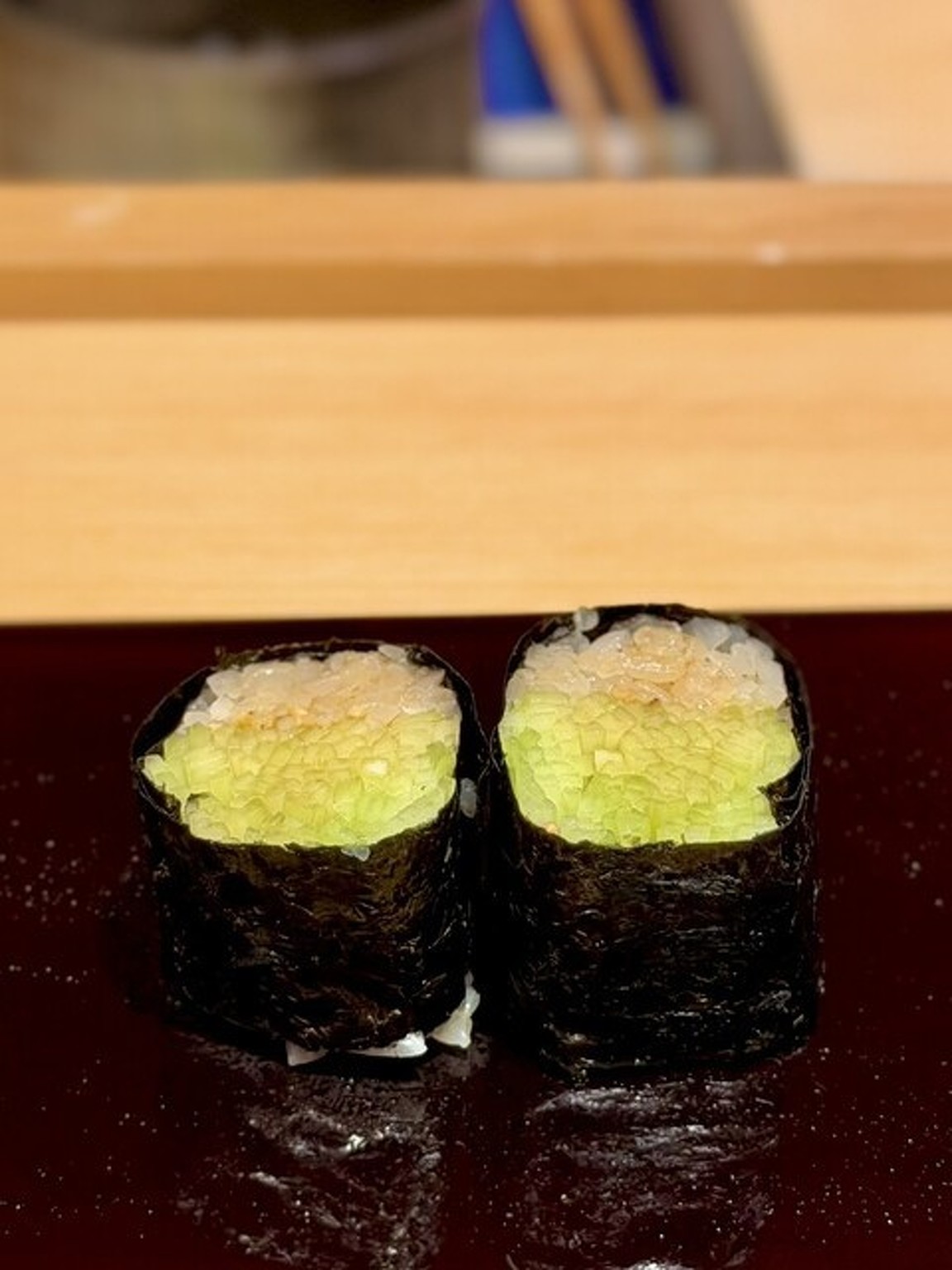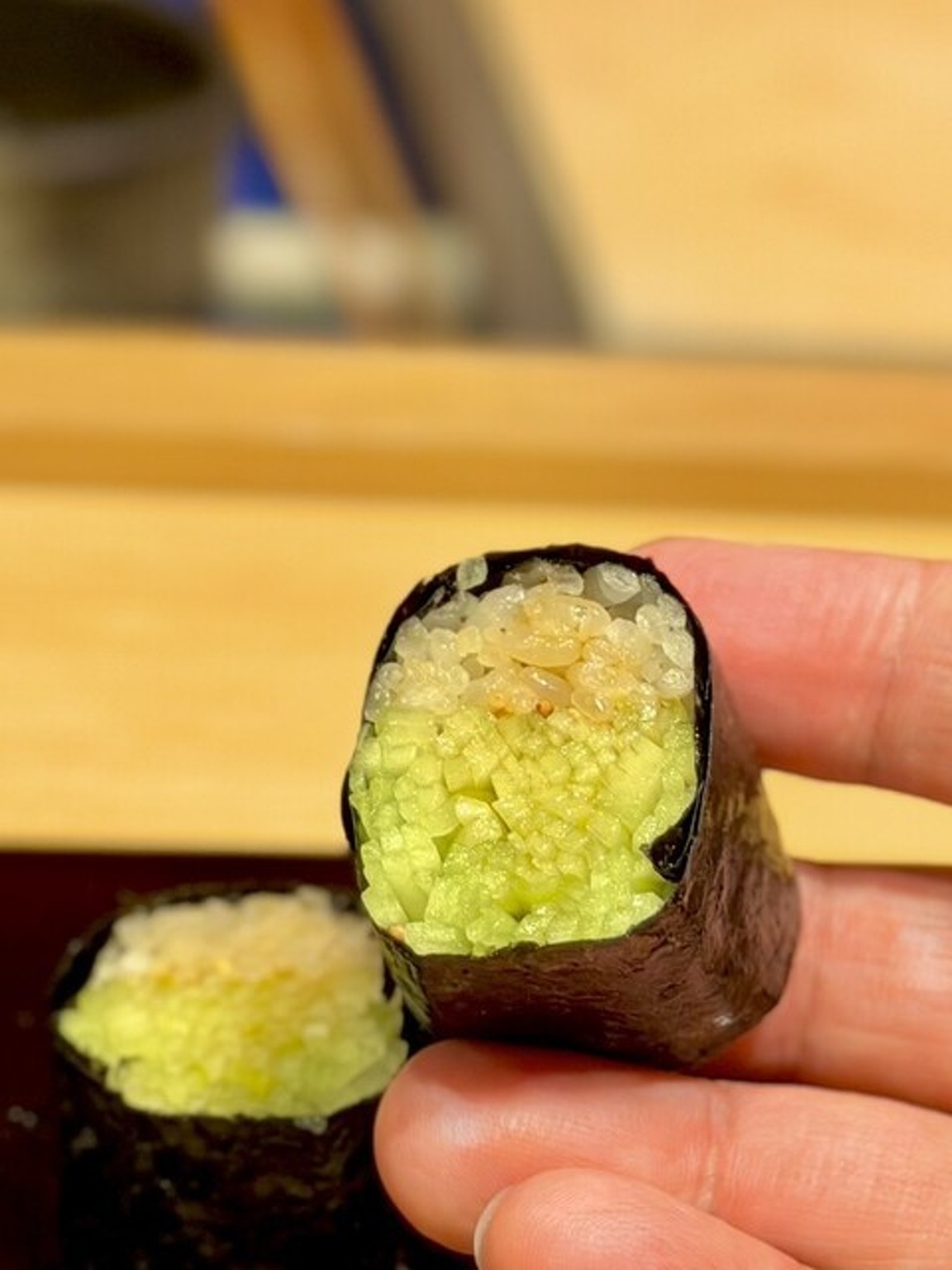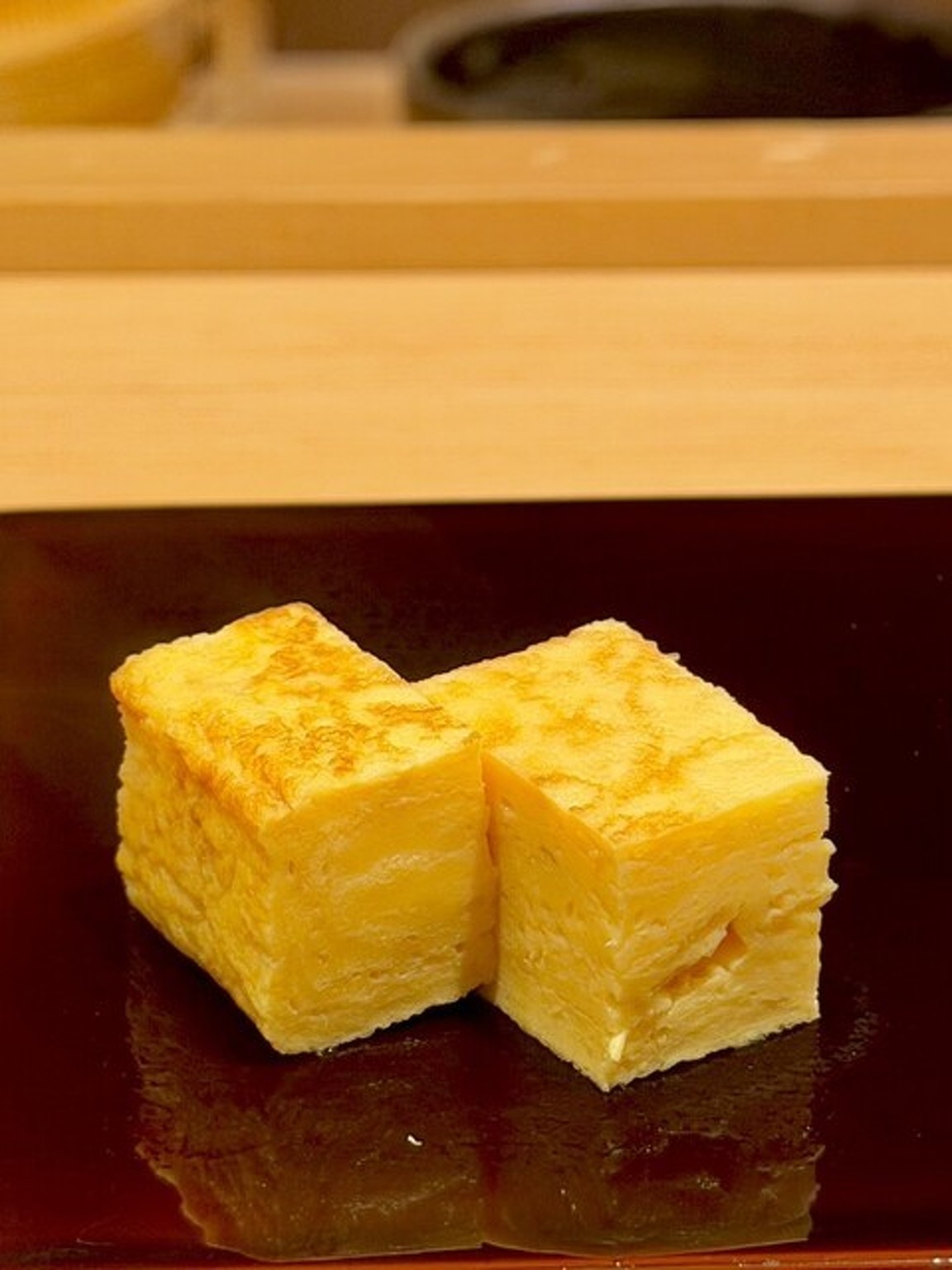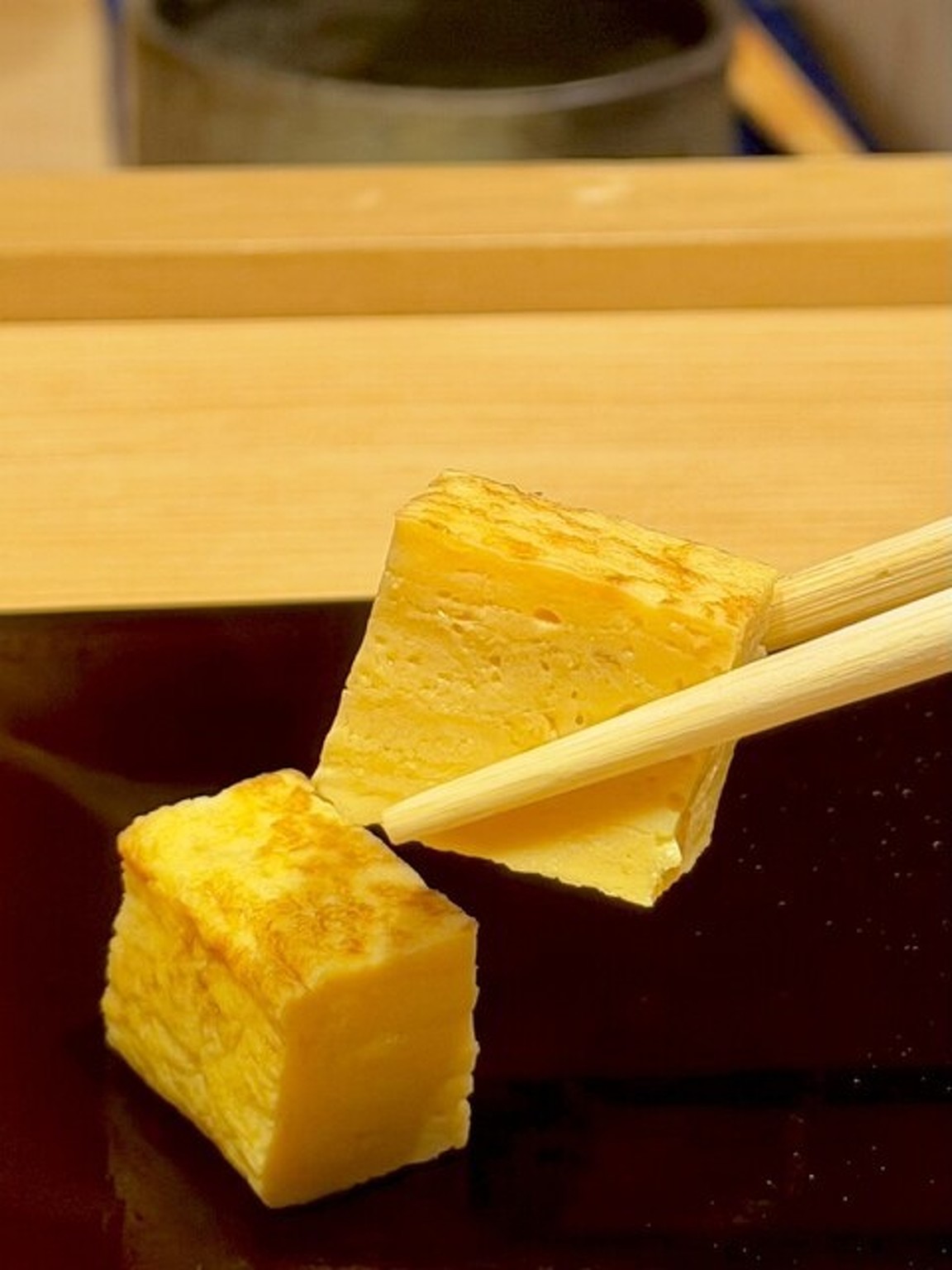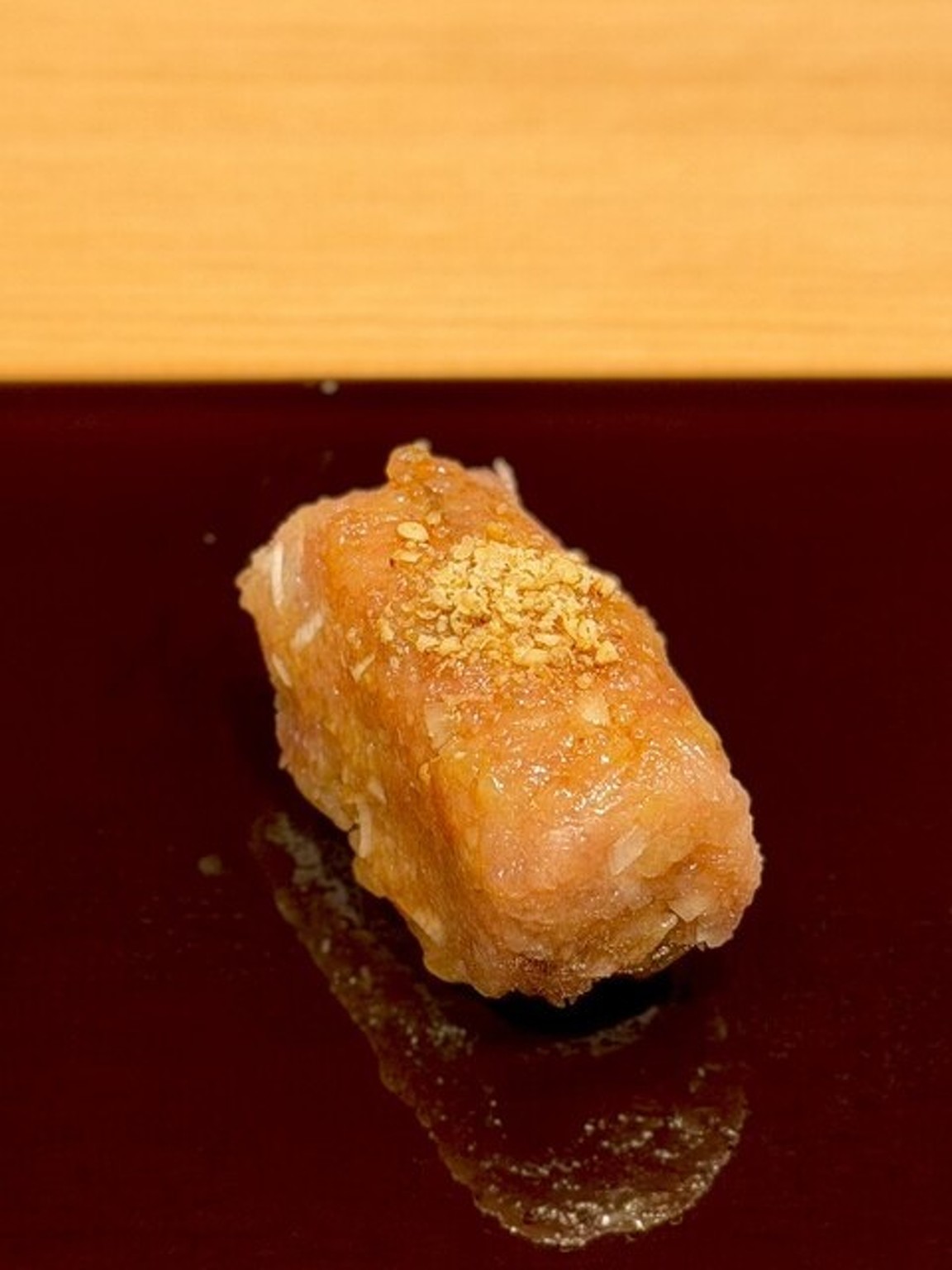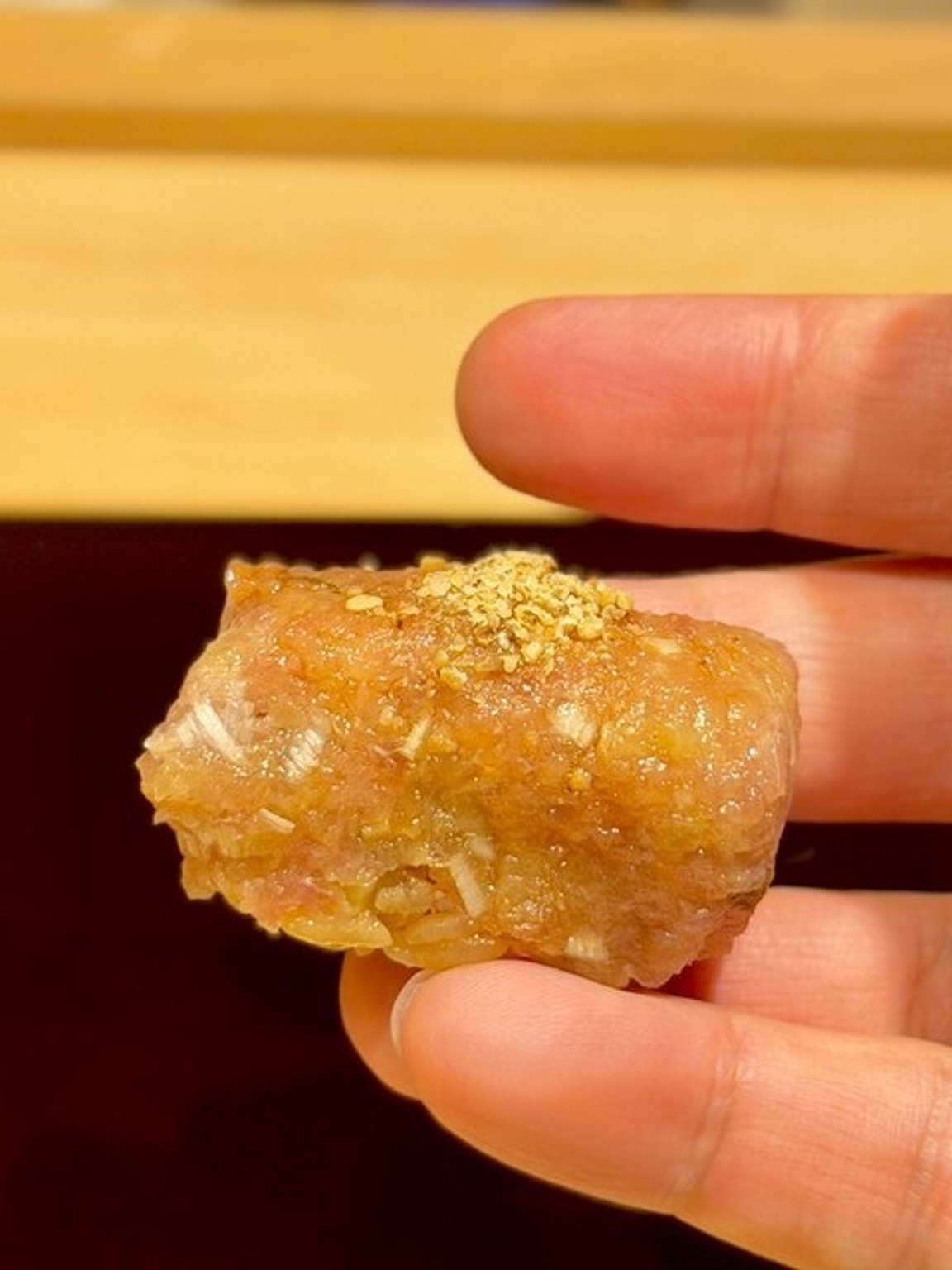
I visited "Sushi Sho" located in Omachi, Akita City. It’s a renowned sushi restaurant just a 20-minute walk from Akita Station, situated across from the Akita Red Brick Museum.The owner, Mr. Keiji Sasaki, trained as a sushi chef in Tokyo, where he met Mr. Keiji Nakazawa of "Sushi Sho" in Yotsuya. After five years of honing his skills under Nakazawa, he returned to his hometown of Akita and opened his own "Sushi Sho" in 2001. This restaurant is one of the earliest independent establishments in the Sushi Sho lineage.In 2022, 2025, and 2026, it earned a Bronze award and has been selected three times for the Sushi EAST 100 Best Restaurants in 2021, 2022, and 2025, making it a true gem in both name and reputation.A distinctive feature of "Sushi Sho" is its style of alternating between appetizers and sushi, rather than clearly separating the two.While the Yotsuya branch focuses on the meticulous use of rice according to the aging and type of fish, the Akita branch emphasizes using locally sourced ingredients, including fish, vegetables, and wild plants, while inheriting the techniques and course structure.The course I enjoyed that day included the following:- Kasugo: The right amount of vinegar enhances the soft flesh's umami, with a delicate finish from precise knife work.- Hon-Ara: A refined umami typical of white fish, slowly expanding in flavor with each bite, showcasing the quality of the flesh.- Tsubugai: Sourced from Samani, Hokkaido. It has a crunchy texture, followed by a sweet and savory flavor as you chew.- Akami: This 230kg bluefin tuna was caught in the Funka Bay, Hokkaido. It had a refreshing taste while retaining the characteristic umami of tuna.- Chutoro Zuke: The sweetness of the fat is stronger than the akami, and marinating enhances the umami. This chutoro was exceptionally delicious.- Kuromono Sunomono: With a much crunchier texture than typical mozuku, it retains a delicate yet firm bite.- Akamutsu: Locally sourced from Akita, the skin's aroma is followed by a sweet fat flavor, with a wonderfully balanced richness and fragrance.- Sumiika: The thick flesh starts with a crisp texture, transitioning to a sticky mouthfeel. The sweetness of the squid increases as you chew, pairing well with the rice.- Shinko: From Kumamoto, this seasonal fish showcases the acidity from vinegar and the fish's umami, presenting a delicate Edomae-style piece.- Geso: The tentacles of the Sumiika have a distinct, bouncy texture, enhanced by a roasted aroma. The moment it enters your mouth, the fragrance is delightful, and the sweetness and umami intensify as you chew.- Tako and Kuro Awabi: The tako has a bouncy texture that is easy to bite through, releasing umami gradually. The black abalone has a dense flesh, revealing ocean flavors and umami from its firm texture.- Sanma: The richness of the sanma's fat combined with the liver's depth and slight bitterness creates a deeply flavorful experience. The grated daikon perfectly complements the aftertaste.- Shima Ebi Head: Cooking enhances the shell's aroma, resulting in a rich, sweet, and concentrated flavor.- Katsuo Hirazuke: Sourced from Chiba, marinating brings out the umami, and biting into the thick flesh releases a burst of iron-rich flavor and aroma, redefining the typical perception of katsuo.- Cucumber with Mustard: Locally sourced from Akita, the refreshing crunch of cucumber is complemented by the kick of mustard, making for a great palate cleanser between rich seafood.- Sardine: Sourced from Chiba, it carries a refreshing acidity from vinegar while retaining the sardine's rich fat, enhanced by a roasted aroma. This depth of flavor, combining acidity, fat, and toastiness, is distinct from simple vinegar marination.- Shima Ebi: Locally sourced from Akita, it has a creamy texture with a rich sweetness. The head was delicious, but the flesh was a completely different experience—truly wonderful.- Ikura: The first catch from Nemuro. The pearls are still slightly small, but they burst in your mouth, releasing rich umami. The crispy texture of the fragrant seaweed enhances the flavor of the ikura.- Murasaki Uni: Sourced from Hokkaido, it is paired directly with the rice without seaweed, allowing the uni's aroma, sweetness, and melt-in-your-mouth texture to shine through. There were no off-flavors or bitterness, showcasing the high quality of the uni.- Kappa Maki: Thinly sliced Akita cucumbers are doubled and finely chopped, creating a unique roll where the rice and cucumber are separated. The texture of this kappa maki was excellent.- Tamago: A thick omelet made with Hinai chicken eggs, layered beautifully.Additional items:- Ohagi: A combination of nakaochi tuna and finely chopped iburi gako with green onions. The umami and fat of the tuna blend with the smoky aroma and texture of the iburi gako, creating a wonderful balance of aroma, texture, and flavor. This dish symbolizes the Akita branch's adaptation of the Yotsuya style to Akita's food culture.- Anago: Sourced from Tsushima, it is fluffy and tender, melting in your mouth. The balance with the sweet sauce was perfect, making it a great addition.- Murasaki Uni Double: After enjoying the first Murasaki uni, I added more, covering the rice with a generous layer of uni. The rich sweetness and creamy texture made for an incredibly luxurious piece.- Shijimi Soup: The meal concluded with a gentle shijimi soup, infused with umami, providing a calm end to the long course.Overall, it was a wonderful experience that showcased the techniques cultivated at Yotsuya "Sushi Sho" while highlighting the charm of Akita, a "treasure trove of ingredients."Thanks to Mr. Sasaki's 20 years of blending Akita's ingredients, this truly was a "meaningful sushi experience in Akita."On this particular weekday evening, it was surprisingly empty, even at 20:30.In a bustling urban area, top restaurants are usually fully booked, so this was quite unexpected.However, outside of major designated cities, even renowned restaurants often follow this pattern.And yet, it was delicious and reasonably priced.I can’t resist the journey of exploring delicious restaurants across the country. There are always new discoveries.After returning to the hotel from "Sushi Sho," I noticed that my hands didn’t smell fishy at all. Even at famous urban restaurants, I’ve often experienced lingering fish odors despite washing my hands, but that was not the case at "Sushi Sho."Poor sushi restaurants often have a fishy smell upon entering. Delving deeper, a restaurant where your hands don’t retain a fishy odor indicates good quality of ingredients, proper handling, and storage.I found it remarkable that during this visit to "Sushi Sho," despite the variety of dishes and the presence of blue fish, my hands did not carry any odor.I would love to visit this wonderful restaurant again when I come to Akita.
We use cookies on this site to enhance your user experience.