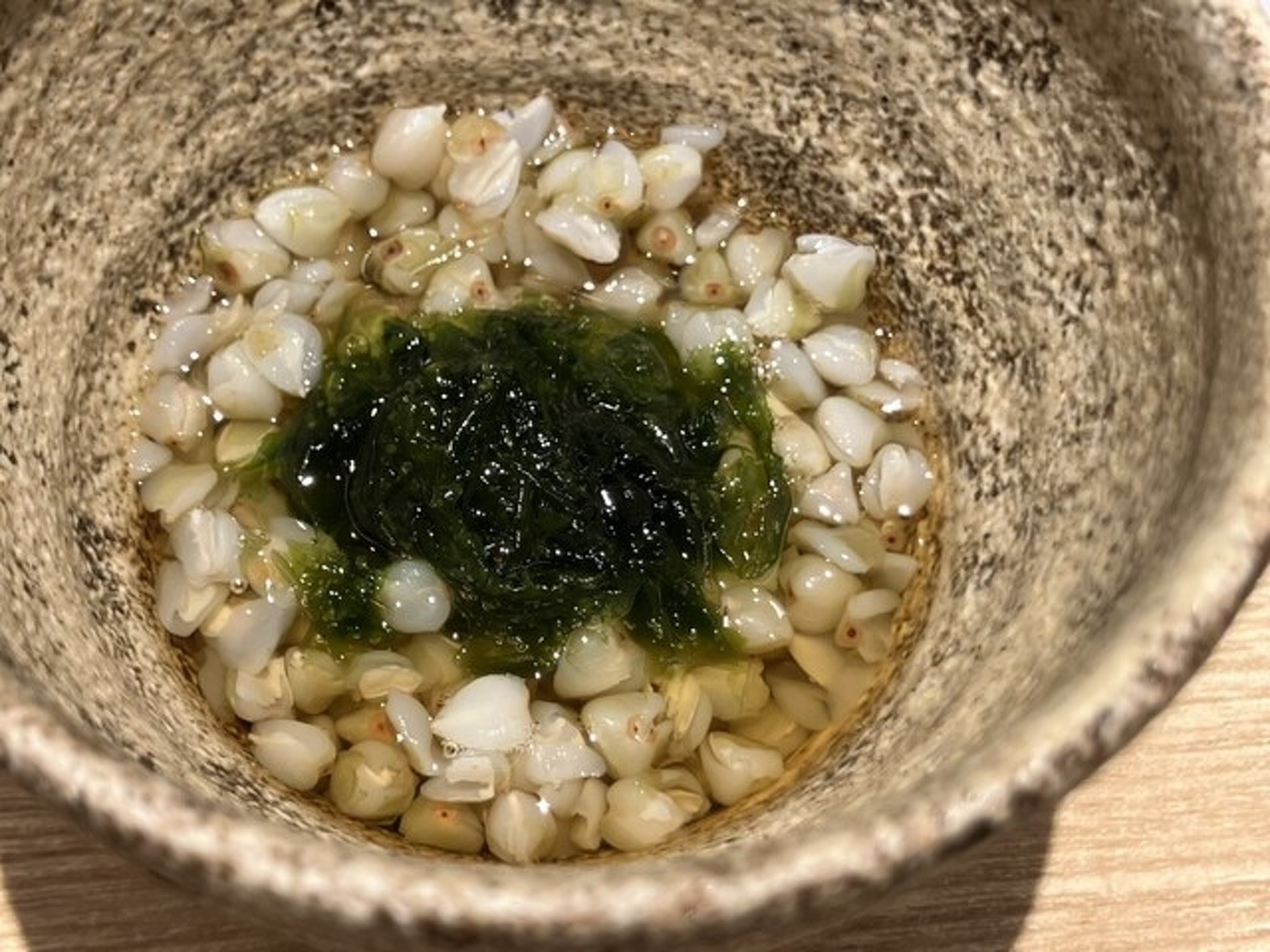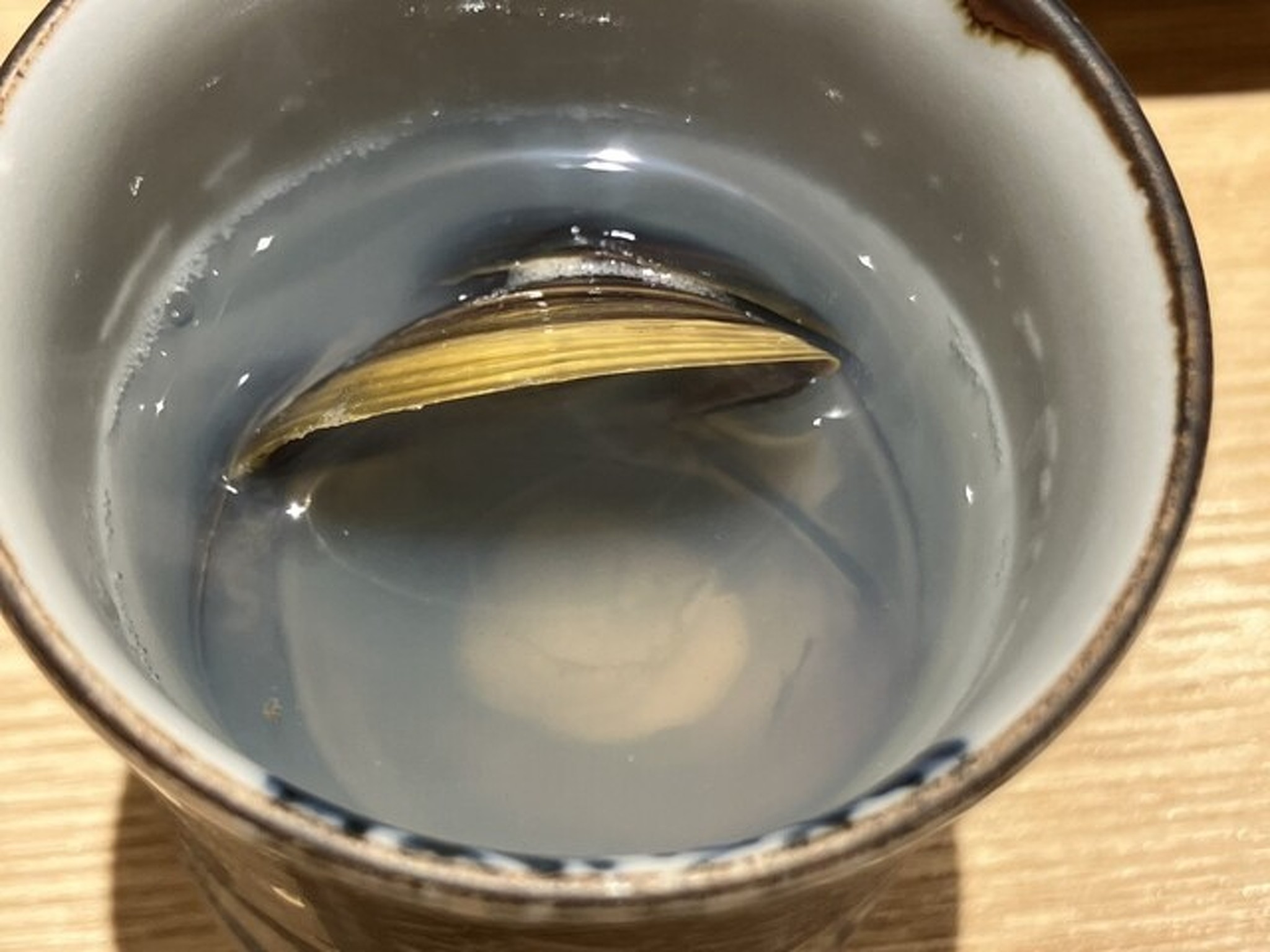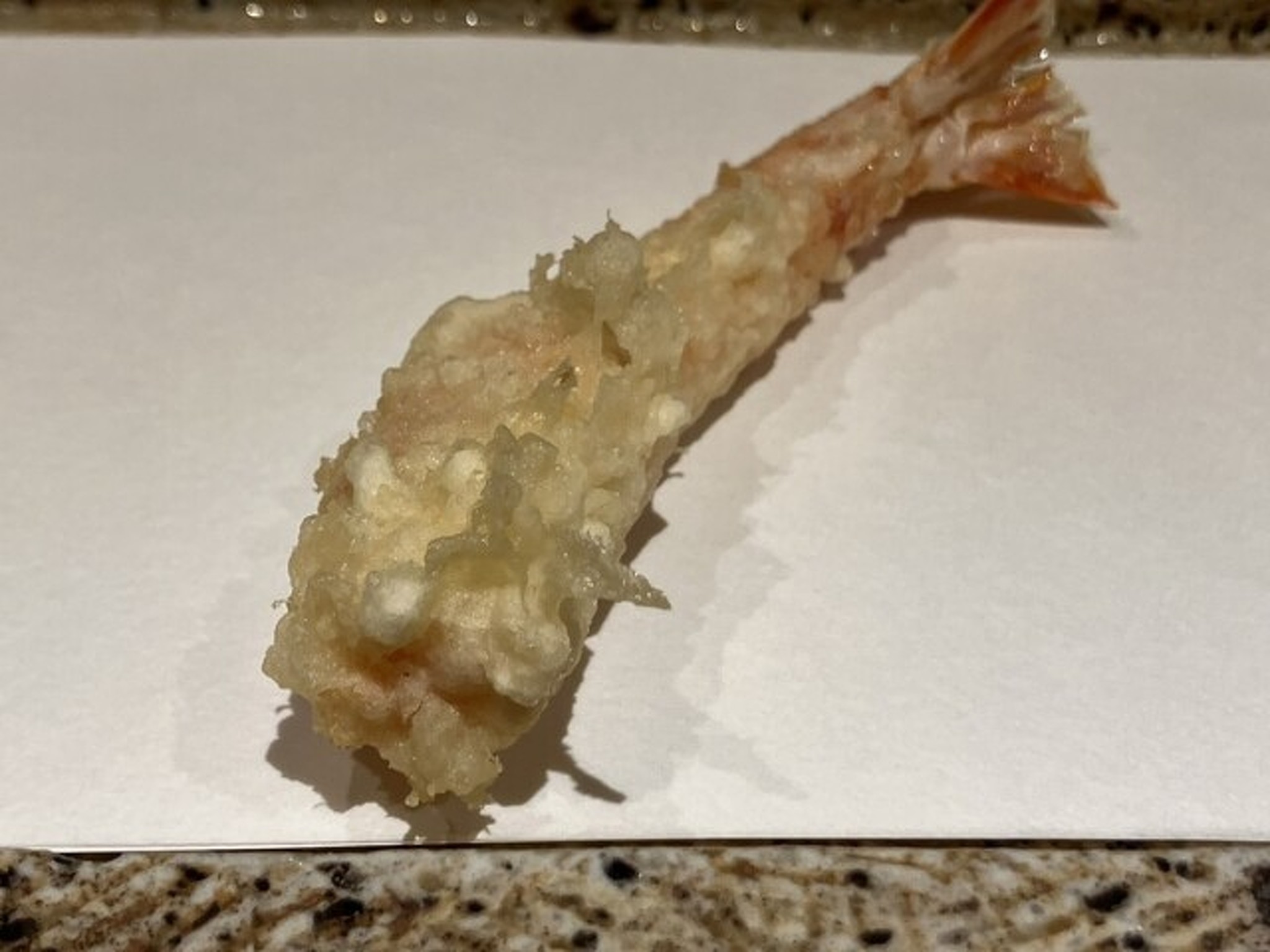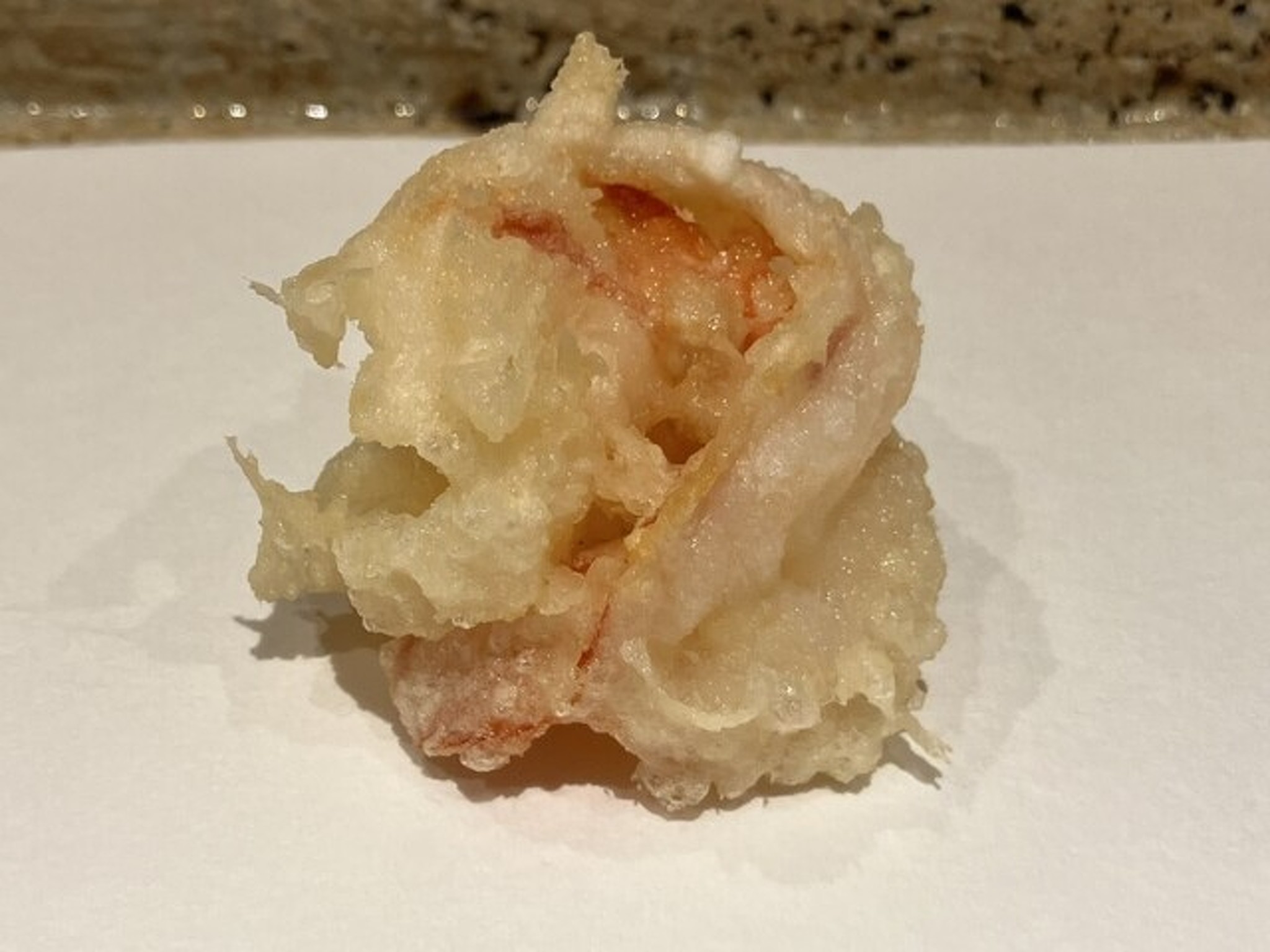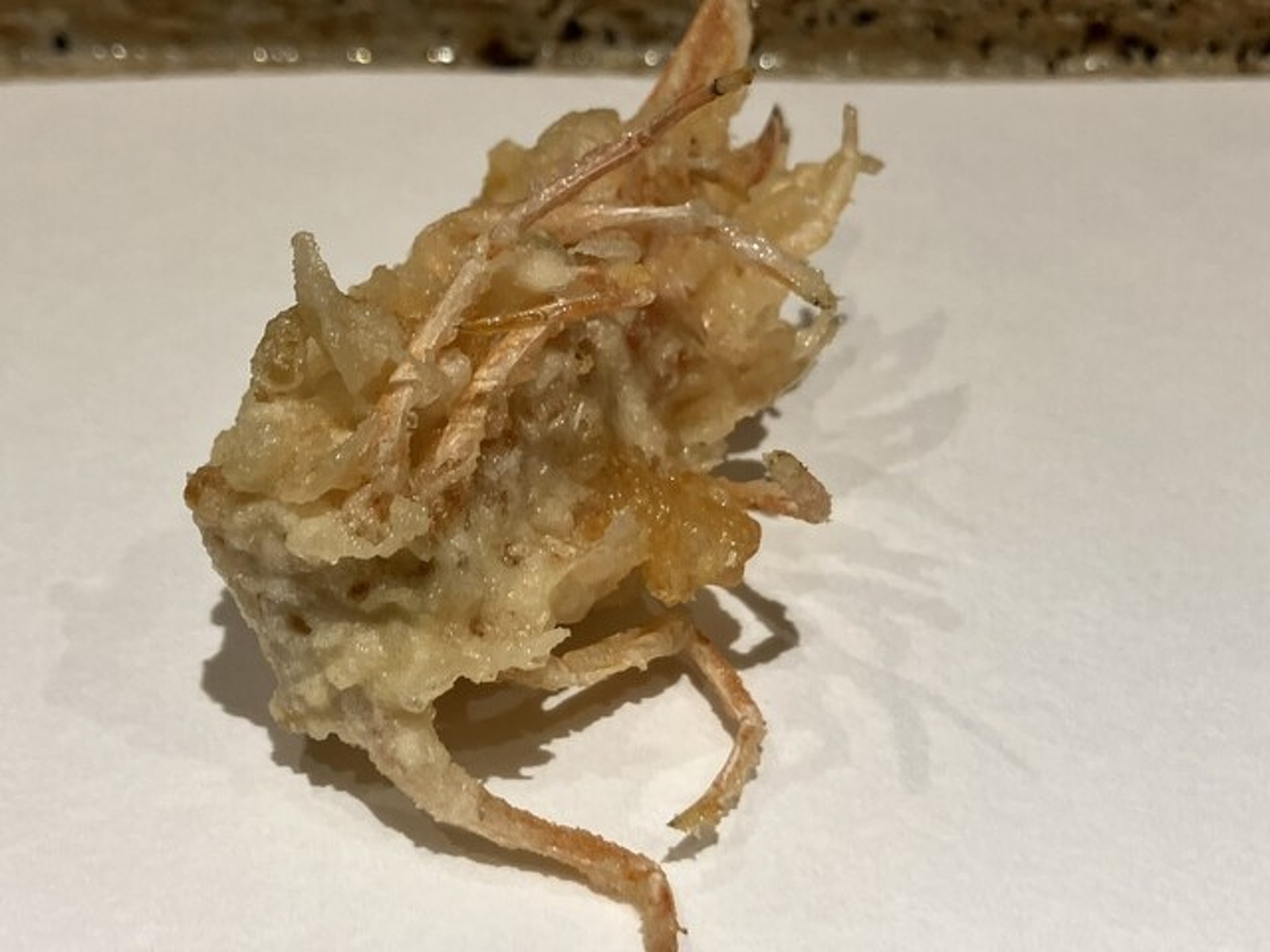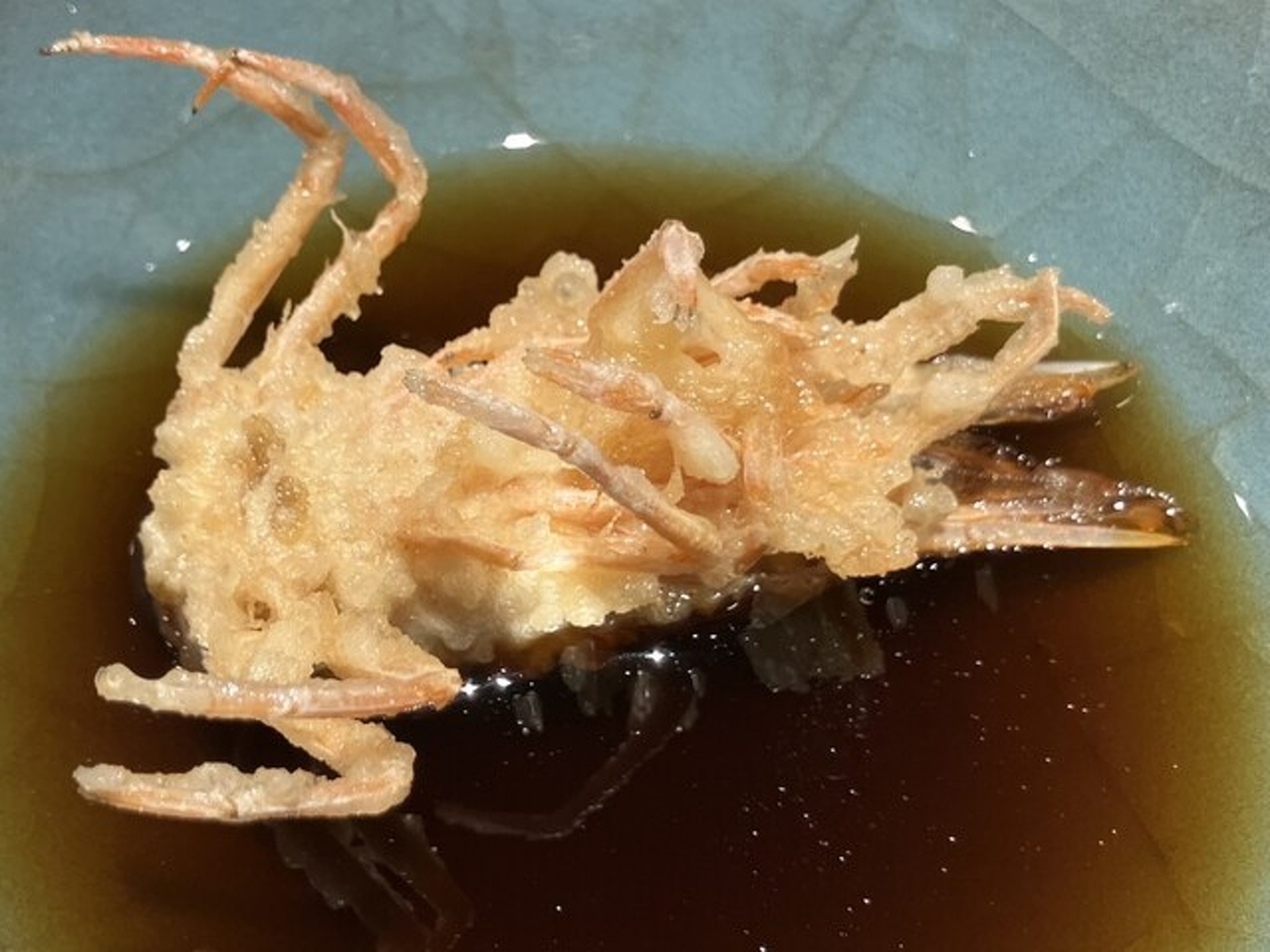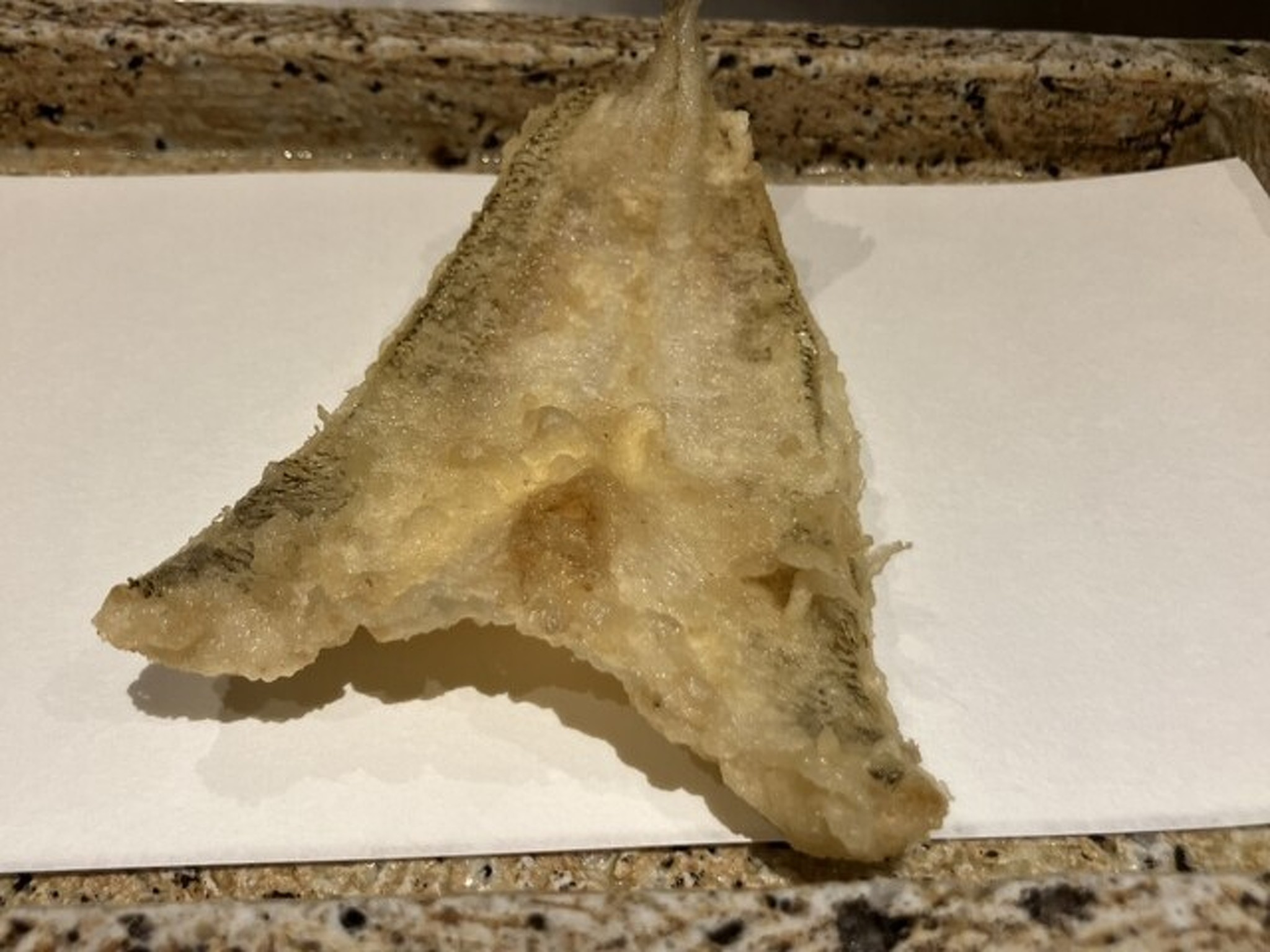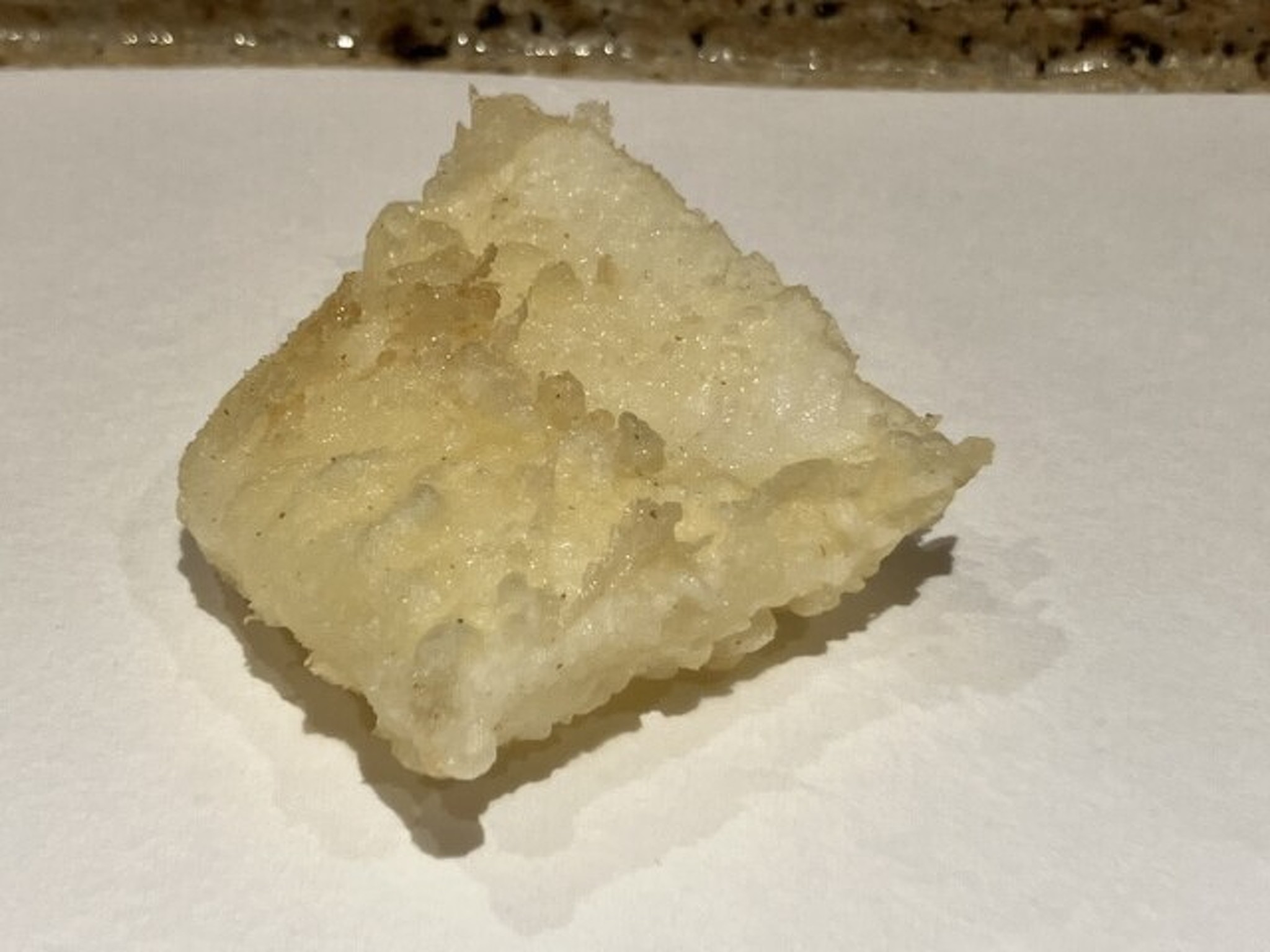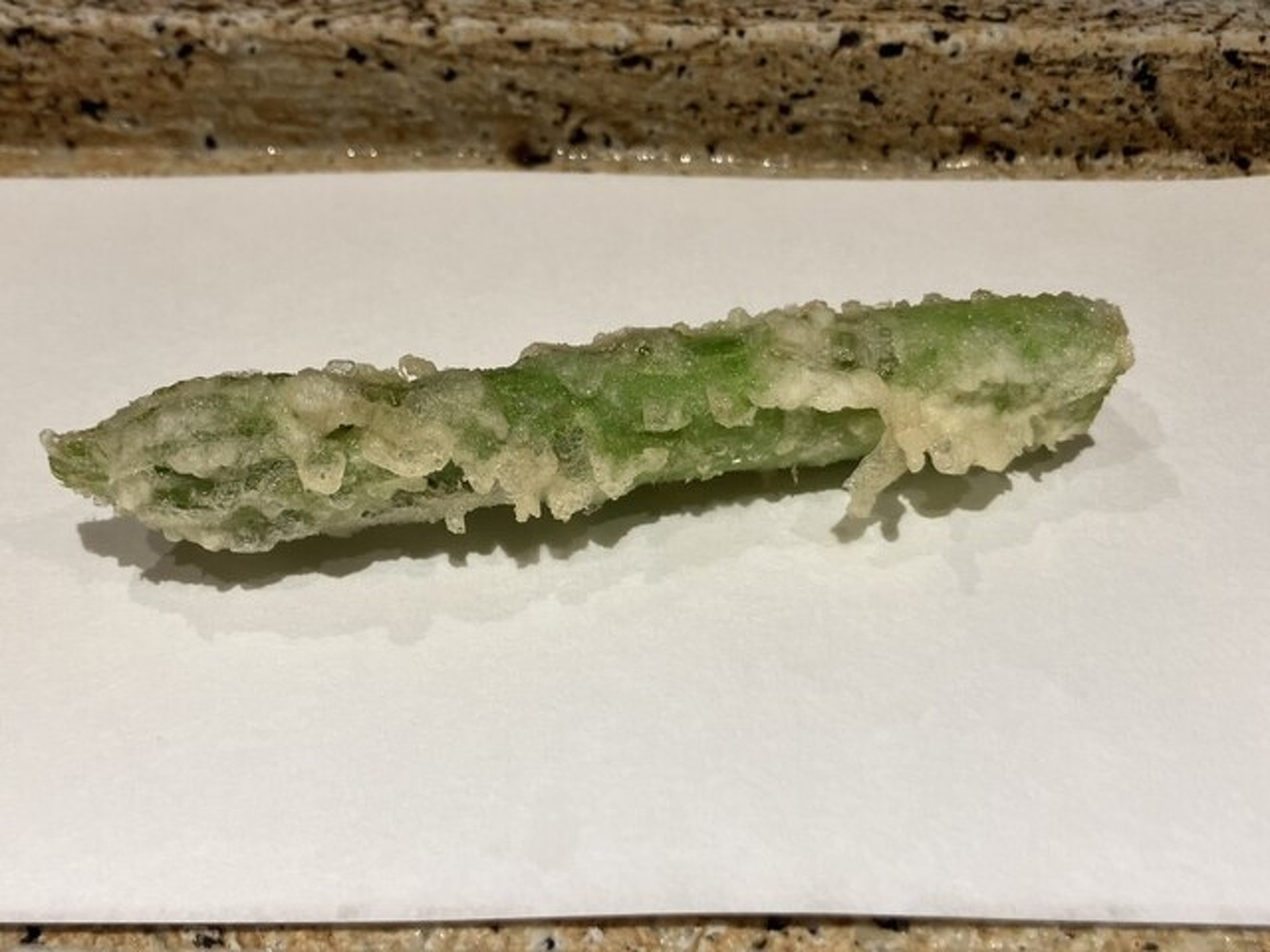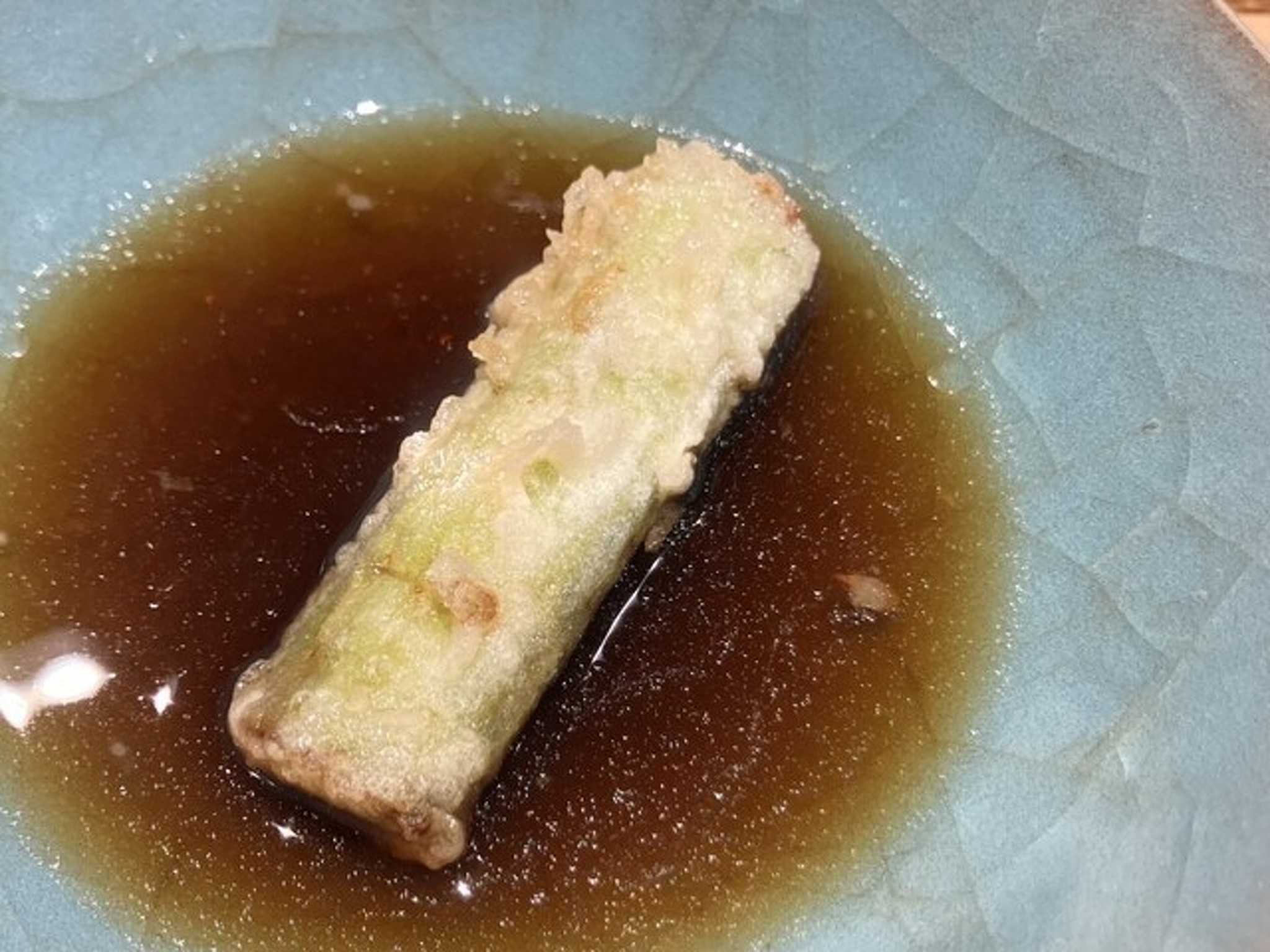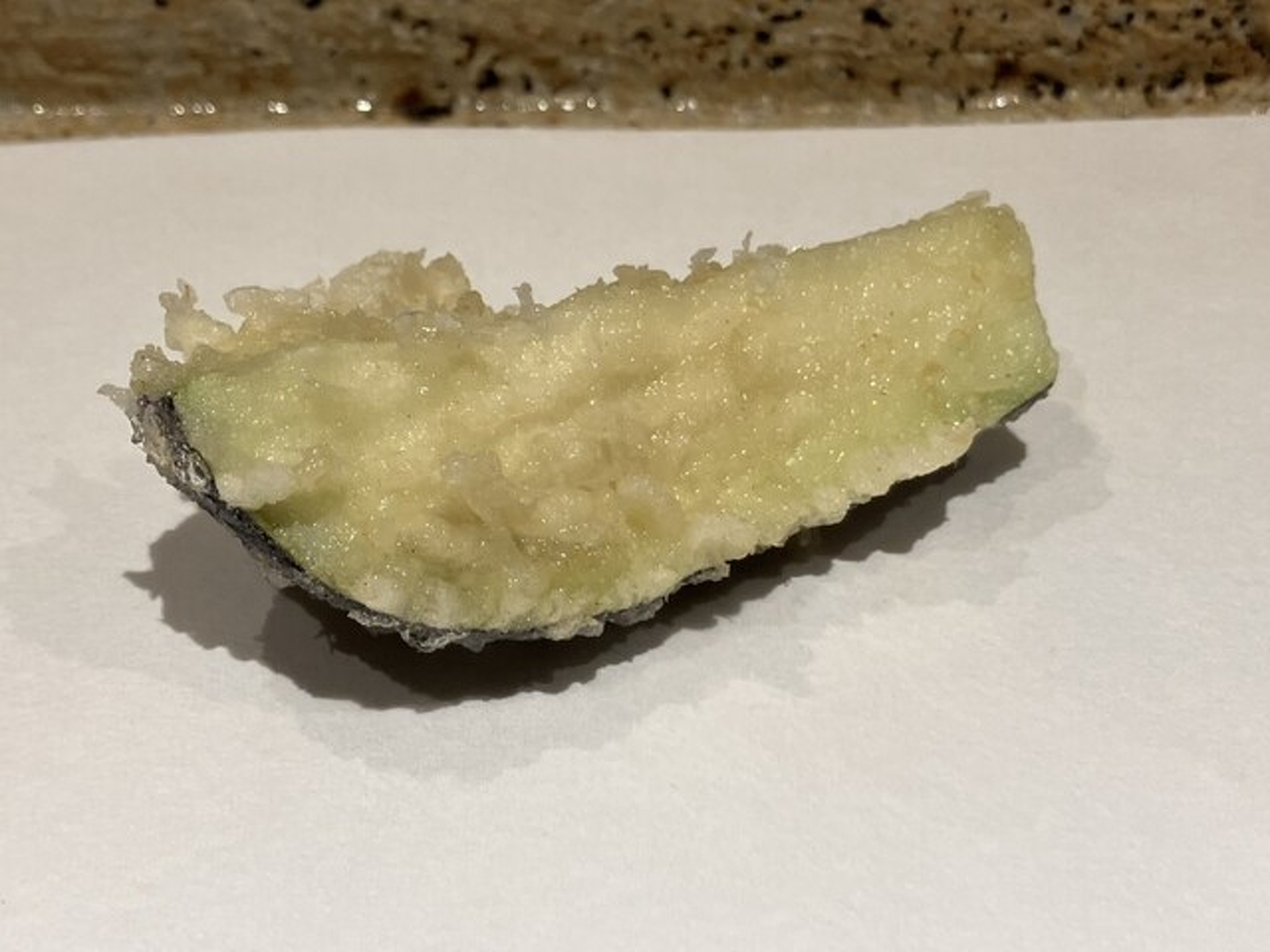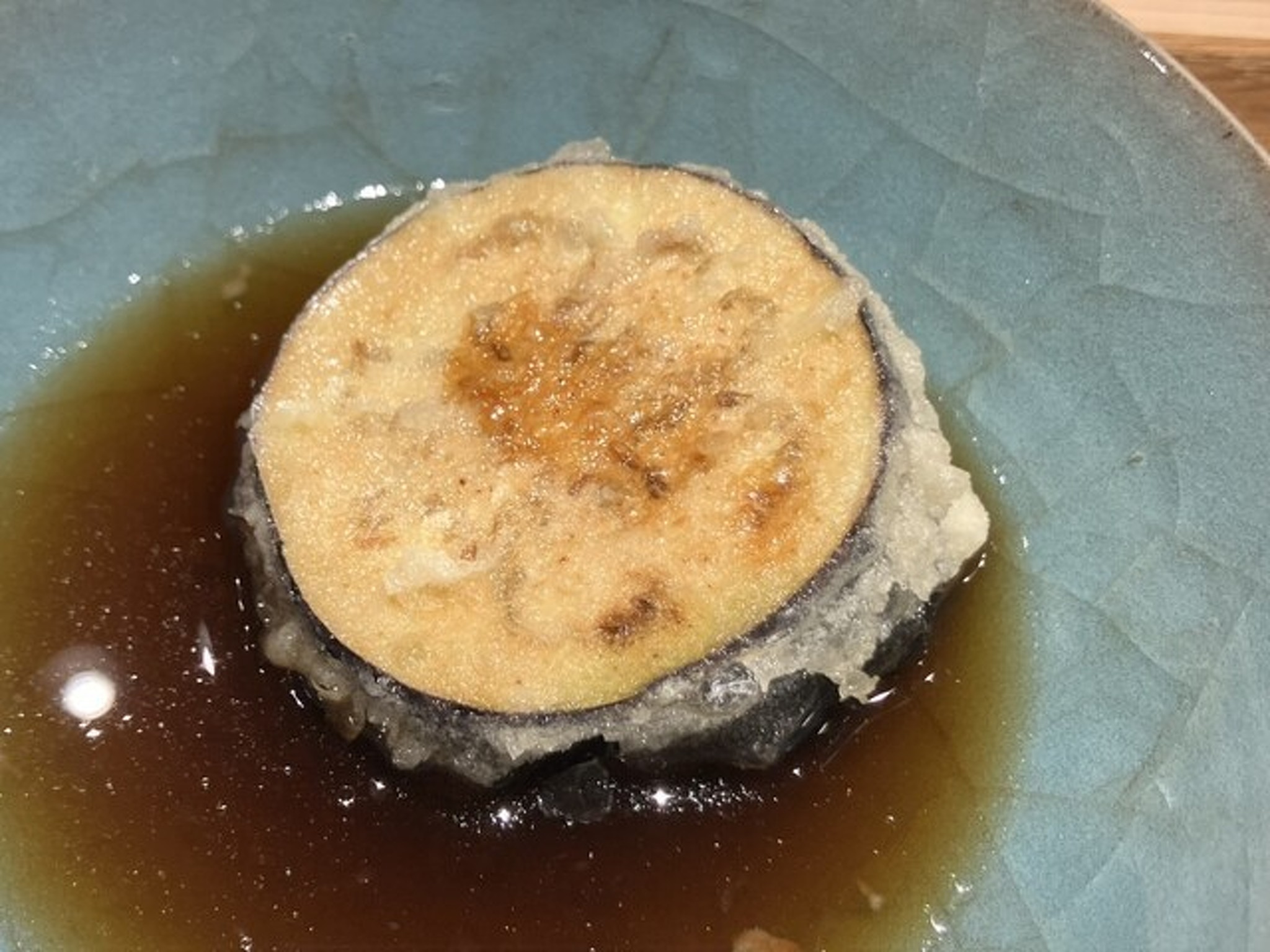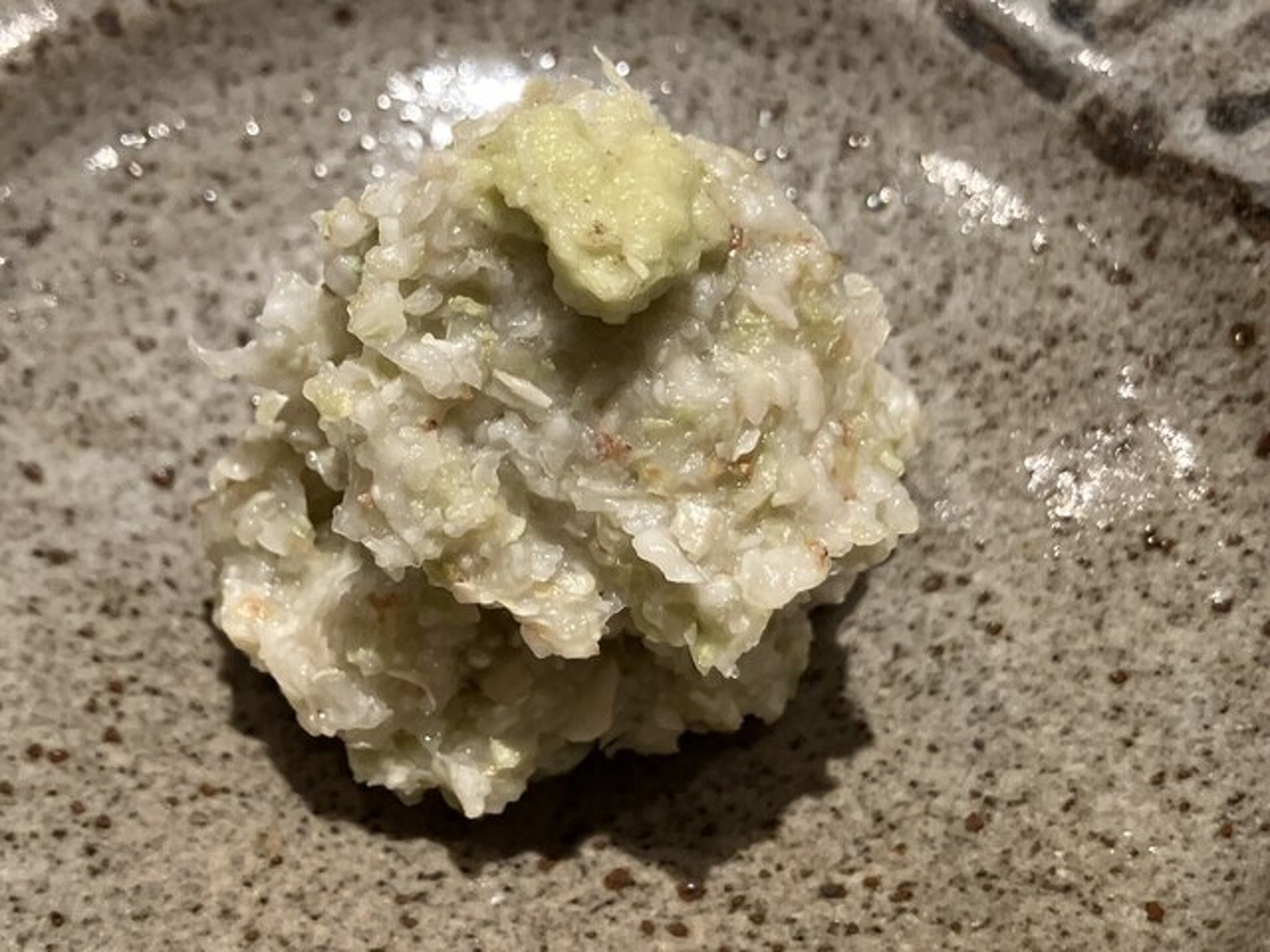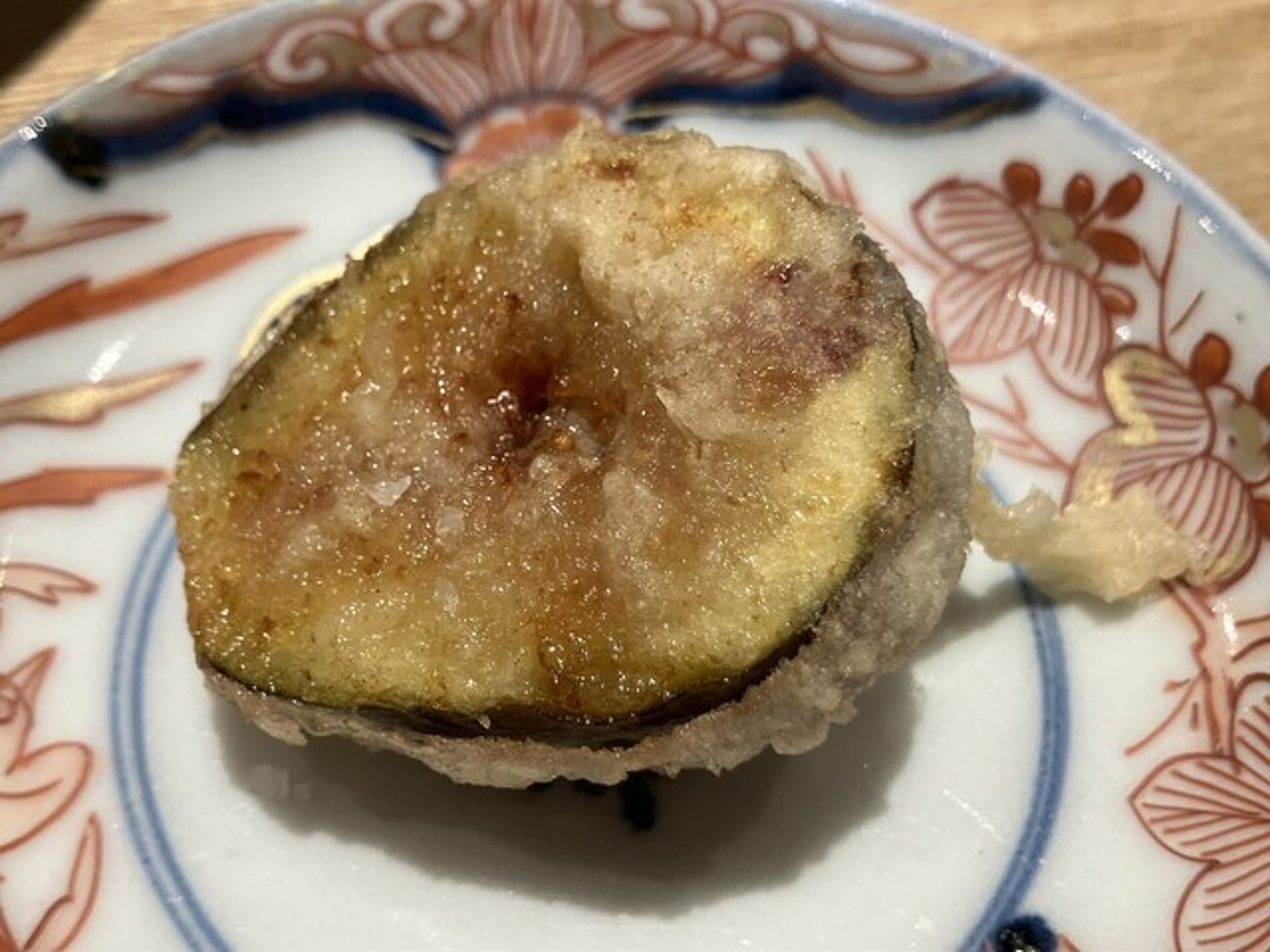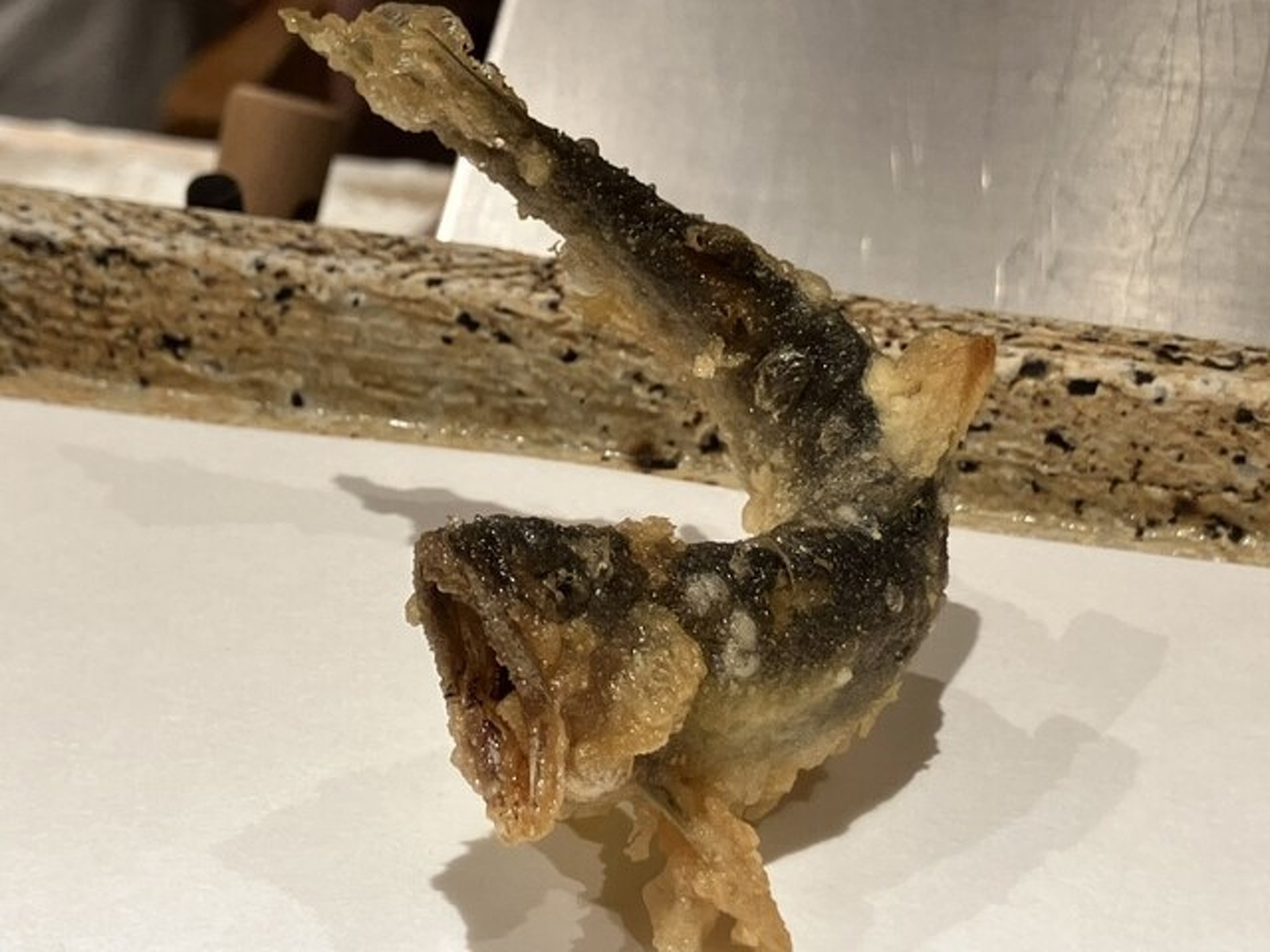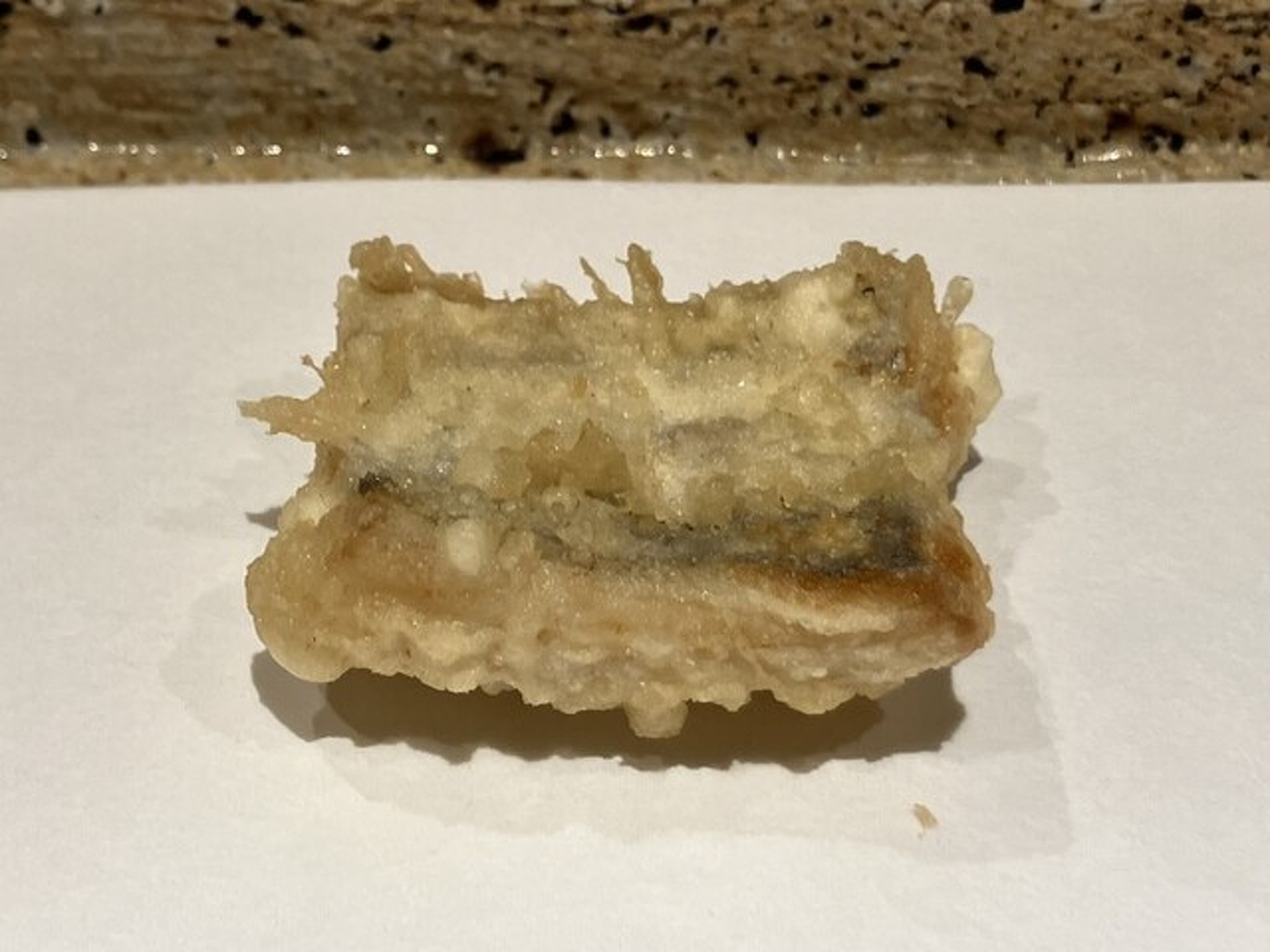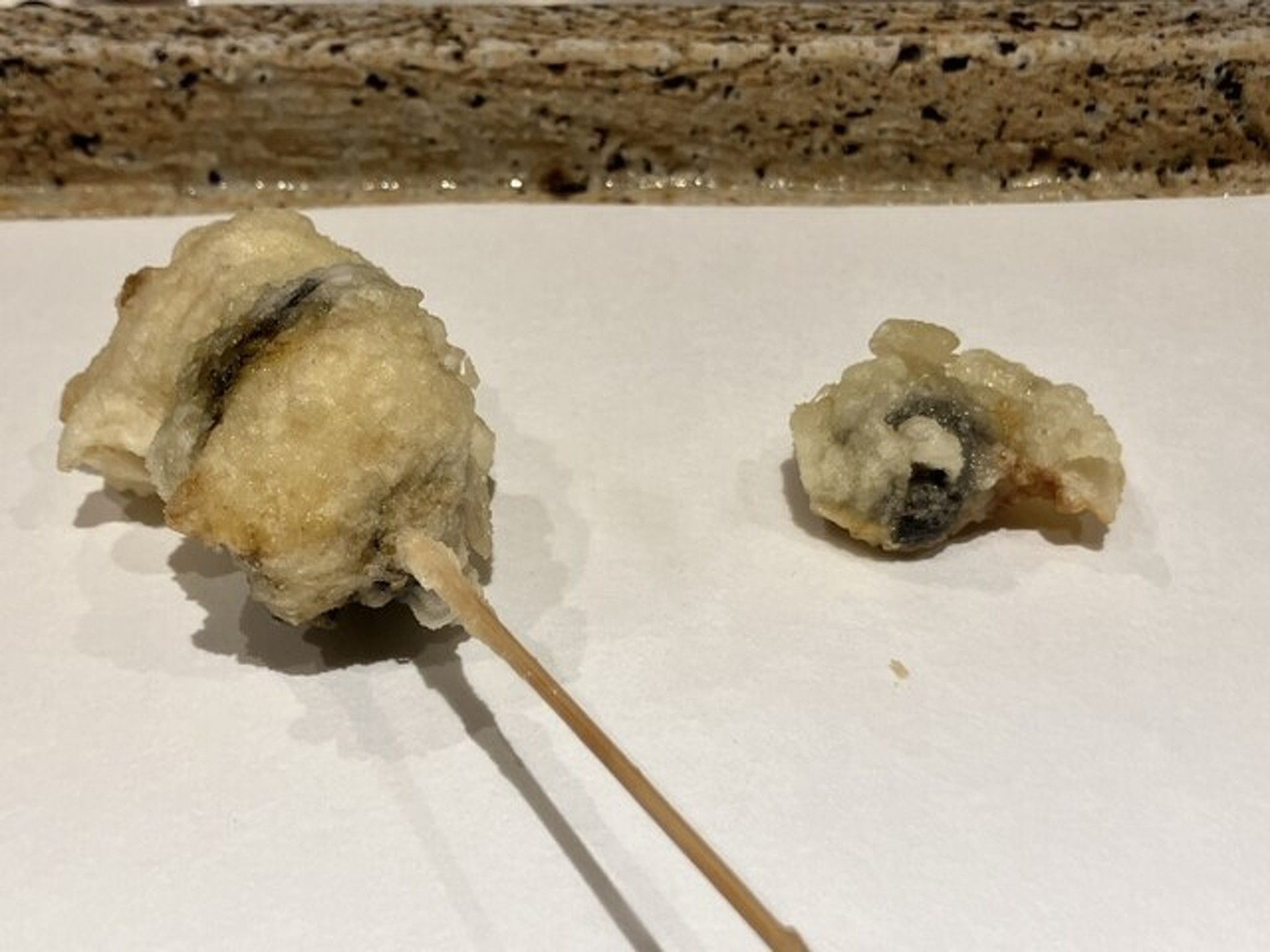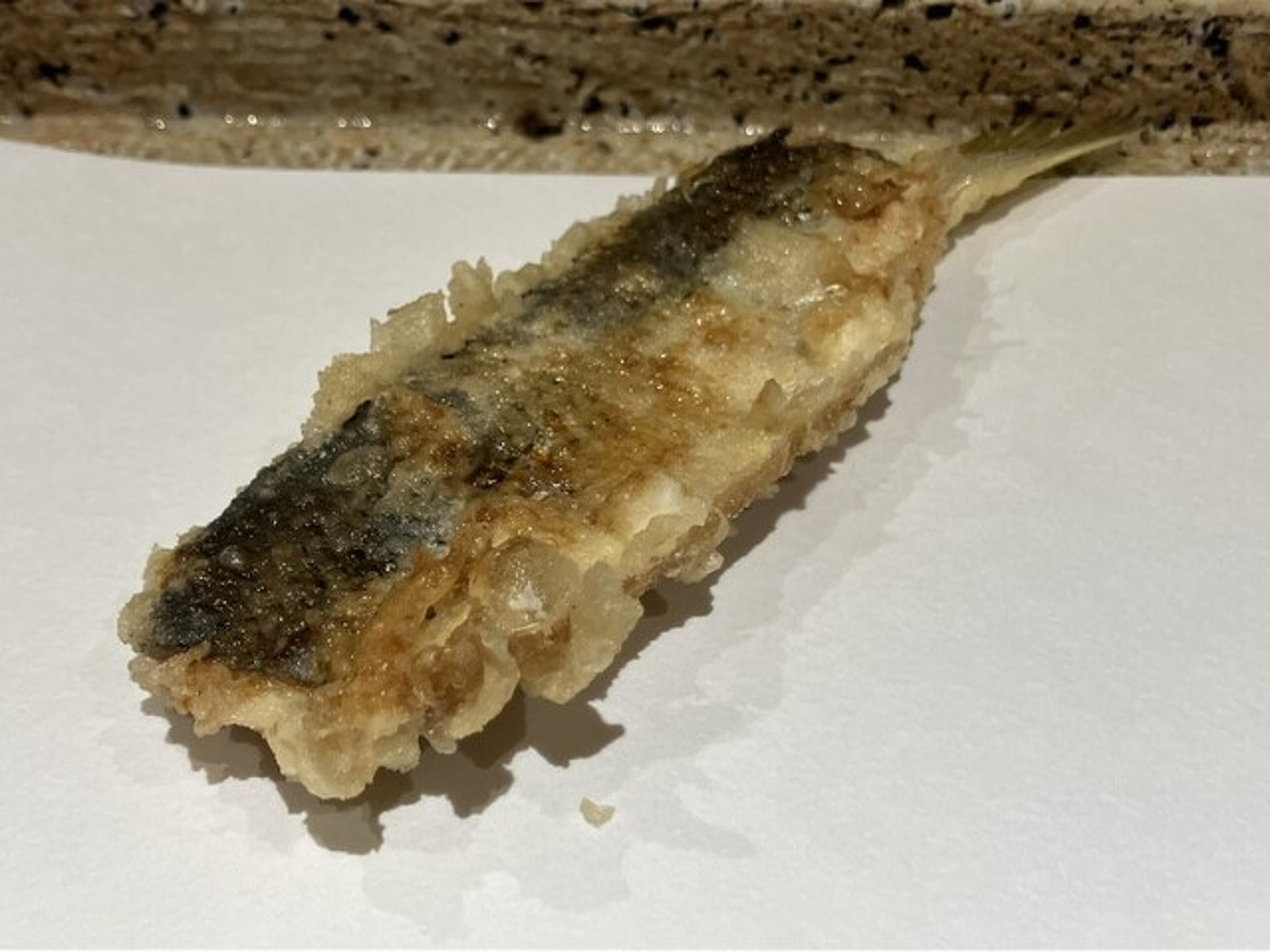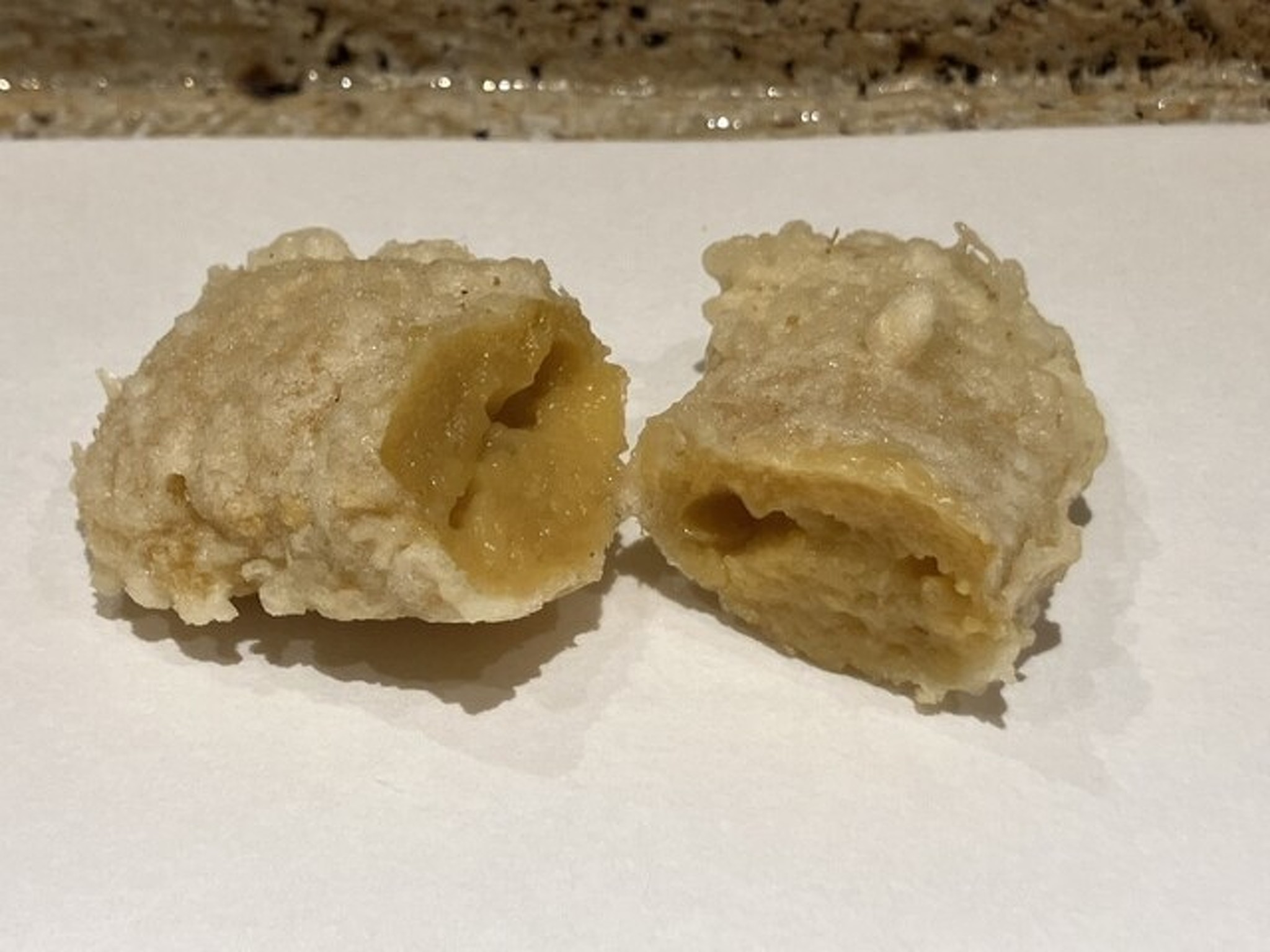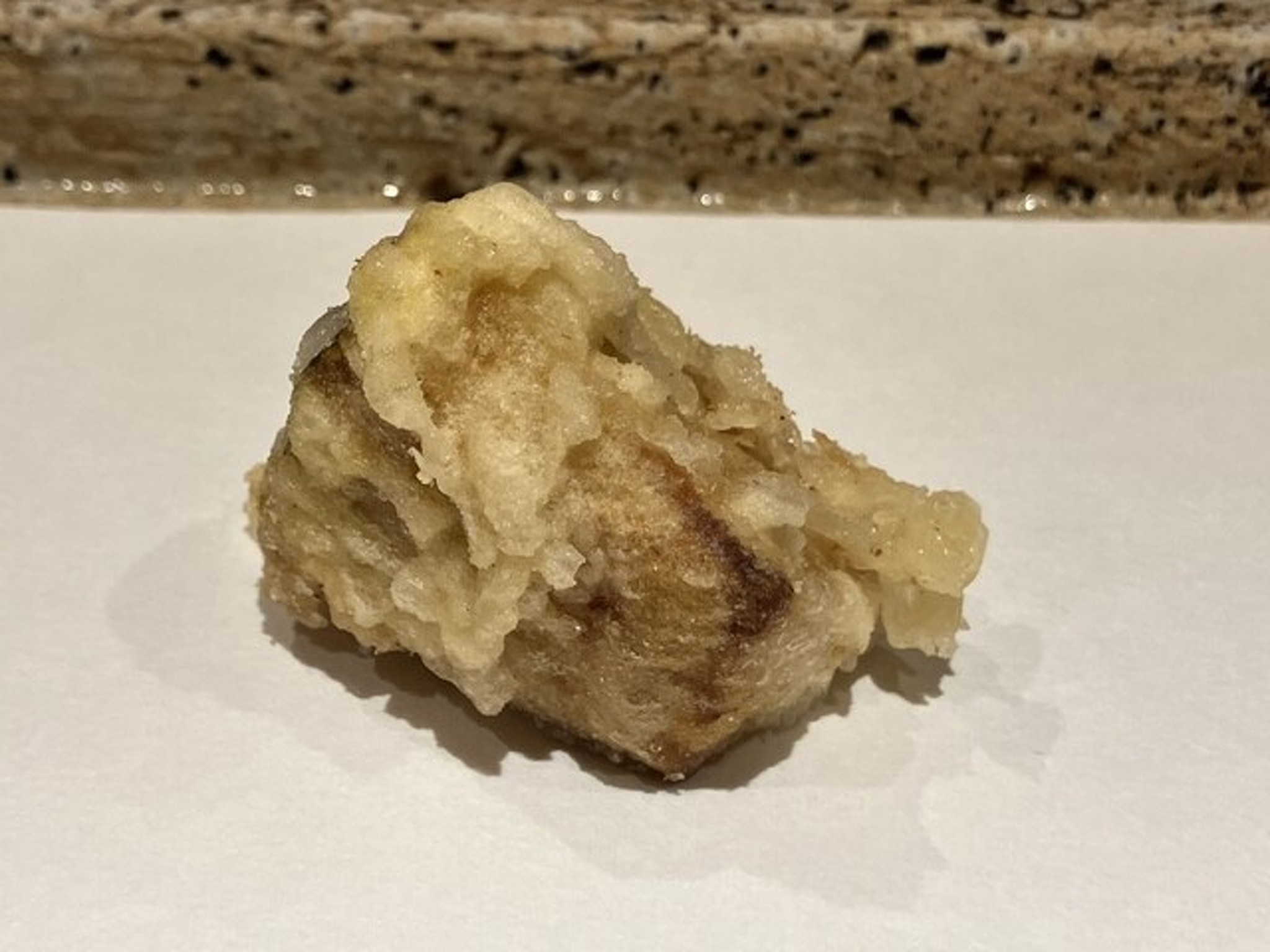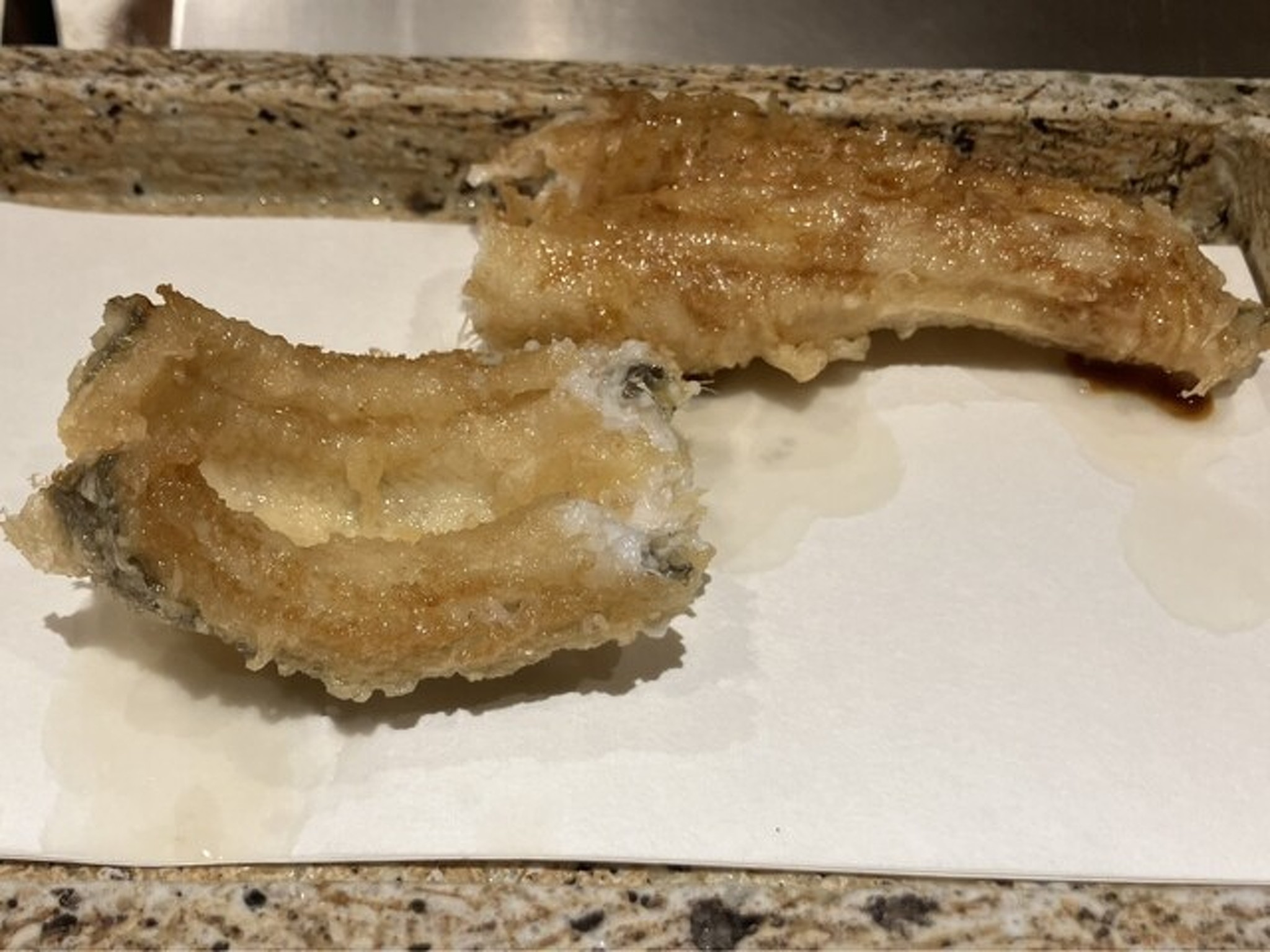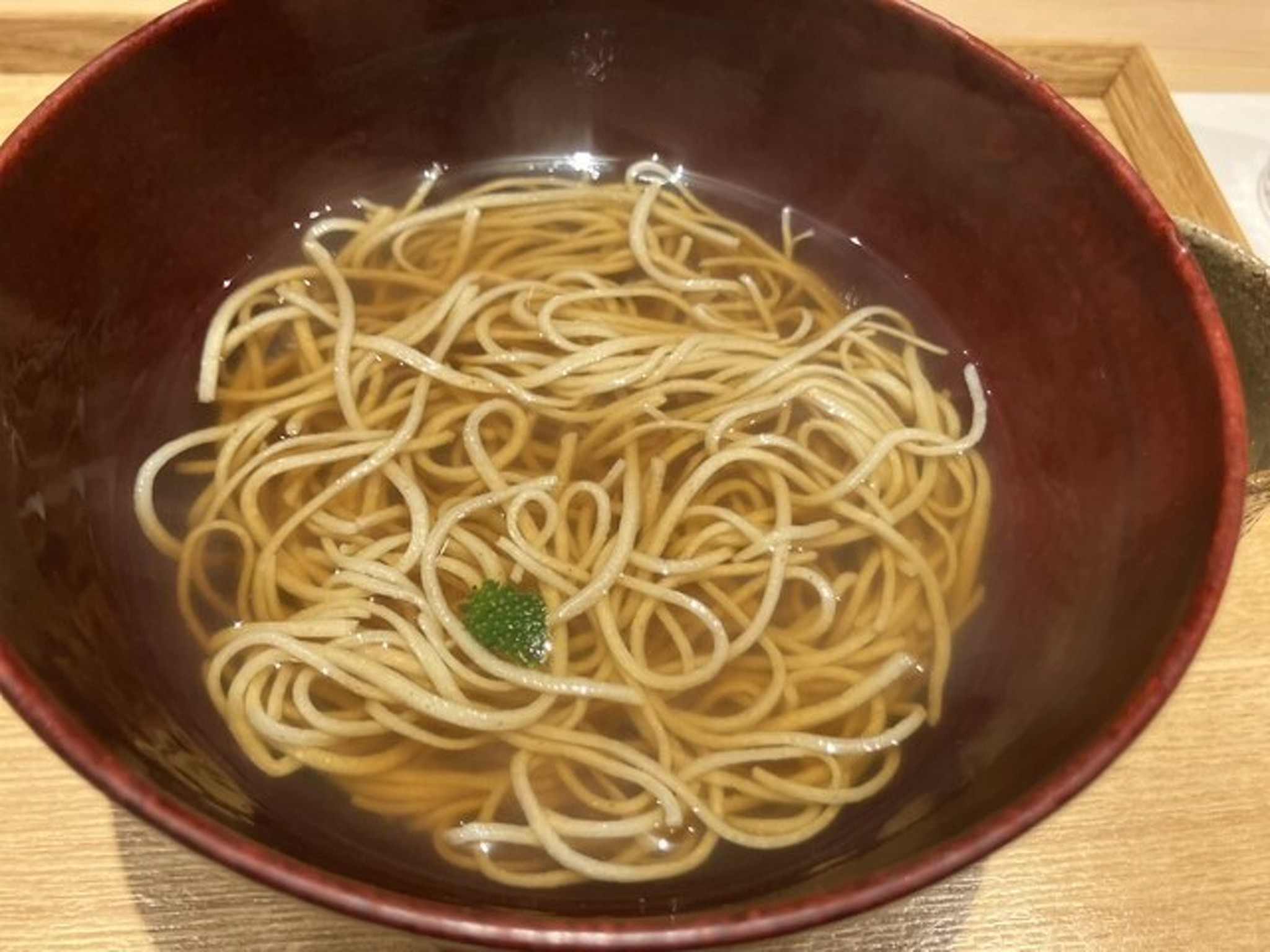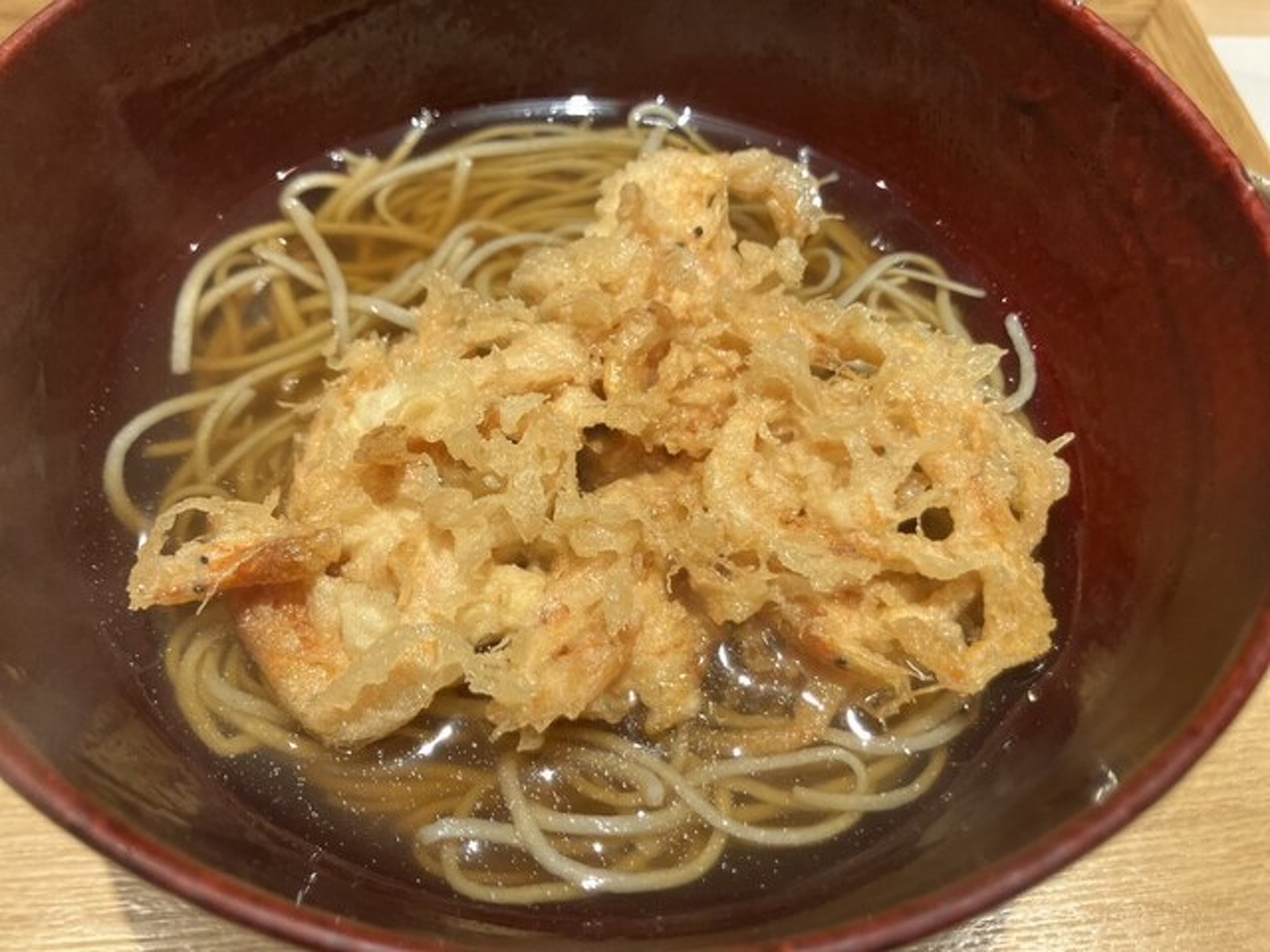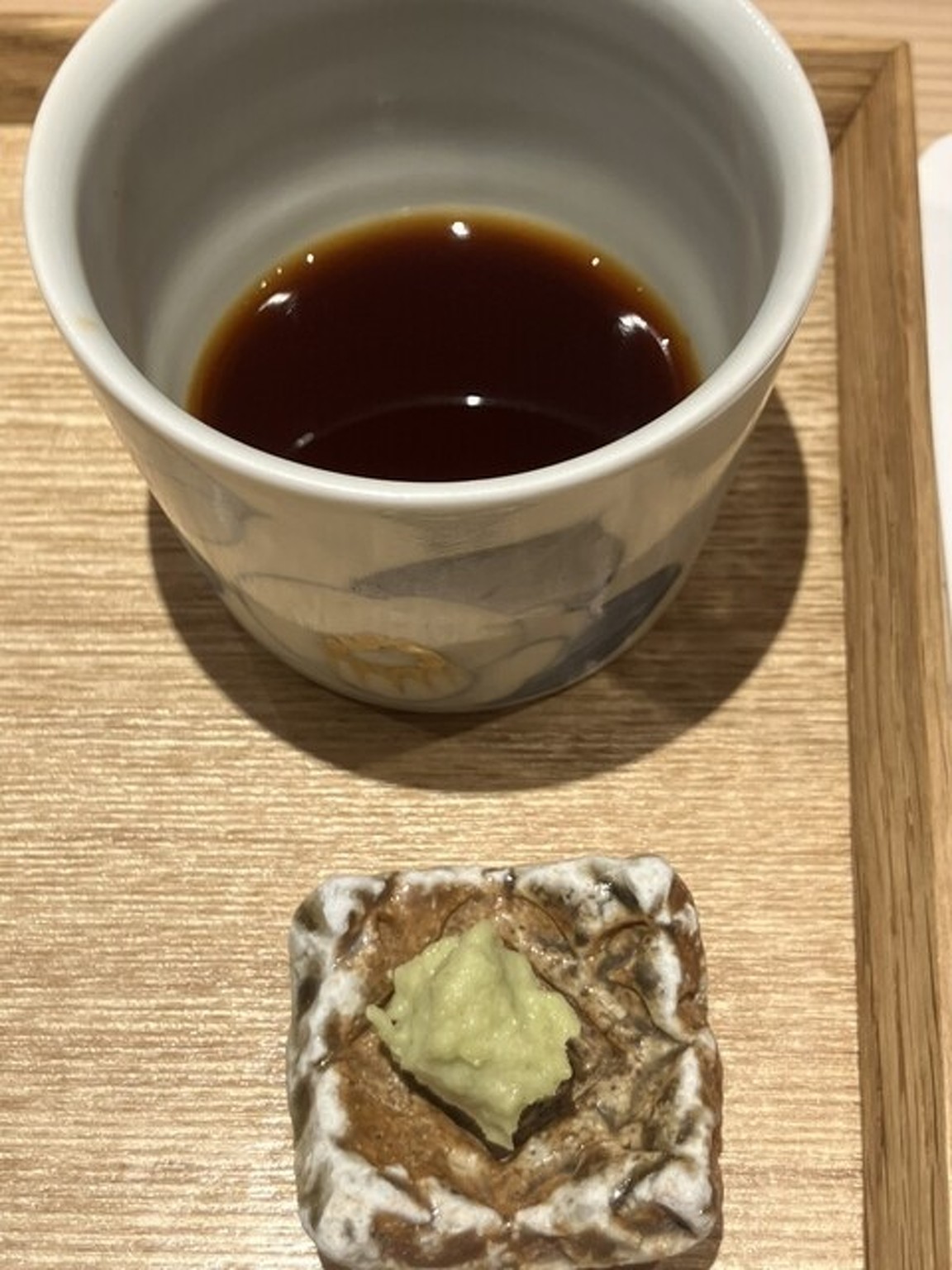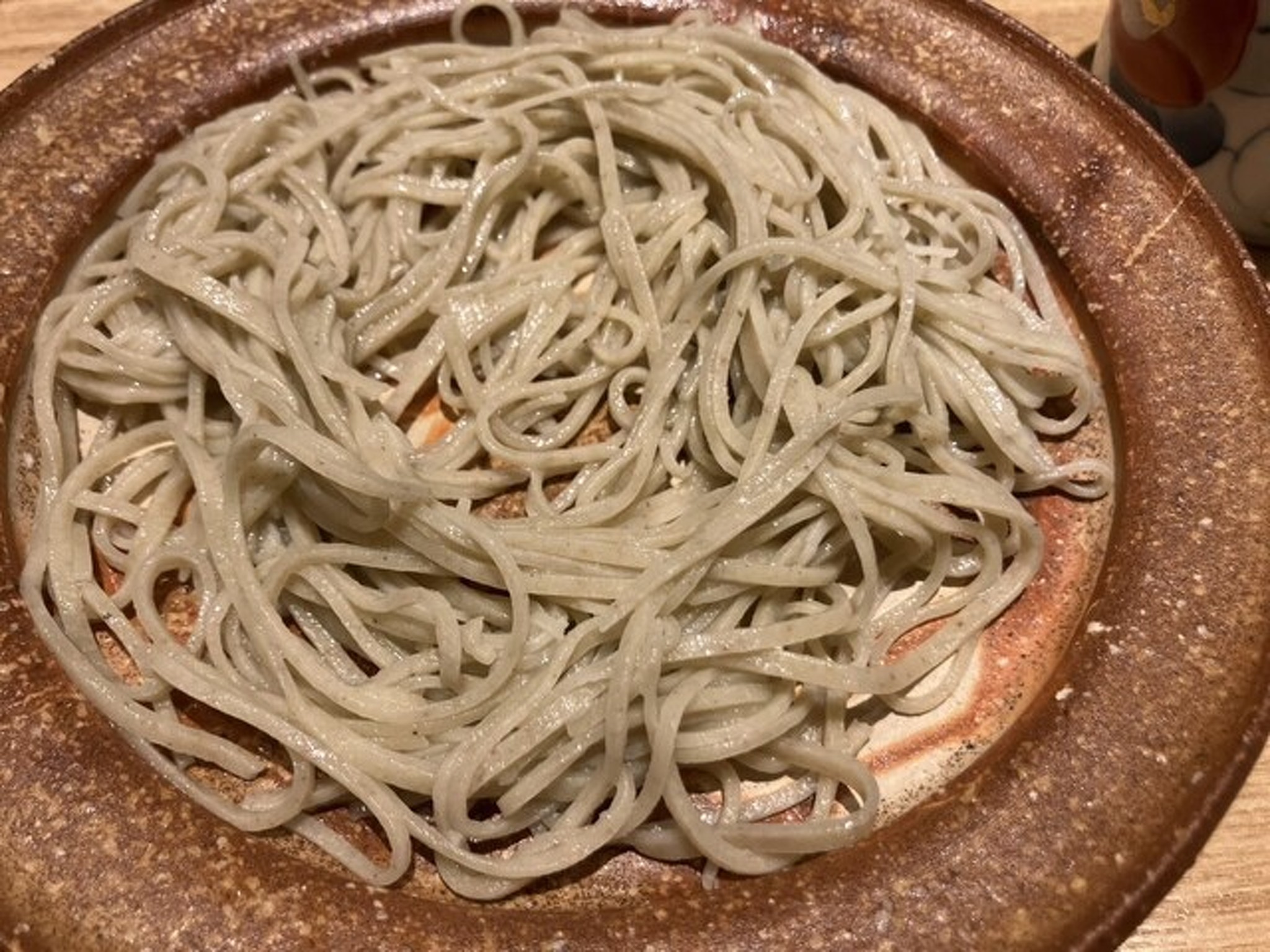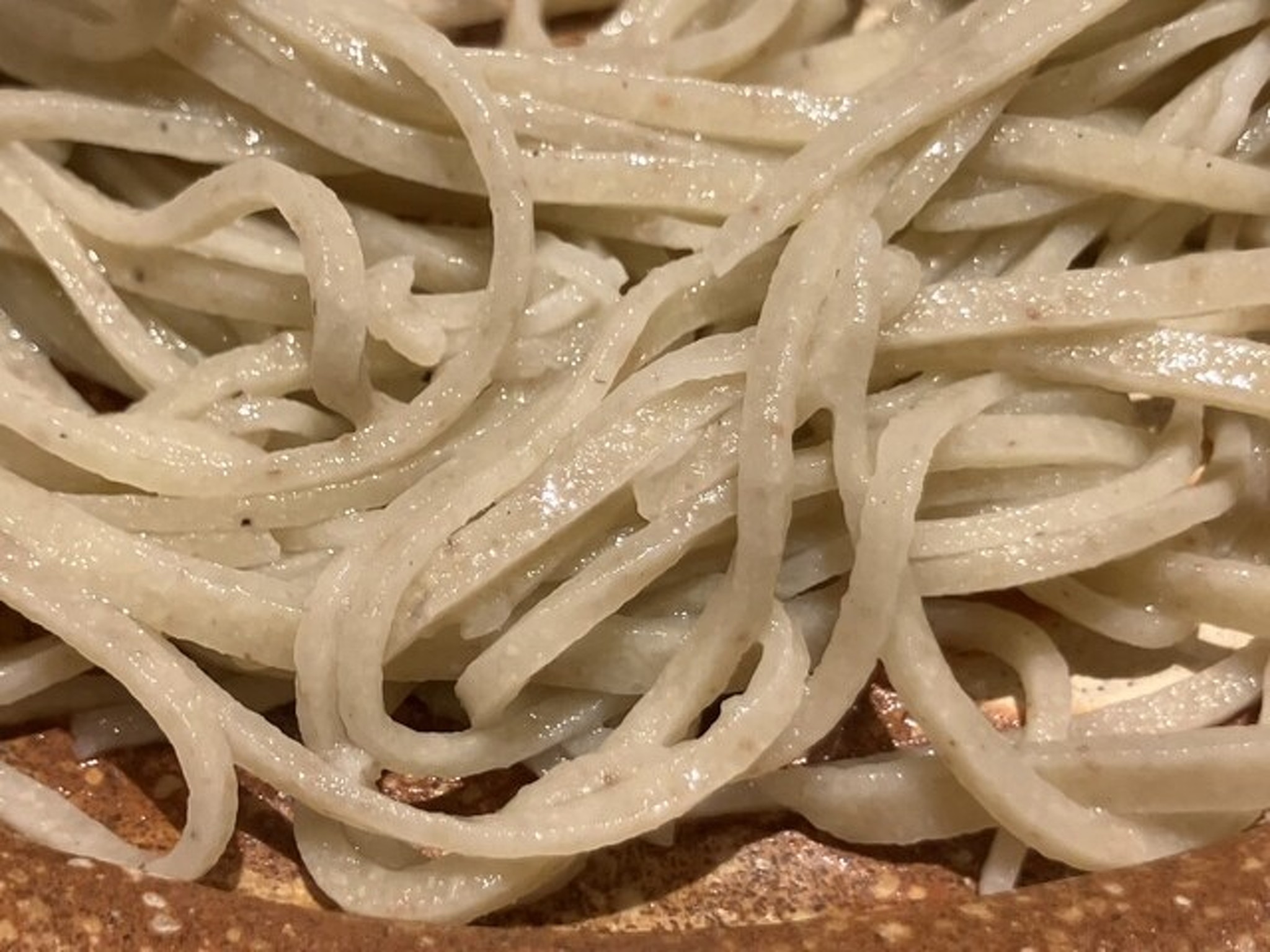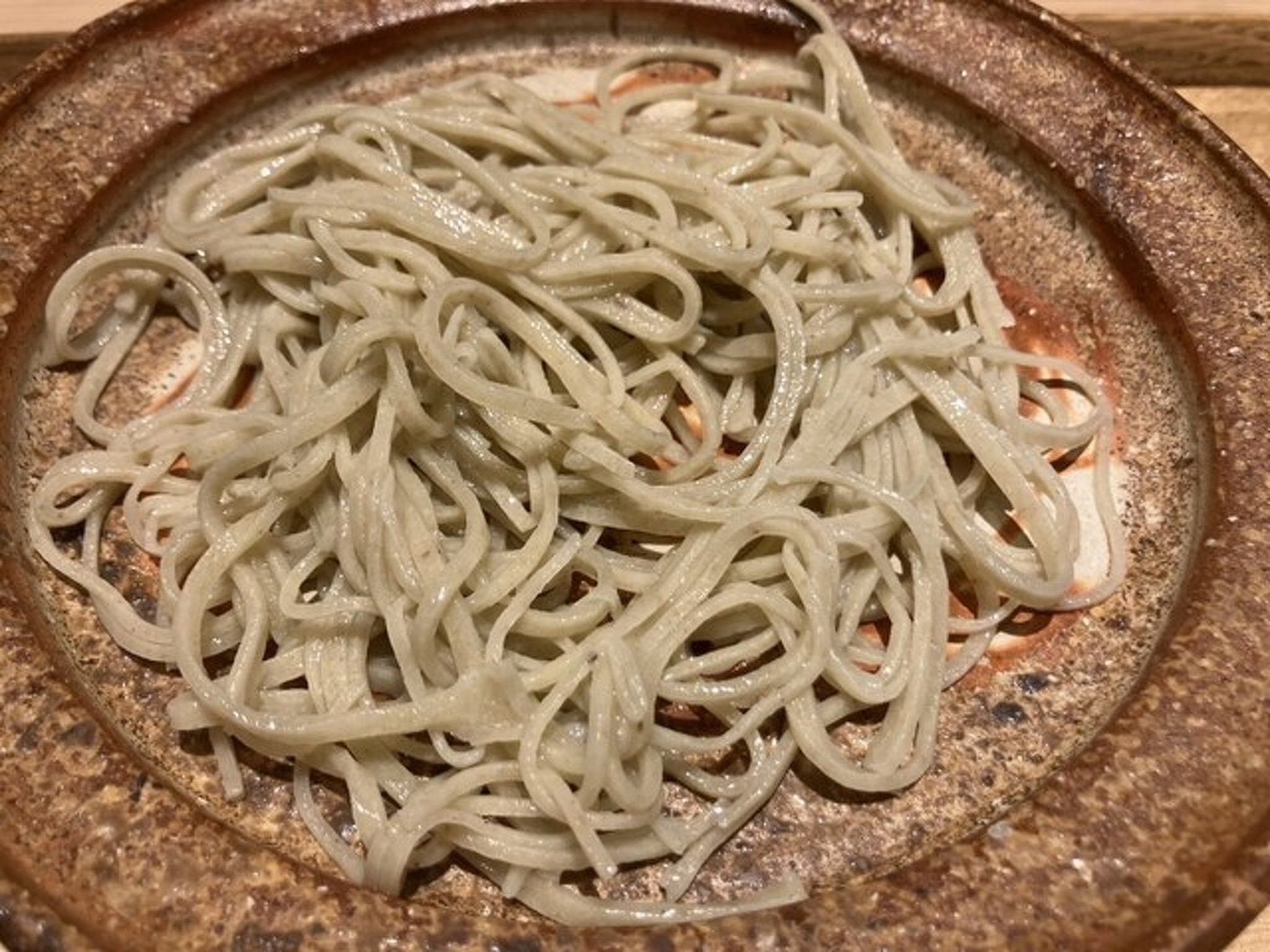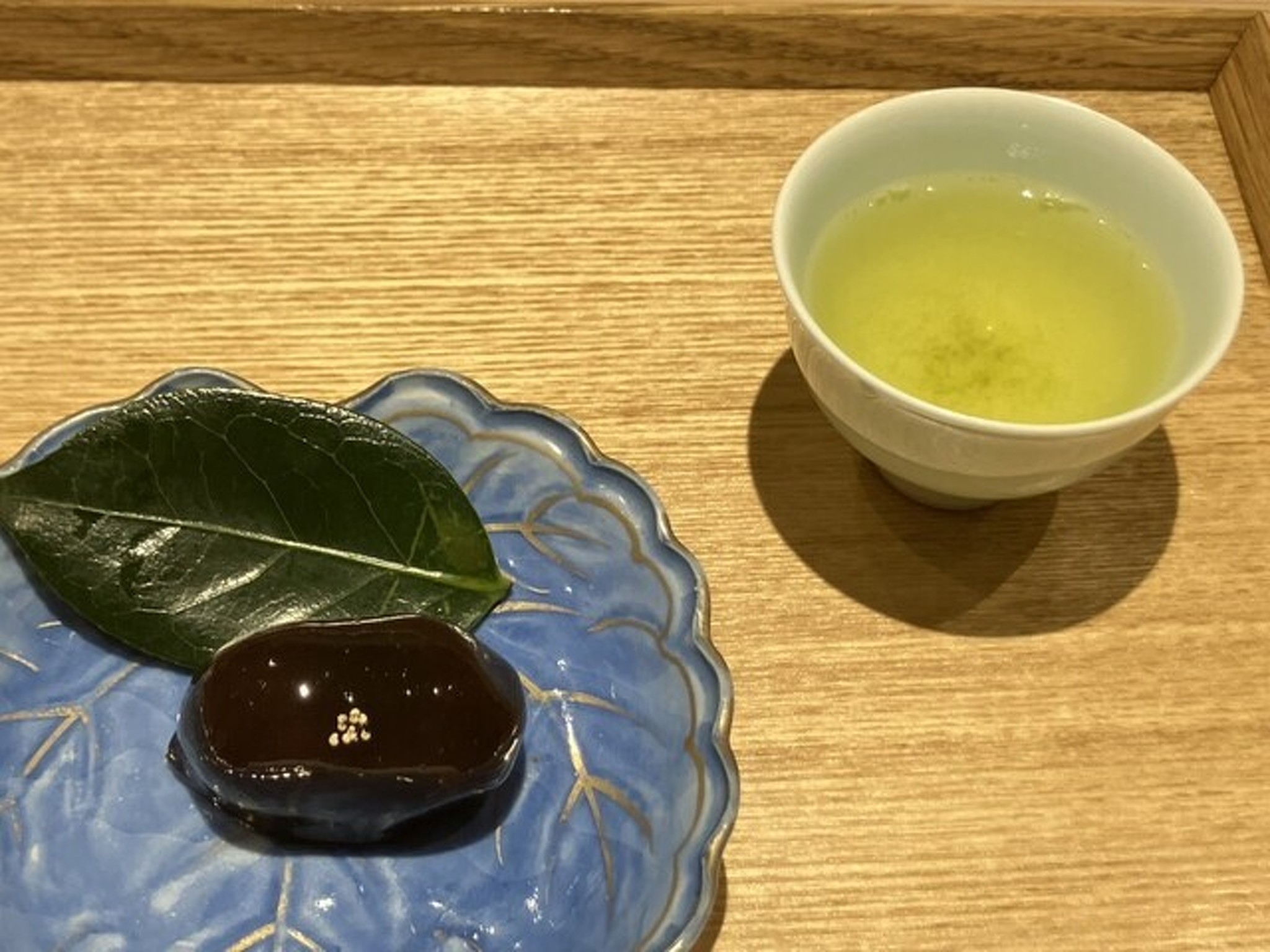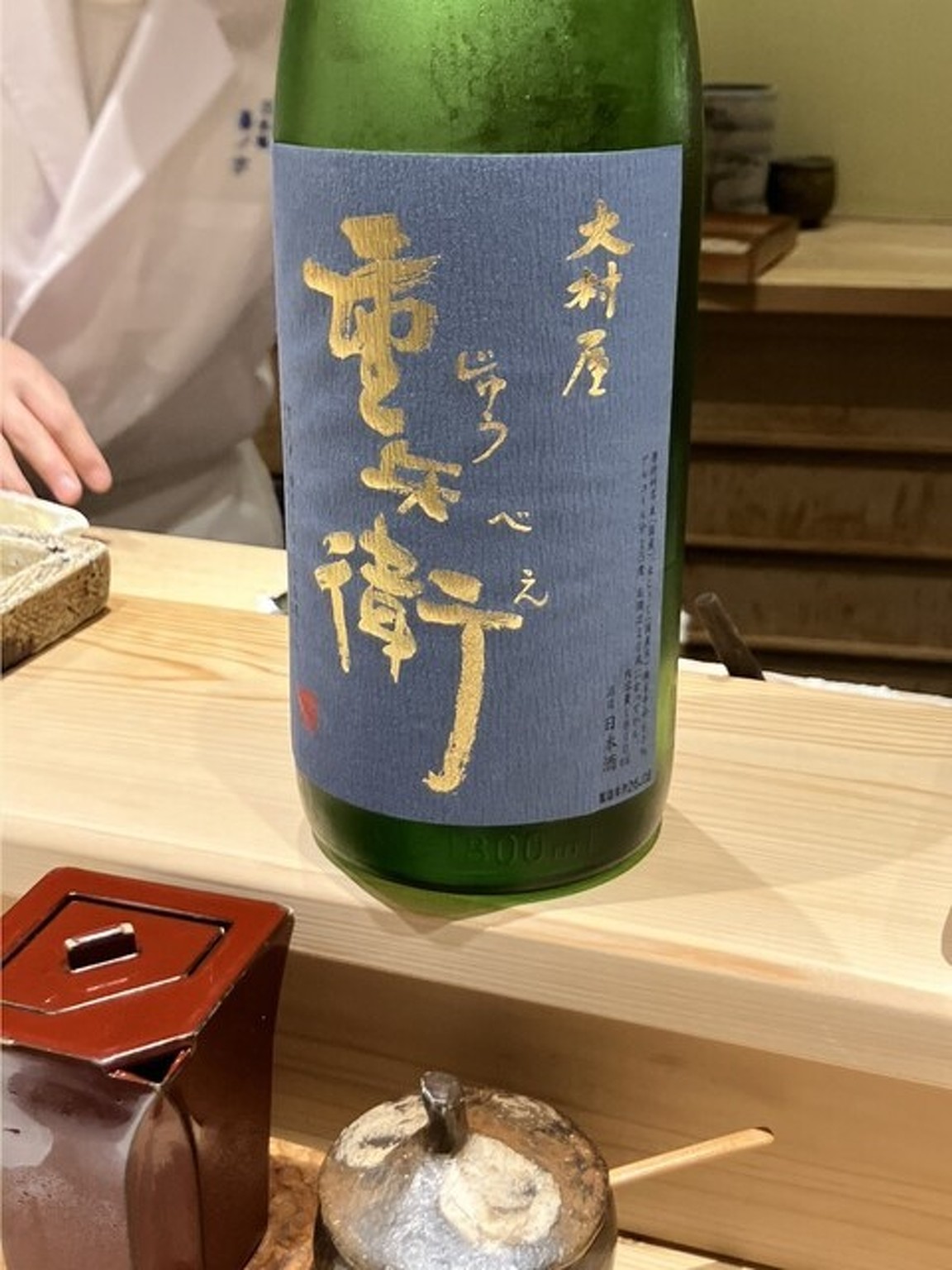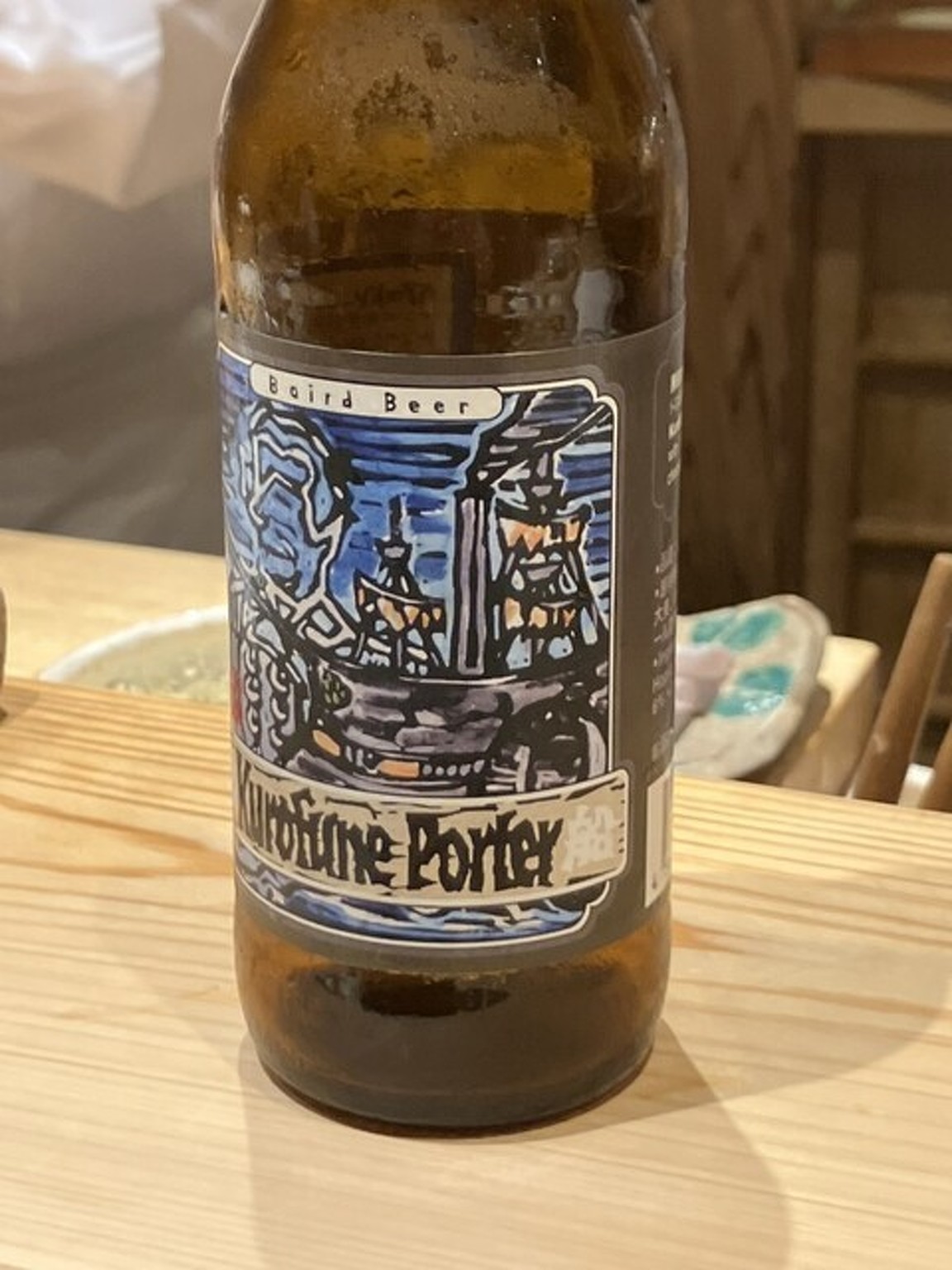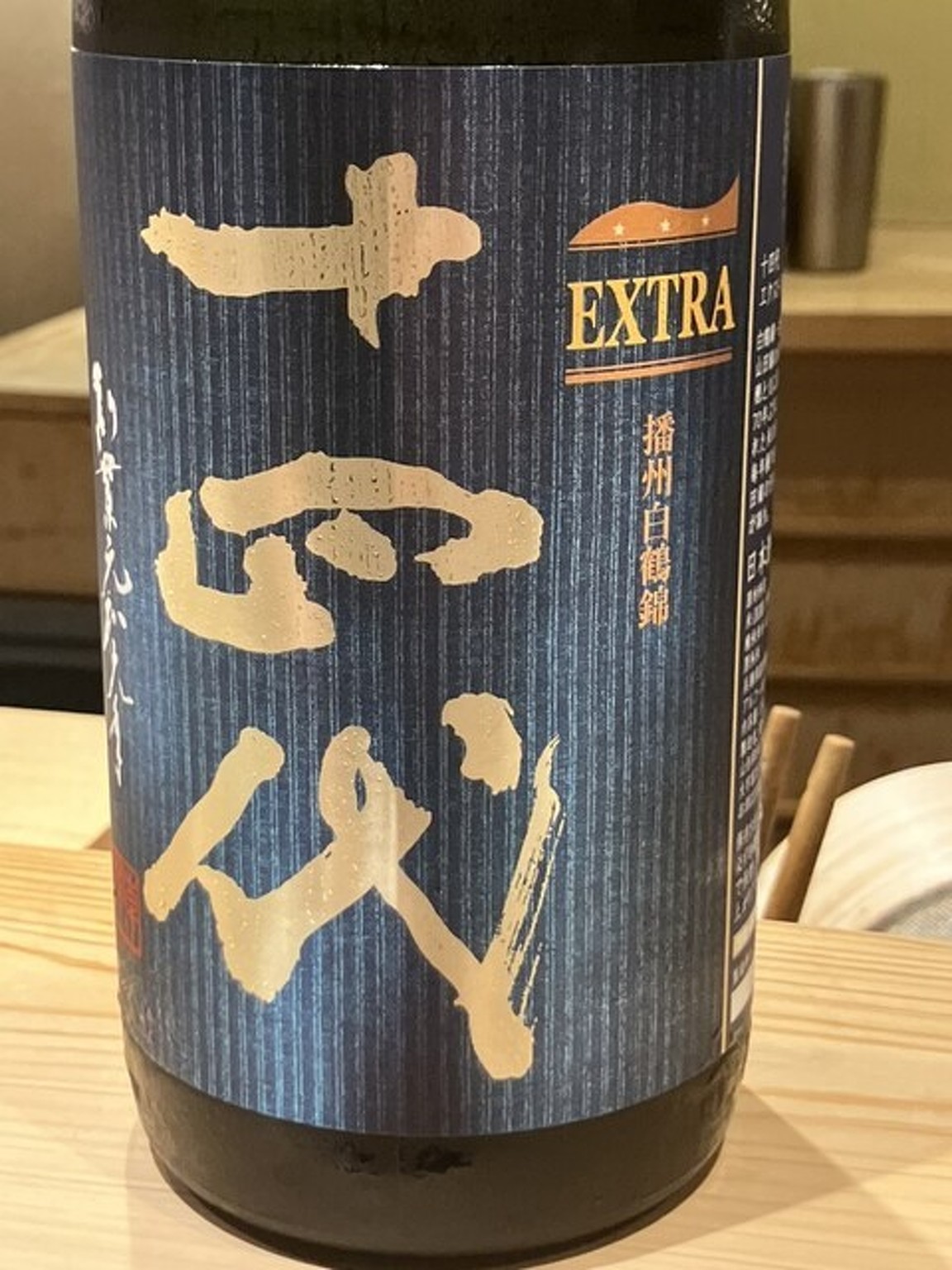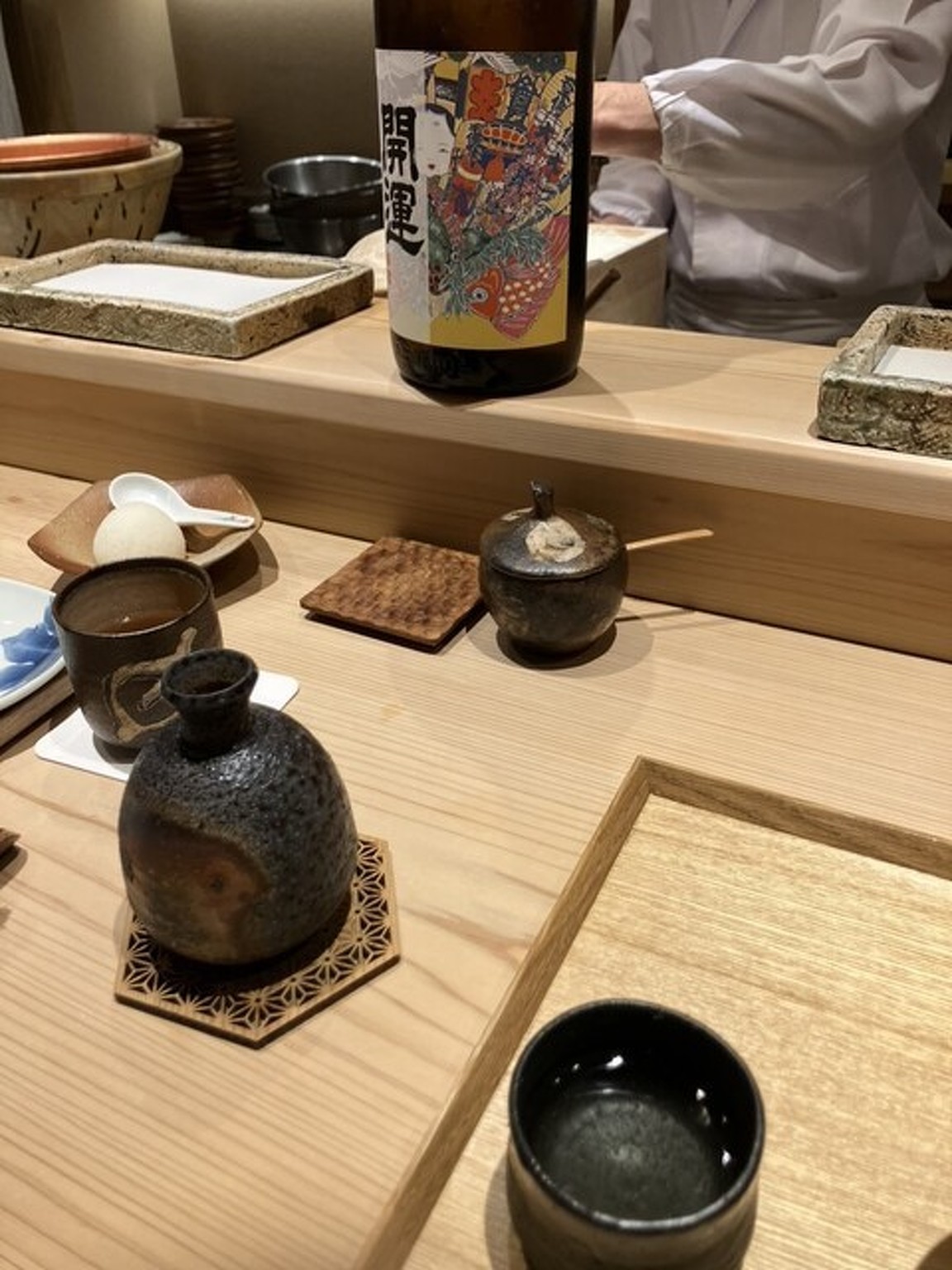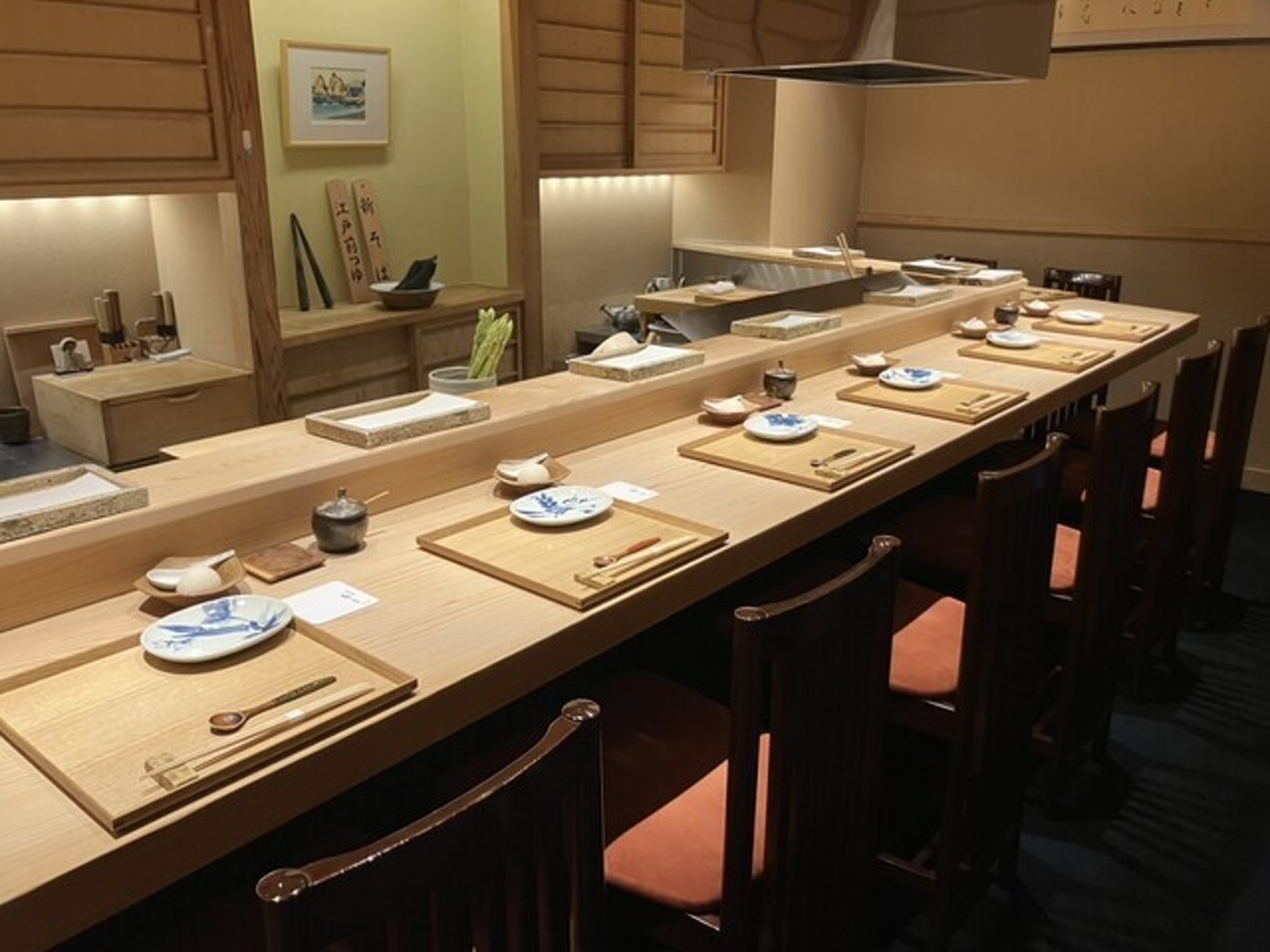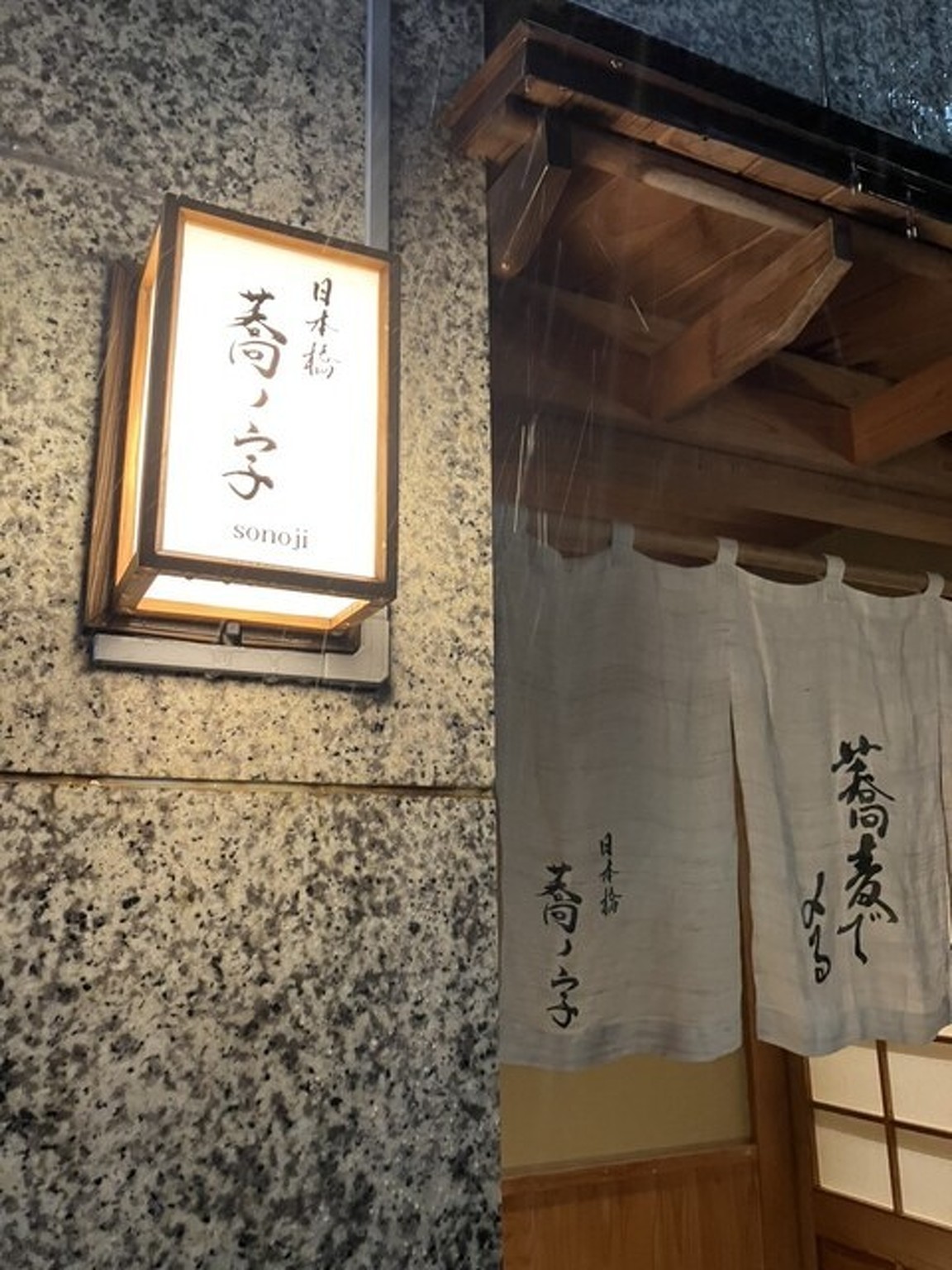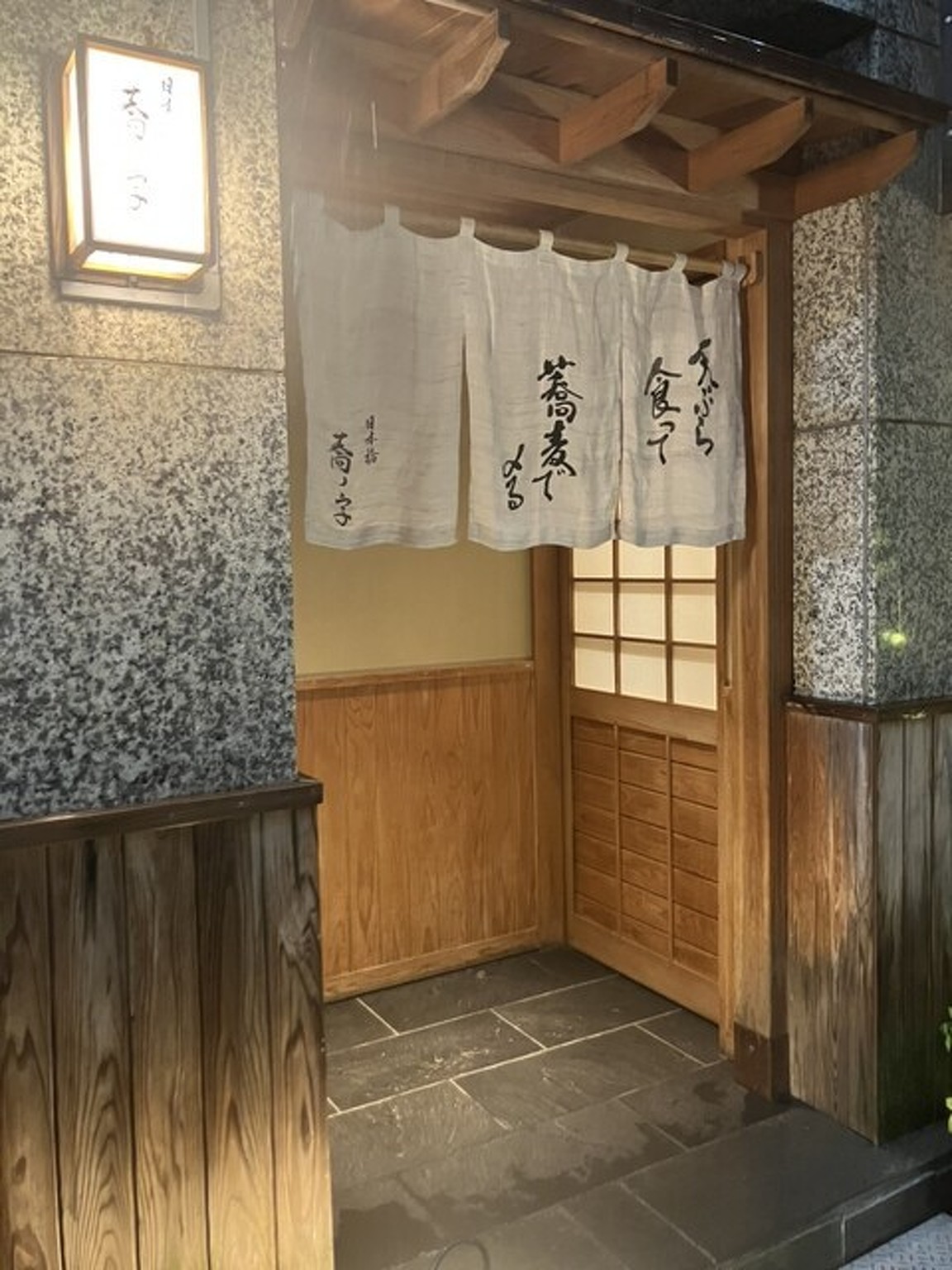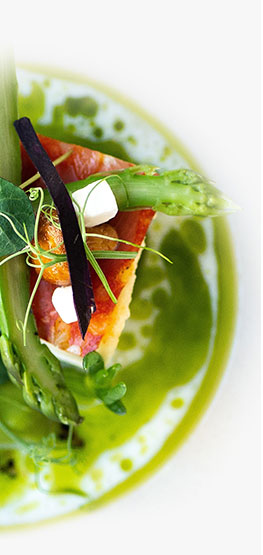
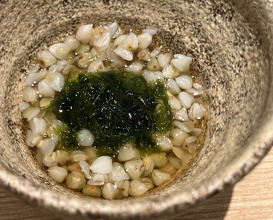
A short walk from Ningyocho Station, this is a tempura restaurant.I was invited to visit. Seated at the counter.Even as someone with limited tempura experience, I could easily tell that this tempura is exceptional. It features an ultimate thin batter. Only the minimum amount of flour is dusted, and just enough batter is applied before frying.I can infer that this technique has several effects:- The ingredients and batter become one, both in flavor and texture.- The thin batter allows for precise control over the timing of moisture extraction from the ingredients.- As moisture is drawn out, the umami is captured by the batter, allowing it to absorb the flavors of the ingredients.- The heat from the oil easily penetrates the ingredients, creating a light Maillard reaction on the surface that enhances flavor.- The light and crispy batter creates a harmonious experience when chewed, blending with the ingredients.- The main focus is on the ingredients, while the batter plays a supporting role to enhance them.- Salt and dipping sauce can easily reach the ingredients, boosting their flavor, whereas a thick batter would shield them.- The fish is cooked evenly, breaking apart beautifully and deliciously when chewed.- The vegetables are also cooked thoroughly, activating their flavors.In other words, tempura that is heavily battered and steamed, like at other restaurants, results in ingredients that only reach about 100°C, giving them a steamed flavor. In contrast, the thin batter here exposes the ingredients to temperatures much higher than steaming, closer to the frying oil temperature, resulting in flavors that can only be achieved at those higher cooking temperatures. This isn't a matter of which is better; it's simply a discussion of the desired flavor direction. Each method has its own merits.Despite the thin batter, the ingredients used for frying are extraordinary. How can kohada (young sardine) be made into tempura and taste so good? How can murasaki uni (purple sea urchin) be fried and still be delicious? Normally, the uni would dissolve in the frying oil and spread out, and its unique odor would emerge as it warms up, not to mention that the uni itself would likely lose its shape. Yet, this tempura of murasaki uni has overcome those challenges and is simply amazing.As I ponder all of this, I realize how deep the world of tempura truly is.On this day, I had:- An omakase course- A little Japanese sakeThe total bill was about JPY 40,000.The course included the following:【Appetizer】(1) Soba buckwheat (Nikko) + Aonori seaweed (Hamana Lake) in a light broth【Soup】(2) Clams (Aomori Ogawara Lake) + Donko shiitake mushrooms (Shizuoka)【Fried Part 1】(3) Normal roll shrimp (Amakusa)(4) Twisted roll shrimp (Amakusa)(5) Salted roll shrimp heads (Amakusa)(6) Roll shrimp heads with dipping sauce (Amakusa)(7) Whiting (Tokyo Bay)(8) Mud squid (Tokyo Bay)(9) Asparagus tips (Iwata)(10) Asparagus stalks (Iwata)(11) Gourmet eggplant (Mishima)(12) Fluffy eggplant (Kakegawa)【Noodle Dish】(13) Soba dough (Nikko)【Fried Part 2】(14) Black figs (Fuji)(15) Tenryu sweetfish (Iida)(16) Spanish mackerel (Yaizu)(17) Turbo snail (with soft roe) (Shimoda)(18) Kohada (Amakusa)(19) Murasaki uni (Hokkaido)(20) Kanaya pumpkin (Shimada)(21) Anago (Tsushima)【Main Dish: Soba (Nikko)】(22) Sakura shrimp tempura soba(23) Assorted soba + extra serving of assorted soba【Dessert】(24) Kuro Dainyu from Shimizuya, served with green tea.Wow, it was delicious. Simply wonderful. The soba was not as impressive, perhaps due to the season (it was new soba), but the tempura was unique, showcasing distinct techniques that made for an enjoyable experience.I have many more thoughts and reflections I’d like to share, but I’ll stop here to avoid an all-nighter. That said, it was a meal that sparked my curiosity and made me contemplate various aspects while eating, making it a truly enjoyable experience.
We use cookies on this site to enhance your user experience.