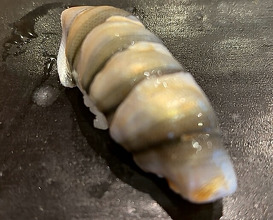
During a two-night, three-day culinary journey in Fukushima Prefecture, I visited several renowned restaurants including Marushin in Koriyama and Naraki, as well as the prestigious Namiki's Rantei and its annex, Rantei - Bichian. Still buzzing from the exquisite meals, I left Koriyama before hotel check-out to head to Tanakura, a castle town that thrived during the Nara and Heian periods as the cultural center of Fukushima and later became a significant area during the Edo period under the Tokugawa shogunate, connecting the coastal region of Iwaki to Aizu.My destination was Koban Zushi, a popular sushi restaurant that frequently wins Tabelog Awards and is listed among the top 100 sushi spots on Tabelog. It has also been featured in Gault&Millau, making it a representative of Edomae sushi in northern Japan, attracting sushi lovers from all over the country. Behind the counter was the skilled owner, Shingo Wachi, assisted by his wife Yayoi and their son Yoshi.I took my seat at the end of the counter and began with a refreshing draft beer, "MASTER'S DREAM." The meticulously maintained beer tap produced a beautifully foamy brew that was delightful. I opted for the usual omakase course, starting with a vinegar dish made from freshly picked water shield and sweet peas from Ura-Bandai, which stimulated my appetite with its pleasant acidity. Next, I savored my favorite dish, tender octopus prepared with a soft texture yet a satisfying chew.The sashimi included Makogarei (flatfish) and thick Hokkigai (surf clam), served with sudachi (Japanese citrus) and a special soy sauce made from the liver of the Makogarei, along with freshly grated wasabi and natural salt. I also enjoyed grilled Hokkigai intestines and small clams, and a steamed dish featuring a generous amount of abalone from Tokiwa, topped with a rich abalone liver sauce. I relished the high-quality sea urchin from northern Sanriku, and dipped the squid sashimi into the remaining sea urchin in its shell.I also tried the natural sea cucumber, known as "hoja," which is often referred to as the "pineapple of the sea," and the evolved ankou liver, paired with finely chopped Nara pickles for a textural contrast. This was enjoyed alongside the century-old Kijo sake from Niida Honke. The first half of the meal concluded with grilled anago (conger eel) served with cucumber, and the liver and stomach were prepared separately as sake appetizers.The second half began with four pieces of shinko (young fish), followed by sweet sea bream, fragrant akagai (red clam) with hidden cuts for texture, and beautifully garnished kasugo (young sea bream). I also had red meat from natural summer tuna, boiled kuruma shrimp, seasonal maaji (horse mackerel), and well-prepared boiled clams. The meal included gunkan sushi with sea urchin, mehakari (shiny fish) from Tokiwa, and anago prepared with salt and a reduction.I finished with iwashi (sardine) dumpling soup, a strong wasabi-infused kanpyo roll, two types of tamago (egg), and refreshing white peaches and cherries for dessert, accompanied by tea. Throughout the meal, I enjoyed a selection of local sake, including "Ikusui Uma," "Gakki Masamune" (naka-dori), "Aizu Chujo" Junmai Ginjo Hattan Nishiki, "Niida Honke" 100-Year Kijo Sake 2025, "Gakki Masamune" Daiginjo Kuroko Naka-dori, and "Hiroki" Ginjo, which made for a delightful experience.As I left, I received a warm farewell from the Wachi family. My first encounter with Shingo Wachi was 17 years ago when Koban Zushi was still a hidden gem. I had spontaneously driven north on the Tohoku Expressway from Urawa to visit. Now, Koban Zushi in Tanakura has established a solid reputation among sushi enthusiasts nationwide. After eight years of rigorous training under the previous owner of Koban Zushi in Sendai, Jin Maruko, Shingo Wachi was finally allowed to branch out on his own. He and the previous owner, Yukio Maruko, were fellow disciples.The rice, a fundamental element of sushi, is made with a blend of salt and white vinegar from the original Koban Zushi, with a touch of red vinegar added, using rice that he mills himself the day before. Among the sushi I enjoyed, the shinko, kasugo, maaji, and akagai stood out as exceptional. Koban Zushi is a true gem in the Tohoku region, and the dedicated sushi restaurant in Tanakura is still going strong.
We use cookies on this site to enhance your user experience.