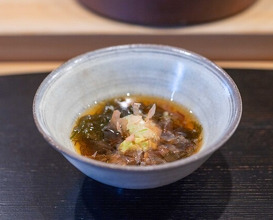
2,594 characters ★Omakase Course (JPY 31,460, tax included) Duration: Approximately 2 hours (including extras)I traveled from Tokyo to Fukui Prefecture.This restaurant (4.49) is run by Chef Tetsuya Tsukada, who was born in 1982 and hails from Fukui. He honed his skills at Sushi Zen in Sapporo (3.69) and took over as the second-generation chef in 2013. I found an available slot through the online reservation site Table Check and decided to visit.Overall, I was more impressed by the appetizers that showcased "Fukui terroir," rating them around 4.5. However, the nigiri did not exclusively feature local fish, as ingredients from all over Japan were presented. Out of the 15 pieces (including extras), only 3 were from Fukui, and even when expanding to the Hokuriku region, there were only 6.This lack of local seafood compared to Tokyo sushi restaurants that handle seafood from across Japan made me feel that the techniques at award-winning urban sushi spots might be superior.The restaurant has a parking lot with space for about 10 cars, paved with asphalt. At 11:51 AM (opening at 12 PM), the doors opened. There are 9 seats at the straight counter in front of the sushi preparation area, which feels a bit cramped for a regional city. According to Tabelog, there were 8 seats, so I assume they added more for this new location.They provided a towel, paper coasters, toothpicks, and chopsticks on a black tray. The restaurant is managed by a team of five, including four men and one woman. The restrooms are gender-separated TOTO facilities with a 2023 model Neorest.I enjoyed the following dishes, and the total bill came to JPY 40,500.• Omakase Japanese Sake (half servings)0. Yawagi Water (iced cold water)1. Jozan Gokushizuku Nama from Jozan Brewery, Fukui City, Fukui Prefecture2. Hakutake Sen Junmai Ginjo Natsumushi from Yasumoto Brewery, Fukui City, Fukui Prefecture3. Eiheiji Hakuryu Junmai Ginjo Natsu-kiri from Yoshida Brewery, Eiheiji Town, Fukui Prefecture4. Jozan Junmai Karakuchi Chou from Jozan Brewery, Fukui City, Fukui Prefecture• Omakase Course (JPY 31,460)~ Appetizers ~01. New Mozuku Vinegar from Tsuruga02. Fukui Sourced Makogarei Sashimi with Fresh Wasabi, Sudachi, Salt, Soy Sauce, and Grated Ponzu03. Fukui Sourced Lightly Vinegared Aji with Noto Sourced Torigai, Torigai Liver Paste, Fresh Wasabi, and Grated Ginger04. Fukui Sourced Hairy Crab Chawanmushi05. Hokkaido Sourced Ankimo with Noto Sourced Simmered Tako and Fresh Wasabi06. Grilled Salted Tachiuo from Kagoshima~ Nigiri ~07. Ishikawa Sourced Ara08. Himi Sourced Isaki09. Wakayama Kushimoto Sourced Shima Aji10. Fukui Sourced Surume Ika with Sudachi Salt11. Yamagata Sourced Hon Maguro Akami12. Hokkaido Sourced Tokishirazu13. Ishikawa Sourced Sweet Shrimp14. Aburi Hokkigai from Notsuke, Hokkaido with Sudachi Salt15. Northern Islands Sourced Bafun Uni Gunkan16. Yamagata Sourced Hon Maguro Chutoro17. Chiba Sourced Kohada18. Miso Soup with Grilled Nori19. Simmered Anago from Kagoshima20. Kanpyo Maki21. Thick OmeletteExtras: Chiba Sourced KinmedaiExtras: Himi Sourced IshidaiExtras: Kanazawa Sourced Botan Ebi22. Matcha BlancmangeHere are my impressions of the dishes, with individual ratings in brackets, and prices displayed include tax:【4.7】 New Mozuku Vinegar from TsurugaThe dish consists of mozuku, grated nagaimo, fresh wasabi, and katsuobushi. The mozuku, a thinner variety, is exceptionally delicious with a perfect crunch and vibrant umami flavor. The seasoning is refined and sophisticated, with a gentle acidity.【4.4】 Fukui Sourced Makogarei SashimiThe makogarei was freshly prepared the previous morning, retaining a lively texture and rich flavor. It rivals the quality of joshikari and left me astonished by Fukui's terroir.【4.1】 Fukui Sourced Lightly Vinegared Aji with Noto Sourced Torigai, Torigai Liver Paste, Fresh Wasabi, and Grated GingerI was pleasantly surprised to enjoy the liver paste as part of the dish.【4.6】 Fukui Sourced Hairy Crab ChawanmushiThis chawanmushi was generously filled with crab meat and topped with crab miso, reaching a level comparable to that of a professional Japanese restaurant. The Fukui hairy crab is even tastier than the Echizen crab I’ve had in Tokyo.【4.2】 Hokkaido Sourced Ankimo with Noto Sourced Simmered Tako and Fresh WasabiThe ankimo was rich and melting, while the simmered tako had a good texture. Interestingly, while ankimo is also caught in Hokuriku, the liver there is said to be clearer.【3.5】 Grilled Salted Tachiuo from KagoshimaThis tachiuo is neither from a terroir nor a branded source like Takeoka (Chiba Prefecture). The boneless fillet is easy to eat, but it lacks sufficient fat and has a slight odor.【3.9】 Ishikawa Sourced AraThe crunchy sweet vinegar ginger (gari) uses the bud part, balancing saltiness and sweetness well. The sushi rice is cooked a bit firmer, leaving a core in the mouth, with a gentle acidity. However, the large pieces of fish seem mismatched with the smaller sushi rice.【3.8】 Himi Sourced IsakiFor Isaki, Kyushu might be stronger than Hokuriku.【3.8】 Wakayama Kushimoto Sourced Shima AjiThe terroir Aji left a better impression.【3.8】 Fukui Sourced Surume Ika with Sudachi SaltTokyo's nigiri, which incorporates more cuts to make the squid more tender, is preferable.【3.7】 Yamagata Sourced Hon Maguro AkamiThis summer tuna has a refreshing acidity.【4.0】 Hokkaido Sourced TokishirazuNot related to terroir, but it had good fat content and I preferred it over chutoro.【3.9】 Ishikawa Sourced Sweet ShrimpThe texture and sweetness of the shrimp were far superior to those I had at local izakayas.【3.7】 Aburi Hokkigai from Notsuke, Hokkaido with Sudachi SaltThe Hokkigai I had in the city seemed larger.【4.0】 Northern Islands Sourced Bafun Uni GunkanThis was of sufficient quality for a JPY 31,460 course.【3.9】 Yamagata Sourced Hon Maguro ChutoroAs expected for summer tuna, the fat content is less than in winter.【3.7】 Chiba Sourced KohadaI prefer a milder vinegared version.【3.6】 Miso Soup with Grilled NoriIt was lightly salted and easy to drink.【3.6】 Simmered Anago from KagoshimaEven within Kyushu, the Tsushima sourced ones are better.【3.9】 Kanpyo MakiThis traditional thin roll was perfectly delicious.【3.8】 Thick OmeletteFluffy texture with more umami than sweetness.【3.7】 Chiba Sourced KinmedaiThe Kinmedai I had in the city seemed to have better fat content and flavor.【3.9】 Himi Sourced IshidaiWhile eastern Ishidai is said to be more fishy compared to the west, Himi had no off-flavors.【3.9】 Kanazawa Sourced Botan EbiWhile it doesn't compare to the branded Haboro sourced ones, the Toyama shrimp from Hokuriku is also delicious.【4.1】 Matcha BlancmangeThis dessert had a rich, creamy texture, and the balance with the matcha sauce was excellent. It surpassed the typical sweets found in sushi restaurants.
We use cookies on this site to enhance your user experience.