We use cookies on this site to enhance your user experience.

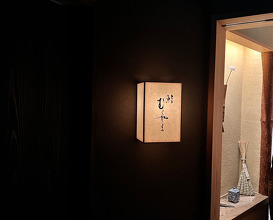
Sushi Murayama in Ginza is one of those rare counters where precision, seasonality, and emotion come together in perfect proportion. Chef Daisaku Murayama opened his restaurant in 2019 after years of training in both traditional Japanese cuisine and high-level sushi establishments. That dual foundation — kappo sensitivity combined with rigorous Edomae discipline — defines his style. His omakase does not feel like a simple succession of pieces, but like a carefully composed narrative with rhythm, contrast, and intention.
The setting is intimate and focused, a counter where every movement matters. Murayama-san works with quiet concentration, his knife work clean and assured. His shari is warm, gently seasoned, and alive — never intrusive, always supportive. There is clarity in his flavors and confidence in restraint. Nothing feels decorative; everything has purpose.
What truly distinguishes him, however, is the strength of his otsumami. In my view, these dishes alone would qualify him for a top-tier kappo-kaiseki restaurant. They are not transitional bites before the sushi — they stand on their own as composed plates.
The abalone with liver sauce remains my perennial favorite. Succulent and soft, yet retaining just enough texture to preserve its integrity, it is paired with a deeply savory liver sauce that delivers layered umami while respecting the shellfish’s natural sweetness. It is rich but balanced, luxurious yet precise. Today’s meji maguro was vibrant and youthful, clean in flavor with beautiful structure. The taco was perfectly judged in firmness and chew, demonstrating technical control. Particularly memorable was the hirame topped with konowata (sea cucumber ovary) — a striking combination of saline intensity and delicate translucence. A chawanmushi with fukinoto brought early spring bitterness in the most elegant way, adding lift and seasonality.
The nigiri progression was equally compelling. Three distinct cuts of tuna plus a hand roll showed variation in fat content, texture, and depth, each piece clearly articulated. The kawahagi was especially strong today — subtly sweet, beautifully structured, and elevated by precise seasoning. The balance between neta and shari throughout the meal was exemplary.
This is sushi with intellect and soul. Murayama does not chase theatrics or excess. He delivers clarity, structure, and conviction — a meal that feels thoughtful, complete, and deeply satisfying.
9 / 10