We use cookies on this site to enhance your user experience.

Yakiniku Kōsen: The Extraordinary Evolution of a Neighbourhood Classic
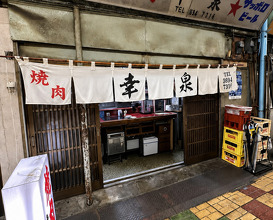
Hidden inside the wonderfully timeworn streets surrounding Keisei-Tateishi Station, Yakiniku Kōsen looks much as it has for decades: a tiny, unpretentious neighbourhood yakiniku restaurant, with only a handful of counter seats downstairs and a small tatami room above.
Kōsen was founded more than 40 years ago by the grandmother of the present owner, Ryūshu An. An grew up in Tateishi with her cooking and, after graduating from high school, trained professionally in several Tokyo yakiniku restaurants. When his grandmother retired, he returned to take over the family business, reopening Kōsen in its present form in March 2022.
What he has created is not a reinvention but a remarkable refinement of the traditional machi yakiniku. He preserved the soul of his grandmother’s restaurant, particularly her deeply flavoured homemade momi-dare, while applying everything he had learned about sourcing, ageing, trimming and cutting meat.
Kōsen is not driven by famous beef brands or extravagant marbling. An selects each piece according to flavour and character, then determines its ideal thickness, knife work and seasoning. Different cuts receive different treatments: salt, garlic, miso or variations of the inherited tare. This precision transforms familiar neighbourhood yakiniku into something genuinely exceptional.
Our dinner began with one of Kōsen’s most unusual creations: avocado kimchi. It sounds almost too simple, but the creamy richness of perfectly ripe avocado works beautifully with the spicy, savoury kimchi seasoning. It was distinctive, delicious and immediately memorable.
The excellent senmai sashimi demonstrated the kitchen’s meticulous handling of offal. This was followed by beautifully prepared tongue, served not with the customary lemon but with Kōsen’s distinctive plum-based sauce. The thick-cut upper harami was succulent and intensely beefy, while the sagari, upper loin and other tare-marinated cuts showed precisely why the restaurant’s sauce is so important. These are meats designed to be eaten with rice, each carrying a different balance of sweetness, garlic, savouriness and rendered beef fat.
We continued through lean beef cubes, liver, yaki-yukhoe, liver with nira and a superb selection of horumon, including shimachō and mino. Every piece had been carefully cleaned, trimmed and cut. Nothing felt secondary: the offal received exactly the same attention as the premium cuts.
The revelation of the evening, however, was beef from an eight-year-old Holstein cow raised in Hokkaido. Mature Holstein is not the kind of fashionable, heavily marbled wagyu that usually attracts attention. Its appeal lies elsewhere: depth, structure and an extraordinarily concentrated beef flavour that only develops with age. It was so good that, after completing the entire menu, we ordered another serving. That almost never happens during such a substantial meal, but this meat was impossible to resist.
The soups provided a deeply comforting conclusion, particularly the rich but remarkably clean komutan. By the end, it was clear that Kōsen’s reputation rests not upon one celebrated signature dish, but upon the consistency and intelligence of the entire meal.
The restaurant remains warm, informal and completely unaffected by its success. There is no luxury setting and no theatrical presentation. You sit close to the other guests, grill the meat yourself and experience yakiniku in its most direct and convivial form. Yet behind that apparent simplicity is an enormous amount of judgment, preparation and technique.
Our final bill was approximately ¥17,000 per person. For a meal of this quality, generosity and individuality, that represents extraordinary value. Kōsen is now one of Tokyo’s most difficult reservations, but the excitement surrounding it is fully justified. This is much more than an excellent neighbourhood barbecue restaurant. It is a deeply personal family legacy, preserved with affection and elevated by genuine craftsmanship into one of Japan’s finest yakiniku experiences.
8 / 10