We use cookies on this site to enhance your user experience.

Tucked away on the second floor of a quiet building in Kagurazaka, J-Free offers a dining experience that feels both intimate and forward-looking. With only 11 counter seats, the restaurant invites guests into a calm, focused environment where each dish unfolds like a chapter in a well-composed narrative. Led by Chef Tsubasa Jinnai, a veteran of Florilège and Quintessence, J-Free blends classical French techniques with the delicate sensibilities of Japanese cuisine. The result is not fusion for its own sake, but a thoughtful, ingredient-driven expression of terroir—especially that of Miyazaki, the chef’s home prefecture.
The meal began with a house-made miso and wheat gluten, subtle yet grounding. This was followed by swordfish paired with myoga and trabeculae—its texture was exceptional, clean and resilient. The highlight of the early courses was undoubtedly the Tsumajidori chicken consomme: a bowl brimming with deep umami, containing a surprisingly large, supple piece of chicken. It demonstrated finesse and restraint.
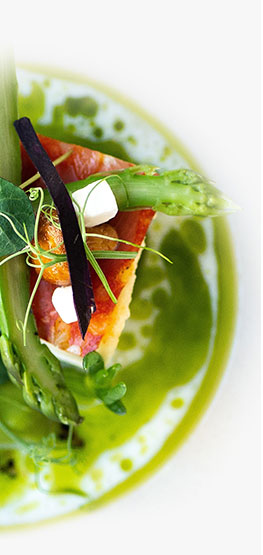
A standout was the Hamo (pike conger eel)—a dish that subtly showcased honegiri, the meticulous bone-cutting technique essential to making this bony eel enjoyable. The sauce, punctuated with pecan nuts, provided warmth and contrast that elevated the dish. This was followed by an outstanding pairing of hairy crab and green asparagus. The asparagus, sourced from Hasegawa Farm in Hokkaido, known for its mineral-rich soil and crisp produce, brought a satisfying crunch to the sweet, rich crab. Perhaps slightly on the salty side, but still a winner.
The kinmedai was perfectly cooked, served with bigfin reef squid and a touch of green yuzu that added a graceful citrus lift. The Miyazaki Toman Wagyu followed—a leaner, umami-rich cut that steered clear of the overpowering fattiness often associated with wagyu, and in doing so, showed greater balance and maturity.
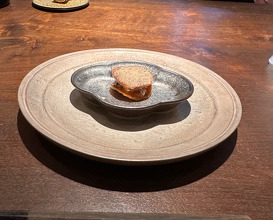
The dessert sequence was particularly thoughtful. A white tomato sorbet offered a surprising interlude; the clear tomato juice is likely extracted through slow filtration or centrifugation, yielding a dish that was both vegetal and refreshing. The restaurant’s signature crepe salée played deftly with the sweet-savory balance, a creative mainstay of the menu. A pacojet-spun Jin Xuan oolong tea ice cream closed the dessert progression—rich in tea tannins, refreshingly unsweet, and deeply aromatic.
An unexpected delight was a fluffy caramel pudding served as an extra course by a 22-year-old apprentice, already showing a great touch and promise. A beautiful gesture and a hint of the mentorship spirit that defines the kitchen.
The wine pairing leaned French and Burgundy-focused, curated with modesty and insight by a general manager whose palate is clearly underrated. His pairings elevated the food without overshadowing it.
Chef Jinnai clearly knows how to cook—but more importantly, he’s pushing. There’s an undercurrent of ambition and precision here that signals a restaurant in ascension. With his grounding in two of Tokyo’s top kitchens, and the creative confidence now on display, it’s hard to imagine J-Free staying under the radar for long. A Michelin star feels imminent.
For now, J-Free remains a hidden gem—quiet, deliberate, and refined. It’s the kind of place you visit not just to eat, but to witness a chef at the cusp of greatness.
8 / 10