We use cookies on this site to enhance your user experience.

Review: Sushi Sakai, Fukuoka
Date of Visit: March 29, 2025
Tucked quietly in a discreet corner of Fukuoka, Sushi Sakai continues to stand as one of Japan’s most sophisticated and disciplined sushi-ya, offering a dining experience rooted in precision, balance, and reverence for seasonality. The meal I experienced here was nothing short of masterful — a seamless blend of thoughtful progression, outstanding ingredients, and nuanced technique.
⸻
Ambiance & Service
The room is understated but quietly elegant: a serene counter of polished hinoki wood anchors the space, with no more than eight seats arranged in a gently curved arc around Chef Sakai. Every element — from the muted lighting to the unobtrusive soundtrack of soft conversation and the delicate clink of ceramics — is designed to focus attention on the food and its quiet craftsmanship. Chef Sakai himself is calm, measured, and warm in a reserved way. His movements are precise, never hurried, and his interactions with guests are minimal but always sincere. Service is polished and smooth, as one would expect from a restaurant of this caliber.
⸻
Zensai / Appetizer Course
We began with hotaru ika, the firefly squid, a seasonal delicacy. It was served chilled, offering a gentle bitterness and umami burst.
Next came a katsu, fried perfectly with a crisp, non-greasy shell — a brief interlude of texture and warmth.
Awabi (abalone) and tako (octopus) followed, sliced thin with a tender resistance that transitioned into deep ocean flavor.
The negi toro was lush and savory, built on the contrast between the creamy toro and the gentle pungency of the scallion.
A thoughtful dish of ankimo from Hokkaido and fugu from Fukuoka balanced richness and delicacy. The ankimo was smooth, foie-gras-like, with a lingering finish, while the fugu added clean texture.
The chawanmushi was exceptional — custard-soft and infused with sakura ebi, hotate, and dai. The sakura ebi’s briny intensity permeated the silky egg, making it a highlight of the cooked courses.
A single fried oyster from Senposhi arrived next: warm, juicy, sweet, and full of mineral complexity. The batter was whisper-thin, adding crispness without masking the bivalve’s flavor.
Then, a plate featuring takenoko (bamboo shoot) and sakura mazu (pickled cherry blossom) subtly bridged the cooked and raw courses — a poetic nod to spring, gently floral and earthy.
⸻
Nigiri Course
The progression of nigiri was expertly paced and masterfully composed.
• Sayori with yuzu leaf: Delicate and clean, lifted by the aromatic brightness of yuzu — a fresh opener.
• Kasugo (baby tai) from Kagoshima’s Izumi: translucent, slightly sweet, and tender — classic spring fare.
• A second preparation of ankimo, this time integrated into nigiri, offered a silky, rich bite.
• Karasumi added intensity and depth — a bold, briny interlude.
Then came a wave of exquisite craftsmanship:
• Torigai from Awaji-shima — likely the best I’ve ever had. Unusually large and vibrant, the bite was firm but yielding, with a snap and incredible sweetness.
• Kohada (young gizzard shad) — in peak season, skin barely perceptible. Delicate curing drew out deep umami without overpowering the fish’s natural oils.
• Akami from Shimoda — aged to perfection, soft yet structured, with an umami-laden release that lingered.
• Chutoro — in impeccable condition. Silky, almost mousse-like, seamlessly merging with the shari.
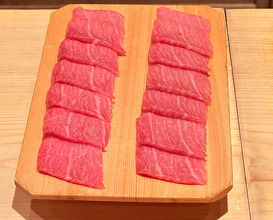
• Otoro — cut thicker than the winter variant to moderate its richness, a smart and confident choice. The aftertaste was profound and satisfying.
Kuroma ebi, cooked one by one, was an exercise in precision. The prawn was crunchy, sweet, and had a layered complexity that only comes from perfect temperature control and immediate serving.
Then came a rare delight — Daisen uni Kurosaki from Aomori. Lush, sweet, and cold. Chef Sakai remarked that when he opened his shop, this uni was ¥7,000; it is now ¥5,000 — a detail that added a personal touch and quiet nostalgia.
Hamaguri followed, the warm clam perfectly aligned in temperature with the shari. Its sweet-salty glaze (tsume) was sticky, lacquered, and just slightly sweet — complementing without overpowering.
The anago, also finished with tsume, melted on the tongue, airy and warm — a classic closer.
⸻
Finale
The tamago was the ideal epilogue — fluffy, eggy, with a barely perceptible sweetness and a touch of caramelization on the surface. Not just an afterthought, but a miniature cake of technique.
⸻
Overall Impression
This was a strong meal, in every sense — quietly confident, deeply seasonal, and rigorously executed. What stood out was the balance: between temperature and flavor, richness and restraint, familiarity and surprise. Chef Sakai isn’t chasing theatrics or flash — his philosophy is rooted in trust: in the fish, the shari, and the precision of timing.
It is not a meal that demands attention; rather, it earns it — quietly, relentlessly, and without a single misstep.
Sushi Sakai remains one of Fukuoka’s finest expressions of edomae tradition, anchored by intuition and grace.
10 / 10