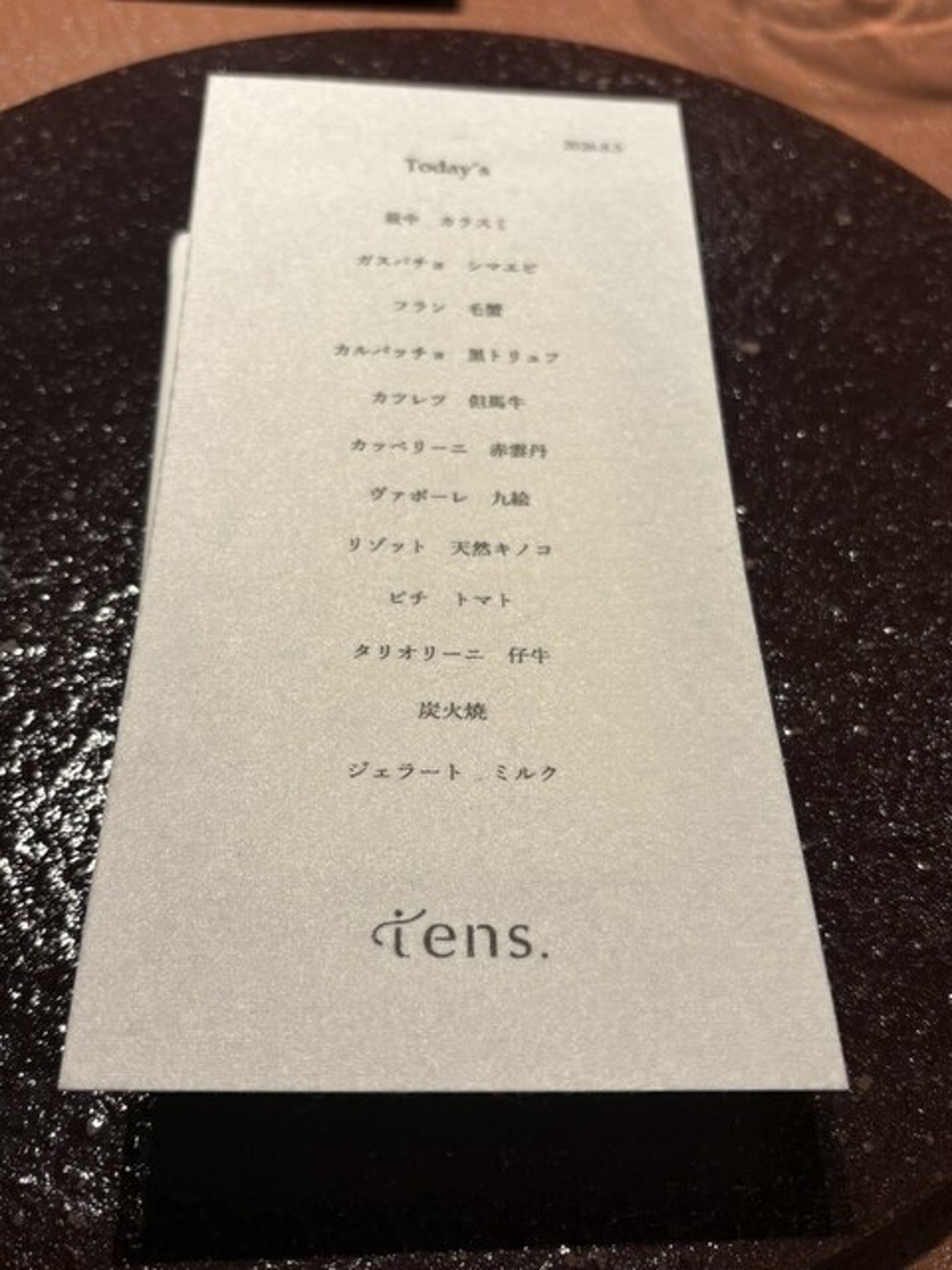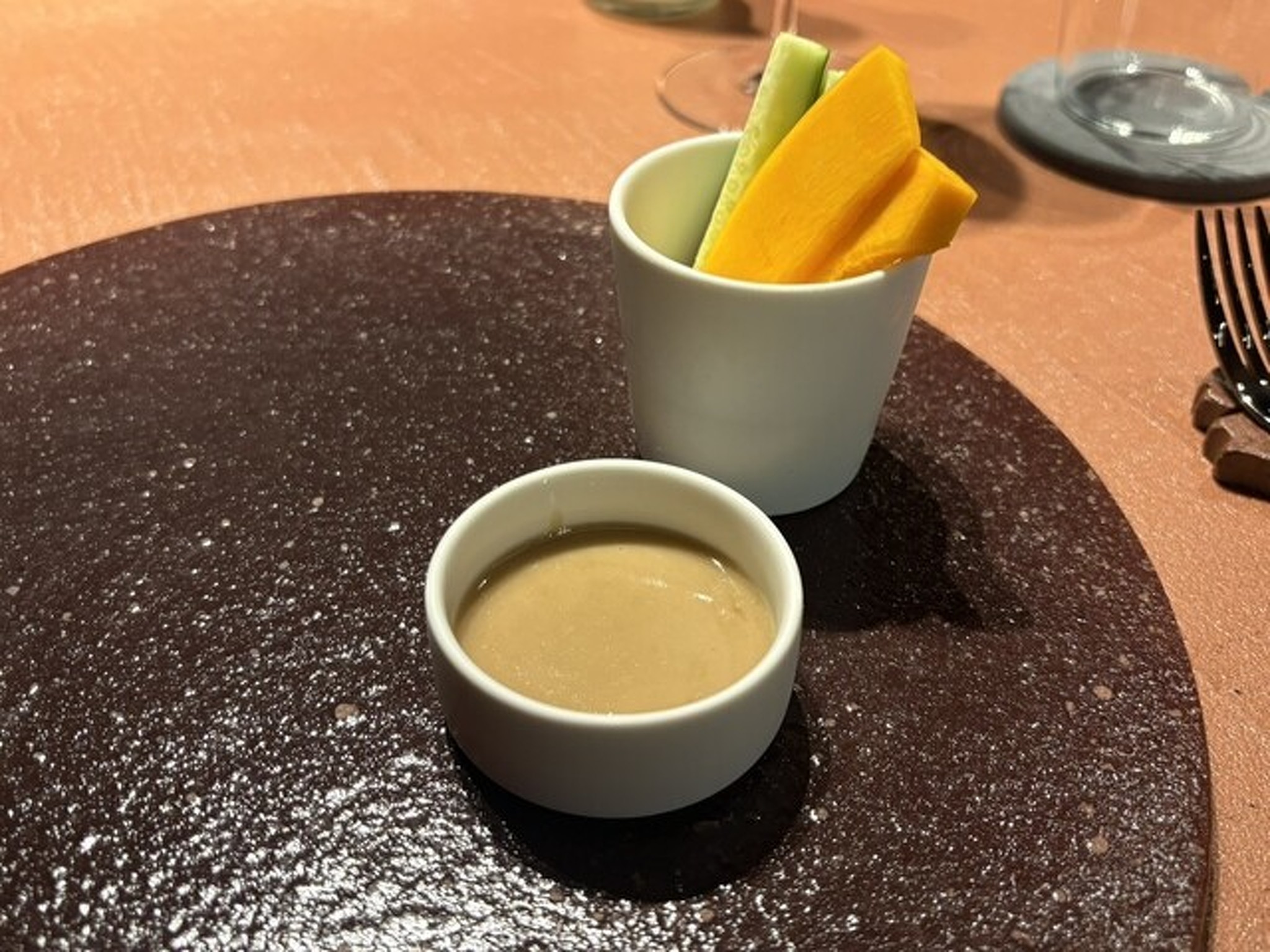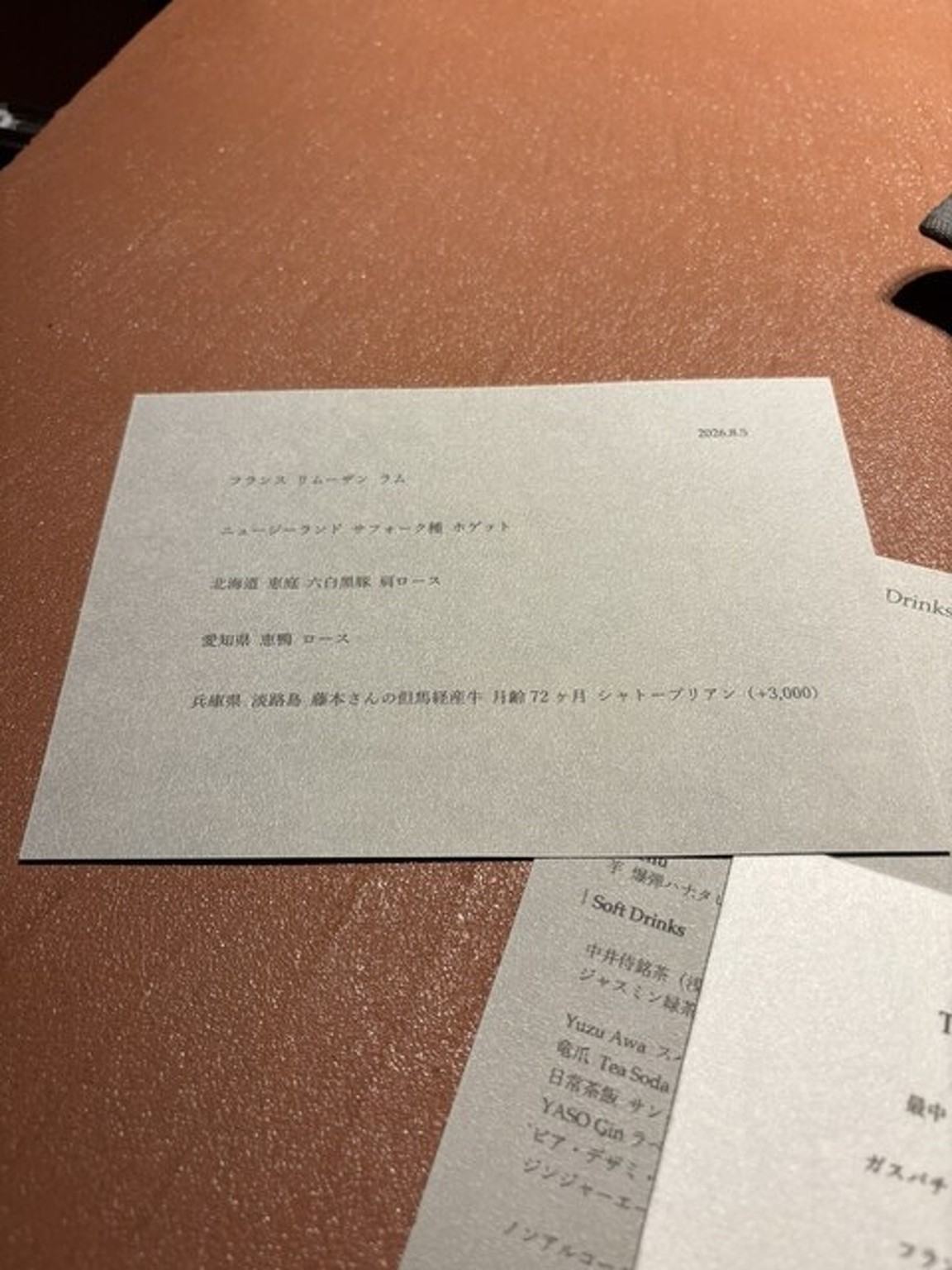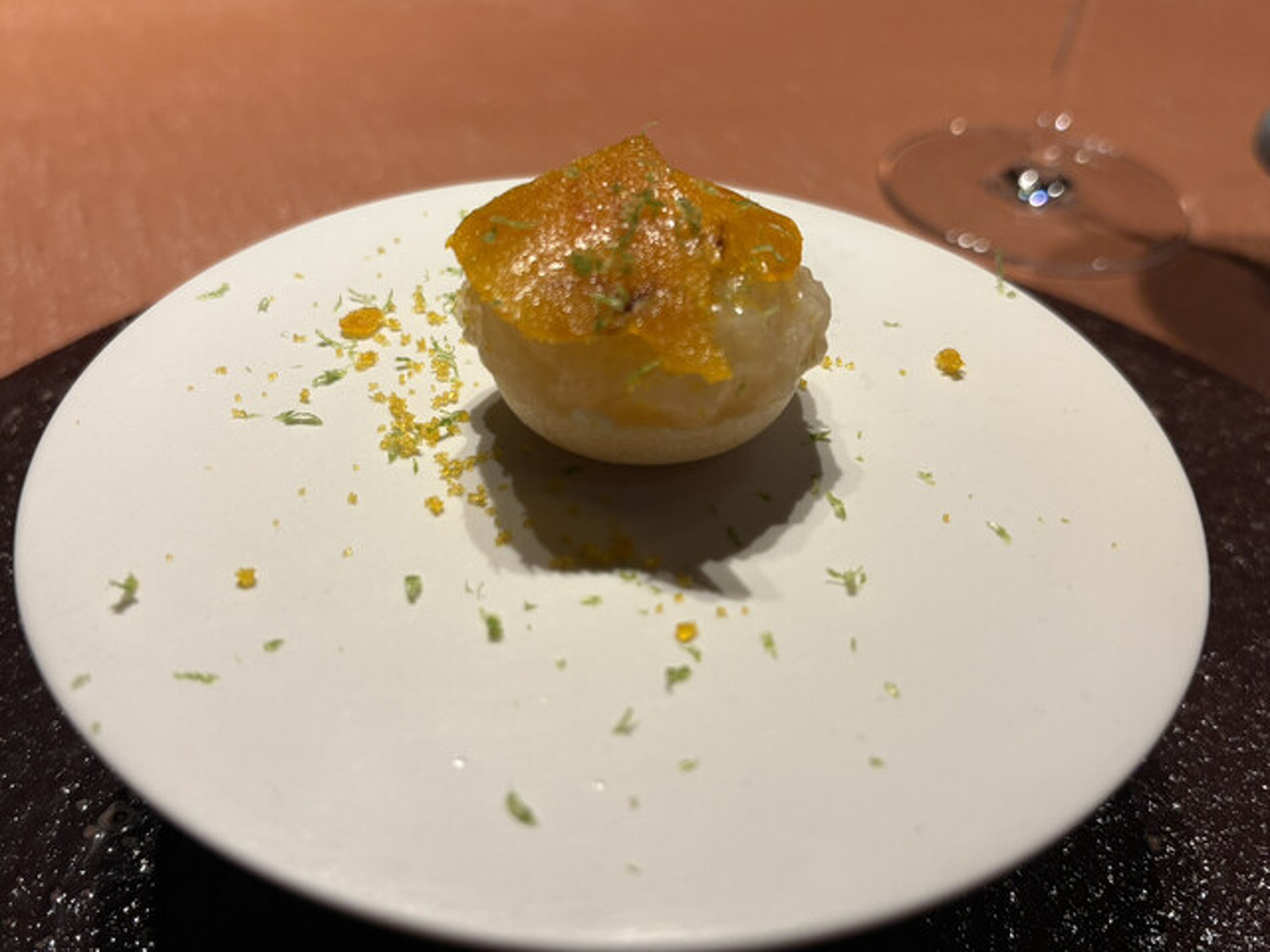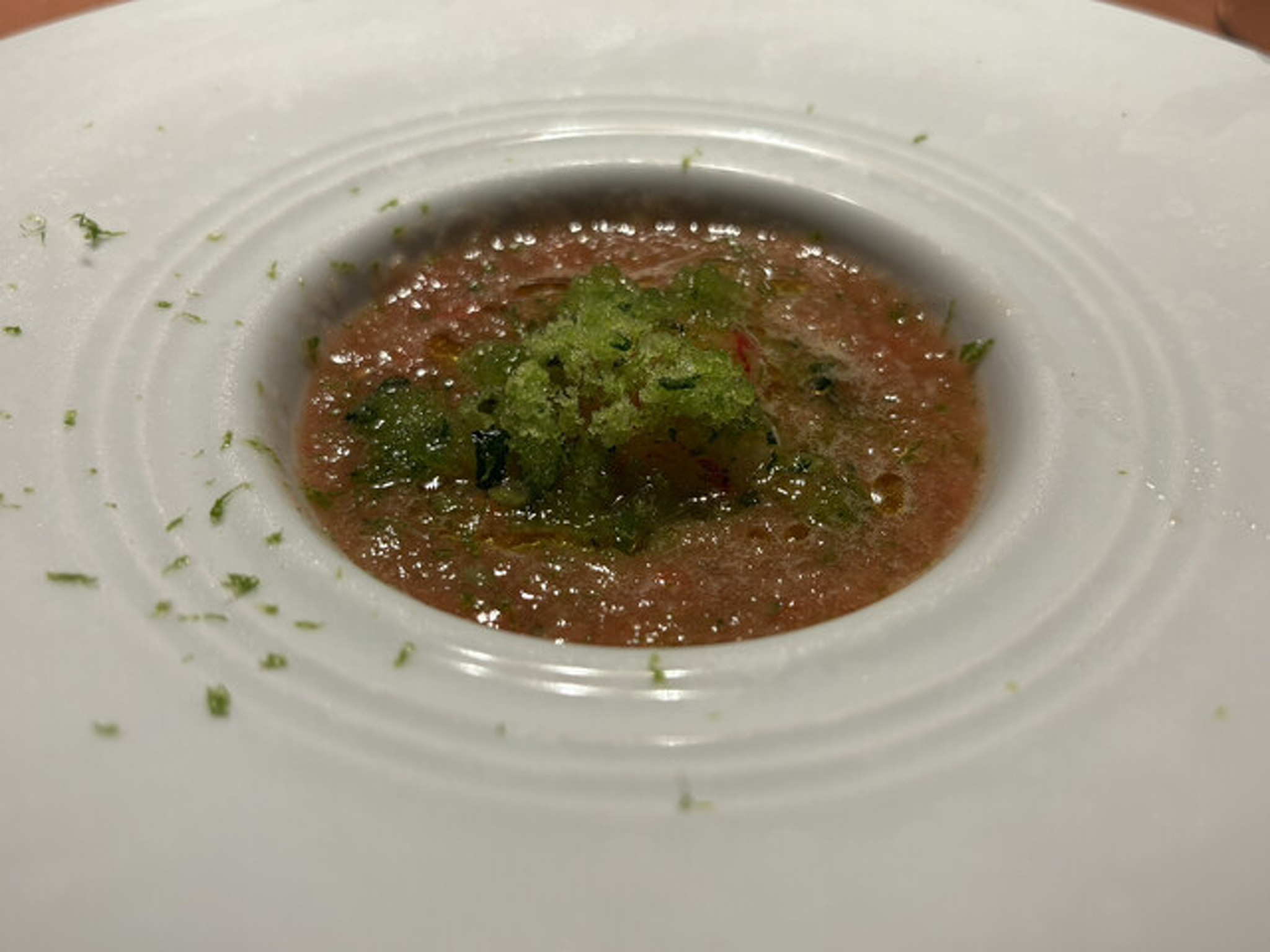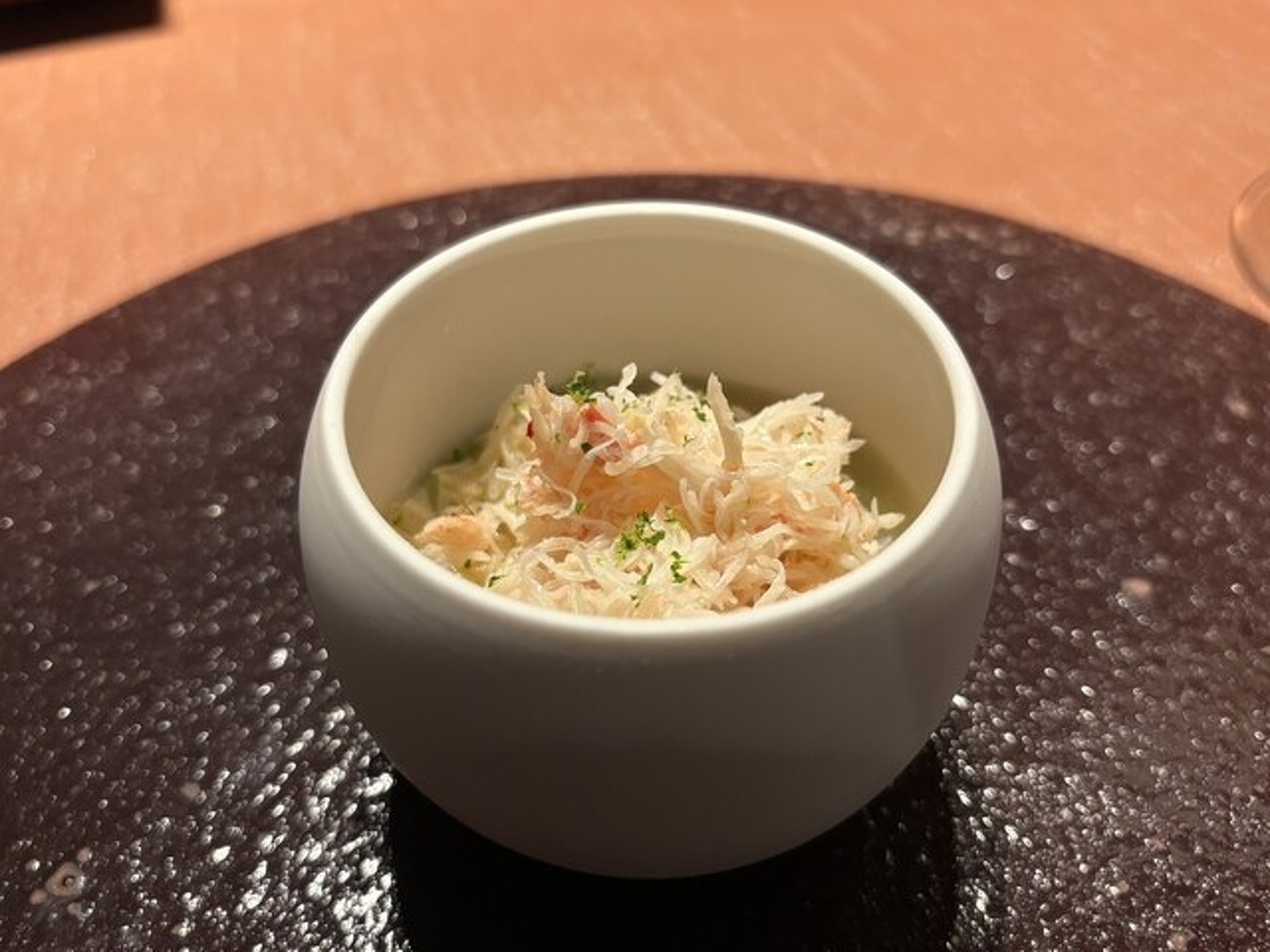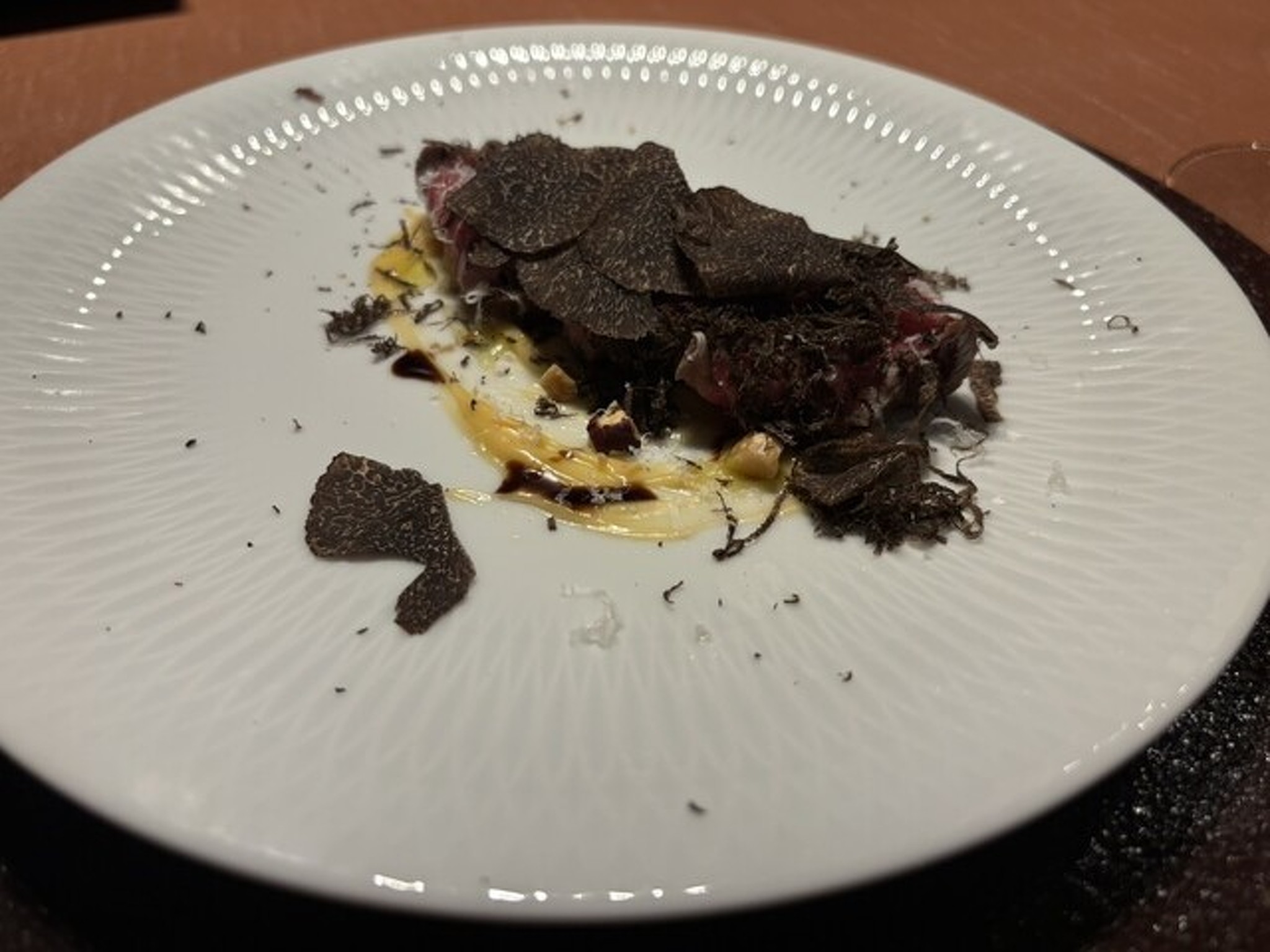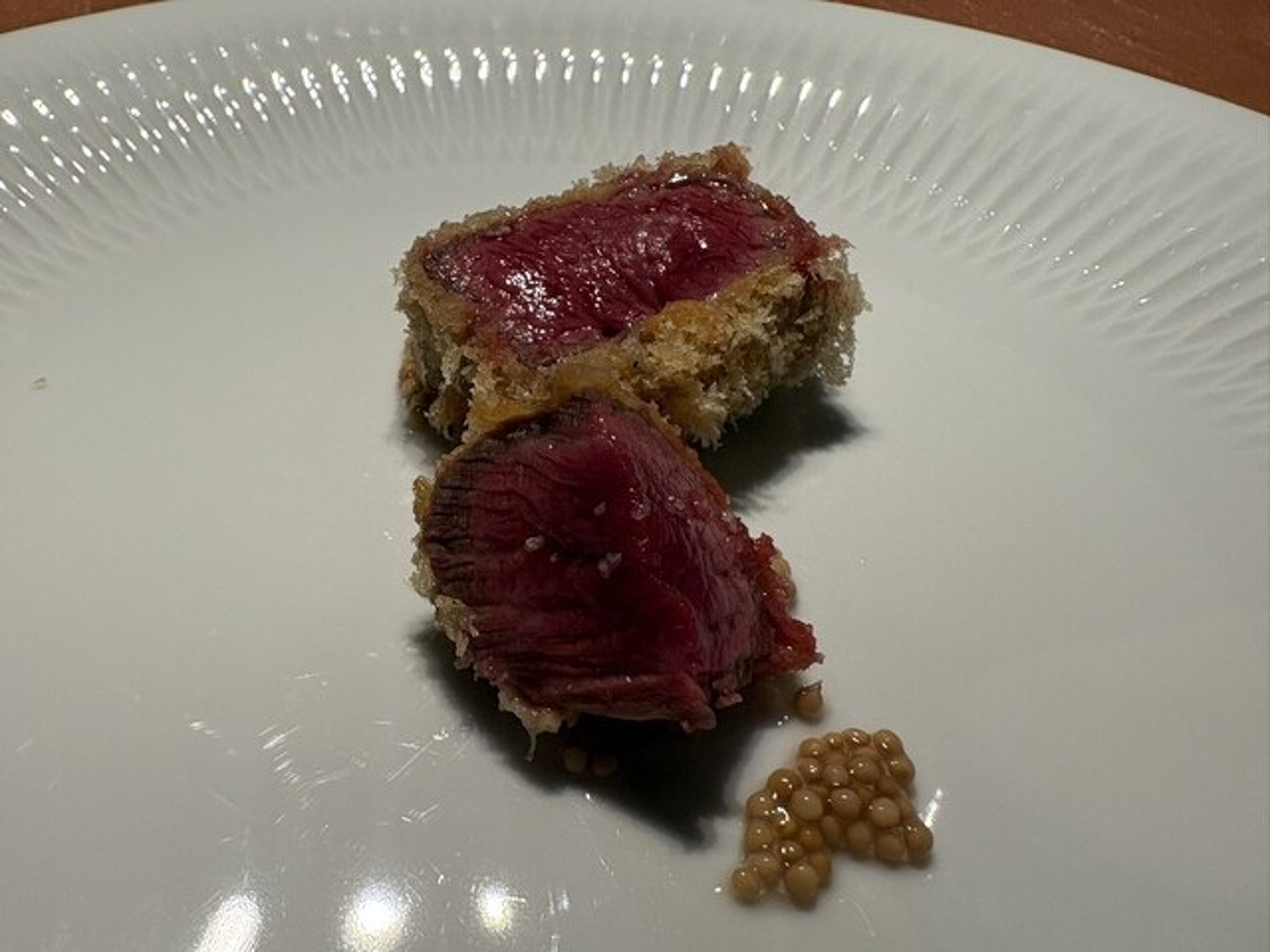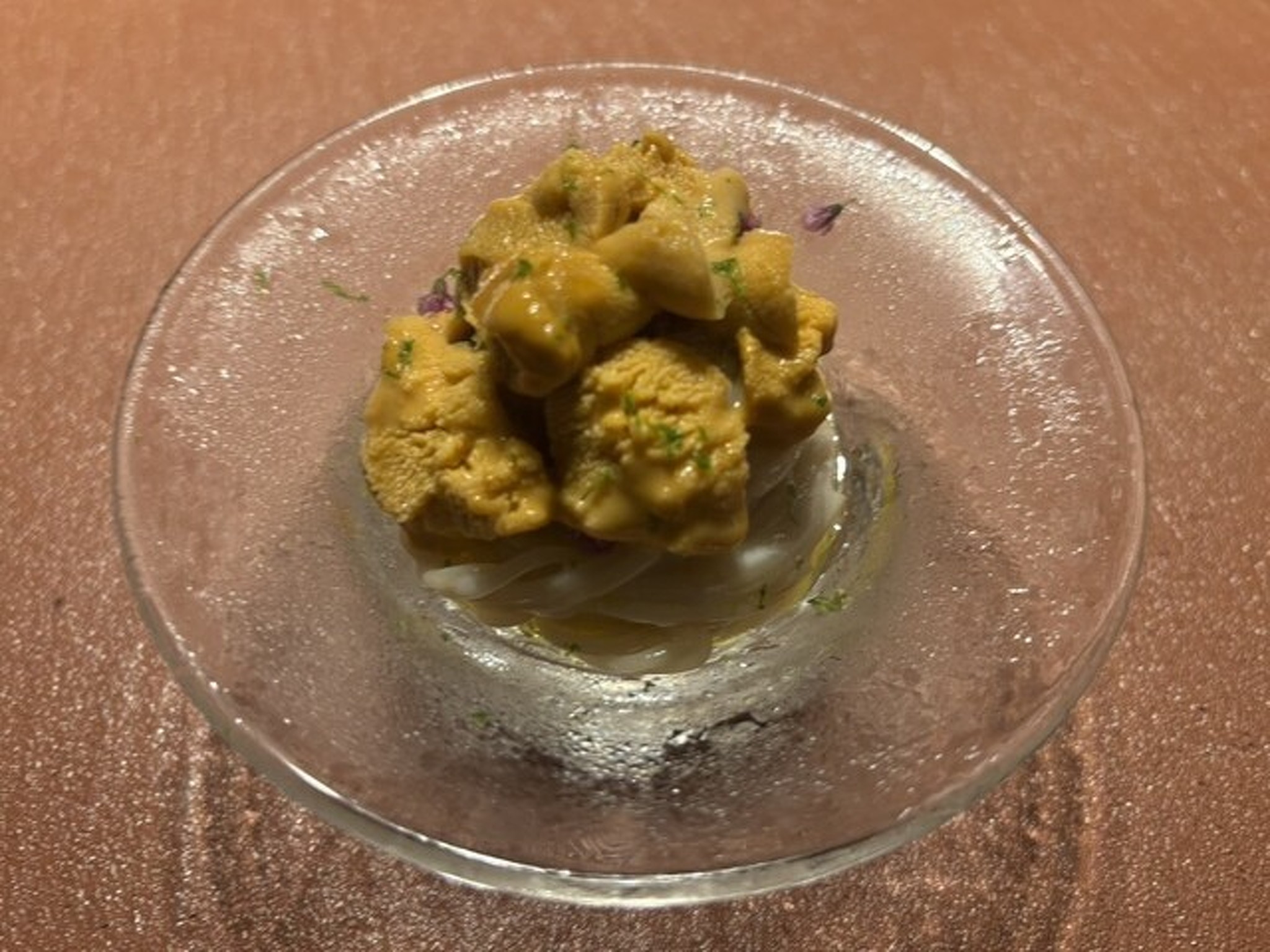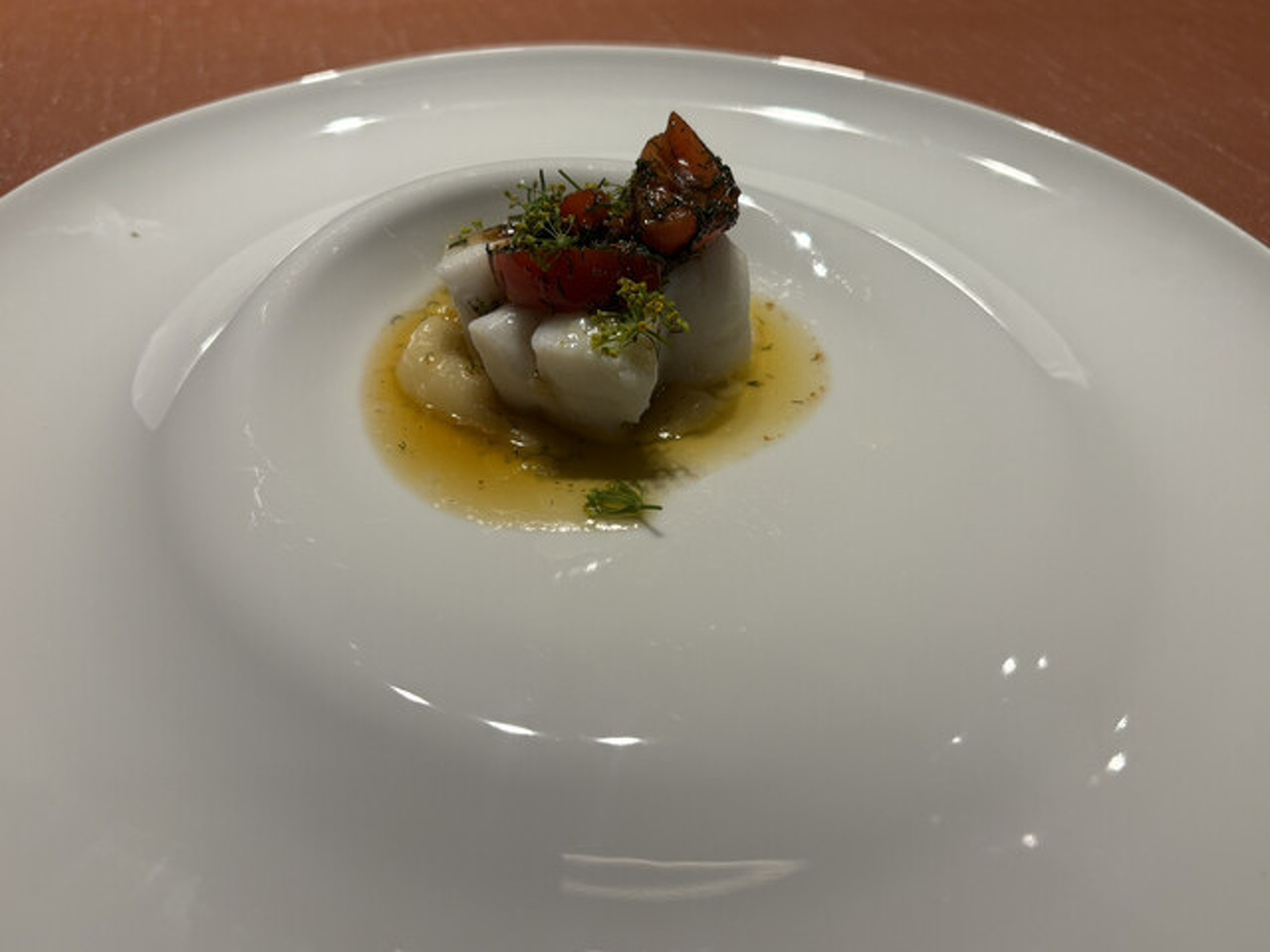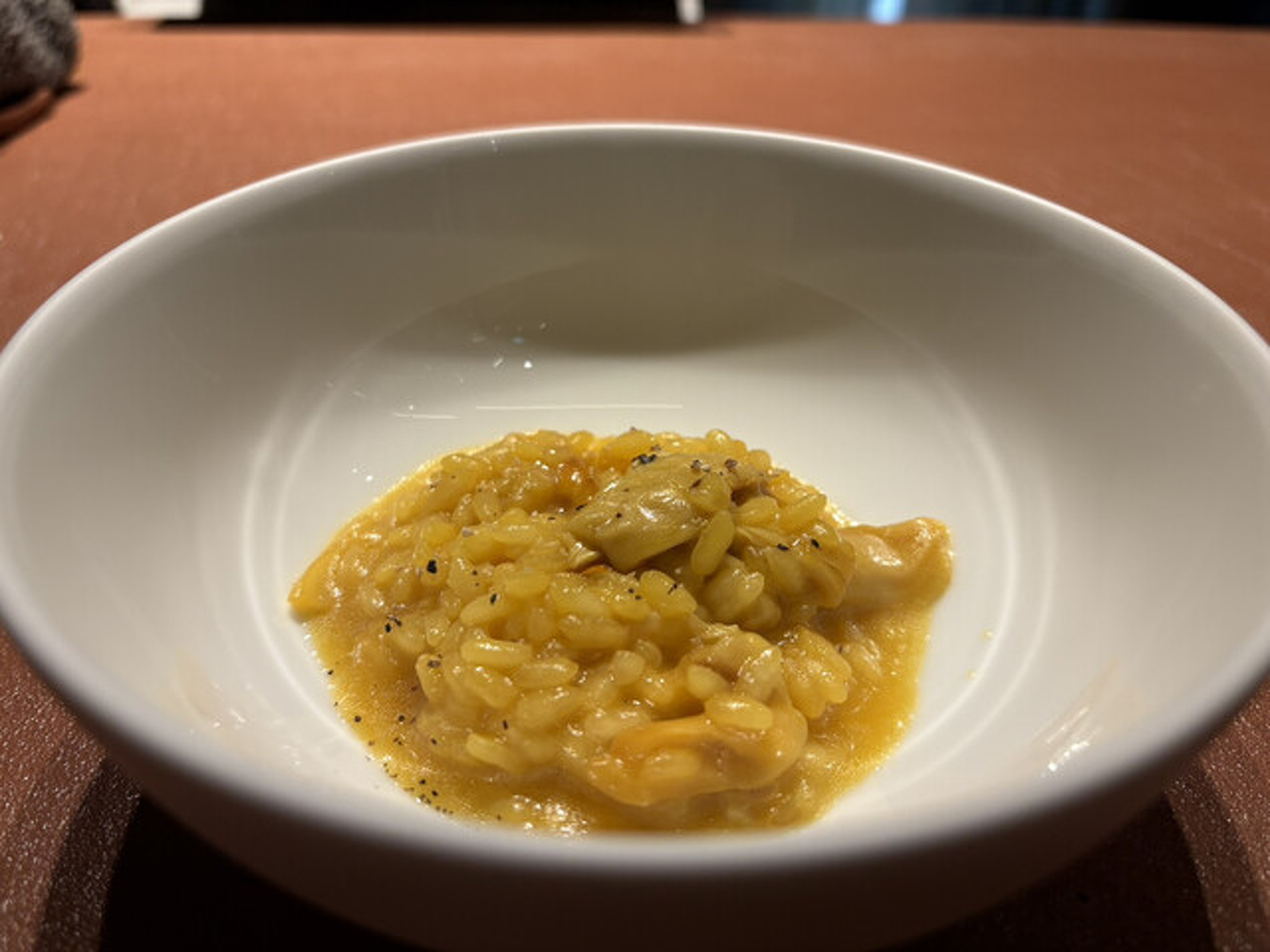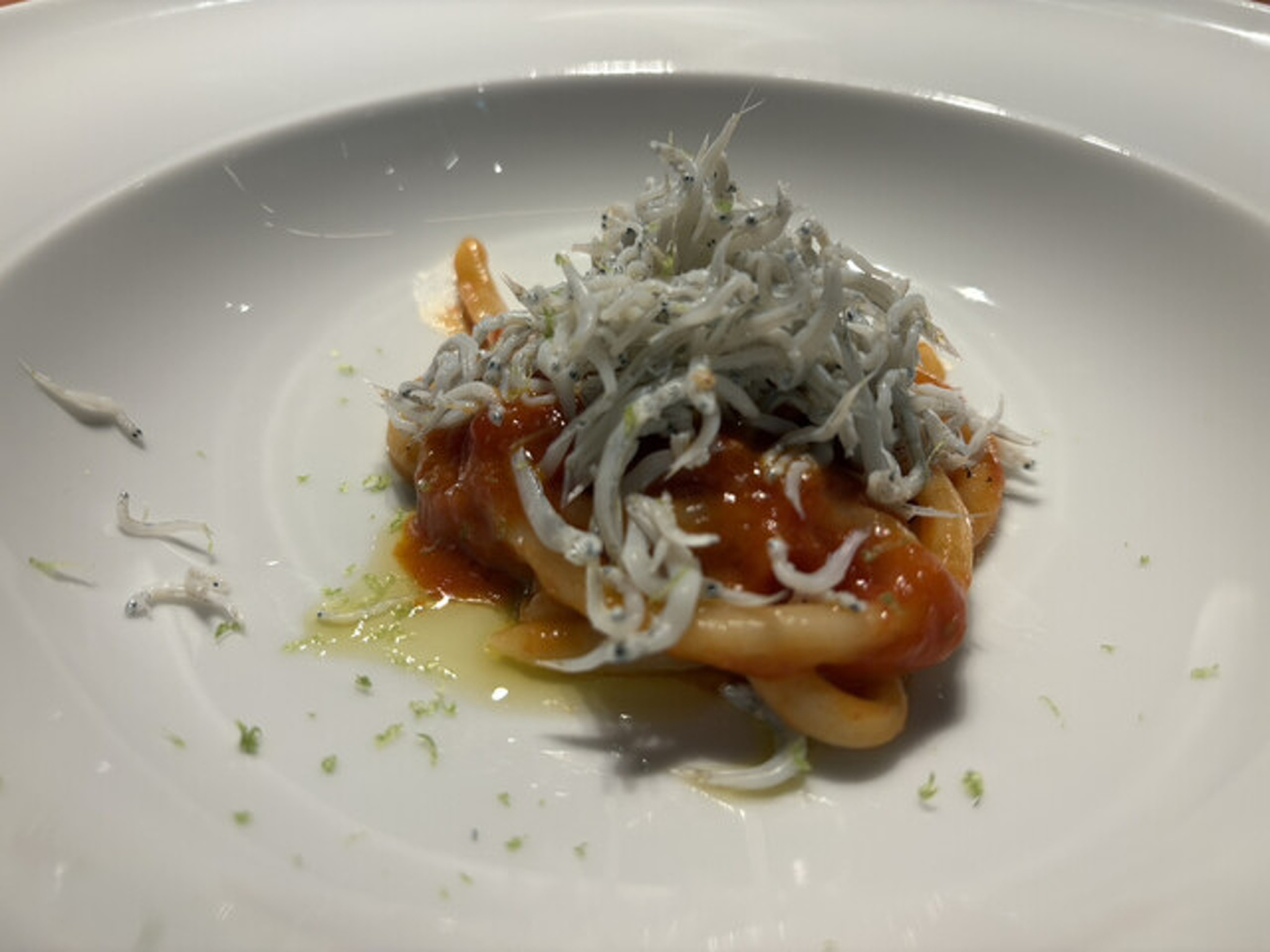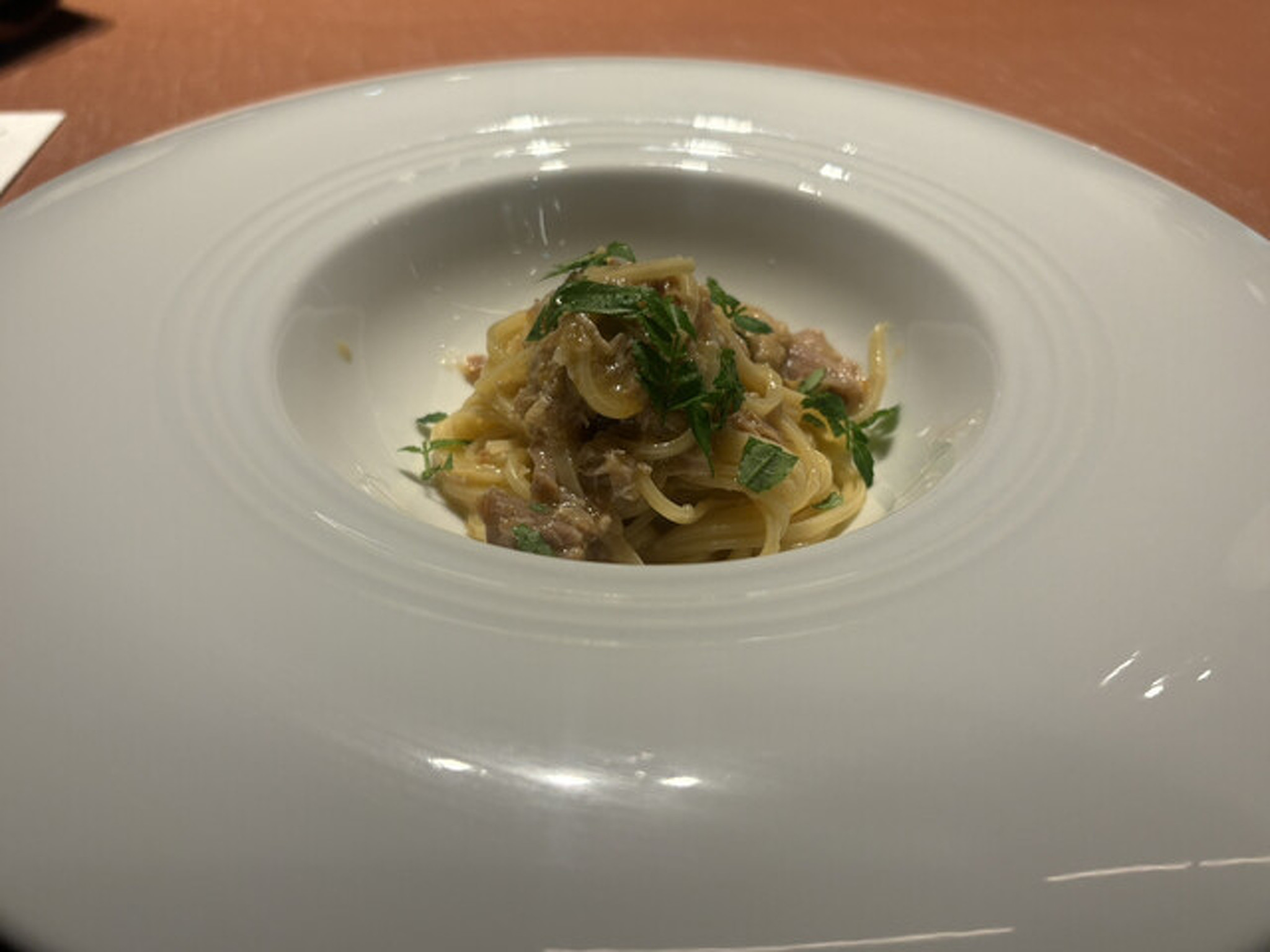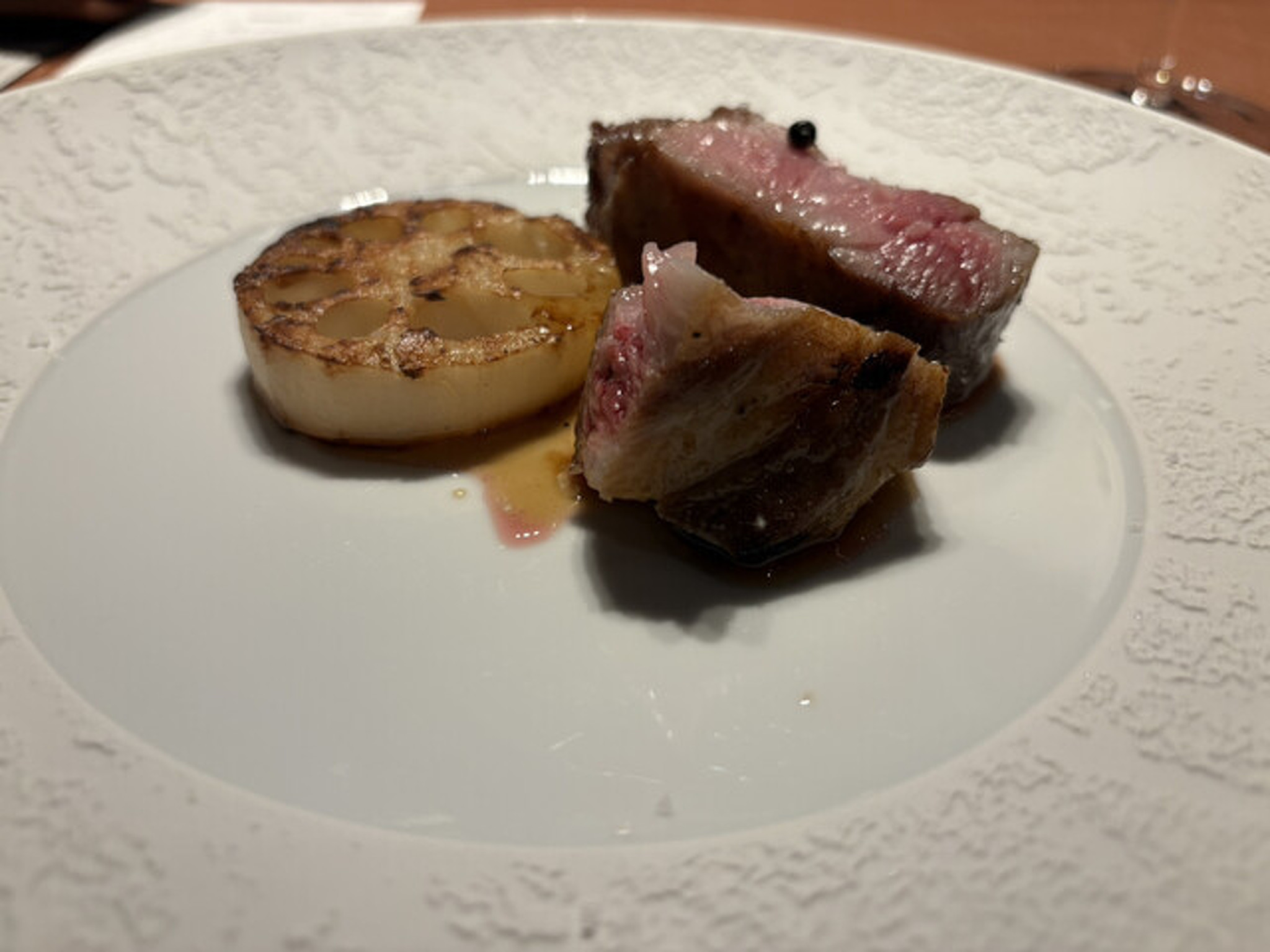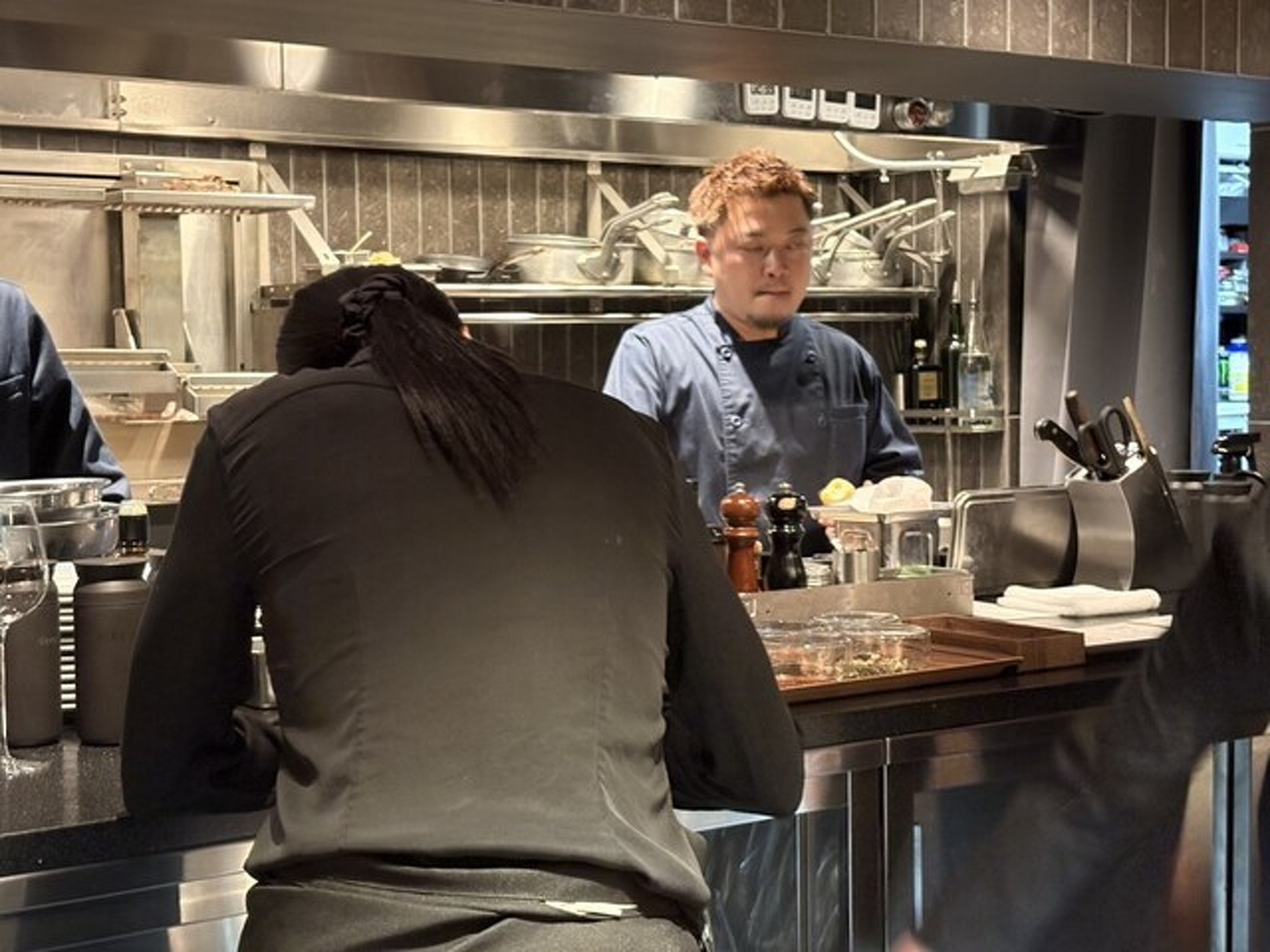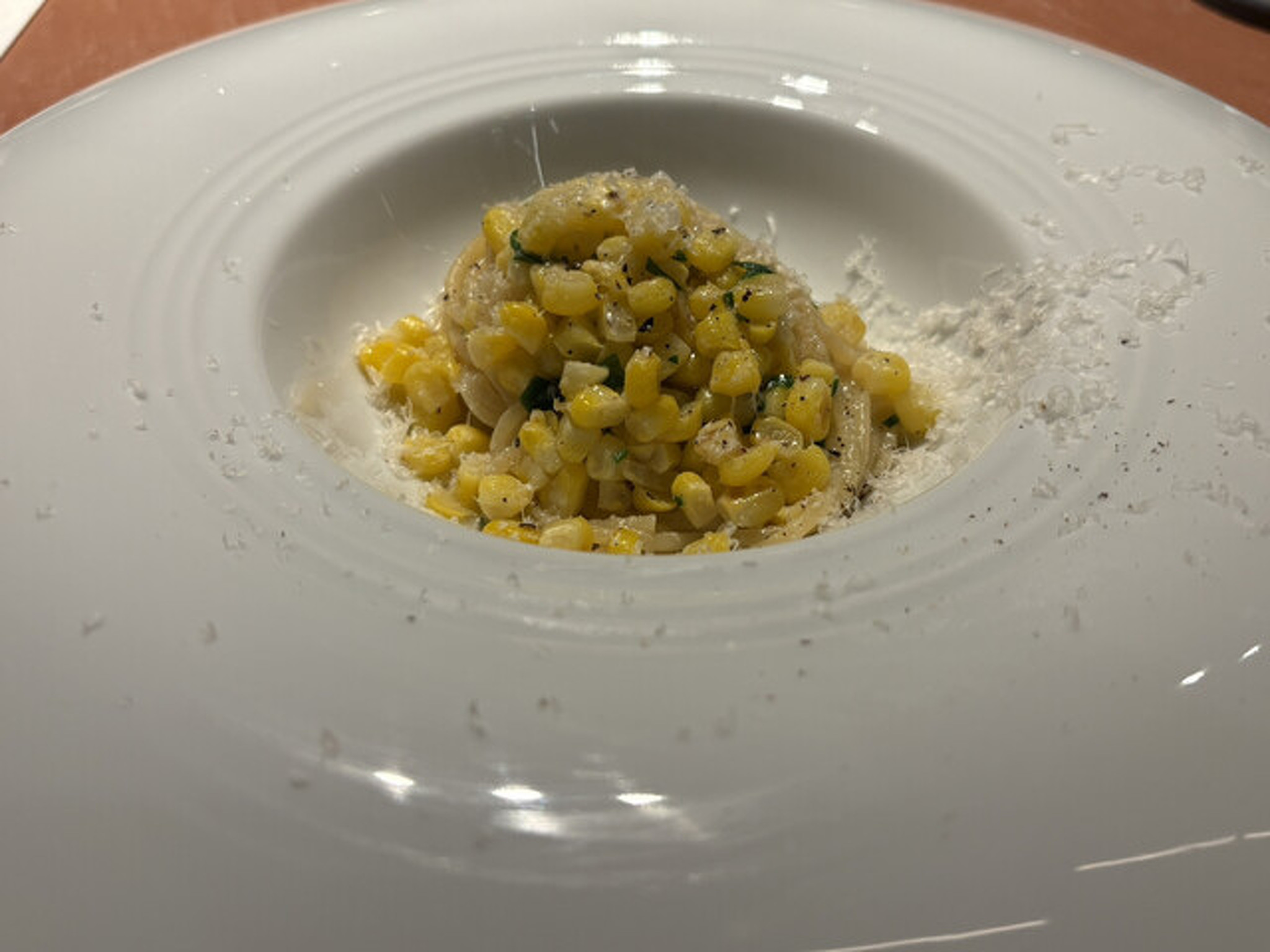

Based on the experience gained from the à la carte menu, I visited tens., which now offers a set course.The meal began with a light dish featuring vegetables dipped in sauce. The next course combined Kanazawa's white shrimp with karasumi (dried mullet roe), harmonizing the toasty flavor of the monaka (rice cracker) with the elegant sweetness of the shrimp and the saltiness of the karasumi.The gazpacho with green tomatoes presented a refreshing summer dish, where the sweet and sour notes of the tomatoes complemented the sweetness of the shima ebi (sweet shrimp). The crab flan made with hairy crab had a smooth texture, allowing the rich flavor of the crab to shine through.The Kobe beef carpaccio was paired with black truffle, creating a fragrant dish that still preserved the taste of the beef. The Tajima beef cutlet had a light coating, with the center remaining slightly rare. The contrast between the crispy exterior and the tenderness of the meat was impressive.The red sea urchin capellini was a satisfying dish, generously topped with sea urchin. The vapore made with Kanazawa's grouper was cooked with care, retaining the fish's moisture and allowing the quality of the ingredients to be enjoyed. I was particularly impressed by the opportunity to taste Kanazawa's ingredients in different dishes, starting with the white shrimp.The risotto with wild mushrooms was rich, maintaining the texture of the rice while layering the umami of the mushrooms with the creaminess of the egg.The course included three types of pasta.Following the red sea urchin capellini, there was pici with white shrimp and tomato, and tagliolini with veal and kinome (Japanese pepper leaf). Each pasta had a different thickness and sauce profile, preventing monotony even when served consecutively.My favorite was the pici with white shrimp and tomato. The thick, chewy handmade noodles paired beautifully with the acidity and sweetness of the tomato, as well as the delicate umami of the white shrimp, making it the most memorable dish of the course.Additionally, at the chef's recommendation, I added a corn aglio e olio. This dish highlighted the natural sweetness of the corn, balanced with the flavors of garlic, olive oil, and cheese, embodying the essence of the season. As a pasta lover, I was very satisfied to enjoy four different types of pasta.For the charcoal-grilled dish, I chose the Rokuhaku Kurobuta (black pork) shoulder from Eniwa, Hokkaido. Having enjoyed Kobe and Tajima beef earlier in the meal, finishing with pork added variety to the course. The aroma of the charcoal and the sweetness of the fat were delightful, resulting in a stable main dish.Overall, there were no significant weaknesses, and every dish in the course was consistently delicious. The pasta offerings were particularly impressive, with the pici of white shrimp and tomato being the best of the day. This restaurant does not rely on a single standout dish but maintains a high standard throughout, thanks to quality ingredients and careful technique.
We use cookies on this site to enhance your user experience.