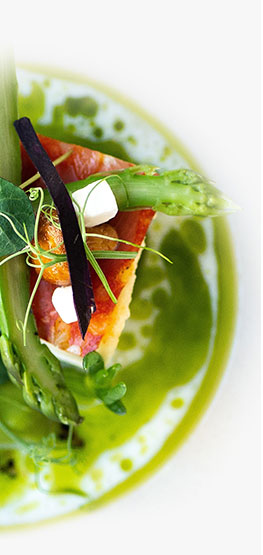
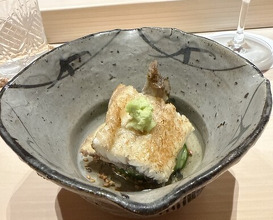
Starting with the appetizers, we had grilled aoyanagi (eel). This dish, reminiscent of uzaku, featured cucumber cut with a knife, while the skin was delightfully crispy. The hamo (pike eel) from Imabari was impressively large, weighing over 2 kilograms, and we thoroughly enjoyed it, including the broth. The meal continued with seasonal delicacies such as goma saba (mackerel) from Ainanshi, black abalone from Futagami Island, kinmedai (golden eye snapper) from Kochi, and steamed okose (a type of fish) that was carefully prepared with nerve-stunning techniques, showcasing both the origin and craftsmanship of the dishes.The nigiri began with the 15-kilogram kue (grouper) from Ainanshi, followed by marinated managatsuo (mackerel) from Imabari, which was nerve-stunned on the boat, concentrating the flavors of this fish that is typically difficult to serve raw. We also enjoyed luxurious slices of akami (fatty tuna) from Tottori Sakai Port, along with Imabari's blue crab, Ainanshi's shimaaji (striped jack), steamed ayu (sweetfish) sushi, grilled akamutsu (red mullet) from Tokushima, freshly caught kisu (whiting), kuruma ebi (Japanese tiger prawn), red sea urchin from Futagami Island, and anago (conger eel) steamed in bamboo leaves, all reflecting the essence of the season and the land. We also added hamo nigiri, chairo maruhata (brown grouper), and more squid.The sushi itself was exceptional, and I noticed the details, such as the newly sharpened knife specifically for squid and the changed serving dish for the shrimp, adding to the enjoyment of the experience. This establishment conveys its evolution not only through taste but also through its tools and techniques.
We use cookies on this site to enhance your user experience.