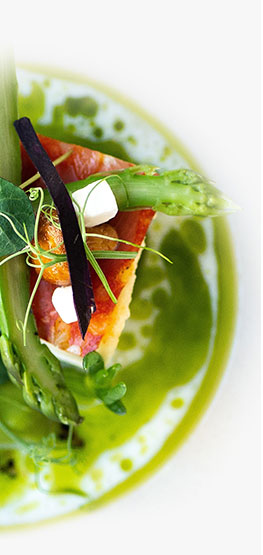
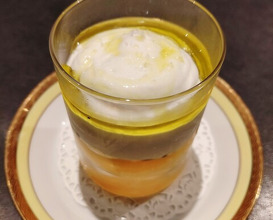
In the basement of Shirokanedai, with just 11 seats, Chef Daisuke Watanabe, a master of meat grilling, always chooses "irreplaceable ingredients." Throughout the course of the day, it became clear that his consistent intention was to highlight the unique character of each breed, cut, and ingredient with minimal intervention. The name "Sanwa" symbolizes harmony among producers, chefs, and customers, and that night felt like a confirmation of that harmony.Chef Watanabe was born in a Western-style restaurant in Yamanashi and has trained in Italy twice, as well as learning French cuisine at "Chez Ino." After working at "Rodeo" in Nakameguro, he became independent in 2021. The restaurant is quietly located in the basement of a building, just a 4-minute walk from Shirokanedai Station, off Platinum Street.The omakase course is priced at JPY 22,000 (plus a 10% service charge).Closed on Wednesdays. Due to its popularity, each visit begins with the task of recalling memories from the last time.The first dish was a mousse of mozzarella cheese paired with Miyazaki mango. Although it was a bit early for summer heat relief, it created the perfect atmosphere. The sweetness of the mango, the richness of the mozzarella, and the fresh aroma of basil combined beautifully. I was pleasantly surprised by the generous portion, as the deliciousness becomes apparent only after eating a certain amount.Next was the classic dish of prosciutto and gnocchi fritti. The freshly fried gnocchi fritti was layered with thinly sliced prosciutto. While it may not be flashy, this dish serves to neutralize the course's flow, providing a moment of balance. The accompanying fennel salami was delightful, allowing one to appreciate the aroma of fennel in this season. Despite being a staple, there is always something updated in this dish.The boiled white asparagus with scrambled eggs was the most memorable dish of the day. The creamy, soft scrambled eggs served as a sauce connecting the white asparagus and what seemed to be summer truffles shaved thinly, along with Parmesan. Just before serving, the atmosphere in the kitchen felt tense, perhaps to maintain the serving temperature. This dish is one where the temperature plays a significant role. It was wise to enjoy it while it was still hot, rather than focusing too much on taking photos. Such temperature design is supported by the restaurant's structure and operation, making it something that cannot be easily replicated, which adds to its charm.The bluefin tuna carpaccio was sourced from Yamako, caught in Tottori's Sakai Port. Honestly, I still cannot discern the subtle taste differences in tuna. However, the execution of the gazpacho was outstanding. The cold acidity of the tomato melded perfectly with the fat of the tuna. I aspire to have a palate that can confidently declare what tuna should taste like, but I will leave that as a task to learn with age.The fried kinmedai (golden eye snapper) was remarkable. The texture of the kinmedai and the saffron-infused broth were exquisite. Kinmedai is indeed a powerful ingredient. Even when fried and combined with saffron, it retains its strong character. The impression it leaves is still strong, even after the bluefin tuna. I was reminded once again of how incredible this ingredient is, with a hint of what seemed to be sansho pepper adding a touch of Japanese flavor.The green pea risotto was a memorable dish. The richness of the broth made from Sicilian green peas was impressive. The vegetable broth brought out the sweetness of the peas directly. I believe this dish exemplified the restaurant's overall approach of "not adding unnecessary intervention that surpasses the ingredients."The red shiso granita served as a palate cleanser. It was perfectly refreshing. The idea of incorporating the Japanese herb red shiso into an Italian sorbet is characteristic of this restaurant.The seasonal grilled vegetables included lotus root, red bell pepper, and broccoli, grilled over charcoal. This simple composition brought out the sweetness and aroma of the vegetables, showcasing the restaurant's focus on charcoal grilling right from the start.The charcoal-grilled guinea fowl (from Iwate, Ishiguro) was outstanding. Normally, I would order beef for the secondo, but that day I wanted to learn about a different breed, so I chose guinea fowl. It was simply wonderful. The crispy skin, the fat and collagen between the skin and meat, and the texture and tenderness of the meat were remarkable. It had a unique flavor and chewiness that is not found in broilers or even ducks. I was genuinely surprised that such poultry exists. Although it was served with a red sauce and condiments, the focus remained on the unique character of the meat itself.The Nakayama beef (Shin'ishi beef) ragù with tagliatelle was the core of the meal. The ragù was made from Nakayama Farm's Shin'ishi beef, using the unique cut known as senbon-suji. This was exceptional. It expressed a texture that could only come from this specific cut, neither from the shank nor the shoulder. The collagen was remarkable, and the melted connective tissue clung beautifully to the rich egg tagliatelle. Like the guinea fowl, there was no interest in alternative textures or impressions; it was all about honing in on the unique qualities of that breed and cut. The dish made me feel that the chef had a clear vision of what he wanted to achieve even before creating it. Those who understand the nuances of cuts will surely appreciate this selection.The meal concluded with grappa. I opted not to have dessert and finished with a glass of Romano Levi's grappa, marked with a golden seal commemorating its 100th anniversary (1925–2025) and a handwritten label of "Donna Selvatica." This legendary distillery, where each bottle is hand-painted and labeled, stands in stark contrast to mass production. Ending the meal with this glass resonated quietly with the dishes of the day.In summary, the name "Sanwa" represents the harmony among producers, chefs, and customers. The course that day was indeed a time to confirm the relationship among these three parties, with Chef Watanabe's dishes skillfully identifying the unique character of each breed, cut, and ingredient with minimal intervention. The texture that can only come from senbon-suji, the unique flavor of guinea fowl, and the richness of the green pea broth—all have their reasons for being irreplaceable. When one can share that understanding with the producers, the restaurant's deliciousness deepens even further. I look forward to exploring another cut with the beef secondo next time. This quiet gem in Shirokanedai is highly recommended for anniversaries and for couples who wish to discuss food seriously.
We use cookies on this site to enhance your user experience.