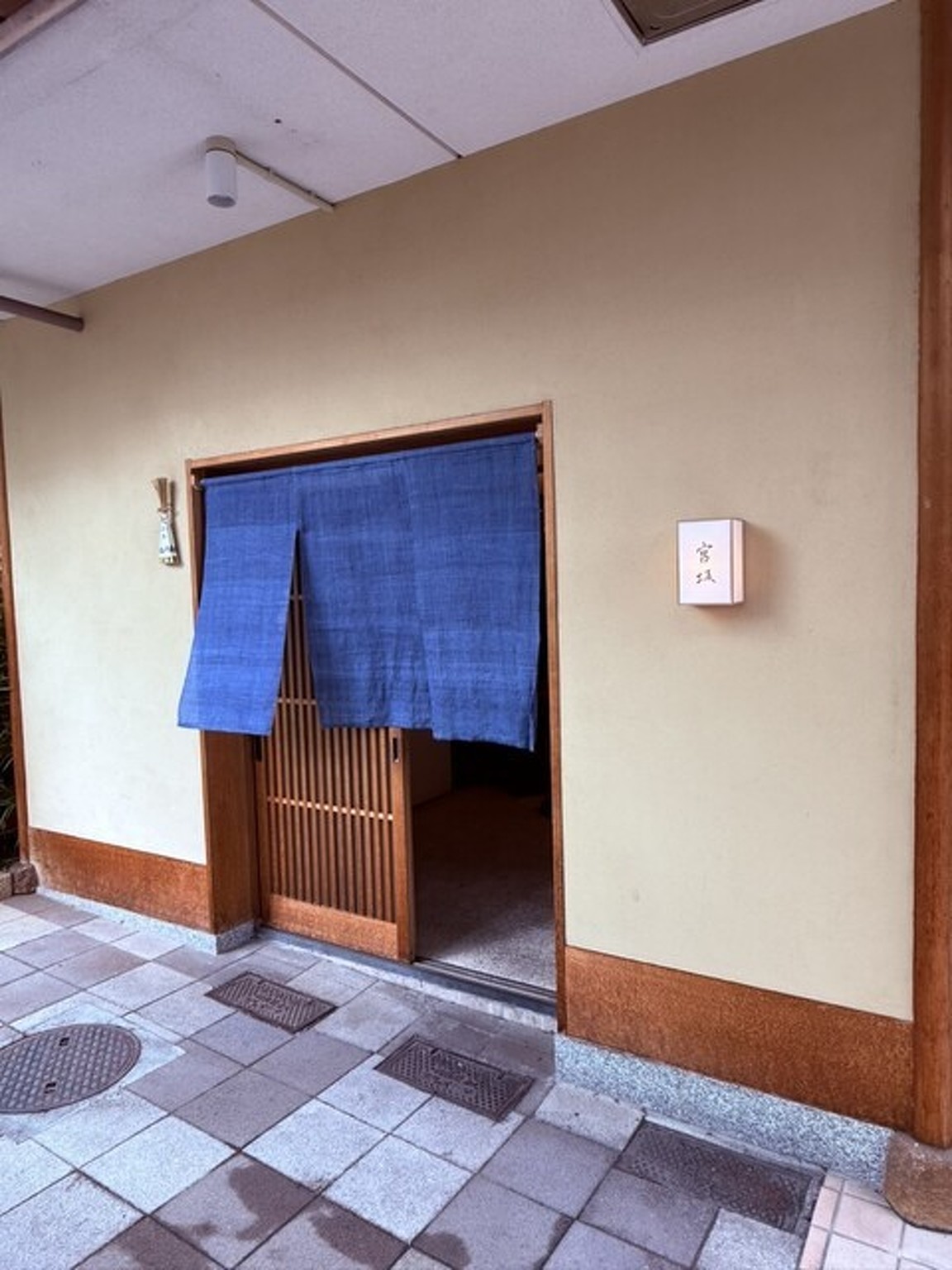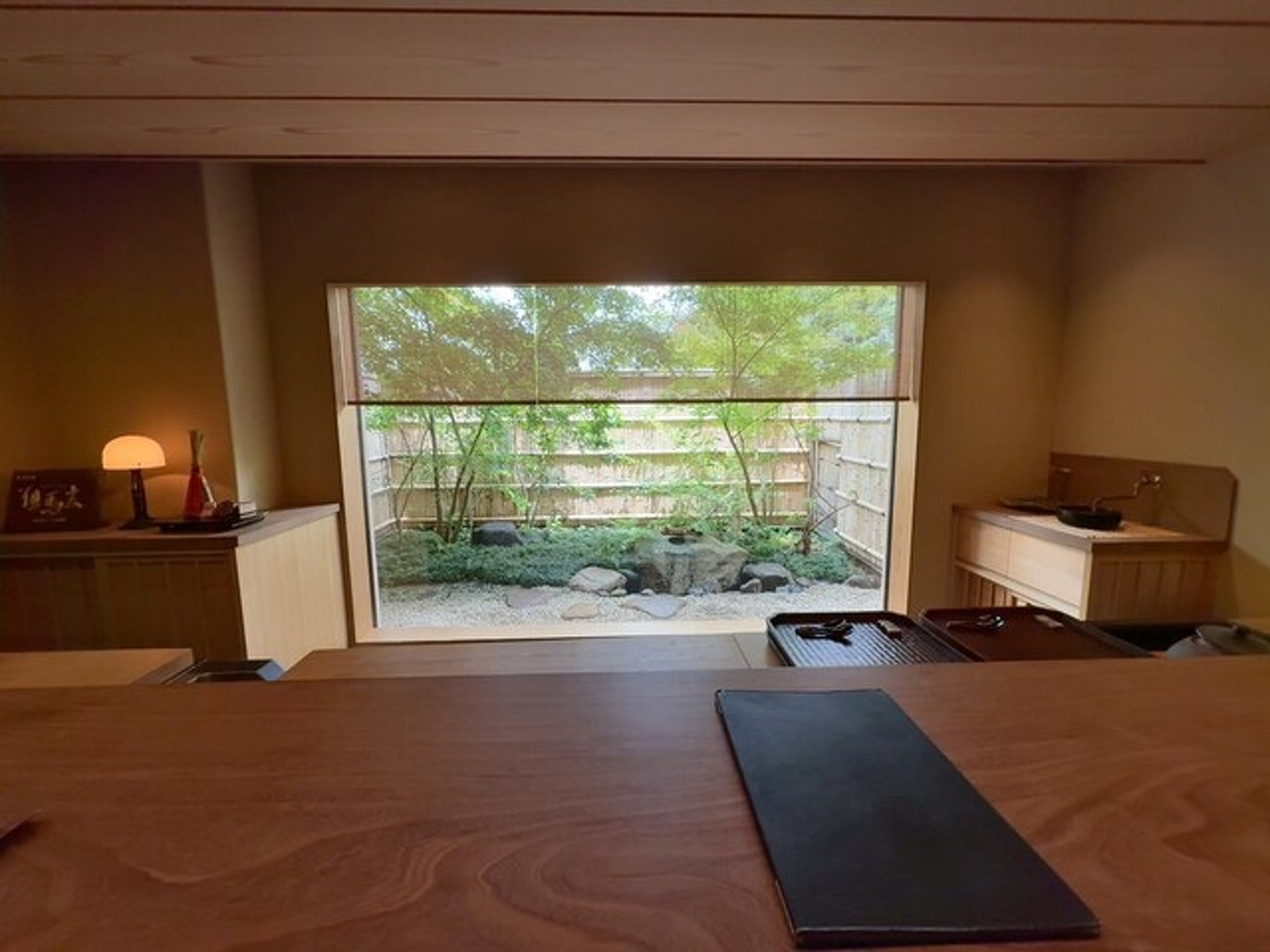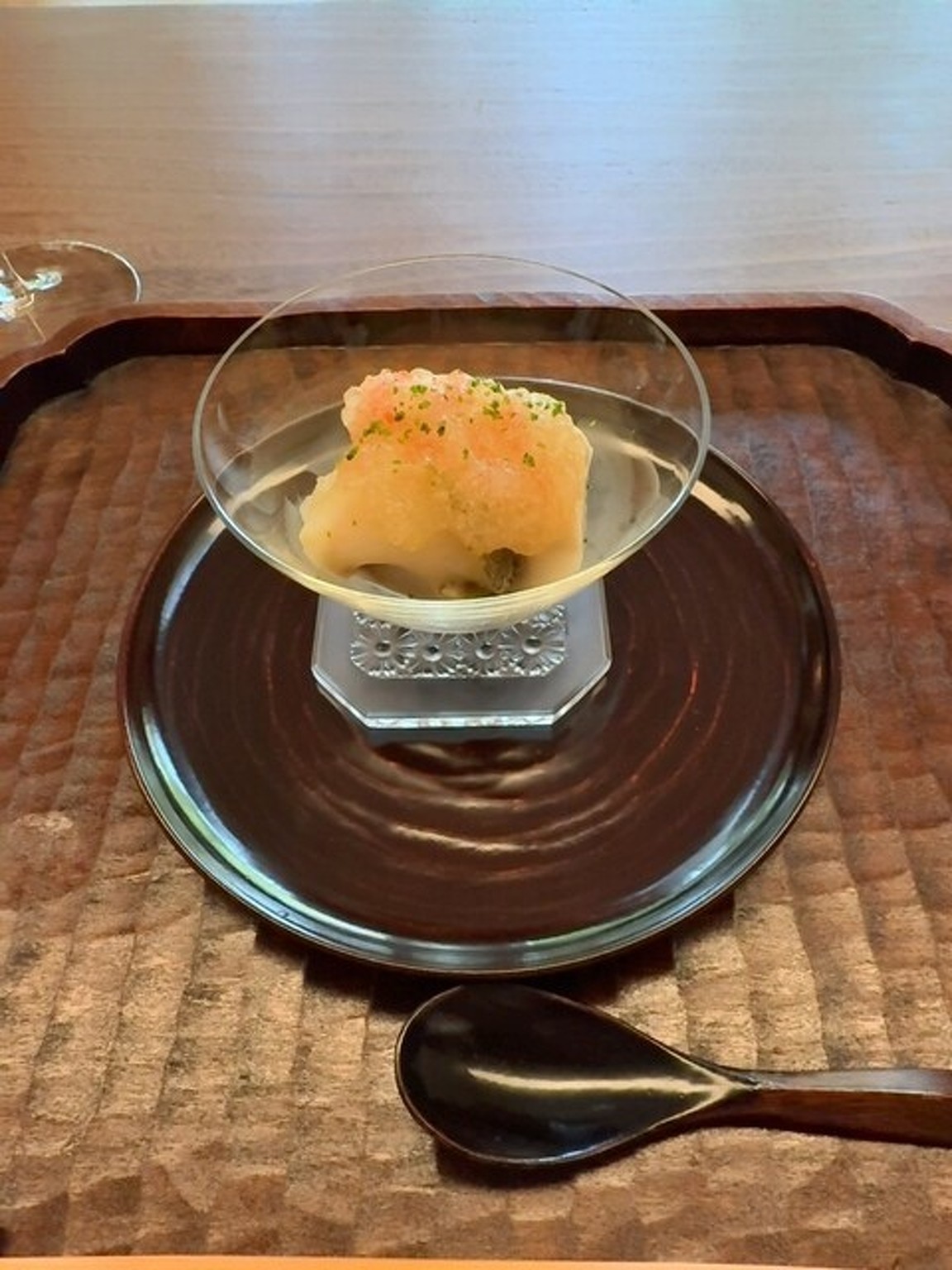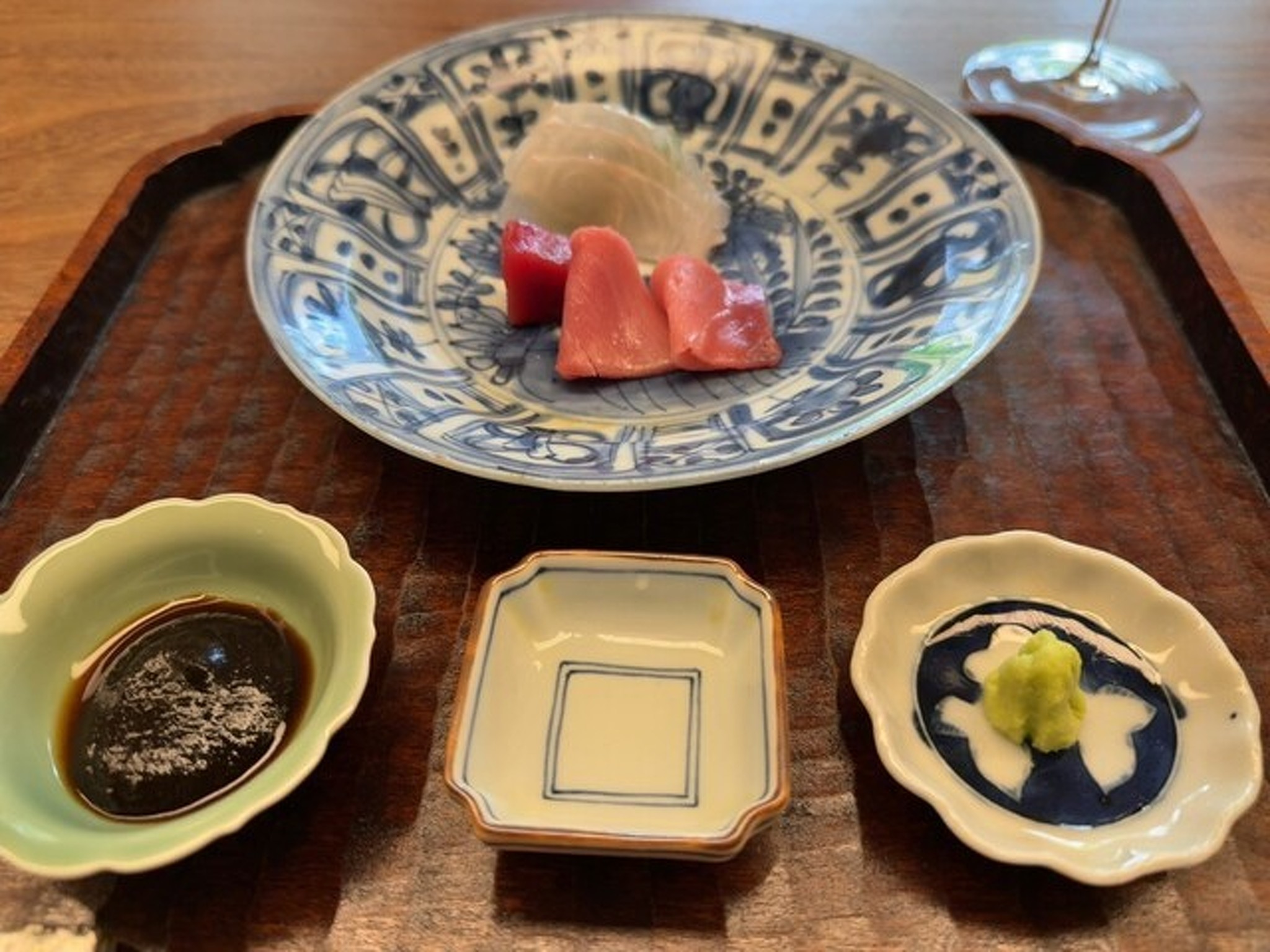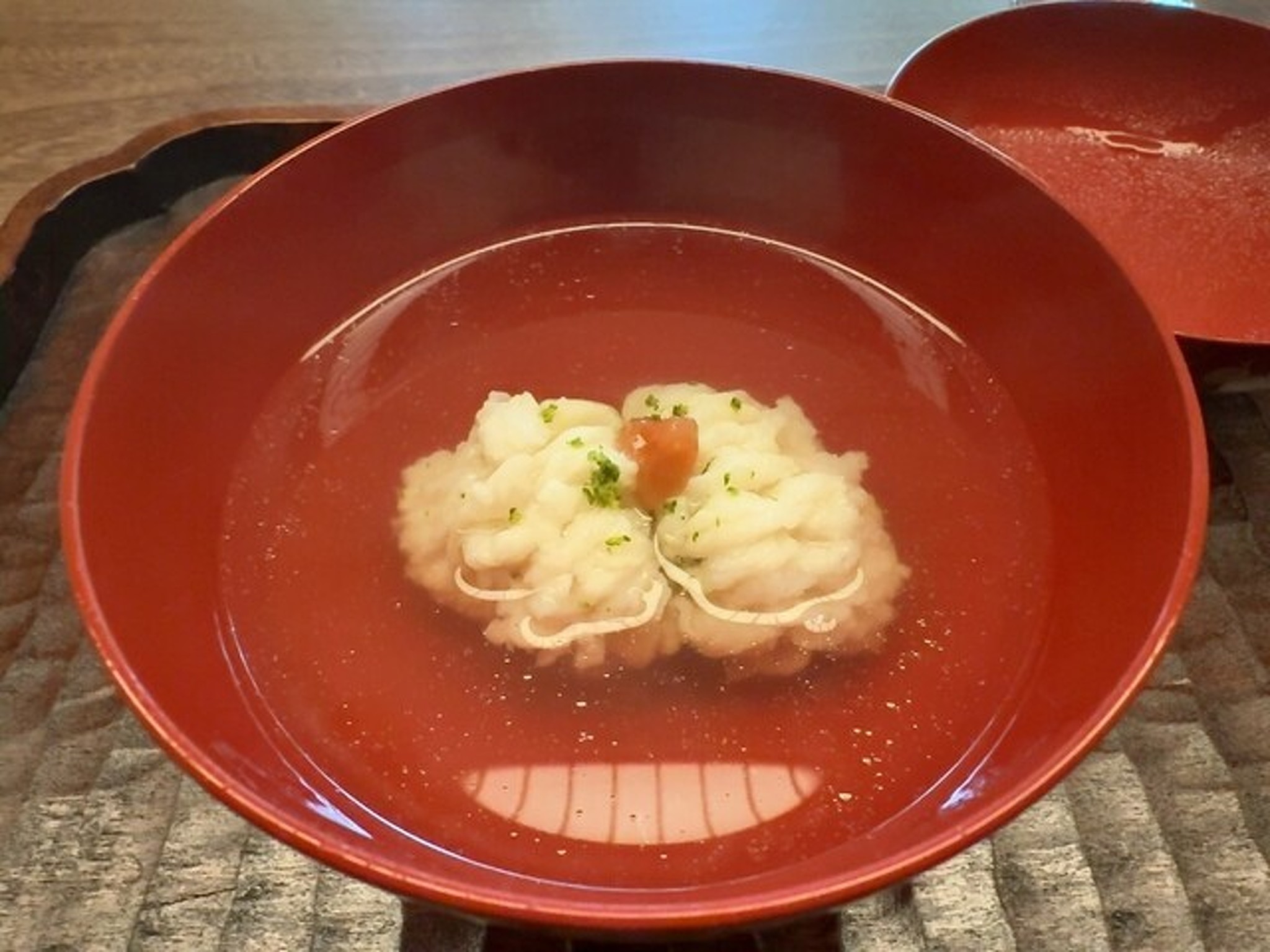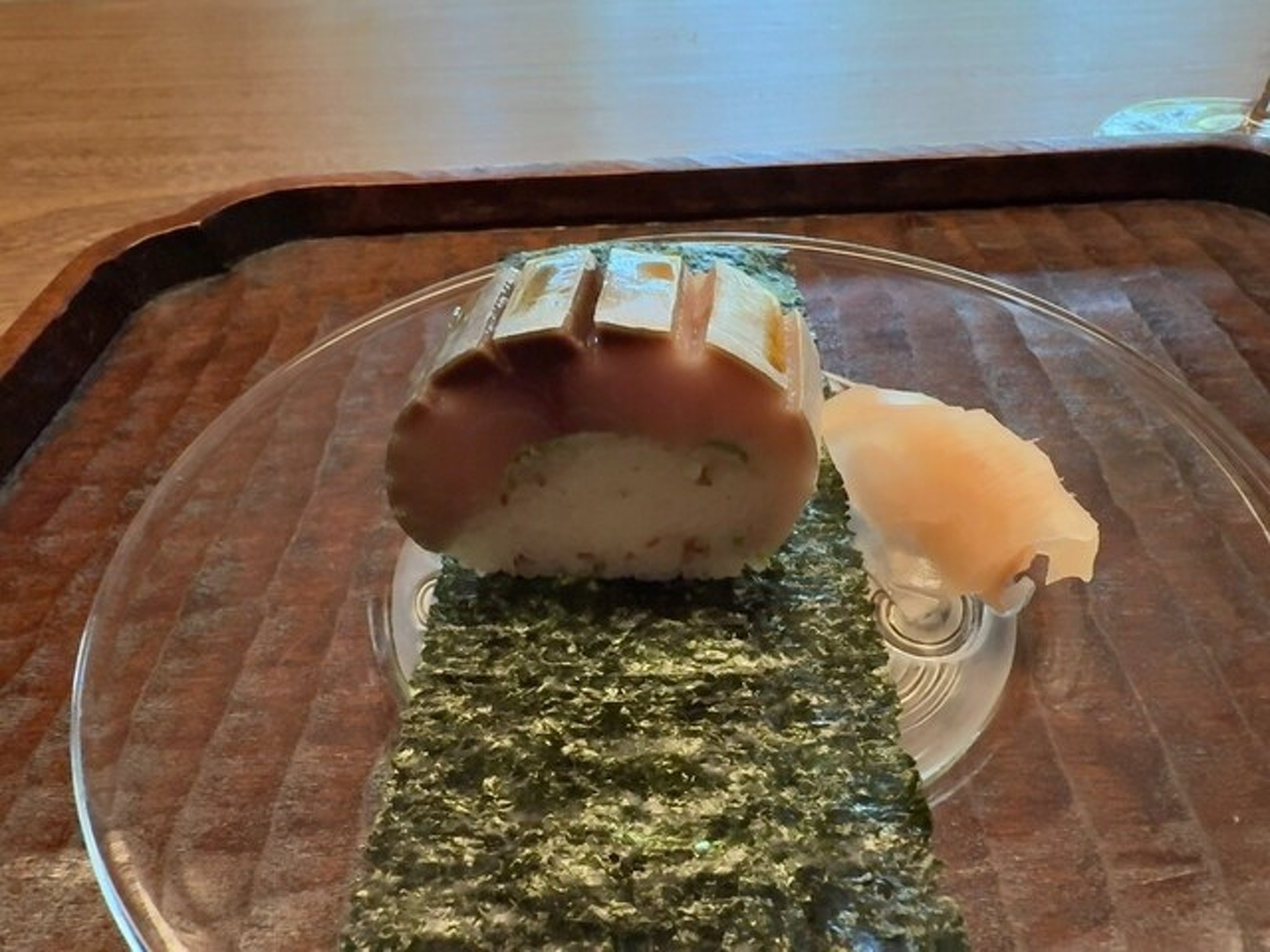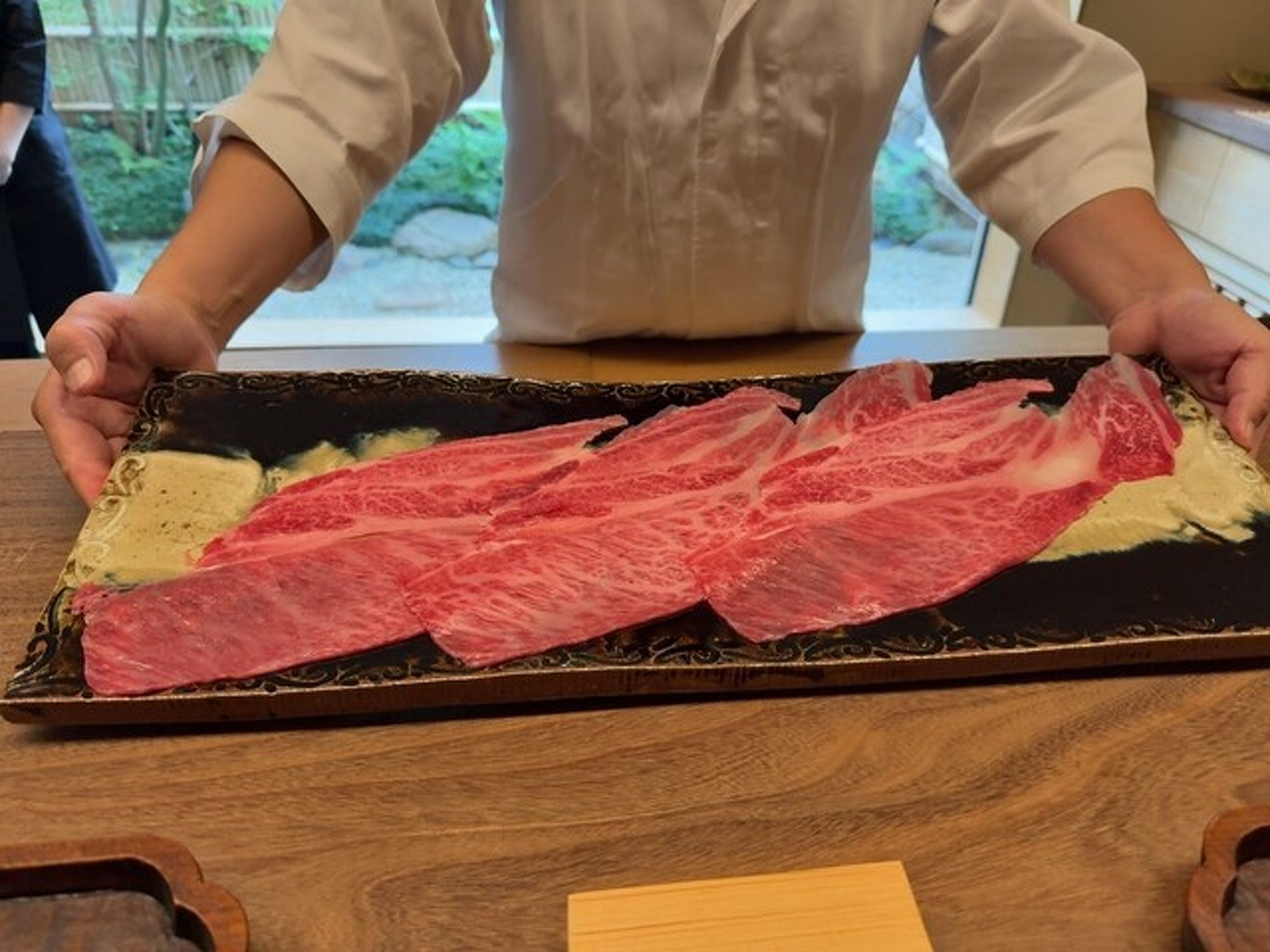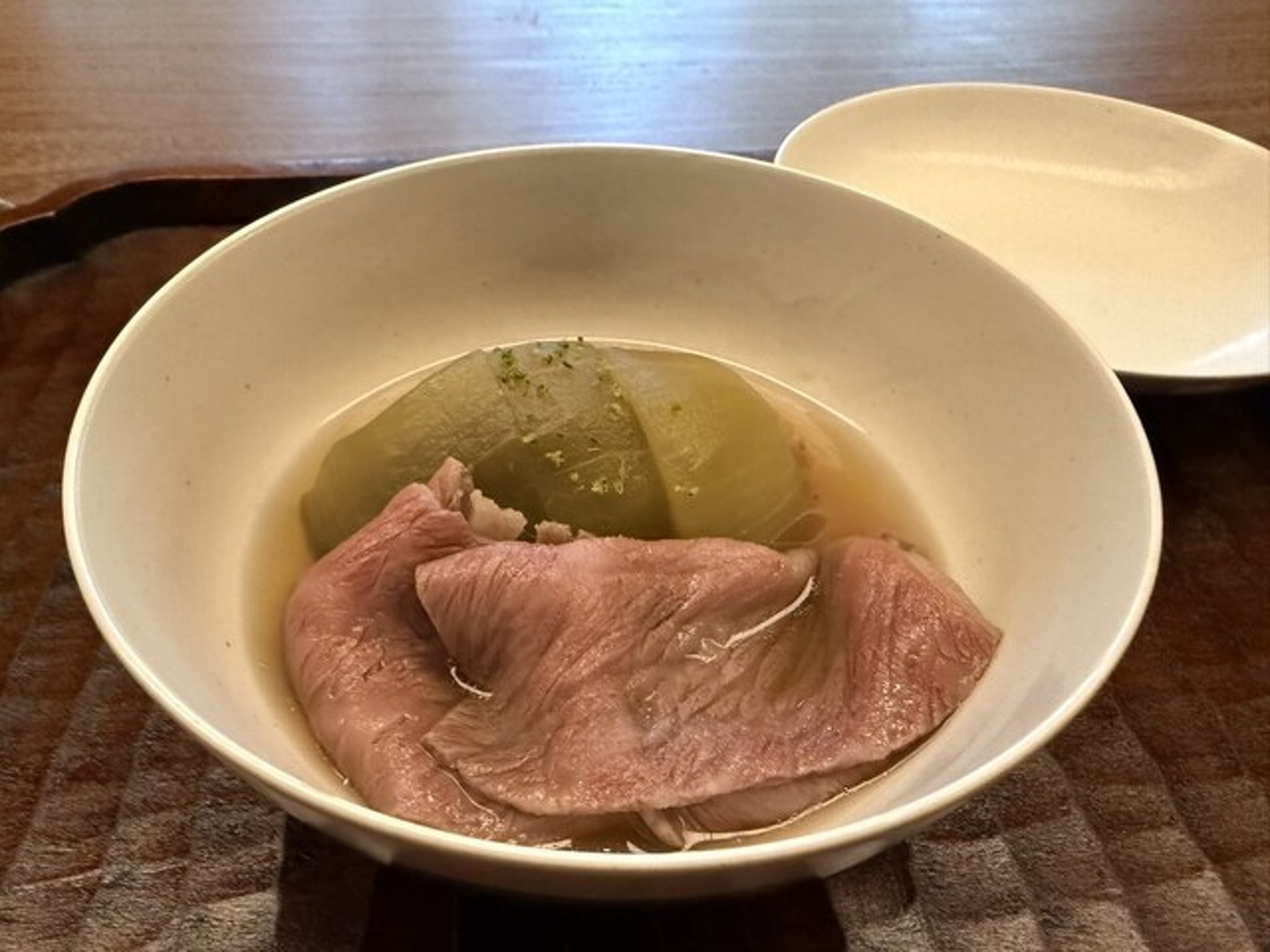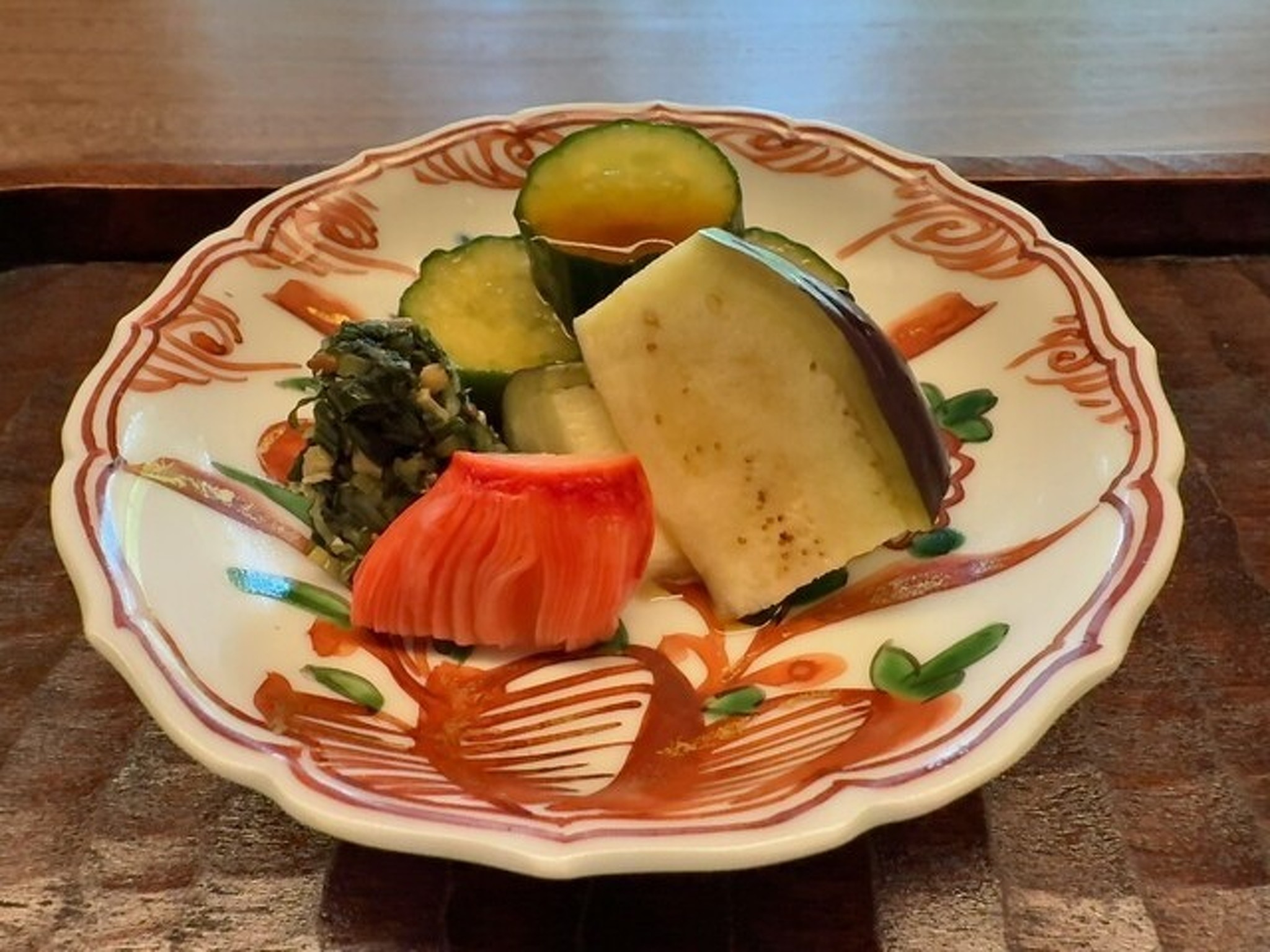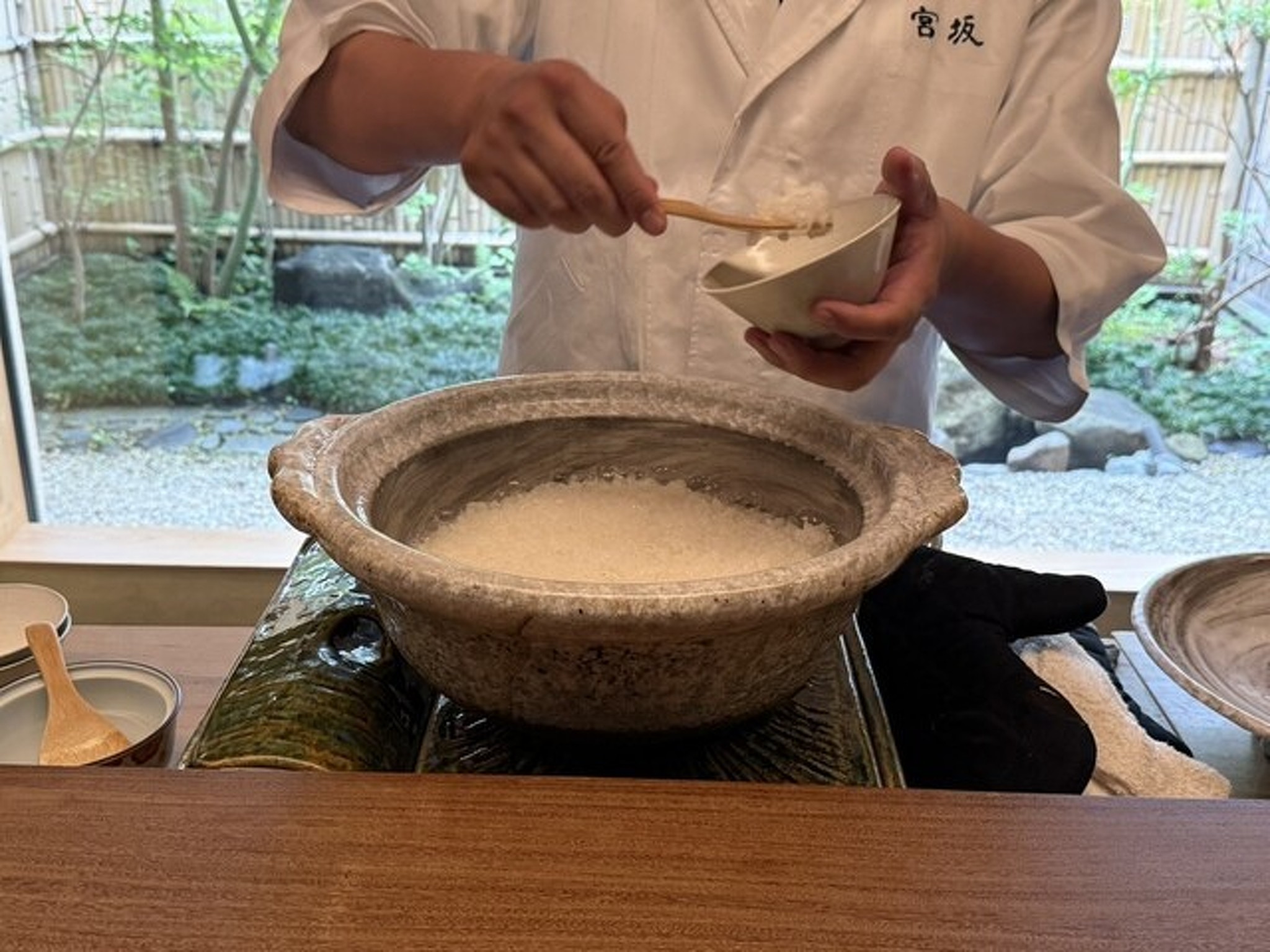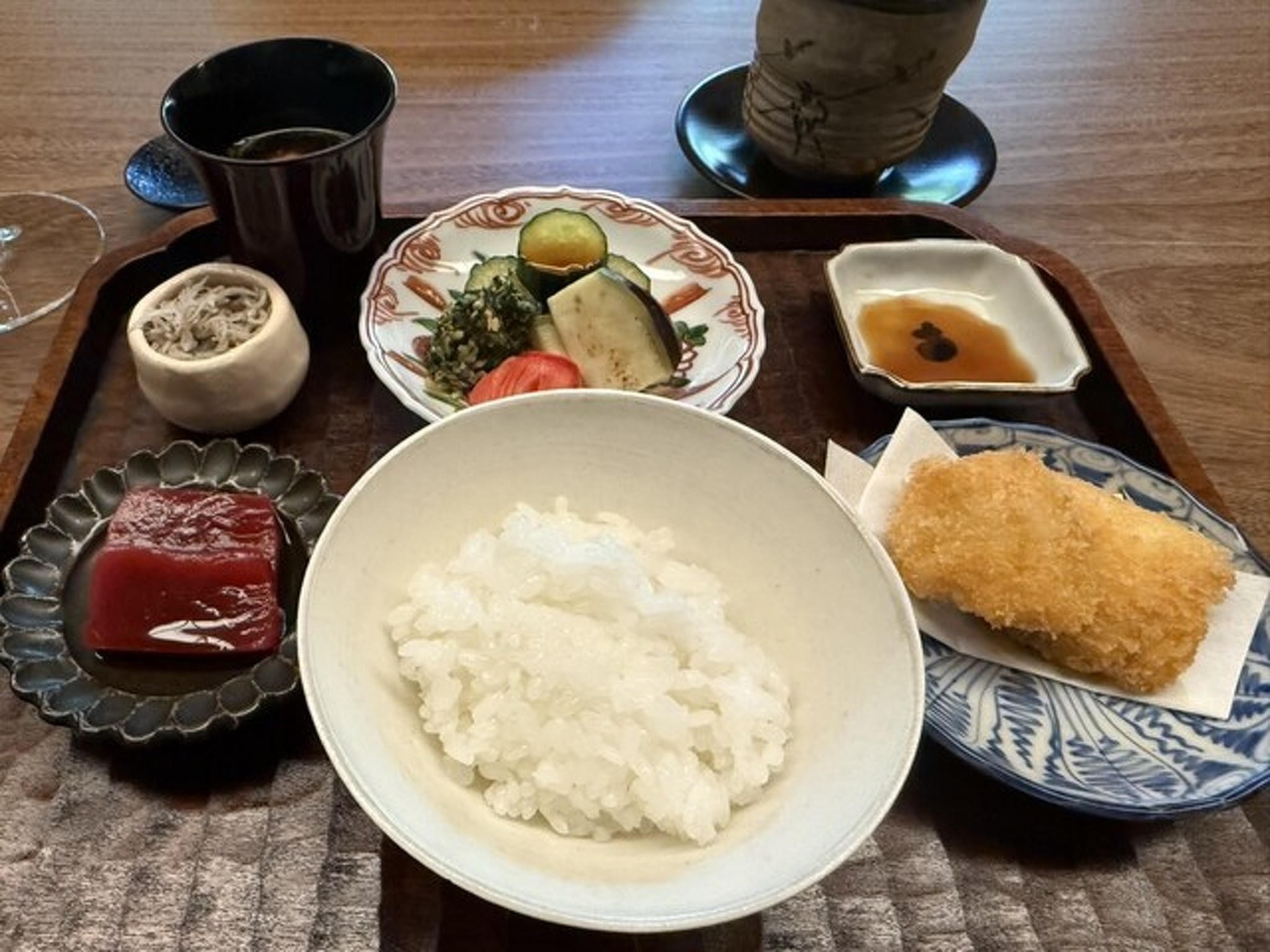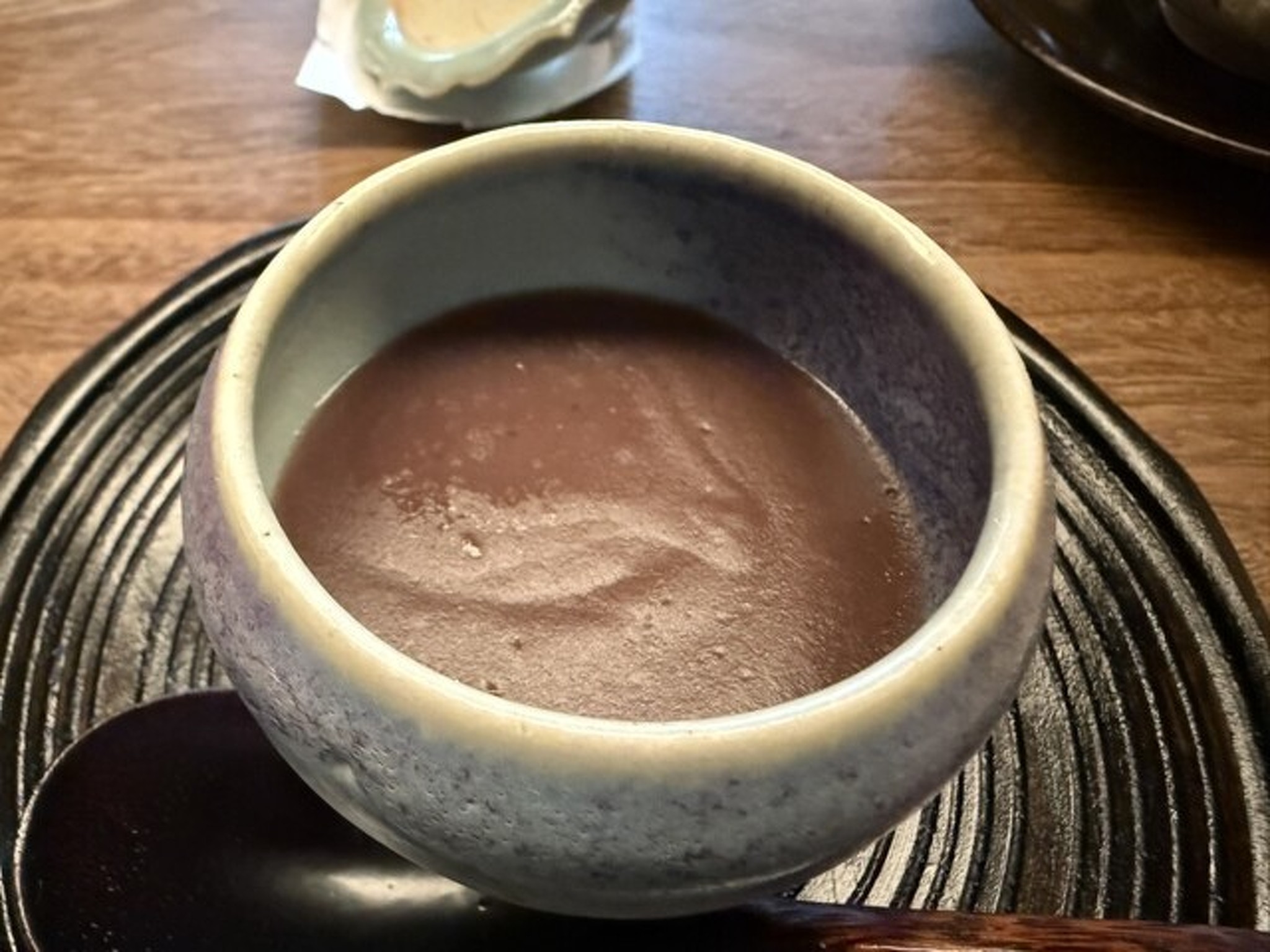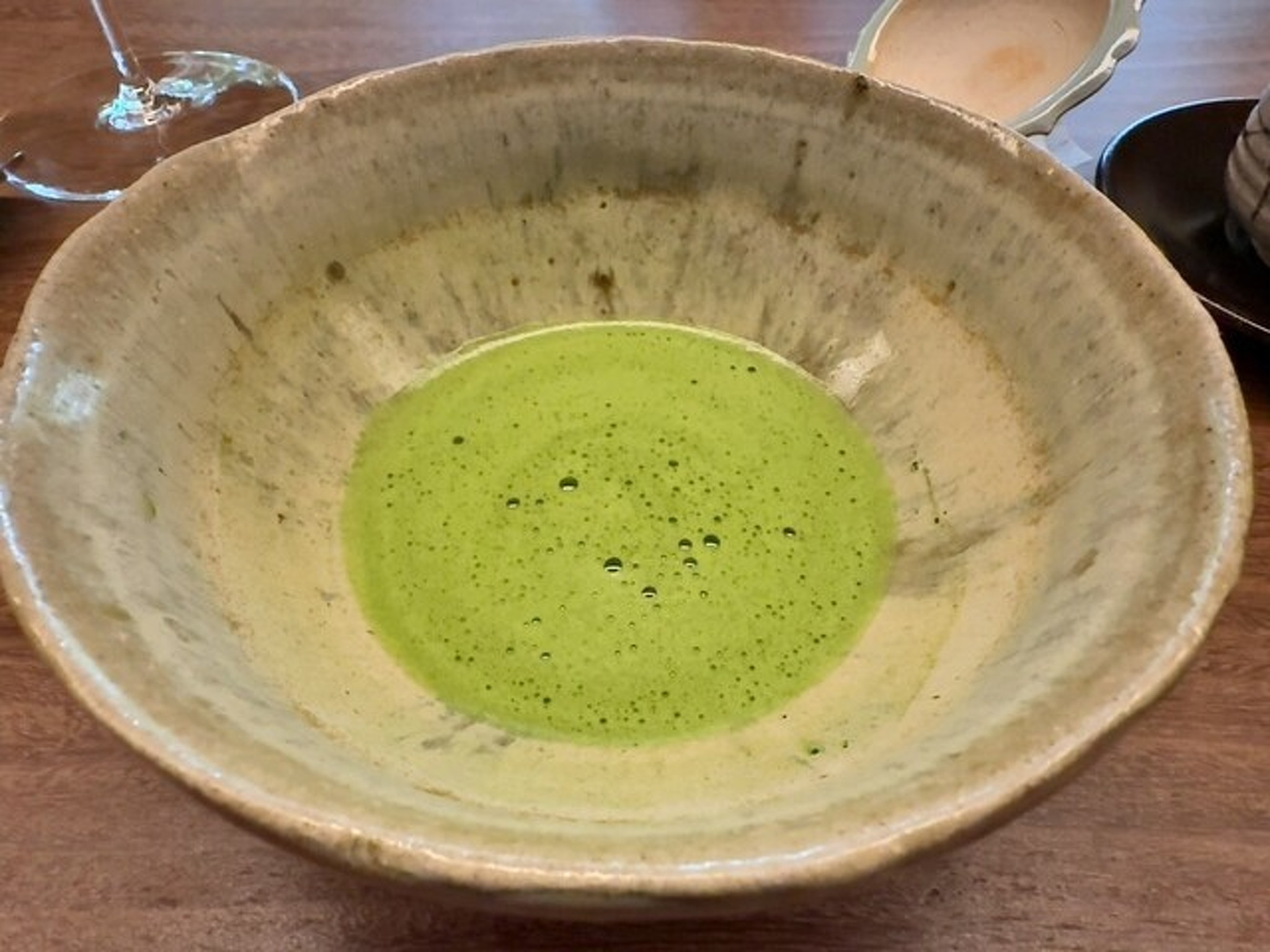
Beyond the large window facing the counter lies a seasonal garden. The sound of water from the bamboo fountain, the hand-washing basin, and the bamboo fence are beautifully arranged, creating a serene atmosphere that is elegant yet not ostentatious. The owner's hospitality, which cherishes the spirit of tea ceremony, naturally comes through in the setting.The first dish, a sesame tofu, immediately captured my heart. Beneath the jewel-like shimmering dashi jelly, there were perfectly cooked sweet shrimp and abalone. The cool sesame tofu, with its rich aroma, combined with the clear umami of the dashi, created a refreshing aftertaste that lingered in my mouth.Next was the seasonal side dish featuring tuna and flounder. The medium fatty tuna offered a blissful taste, with its rich aroma and deep umami gradually spreading. On the other hand, the flounder had a delightful crunch and a remarkable texture, and when enjoyed with salt, its delicate flavor was further enhanced. This dish exuded absolute confidence in the quality of its ingredients.The most memorable dish of the day was the soup. Watching the beautiful knife skills as the conger eel from Awaji Island was filleted right in front of me felt like witnessing a culinary performance. The moment the lid was lifted, the exquisite aroma of the dashi wafted up, taking my breath away. The eel, cooked to perfection, was astonishingly tender, releasing umami with every bite, and a subtle hint of plum aroma elegantly tied the dish together. It was a remarkable bowl that truly captured the essence of Japanese cuisine.The mackerel sushi served as a vinegared dish was one of the highlights of the day. The thick mackerel was perfectly marinated, retaining only the rich flavor of the fat without any unpleasant odor. Wrapped in fragrant seaweed like a rice ball, taking a big bite revealed a wave of the mackerel's rich umami combined with a hint of sansho pepper. Without a doubt, it was the pinnacle of mackerel sushi I have ever had, making me want to return just for this dish.The simmered dish featured Tanba black beef and Kamo eggplant. The Tanba beef, briefly dipped in dashi, retained its tenderness and inherent flavor beautifully, while the Kamo eggplant absorbed the high-quality dashi and beef umami, creating a wonderful combination that complemented each other. Even without flamboyance, the dish reflected the aesthetic of subtraction typical of Japanese cuisine.The final rice dish was cooked to fluffy perfection in a large clay pot, and the moment the lid was opened, the steam and glossy beauty captivated me. Each grain stood out, and when I took a bite, the juicy sweetness and rich aroma spread delightfully. Accompanied by pickles, fragrant chirimen sansho, moderately pickled tuna, and luxuriously prepared fried conger eel that was crispy on the outside and fluffy on the inside, I couldn't stop eating. The deliciousness compelled me to ask for a second helping. The meticulous attention to detail until the last grain of rice reaffirmed the restaurant's exceptional skill.For dessert, there was a red bean yokan with white flower beans. The sweetness was restrained, allowing the rich aroma of the red beans to shine, and it paired perfectly with the beautifully served matcha, concluding the meal quietly and beautifully.Not only the food but also the owner's movements, knife skills, choice of dishes, and the ambiance were all executed without any waste, allowing each plate to convey the seasons and Japanese culture. Despite being located in Omotesando, this restaurant allows you to forget the hustle and bustle of the city and slowly immerse yourself in the depth of Japanese cuisine and the changing seasons. I definitely want to visit again in a different season. It was a great meal.
We use cookies on this site to enhance your user experience.