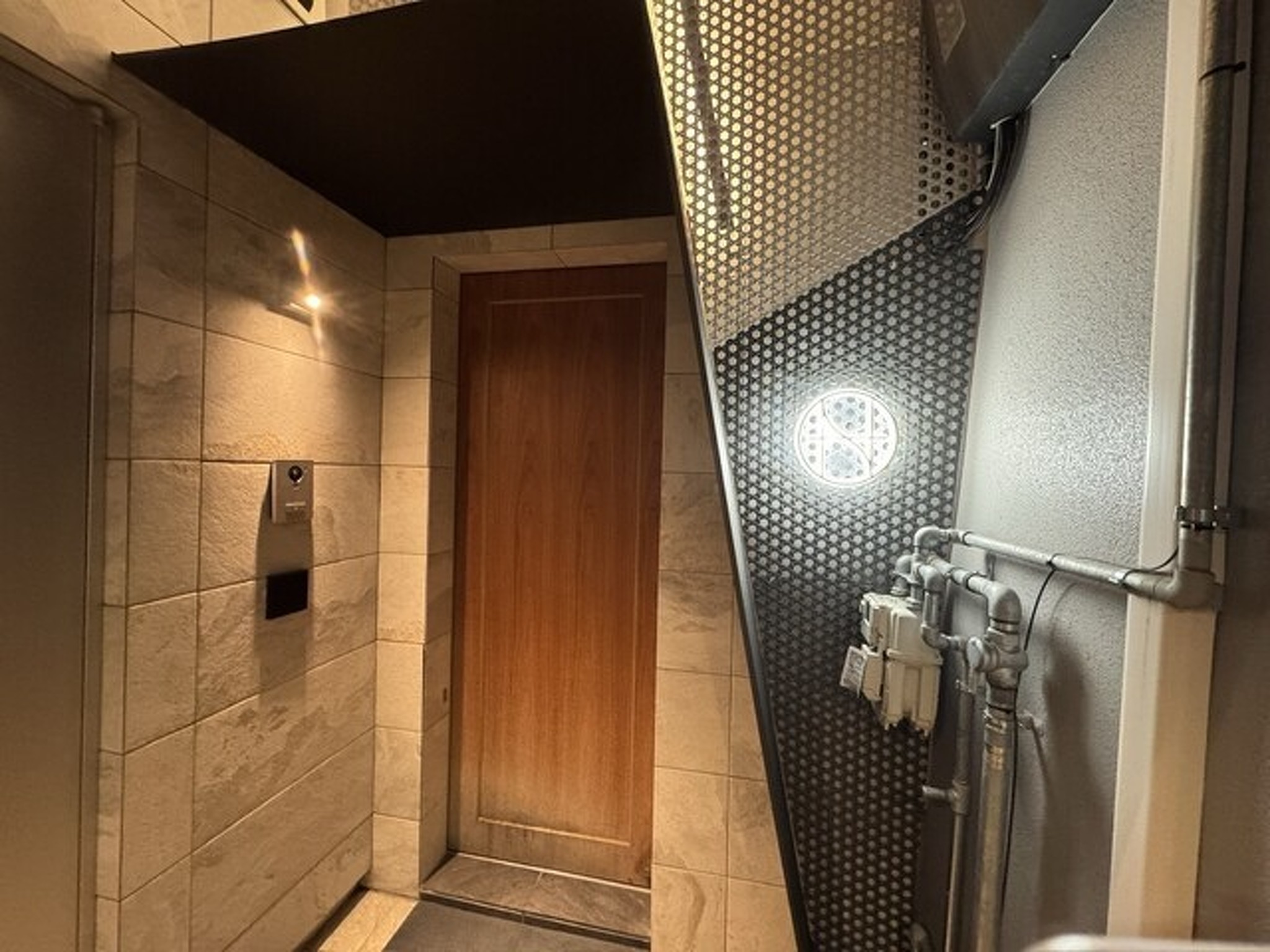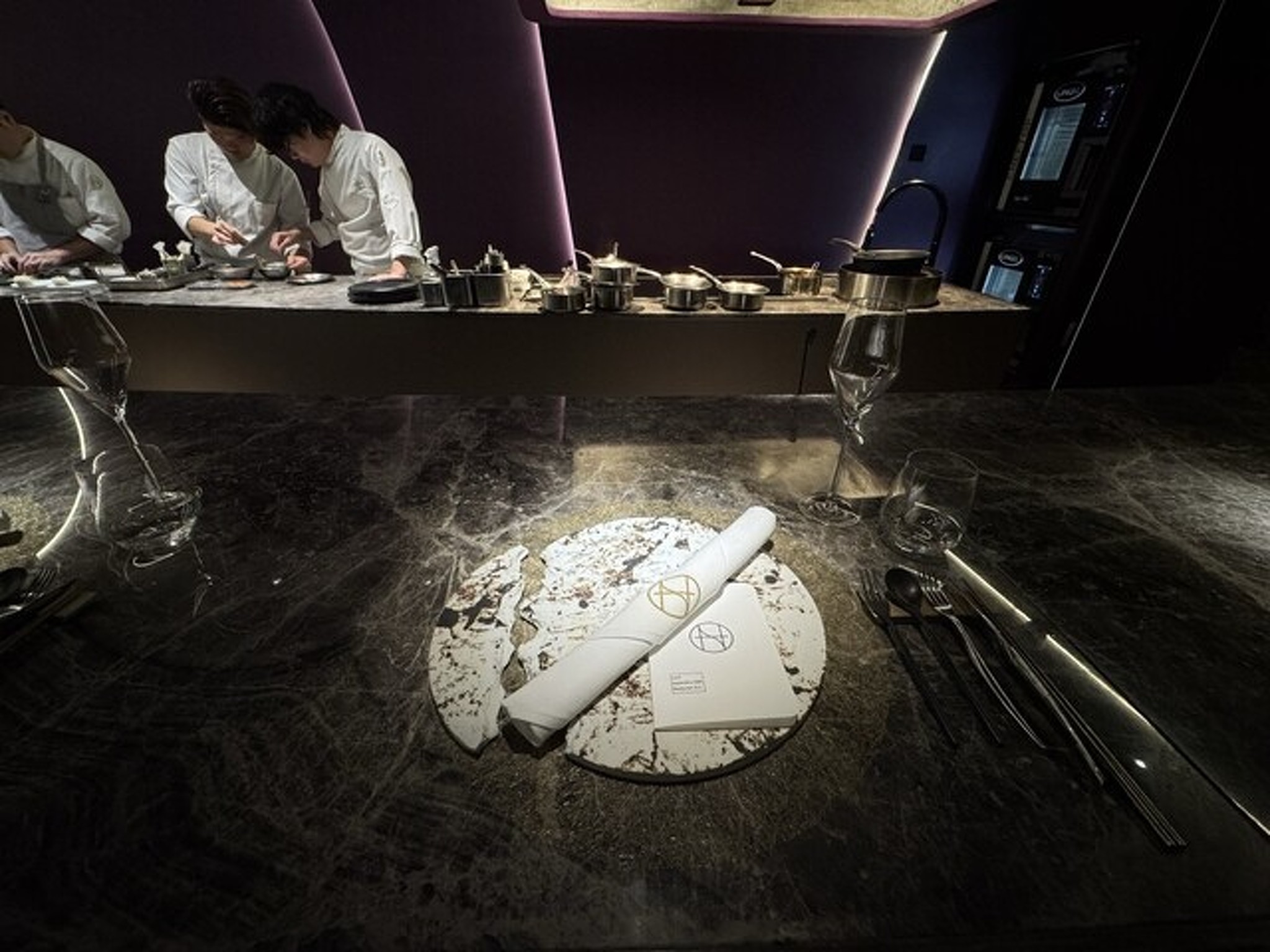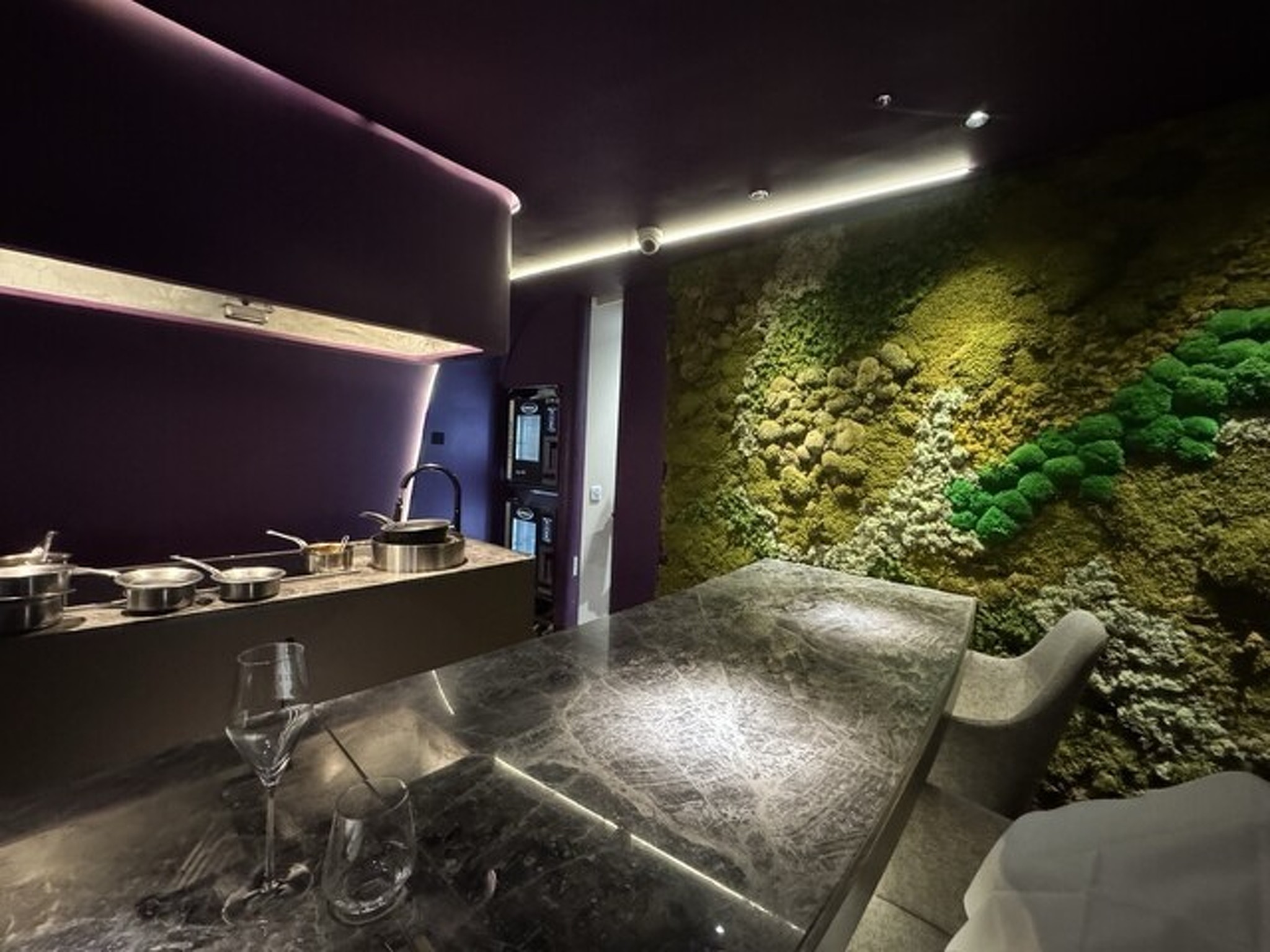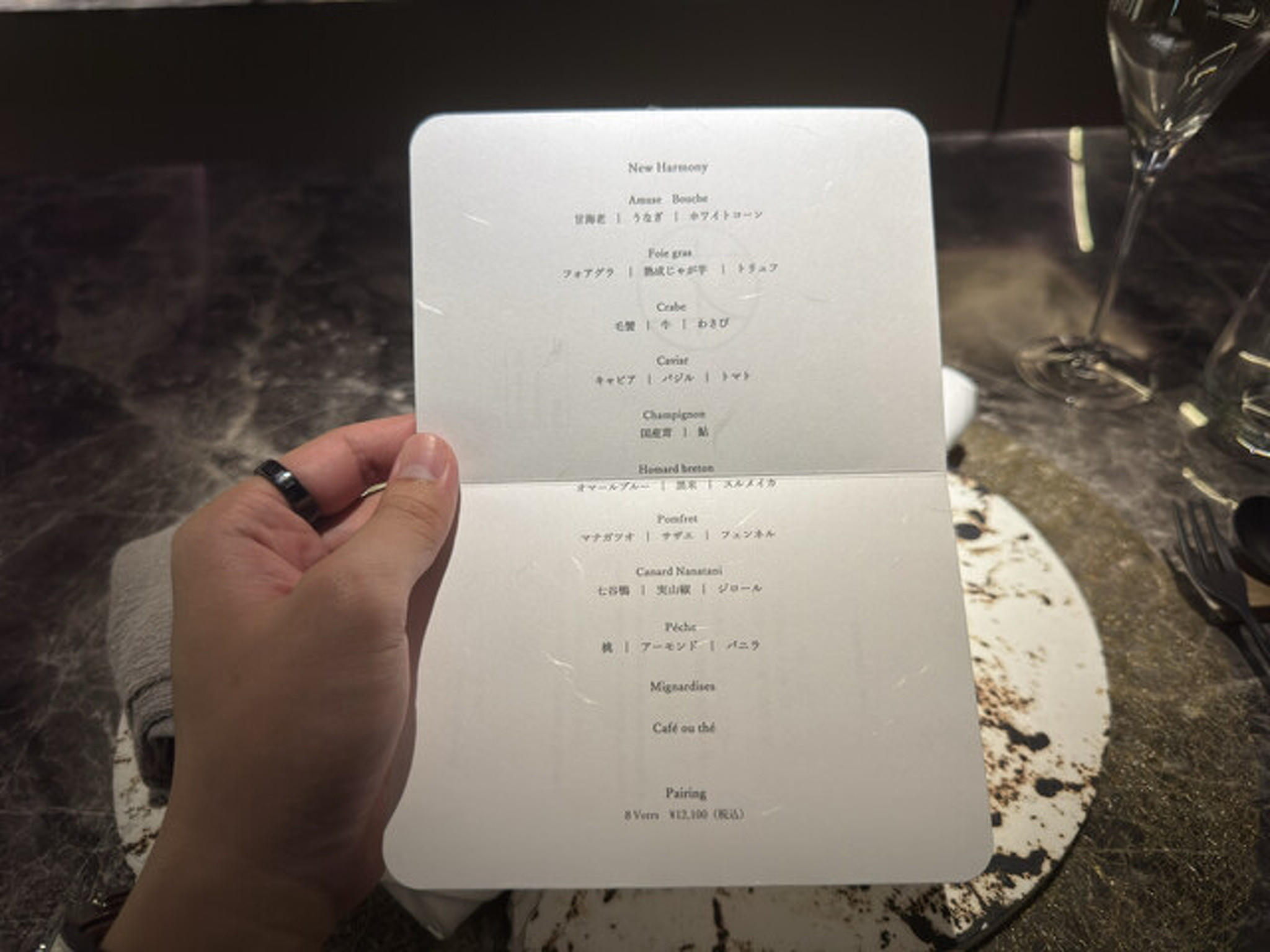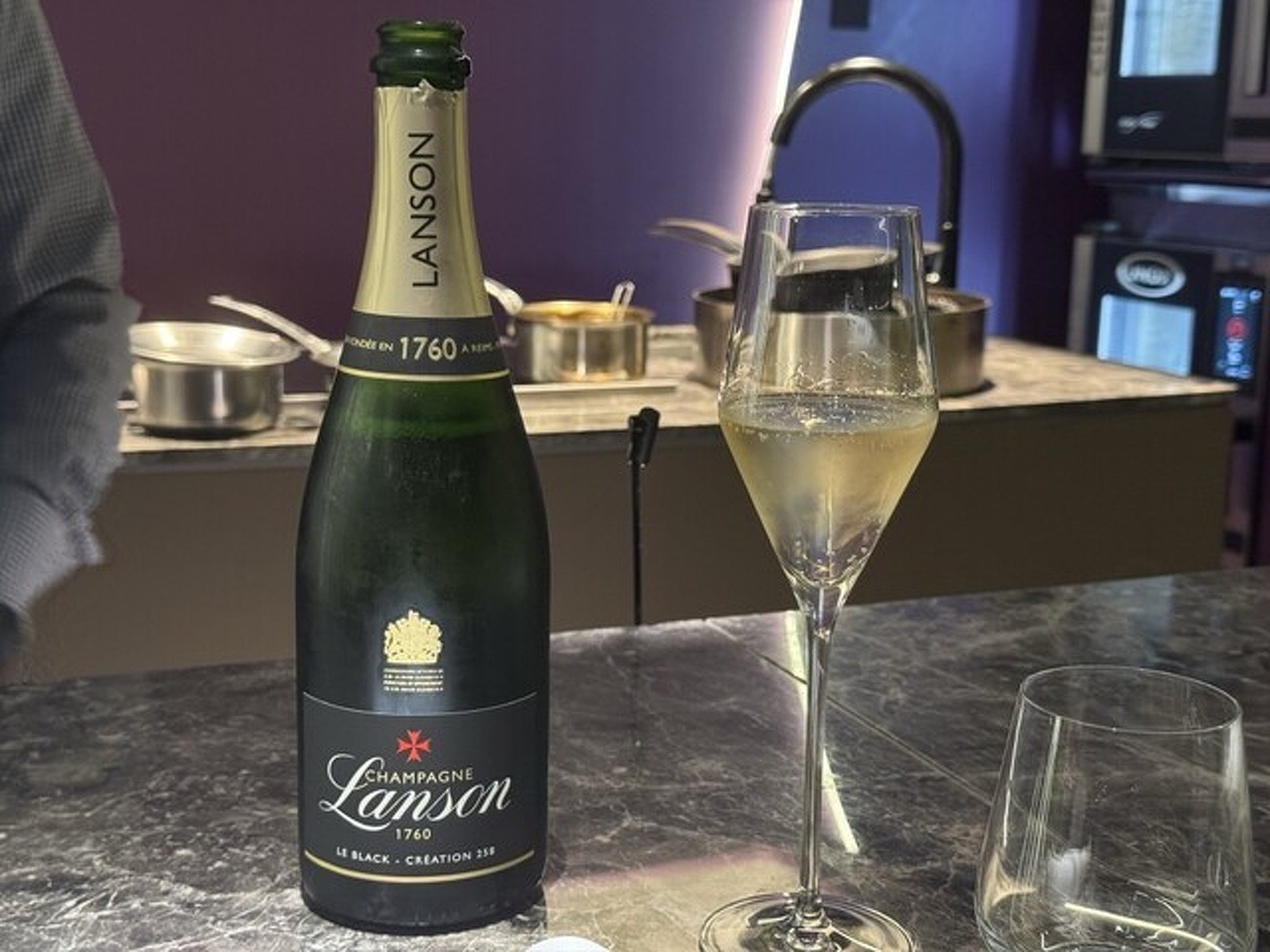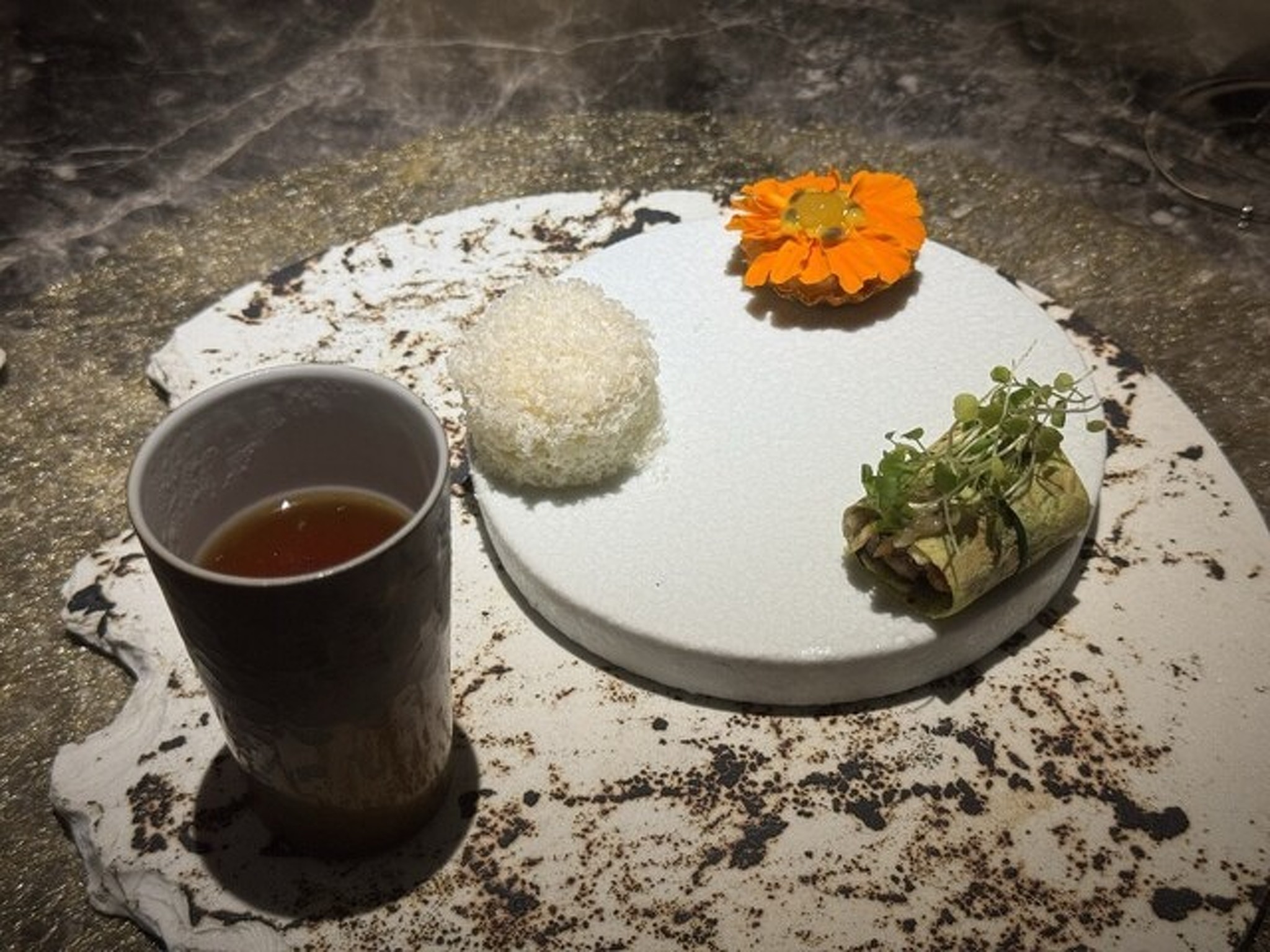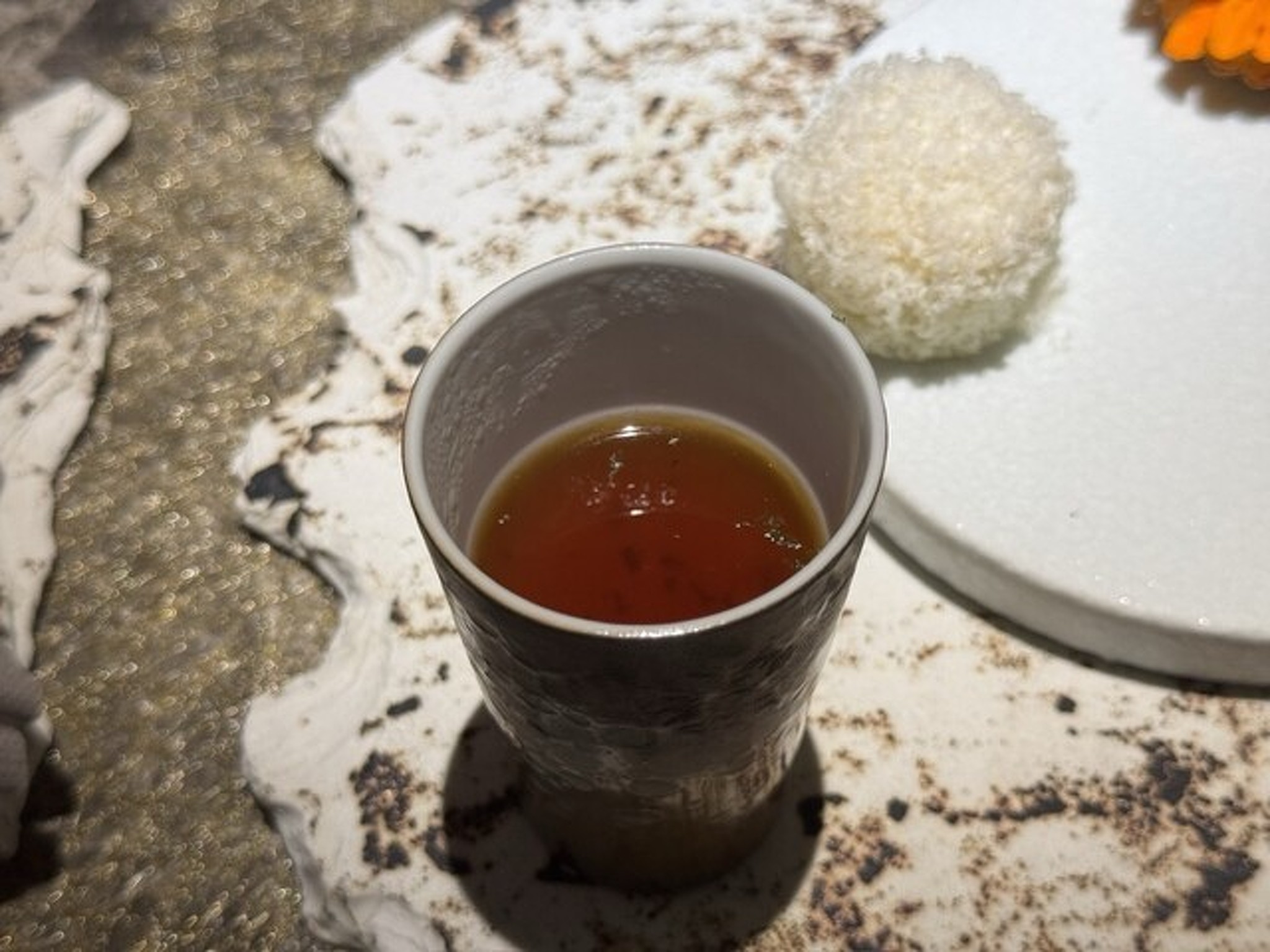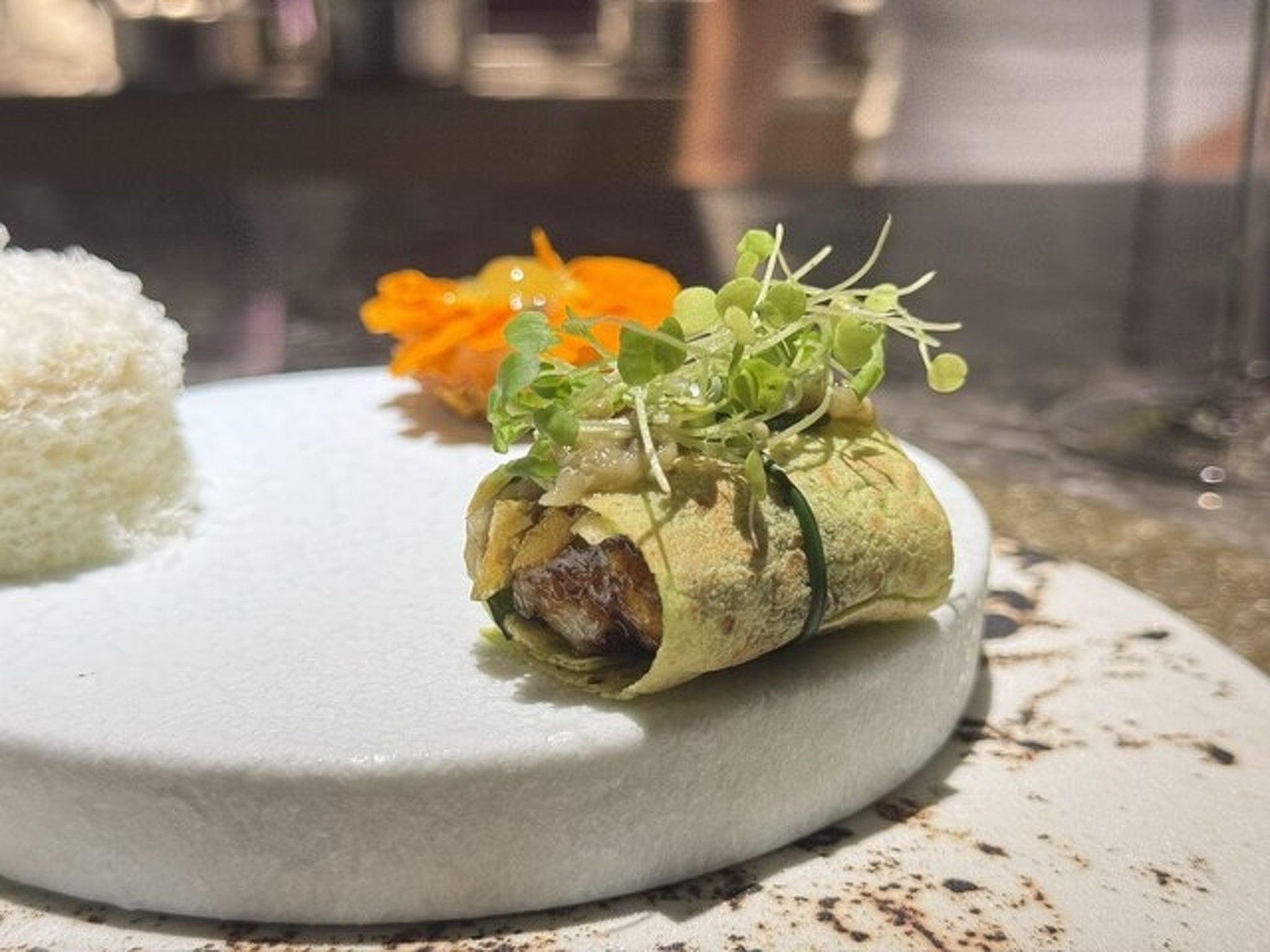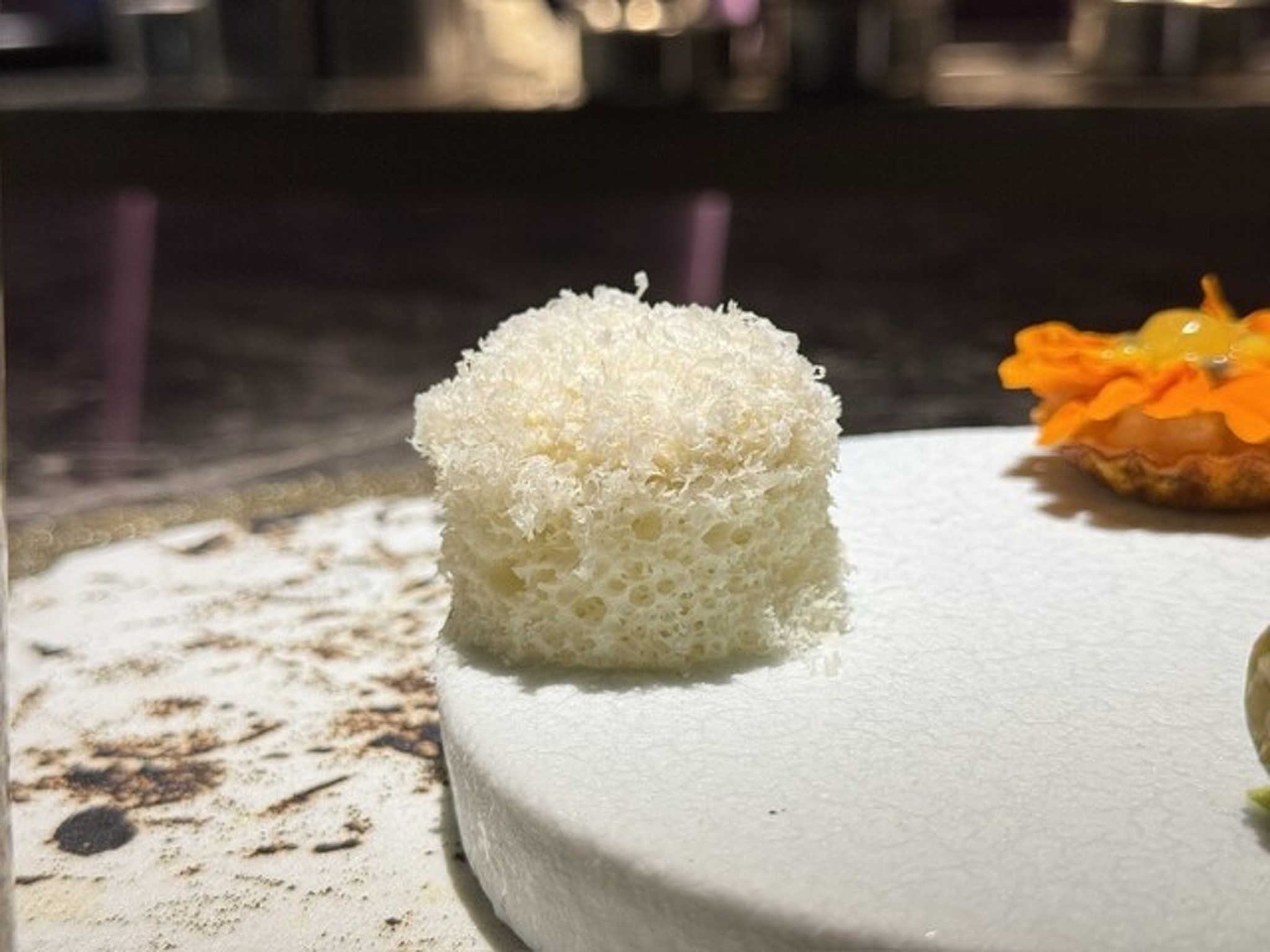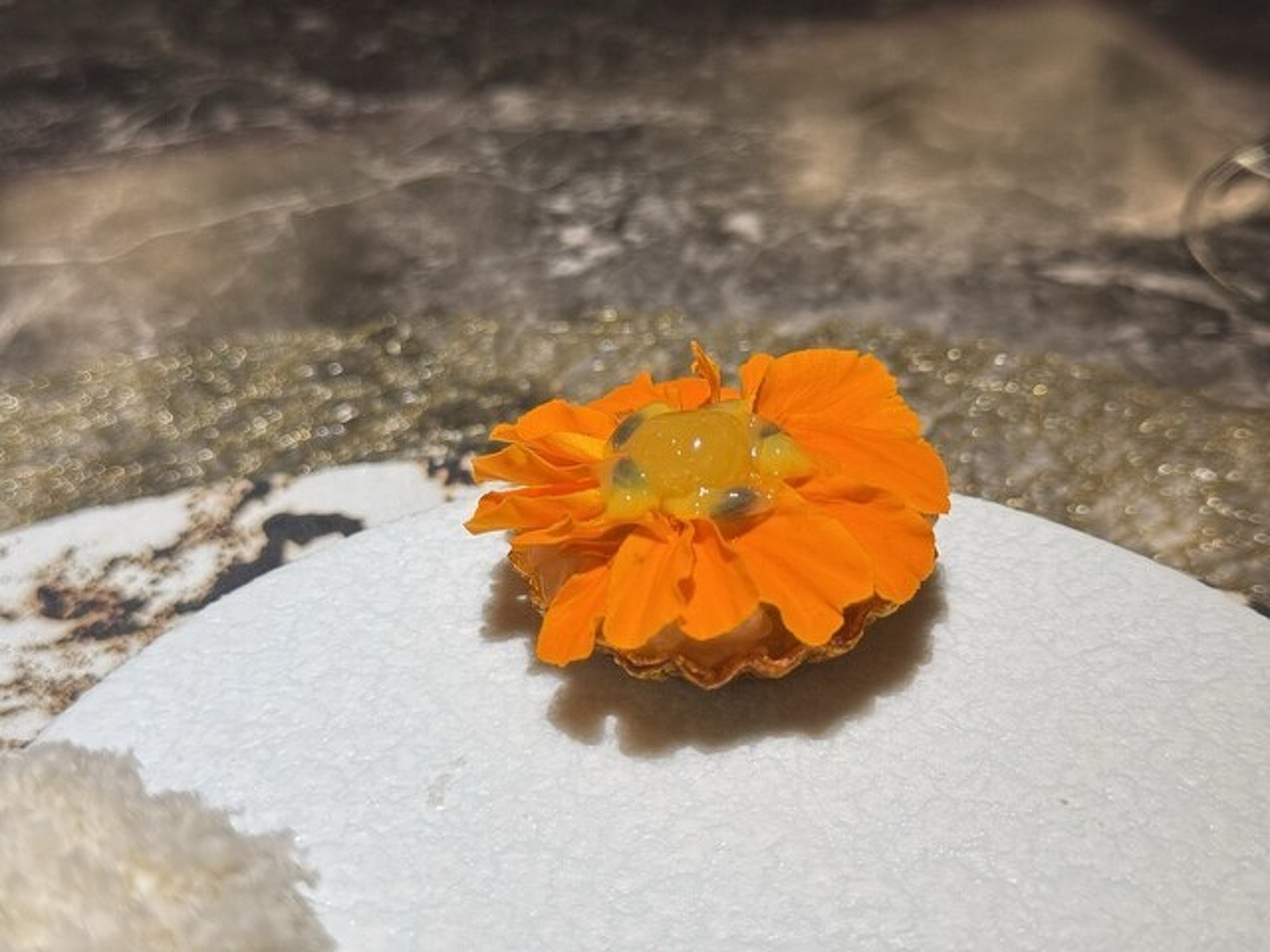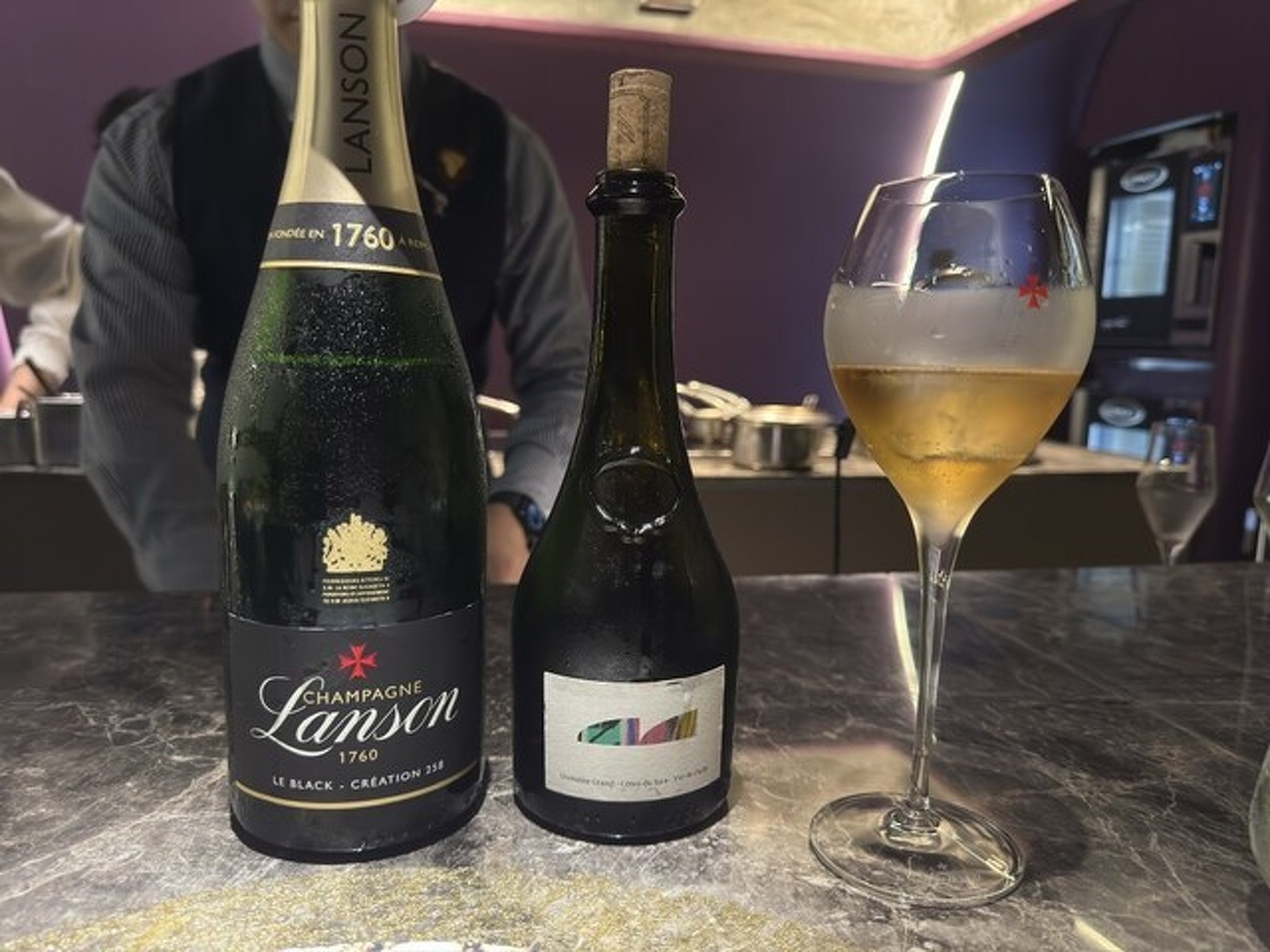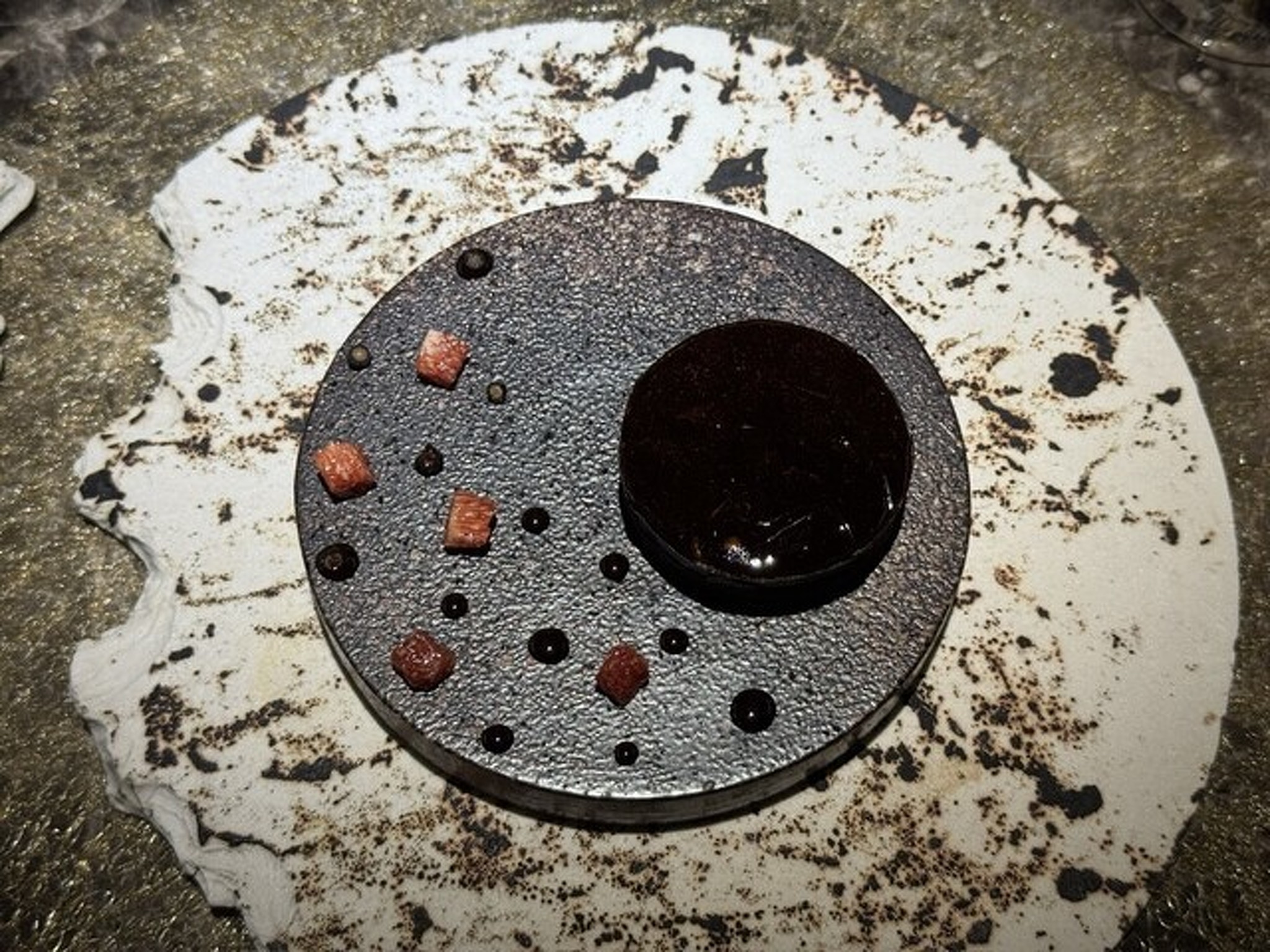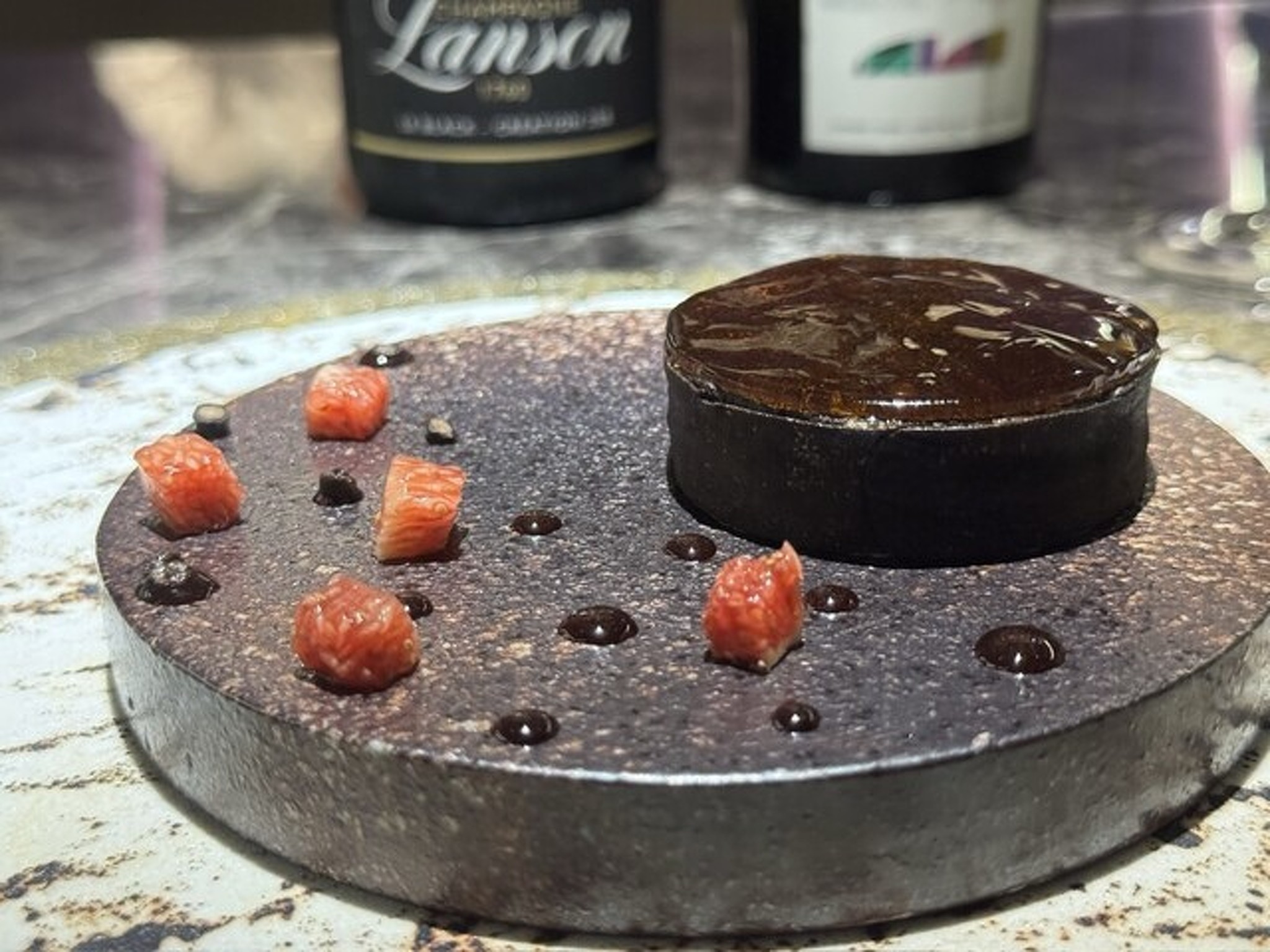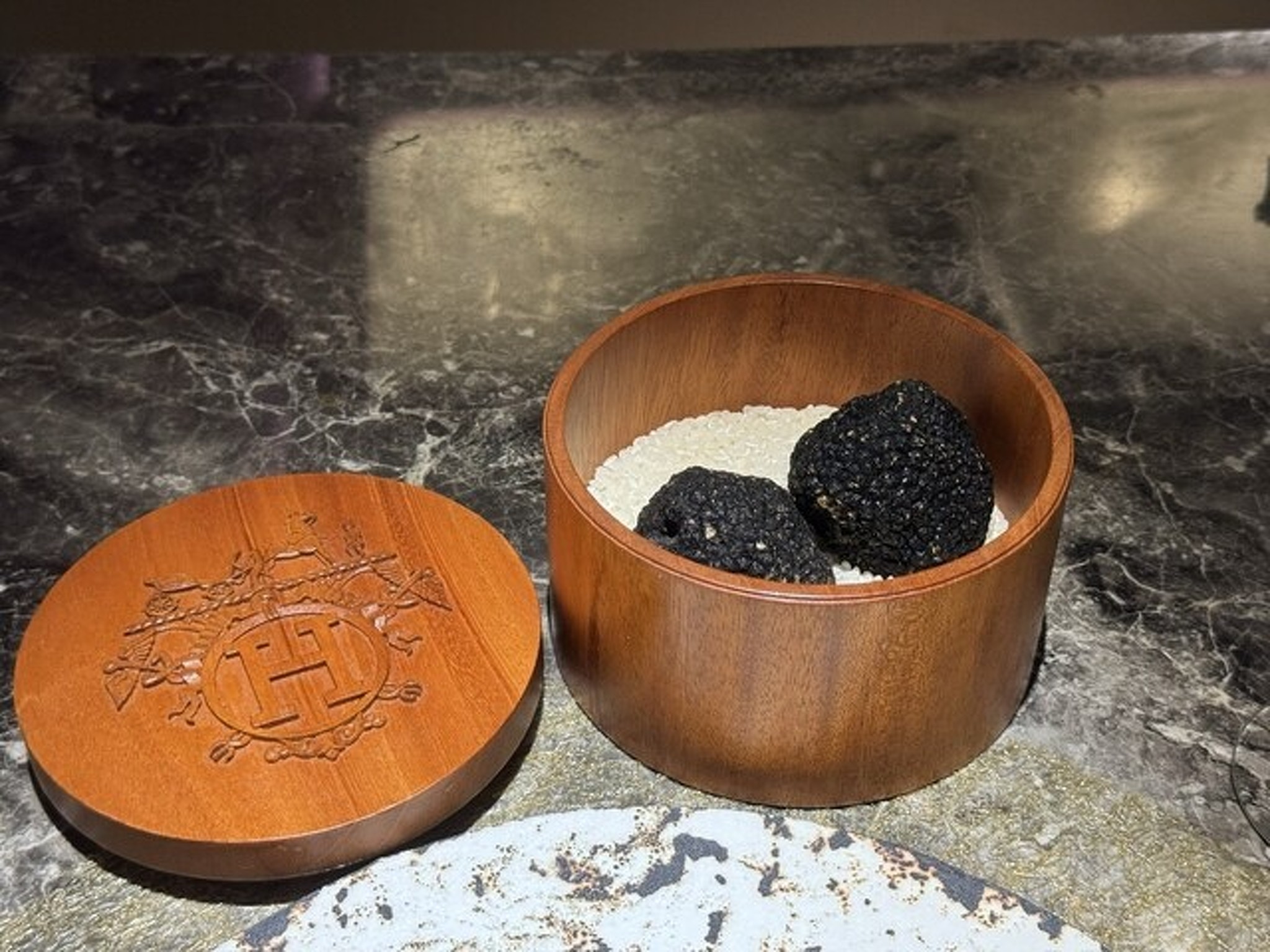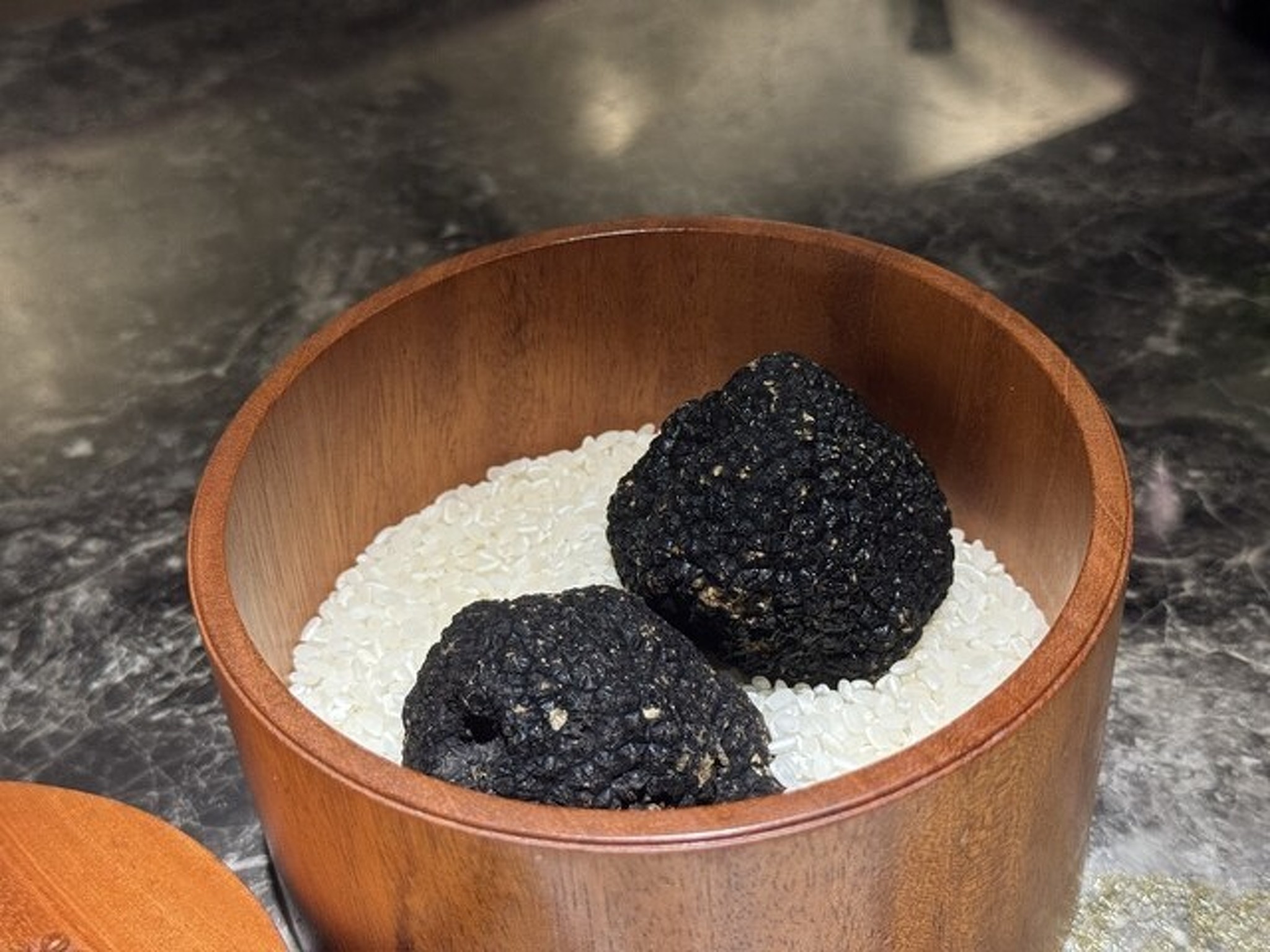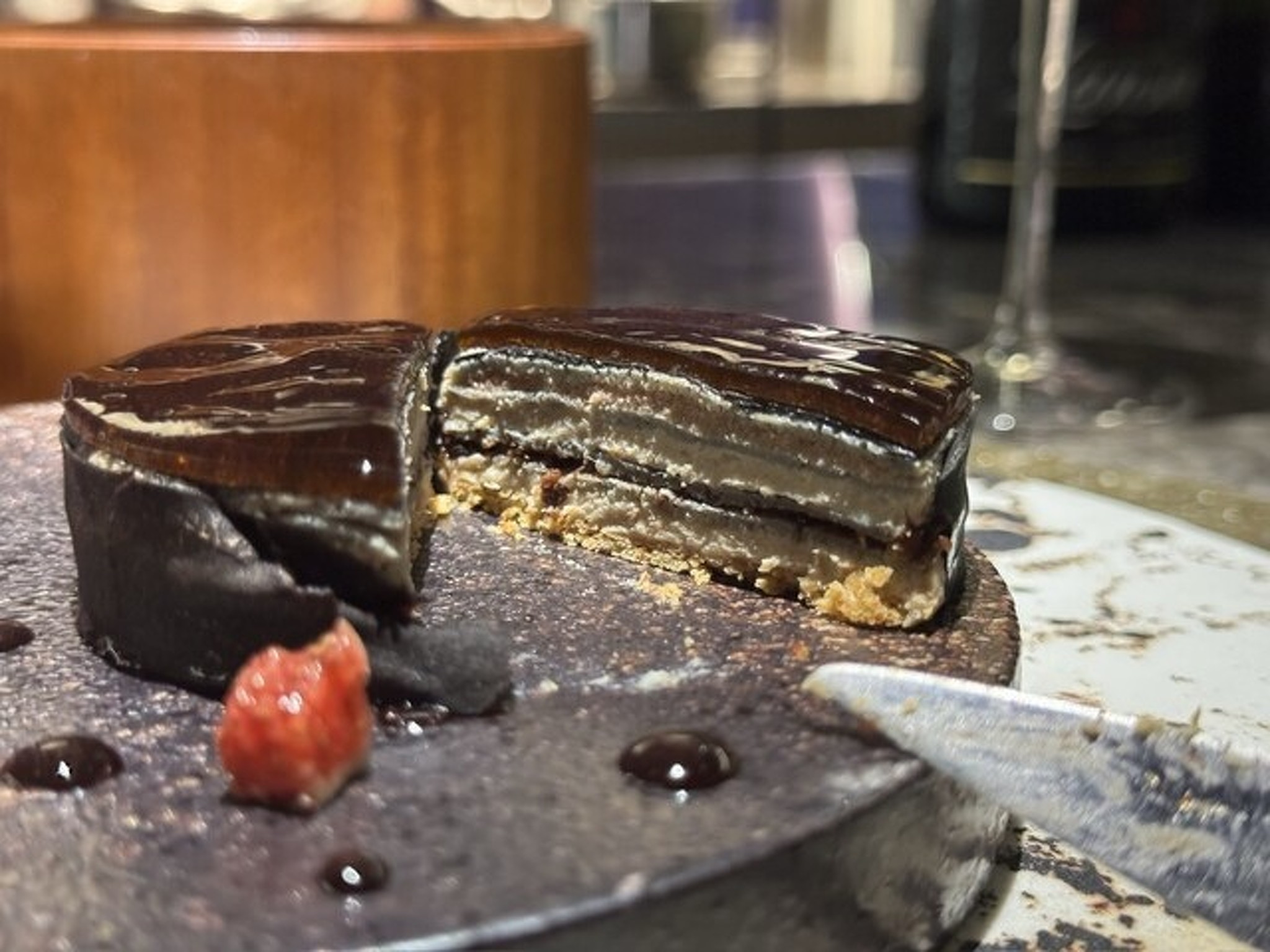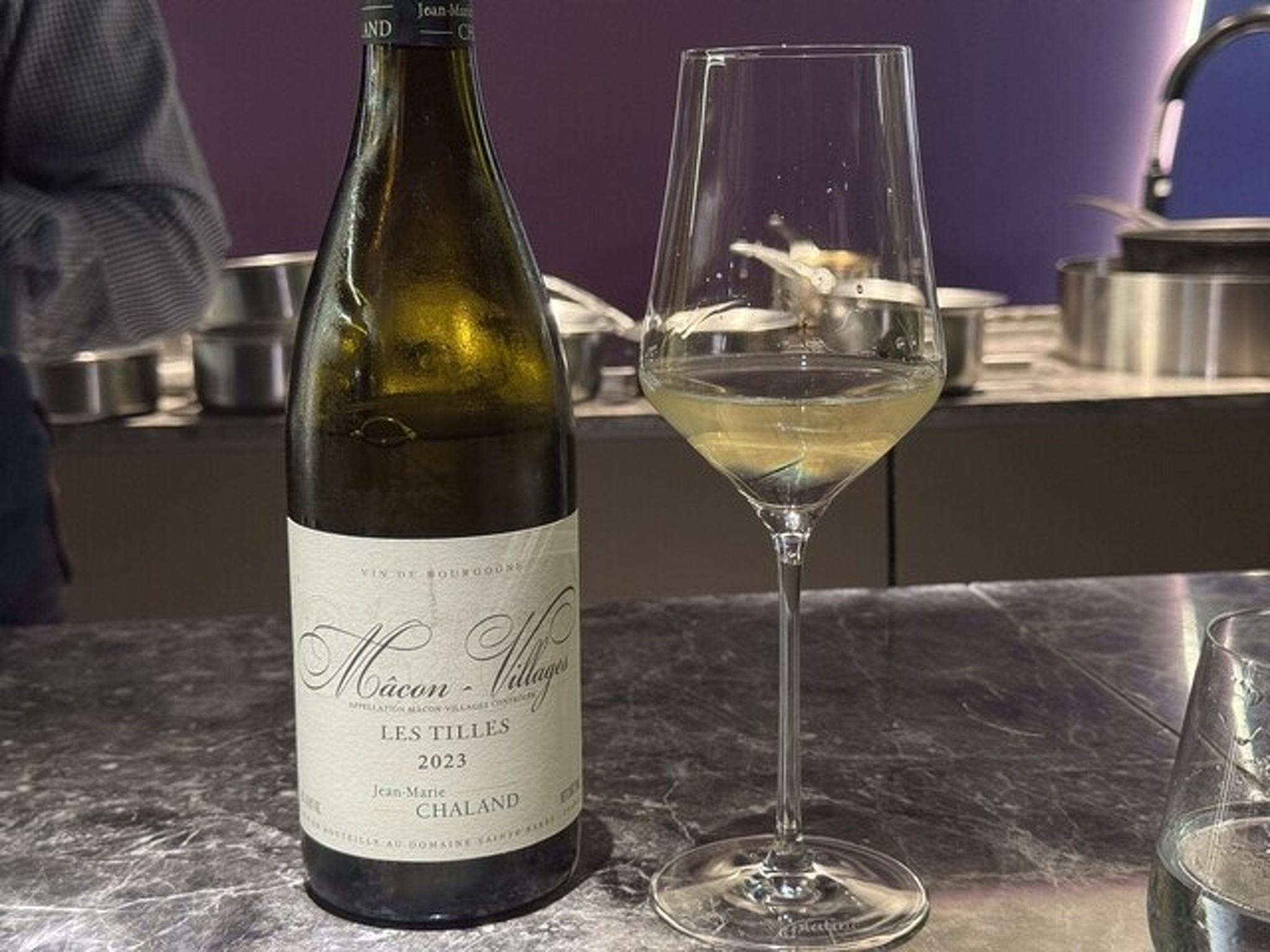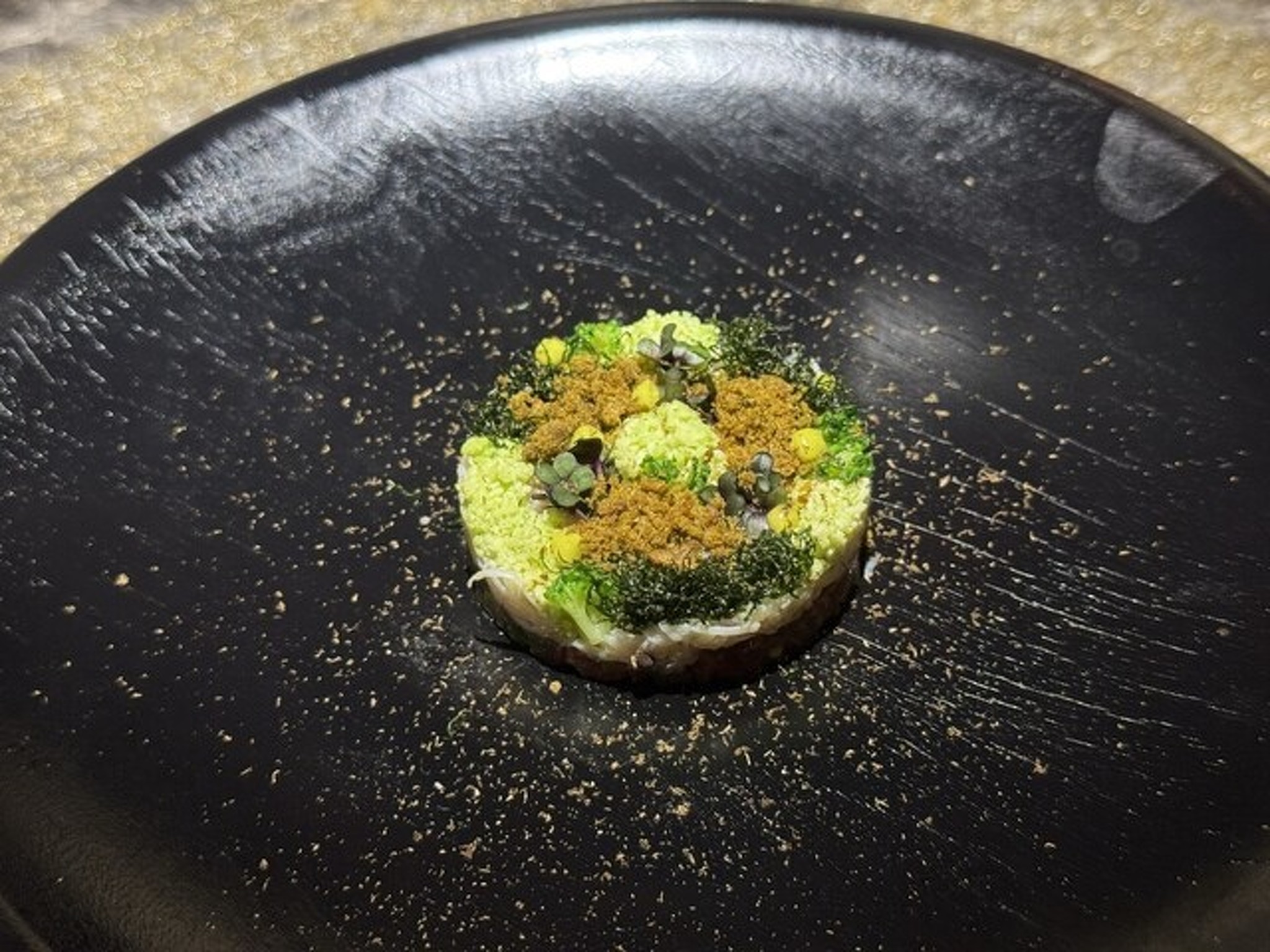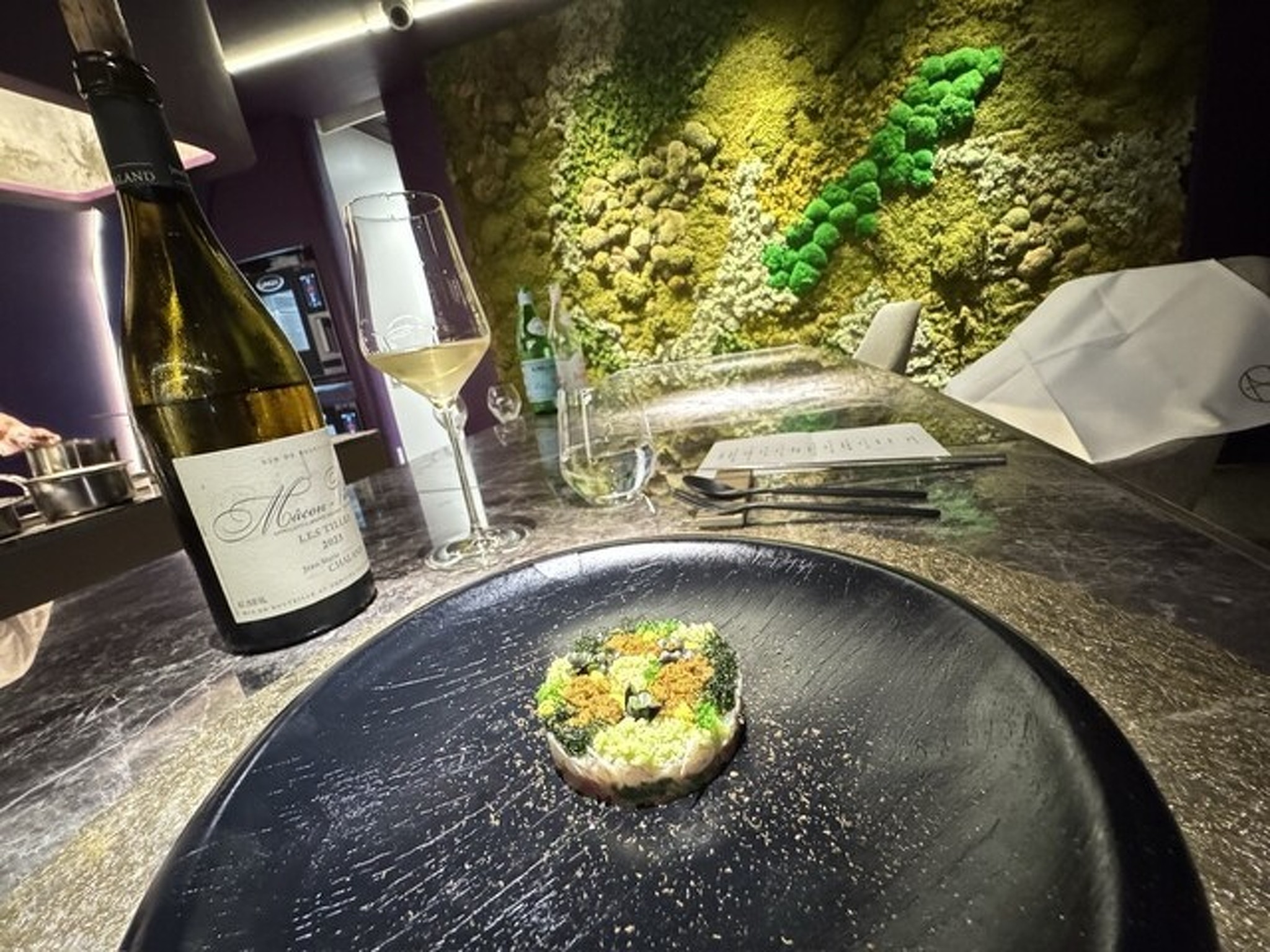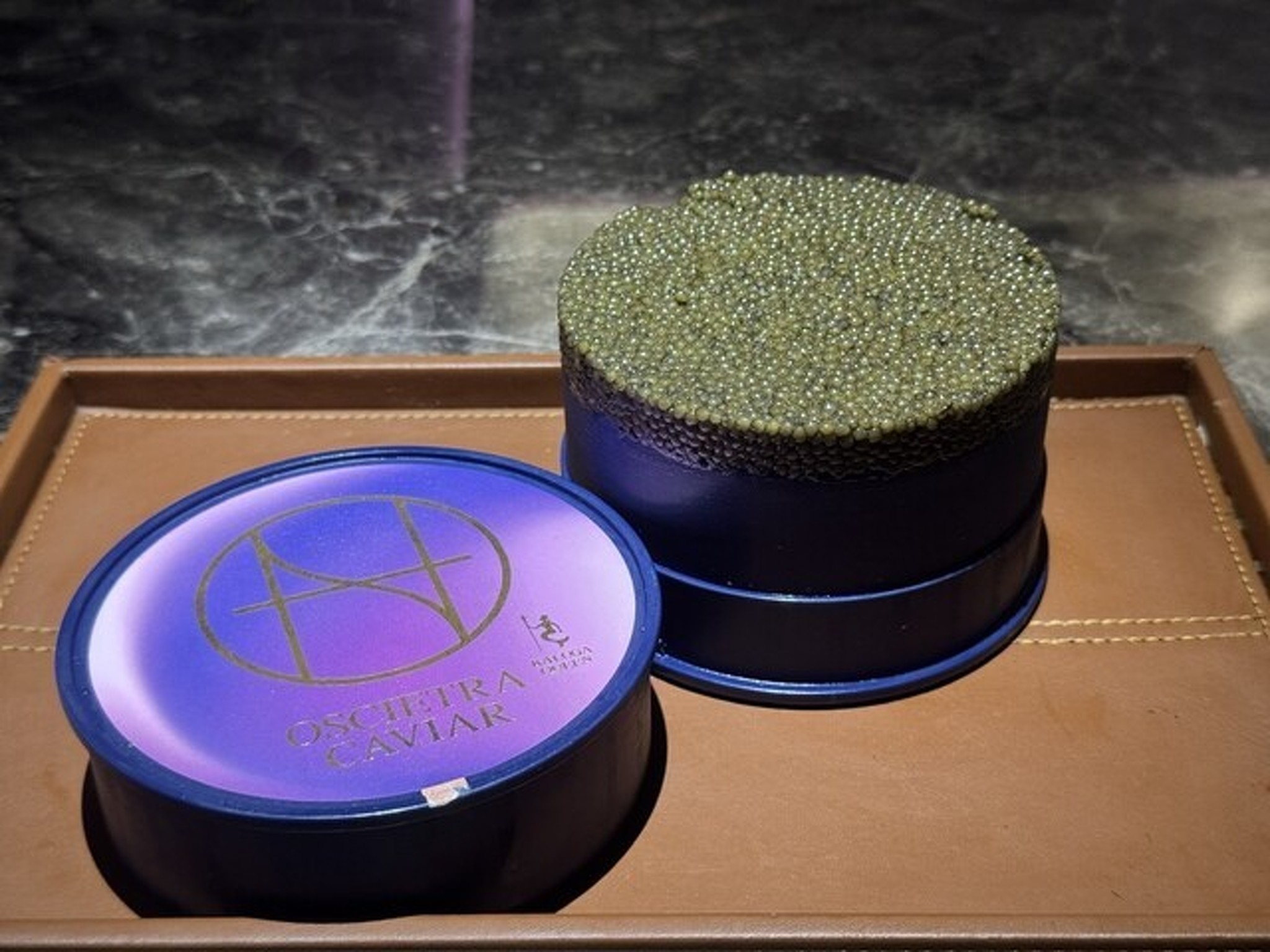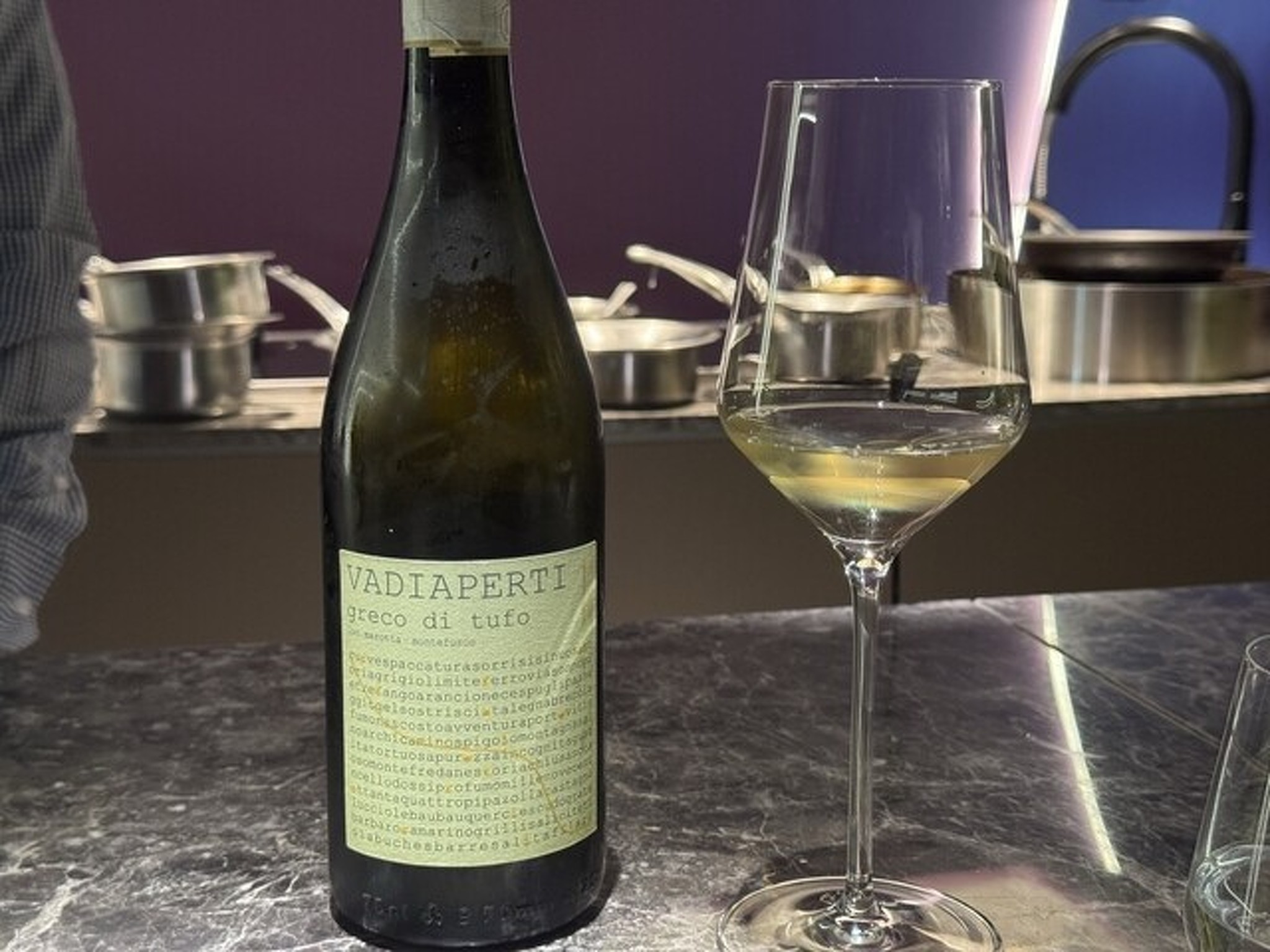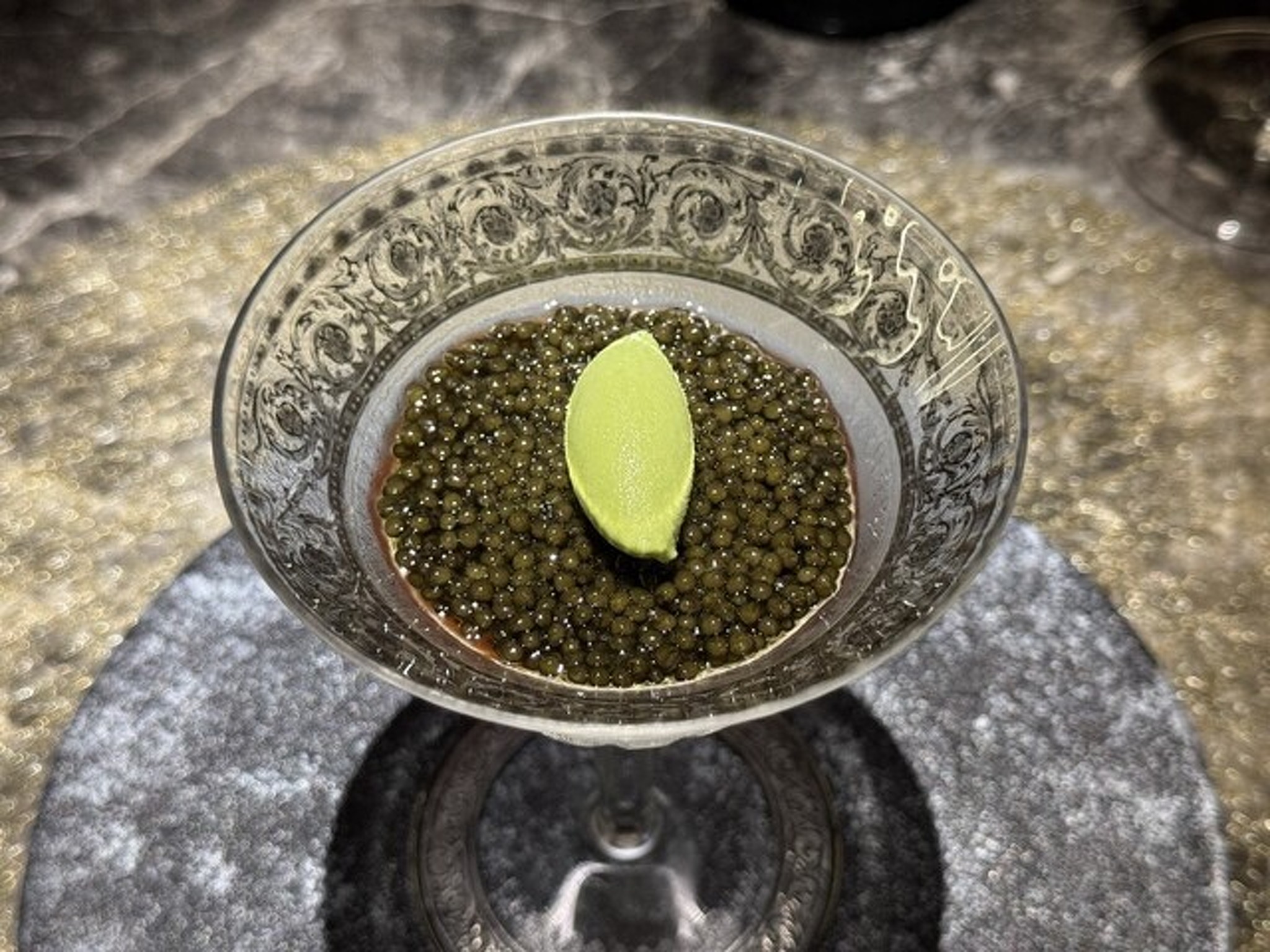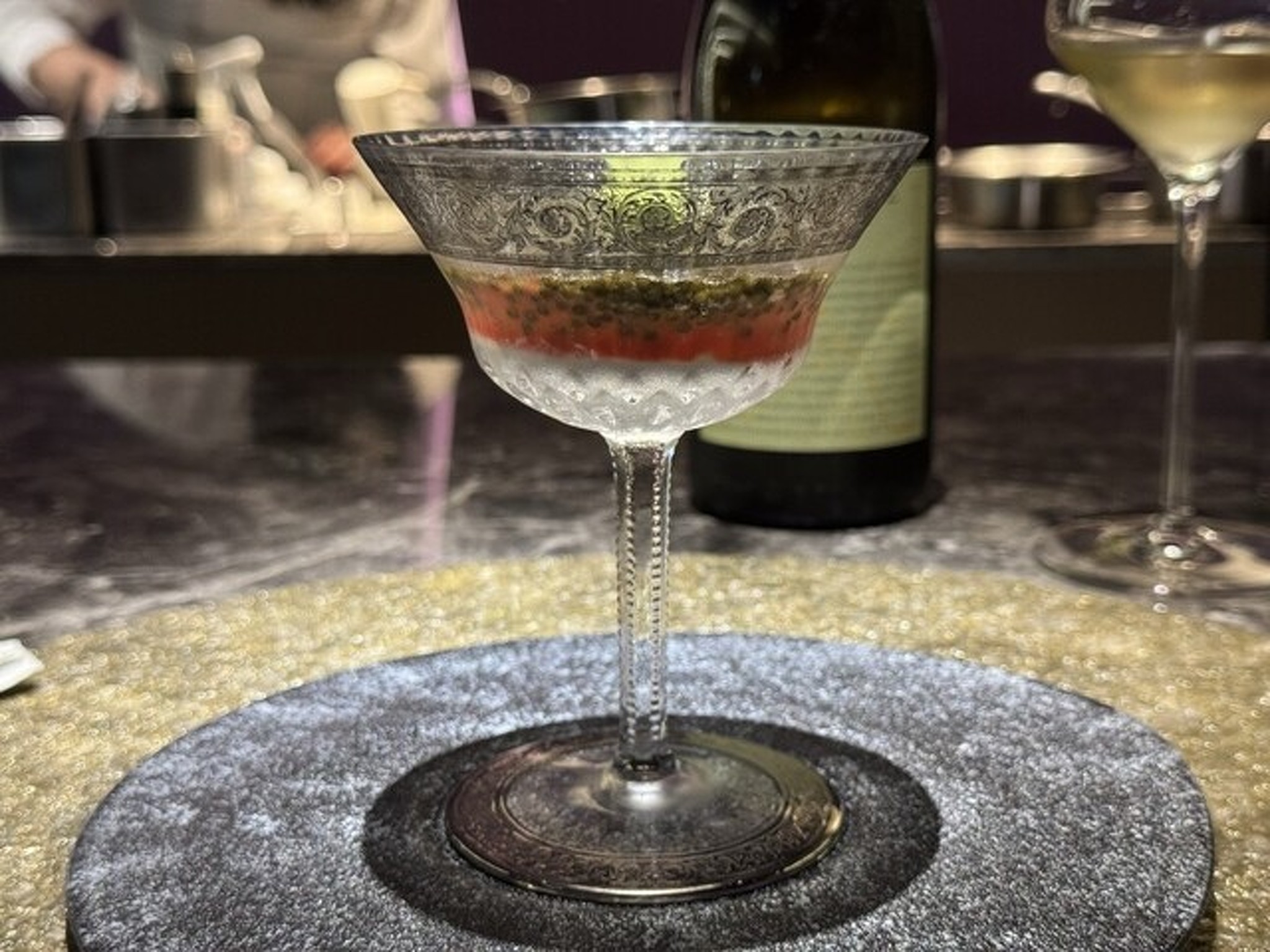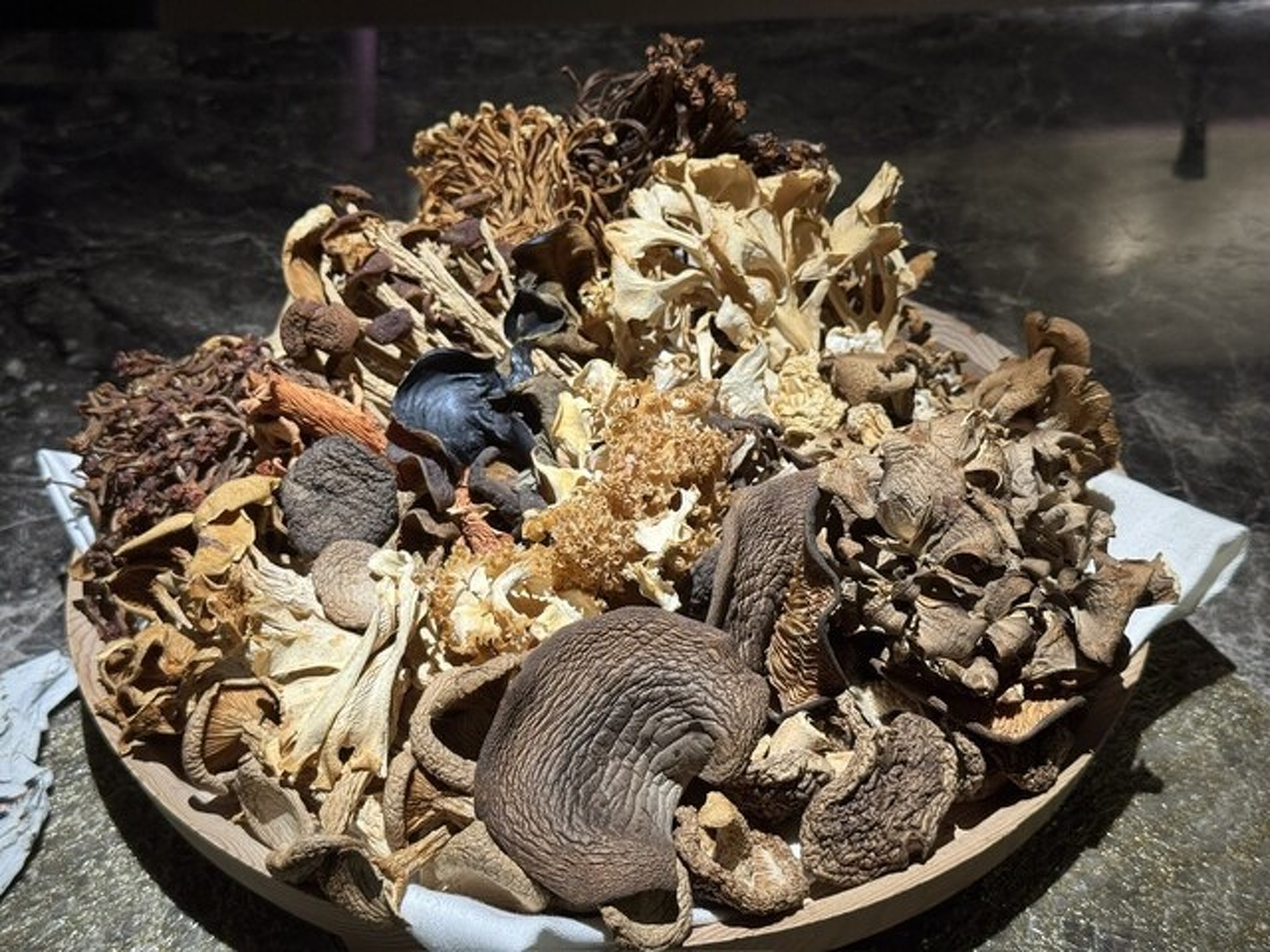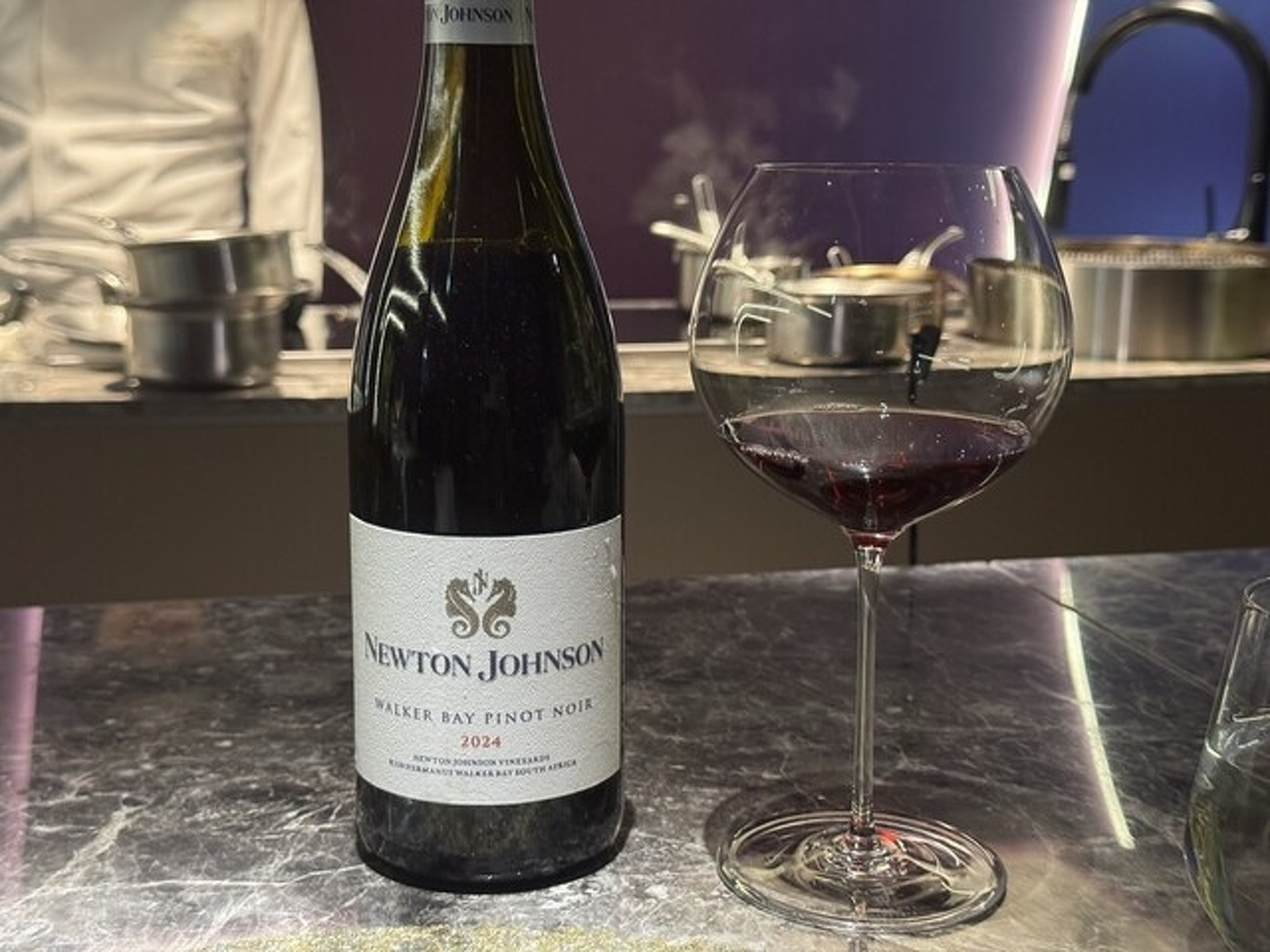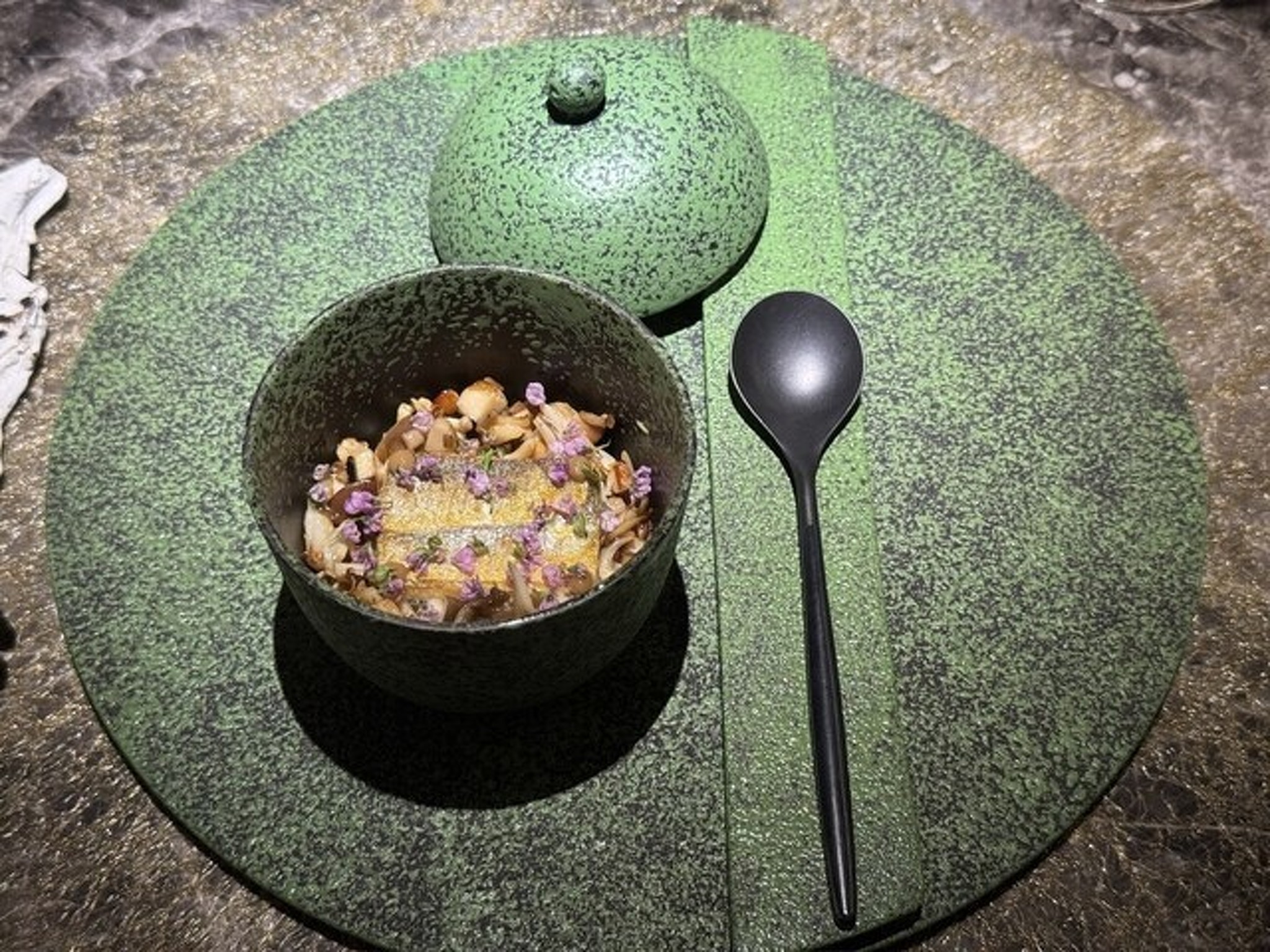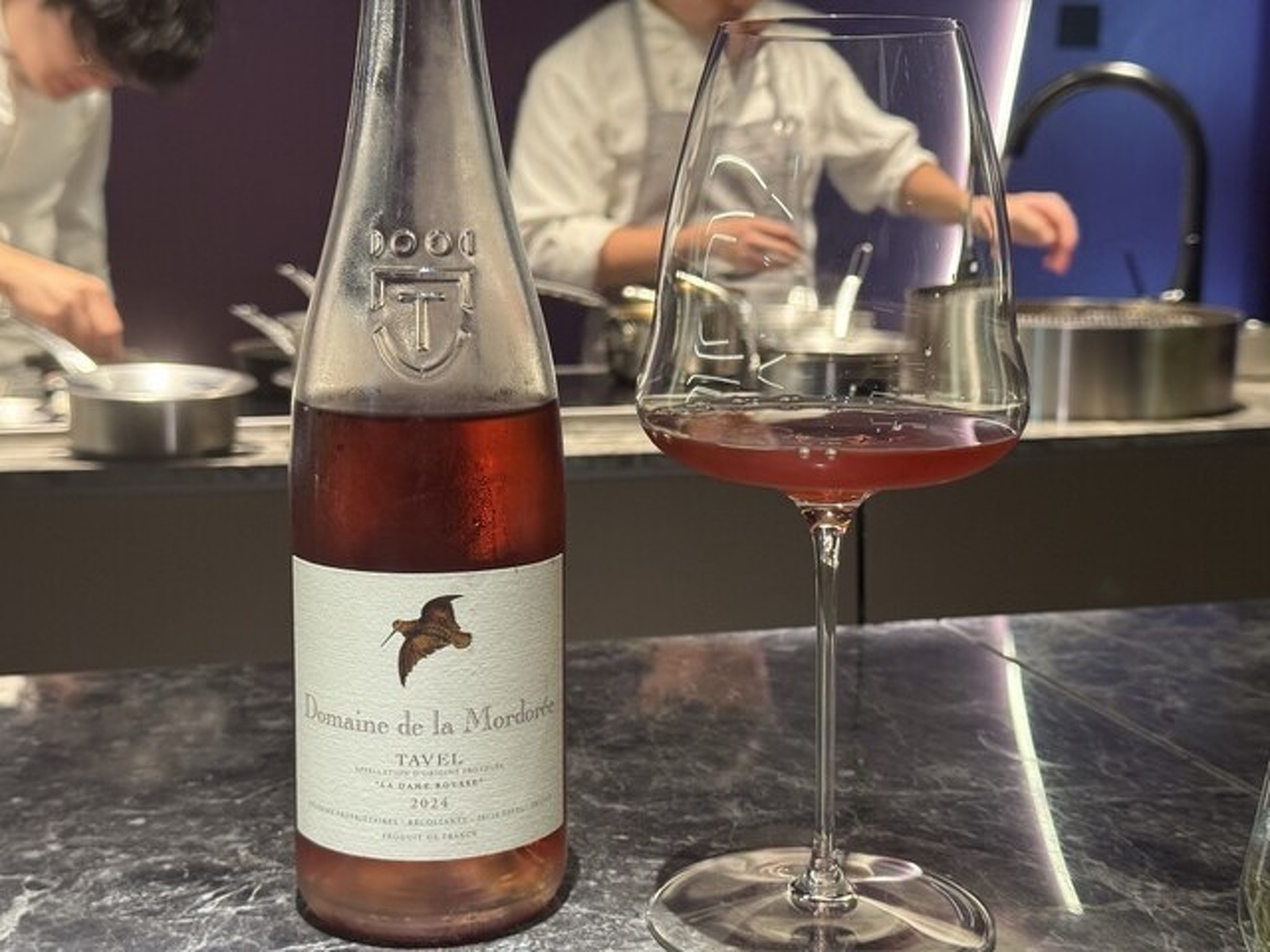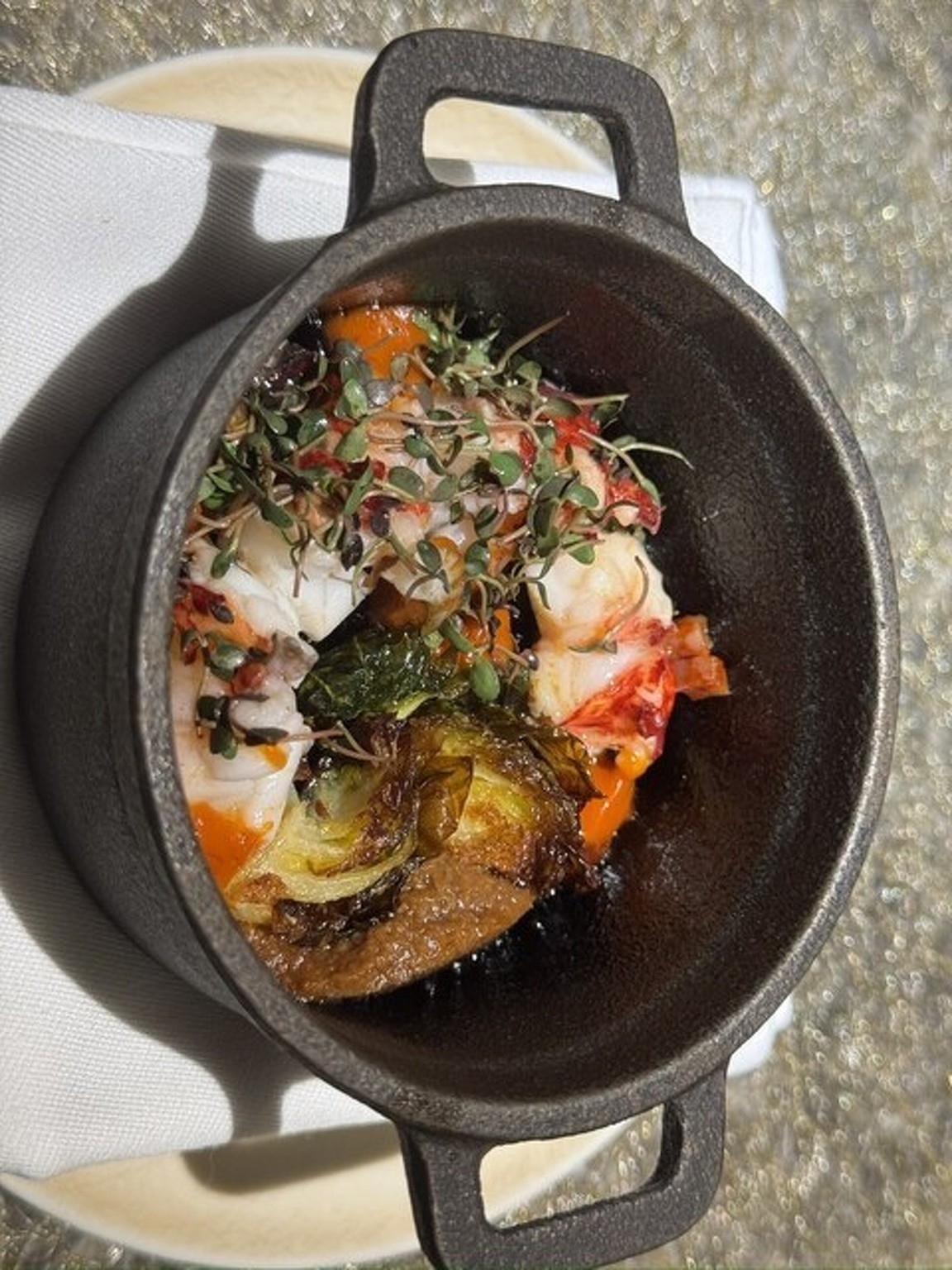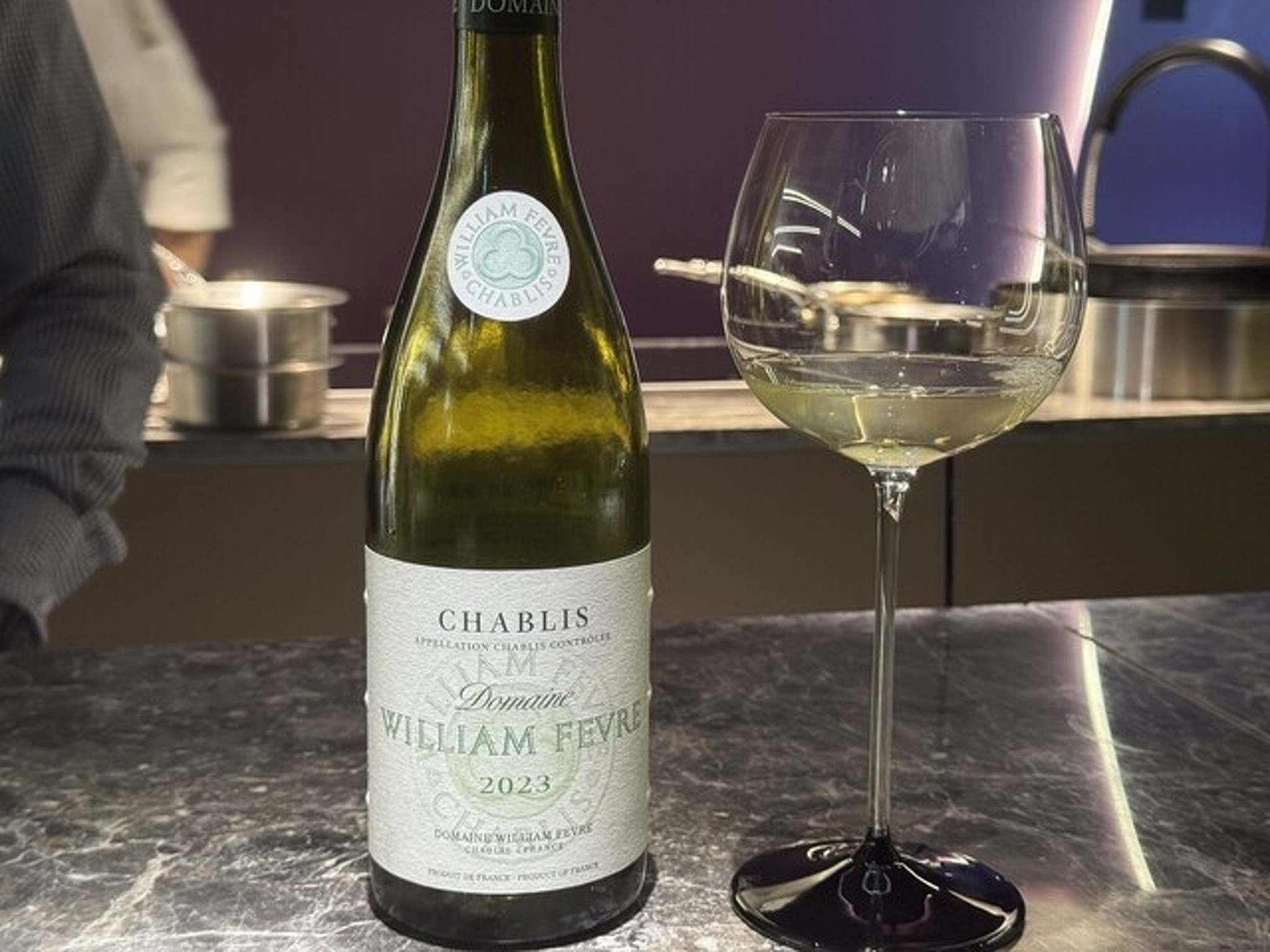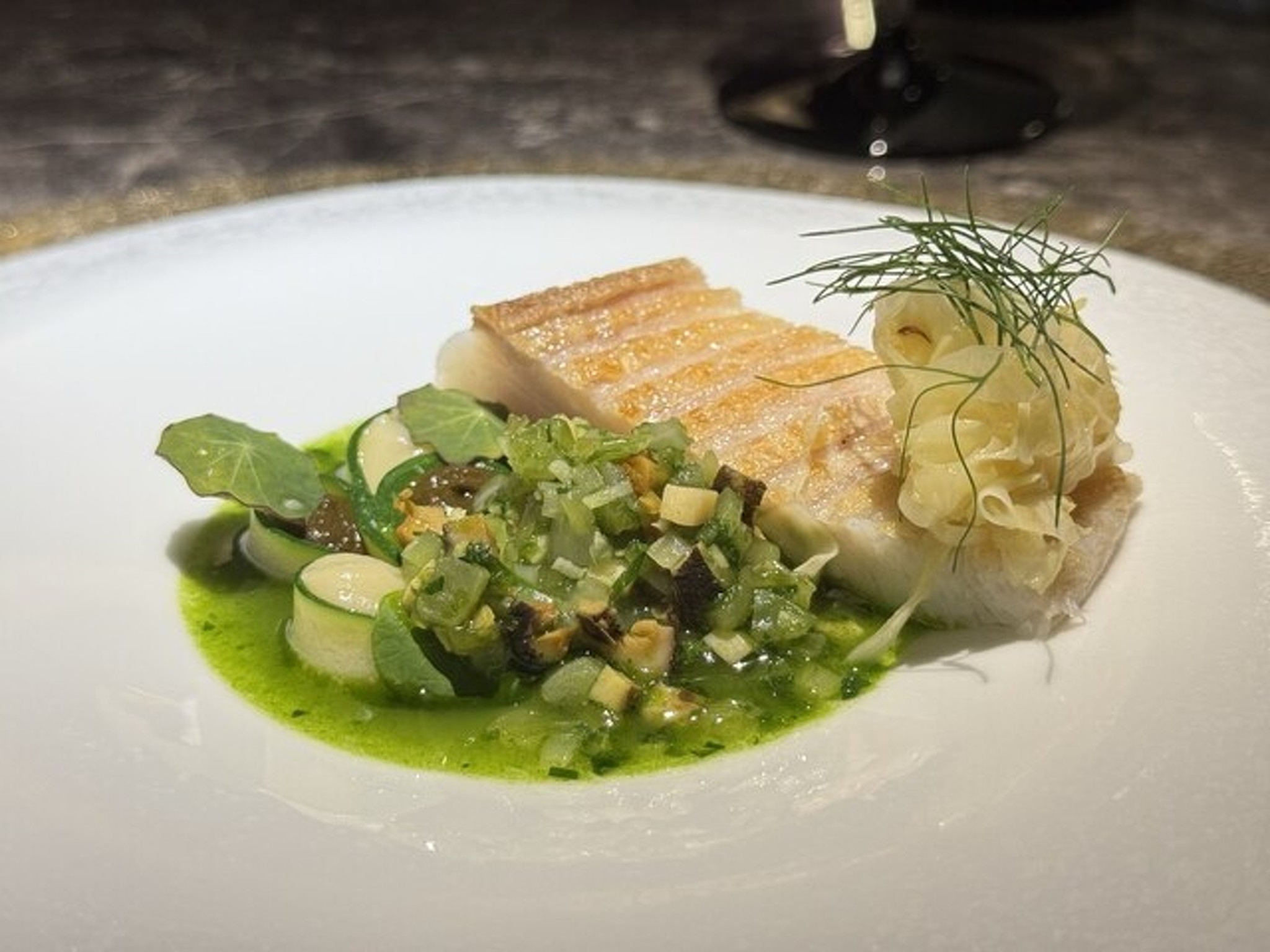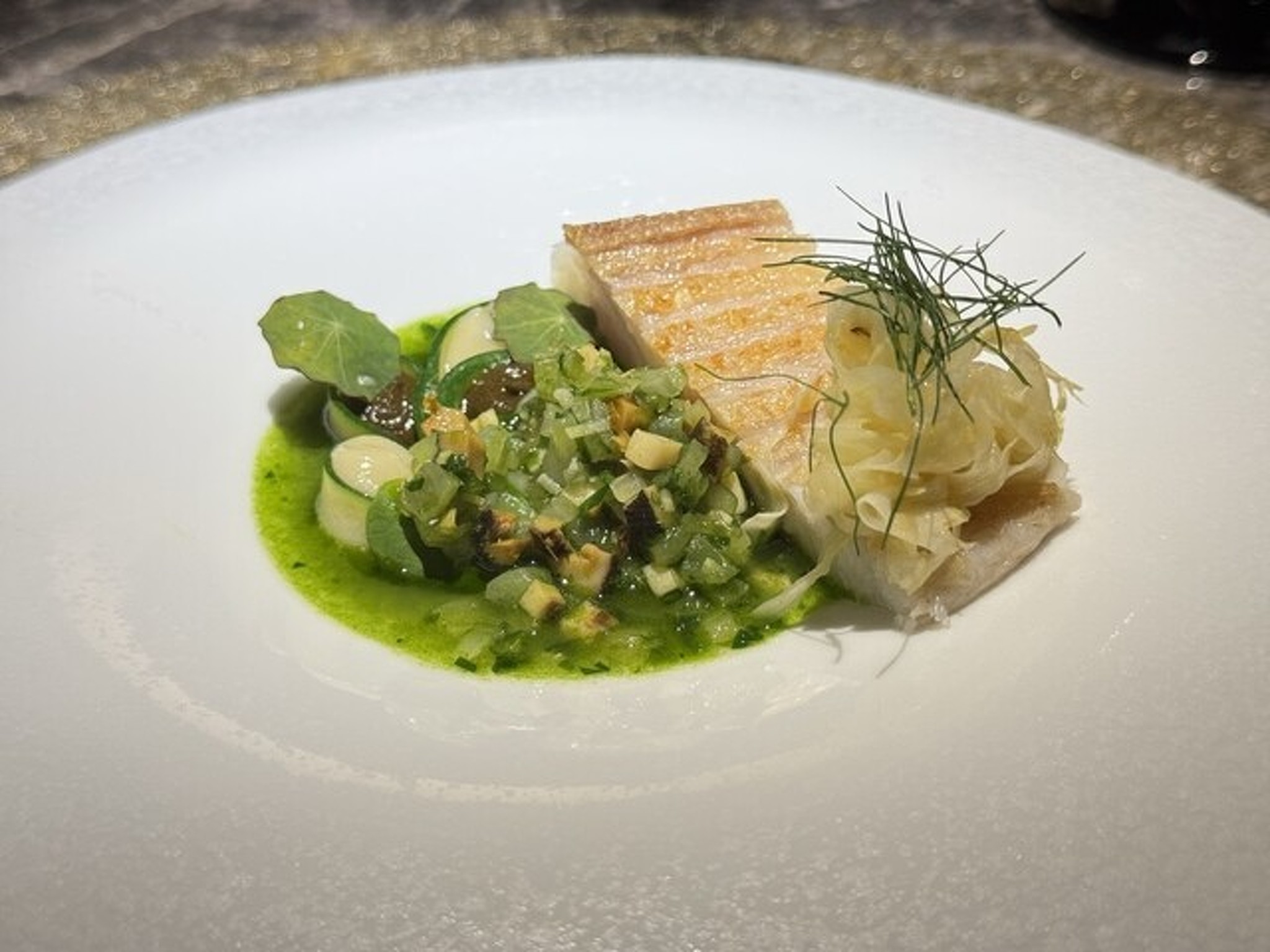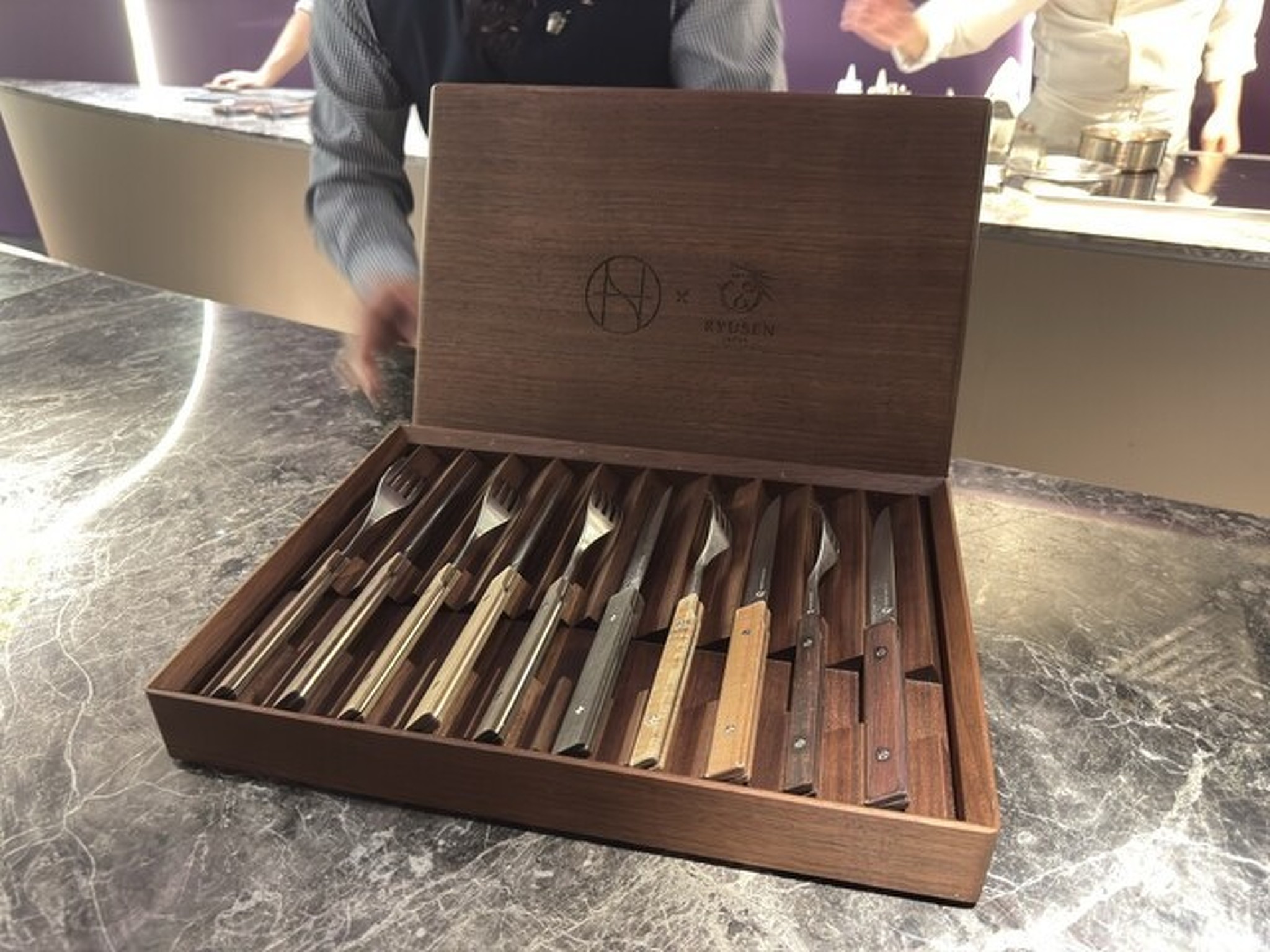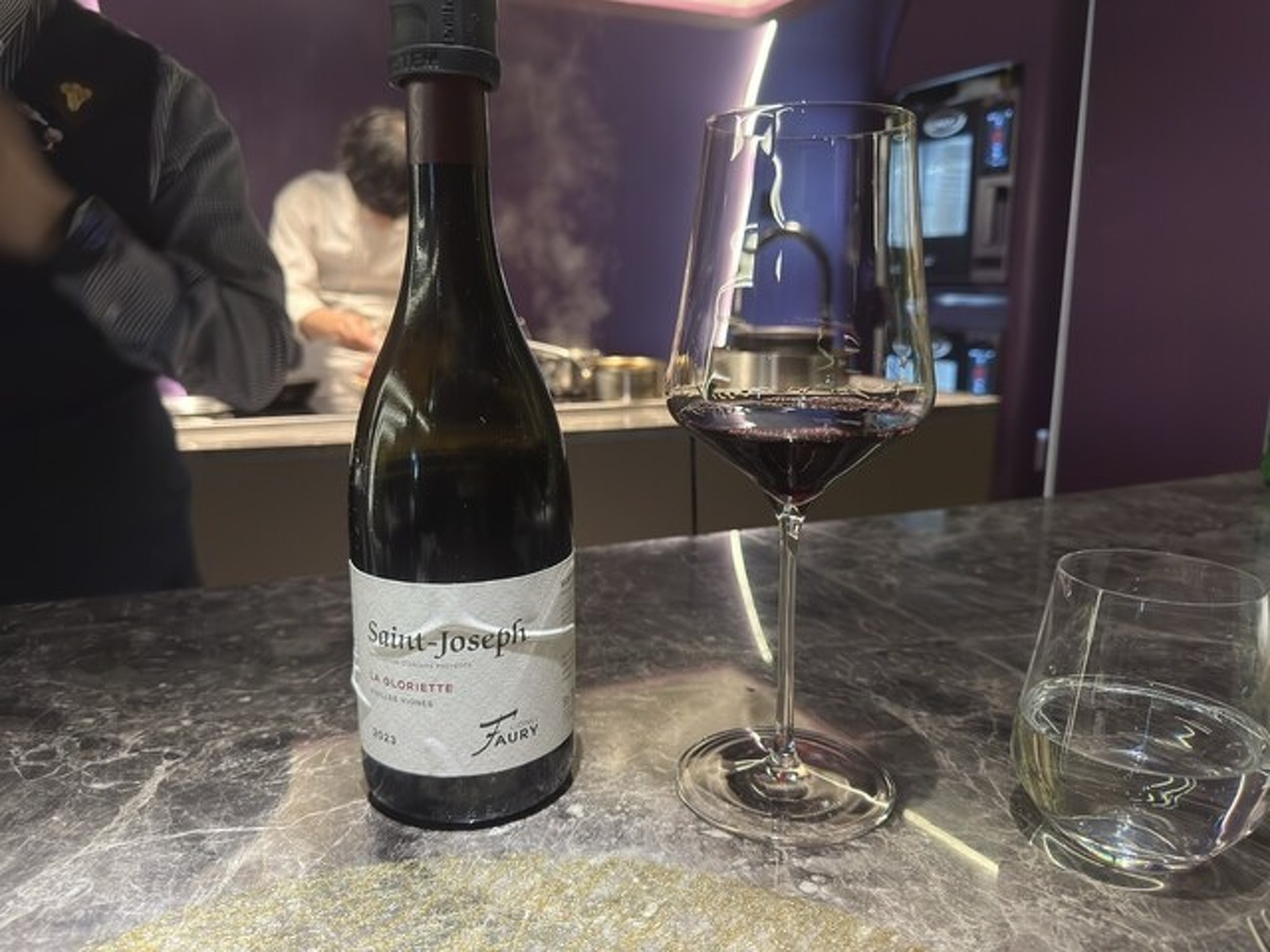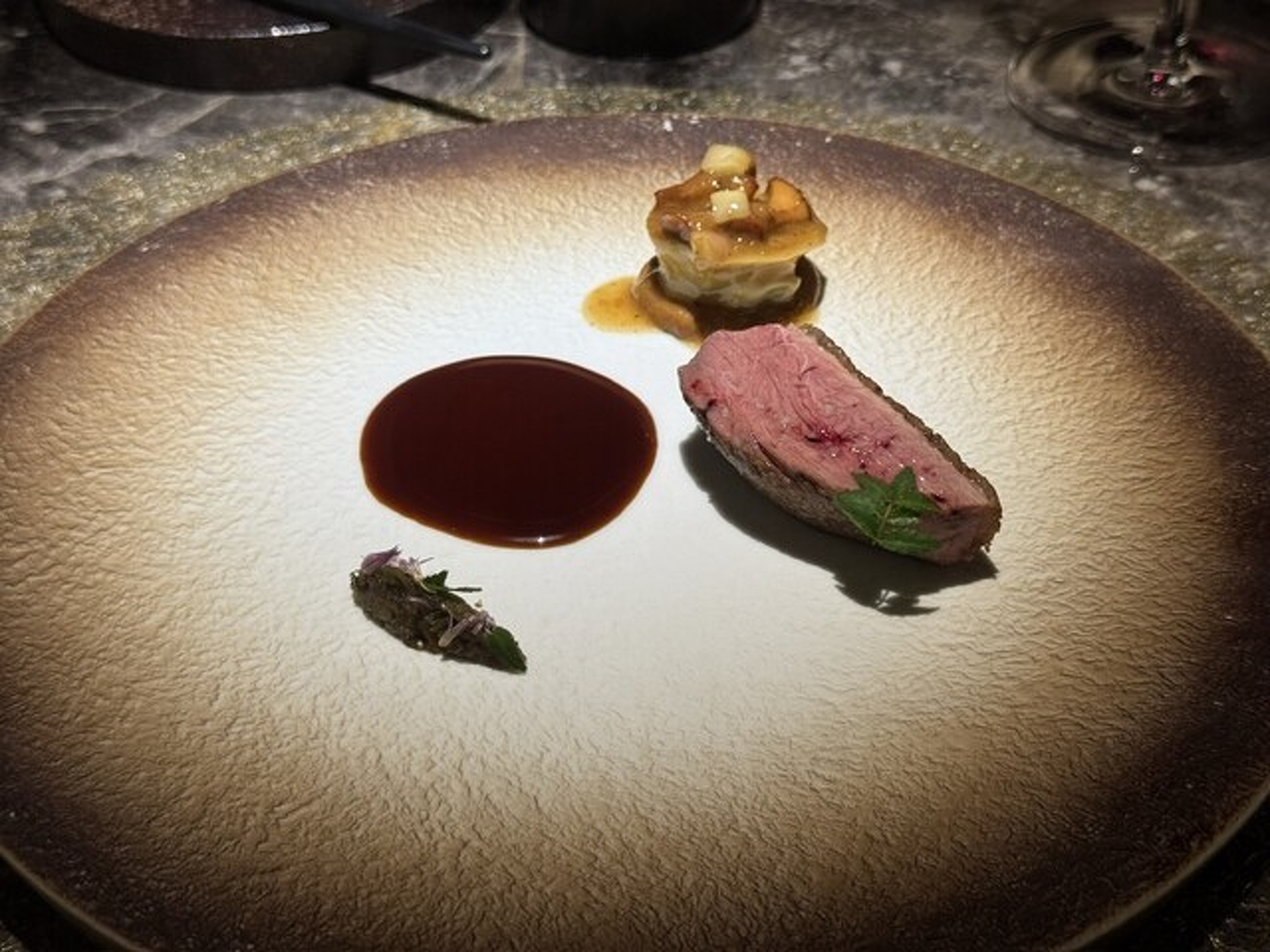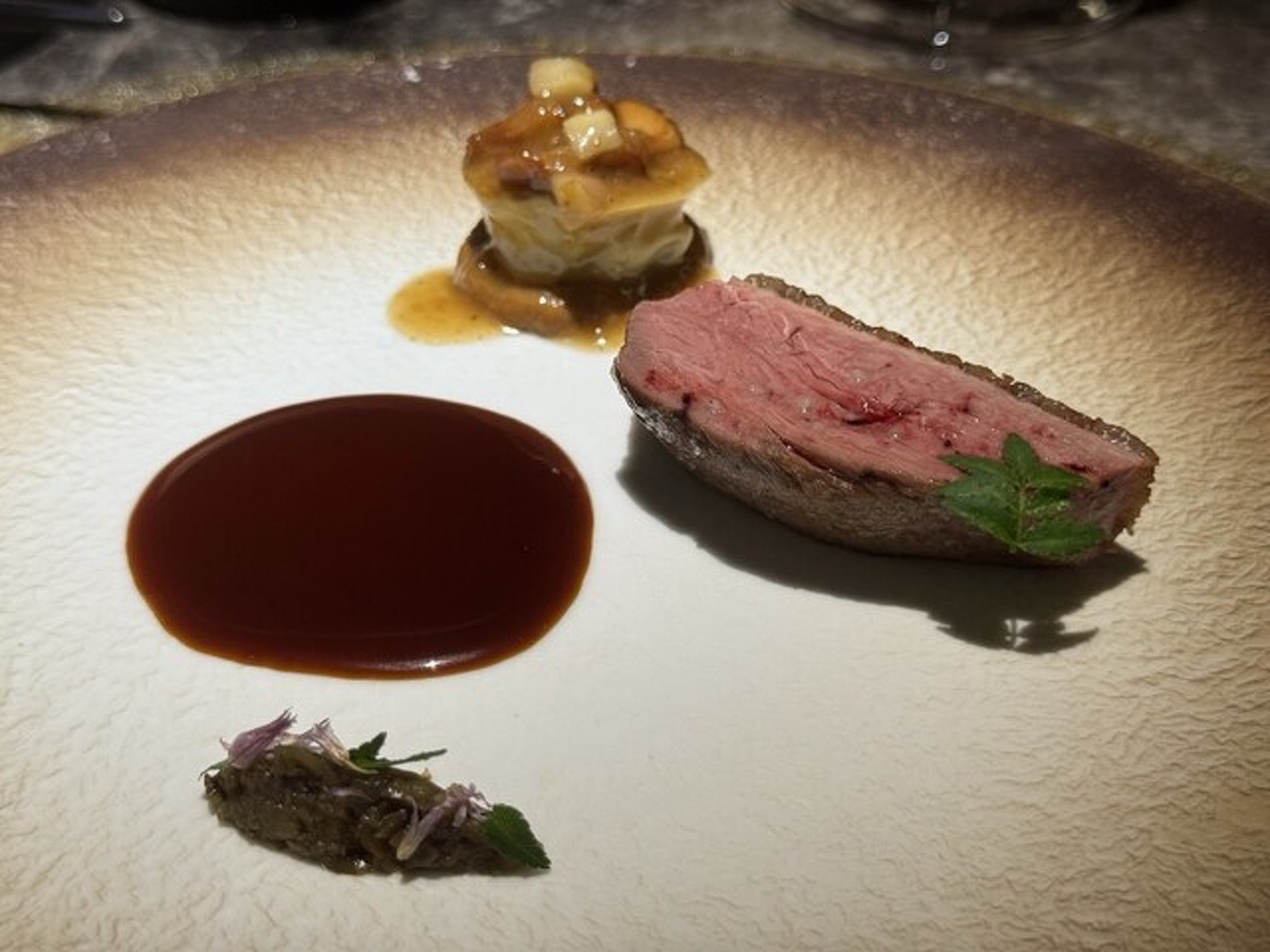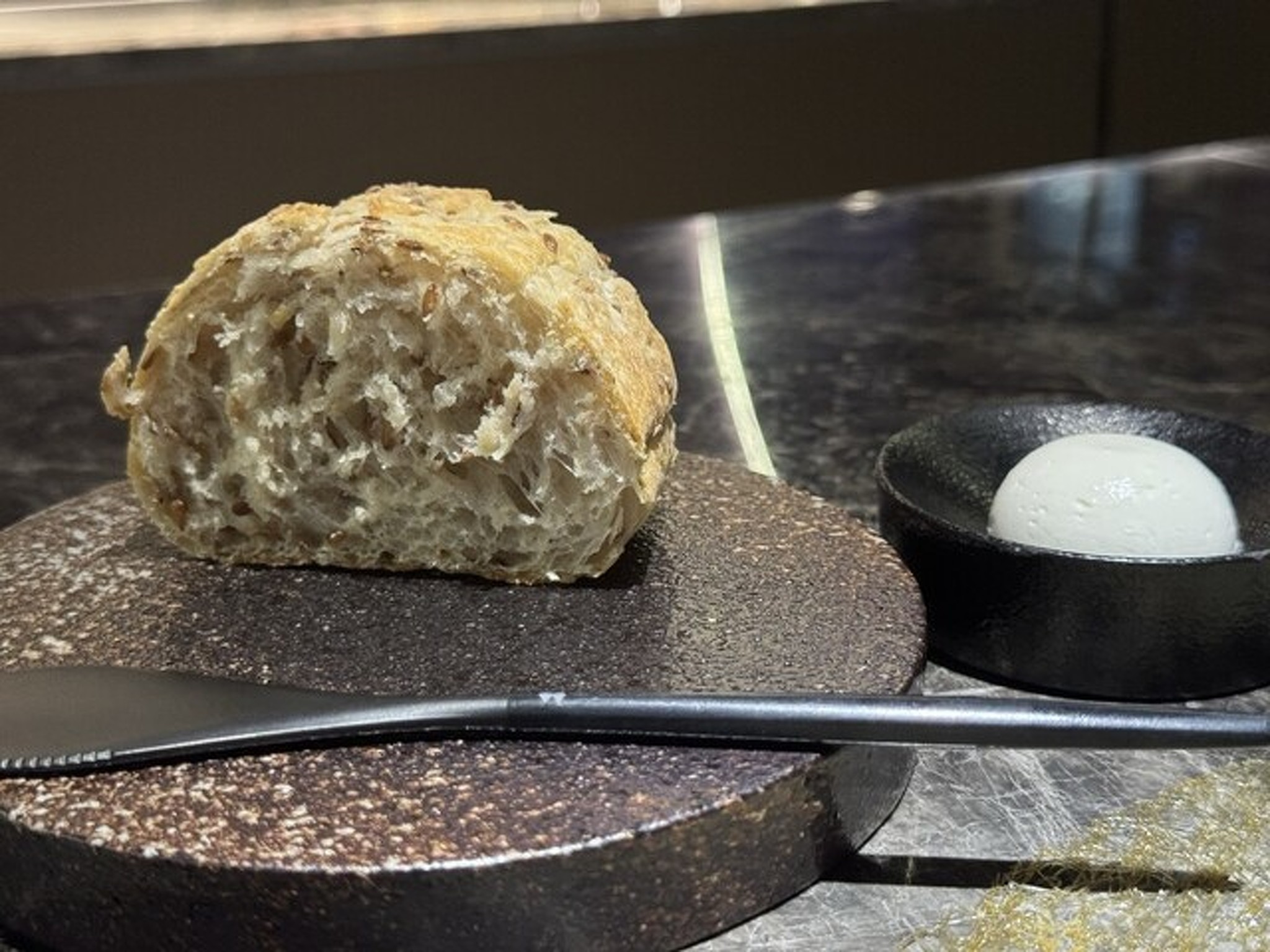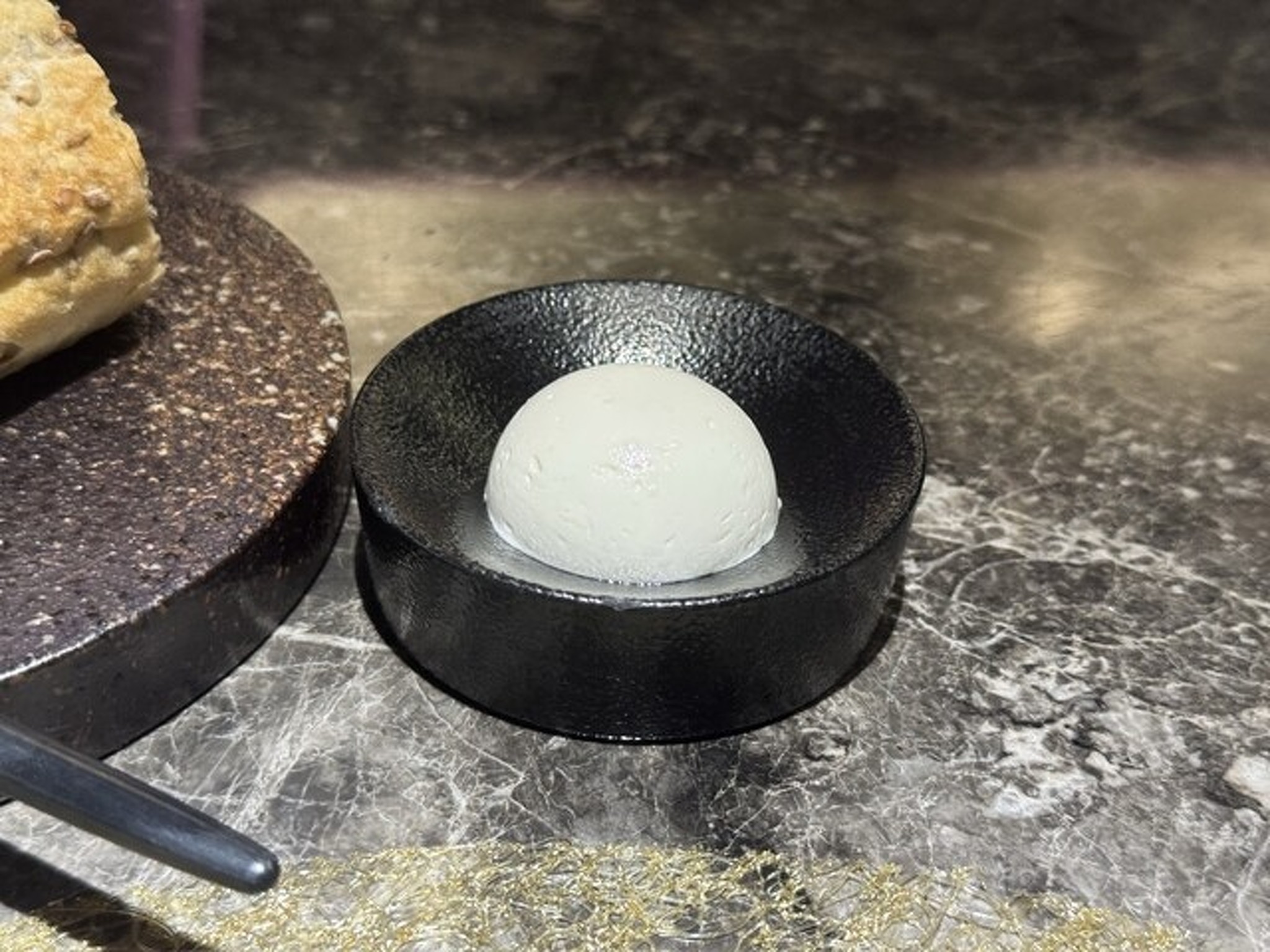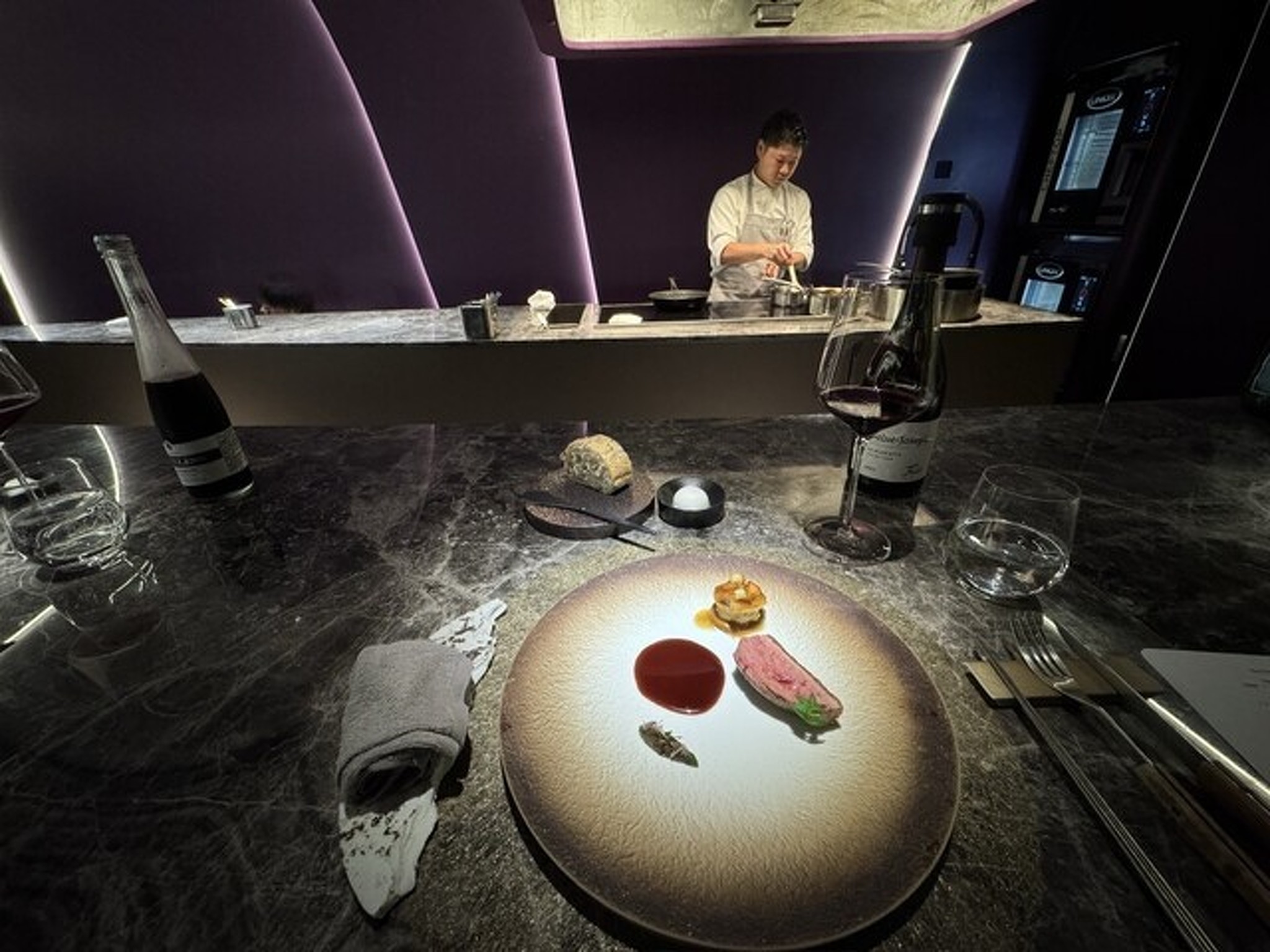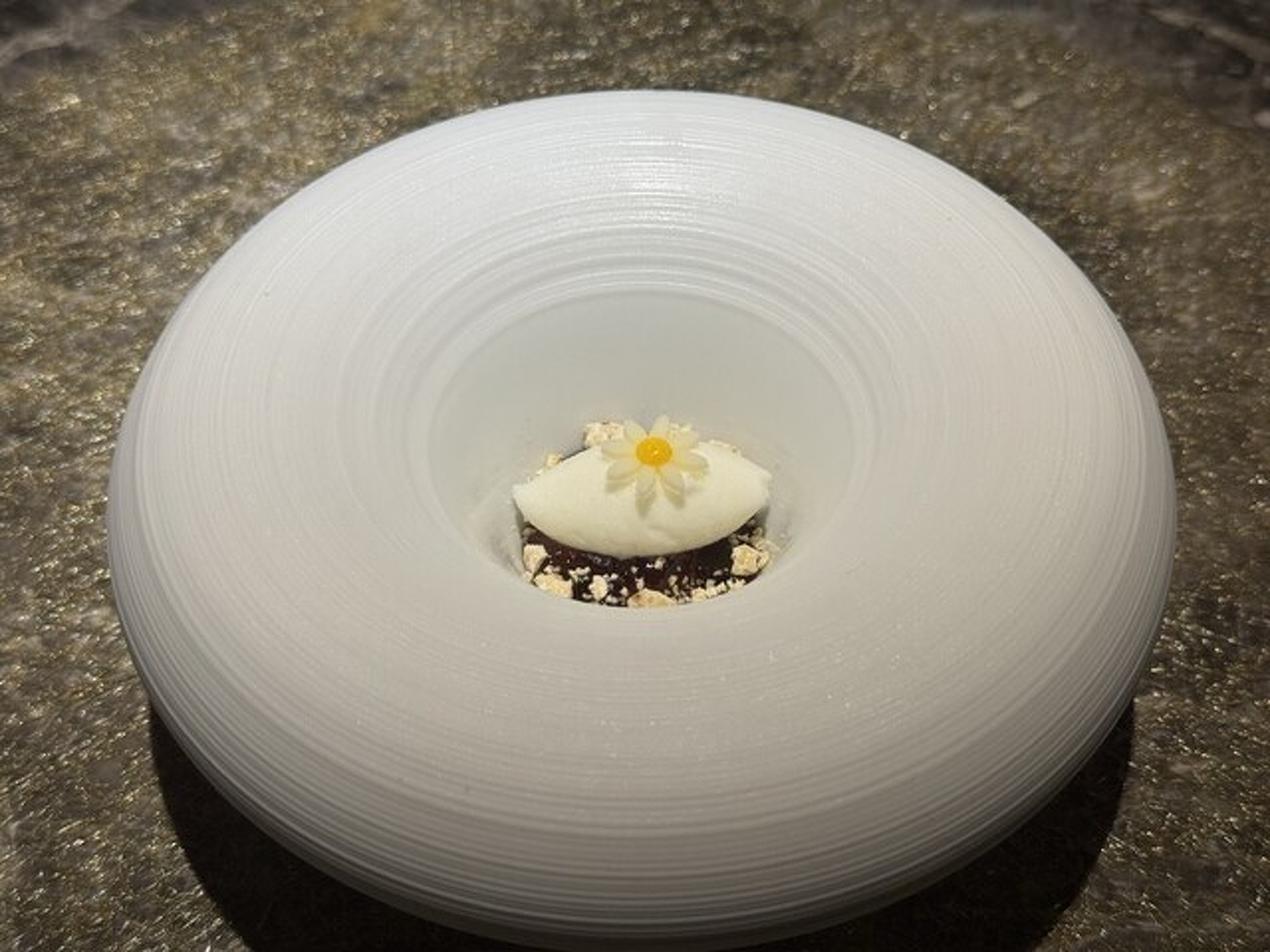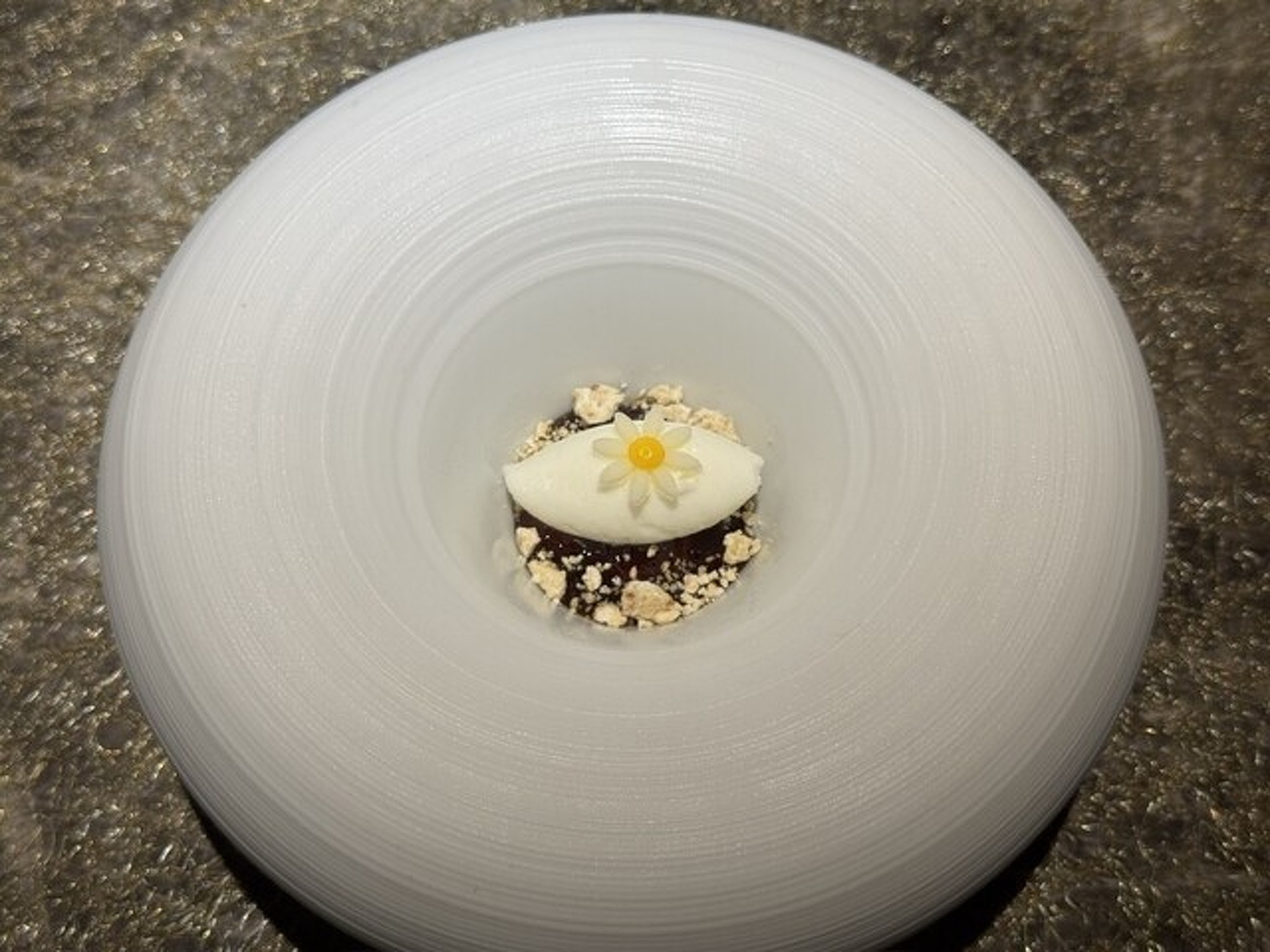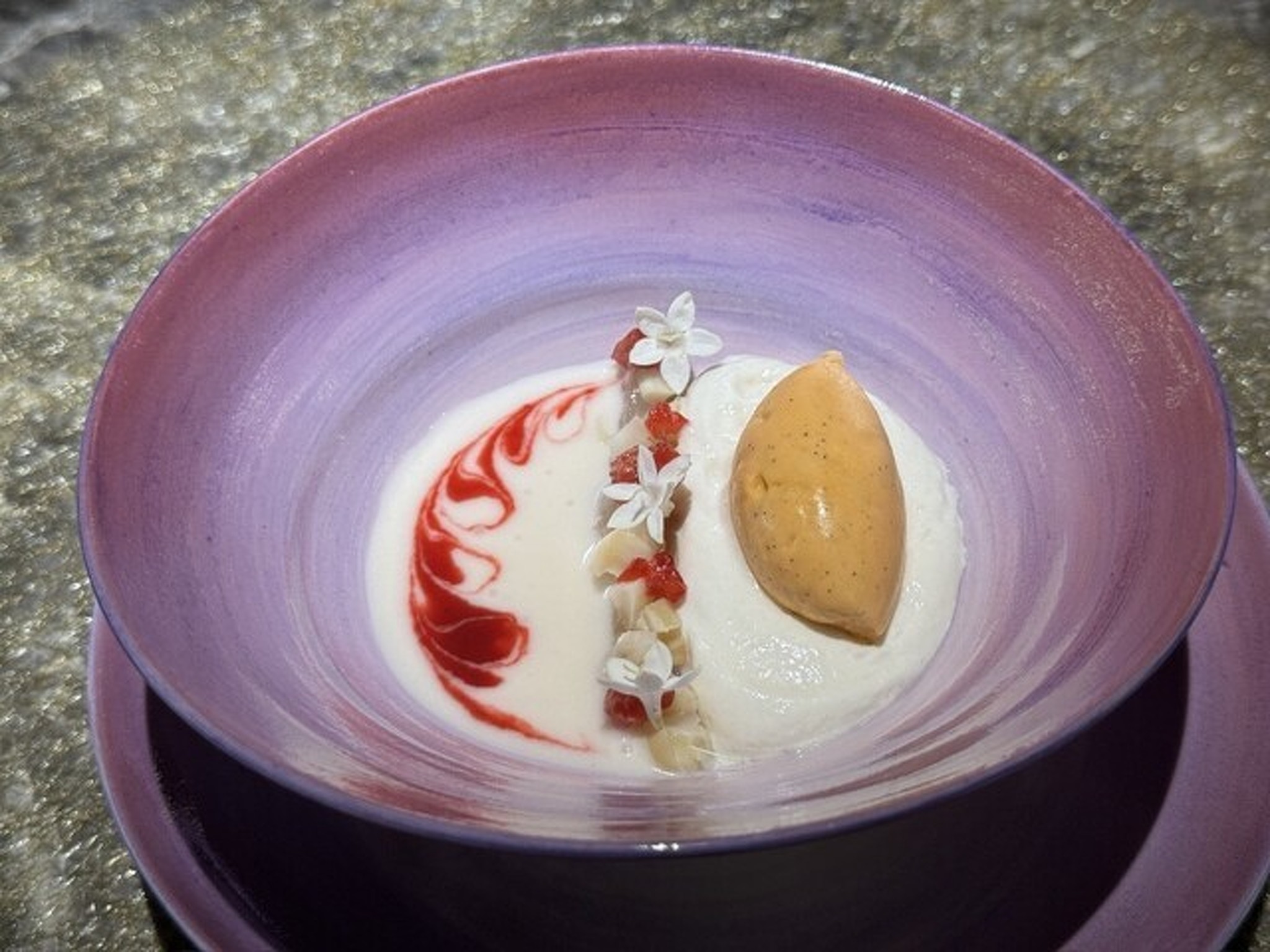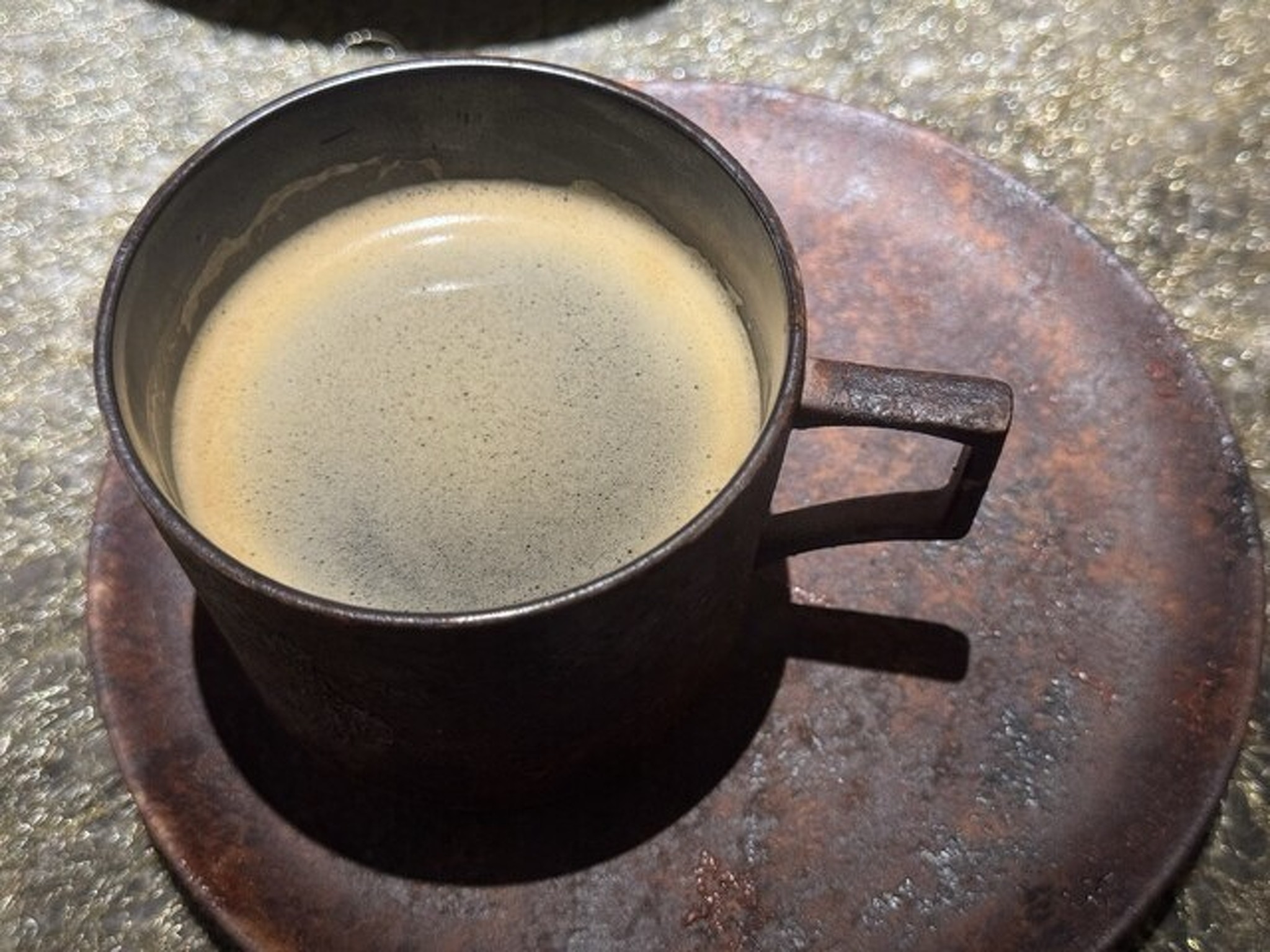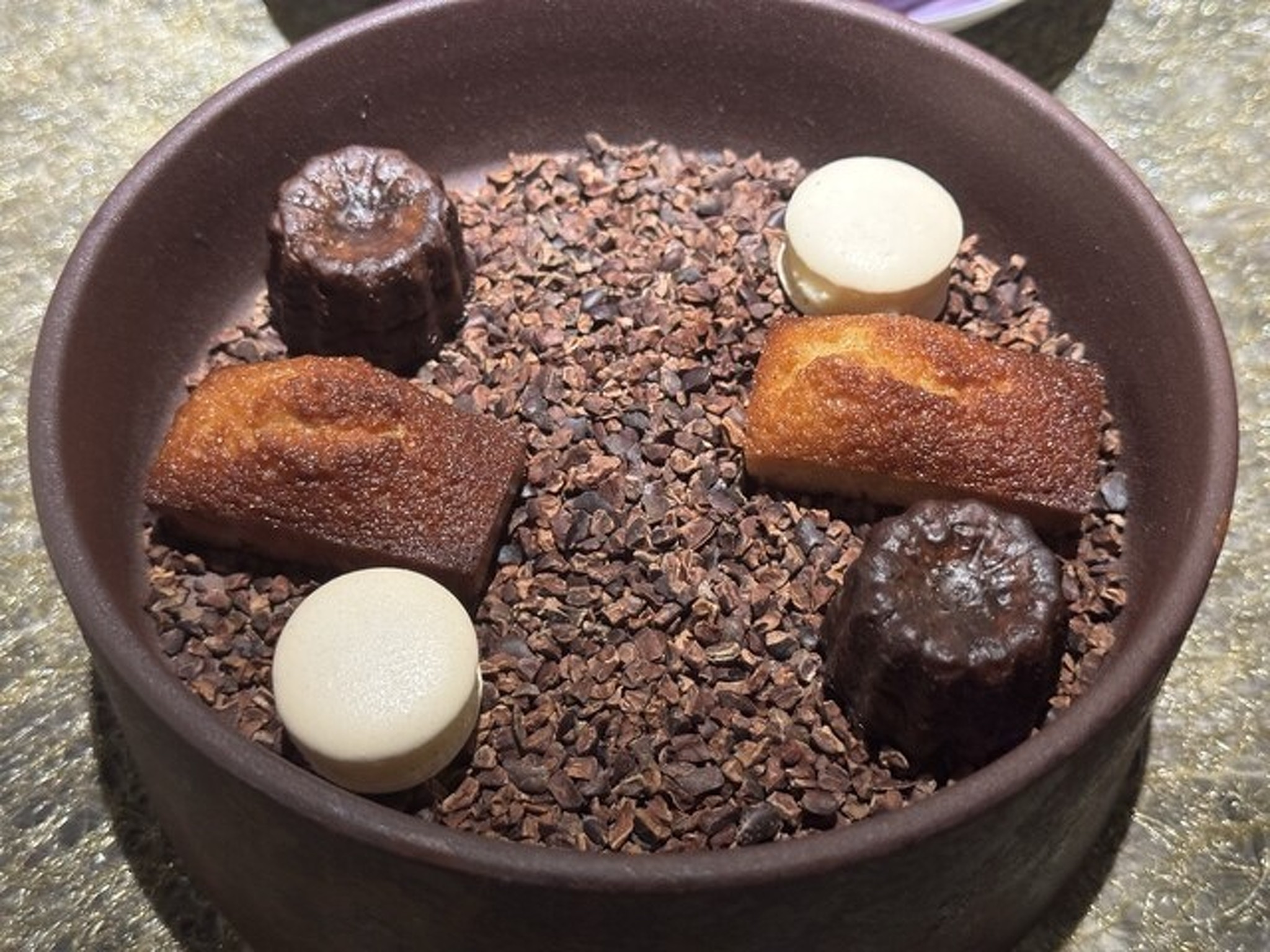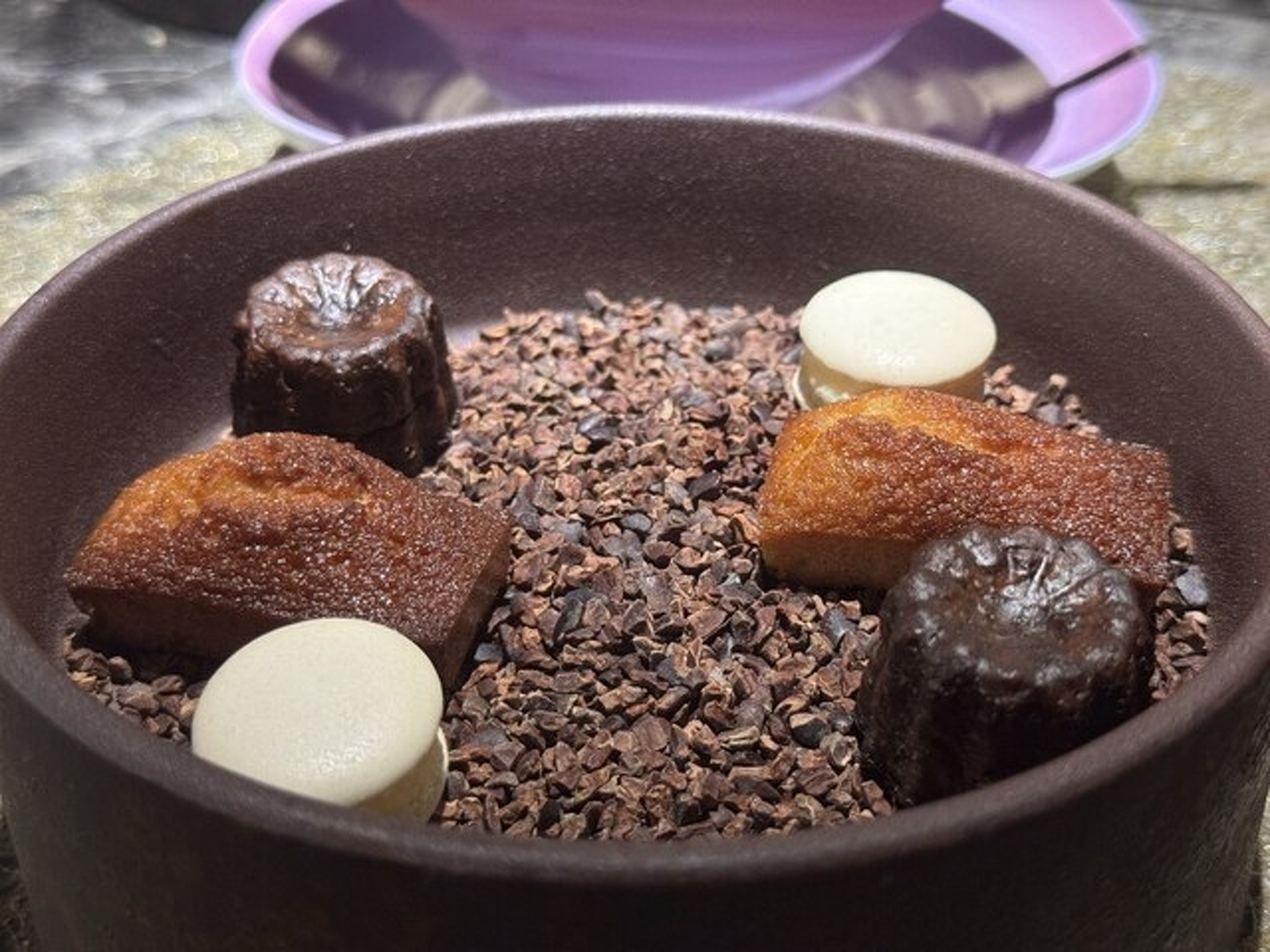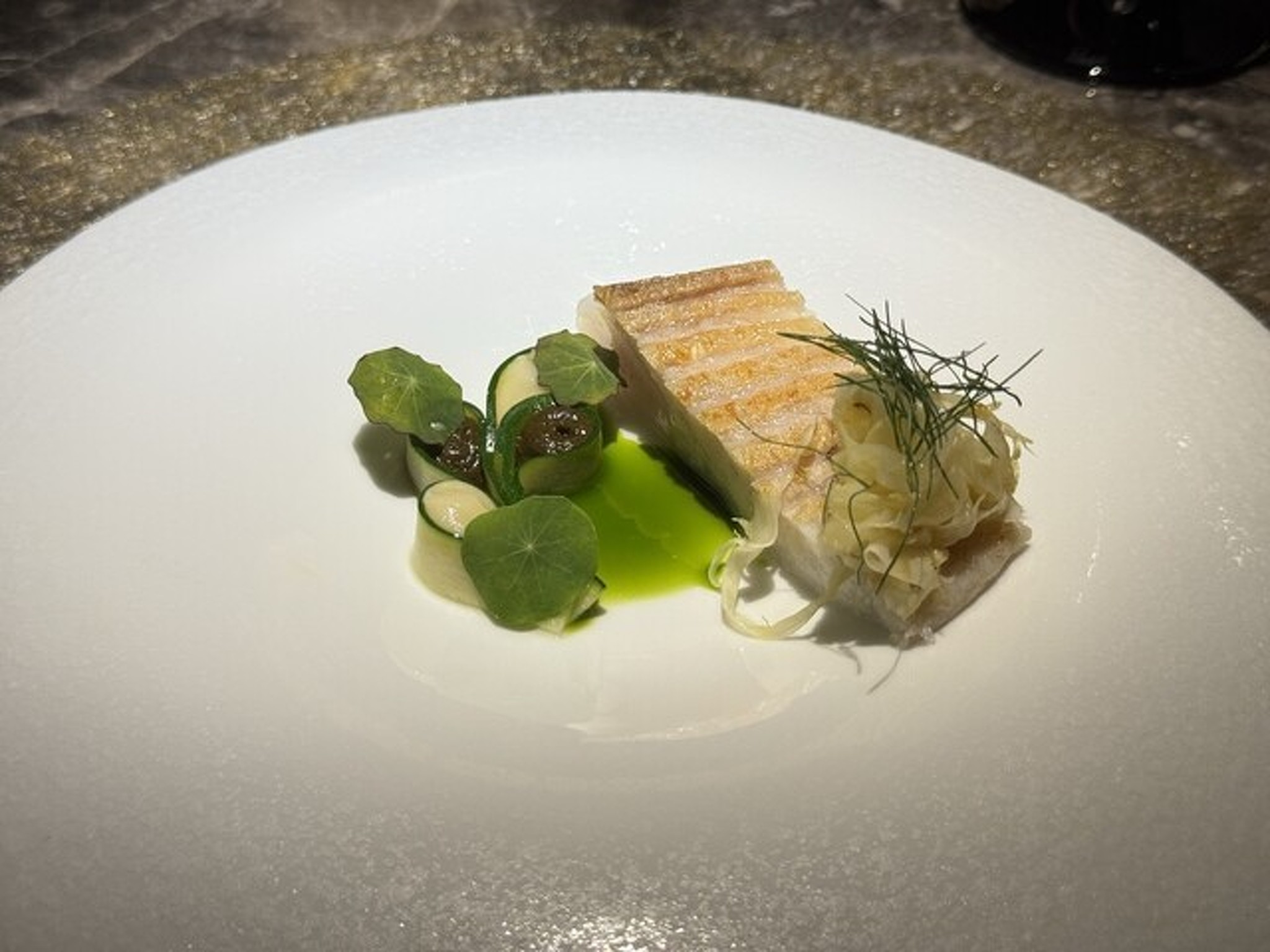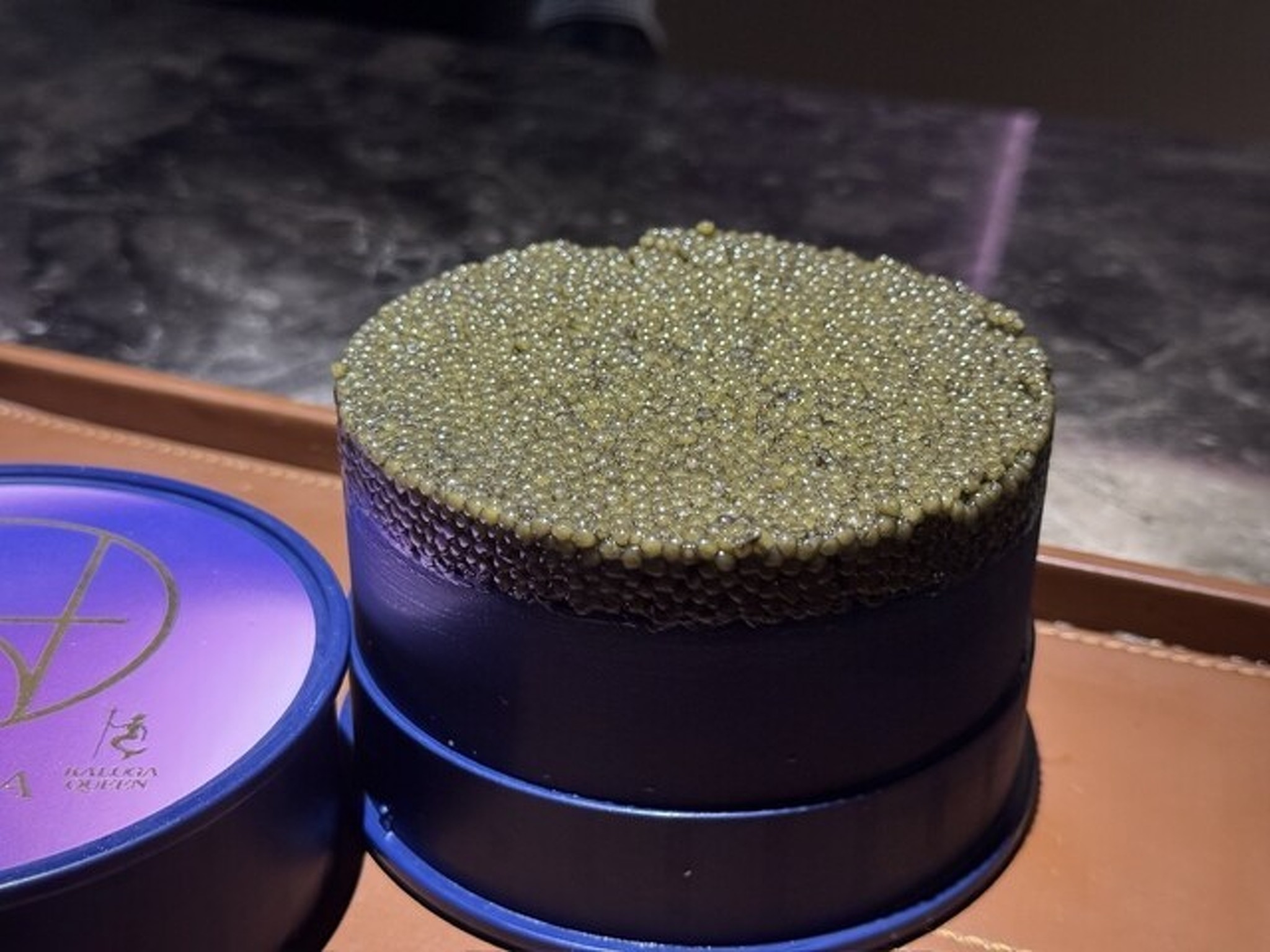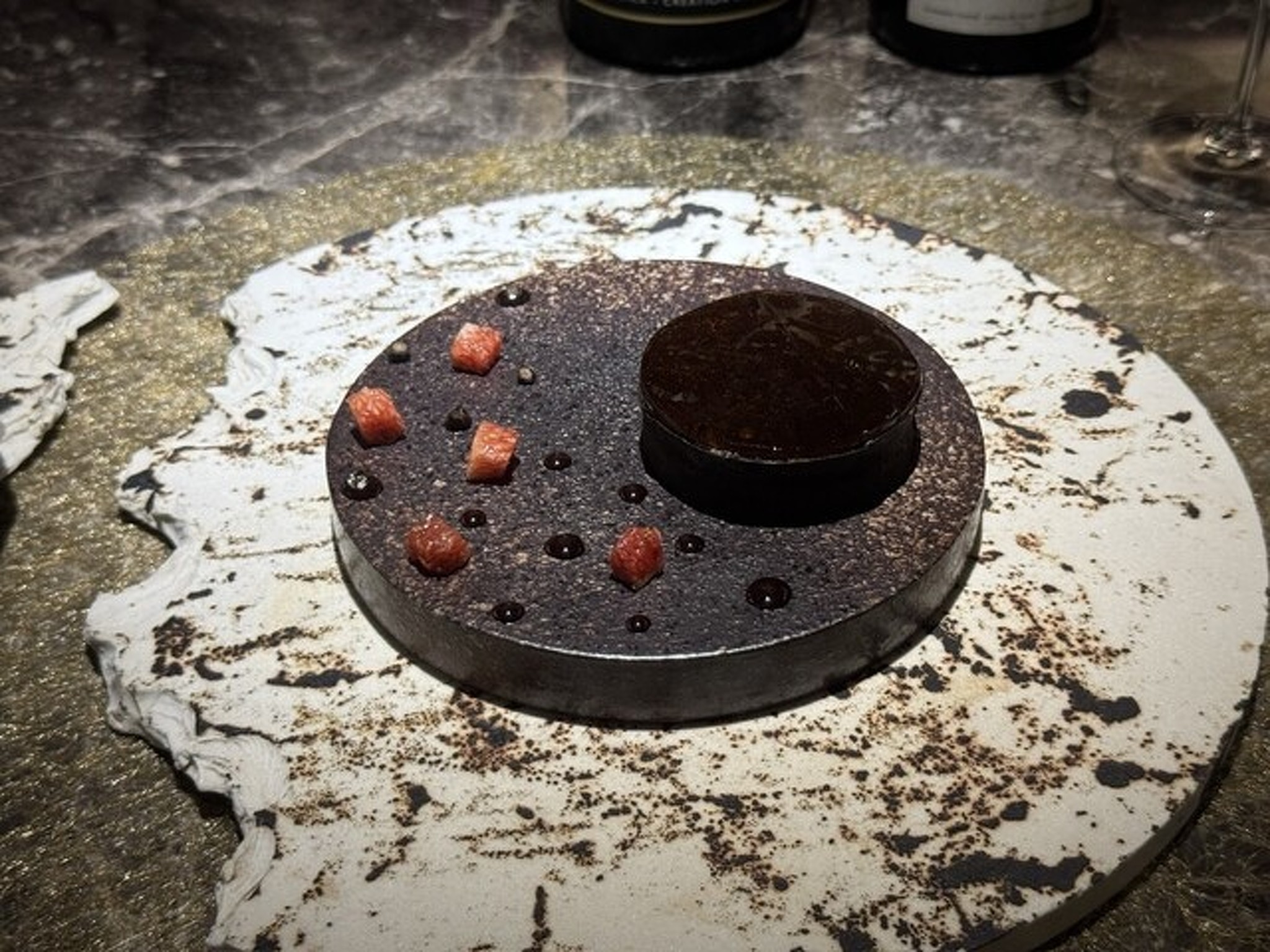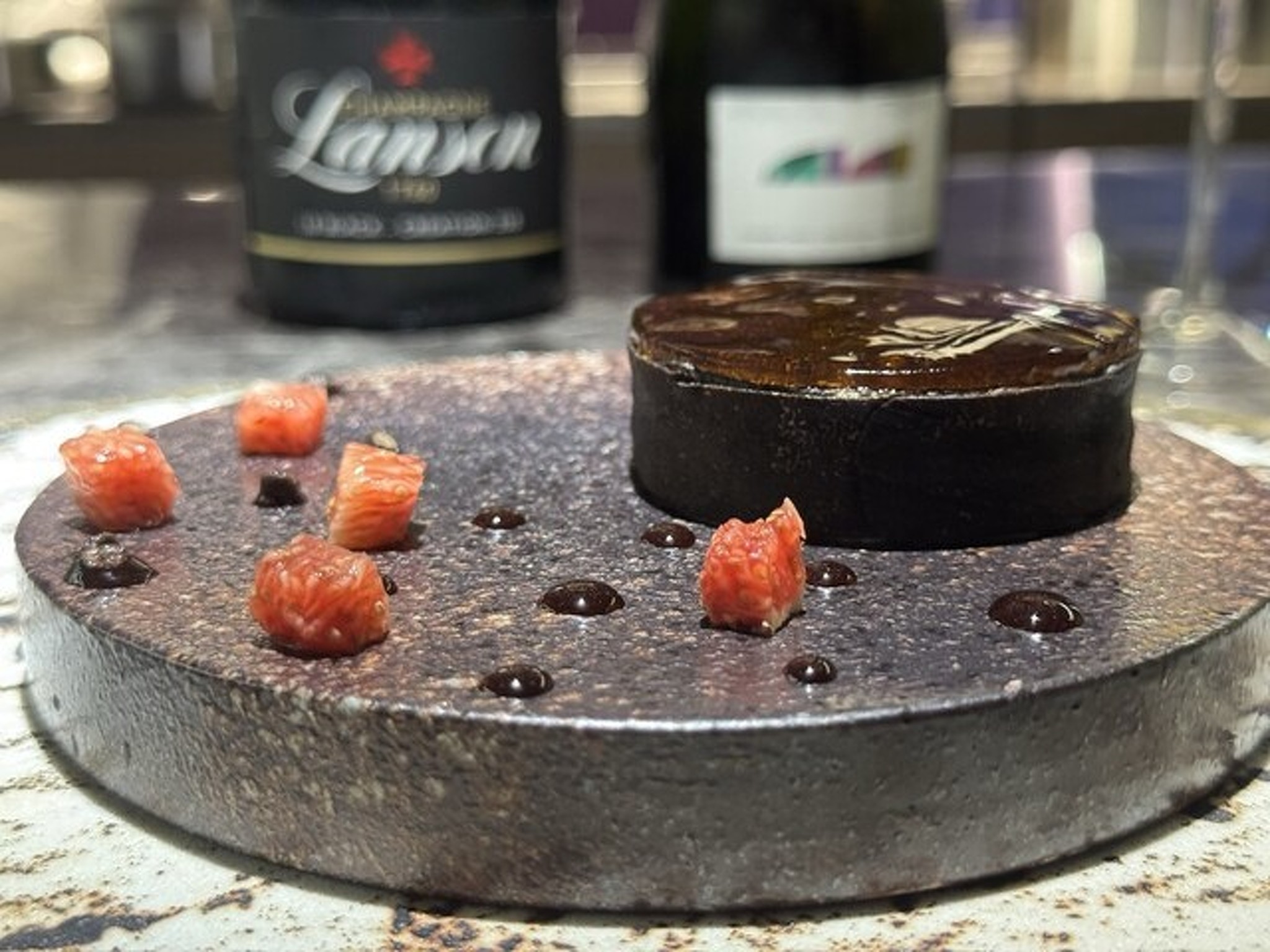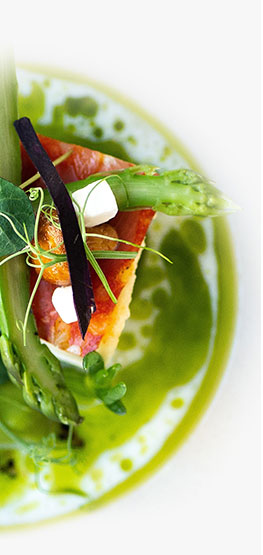
I visited "NH" (Enashu) located in Kitashinchi.What I had this time was the "NH Signature Course" priced at JPY 32,000 (JPY 35,200 including tax) plus a 10% service charge.First, I was amazed by the ambiance before even tasting the food.The entrance features a custom Hermes door, and inside, Hermes cutlery is used, with real moss adorning the walls.The futuristic design with its curves gives a surreal feeling, as if stepping into a spaceship.We started with a toast using Lanson Champagne.The first dish was a duck consomme soup.The clear consomme, concentrated with the essence of duck, was paired with yuzu, adding a refreshing aroma to the rich flavor.Next came the finger food.The taco shell made with herbs was wrapped around eel, accompanied by a puree of eggplant and black garlic.This small dish combined the umami of eel with the creaminess of eggplant and the richness of black garlic.The soufflé was made with white corn and its puree, finished with Parmigiano.The sweetness of the corn was enhanced by the saltiness and richness of the cheese.The carrot-flavored tart was topped with sweet shrimp tartare.The acidity from passion fruit and others created a delightful contrast with the sweetness of the shrimp.Next was a dish featuring foie gras, which left a lasting impression.Covered with truffles, it had a very intricate structure with multiple layers.At the bottom was a wheat germ sablé, topped with foie gras terrine, a paste of black figs simmered in Jura wine, and a cream of aged potatoes and Amazon cacao.Additionally, a crepe infused with truffle aroma was layered on top, along with a sheet of espresso jelly.Surrounding it was a sauce made with wild grapes and balsamic, fresh figs, and black pepper.Despite the strong flavors of foie gras, figs, cacao, espresso, and truffles, they harmonized beautifully on the plate.The aroma of truffles was irresistible!Here, I paired a sweet wine from the Jura region with Lanson.The combination of rich foie gras with sweetness and acidity was also impressive.Next was the tartare of Tokachi herb beef and Hokkaido hairy crab.Underneath the tartare was hidden prosciutto, combined with hairy crab, edamame puree, fried shiso leaves, and a sauce with wild garlic.While layering strong ingredients like beef and crab, the aromas of shiso and wasabi rounded out the aftertaste.The following dish featured caviar, using original Ossetra caviar with a salinity of 3.2%.At the bottom was a mozzarella cheese espuma and stracciatella.This was topped with tomato jelly, surrounded by vibrant tomato sauce, generous Ossetra caviar, and basil ice cream.This dish reconstructed the combination reminiscent of Caprese, utilizing the temperature difference with caviar.The saltiness of the caviar, acidity of the tomato, creaminess of the cheese, and aroma of basil all layered beautifully in one bite.This was a unique dish that could only be made with this caviar!The wine was Greco from Campania, Italy.Next came sweetfish and mushrooms.A royal dish concentrated with the umami of mushrooms was served with a generous sauté of about 20 types of domestic mushrooms.It was paired with pan-fried sweetfish and sweetfish bisque sauce, along with a sauce made from salted sweetfish innards, garnished with purple shiso flowers.The dish had a rich umami from the mushrooms, layered with the slight bitterness and aroma of sweetfish.It was very seasonal, allowing for a variety of mushroom textures in each bite.Paired with it was a Pinot Noir from South Africa.It had fruity notes reminiscent of strawberries and cherries, with a style reminiscent of Burgundy.Next was black rice risotto with blue lobster.The risotto, with its chewy texture from ancient black rice, was combined with a squid paste.On top were blue lobster and Brussels sprouts, along with a spicy paprika puree reminiscent of chorizo.This dish was inspired by Spanish paella, layering the flavors of shellfish and squid with the texture of black rice and the spice of paprika.It was a dish with a strong presence even in the middle of the course.The wine was Tavel rosé from the Rhône region.The fish dish featured fresh bonito from Wakayama Prefecture.The bonito was cooked to a tender finish, served with a fresh fennel salad and herbs, fennel oil, zucchini, and a puree and sauce of turban shell and fennel.The delicate flesh of the bonito was complemented by the umami of the turban shell and the refreshing aroma of fennel.It retained the nuances of the sea without becoming too heavy.Here, I had Chablis.This mineral white wine paired well with the shellfish sauce.The main dish featured Hase duck from Kameoka, Kyoto.After about a week of aging, it was roasted to achieve a crispy skin.The meat was rich in flavor, while the crispy skin provided a delightful accent.The sauce was a reduction of duck essence with sherry.Additionally, there were duck ravioli stuffed with various parts, fresh peanuts, and girolle mushrooms.A sauce made with kombu and sansho pepper was also included, incorporating Japanese umami and aroma.This dish allowed for multiple interpretations of duck in one plate, providing a satisfying main course experience.The pairing was Syrah.The bread was also impressive.By combining sake lees and grains, it offered not only a change in aroma but also in texture.The accompanying Calpis butter was whipped to a light consistency.Before dessert, there was a small dish.Pineapple with spiced cola jelly and mint ice cream, garnished with ginger ramune.This refreshing combination reset the palate towards the end of the course.The main dessert was Peach Melba.Using white peaches from Yamagata Prefecture, the peach compote was paired with almond milk espuma.It was accompanied by vanilla ice cream made with New Caledonia vanilla, along with peach soup and raspberry sauce.While centered around the aroma and sweetness of the peach itself, the dessert achieved depth with vanilla, almond, and raspberry, without feeling heavy towards the end of the course.The final mignardises included canelé, financier, and white chocolate ganache.From the initial consomme to the small sweets, the number of ingredients and techniques used in each dish was remarkable.Rather than simply presenting high-end ingredients, NH's charm lies in the meticulous combination of aromas, temperatures, textures, and acidity to create a single dish.With the Hermes door, real moss walls, and a spaceship-like atmosphere, this was an innovative French dining experience in Kitashinchi that could be enjoyed as a "culinary experience."
We use cookies on this site to enhance your user experience.