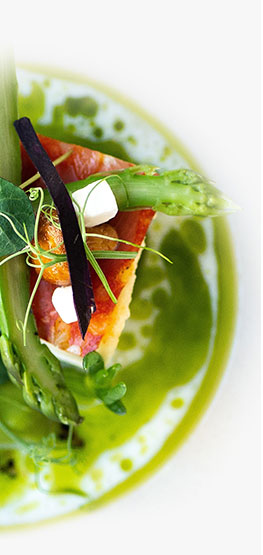
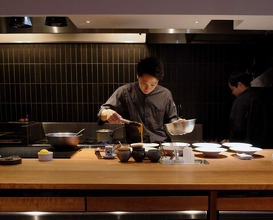
On this day, I stayed in Kyoto and visited "shiro," a highly-rated innovative Italian restaurant, for dinner.1. Manganji Pepper A cold soup made from Manganji peppers from Kameoka, Kyoto, roasted over an open flame until charred, with the skin removed to extract its roasted flavor and sweetness. The refreshing taste of green beans, cucumber, and young ginger was soothing on my heated body in the summer.2. Rock Oyster Rock oysters from Hamada City, Shimane, were slowly cooked in milk and transformed into a rich ice cream-like summer delicacy. A lemon jelly from Naito Farm in Shimane and dill enhanced the creamy umami and subtle bitterness of the oysters.3. Ayu from Hachinohe River The ayu was cooked tenderly from head to bone, then fried to a crisp and served with ayu miso that had been fermented for three months, expressing bitterness. Layered with funazushi rice, Parmigiano, and gremolata, this dish skillfully incorporated the umami of fermentation.4. Green Asparagus Lightly cooked asparagus from Kagoshima was paired with a smooth white sauce made from tofu and sesame, creating a vibrant dish. The consomme jelly made from ripe tomatoes and kumquat added color and acidity, enhancing the natural sweetness of the asparagus.5. Peach from Naito Farm This dish featured ripe peaches from Naito Farm in Shimane, combined with burrata, goat cheese, ham mousse, and 18-month-aged prosciutto. The harmony of the fruit's sweetness, the saltiness of the prosciutto, and the richness of the dairy was remarkable.6. Mochigome A risotto made from steamed mochi rice from Shimane, combined with shibazuke from Ohara. The addition of shibazuke created a curious sensation, as my brain translated it into porridge. The gentle umami and moderate acidity provided a pleasant balance for the subsequent dishes.7. Siciliana An original cold pasta inspired by "what kind of pasta would Sicilians make?" The shrimp was marinated in ayu fish sauce and lemon, layered with bottarga and dill, creating a rich dish that evoked the scent of the sea in multiple layers.8. Fava Beans Surprisingly light gnocchi made from pureed fava beans mixed with plenty of ricotta. The cream sauce infused with the aroma of prosciutto was enhanced with fermented lemon, balancing gentle sweetness with refreshing acidity.9. Sea Bass and Winter Melon A summer dish from Kyoto. The freshly caught sea bass was coated in kudzu and served with a puree and soup of winter melon, creating a refreshing experience. The acidity of the plum and the aroma of lemongrass oil added a light accent to the elegant flavor of the sea bass.10. Jukuyou Farm The sirloin cap from Jukuyou Farm, a Wagyu ranch in Shimane, was grilled over charcoal to a fragrant finish and paired with a rich sauce made from Ikkyu-ji natto and black garlic from Kameoka. The aroma of the meat was wonderful, and the deep umami of the Ikkyu-ji natto, reminiscent of Chinese fermented black beans, enhanced the meat's flavor without feeling heavy.11. Dainagon Azuki A cold zenzai made from Dainagon azuki beans, which originated in Izumo. By combining it with mango, passion fruit, and sansho pepper, the dessert achieved an unexpected harmony of Japanese and tropical flavors.12. Melon and Almond A closing dessert inspired by "adult melon cream soda." Almond blancmange was layered with yogurt sorbet and carbonated melon soup, topped with a sake lees tuile that added a lingering aroma.The wine pairing was also enticing, but since I had plans to meet someone afterward, I consulted the sommelier and enjoyed just two recommended glasses of wine.- Franz Keller 2023 Oberbergen Bassgeige Grauburgunder (Pinot Gris) - Domaine de la Bongran 2020 Cuvée E.J. Thévenet, Chardonnay The Chardonnay from the prestigious Burgundy estate "Domaine de la Bongran" paired wonderfully with the sea bass in the latter part of the meal, elevating the appeal of the dish significantly.While in Kyoto, I experienced a local gastronomy journey, savoring the seasonal flavors of the chef's hometown, Shimane. As I left, I told the chef, "I felt a strong love for Shimane's local culture," to which he shyly smiled and replied, "Having spent so long in Kyoto, I can’t tell which is my hometown anymore." As he said, the respect and affection for both Shimane and Kyoto were evident throughout the course. It was a wonderful culinary experience that allowed me to taste the local climate, food culture, and the passion of the producers.
We use cookies on this site to enhance your user experience.