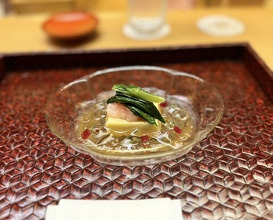
I had some free time during lunch in Kansai, so I decided to visit Kiyama, a restaurant I thought would align with my taste, given its connection to Wakuden.Located in a corner of a condominium, the approach and the interior design are surprisingly spacious and exude a serene Japanese atmosphere, making it hard to believe it’s in a residential building.On the counter, various types of katsuobushi (dried bonito) are displayed, and the apprentices take turns shaving it. I later learned that this practice of shaving katsuobushi at the counter has been a tradition since Kiyama opened, and even during lunch, the apprentices continue to shave it whenever they have time.I believe the chef wants to observe the customers while shaving the bonito, sensing their reactions. However, the apprentices seem to be focused on providing attentive service, which shows they still have room for growth.Now, onto the food.The first dish was a refreshing summer-inspired creation featuring corn tofu topped with sweet shrimp, tsurumurasaki (a type of edible plant), and junsai (water shield) accompanied by a gelée made with Tosa vinegar.Next was a dish of fried young corn and edamame paired with shinjyo (a type of shellfish). Hidden under shiso leaves was a surprising peach sauce that complemented the texture of the shellfish and the aroma of the shiso beautifully.The sashimi that followed included horse mackerel and bonito. At first glance, it seemed like a standard sashimi dish, but the freshness and umami of the fish were outstanding. The pickled zucchini and salted watercress served as condiments were exceptional.What appeared ordinary was anything but; the skill in executing these dishes was remarkable. Truly top-notch, with so much to learn from.Then came the performance of the first dashi (broth) at the counter. Served in a glass sake vessel, the dashi made from ultra-soft well water was so delicate that it was hard to detect any flavor if you were even slightly unwell.Having lived in Tokyo for many years, I’ve become accustomed to stronger salt flavors, but the soup made with this dashi was elegantly balanced, just on the edge of saltiness.The addition of the crunchy texture and bitterness of young sweetfish created a wonderful balance of flavors.In between, I switched from Junmai Daiginjo sake to Hayaseura from Fukui.As the atmosphere at the counter warmed up, the conversation turned to the hanging scroll. It featured a handwritten piece by Honami Koetsu, a letter inviting to a morning tea ceremony, which is a limited scroll for June and July.One of the joys of Japanese cuisine is being able to appreciate such cultural elements while enjoying the meal.After savoring the main dish of conger eel, it was time for the much-anticipated rice finale.Today, five types of rice dishes were prepared:1. Mixed rice with kinmedai (golden eye snapper)2. Rice with octopus and egg sauce3. Small rice bowl with horse mackerel4. Clam broth ramen5. Rice with tiny dried fishNaturally, I ordered all of them. I particularly enjoyed the clam broth ramen and even ordered an extra bowl. This clam broth ramen is undoubtedly at a level that could earn a spot among the top ramen shops.To finish, we had matcha and kiwi ice cream. The kiwi ice cream was simply delightful...Overall, my experience at Kiyama was filled with various insights until the very end.
We use cookies on this site to enhance your user experience.