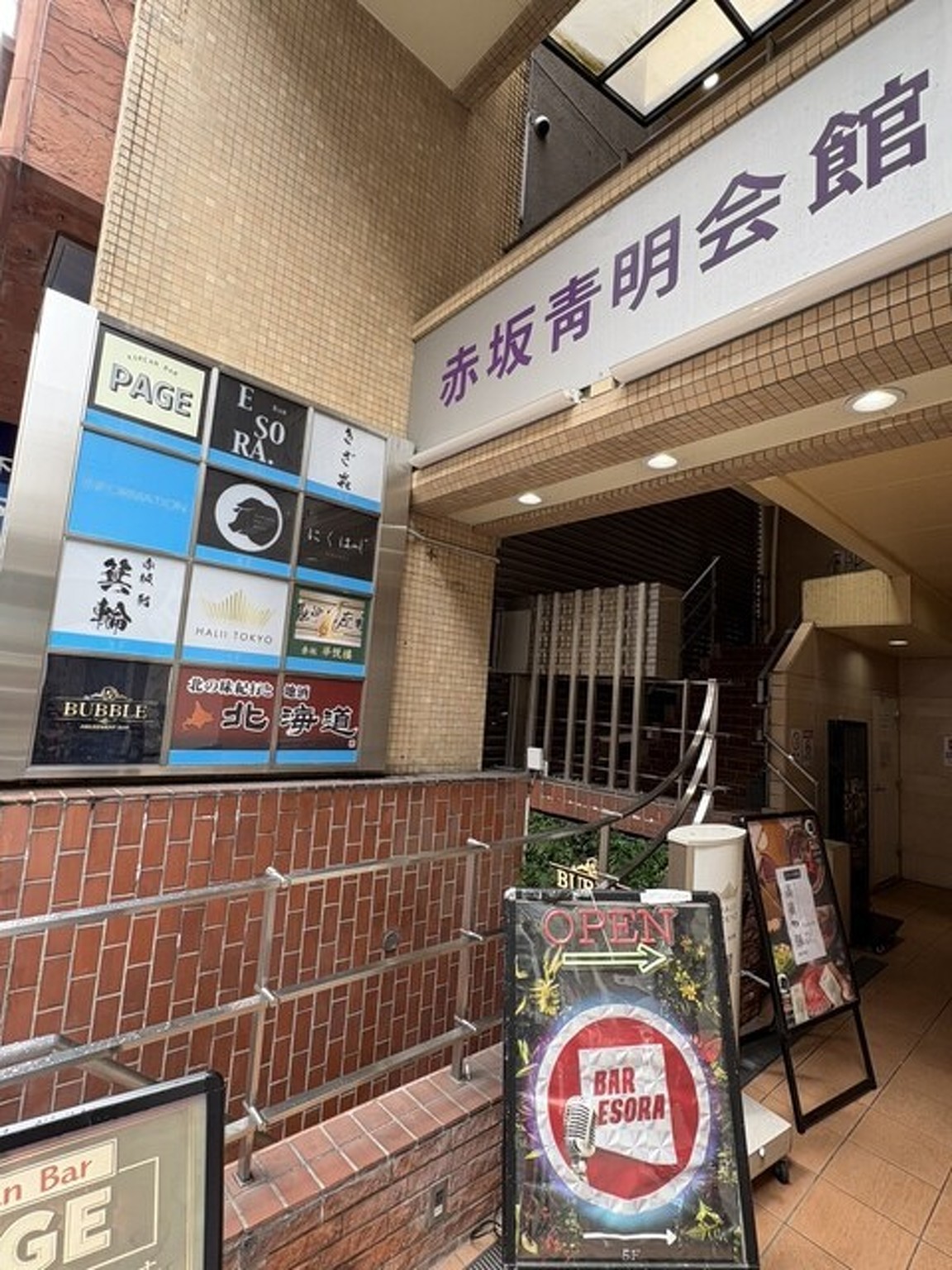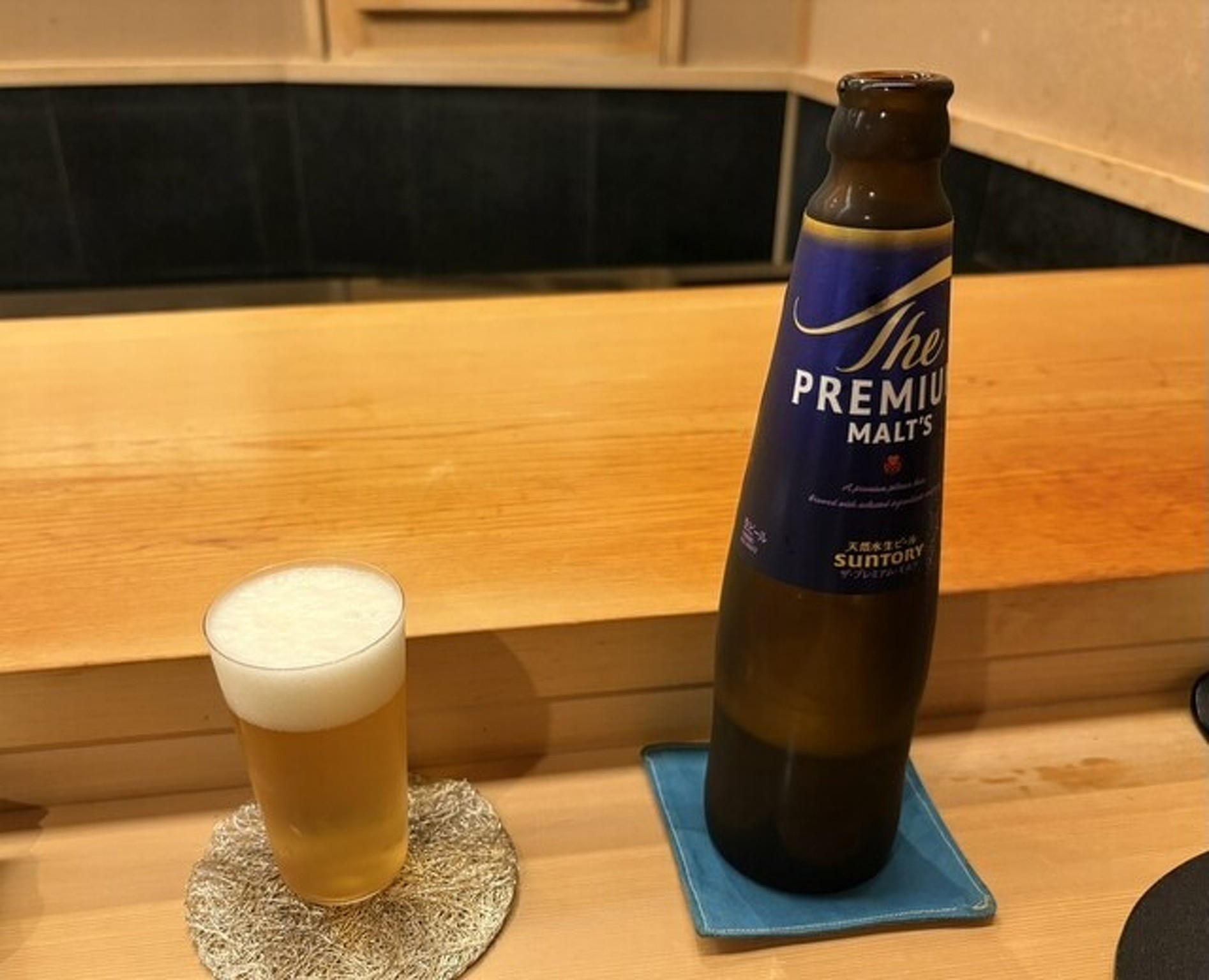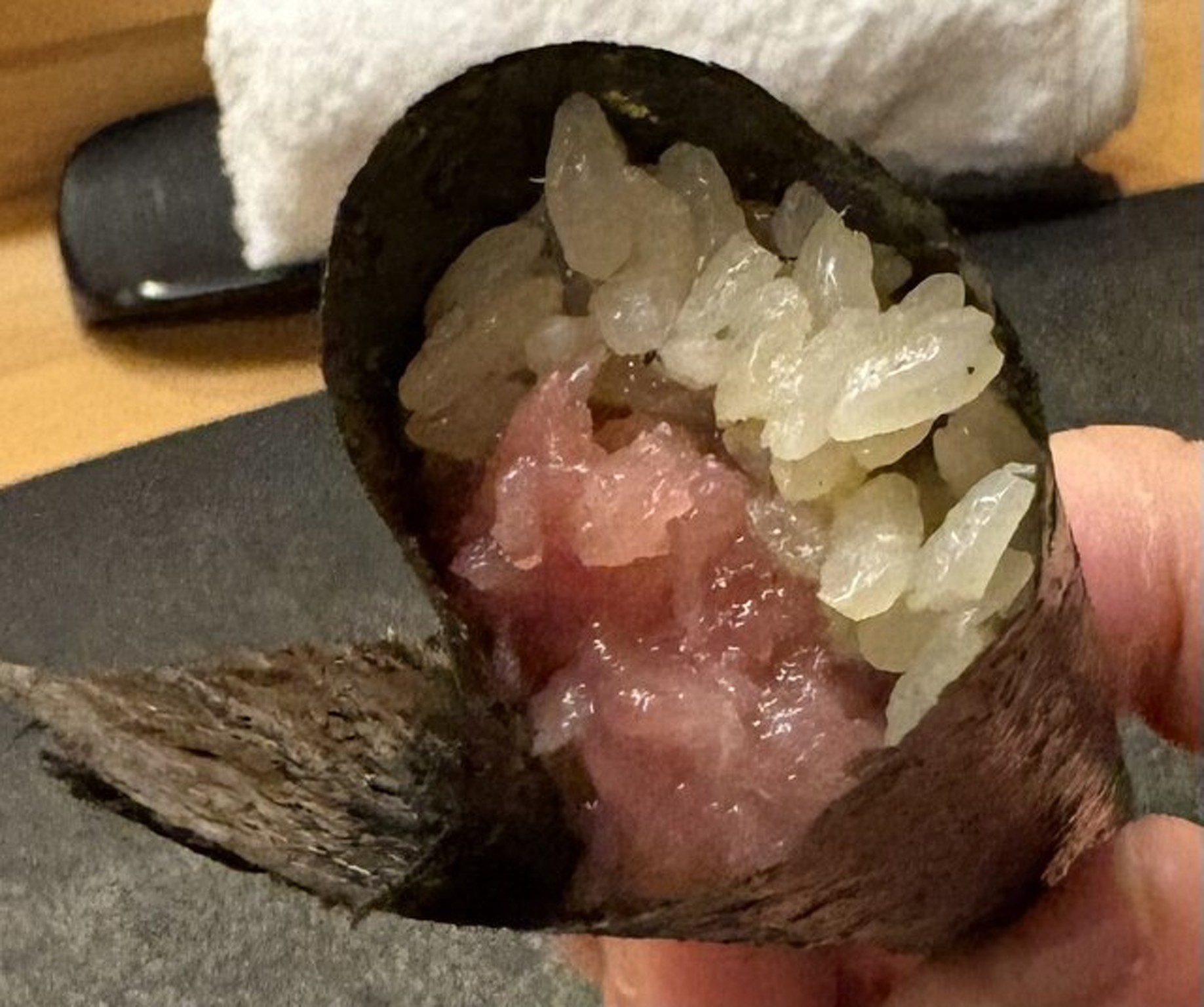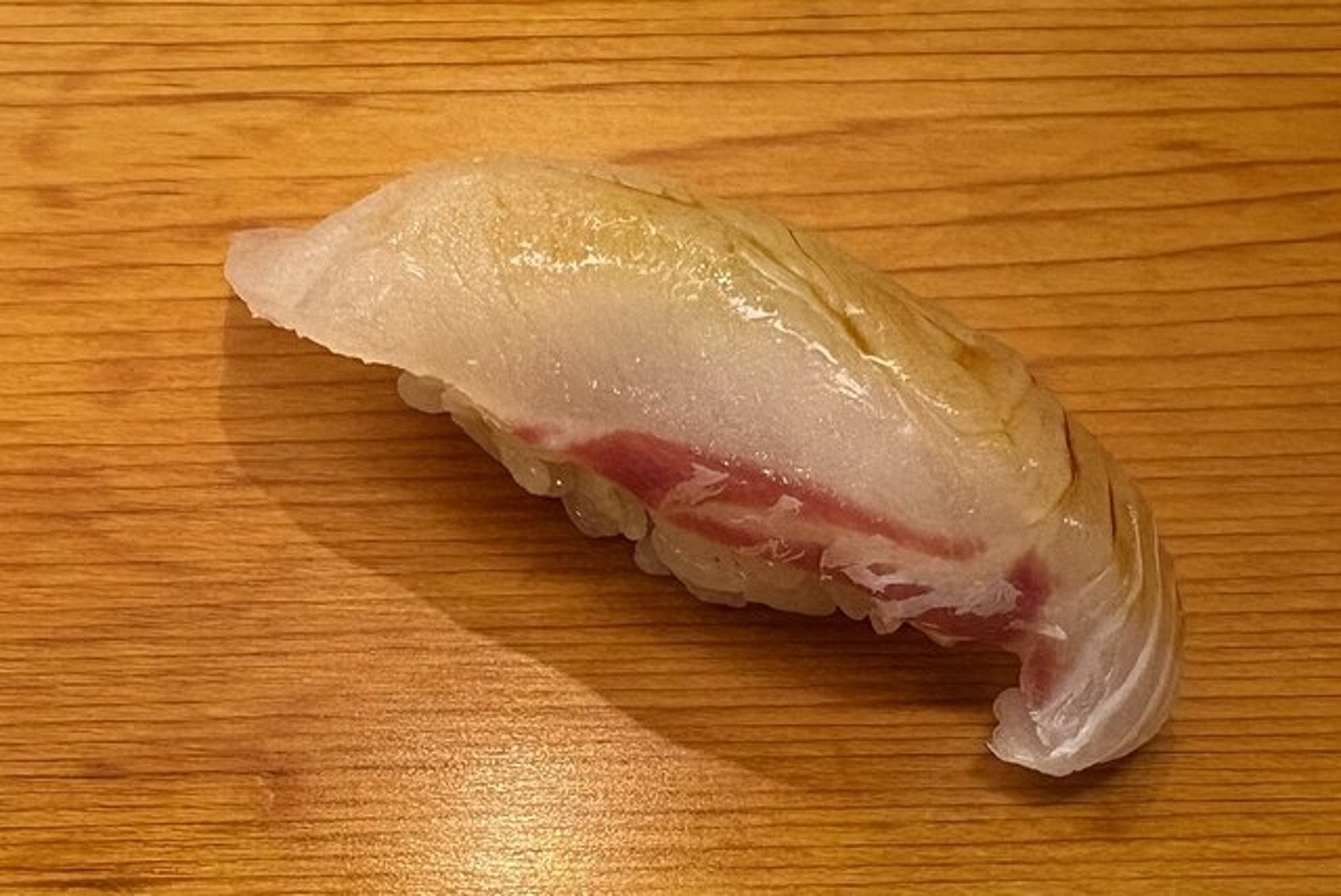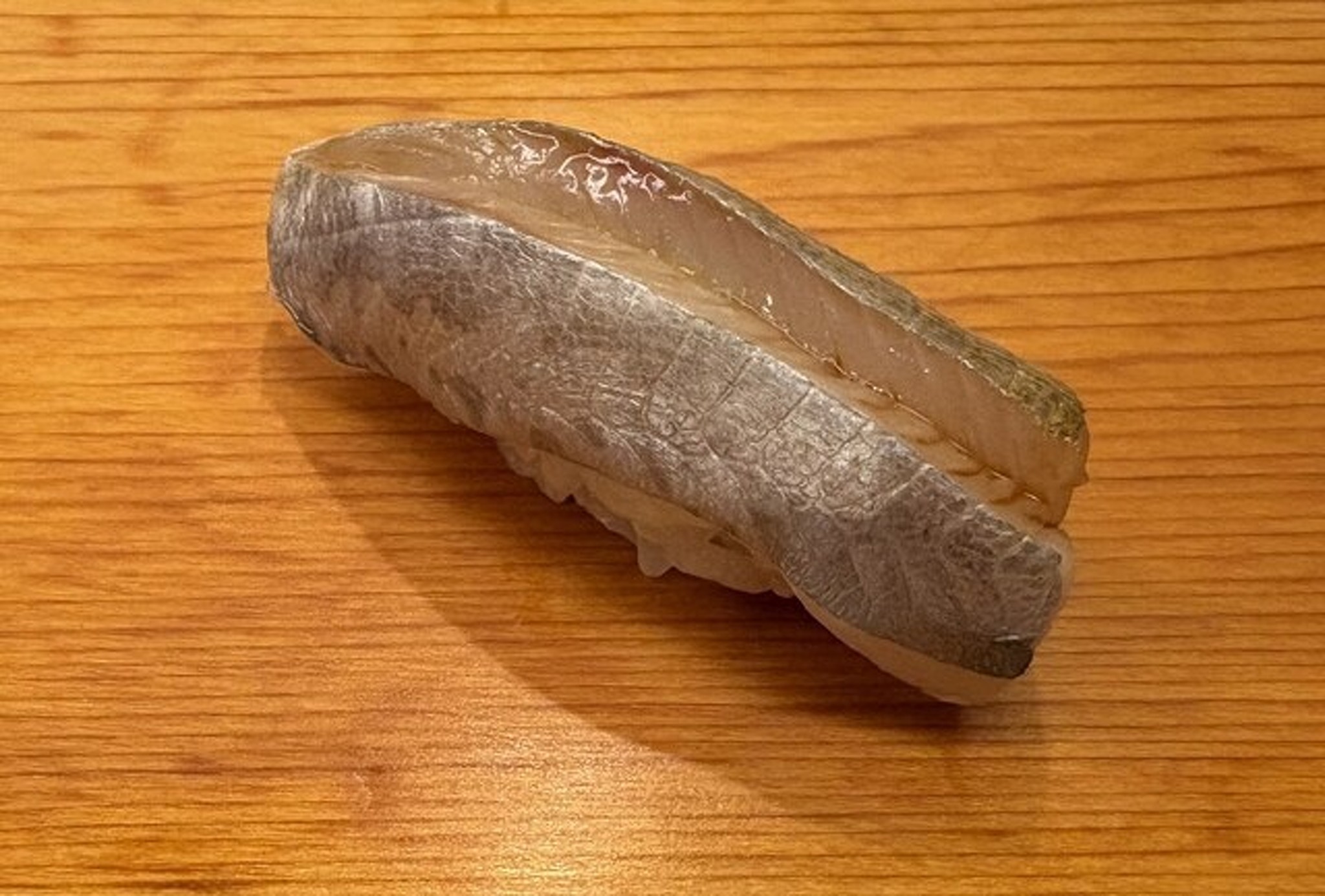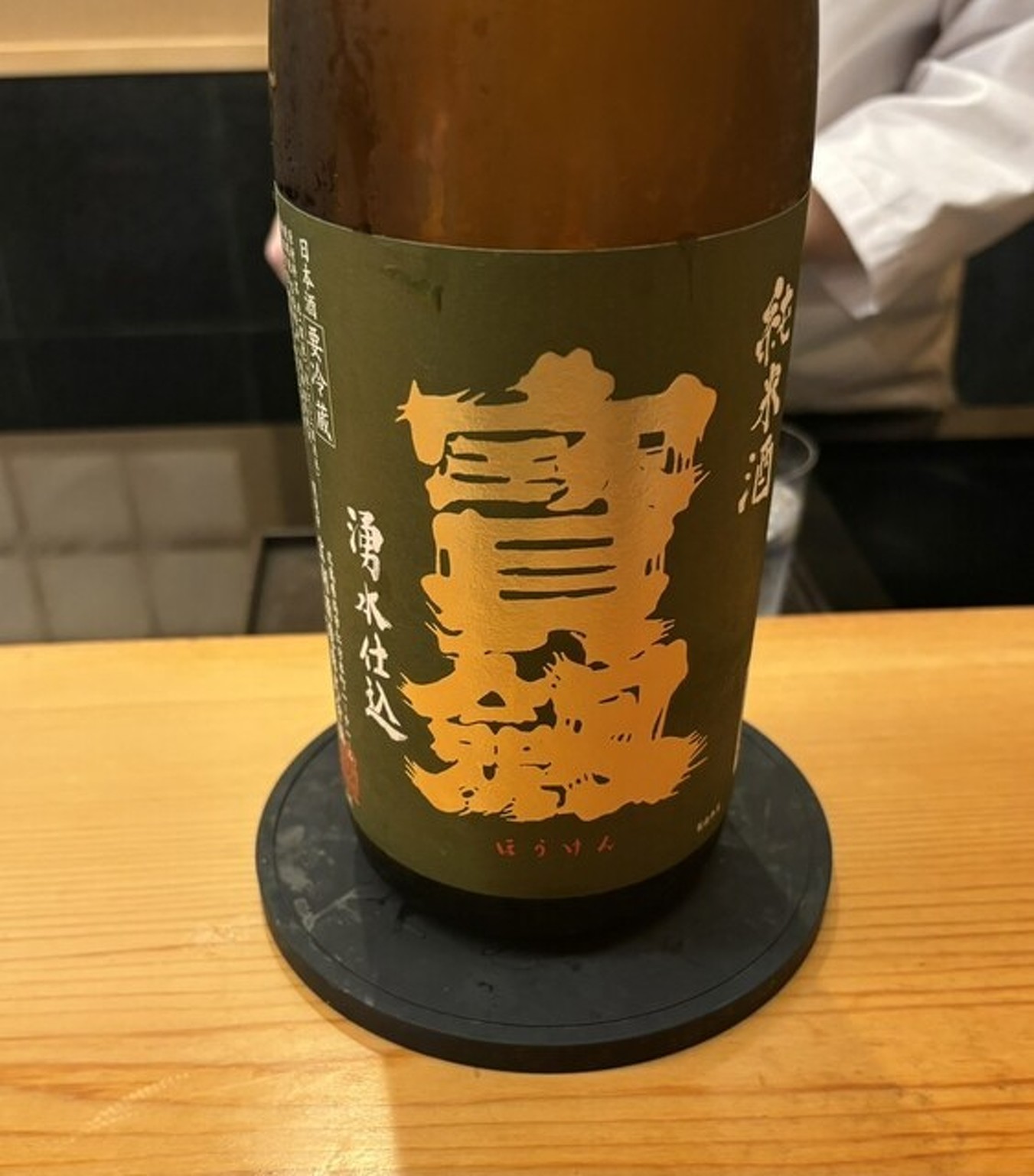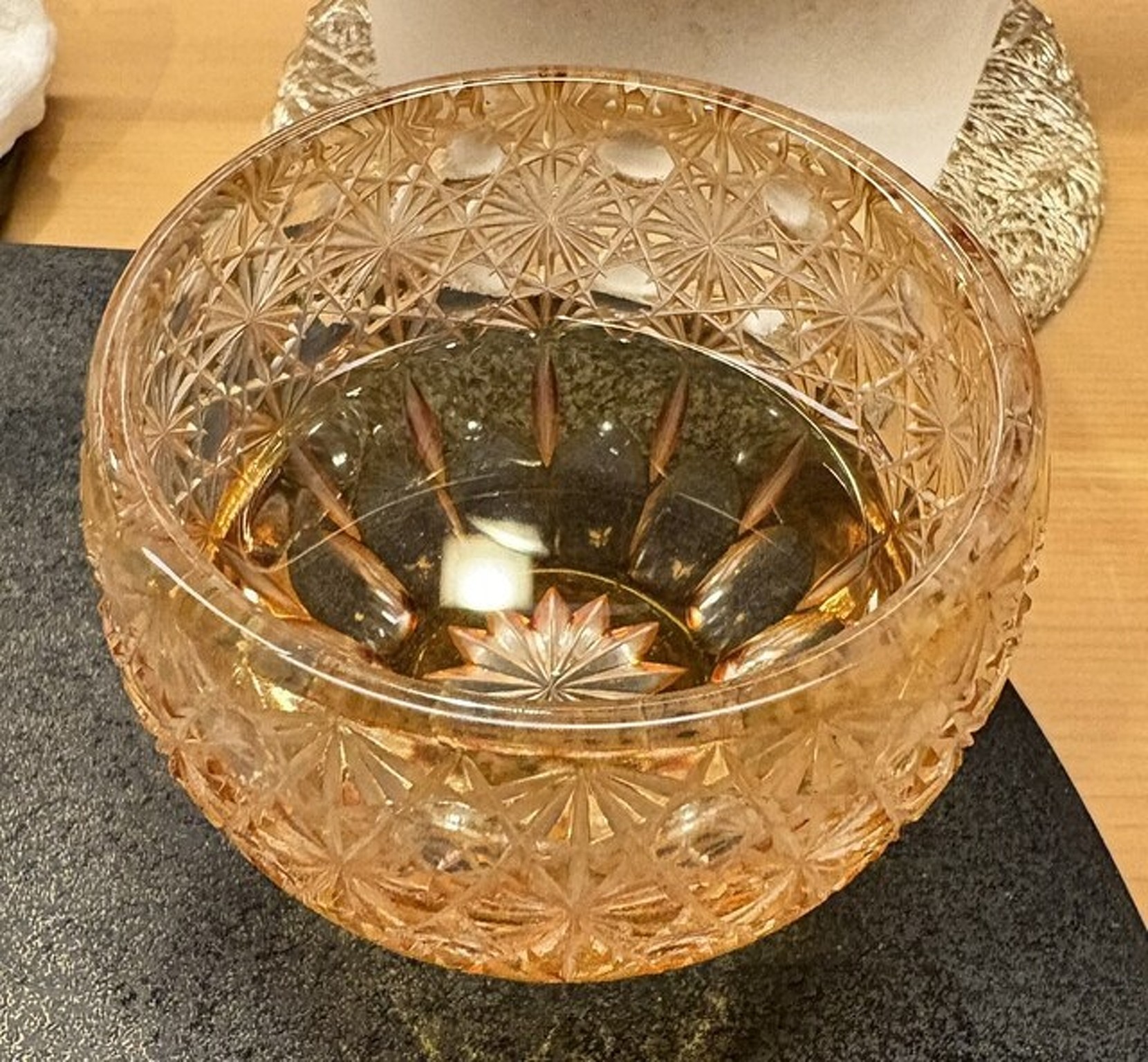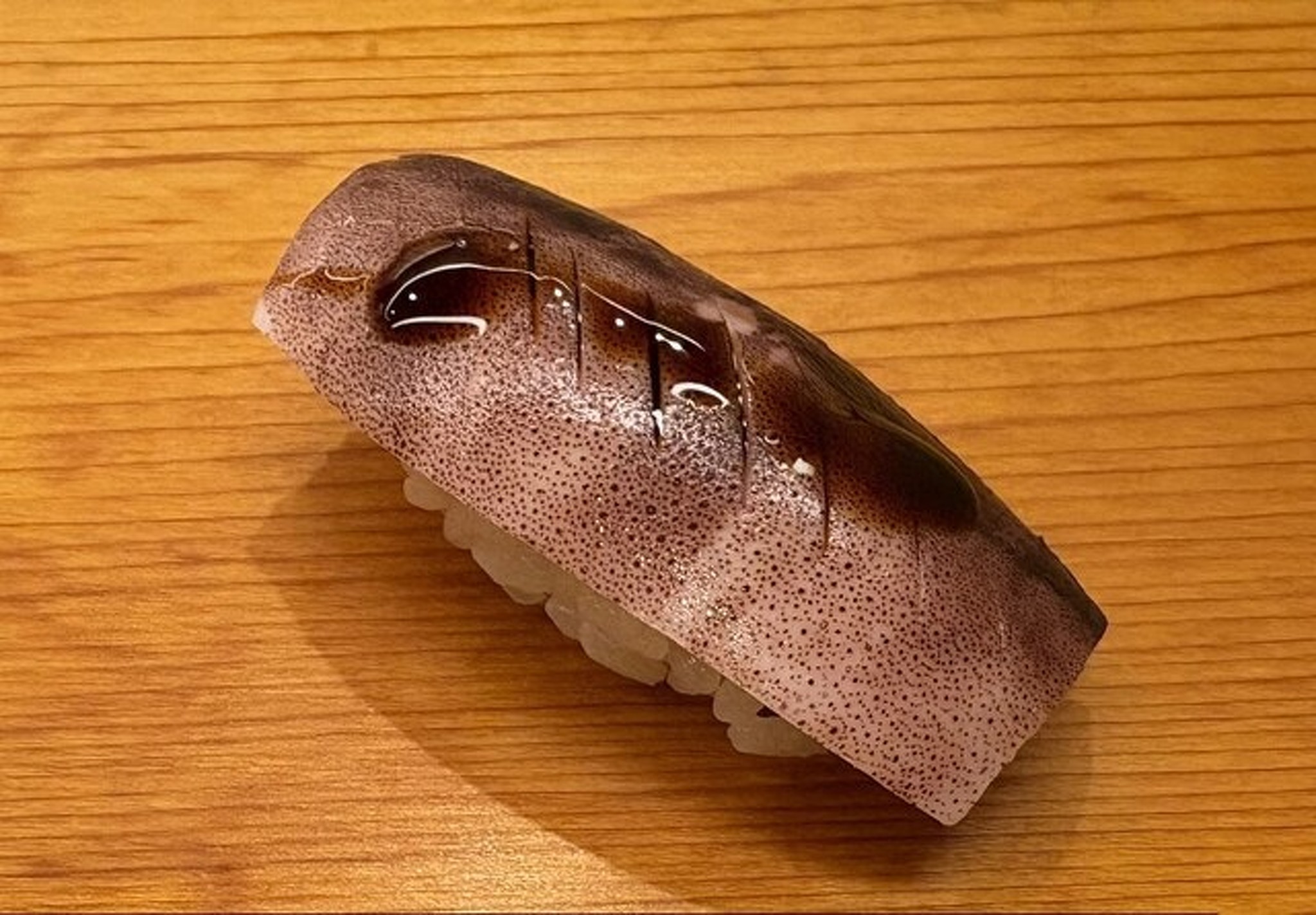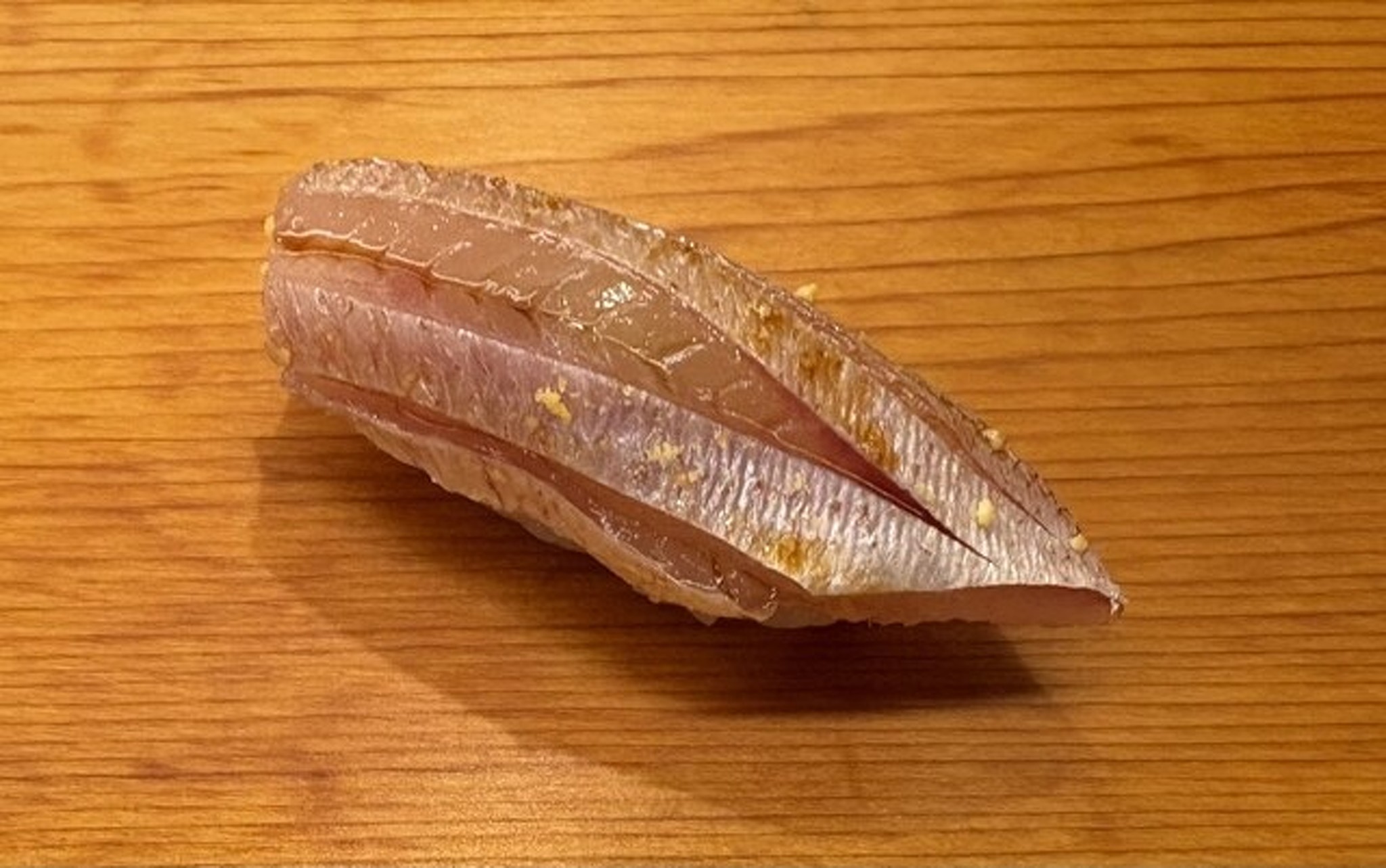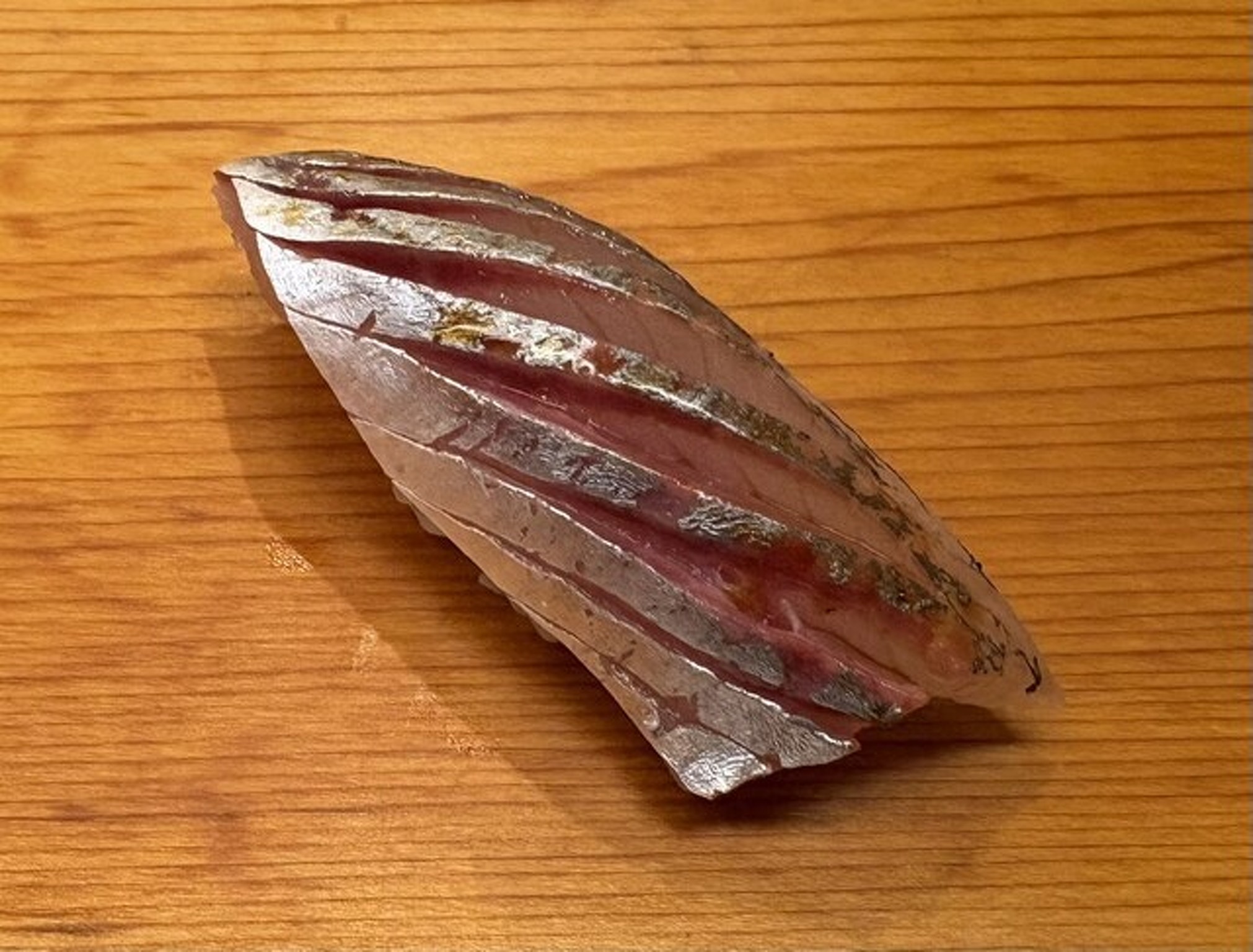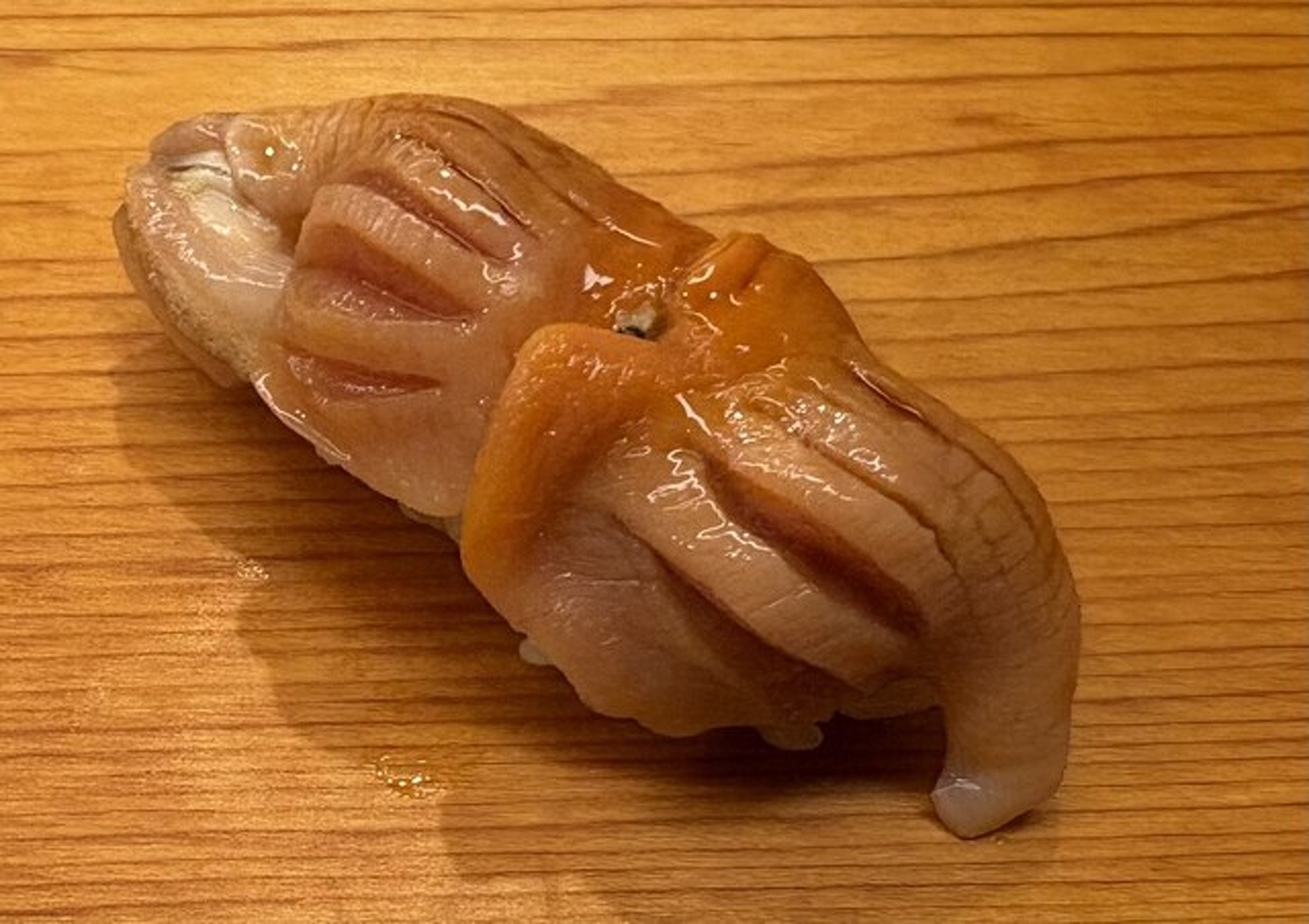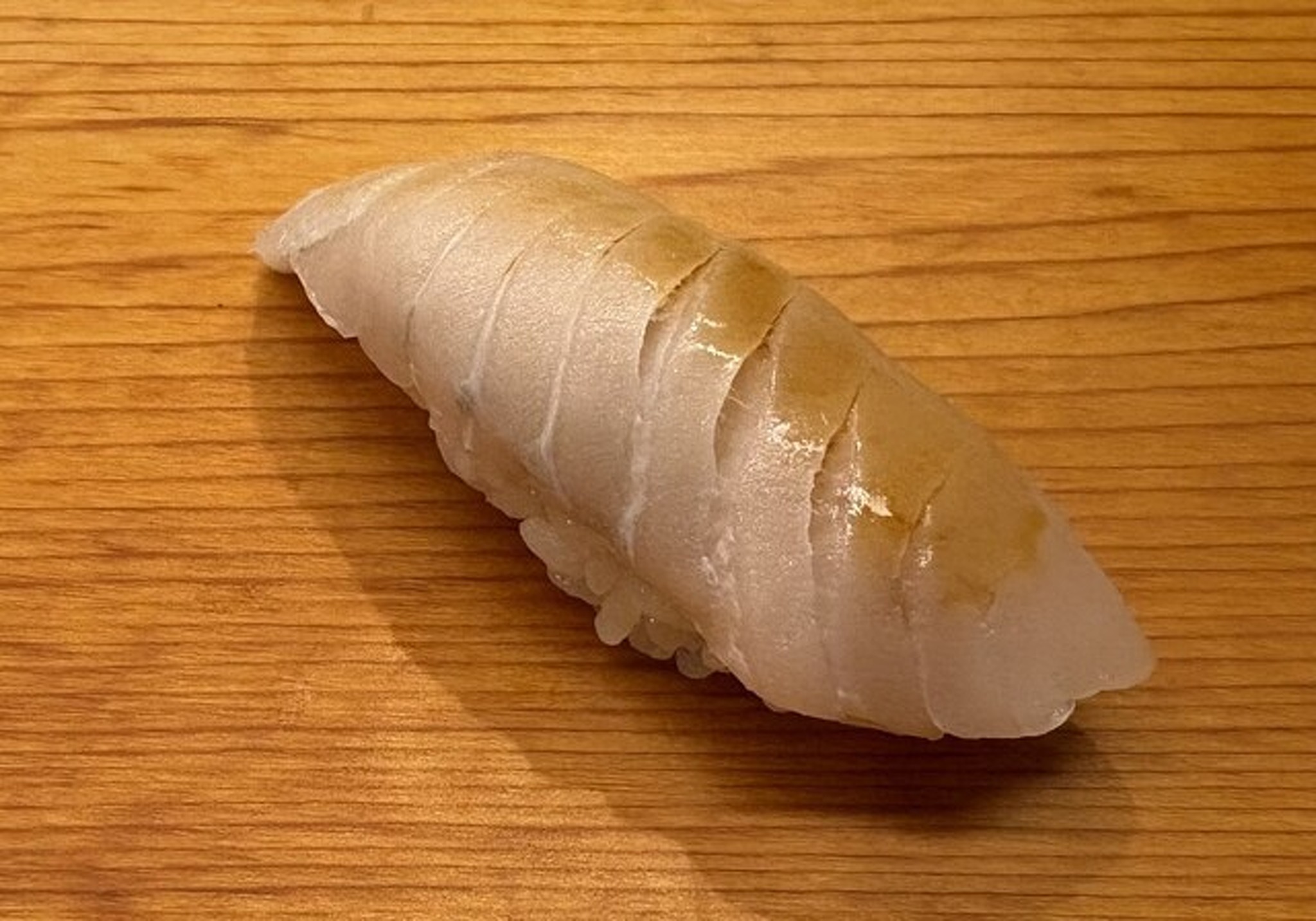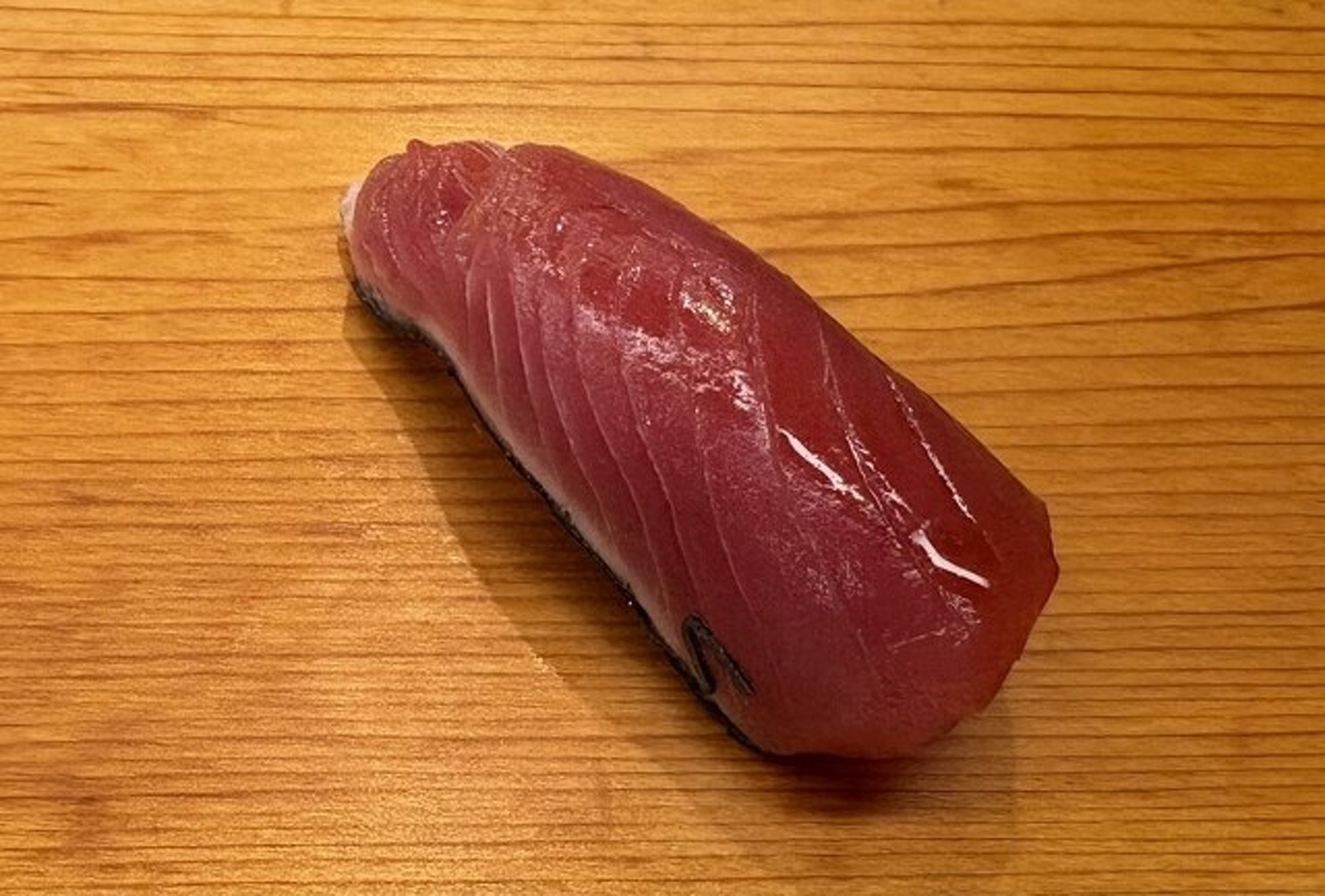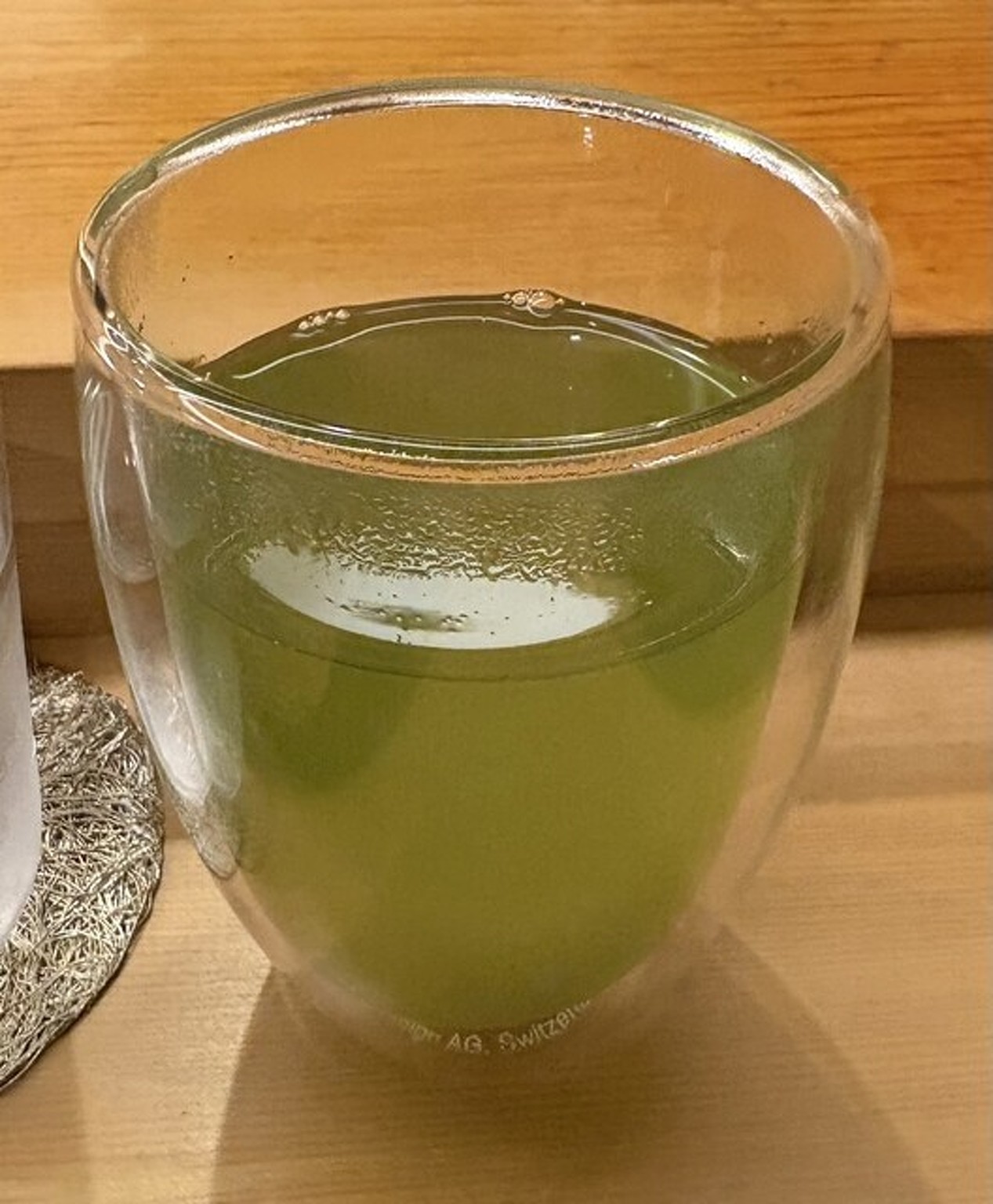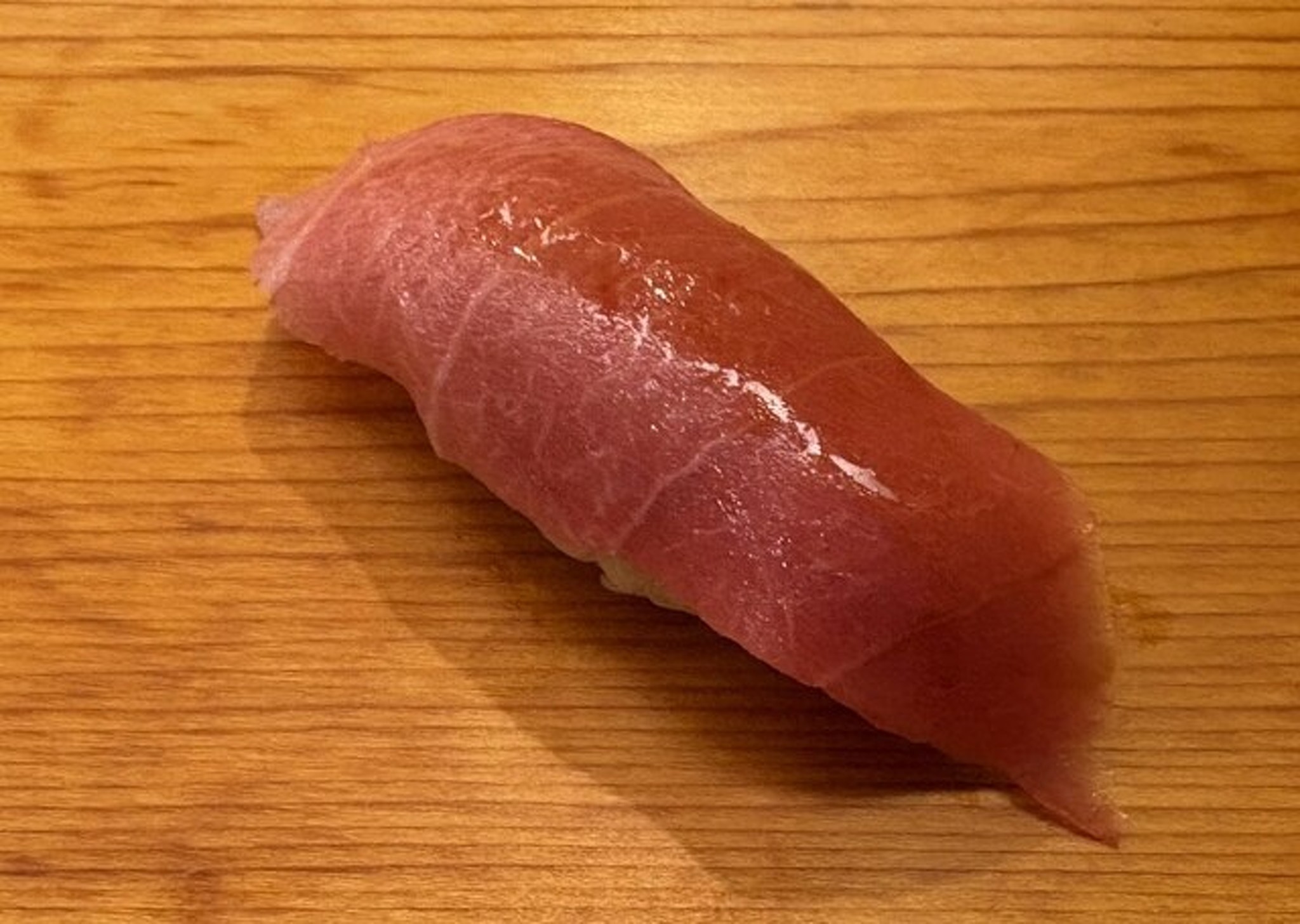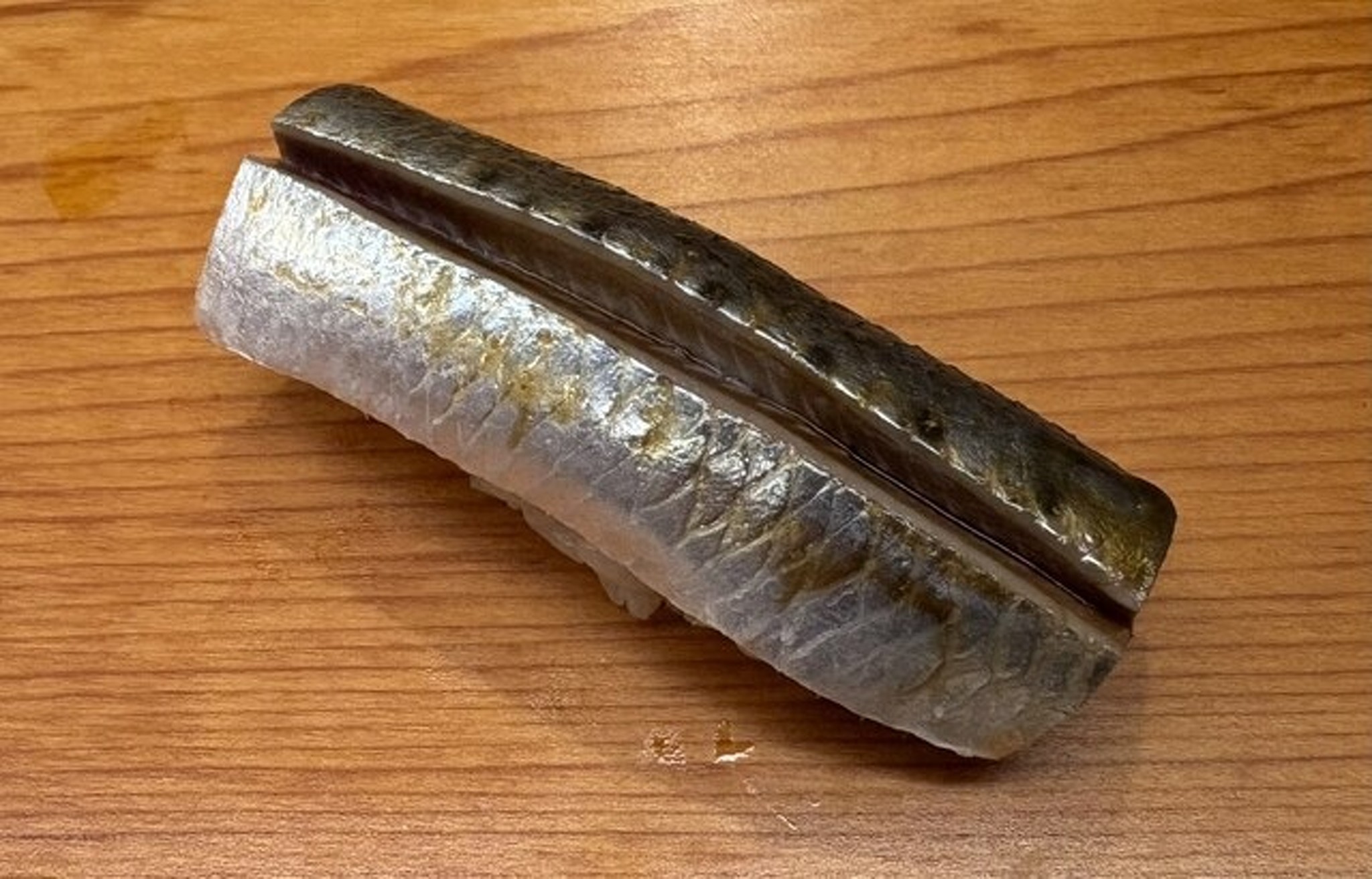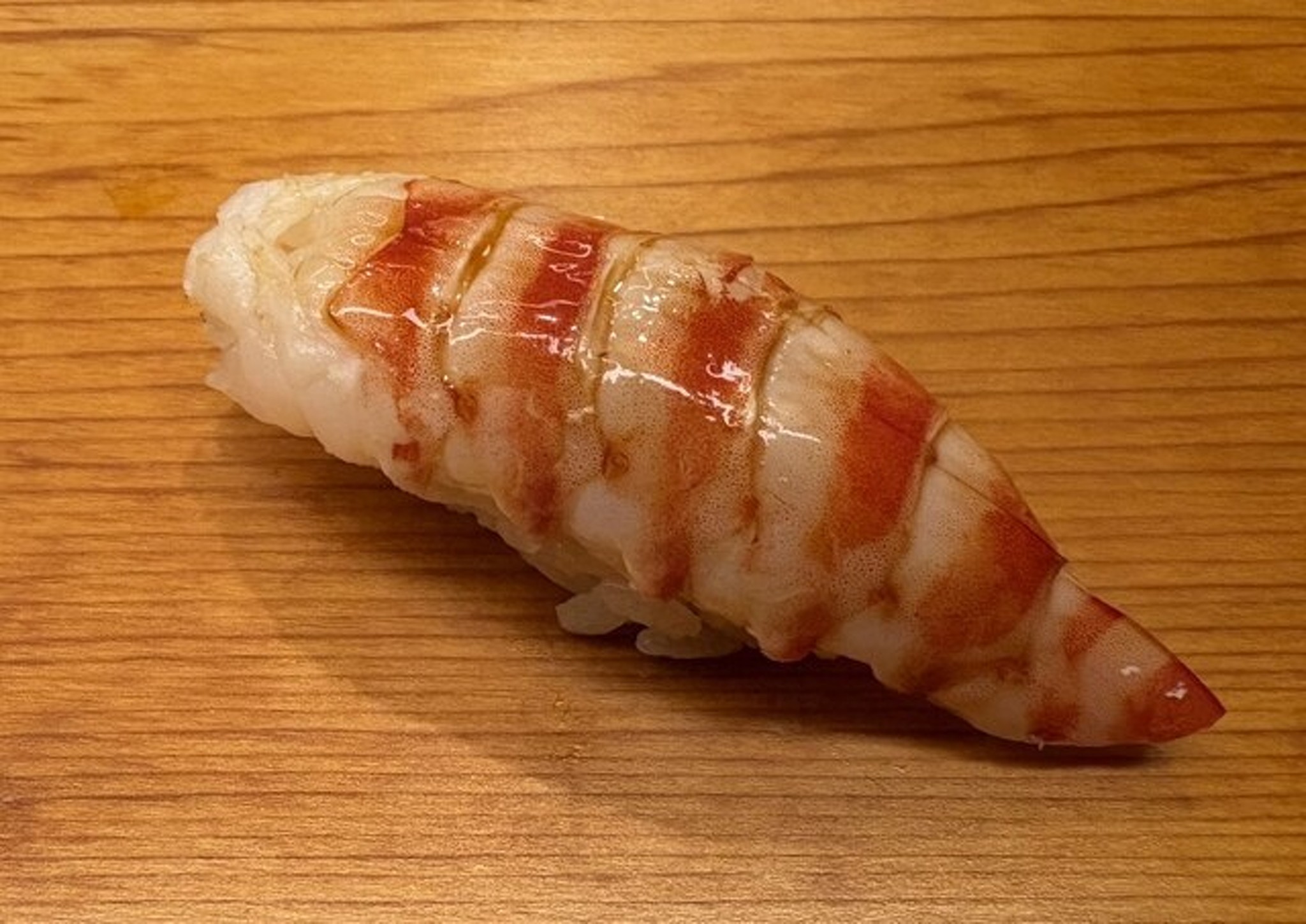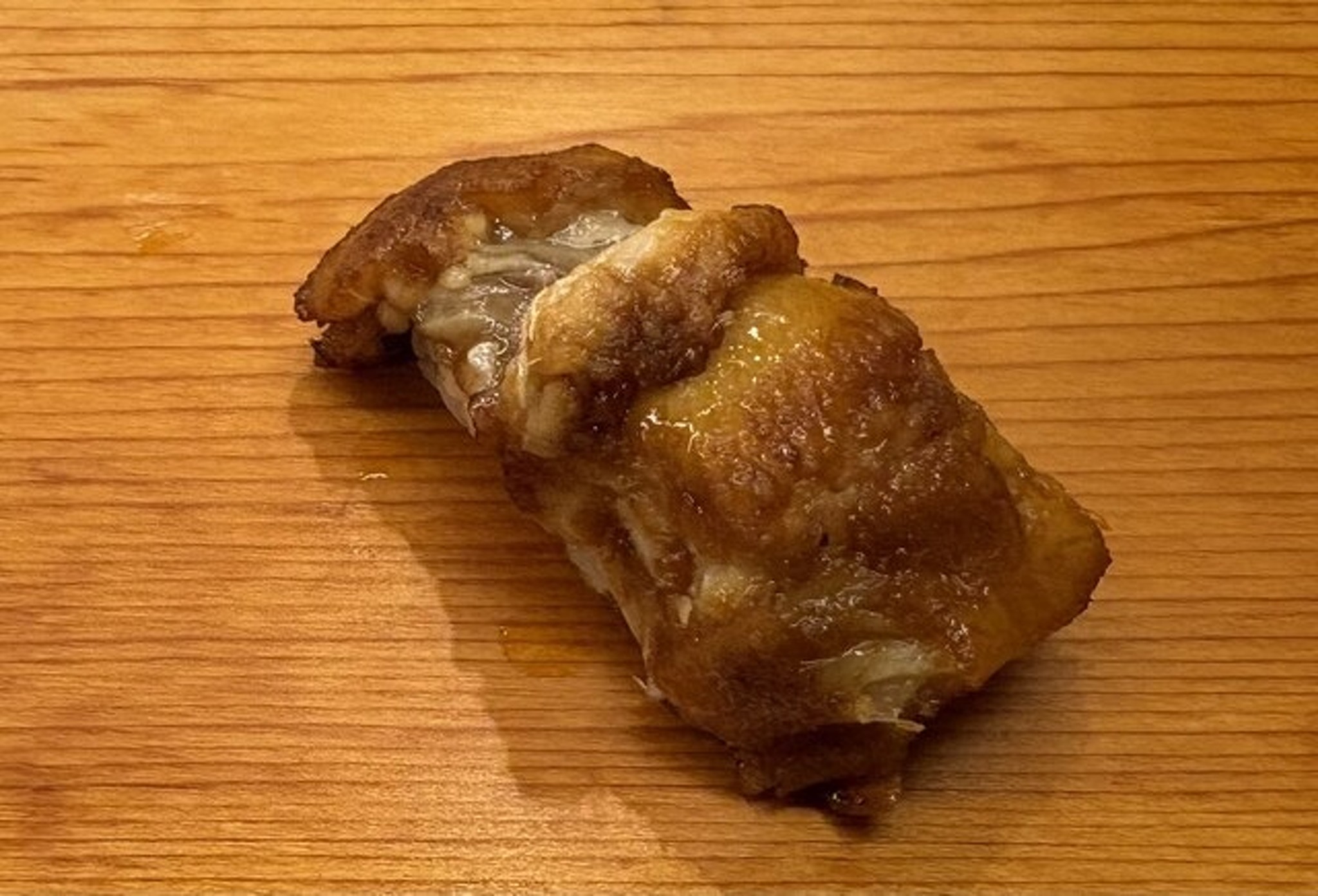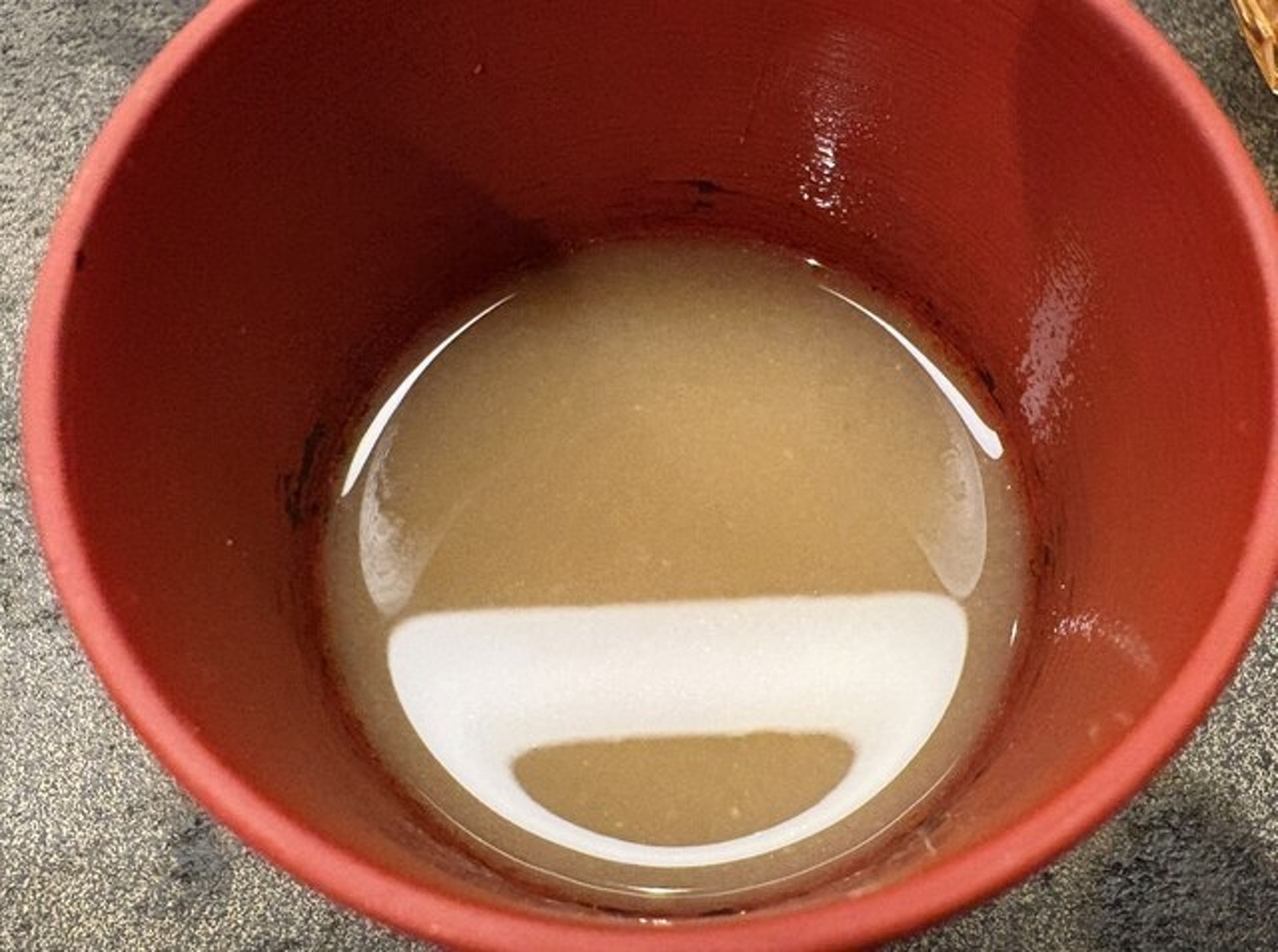
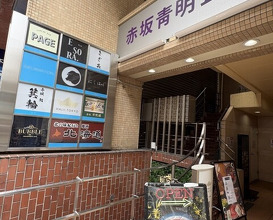
We made a reservation for lunch on a holiday and entered this restaurant as a party of two. "Kizaki" is a reservation-only Edomae sushi restaurant located on the 5th floor of a mixed-use building in Akasaka, opened in 2018 by a chef who trained at places like "Sushi Tokami" in Ginza. When we arrived about 10 minutes before our 12:00 reservation, we found the restaurant still preparing, so we had to wait outside on the 5th floor for a bit. Fortunately, the weather wasn't too hot that day, so it wasn't uncomfortable even without air conditioning.We opted for the omakase nigiri course that started at 12:00 (JPY 18,700, one option). The hinoki wood counter inside was fully occupied.We started with a beer (The Premium Malt's Master's Dream), then switched to a dry Japanese sake (Hōken Junmai Sake, Wakusui Shikomi), and finally enjoyed some warm green tea while savoring the sushi.The course began with the restaurant's specialty, "Tossaki" hand-rolled sushi, made from a rare cut of lean tuna taken from the base of the tuna's head. Next, we had aged sea bream, ebo-dai (a type of fish cured with vinegar and salt), and tender, sweetly simmered barley squid. Each piece was expertly prepared and incredibly delicious. Then came the spring sea bream, horse mackerel, and red clam. The spring sea bream was soft, and the fatty horse mackerel was thick and flavorful. The red clam was lightly struck on the cutting board to tighten its flesh, and it was delightful when enjoyed with the hidden stringy part beneath.The next was Spanish mackerel, which had been aged overnight, offering an unprecedented depth of flavor. Then came the seared bonito, which was as delicious as fatty tuna, followed by the real fatty tuna. The marbled otoro melted in my mouth, delivering pure bliss.Next were sardines, sweet shrimp, and anago (conger eel). Each piece showcased the best qualities of the fish, especially after the richness of the otoro. The sweet sardine was refreshing with a hint of vinegar, while the sweet shrimp, with its vibrant red and white stripes, was perfectly cooked to enhance its sweetness and umami.The anago was tenderly simmered and then grilled to achieve a fluffy, melt-in-your-mouth texture, making it a fitting finale to the course. Every nigiri paired excellently with the red vinegar rice, and the balance of flavors was exquisite. We concluded with a miso soup made from the leftover fish, which had a deeply flavorful taste.One thing that puzzled me was that during our meal, the chef only engaged in conversation with two regular customers, and most of their discussion revolved around money. It felt a bit dismissive as he didn’t seem to pay attention to the rest of the guests, and the topics lacked depth. Particularly, when serving sushi to a solo American customer, he only mentioned the name of the fish in English briefly, so I took the opportunity to engage in a little conversation with him in my limited English. The restaurant is run by a couple, and the wife spoke English very well, so I believe she would have handled any inquiries if needed.It’s clear that this young couple has put in tremendous effort to establish this restaurant. Maintaining a place of this caliber with top-quality ingredients at reasonable prices must involve challenges in financing and price negotiations. They likely also need to provide services to loyal customers and investors. Of course, my wife and I came to enjoy delicious sushi, not just to converse with the staff, but especially when dining at the counter, conversation and hospitality are essential elements of a great meal. With such outstanding ingredients and techniques, this restaurant is on its way to mastering Japan's proud culinary culture. If they improve their hospitality, I believe they will become a highly regarded establishment worldwide, just like the places where the chef trained.
We use cookies on this site to enhance your user experience.