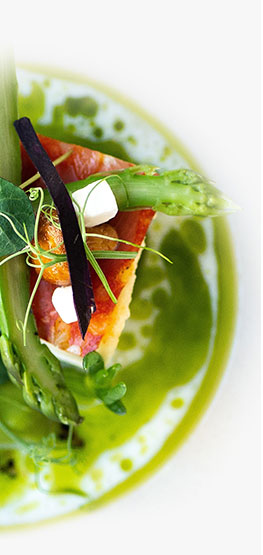
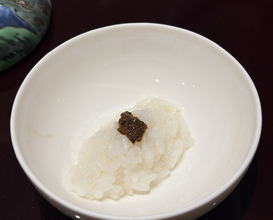
Chef Fukunaga's family is well-known for Maruki Farm. He opened this restaurant in 2015, focusing on beef dishes, but has also embraced the concept of medicinal cuisine in recent years. I want to evaluate the pure flavors and experiences here, and since it's hard to convey everything in a few words, I won't go into too much detail. However, the chef's thoughts on food and lifestyle are truly wonderful, so I encourage anyone who visits to ask him about it.This was my first visit, and I ordered the JPY 12,000 lunch course. Personally, I found the combination with medicinal cuisine to be a huge hit. The course, with its hints of acidity and aromatic herbs, left me feeling surprisingly light even after a satisfying meal. I would love to try a more expensive course next time.---◇ Rice Porridge 〇 A dish made with rice cooked in broth extracted from rice bran, paired with meat miso. The slightly roasted flavor enhances the sweetness of the rice, making for an enticing start.◇ Appetizers Dishes like chawanmushi (savory egg custard) made with persimmon skin broth, bamboo shoots mixed with mugwort and black wood, and beet granola, all add a unique twist. Each dish is balanced with acidity and aromatic herbs, making you eager to move on to the next.◇ Shabu-Shabu with Eggplant, Fennel, and Star Anise 〇 This was my favorite dish of the meal. The aroma of star anise and the sliced cucumber give it a distinctly Chinese flair. The scent of fennel highlights the soft sweetness of the cooked eggplant. The harmony of the meat's aroma and sweetness encourages you to savor each bite. The slightly thicker cut of meat lingers in your mouth, revealing its robust aroma and flavor. This dish truly showcased the restaurant's concept.◇ Offal Stew A simple stew with a perfect amount of ginger. The fat was not too heavy, allowing it to be enjoyed like a light soup.◇ Soup with Soy Milk This soy milk soup seems inspired by Taiwanese Shentoujian. Pouring warm soy milk over vinegar causes parts of the soup to curdle slightly. The strong umami base from the beef allows the creaminess and acidity of the soy milk to be well-balanced. It was a comforting dish that lingered pleasantly.◇ Salad A refreshing palate cleanser without any unnecessary elements, which was delightful.◇ Hamburg Steak 〇 This meat can be enjoyed raw, and the inside is still red. When you cut into it, the juices flow out with a unique texture. It has a nice charred aroma while still allowing the iron flavor from the raw beef to come through. If I had to suggest something, the seasoning was a bit strong, so with the quality of the meat and the flow of the course, a lighter touch with minimal salt and acidity might have allowed the meat to shine even more. However, the red meat served with pickles in vinegar and soy sauce at the end seemed to be the best way to enjoy it here. I was impressed. By the way, I enjoyed the leftover meat juices with some freshly cooked rice, which was delicious.◇ Top Sirloin with Garnish (Garlic Sprouts, Snap Peas, etc.) The main steak, cooked rare with a very simple preparation. The color of the red meat is quite deep. Taking a bite of the slightly larger cut, it may not be flashy, but the more you chew, the more the aroma and flavor of the beef burst forth. I could stay lost in this flavor forever.◇ Rice with Pickles 〇 The rice is from the Hikari Shinseiki variety from Rurikei. It was incredibly delicious. Although it should be a variety derived from Koshihikari, it had a slightly lighter flavor, and the individual grains had a long-lasting aftertaste. Given the memory of the meat's umami and aroma up to this point, this rice felt even more flavorful.The accompaniments included namul (seasoned vegetables) of cabbage and garlic chives, soy sauce-pickled daikon, and red meat mixed with vinegar and soy sauce, making it hard to stop eating.◇ Jasmine Tea Pudding with Medicinal Tea For dessert, there was medicinal tea and pudding. The pudding had a faint jasmine aroma, combined with jasmine tea syrup. The medicinal tea, based on Japanese black tea, was blended with various aromas like cacao and jujube. It had a solid sweetness without being overwhelming, making it perfect for after a meal. I wonder if the chef's wife, who holds a qualification in medicinal cuisine, had a hand in this.The meal concluded without losing the restaurant's unique character, leaving me with a very happy feeling.
We use cookies on this site to enhance your user experience.