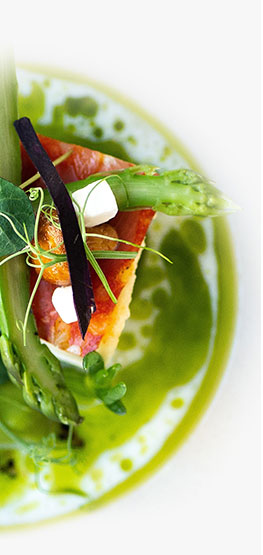
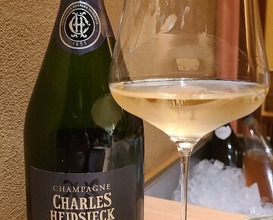
Located just a 2-minute walk from Kitashinchi Station on the JR Tozai Line, the upscale restaurant "Tempura Numata" is situated on the 7th floor of a high-end dining building.I was fortunate enough to receive an invitation from the organizer for a reservation at the exclusive platinum seats, allowing me to revisit this wonderful place. Thank you very much.m(_ _)mOpened in 2020 after relocating, Tempura Numata is operated by Numata Co., Ltd. (founded in 2011, established in 2023, CEO: Kazuya Numata, headquartered in Osaka).The company operates six establishments:1. Tempura Numata2. Numata Sou3. Tensho4. Tempura nuu nuu5. Numata Sou ~Shanghai~6. Samgyeopsal HobReturning to "Tempura Numata," the exterior reflects its upscale location on the 7th floor, featuring sandy-colored earthen walls, a red cedar (from Yoshino, Wakayama) sliding door, and a red cedar sign, creating a serene atmosphere.Inside, the ceiling is adorned with wooden panels, and the walls are a warm ochre color decorated with red cedar, complemented by dark gray tiled flooring, all contributing to a refined Japanese aesthetic. However, the gentle smile of Chef Numata fills the space with a warm and inviting ambiance.The restaurant has no background music, allowing guests to hear the sounds of frying.There are only 8 seats at the white wooden counter.The operation consists of Chef Numata, four male staff members, and one female staff member, totaling five.The meal (excluding tax at JPY 32,000) along with drinks, service charge, and consumption tax totaled JPY 44,400.Guests can observe the frying process through a glass partition, which seems to be a thoughtful touch to appreciate the skill involved.The tempura is lightly fried, not overly greasy, making it a delight to enjoy without feeling heavy even after finishing the meal.While many renowned restaurants can leave you feeling stuffed, the tempura at "Tempura Numata" leaves your stomach feeling light, reminiscent of the satisfaction after a kaiseki meal. I truly enjoyed the tempura after a long time.Indeed, while rich flavors are delicious, I realized that a lightness is an absolute necessity for enjoying high-quality ingredients.I have included explanations with the photos.It was a great meal.Dishes:1. White asparagus with skin removed, served with a sansho young sprout puree2. Low-temperature fried skin, then charcoal-grilled Isaki3. Head of shrimp 1【as is】4. Head of shrimp 2【salted】5. Shrimp 16. Shrimp 2《rare》【salted】7. Kawachi Ichin-sora bean8. White fish with skin folded inside9. Tarano-me (wild vegetable)10. White fish bone crackers11. Young sweetfish12. Sakura shrimp, red shiso & red mustard greens & green mustard greens & Kujo green onion sprouts, sprayed with kombu vinegar13. Aoyagi clam, served on seaweed14. Koshi-abura (fish)15. Ku-e (rare)16. Zucchini flower & shrimp17. Nagaimo (Japanese yam) noodles, with tuna flakes & Rishiri kombu & ma-kombu broth, topped with shiso flowers18. Fresh white bamboo shoots19. White bamboo shoots, simmered in tempura sauce, topped with sansho young sprouts20. White rice (variety: Momotaro from Okayama), with edible flowers21. Ribbonfish, topped with grated daikon22. Red miso soup with yellow chives23. Sweet potato (variety: Beni Haruka)24. Tempura scraps, Nanko plum salt & wasabi25. Tempura rice ball (white rice)【additional】26. Tempura rice ball (with pickled ginger & mitsuba & tempura sauce)【additional】27. Pickles (turnip, asparagus stalks, cucumber)28. Strawberries (variety: Koto-ka) & gelato, drizzled with elderflower syrupTempura oil: a blend of Taihaku (unrefined sesame oil) and Daikan (roasted sesame oil).Salt: a blend of rock salt (from the Andes, Bolivia) and sea salt (from Amakusa, Kumamoto).
We use cookies on this site to enhance your user experience.