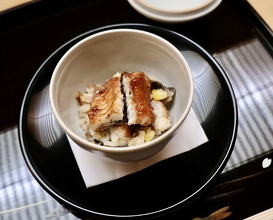
In August 2026, I was invited by a respected gourmet to Kiyama, a Japanese restaurant located in Goshonishi, Kyoto.Kiyama has been awarded the Silver in "The Tabelog Award 2026," recognized as one of the "Top 100 Japanese Restaurants in WEST 2025" by Tabelog, and has also earned a Michelin star in the "Michelin Guide Kyoto-Osaka 2026."The owner, Yoshio Kiyama, honed his skills for many years at the renowned Kyoto restaurant "Wakuden" before opening Kiyama in 2017.When discussing Kiyama's cuisine, two essential elements come to mind: "water" and "dashi."The water sourced from a well on the premises serves as the foundation for the dishes, and the course began with a rich white soup.What stood out was the opportunity to watch the chef shave katsuobushi (dried bonito) right in front of us and prepare the first dashi.As the aroma of freshly shaved katsuobushi filled the air, we savored both ara-bushi and honkarebushi before enjoying the freshly made first dashi.Experiencing not just the finished dishes but also the process of creating the fundamental "dashi" of Japanese cuisine was truly impressive.Here’s what we enjoyed that day:◇ White Soup ◇ Natural eel from the Sanpōgoko lakes with steamed corn rice ◇ Chilled small soup Potato puree, scallops, and red sea urchin from Oita Prefecture ◇ Grilled horse mackerel Served with paprika, bitter melon, pumpkin, and yellow pepper ◇ Comparison of freshly shaved katsuobushi Ara-bushi and honkarebushi ◇ First dashi ◇ Soup Kuzu tofu made with abalone liver, okawakame, and tender abalone ◇ Sashimi of biwa trout and sea bream ◇ Grilled nodoguro (blackthroat seaperch) Wrapped in green eggplant and served with a sauce made from fruit eggplant and zucchini ◇ Grilled hamo (pike eel) The hamo was dried to remove excess moisture, and we watched as it was carefully cooked right in front of us, resulting in a crispy skin and fluffy flesh. ◇ Rice dish Ise lobster, oolong tea jelly, figs, and peach ◇ Fried dish Kue (grouper), winter melon sauce, and cucumber ◇ Chilled simmered dish Sirloin cap, tomato dashi, fruit tomatoes, okra, and fermented flower pepper Towards the end of the course, we had the pleasure of choosing our meal from several options, with the portion sizes adjusted to our preferences.I chose:◇ Kamatsu rice ◇ Clam dashi ramen ◇ Chirimen sansho rice The kamatsu rice was particularly memorable, with its savory aroma and the umami of the fish perfectly infused into the rice.The clam dashi ramen was surprisingly easy to enjoy even towards the end of the course.The chirimen sansho rice was delicious until the very last bite.My companion also chose a fried ribbonfish with egg and rice, allowing us to enjoy a variety of flavors together.◇ Watermelon and wasanbon jelly ◇ Mizu yokan and lemon jelly ◇ Thin tea We concluded with refreshing summer sweets, finishing with thin tea.From start to finish, everything was truly delicious.Using seasonal ingredients such as natural eel, red sea urchin, abalone, biwa trout, nodoguro, hamo, Ise lobster, and kue, each dish showcased meticulous craftsmanship.What was particularly striking was the experience of starting with white soup and watching the katsuobushi being shaved to prepare the first dashi, as well as seeing the hamo being dried and cooked right in front of us. It felt unique to Kiyama to enjoy not just the finished dishes but also the background behind them.Finally, the fun of choosing from several options for the meal and having the portion sizes adjusted added to the experience.I recall the bill being in the JPY 30,000 range per person, but considering the quality of the ingredients, the number of dishes, and the effort involved, I felt it was an exceptional value.Every dish was outstanding, making for a thoroughly satisfying experience from beginning to end.I am grateful for the invitation to such a wonderful restaurant.I would definitely like to visit again when I am in Kyoto.
We use cookies on this site to enhance your user experience.