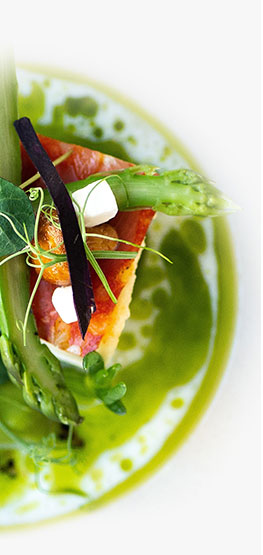
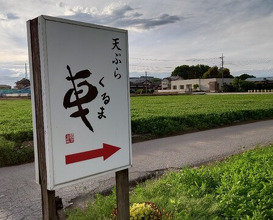
Is Tatebayashi surprisingly a gourmet town? I feel that way. In front of the station, there’s the main branch of Hanayama Udon, which has branches in Tokyo and always has long lines. If you walk a bit, you’ll find Sushi Obana, which won the Tabelog Award SILVER two years ago, and then there’s Tempura Kuruma, which has been awarded BONZE for two consecutive years starting in 2025. It’s amazing that such renowned restaurants exist in a city with a population of less than 100,000!So, I made a reservation through Tabelog to visit Tempura Kuruma, which I had been curious about since it appeared in the Tabelog Award last year. Recently, you can also make reservations through OMAKASE.The owner, Tomoya Kurumazaki, trained at Ginza Tenichi, and he seems to have a close relationship with Shuji Niidome from Tempura Tenpu Ryo, who moved from Nagoya to Azabudai Hills. He wanted to open a restaurant in his hometown after training at a local Japanese restaurant, and he built his shop on his family’s property.It’s said that you can only reach this place by car, so the nearest station is Kawamata Station, but I thought it would be difficult without a taxi. I headed from Tatebayashi Station, but it was quite far—about a 20-minute walk. I actually considered driving from home, but I wanted to enjoy some drinks! Wow, this place is really in the middle of nowhere, surrounded by rice fields. I passed a convenience store along the way, but it seemed like quite a trek. I’ve heard that Gunma Prefecture has the highest number of cars per person in the country, and it’s clear you can’t live here without a car.By the way, on the way back, neither Kawamata Station nor the next closest station, Morinji-mae Station, has the special express "Ryomo" stopping there, so if you want to get back quickly, it’s safer to go to Tatebayashi Station.So, what kind of tempura will I enjoy at this restaurant in the middle of the rice fields? Let’s start the omakase course.- Appetizer: Octopus and Fuki The octopus was steamed for an hour and served on fuki with fuki leaf tsukudani on top. I really like fuki; I love its aroma. This tsukudani is delicious too.- Sashimi: Natural Sea Bream and Toyama Firefly Squid The firefly squid is steamed and is said to be the last of the season. The sea bream has a rich flavor, served in two pieces, one from the back and one from the belly.Here, the day's tempura ingredients are introduced, and it’s finally time for the tempura.- Kuruma Ebi Legs x2: Enjoy them as they are or with a squeeze of lemon. Light and delicious.- Kuruma Ebi: Rare. Size of a rolled shrimp. Half-cooked and sweet!- Kuruma Ebi: The second one is well-cooked. More savory than sweet.- Shoboro Ika: From Ehime, weighing 3.5 kg. Thick! Incredible elasticity!- Asparagus: A large 3L size from Sakata City, Yamagata Prefecture, called "Amaebou." The stalk is juicy, and the tips are soft and sweet.- Shrimp-Stuffed Shiitake: Small rolled shrimp roughly chopped and stuffed into shiitake mushrooms. The aroma of shiitake combined with the flavor and texture of shrimp is delightful.- Young Sweetfish from Lake Biwa: Most young sweetfish are farmed, but those from Lake Biwa are semi-farmed, caught and raised. This is my first sweetfish of the year. The bitterness in the belly is nice.- Fukuoka’s Iwasu and Sea Jelly Vinegar Dish: Topped with egg yolk vinegar. A palate cleanser after the bitterness of the young sweetfish. The water cloud has a crunchy texture.- Bamboo Shoots from Izumi, Osaka: Fluffy and juicy, but the flavor might be a bit lacking.- Hime Kodai from Sajima, Kanagawa: Thick flesh. Hot and fluffy, so delicious!- Chawanmushi with Fresh Seaweed: Contains clams for this season, along with texture from water chestnuts and wood ear mushrooms.- Natural Tara no Me from Niigata: The king of mountain vegetables. Huge! Fluffy! The base has a slight bitterness.- Natural Koshia Bura: The queen of mountain vegetables. It has a refreshing aroma.Now, let’s change the oil.- Anago Bone Senbei: Not freshly prepared, but rolled and frozen. It’s thinner and easier to eat than eel.- Anago from Tsushima: They source 80g from Tsushima. It might be a bit small? And the anago is always prepared fresh (it’s filleted right in front of you while the oil heats up), and they change the oil to bring out a nice aroma. You can enjoy it with wasabi, anago sauce, salt, or lemon. The sauce is made by simmering the head and bones of the anago, which is then added gradually. It’s fluffy and you can really appreciate the aroma. This is delicious!- Clams from Kashima: A larger clam weighing 120g. Rich and creamy!After this, it’s time for the meal, and you can also add more tempura. The tempura ingredients not yet served include sea urchin, sweetfish, swordfish, fava beans, lotus root, and eggplant (today’s is the regular Senryo eggplant). So,- Additional: Fava Beans: Fava beans sourced directly from a farmer. Soft, juicy, and incredibly delicious!For the final meal, you can choose from tempura rice bowl, tempura tea, or tempura bara. You can order multiple, but I’m getting pretty full, so- Meal: - Small rolled kakiage tempura rice bowl - Tsukudani of shiitake stems - Red miso soup with clams The fluffy kakiage tempura with rich tempura sauce is delicious! The tsukudani of shiitake stems was taught to him during his training at Tenichi.- Dessert: Hyuga Natsu You can eat the white part too. Hyuga Natsu is a variety discovered by a farmer by chance.So, that concludes the omakase course at Tempura Kuruma. Wow, it was delicious. Thank you for the meal!The chef, Mr. Kurumazaki, has a commitment to only frying live seafood at his restaurant. While anago is often considered the finishing touch for tempura, he doesn’t serve it if he can’t get live anago. In that case, the omakase course, which is usually JPY 15,000 (excluding tax), is reduced to JPY 12,000 (same). Typically, restaurants prepare substitutes and change the menu structure, but that’s not easy to do.By the way, I heard that this summer, after over ten years of operation, the restaurant will undergo renovations and temporarily close. I want to enjoy tempura in a different season, but I’m torn between visiting again before the renovations or trying the new restaurant.
We use cookies on this site to enhance your user experience.