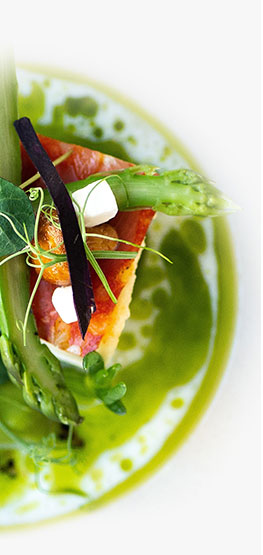
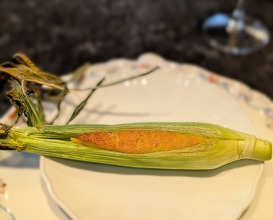
First, I looked at the menu."Young Corn," "Chinese Cabbage," "Onion," "Balance"...I couldn't imagine what would be served at all. The names felt more like a code than actual dishes.---A French restaurant nestled in Kamiyacho. Chef Hiroyasu Kawate is known for his innovative gastronomy that engages with Japanese ingredients and producers.It has been selected as the 31st best restaurant in Asia for 2026, which piqued my interest and led me to visit.◆ Lunch Course @ JPY 11,000◆ Alcohol Pairing @ JPY 7,700◆ Mineral Water @ JPY 800 *Plus a 10% service chargeThe dishes are served in a "table d'hôte" style, where all guests gather around a large table.There are quite a few staff members, creating a lively atmosphere, and sometimes dishes appear unexpectedly from behind. Some may find it a bit startling or feel a little rushed.Now, let’s start decoding the menu.◆ Young CornA savory pancake made with powdered young corn. It's fragrant, soft, and when you bite into it, the natural sweetness of the corn spreads. The texture is interesting with some graininess left intact....Wow, I've never had anything like this before!!◆ Chinese CabbageFermented Chinese cabbage paired with marinated sayori (young horse mackerel). It's wrapped in Hokkaido cheese, topped with shredded cod and yuzu zest, and served with a sauce made from Chinese cabbage, rice, and water.It looks completely white, and at first glance, you can't tell what dish it is. But once you taste it, you can definitely recognize the Chinese cabbage.The umami from fermentation and the sweet burst of the vegetables are present, with the outline of the sayori in the mix. It feels like I'm eating a dish made from familiar ingredients but in an unfamiliar way....Is this really French cuisine?Next, we move on to the next dish.◆ OnionA sushi-style presentation with tuna, but instead of rice, it's made with new onions.I’m starting to understand why the menu only lists ingredient names. Naming the dishes might create preconceived notions.The bread comes in two varieties: sake lees and rye. It's more like mochi than bread—so soft that you hardly need teeth to eat it.◆ Kogomi (Fiddlehead Fern)A tart made with kogomi, young sweetfish, and wild garlic. The freshness of the mountain vegetables, the slight bitterness of the sweetfish, and the sweetness of the tart crust all come together in one dish, showcasing the changing seasons.◆ BalanceWait a minute. Is this even a name for an ingredient anymore?And then the main dish. A piglet raised on cashew nuts. The meat is a mix of thigh and belly, with crispy skin and surprisingly moist flesh.The fat has a clear impression, free of any off-flavors, making it delicate despite being pork.◆ Passion Fruit and KohlrabiA sweet and sour yogurt foam. Underneath is passion fruit compote flavored with vanilla and crunchy kohlrabi.◆ Amazon CocoaA warm cocoa omelet. Rich, creamy, sweet, and slightly bitter. It feels like a dessert yet has a hint of savory, and vice versa.◆ Tea SweetsWasanbon (fine sugar) wagashi, cherries, and ice tofu. The ice tofu reveals its soft interior from within a membrane similar to agar.---The experience of "familiar ingredients but unfamiliar dishes" continued until the end. It was fascinating and refreshing to see vegetables and fermented items presented in entirely new ways.On the other hand, I personally would have preferred a quieter atmosphere to better appreciate the dishes.Rather than just eating French cuisine, it was an experience that updated my perception of ingredients. However, I have a feeling that if I come again, I will still be puzzled by the menu.
We use cookies on this site to enhance your user experience.