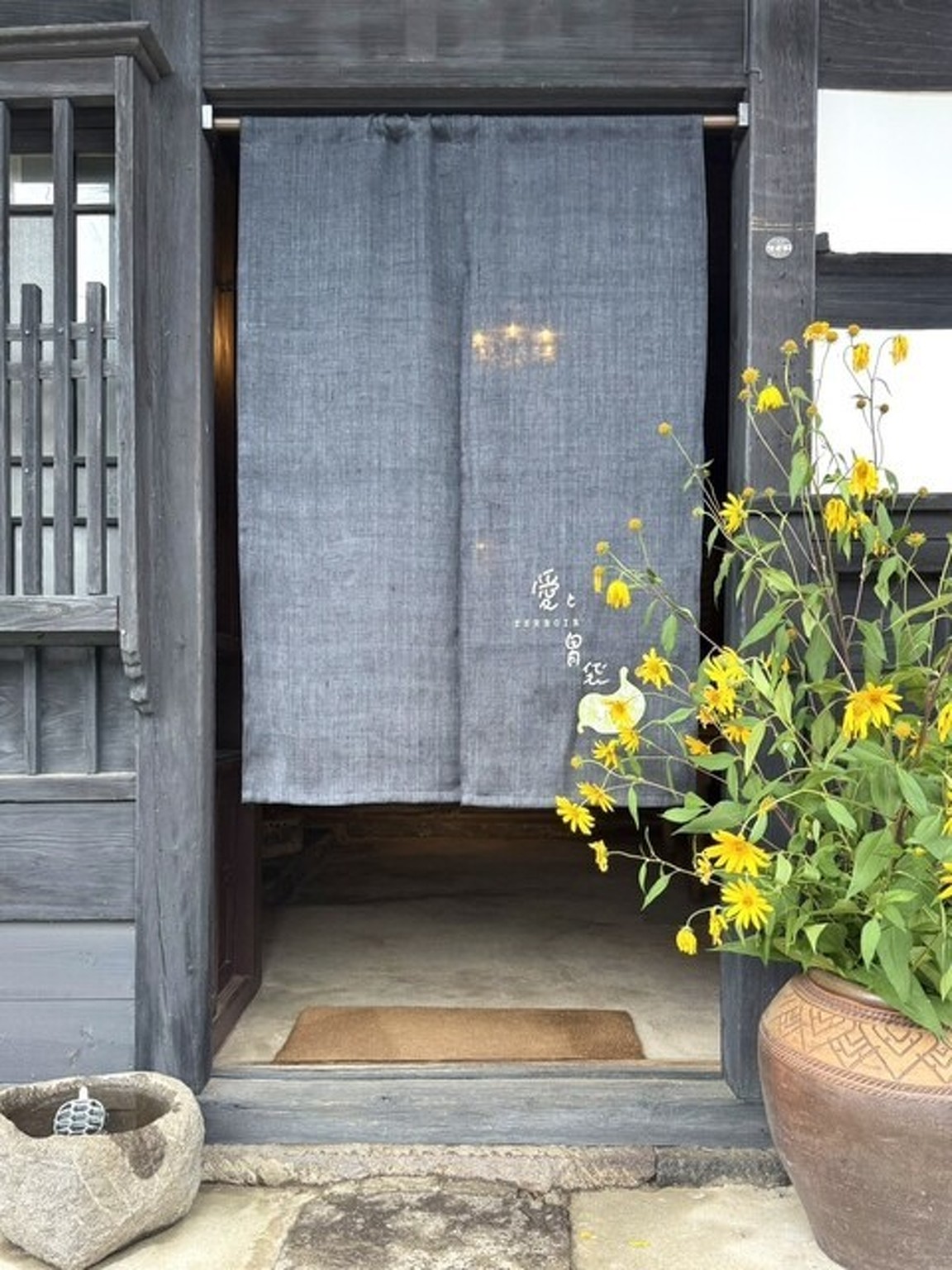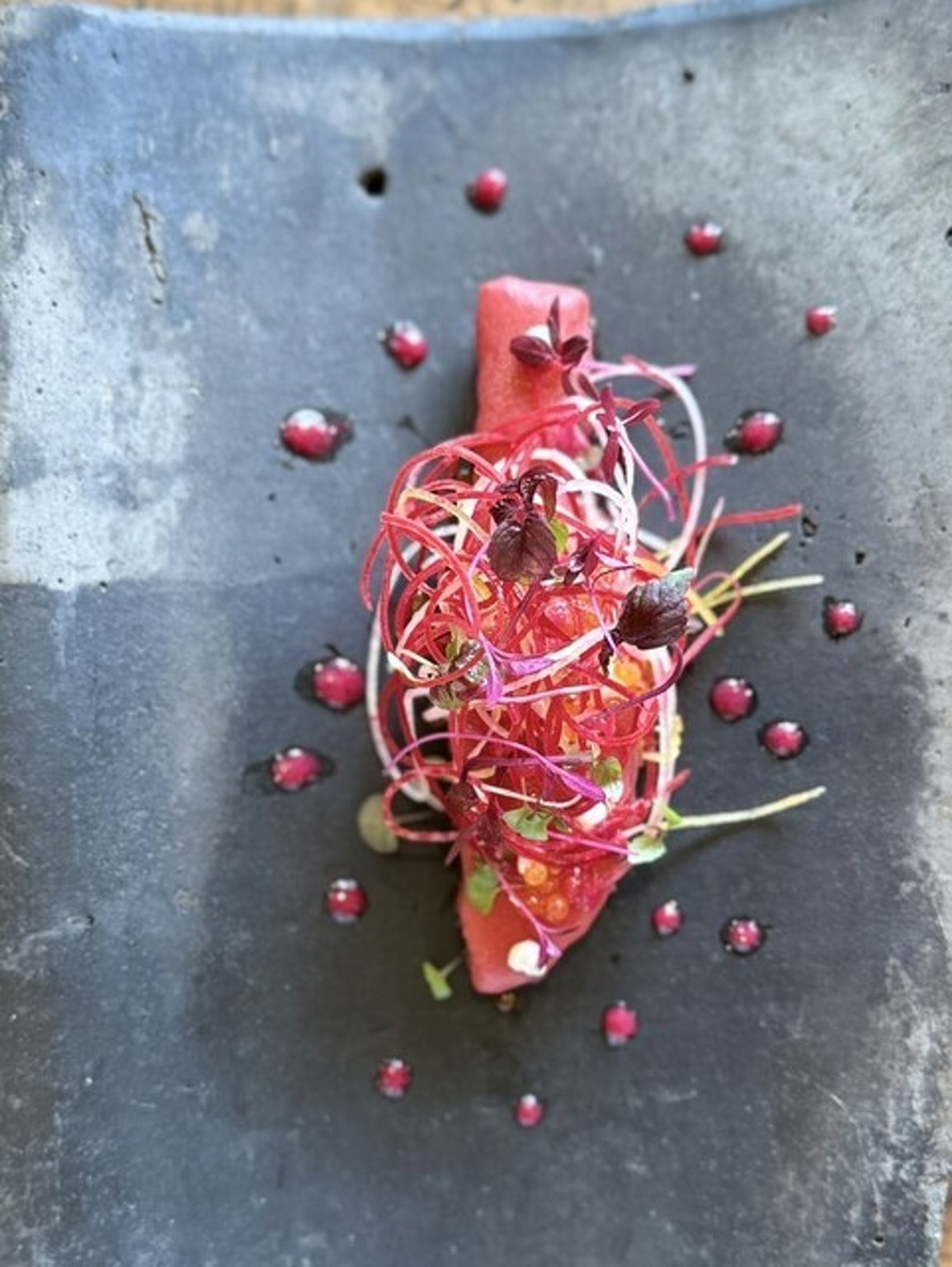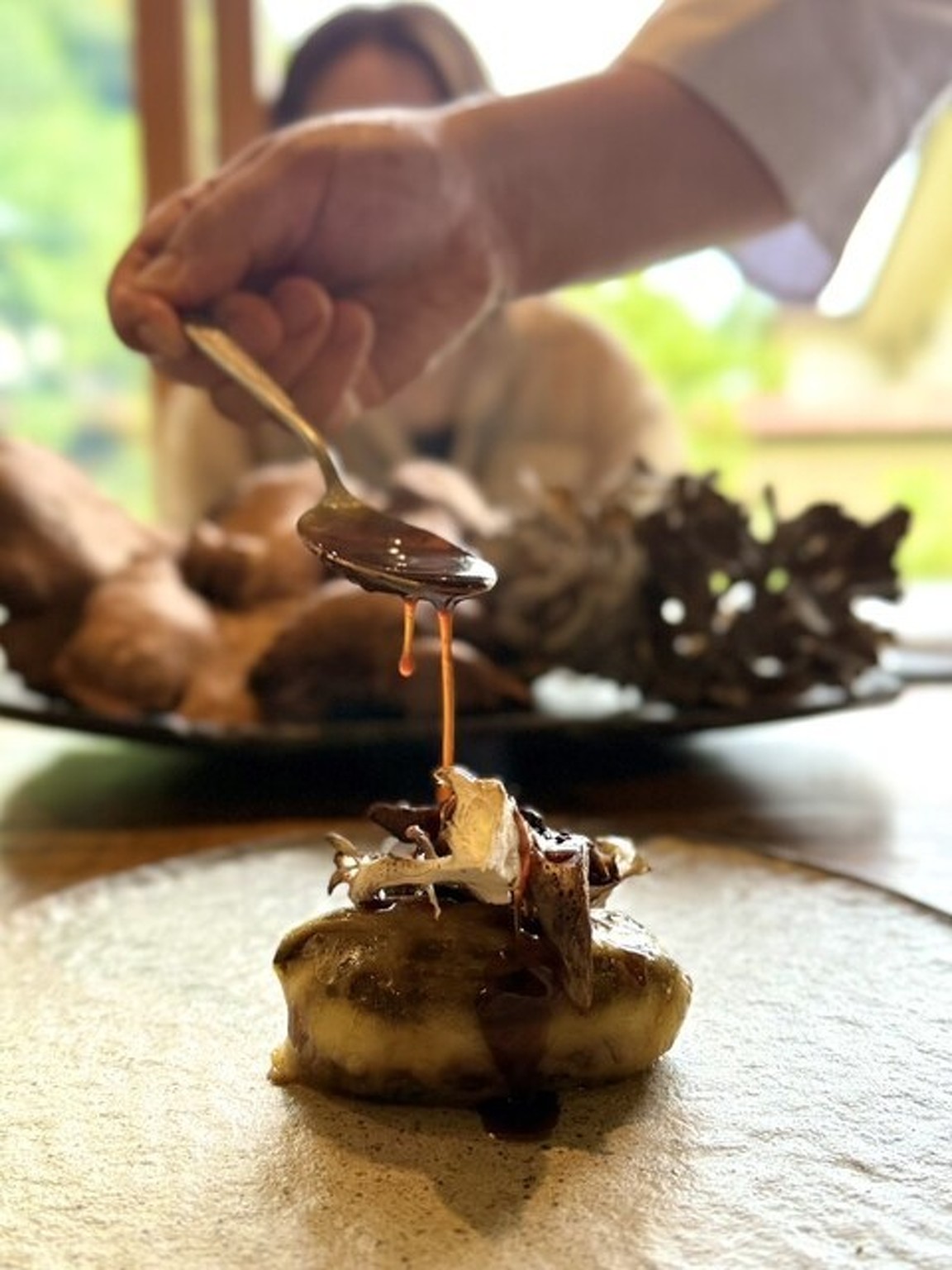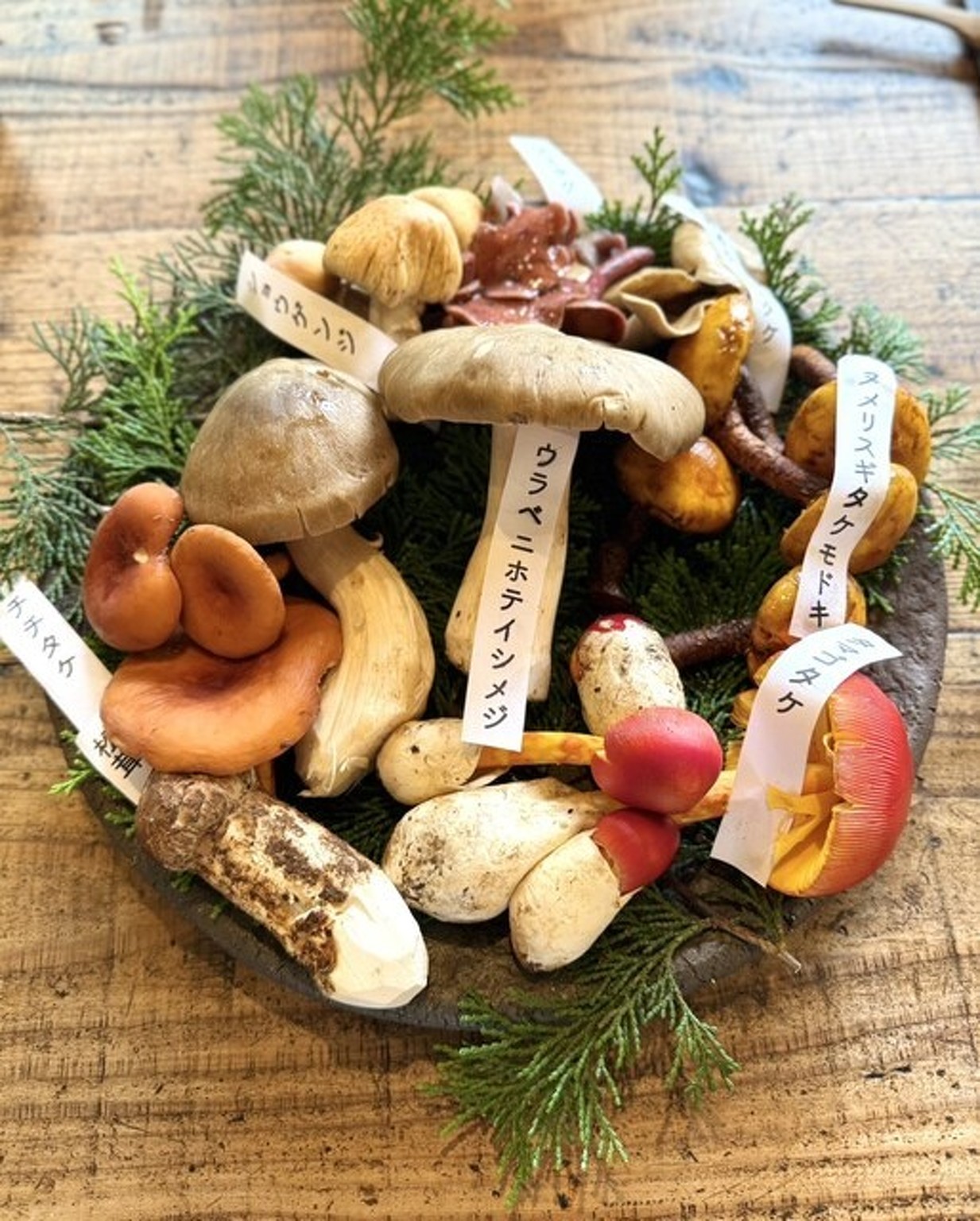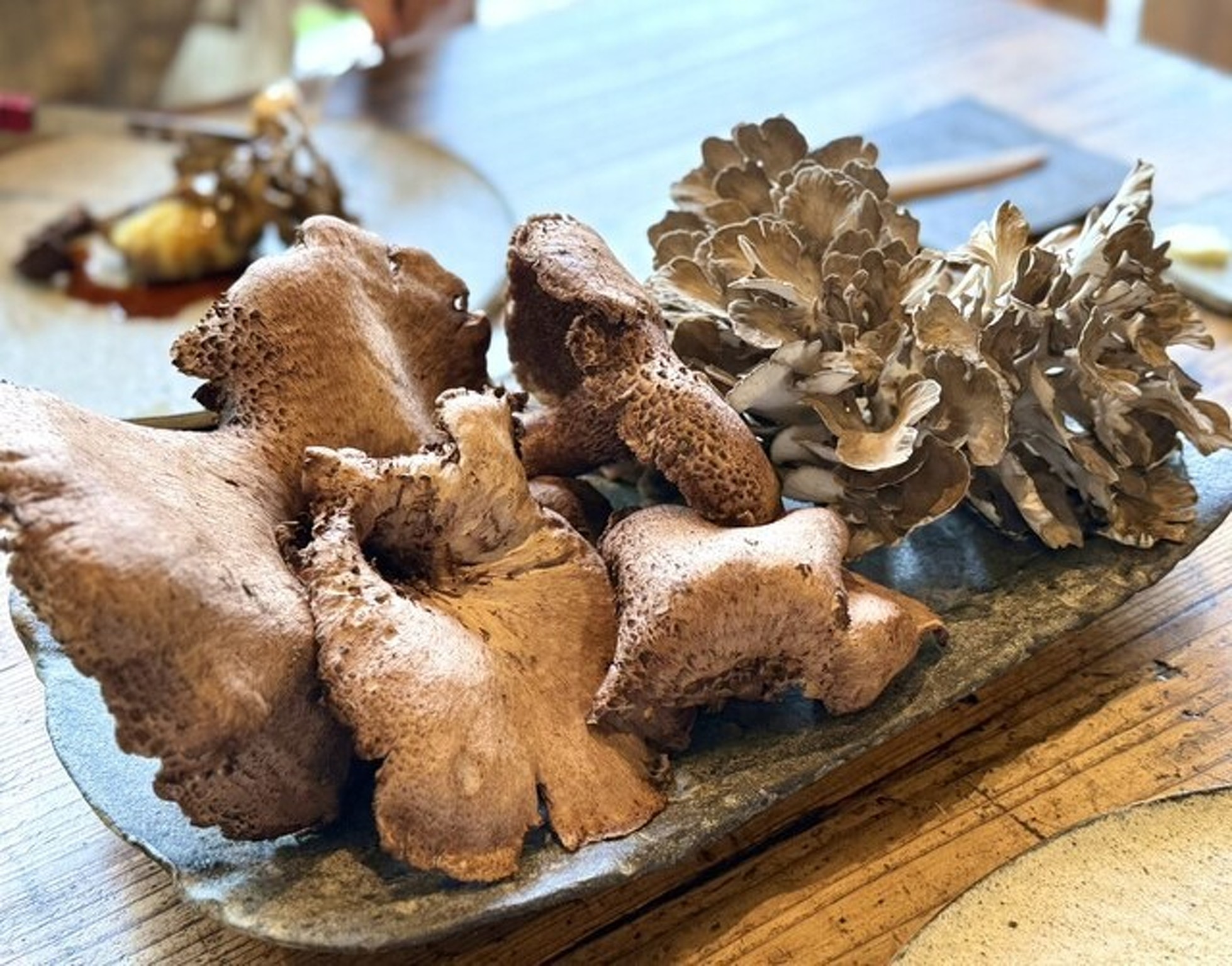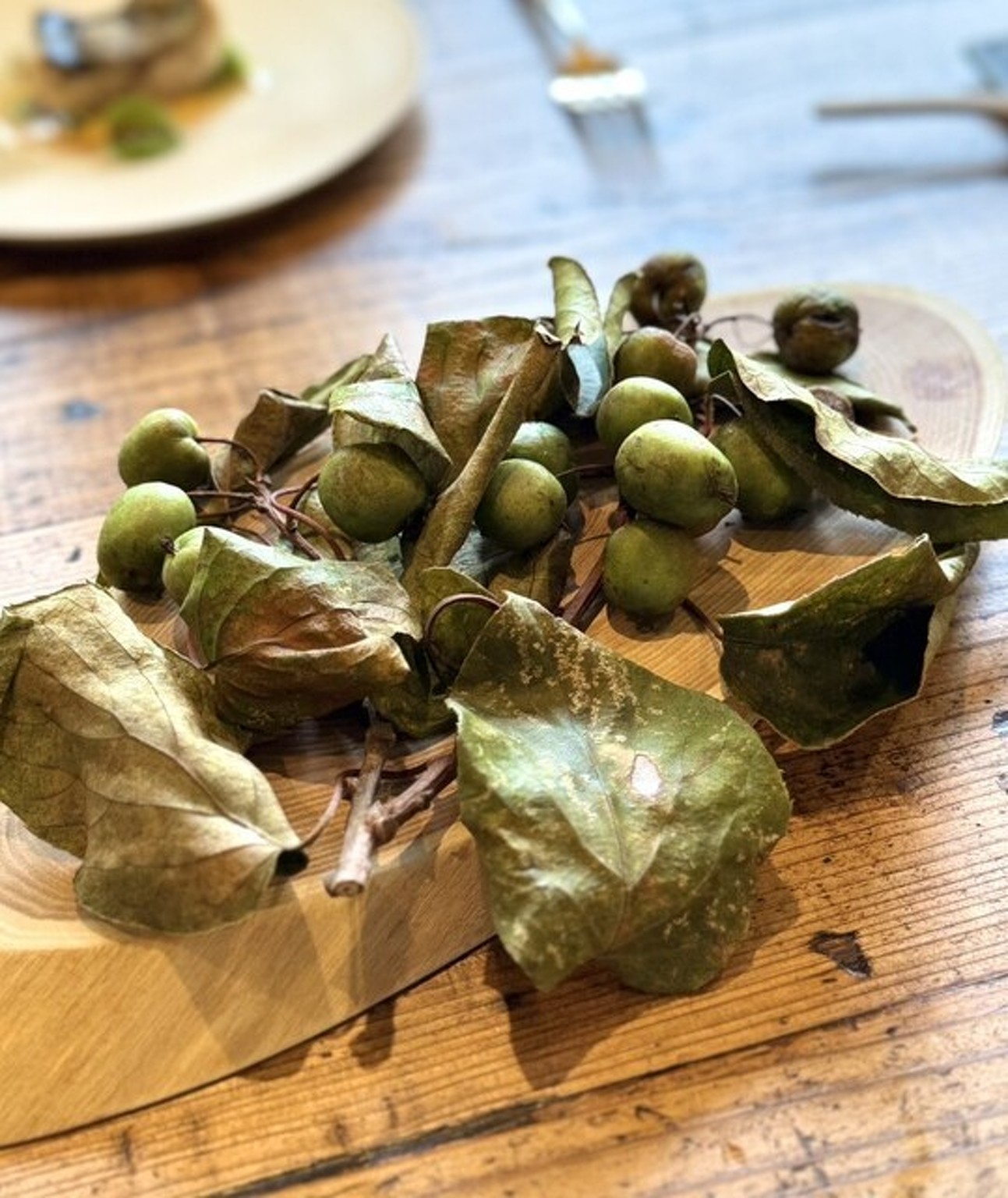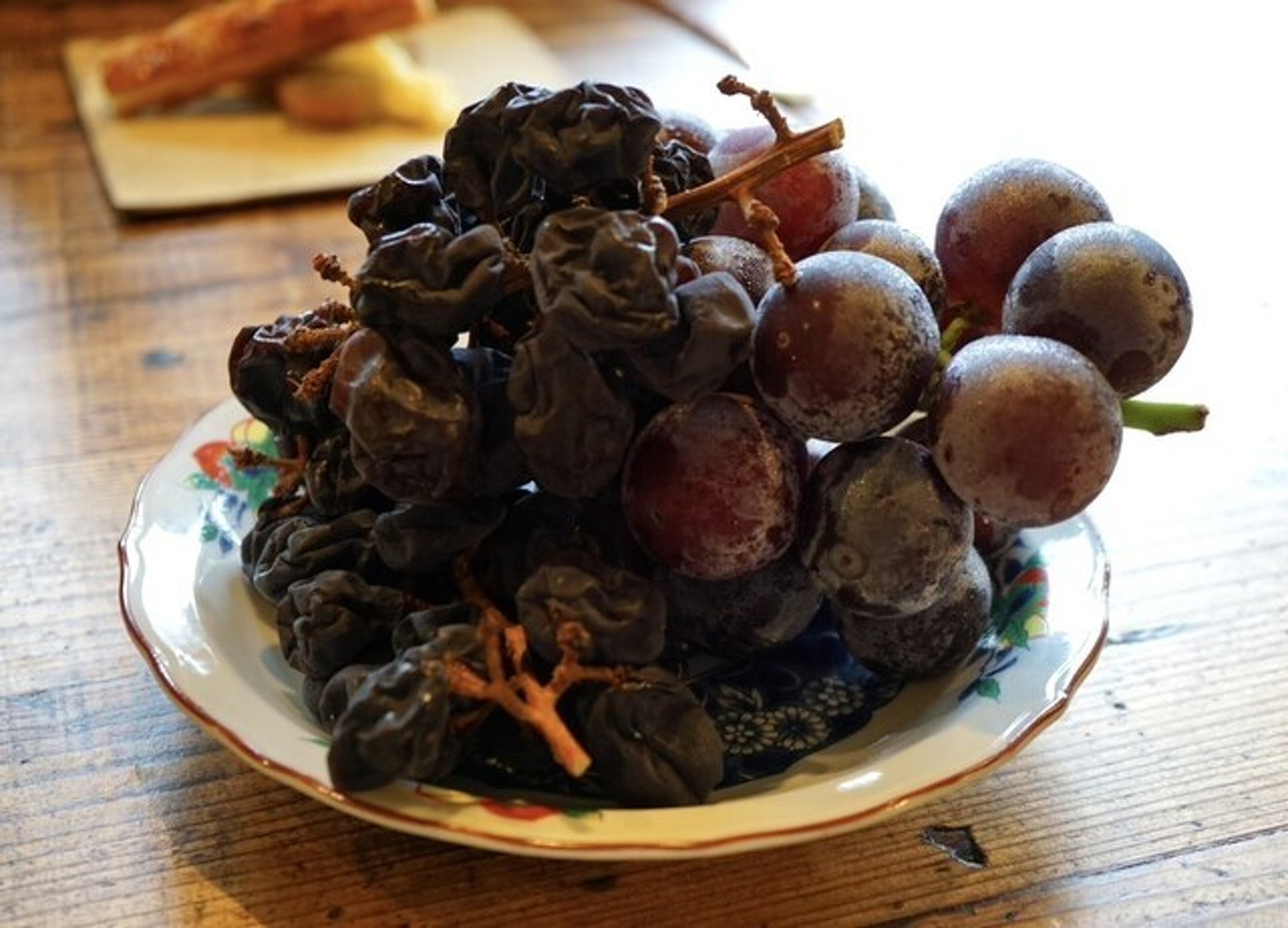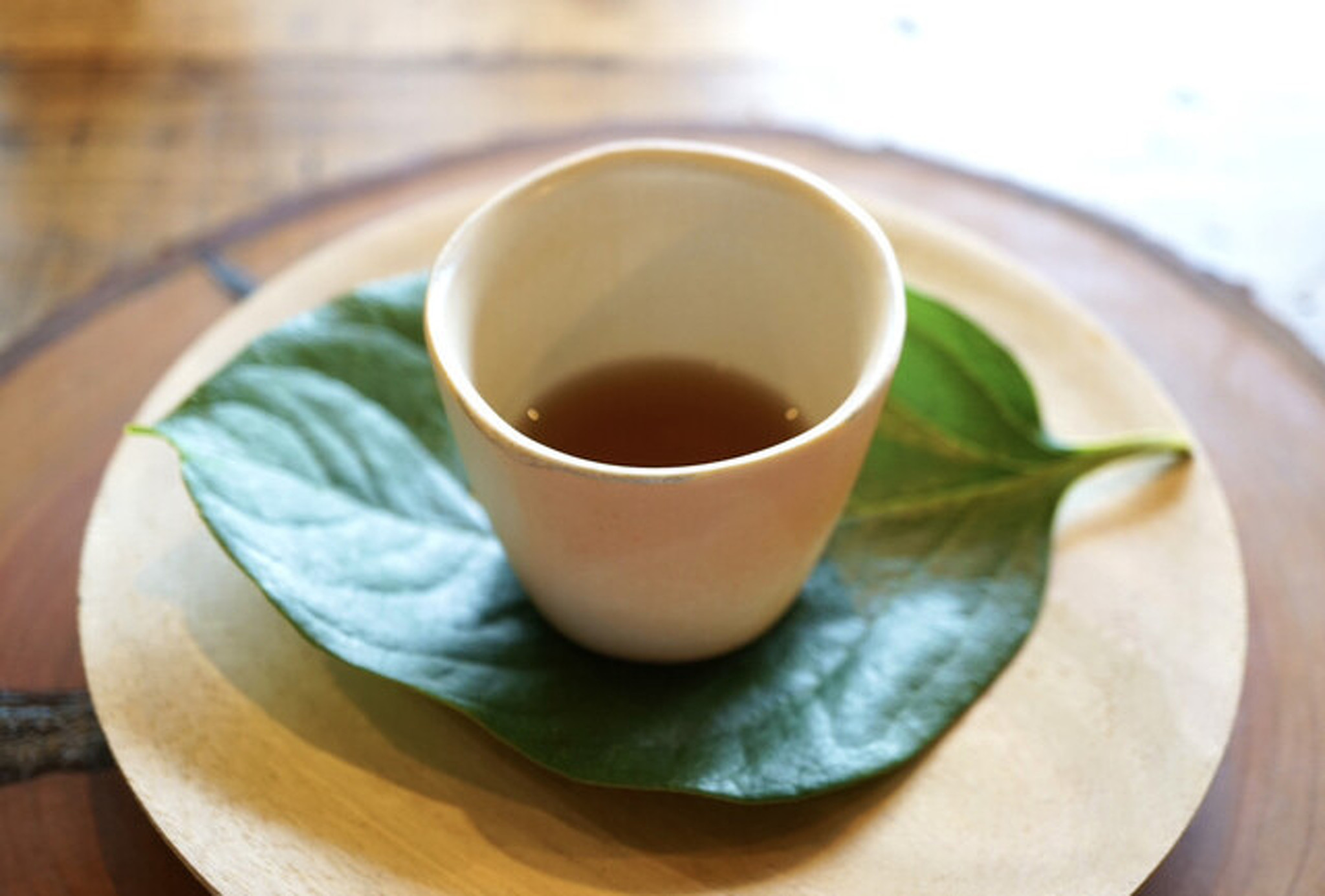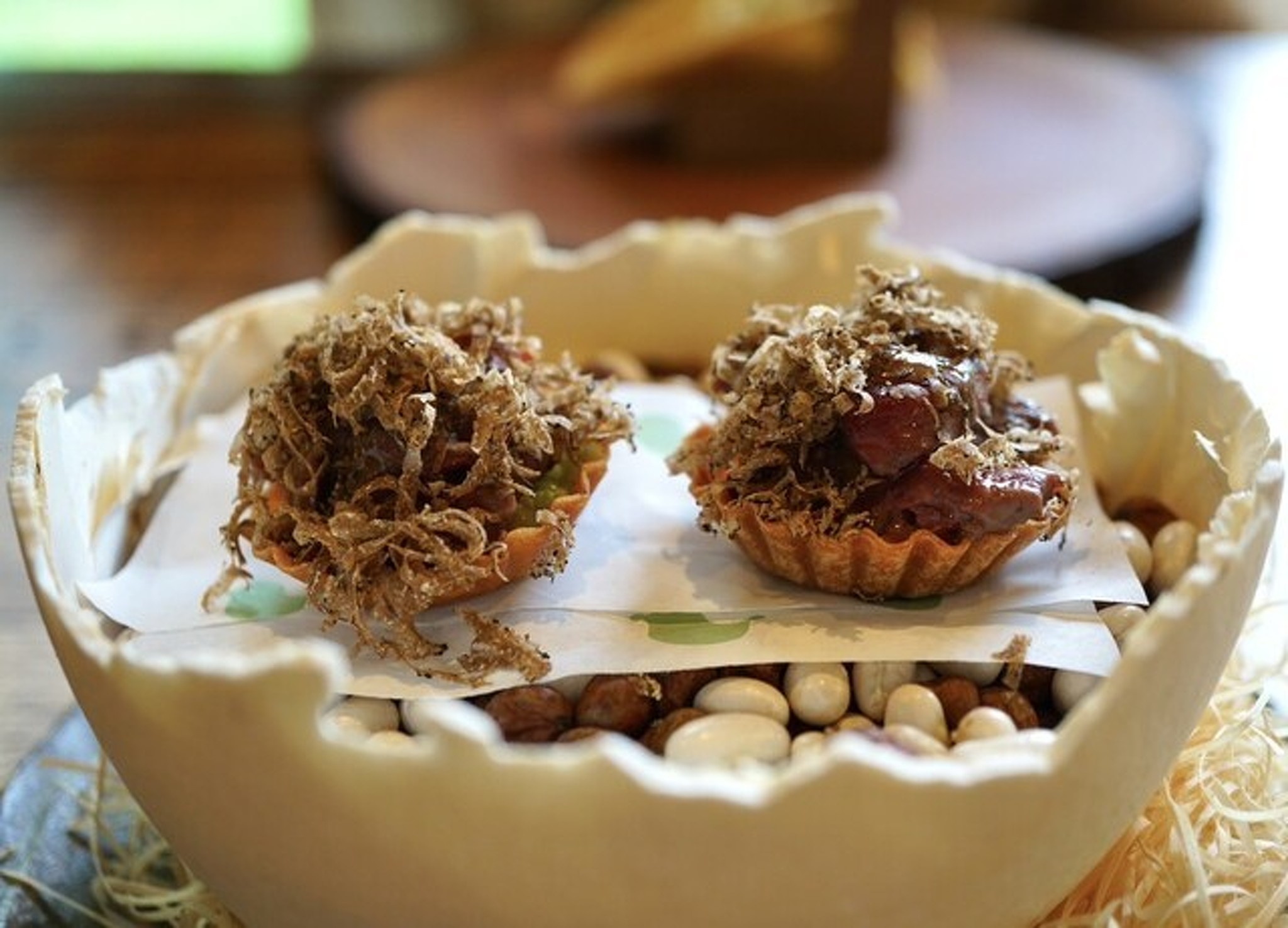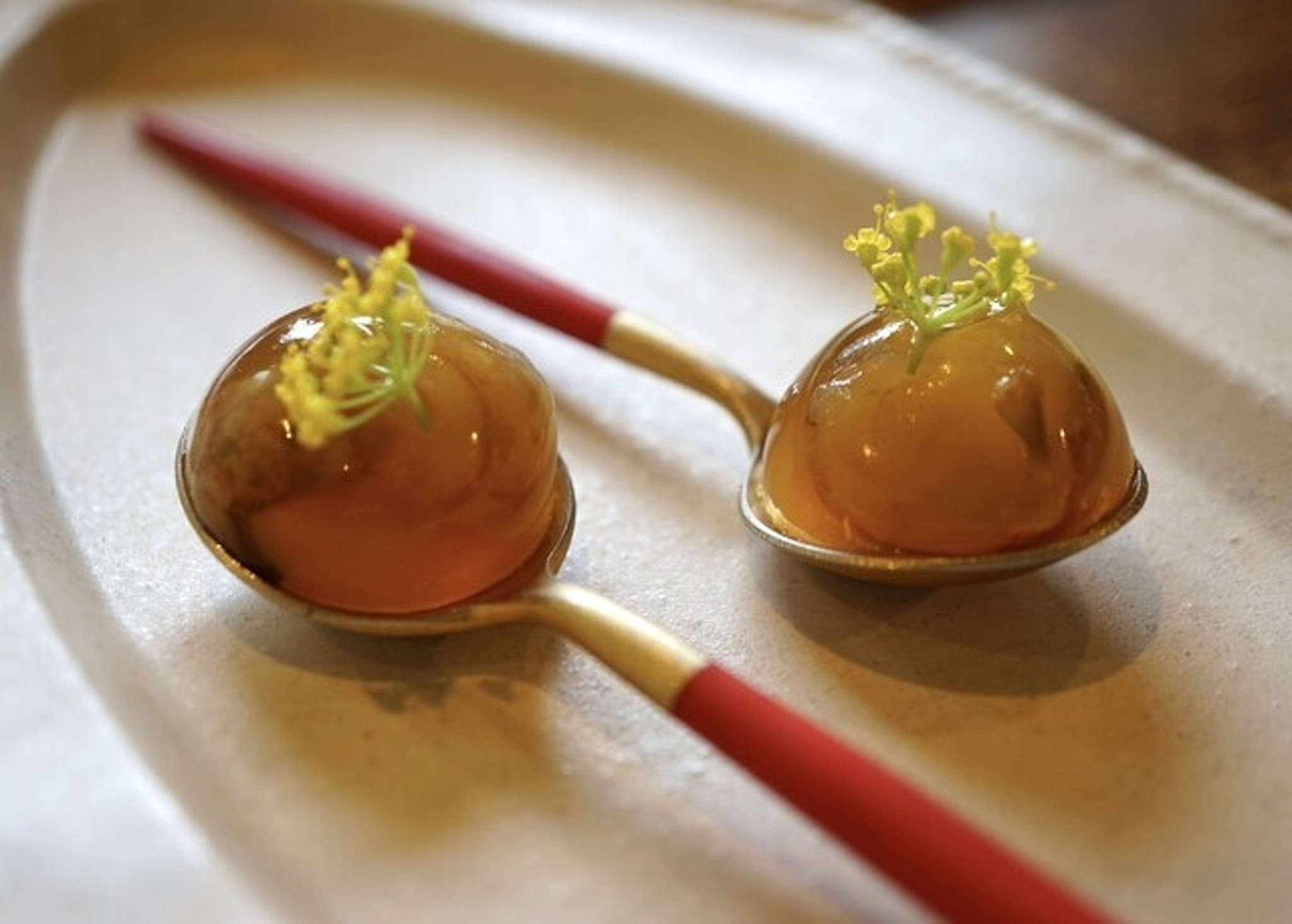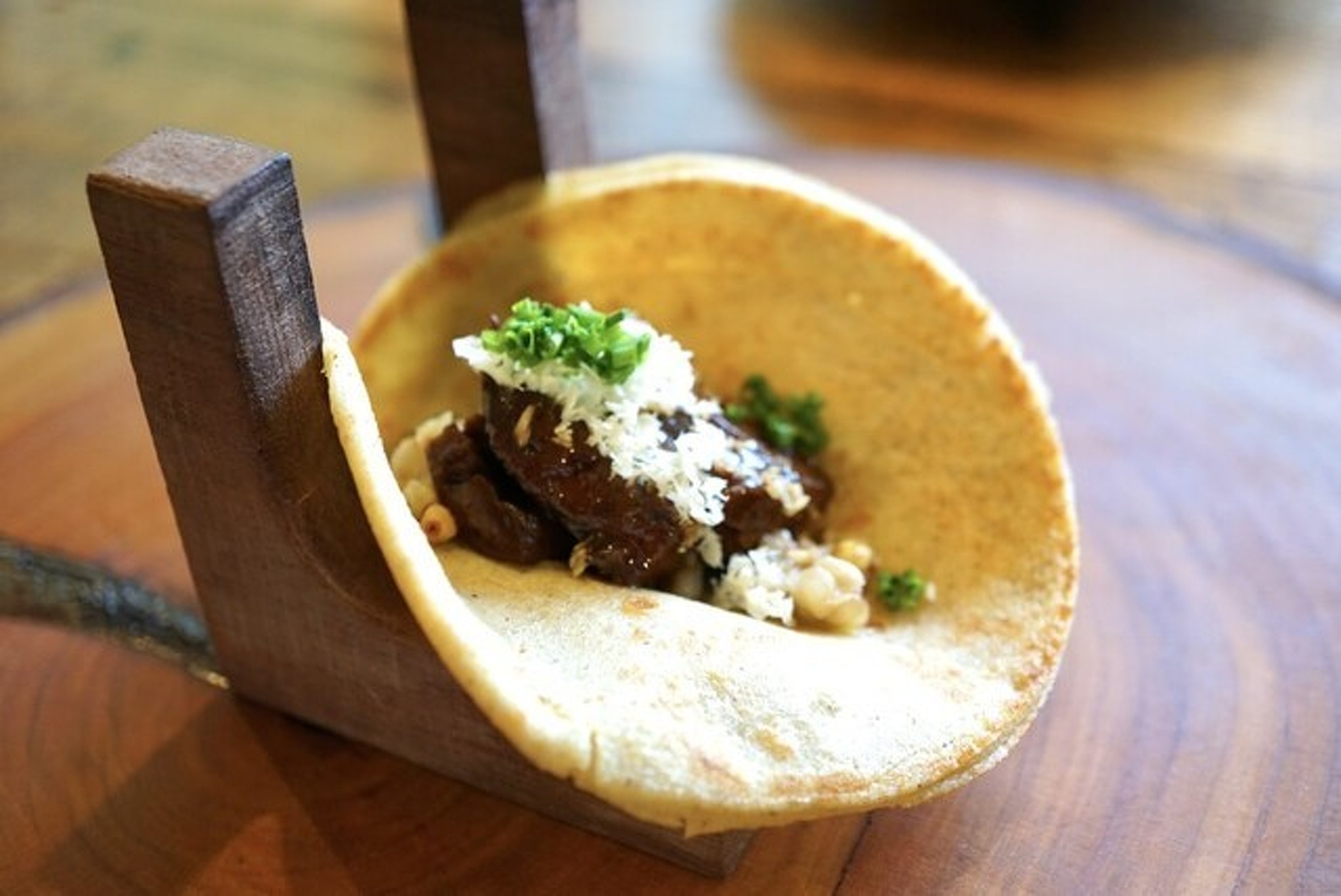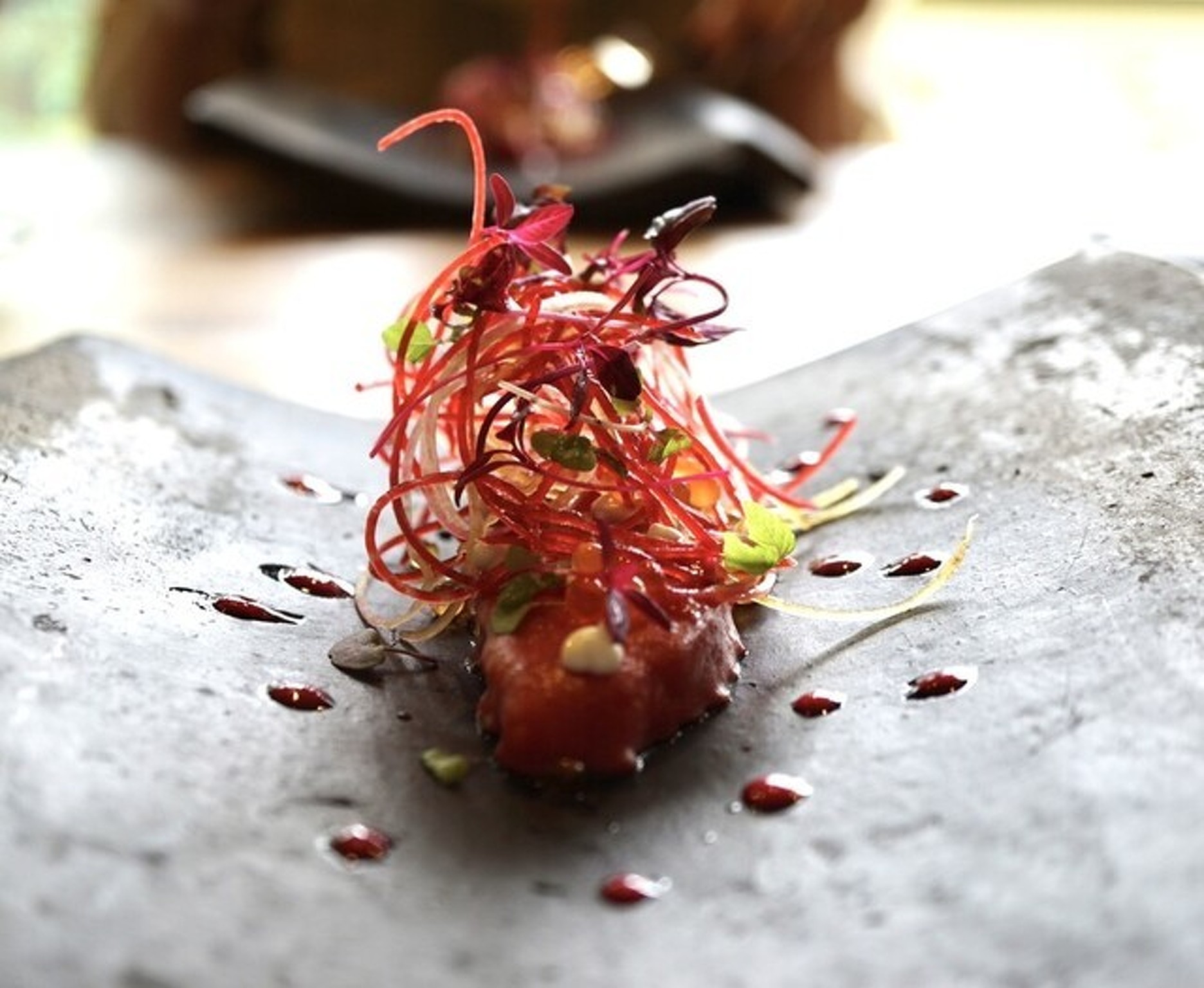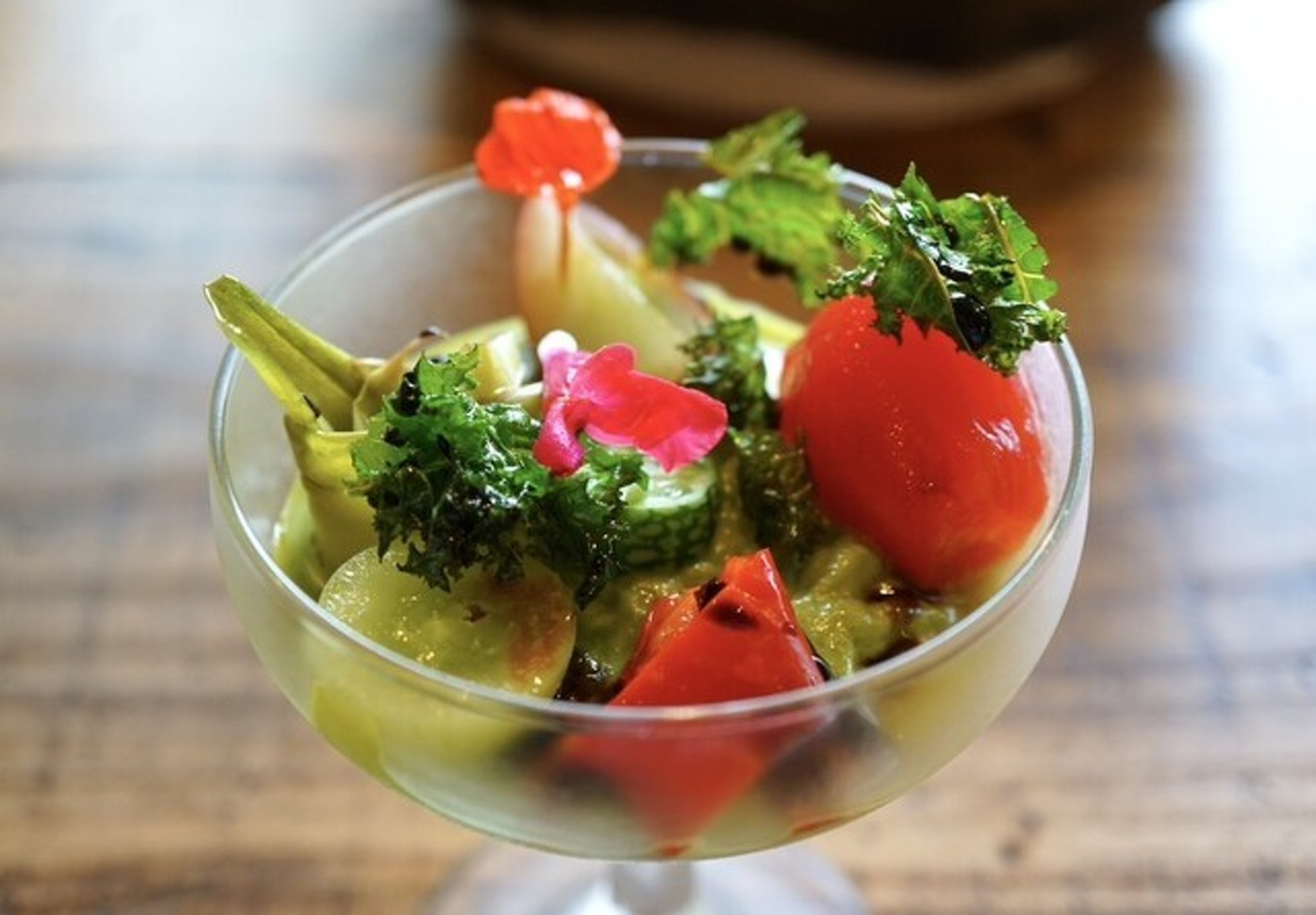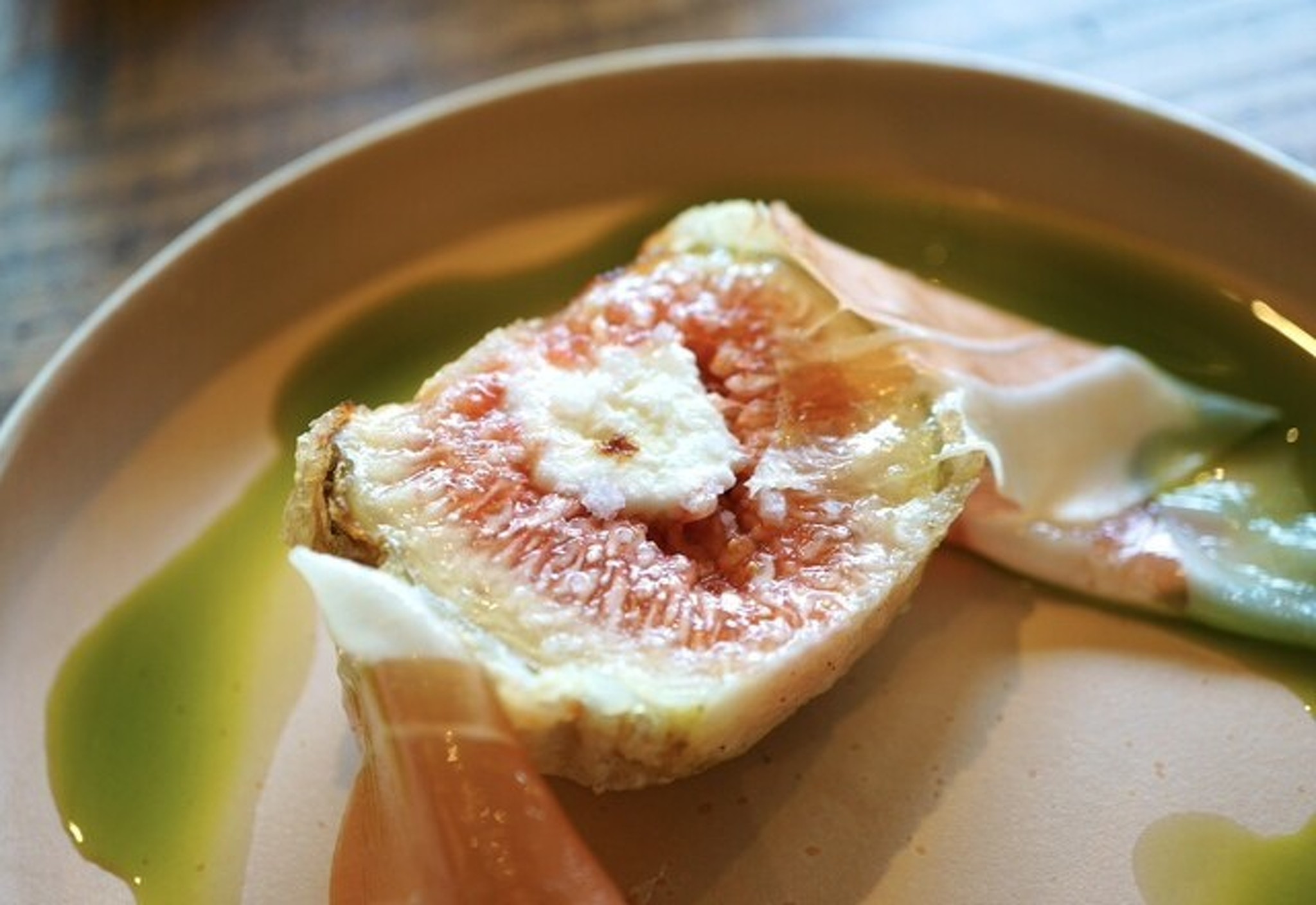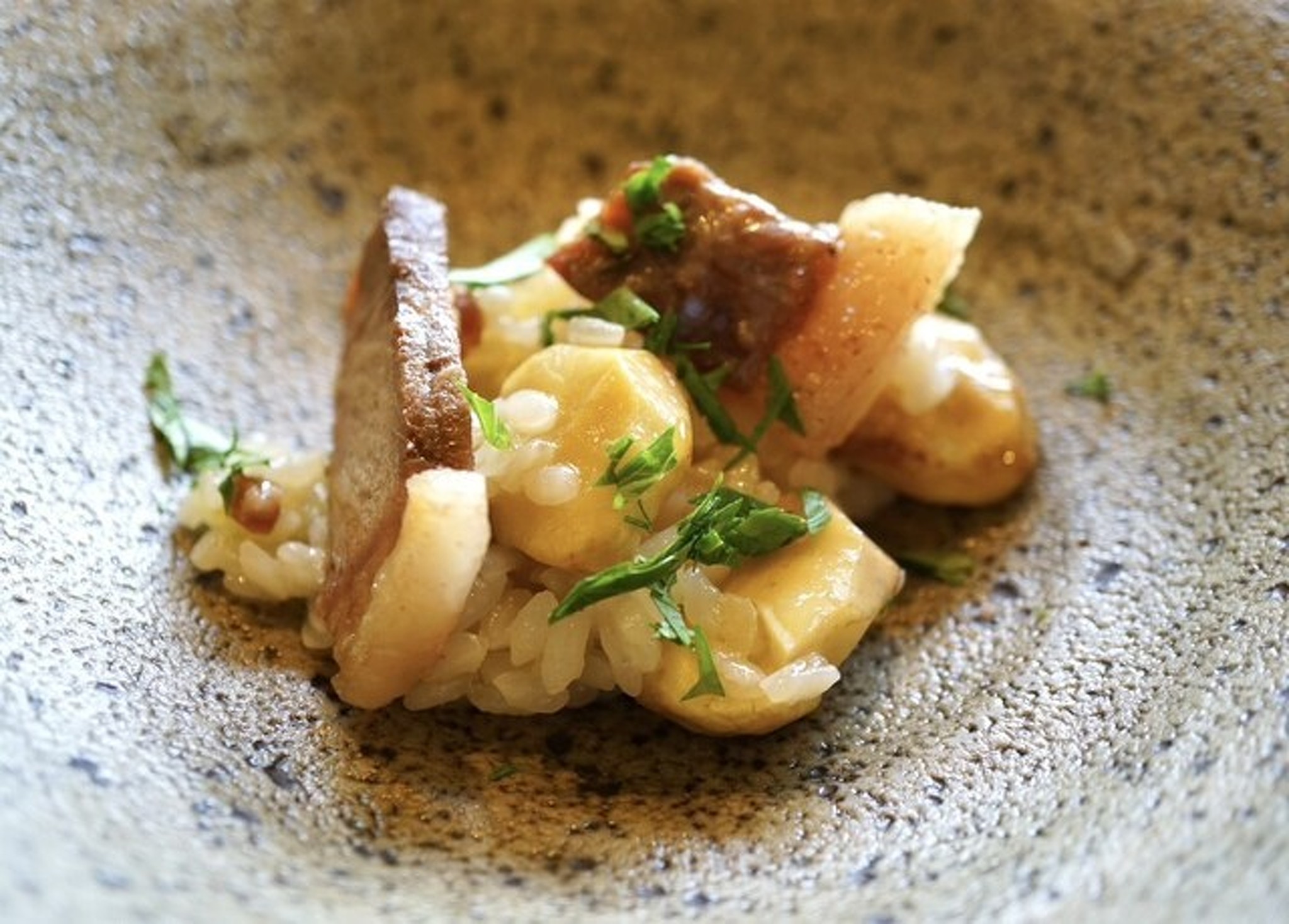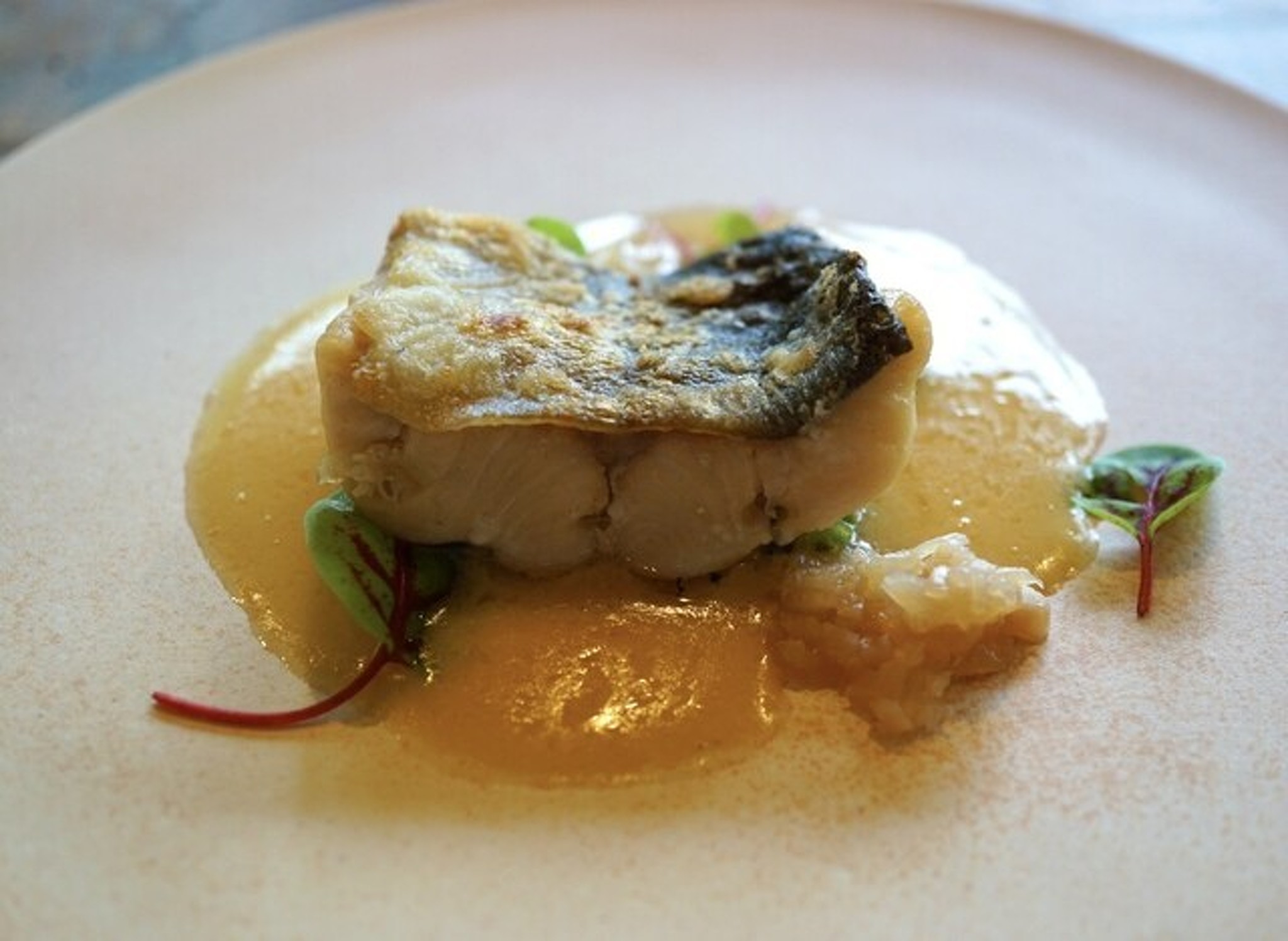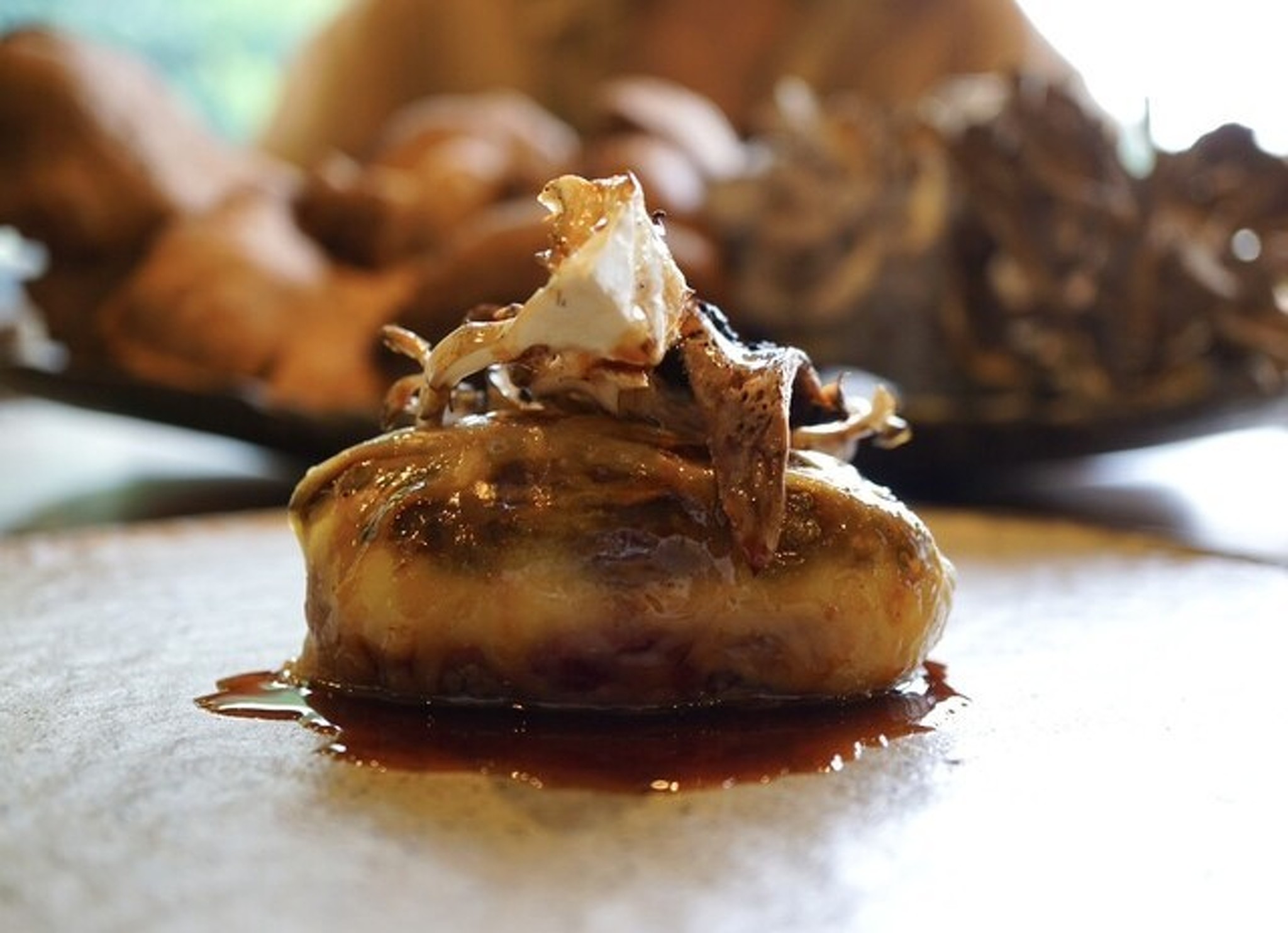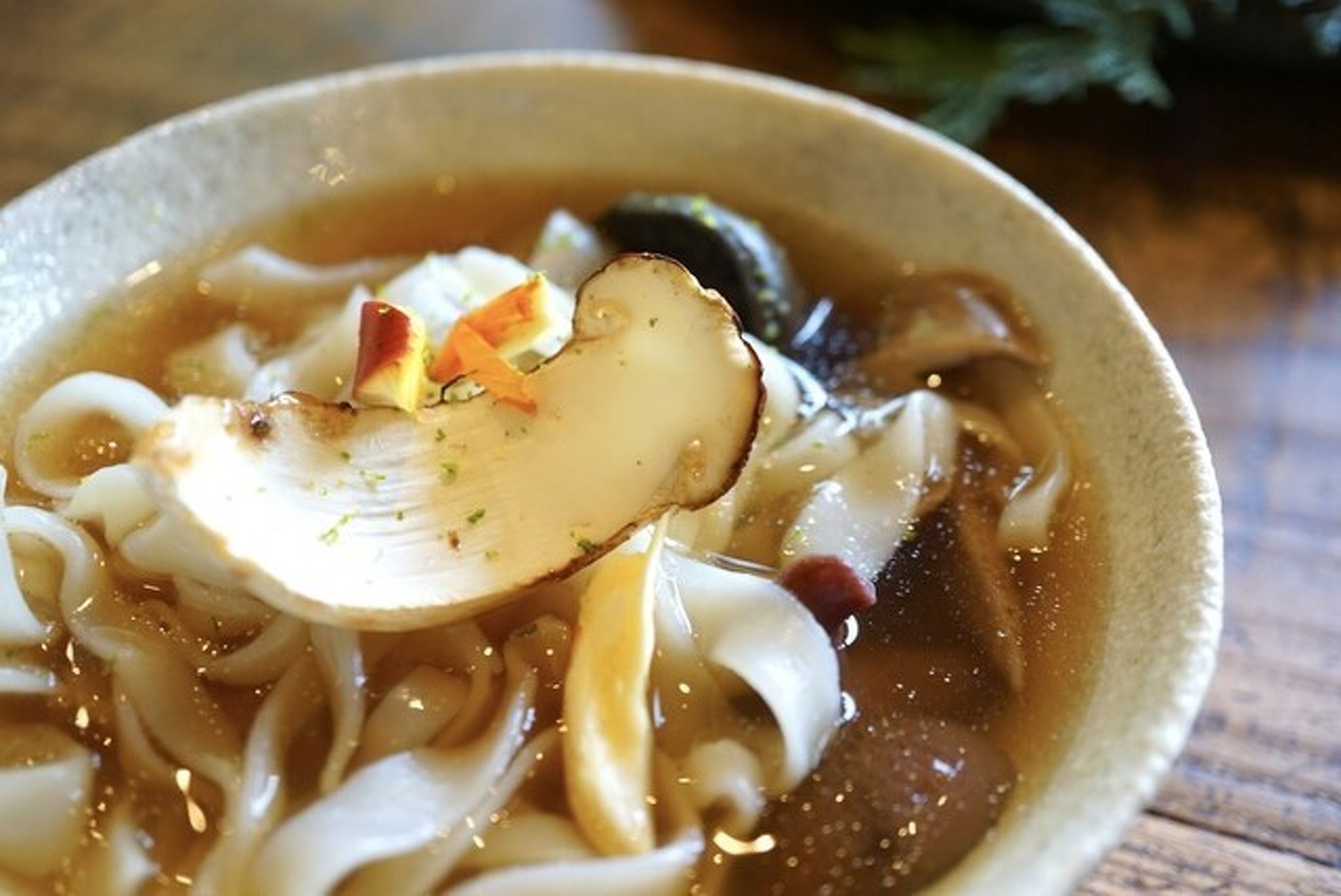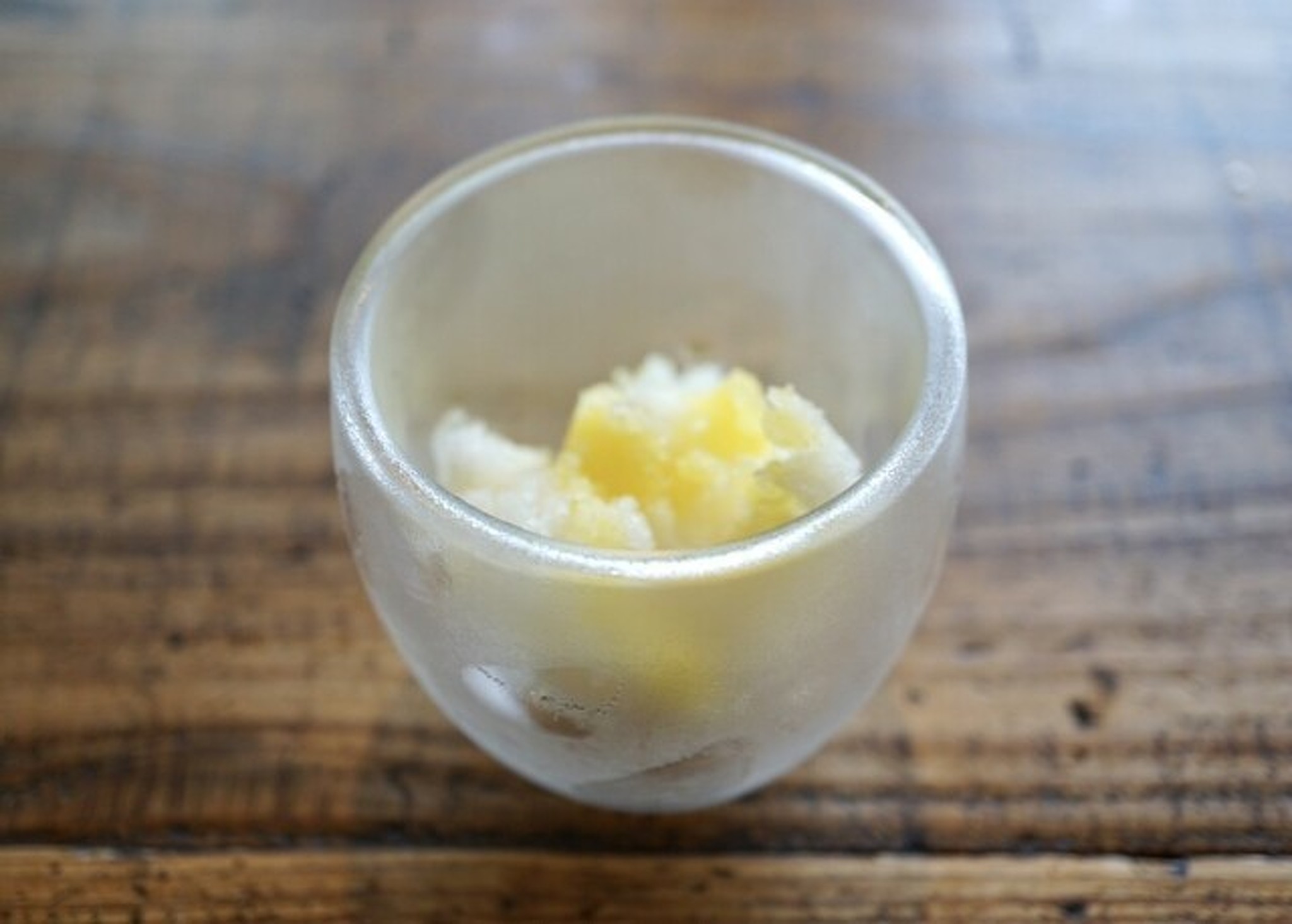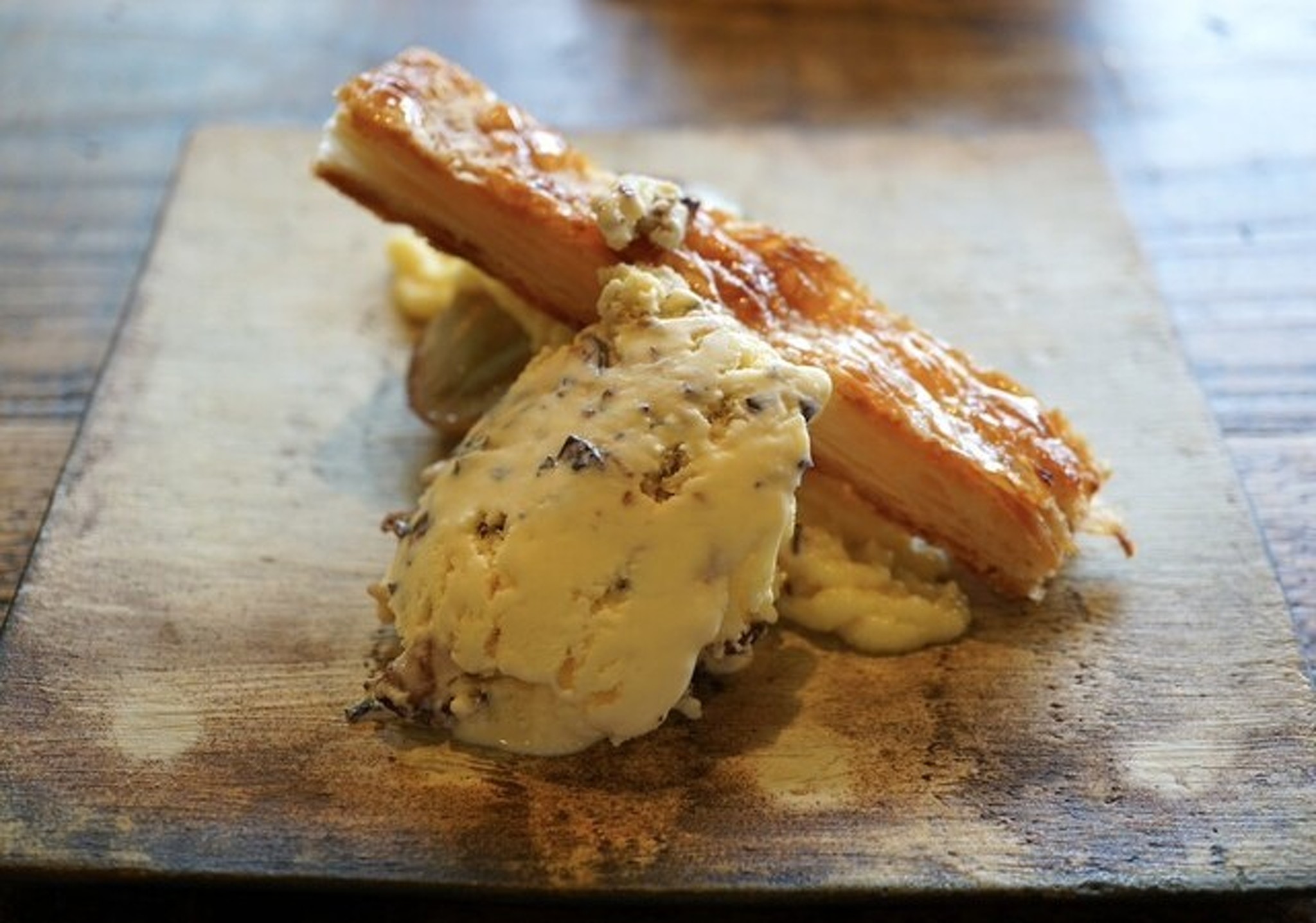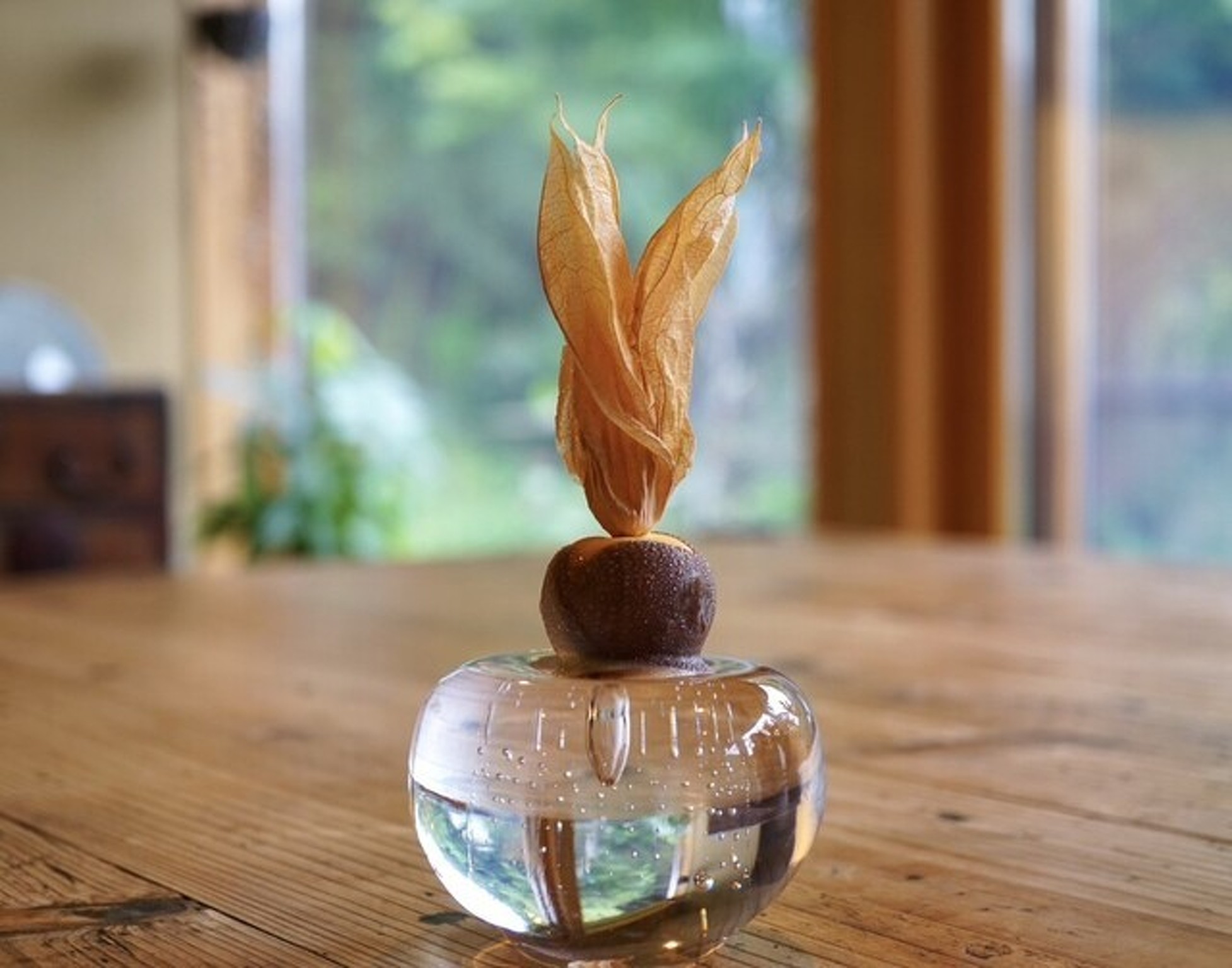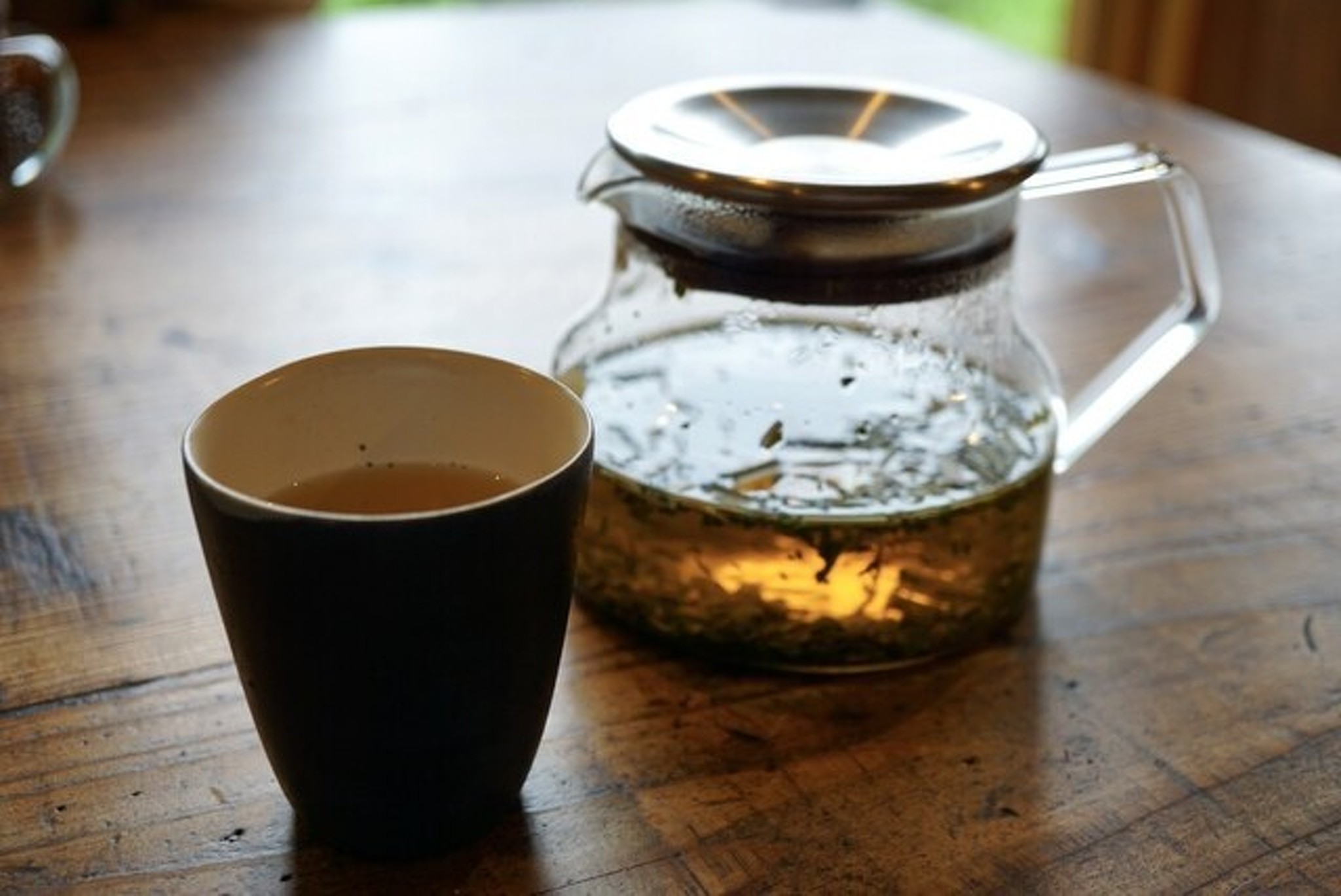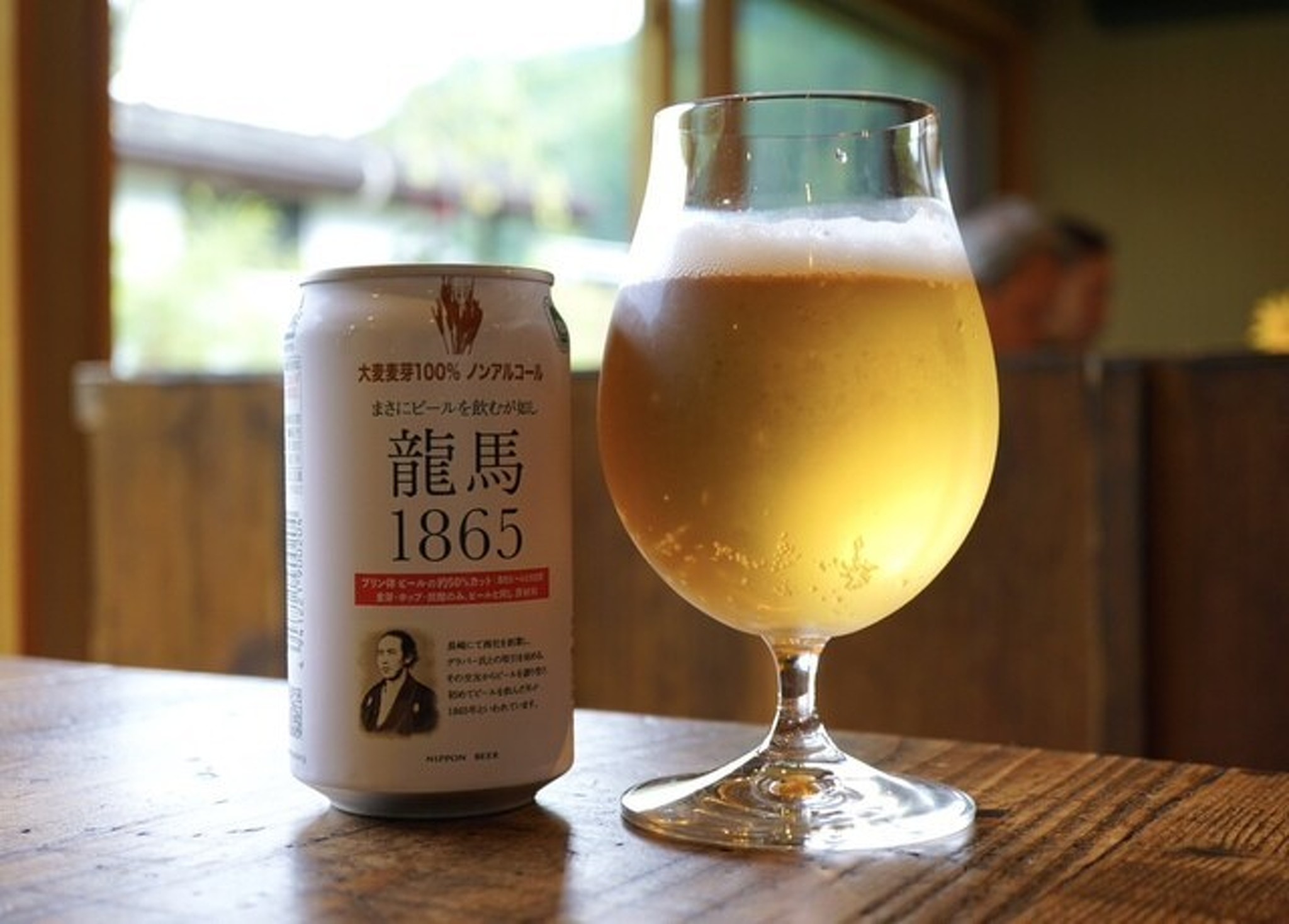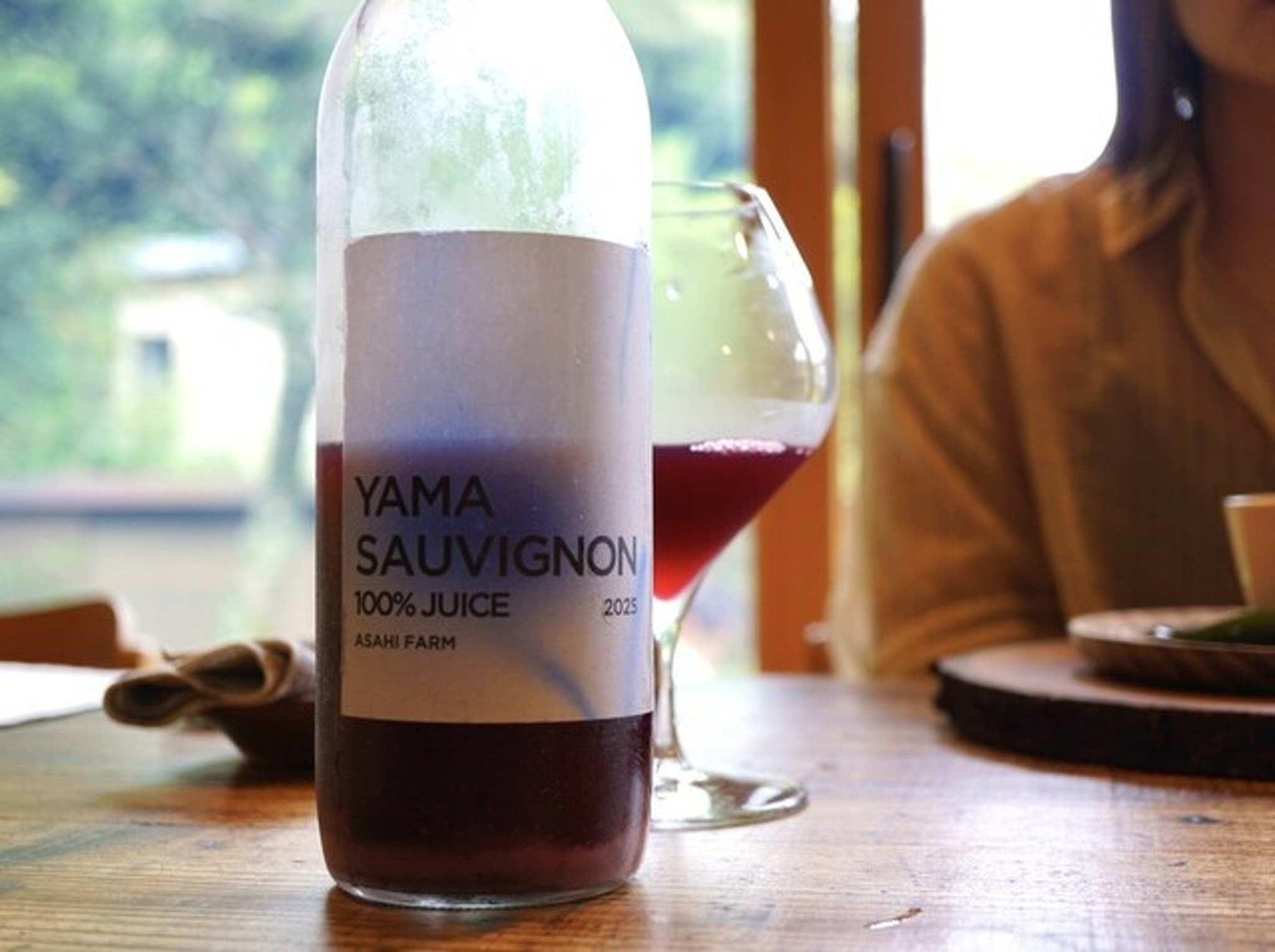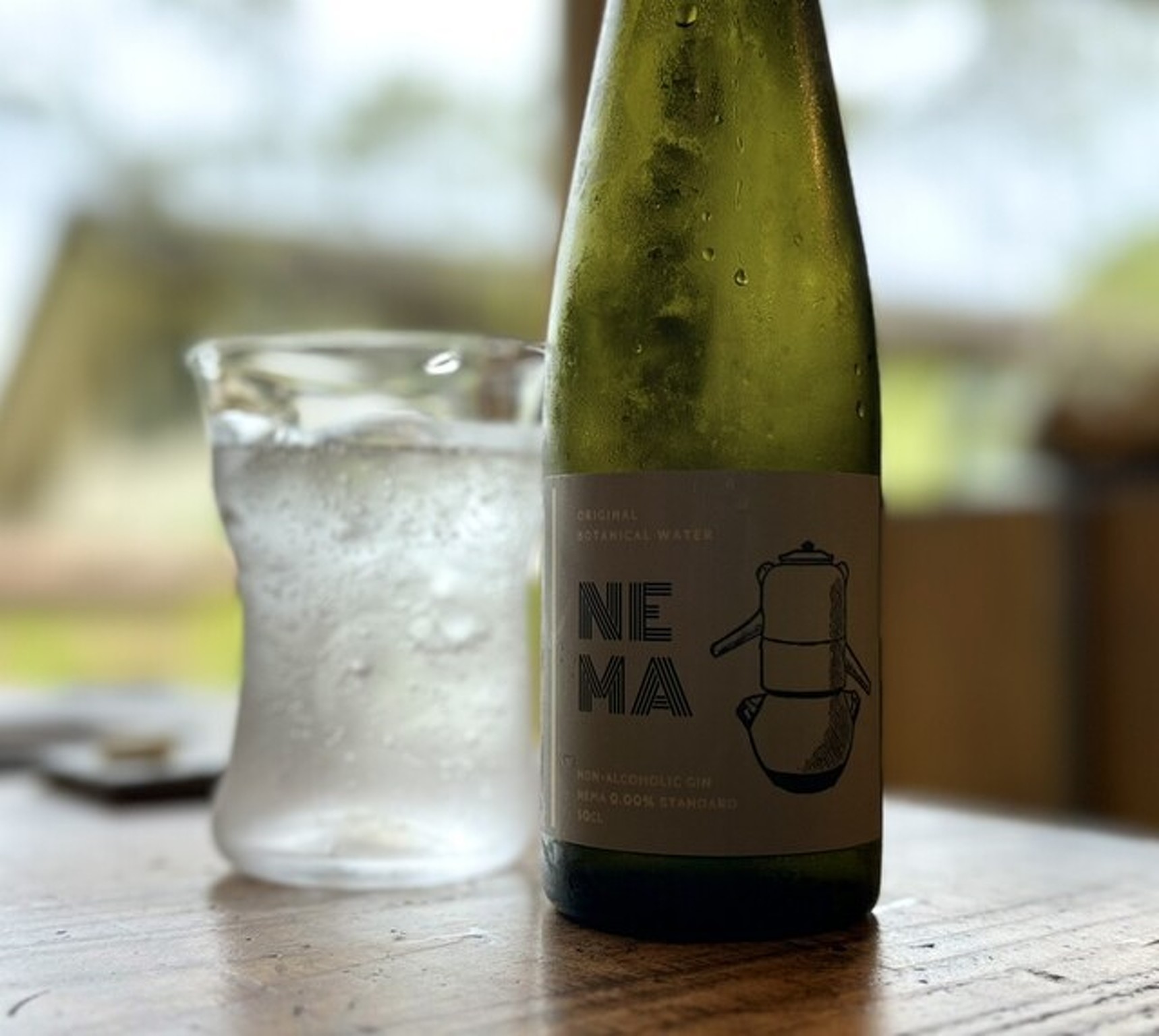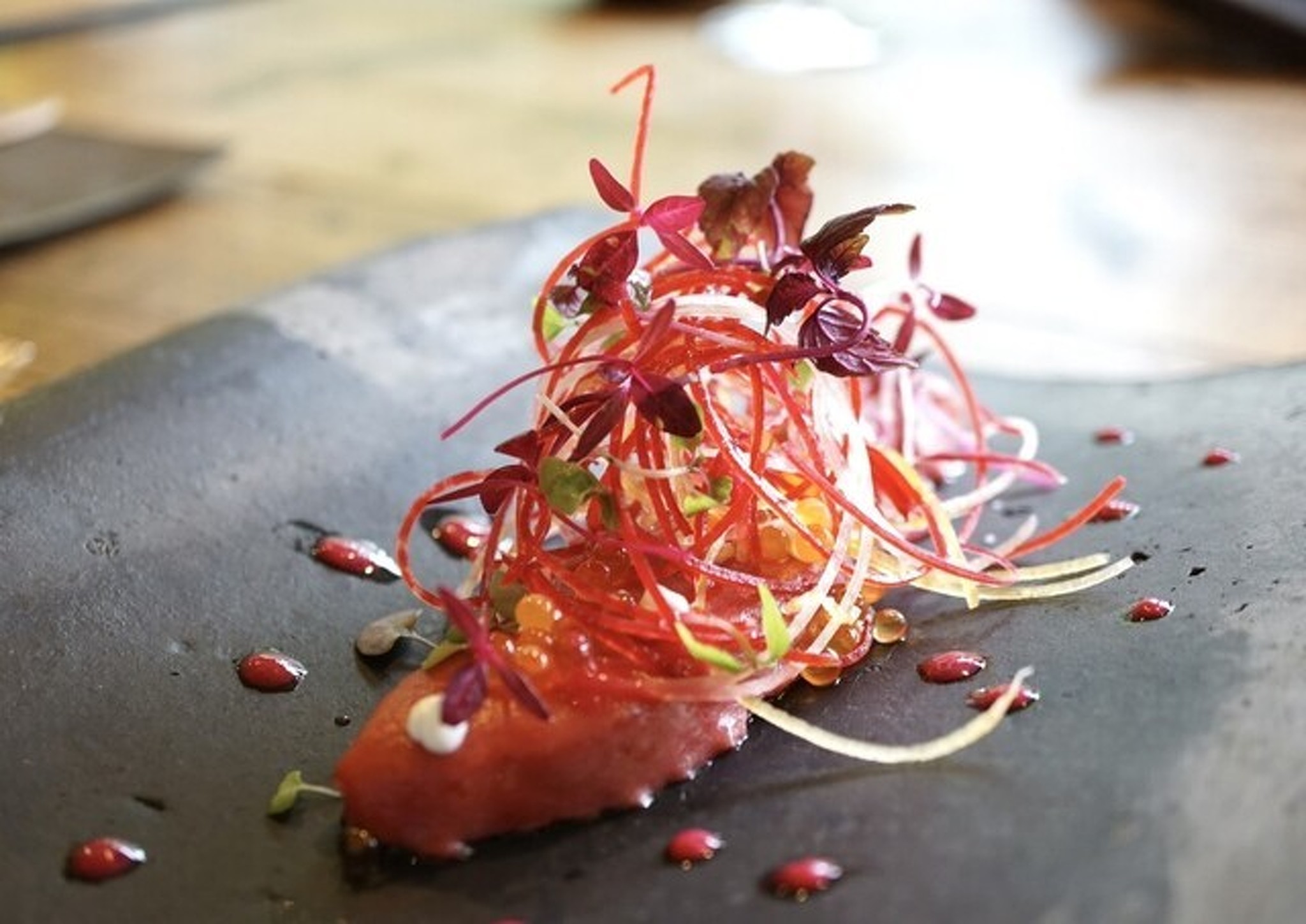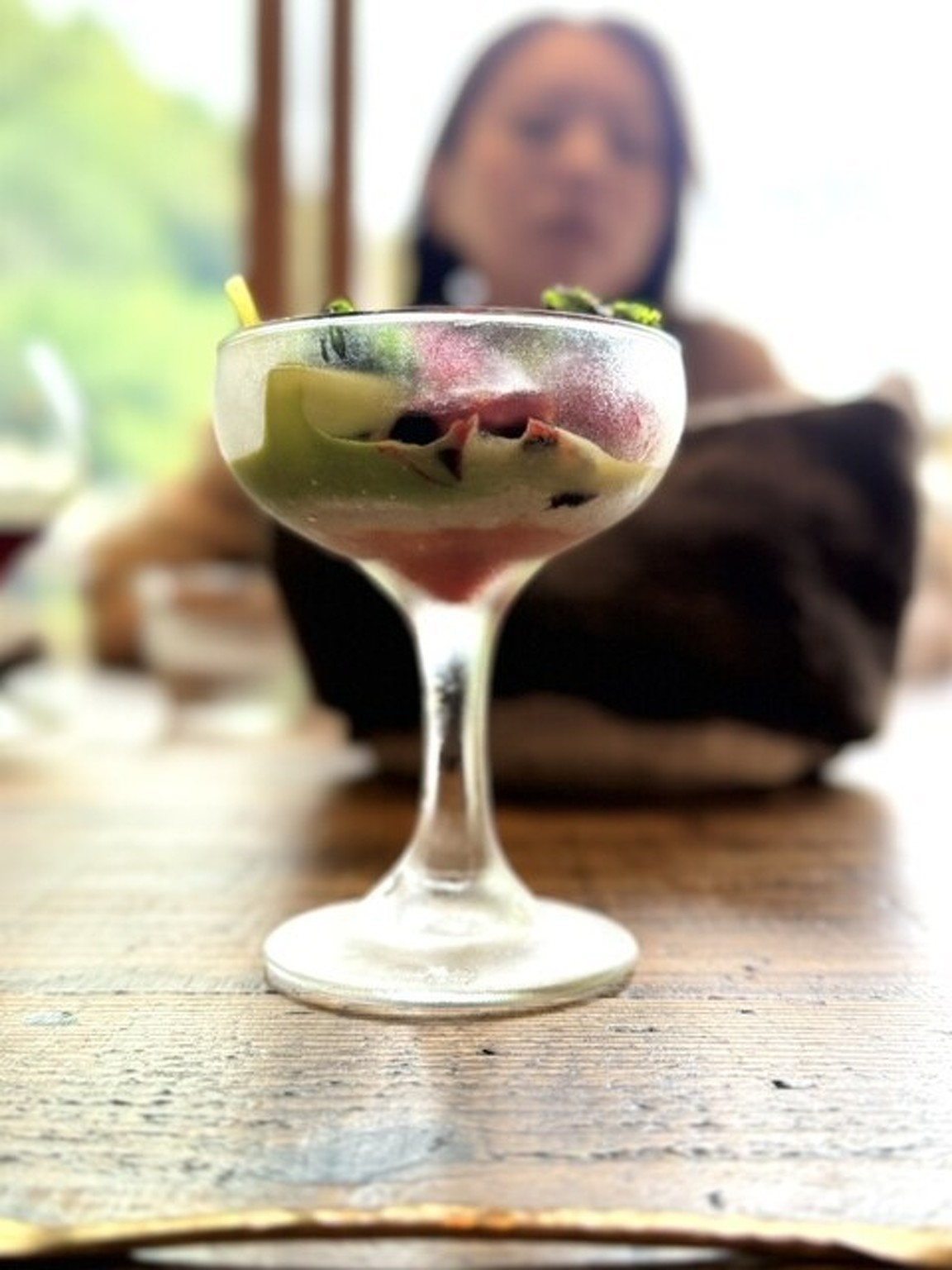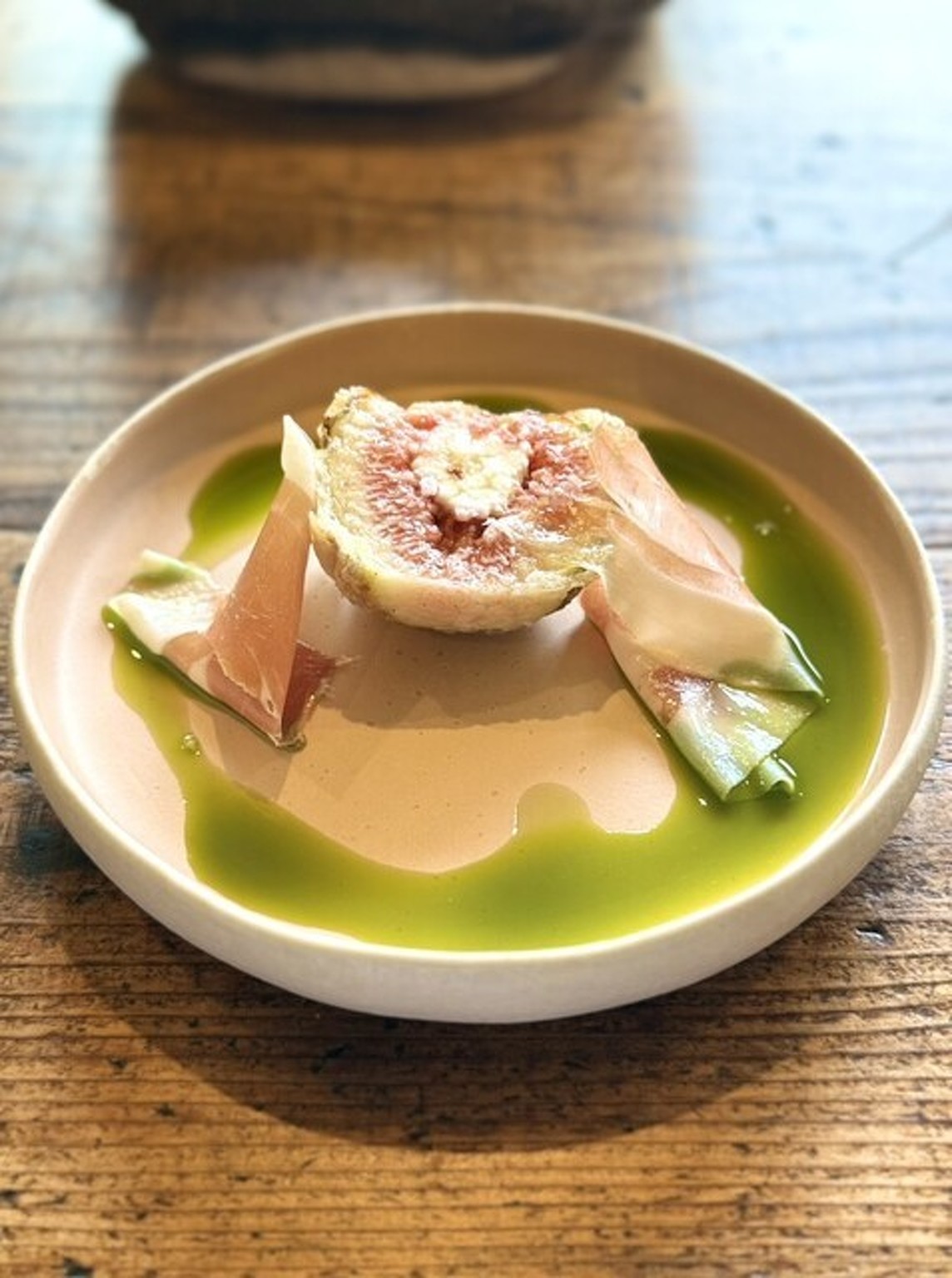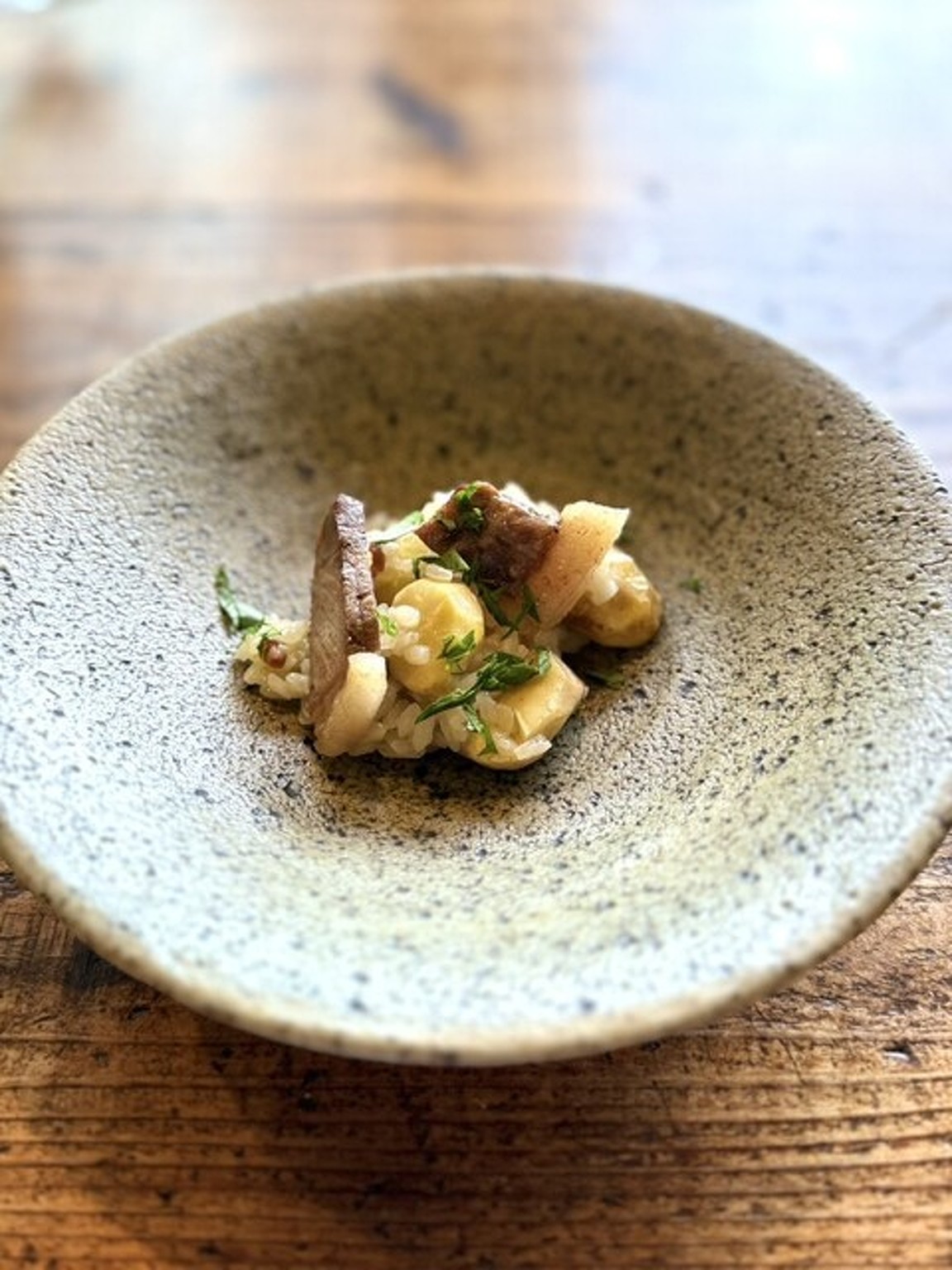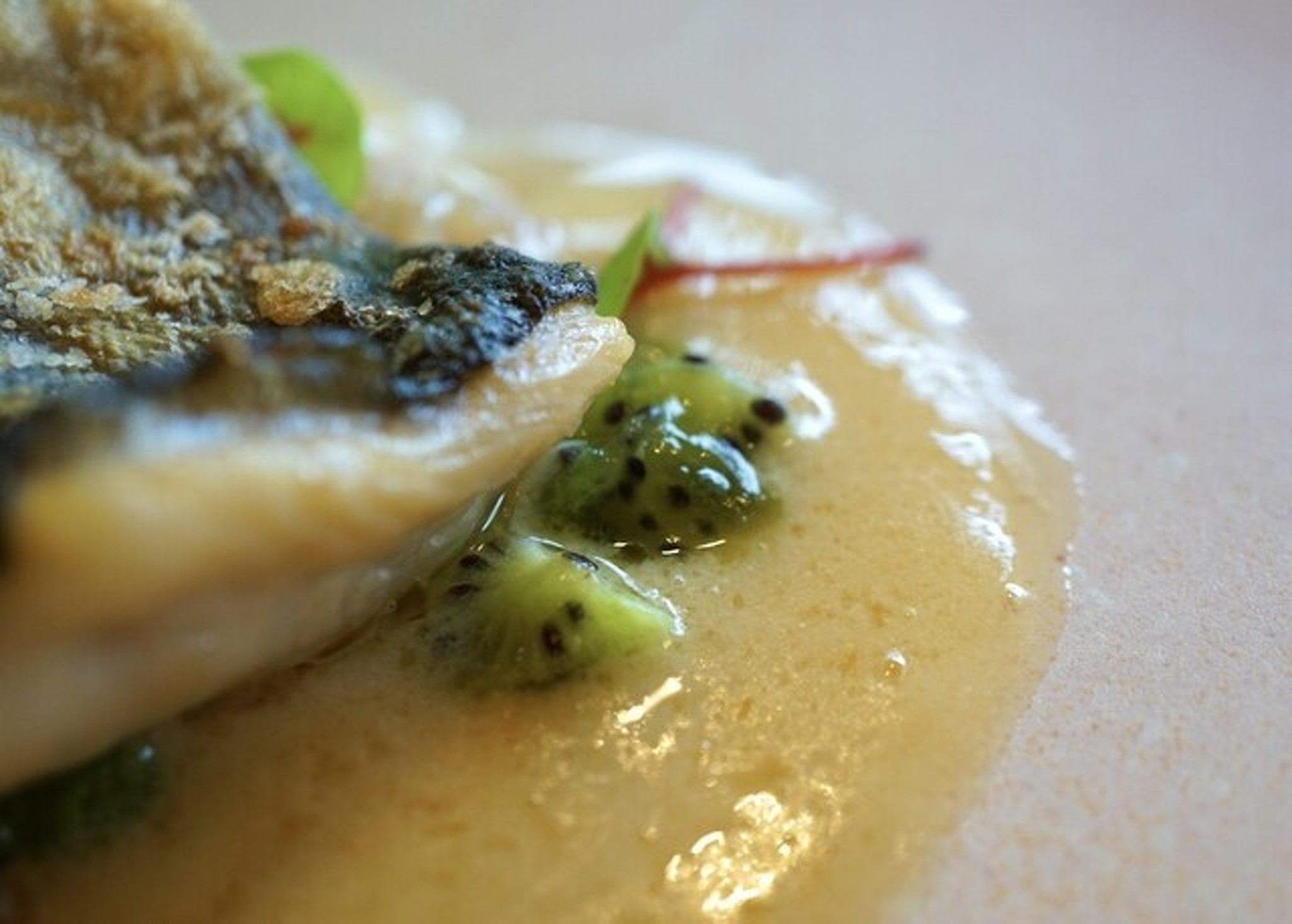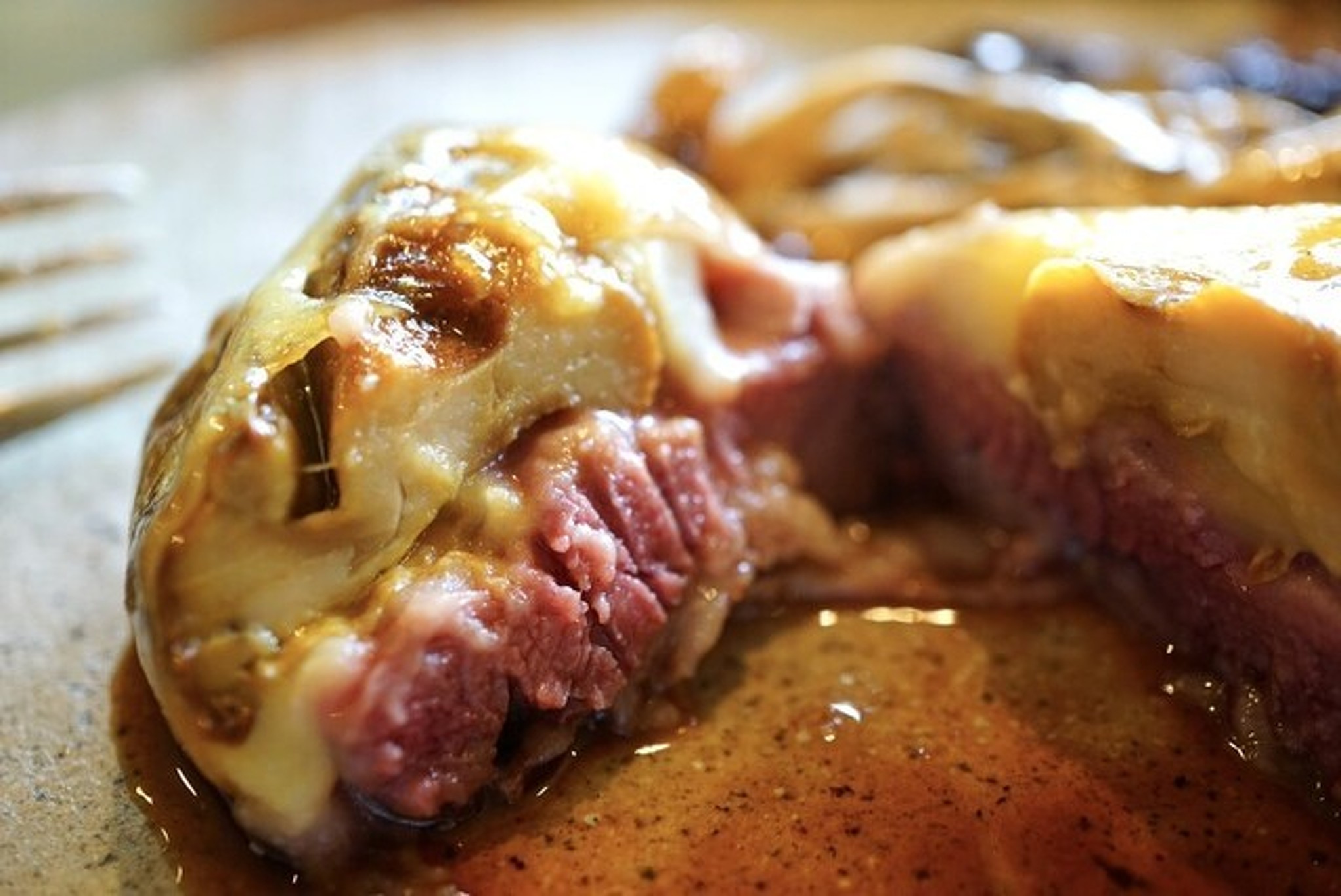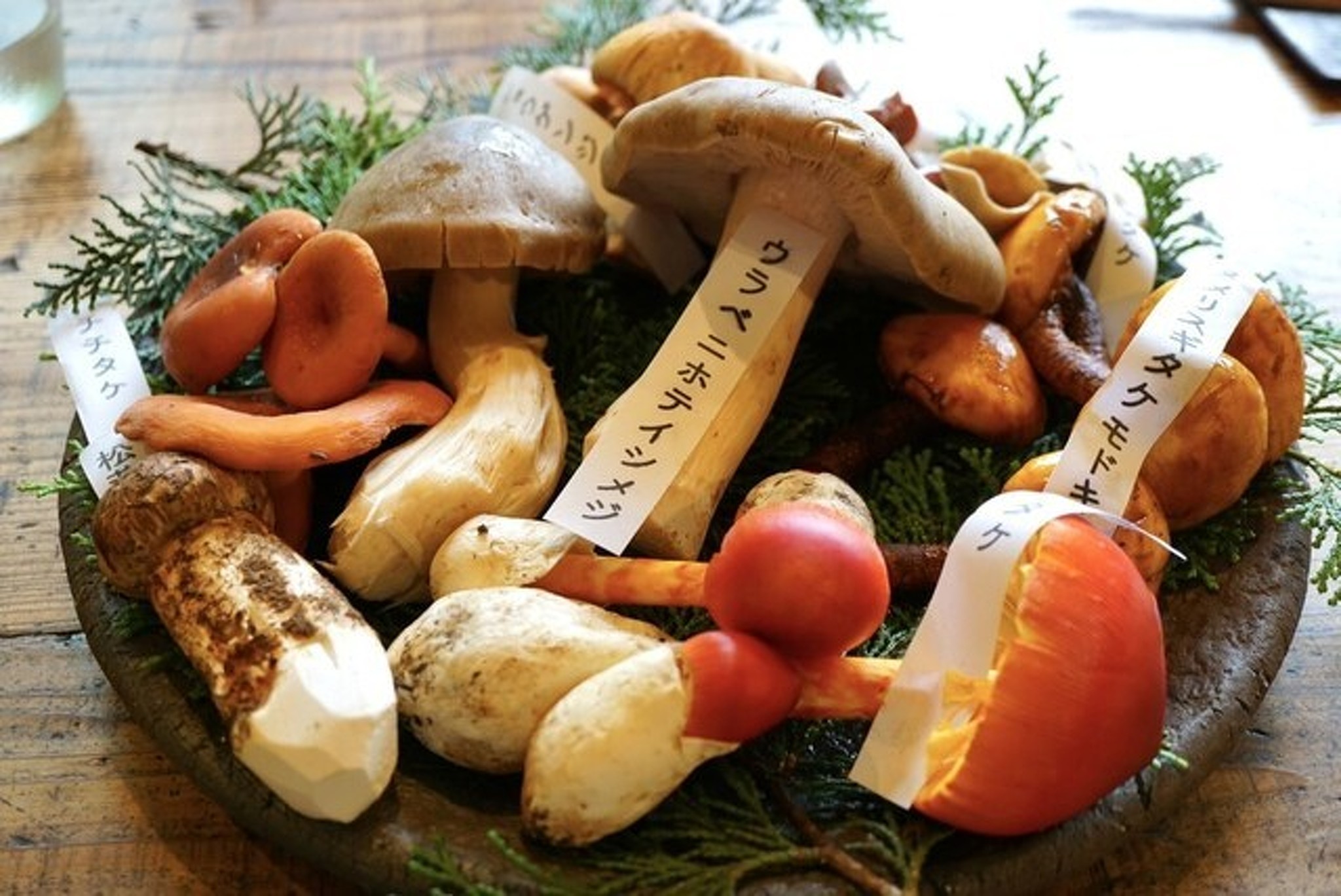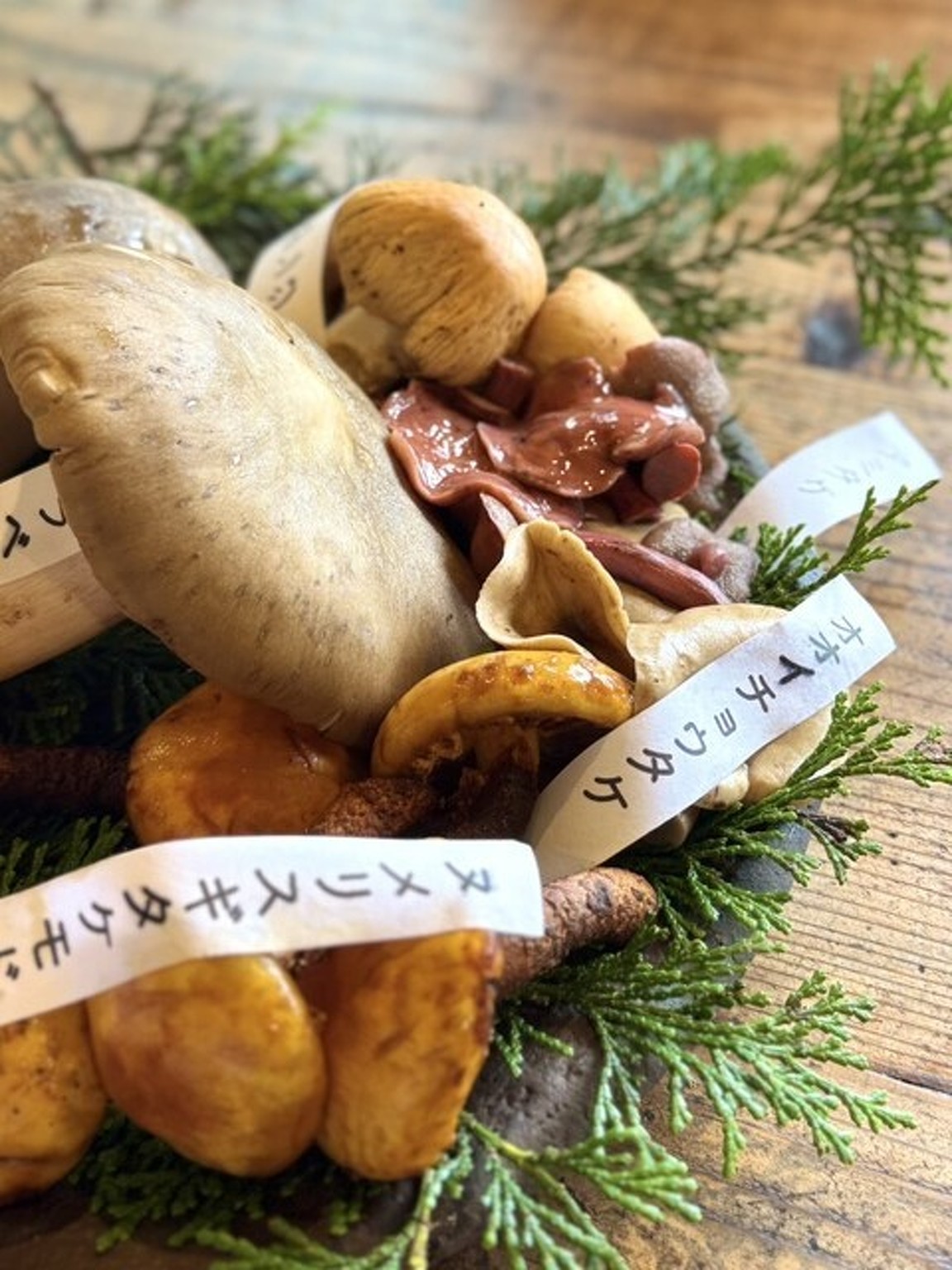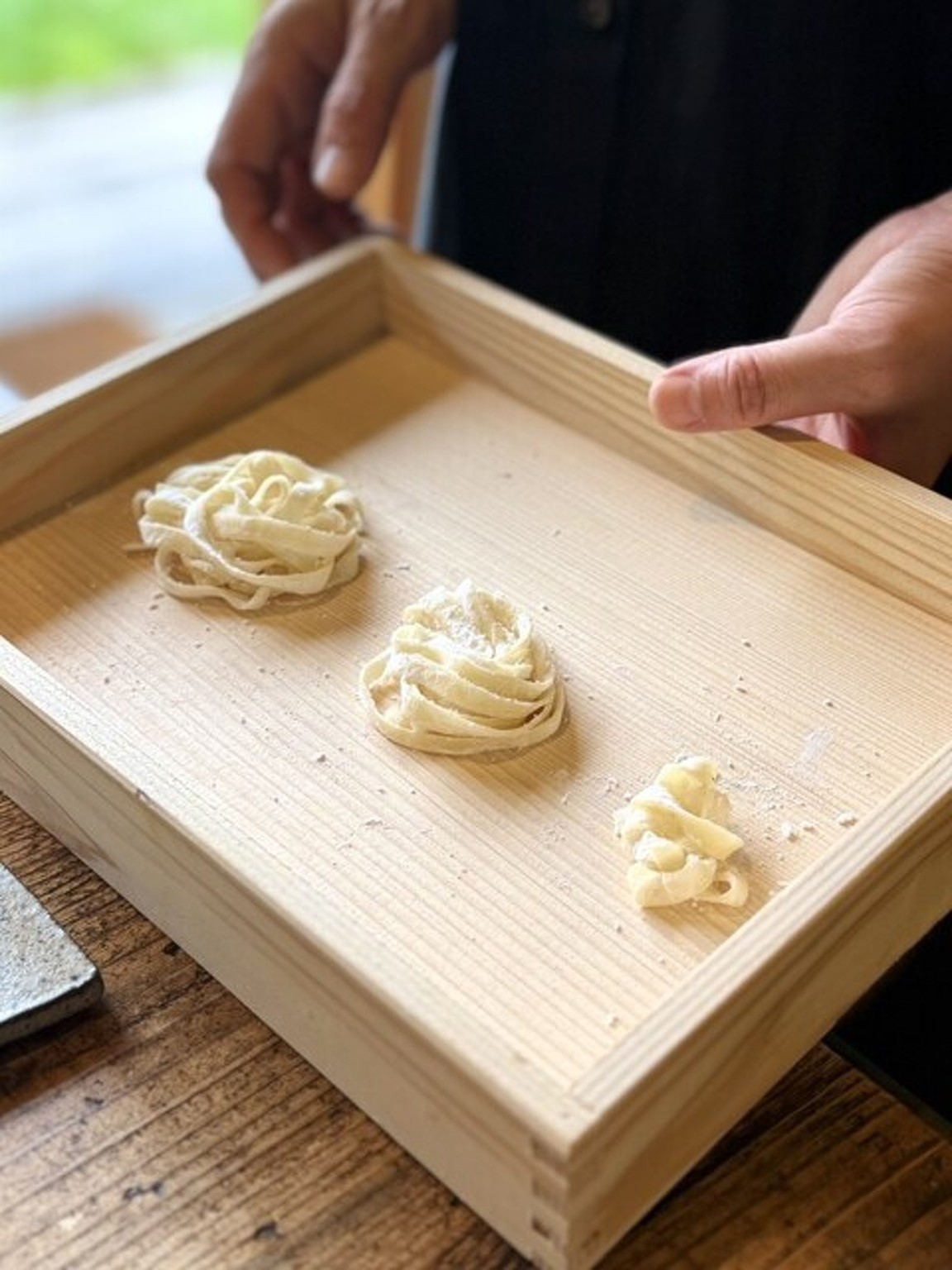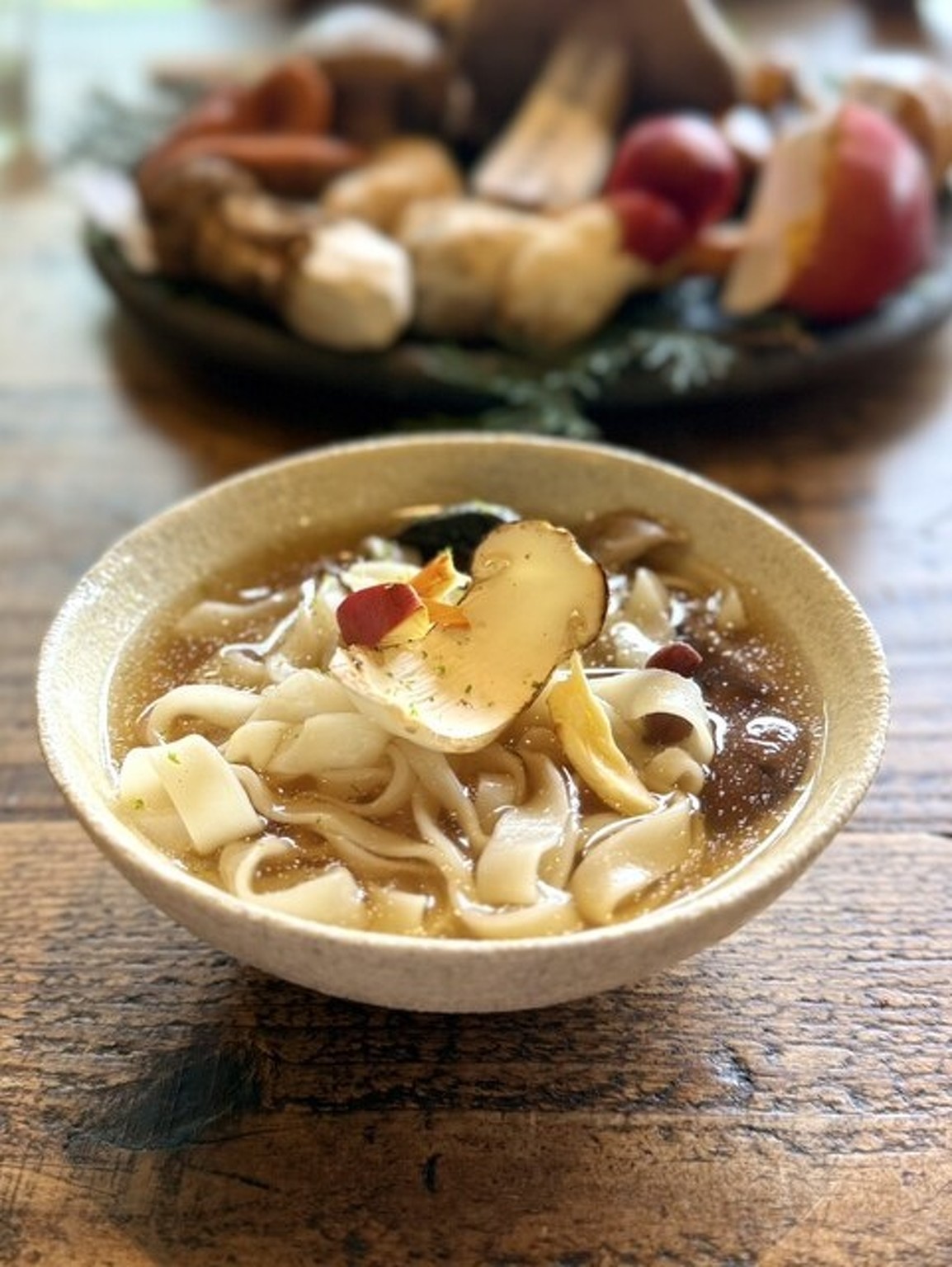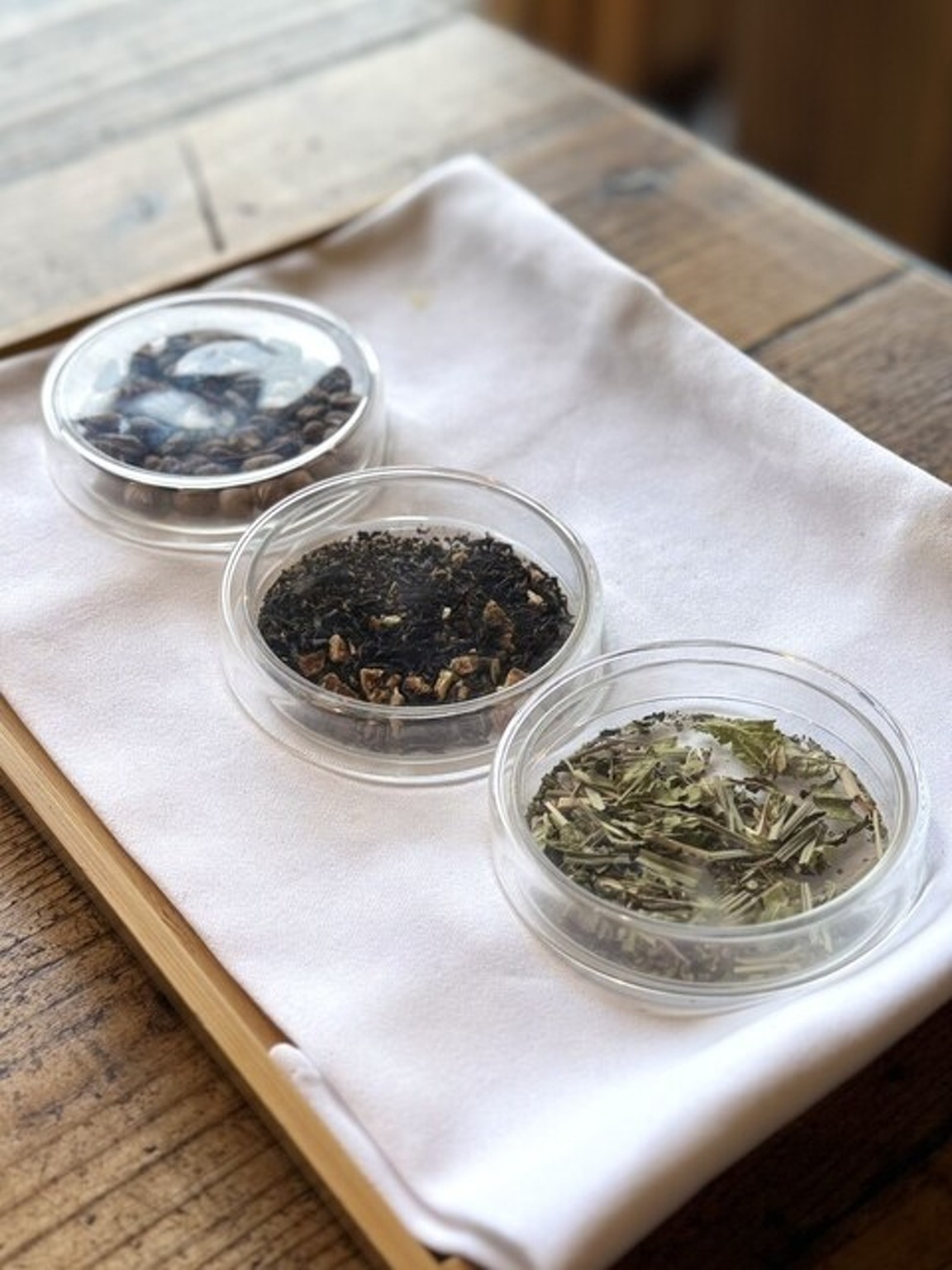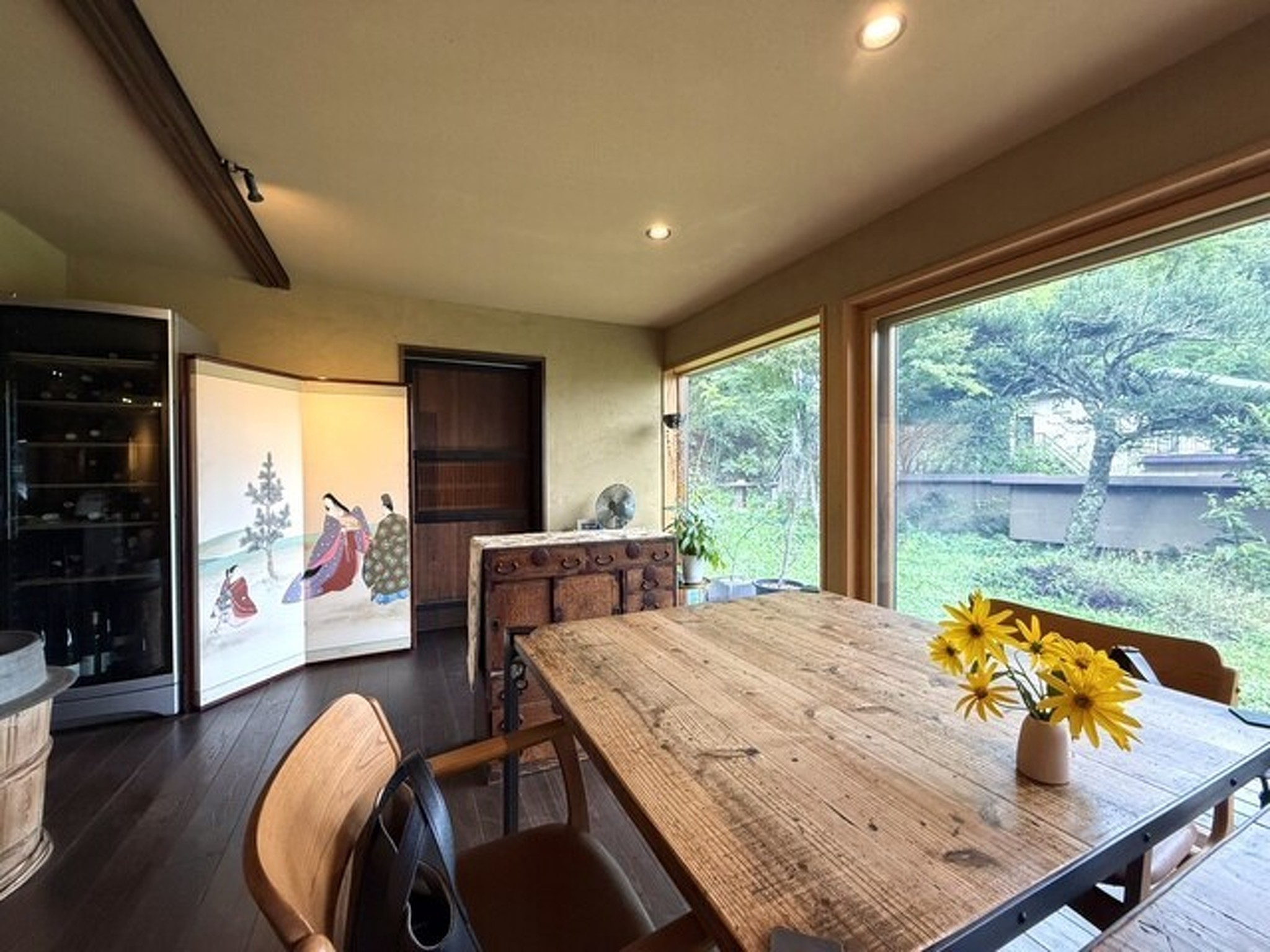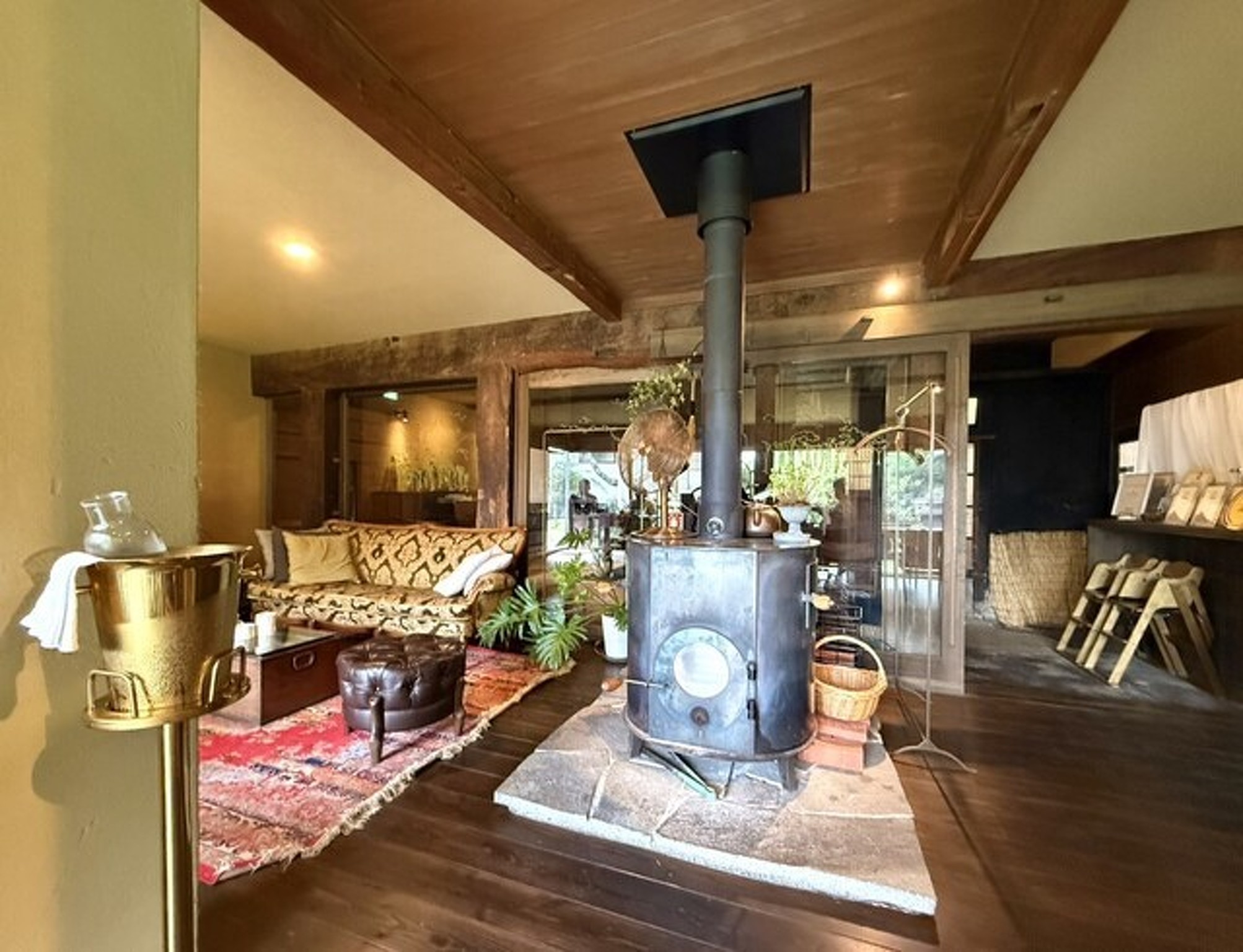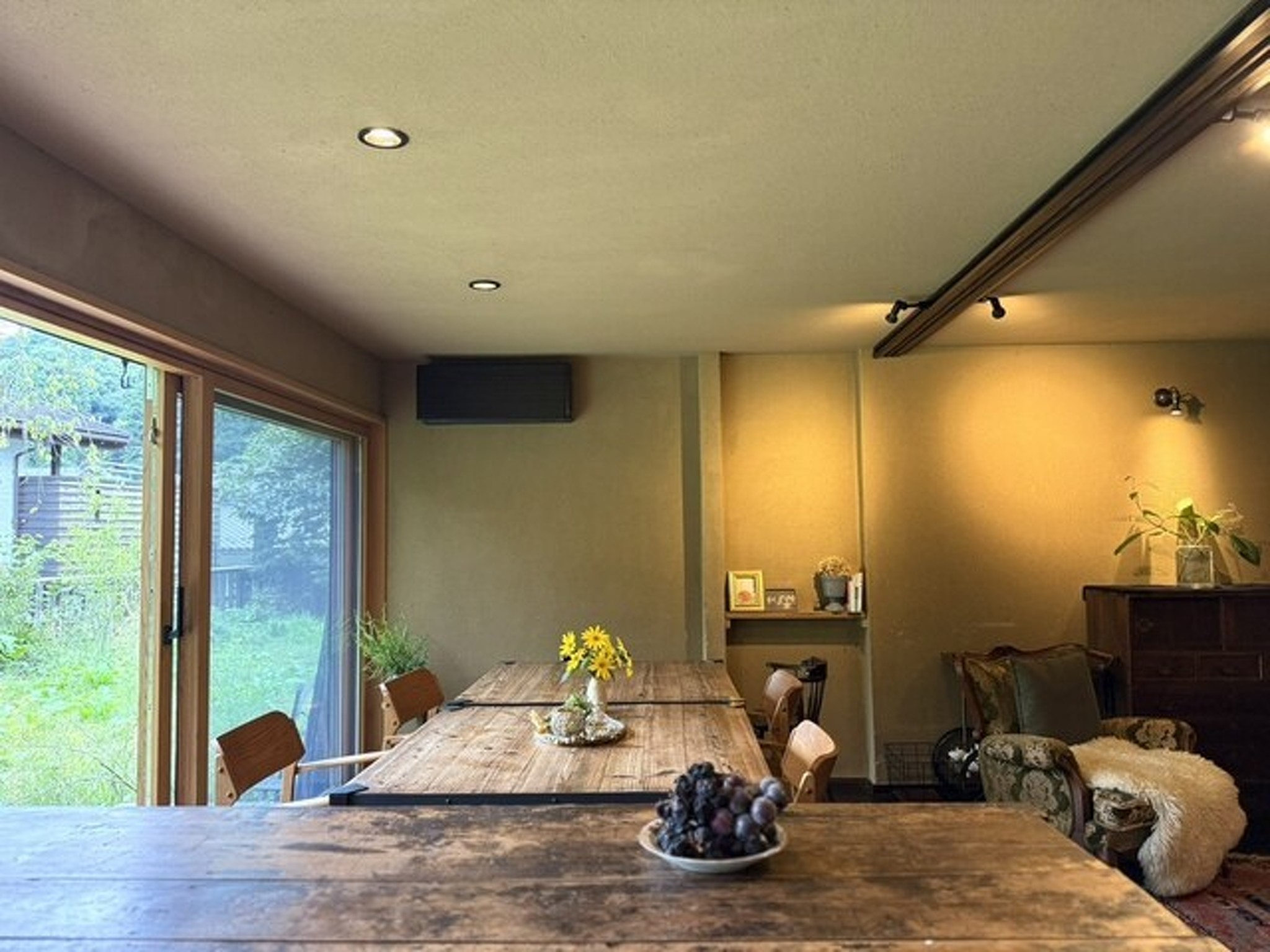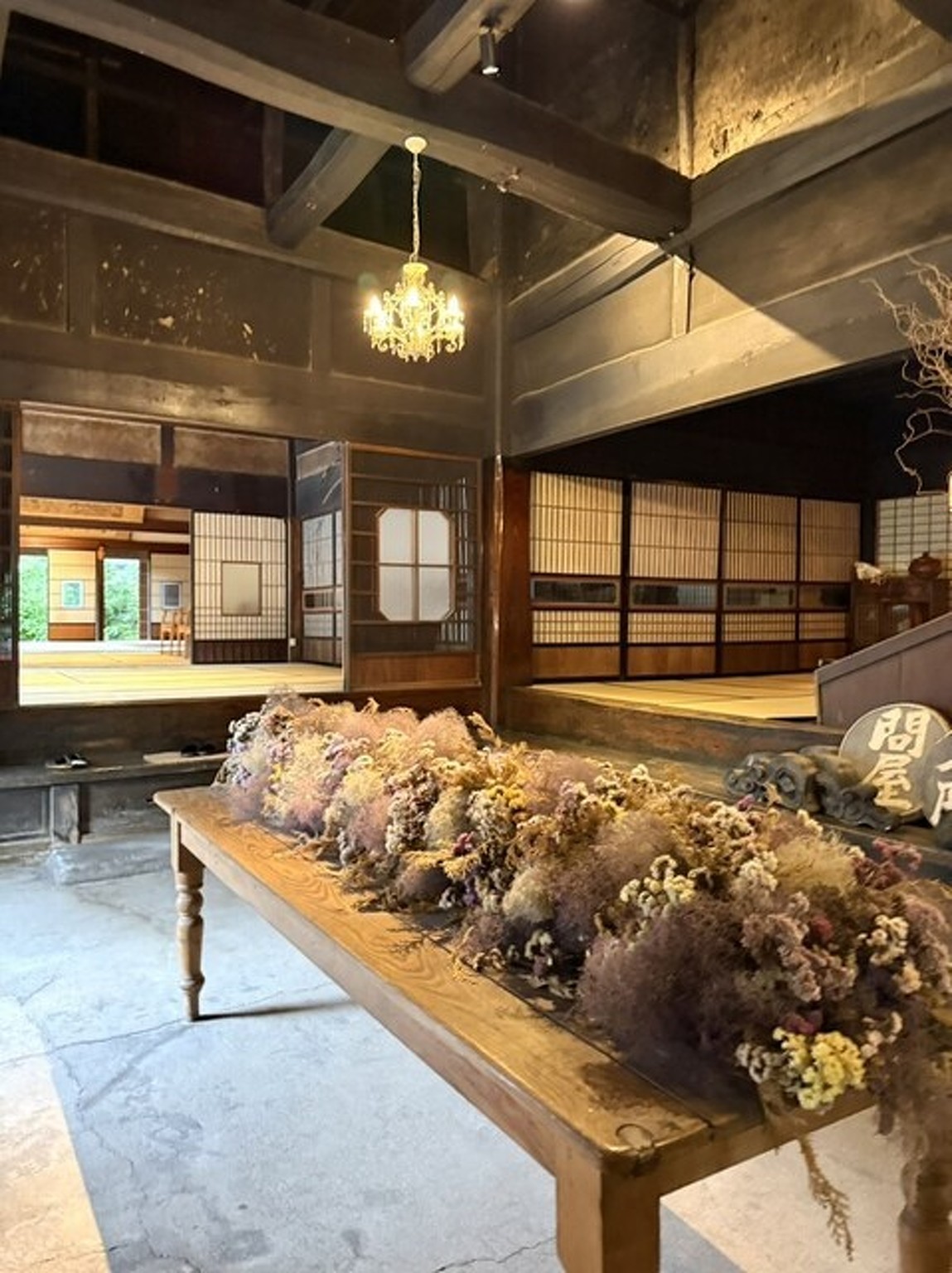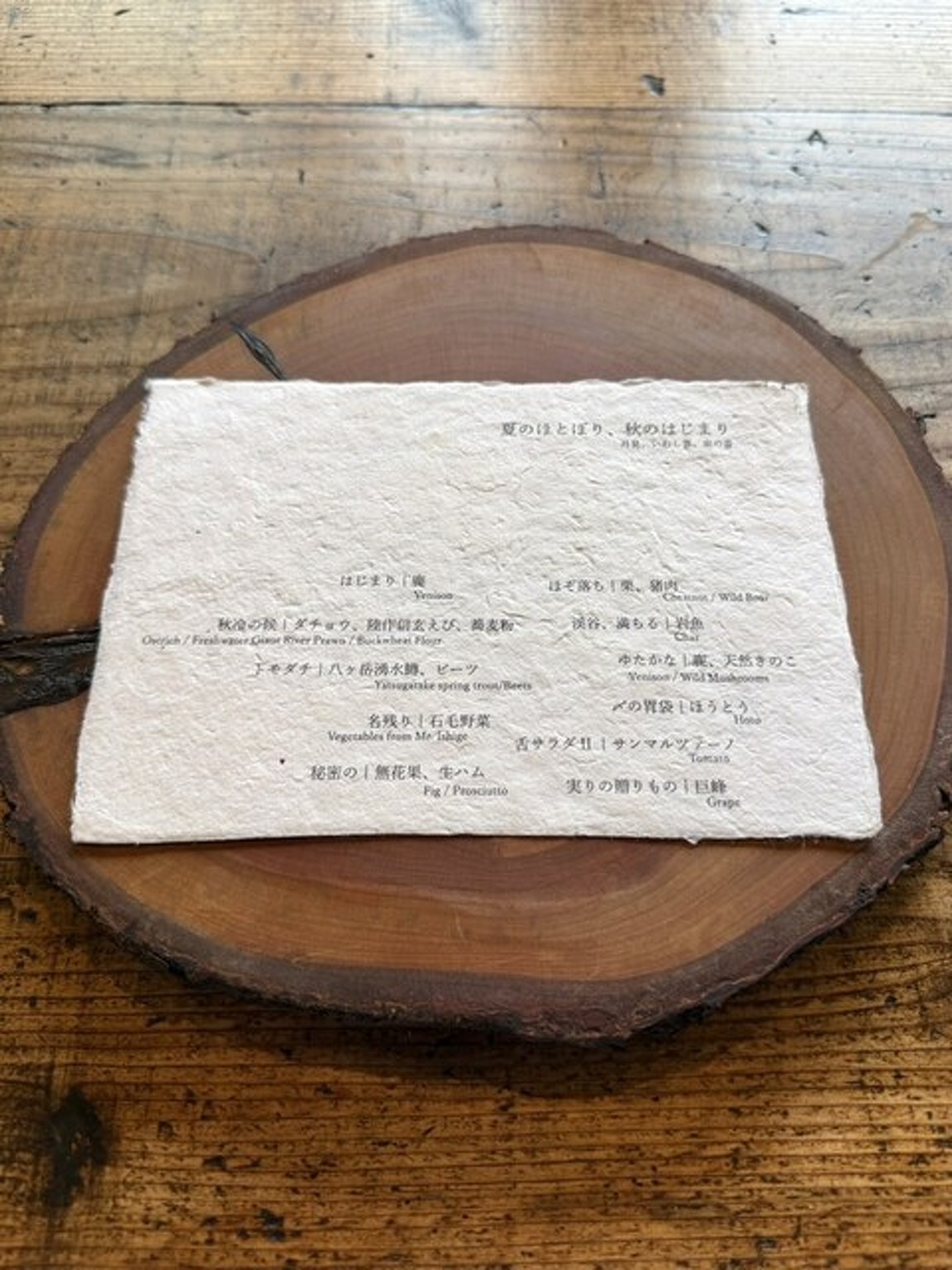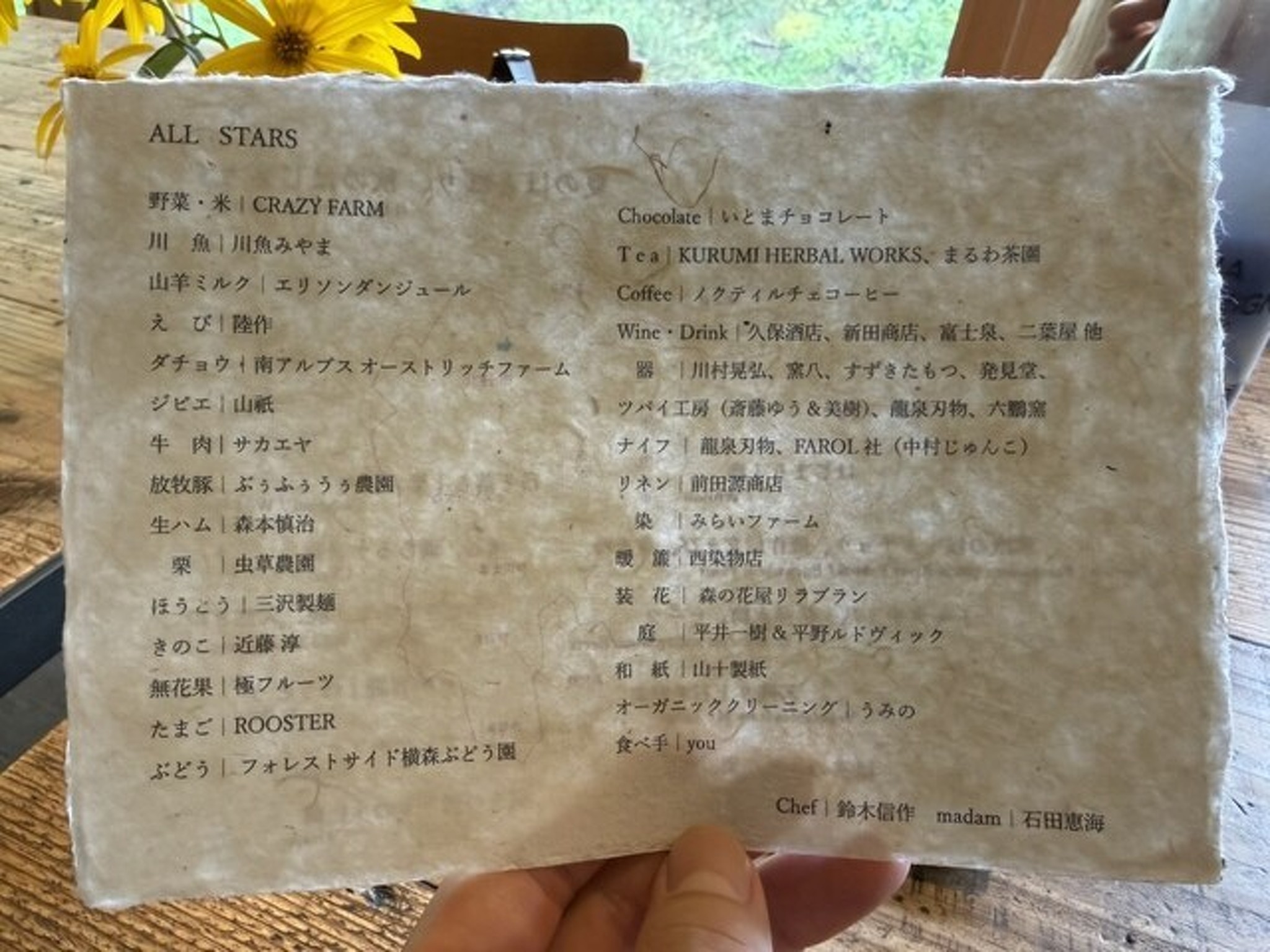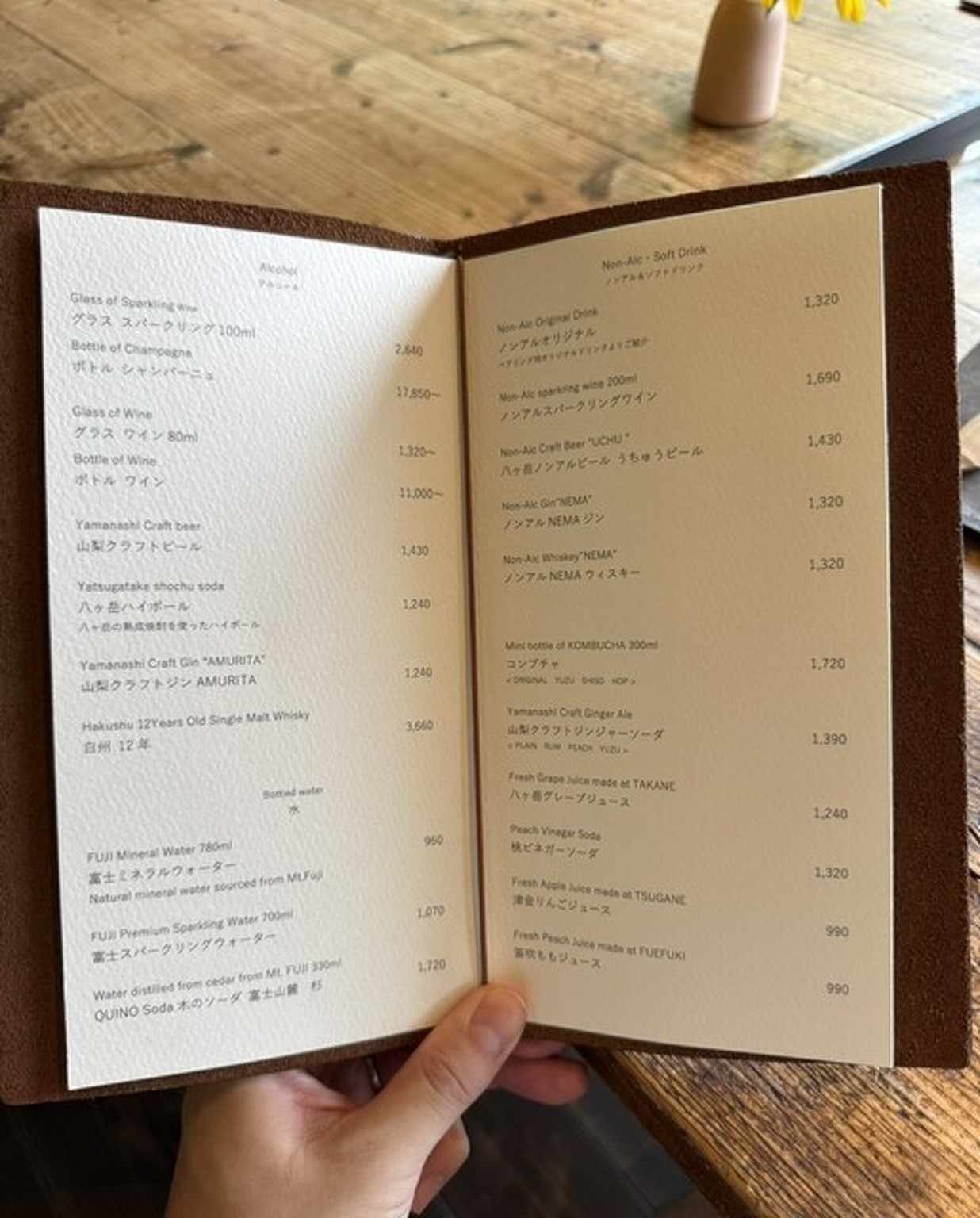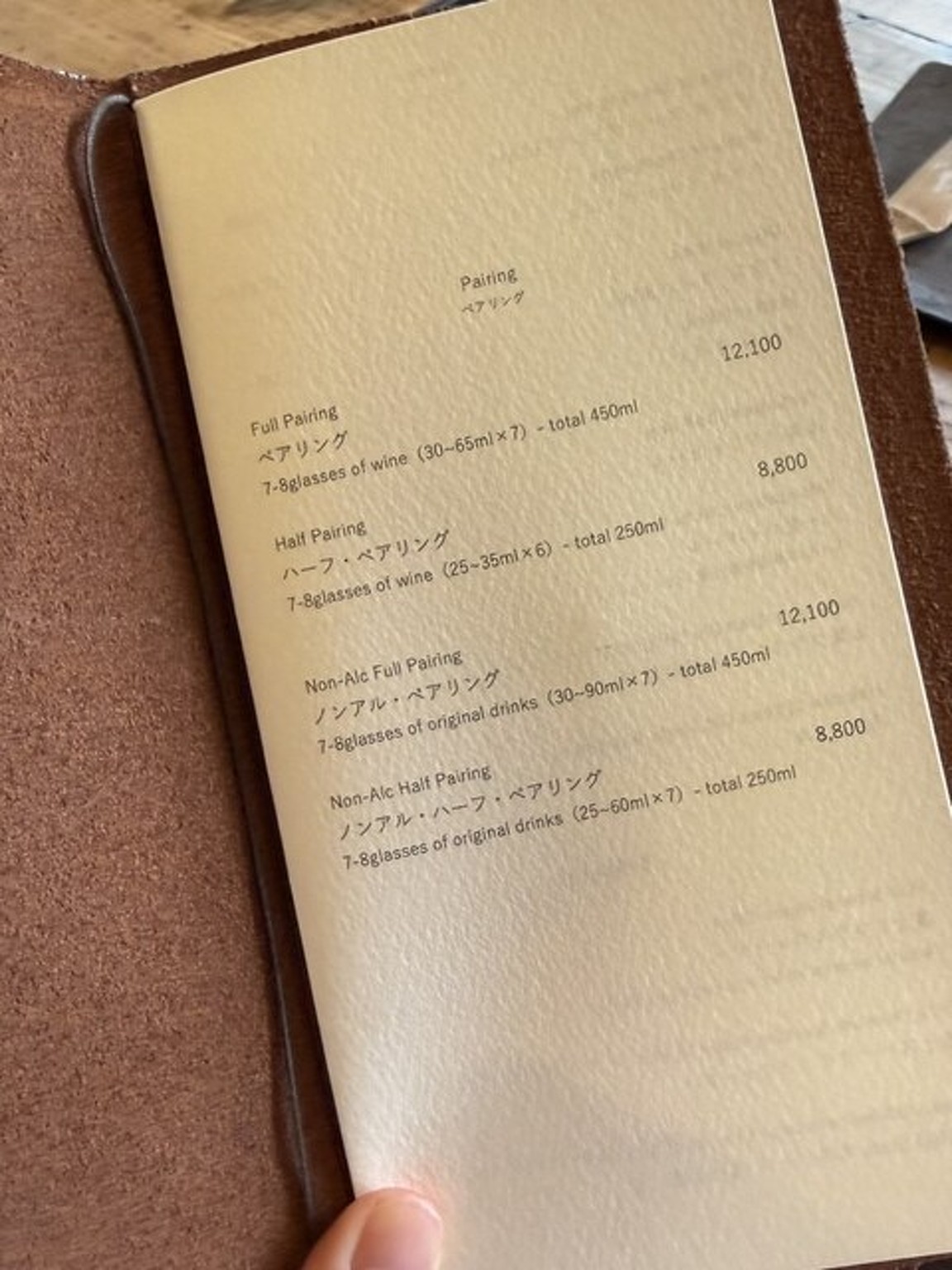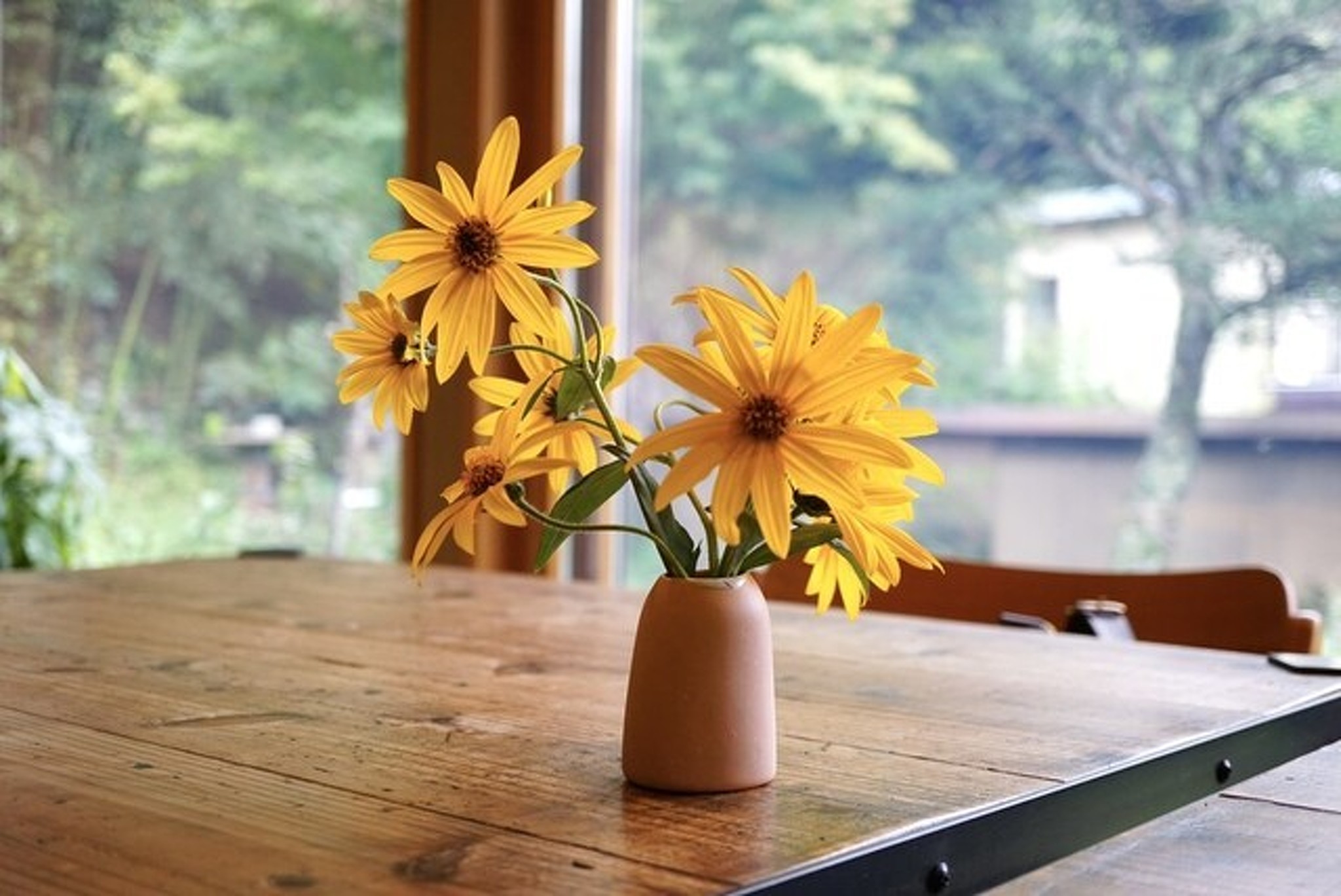
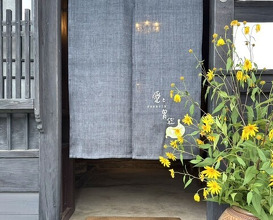
Today, I visited this popular restaurant in Hokuto, where you can enjoy seasonal mountain delicacies. We had lunch for two, and there was one other group present. The space, renovated from an old house, creates a wonderful atmosphere that connects you with nature. We opted for the omakase course.◆ Seasonal Cuisine from the Yatsugatake Mountains: JPY 25,300, tax included, plus 10% service charge- Beginning: Venison- Autumn Chill: Ostrich, Rikuzaku Shinshu Shrimp, Buckwheat- Friends: Yatsugatake Water Trout, Beets- Remnants: Ishige Vegetables- Secret: Fig, Prosciutto- Falling Away: Chestnut, Wild Boar Meat- Valley, Overflowing: Iwana (Char)- Abundant: Venison, Wild Mushrooms- To Finish: Hōtō (Noodle Soup)- Tongue Salad II: San Marzano Tomato- Gift of Abundance: Kyoho Grapes◆ Ordered Drinks- Non-Alcoholic Beer Ryoma 1865: JPY 1,430- Yatsugatake Grape Juice: JPY 1,240- Non-Alcoholic NEMA Gin with Soda: JPY 1,320- Fuji Mineral Water: JPY 960- Fuji Sparkling Water: JPY 1,070Total Amount: JPY 62,682, tax and service charge included for twoDuration: 2 hours and 30 minutes------- Details -------We started with a venison consomme soup. The flavor was distinctly different from other meat broths, with a clear essence of venison that came through beautifully.There were three types of amuse-bouche. The first was a galette made from chicken liver, paying homage to Yamanashi's famous motsu-ni (offal stew). The second was a tartlet featuring ostrich meat from the Southern Alps, adorned with summer truffle. The third was an amuse spoon made with the flesh of the fully farmed Rikuzaku Shinshu shrimp, set with its shells and roe in gelatin. Each was simply outstanding—pure artistry.Next came the signature dish, "Friends." This plate featured Yatsugatake water trout raised at the Miyama fish farm, served with beet sauce, beets, goat cheese, and trout roe. The trout was lightly smoked and confit, tender and bursting with flavor. The acidity and underlying sweetness of the beets, the mildly tangy creaminess of the goat cheese, and the pop of the trout roe created a perfect harmony. The presentation and flavor composition were both beautiful.Following that was a dish showcasing local vegetables. Although the region has calmed down a bit, summer vegetables are still being harvested, and this dish expressed the remnants of summer. Inside the glass were three layers of puree made from bell pepper, eggplant, and kale, topped with various green and yellow vegetables and grapes. Mixing them together allowed each vegetable's flavors to unfold.On the menu, this was the fifth dish. From the "Extreme Fruits" selection, we had perfectly ripe figs fried. In the center was goat cheese, accompanied by prosciutto made by Shinji Morimoto, a local artisan. Finally, fig leaf oil was drizzled on top. The figs melted into sweetness when cooked, perfectly marrying the oily crispness of the fritters, the saltiness of the prosciutto, and the distinct creaminess of the goat cheese.Next, we had a risotto featuring chestnuts raised by squirrels and wild boar belly. The chestnuts were fluffy and not overly sweet, which was just right. The wild boar meat had no gamey taste, and the rich fat was irresistible. It paired wonderfully with the rice soaked in broth.Now, onto the main fish dish. This was also from Miyama, featuring large iwana (char). It was said to be much larger than the wild iwana caught upstream, and the size of the fillet made that clear. The fish was pan-seared until crispy on the skin, served with a rich white wine sauce and the rare wild Sarunashi fruit as an accent. The iwana was incredibly tender with a silky texture. What surprised me was the white wine-based sauce—one of the best sauces I've ever tasted, with incredible depth and a hint of citrus fruitiness that lingered in my memory. The chef mentioned they used a very good wine, but I believe the flavor transcended just the quality of the wine.Next was the main meat dish. Venison fillet was wrapped in caul fat, topped with sautéed matsutake and maitake mushrooms. The combination of the rich game broth and red wine sauce was simply divine, leaving me speechless. The tender, flavorful venison paired beautifully with the meaty matsutake, and the sautéed mushrooms and sauce concentrated the essence of mountain delicacies in this dish.To finish, we had "hōtō," a dish typical of Yamanashi. You can choose the portion size, but even the large size was manageable. This day’s natural mushroom assortment was luxurious, featuring some mushrooms with striking appearances, used generously in the hōtō. Matsutake and tamagotake mushrooms could be eaten almost raw. The noodles were thinly made, closer to kishimen (flat udon). The broth was a clear, light flavor infused with the essence of mushrooms. I could have easily eaten three to four bowls!Before dessert, we had a palate cleanser of granita made with San Marzano tomatoes and olive oil. The unique flavor combined the acidity and subtle sweetness of the tomatoes with the bitterness and oiliness of the olive oil.The dessert of the day featured grapes. It included homemade rum raisins, pastry, custard cream, and Kyoho grapes. The rich rum raisins paired perfectly with the crispy pastry, and the large, juicy Kyoho grapes reminded me of the beginning of autumn.Finally, we enjoyed herbal tea with a small treat. Chocolate-coated hōzuki (Japanese lantern plant) was delightful. I felt relaxed with the fragrant herbal tea, bringing a perfect finish to the meal.It was a great meal. This was the best innovative course I've had recently. The chemistry between the mountain delicacies of Koshu and Chef Suzuki is truly commendable. I look forward to returning to this place in a different season.
We use cookies on this site to enhance your user experience.