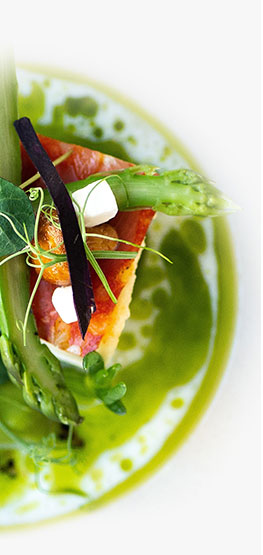
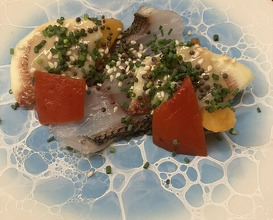
I visited for lunch after a long time.The dedication and time put into each dish are remarkable, and I always look forward to coming here. It's rare to have the opportunity to enjoy such well-prepared dishes, making it feel quite valuable.For the first course, we had Isaki (a type of fish) with fruits (loquat and fig), sprinkled with paprika and perilla, drizzled with sesame vinegar. The grilled Isaki was fragrant and paired perfectly with the sake.The Hassun (a seasonal appetizer platter) featured cherry salmon wrapped in cucumber, tempura (young corn, mini okra, edamame), sesame-dressed three-way beans, fried yamatoimo with junsai (water shield), tender octopus, and abalone. The green plums were simmered for five hours and soaked in running water for a whole day, resulting in a melt-in-your-mouth texture.The soup dish included Awaji's Kisu fish and Mita asparagus (with the tips grilled, the core raw, and the outer part cooked). It’s fascinating how the flavors of each part of the ingredients are brought out without using any salt.For sashimi, we had Awaji's squid and Shima shrimp (wrapped in kombu). The squid was finely sliced right in front of us, and its texture was creamy.To cleanse the palate, we had fried eggplant and white shredded green onion. The eggplant was fried and simmered, achieving a melt-in-your-mouth tenderness reminiscent of soft meat.For the grilled dish, we enjoyed small sweetfish from Lake Biwa, which had been meticulously prepared and grilled over charcoal for nearly 40 minutes. The result was plump, with a wonderful harmony of sweetness, bitterness, and the aroma of charcoal. The refreshing pickled cucumber and myoga (Japanese ginger) were also delightful as a palate cleanser.The rice course consisted of tempura anago (conger eel) rice bowl and egg over rice, accompanied by clam miso soup and pickles. The crispy batter encased the thick, fluffy anago, which was exquisite.For dessert, we had peach daifuku and the owner's coffee. The peach was wrapped in sweet bean paste right in front of us and covered with hot mochi. While strawberry daifuku is more common, the peach is juicier and pairs beautifully with the subtly sweet bean paste.
We use cookies on this site to enhance your user experience.