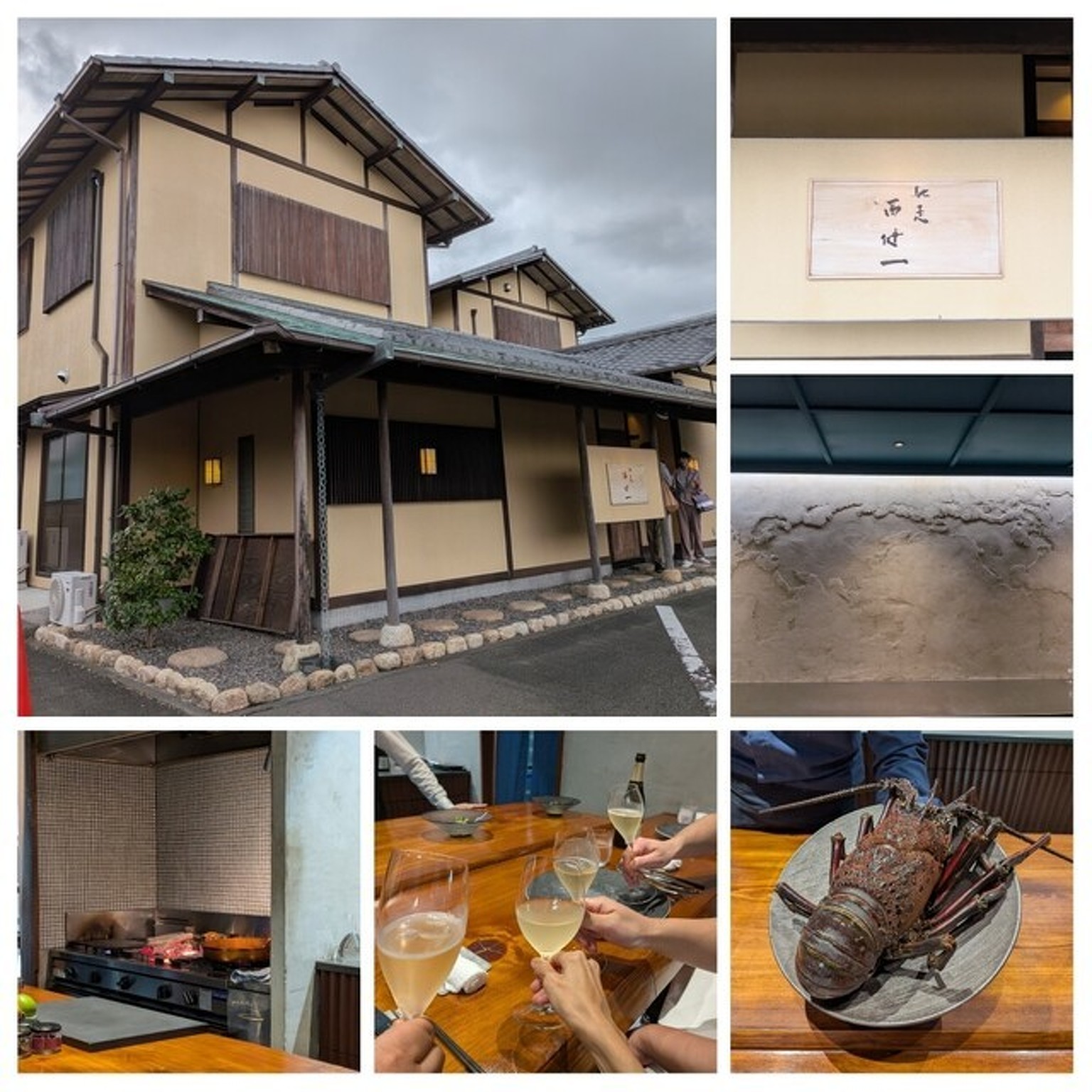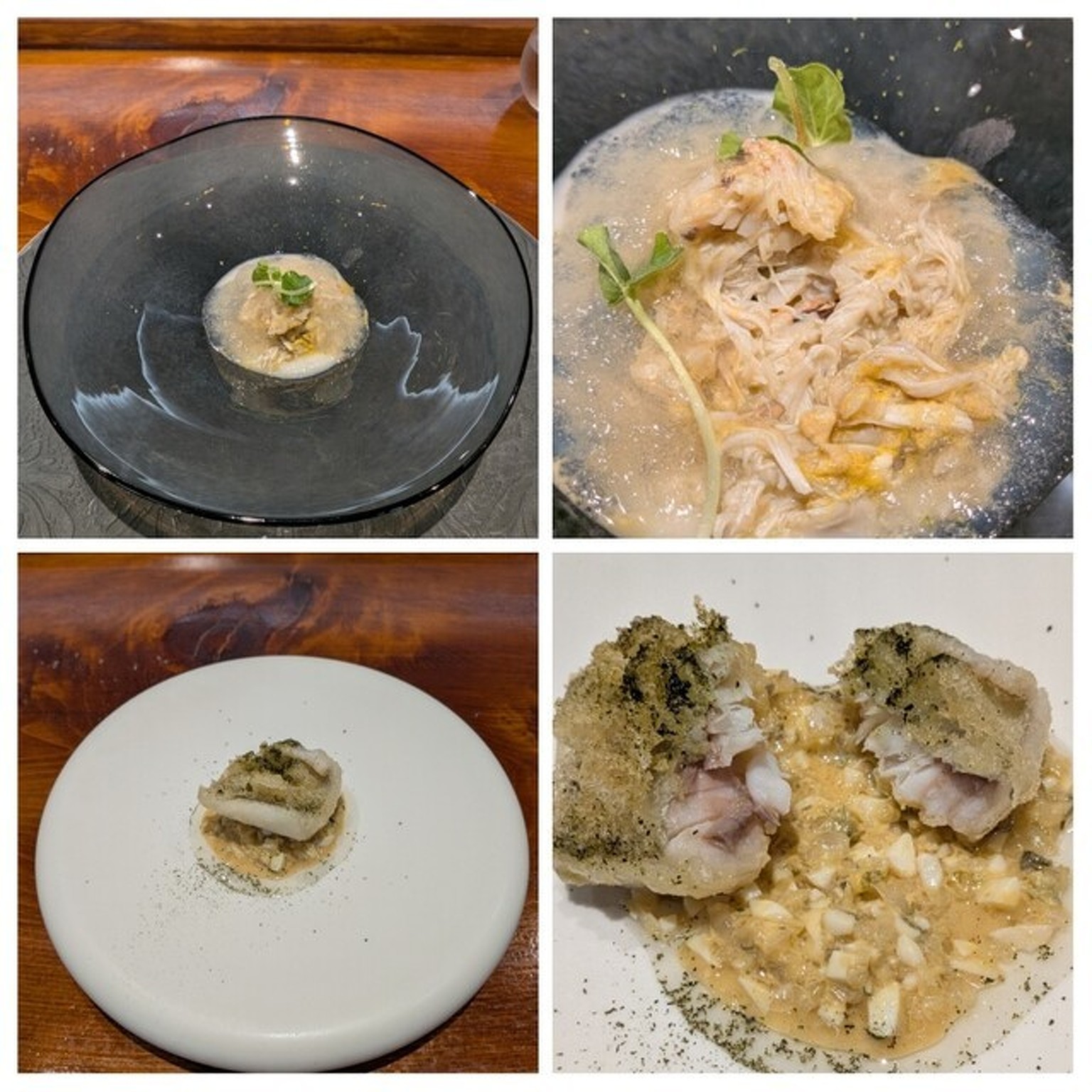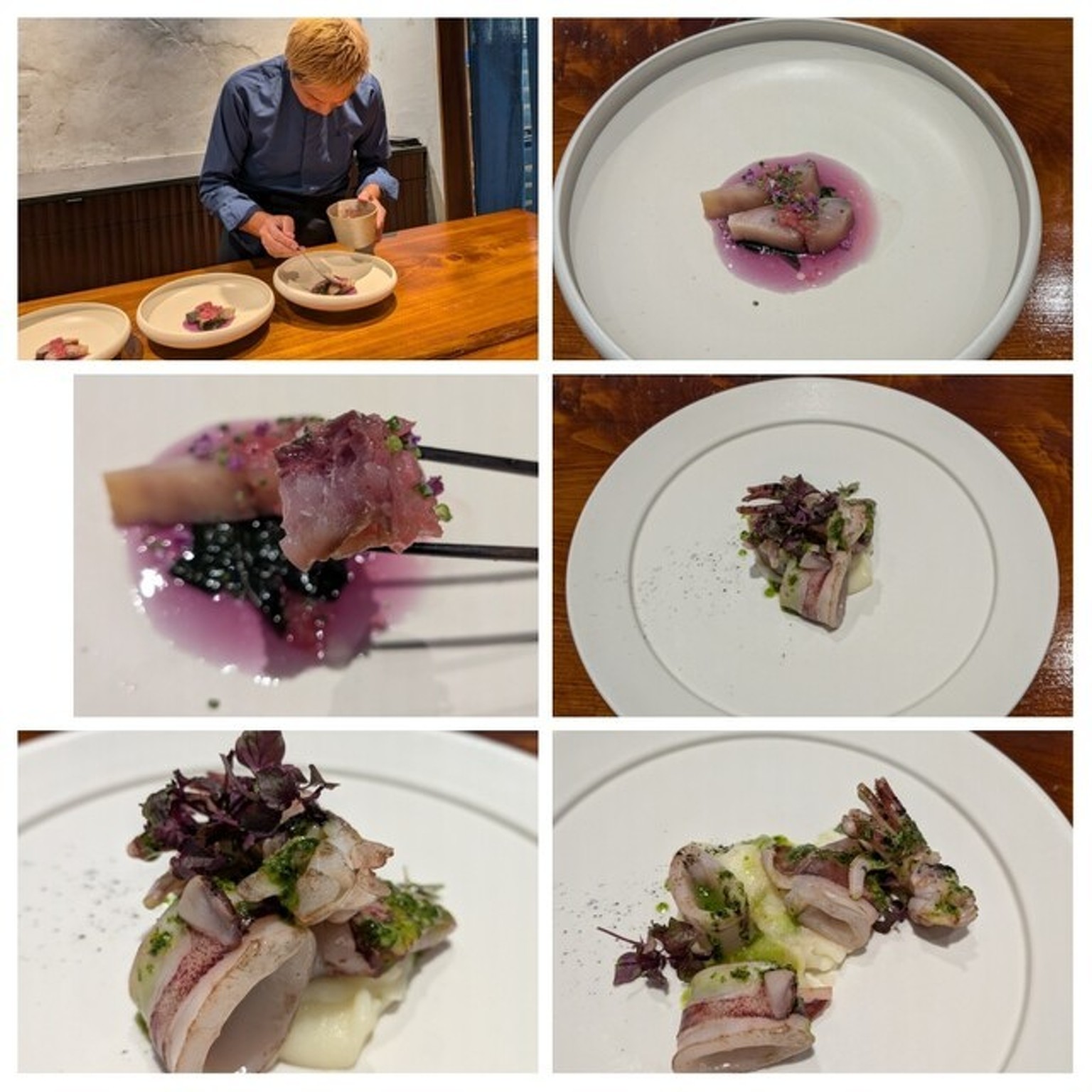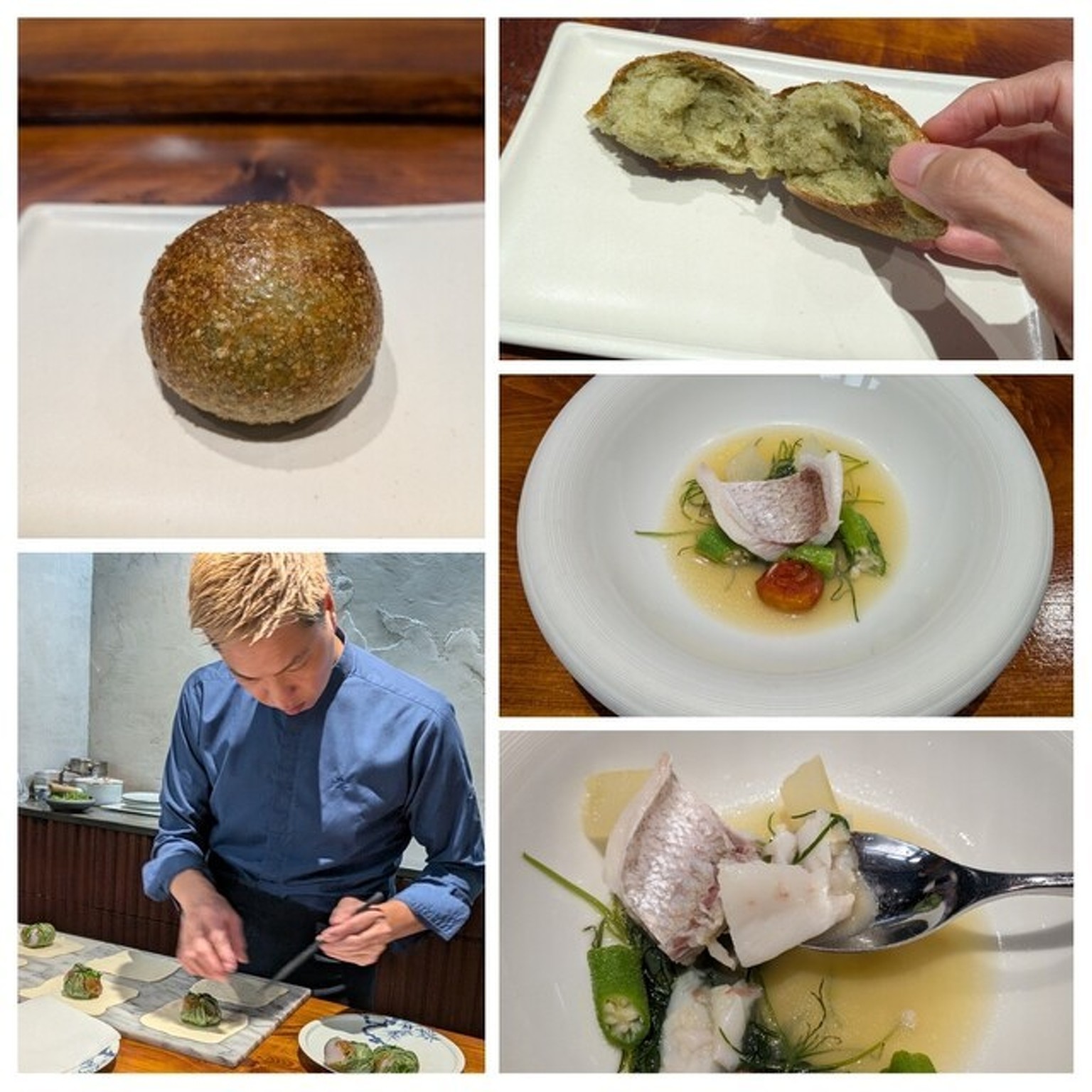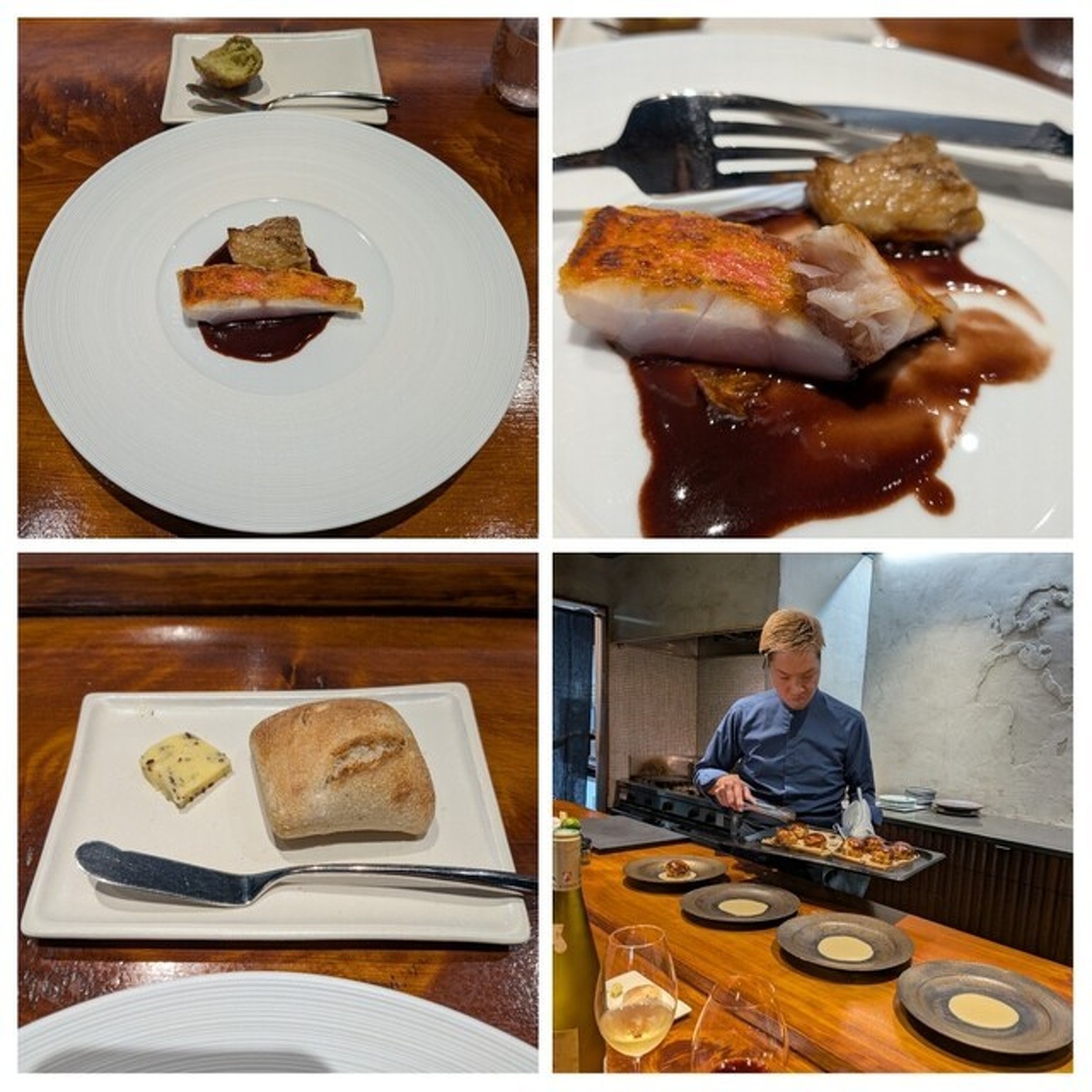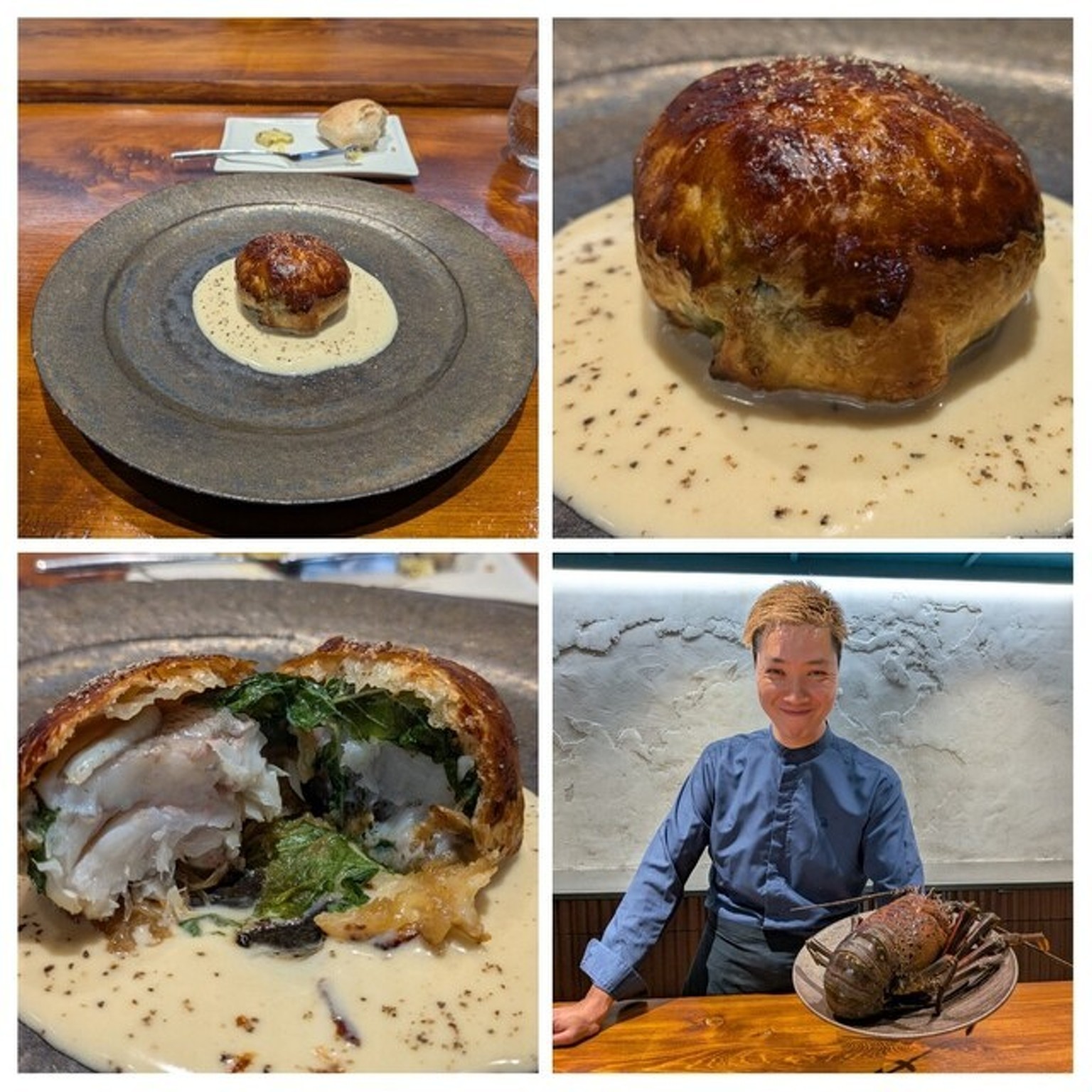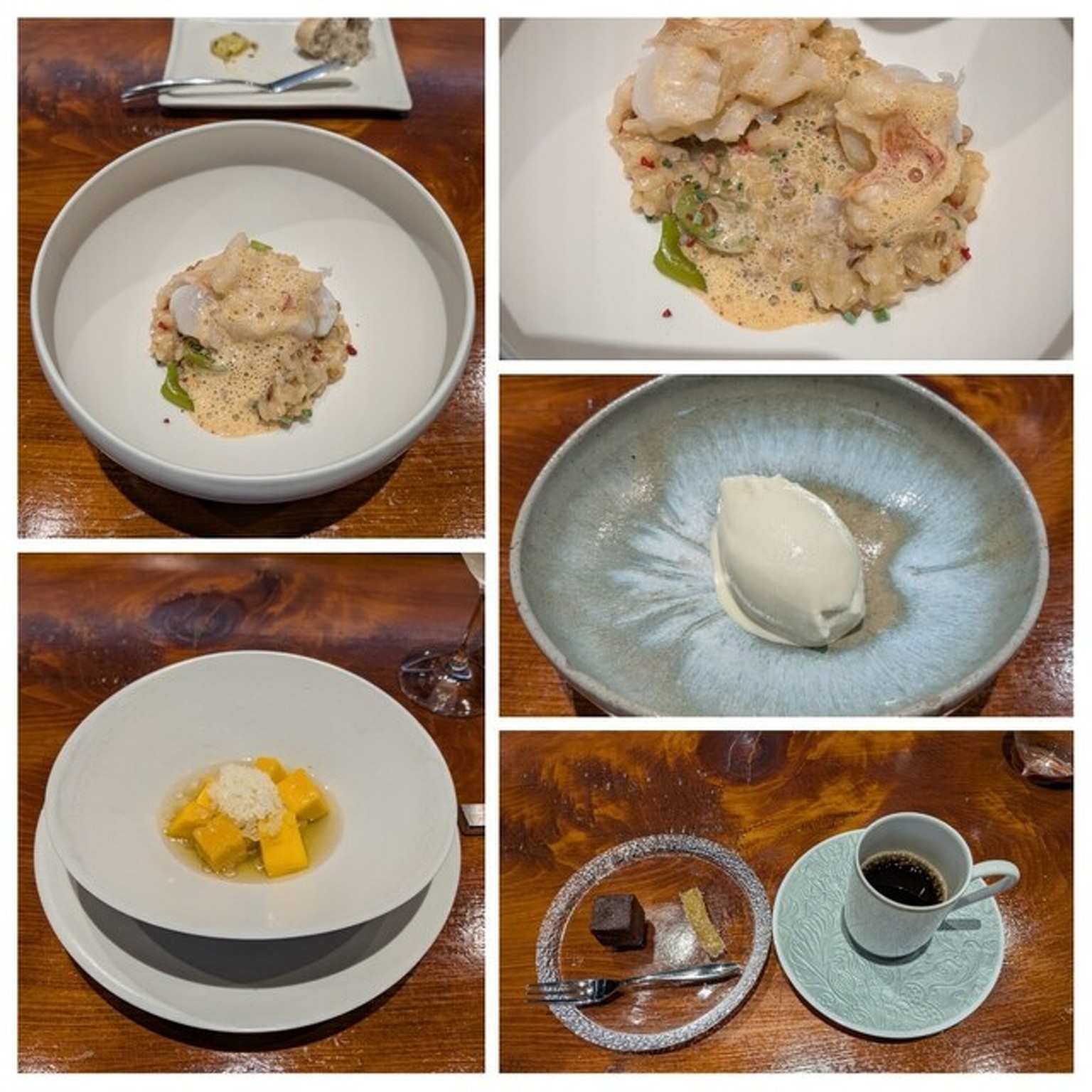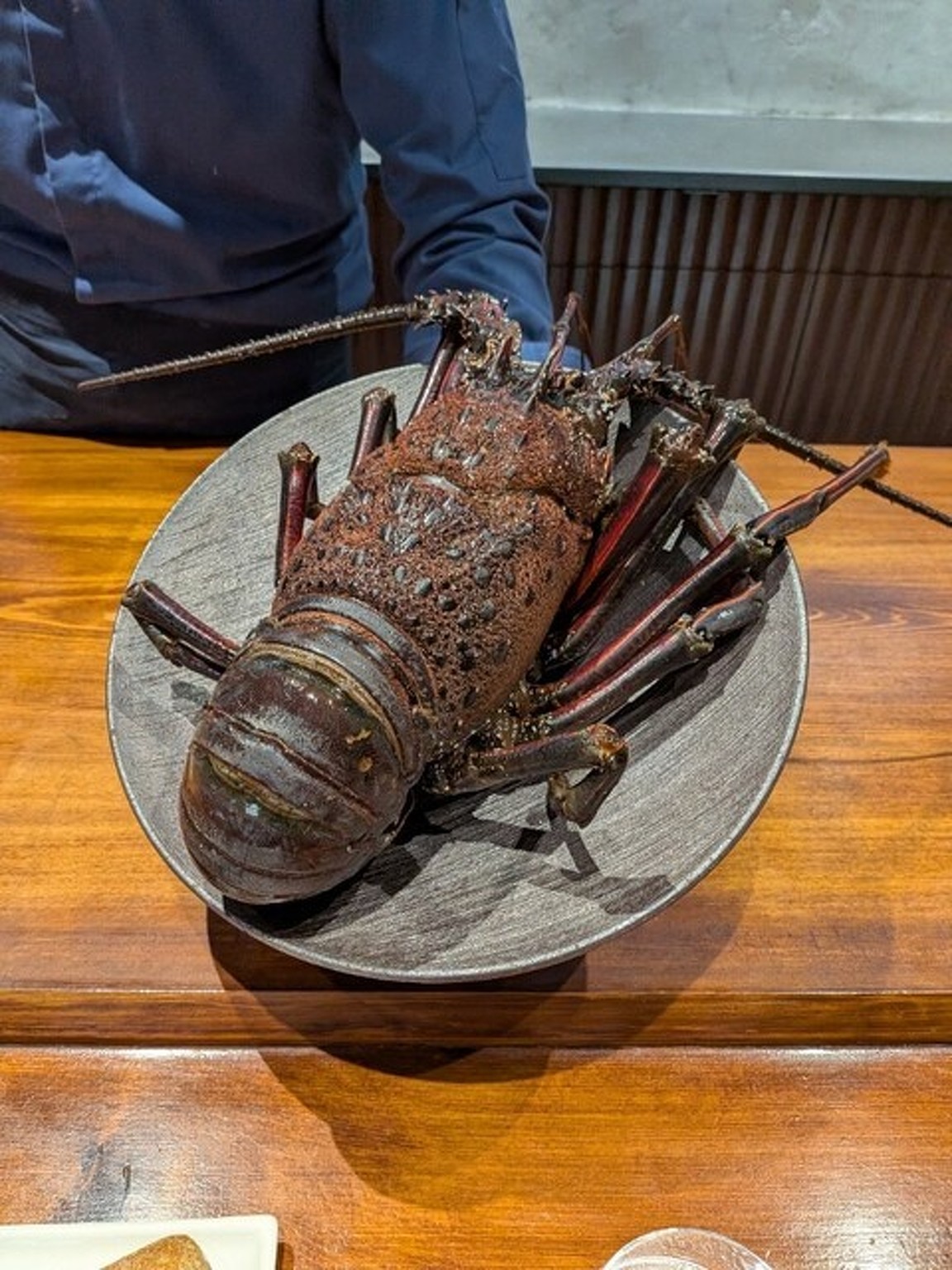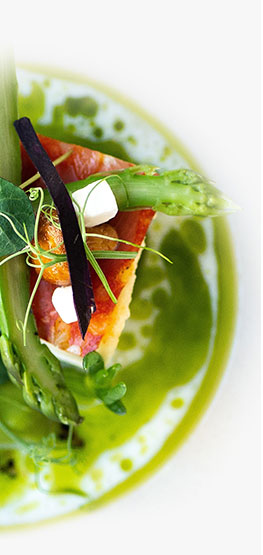
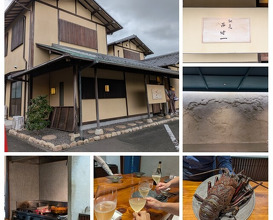
I visited my favorite French restaurant, Chisou Nishi Kenichi, in Yaizu for a seasonal treat.On this day, I enjoyed the company of special guests as always.Since I was the designated driver, I opted for non-alcoholic beverages.We entered the restaurant at 12:30 for a simultaneous start to our meal.Let’s savor the creations of Chef Nishi!I enjoyed a selection of cold-brewed green tea, hojicha, and oolong tea.☆ Female Doiman Crab This dish featured the meat and miso of female Doiman crab served with onion purée, seafood broth, and sea water jelly. The addition of okra sprouts and a sprinkle of yuzu zest provided a delightful accent.The richness of the miso and the sweetness of the onion enhanced the natural sweetness of the crab meat, while the saltiness from the broth and jelly added a mineral touch, making for a refreshing start.I love the intense flavor of Doiman crab, which is one of my favorite crustaceans.☆ Fried Ebodai with Gribiche Sauce and Tea Powder The fried Ebodai was served with a gribiche sauce (made from boiled eggs, capers, sansho leaves, and onions) and sprinkled with tea powder.The acidity of the gribiche sauce perfectly complemented the crispy, fluffy texture of the Ebodai. I particularly enjoyed the sharpness of the sherry vinegar and the tanginess of the capers in the sauce.The use of sansho leaves added a Japanese element, and I felt that the tea powder effectively cut through the richness of the fried dish.☆ Grilled Mackerel with Kinome and Beet Sauce This dish featured freshly caught, smoked mackerel served with a sauce made from beets and red onions, garnished with scallions and shiso leaves, along with kinome underneath.It was reminiscent of a Western-style ohitashi.The mackerel had a pleasant smokiness (not too strong), and its moist, flavorful texture melted in the mouth. The sauce, with its acidity, combined beautifully with the sliminess and freshness of the kinome, showcasing the mackerel's potential.The remaining broth was delicious, infused with the rich flavor of the mackerel fat, making it a joy to finish.This was the most memorable dish of the day.☆ Grilled Jindo Squid with Charcoal Aroma The grilled Jindo squid was infused with a charcoal aroma and served with a potato purée made with ginkgo nuts, parsley oil, black garlic powder, and red shiso.The strong charcoal aroma was a bit overpowering (masking the squid's natural scent), but the squid itself was tender and had a delightful chewy texture, enhanced by the accents of the purée and herb oil.Personally, I preferred it without the charcoal aroma.☆ Aosa Seaweed Steamed Bread This was my first experience with this fragrant, chewy bread made with aosa seaweed.The addition of shiratama flour gave it a satisfying weight and a fluffy texture. The crumb had a sweet, steamed bread-like flavor, while the crust was crispy and aromatic, making it delicious on its own.The chef seemed to have experimented to create a chewy bread.I felt that the hidden oil enhanced the lingering aroma of the aosa.☆ Braised Hanadai with Winter Melon, Okra, and Okahijiki in Seafood Saffron Tomato Broth The perfectly cooked Hanadai had a delightful gelatinous texture between the flesh and skin, with a light, flaky mouthfeel. The umami from glutamate (from tomatoes and summer vegetables) and inosinic acid (from seafood) created a rich broth that was beautifully balanced.It paired well with summer vegetables, and the refreshing notes of hassaku oil and the pleasant aroma of saffron added complexity to the broth.☆ Pan-Seared Kinmedai with Fujinomiya White Eggplant The pan-seared Kinmedai was served with a sauce made from red wine and hojicha from Shizuoka, accompanied by fried Fujinomiya white eggplant.The skin of the Kinmedai was crispy, with a nutty aroma reminiscent of crustaceans, and the tender, flaky texture was delightful. The hojicha added a depth to the red wine sauce, enhancing the flavor of the fish.The eggplant was also impressive, with a creamy texture that, when grilled again, released a nutty aroma.At first glance, the red wine sauce seemed strong for a white fish, but the balance worked well due to the Kinmedai's unique flavor.Those who appreciate the lingering aroma of the main ingredient will truly enjoy this dish.☆ Baked Meigo (known as Kuroguchi in Shizuoka) in Puff Pastry with Beurre Blanc This specialty dish featured the rare Meigo fish, wrapped in puff pastry with caramelized onions and shiso, served with a three-year-aged beurre blanc sauce.The light, flaky pastry enveloped the tender, juicy Meigo, which had an incredible sweetness and mouthfeel. The refreshing shiso, along with the rich beurre blanc, created a refined dish reminiscent of a gratin.Visiting Chef Nishi, I found this specialty to be an essential and remarkable dish, showcasing the special flavors of local ingredients.☆ Charcoal-Grilled King Lobster Risotto This was a special risotto made with a generous amount of king lobster.It was still made with barley and brown rice.The bisque sauce and ume powder added a nice touch.The risotto was gentle, infused with the flavors of the lobster and bisque, allowing me to indulge in the experience of eating king lobster.The dish focused more on the broth and sauce rather than the sweetness of the lobster meat, creating a delightful texture.However, I did notice a distinct aroma from the lobster that caught my sensitive nose.☆ Fujieda Keats Mango with Gyokuro Sorbet and Broth, Black Letter Oil This refreshing dessert combined Shizuoka mango with Shizuoka tea, featuring sweet and sour Keats mango paired with refreshing gyokuro sorbet. The cold broth and sweetness created a refreshing sensation, while the black letter oil added a sharp finish, making it a perfect summer dessert.☆ Mint Ice Cream This silky ice cream highlighted the refreshing mint and sweetness of milk.☆ Chocolate Terrine with New Summer Pear The terrine was made with Valrhona's Caribé chocolate.With a pleasant acidity and a hint of hojicha bitterness, the terrine melted beautifully in the mouth, which I loved. It paired well with the soft New Summer pear, reminiscent of enjoying fresh orange peels.The newly blended coffee served at the Hiroshima G7 Summit was milder and more to my taste than the previous version.In the height of summer, Chef Nishi continues to impress with the potential and power of the ingredients, showcasing their natural flavors through skillful cooking and seasoning.The flow of the course was unified around seafood, with each dish demonstrating meticulous cooking techniques.Most of the vegetables used were locally sourced, reflecting a terroir-based cuisine.This time, I was particularly impressed by the chef's use of tea, which added depth through hojicha and provided a refreshing finish with green tea.The use of natural ingredients as hidden seasonings resonates with my own culinary philosophy, making it a valuable learning experience.I recalled a book on dashi that mentioned a technique for making dashi with green tea, which piqued my interest.I always enjoy the powerful ingredients from Shizuoka at Chef Nishi's restaurant.I look forward to my next visit.Thank you for the wonderful meal! m(_ _)m
We use cookies on this site to enhance your user experience.