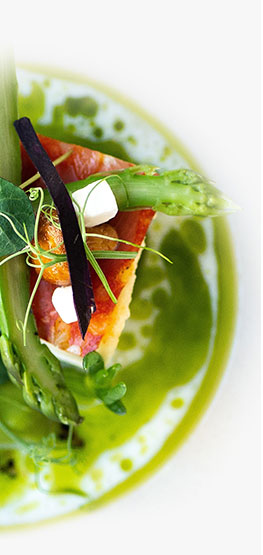
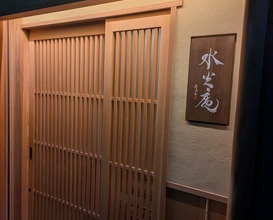
On this day, I had a long-awaited reunion dinner with my middle and high school classmates at "Kashiwade no Tsukasa Suikouan," a Japanese restaurant owned by my classmate, Chef Tomohiro Ishida.After graduating high school, he moved to Kyoto and trained at the prestigious Kyoto Kitcho Arashiyama, eventually becoming a sous chef before going independent.Now, he has become a renowned chef, and I had the pleasure of enjoying "authentic Japanese cuisine" made with seasonal, top-quality ingredients.The restaurant is about a 10-minute walk from Akabanebashi. As I walked through the quiet residential area towards the restaurant, I caught a faint whiff of incense. Could it be around here? Yes, there it was—"Kashiwade no Tsukasa Suikouan."Before even stepping inside, the traditional Japanese atmosphere made me feel as if I had arrived in Kyoto.Once inside, this feeling intensified. A stunning space built in the sukiya style, reflecting Japan's aesthetic sensibilities, unfolded before me.The meal consisted of 15 courses, including appetizers. I took notes while listening to Chef Ishida and the staff, so I apologize in advance for any inaccuracies.◆ Juice extracted from yamamomo (Japanese mountain peach)◆ Jelly of sweet shrimp and purple sea urchin, served with yuba (tofu skin) and edamame◆ Shaved ice with tomato and a smooth sauce of Managiri pepper◆ Hassun: roasted beef with sansho pepper, tender octopus, corn tempura, yamamomo, sweet potato (Maru ju), lemon simmered, sweet ayu, and fried shrimp heads◆ Grilled anago (conger eel) with shredded cucumber, sudachi (Japanese citrus), and salt wasabi◆ Clear soup with white fish and plum paste, served with water shield and winter melon◆ Salt-grilled ayu (sweetfish) finished with frying, one with soy sauce◆ Stick sushi of striped jack mackerel, garnished with wasabi◆ Kyo Kamo eggplant with ultra-thin bonito flakes, salt, and sesame sauce◆ Kansai-style grilled eel, wrapped with myoga (Japanese ginger), shiso leaves, and cucumber in a wheat gluten◆ Inaniwa udon with grilled abalone, mixed with liver sauce and zucchini, finished with vinegared rice and yuzu olive oil◆ Clay pot rice with ayu and mushrooms◆ Simmered black-haired wagyu beef topped with egg yolk◆ Peach ice cream and Shine Muscat grapes◆ Uji Kintoki (shaved ice with sweet red bean)The meal was inspired by the tea kaiseki style, similar to the training he received at Kyoto Kitcho, further elevating the spirit of tea ceremony, calligraphy, and flower arrangement into his cooking.In July, the theme was Tanabata, one of the five seasonal festivals, delving into ancient Japanese rituals and Chinese court ceremonies.We began with a cleansing sip of Japanese sake, and the meal commenced. The chopsticks were pre-moistened, a practice known as "nurebashi," which not only prevents food from sticking but also reflects the chef's meticulous preparation.The first bite of the sweet shrimp and purple sea urchin jelly made my cheeks relax with delight. The richness of the seasonal sea urchin was gently enveloped by the Japanese broth, and the delicate yet rich sweetness of the sweet shrimp highlighted the depth of Japanese cuisine.The salt-grilled ayu was finished with frying, enhancing its aroma significantly. As I savored the umami of the white flesh and the slight bitterness of the liver, a sweetness gradually emerged. It was fascinating to enjoy both salty and soy flavors.The striped jack mackerel was truly impressive. Known as the king of mackerel, its size was astonishing. It had been aged for about ten days, concentrating its flavor. The wasabi, coarsely grated rather than ground, left only a refreshing aroma without any spiciness. This was the best stick sushi I had ever tasted.The grilled eel was the highlight, prepared in the Kansai style, with an exquisite balance of sweetness and aroma. Wrapped in wheat gluten, the refreshing scents of myoga and cucumber combined with the crunchy texture, creating layers of umami. I understood in one bite why this dish is considered the restaurant's signature.Even the udon in the final course delivered another wave of umami. The richness of the abalone liver paired perfectly with the udon. I added vinegared rice to the remaining sauce and drizzled yuzu olive oil. The fragrance of yuzu brought everything together, and I couldn't stop until the last drop.Listening to the chef's calm and smooth explanations, I savored each dish while engaging in lively conversation with my friends.Even the final rice dish was meticulously prepared.The rice, known as "niheban," refers to the moment when the rice transforms from raw to cooked, retaining plenty of moisture. It was juicy and incredibly sweet.I could choose my side dishes, opting for simmered black-haired wagyu beef, nameko mushrooms, and sakura shrimp furikake. I wondered how many bowls I could eat! Since the meal was inspired by tea kaiseki, we concluded with Uji Kintoki. After finishing the shaved ice, a rich matcha flavor lingered, and I drank it down like tea. I was thoroughly satisfied.After the meal, I chatted with Ishida for a while. It had been decades since we graduated high school, but everyone seemed just as they were back then... maybe? Reuniting with old friends and experiencing the depth of Japanese cuisine made for an unforgettable night that filled my heart.
We use cookies on this site to enhance your user experience.