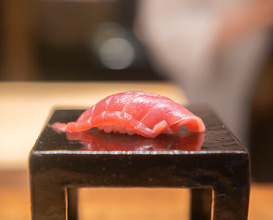
HATSUNEZUSHI is a popular sushi restaurant located in Kamata. Currently, the opportunity to be served by Chef Nakaji is limited, as younger chefs primarily handle the sushi preparation. The restaurant has gained a reputation for offering authentic sushi at prices below JPY 10,000, thanks to the talented chefs in their 20s working at the counter.Known as a difficult reservation spot since the days of the previous chef, its popularity remains strong even with the change in style. Reservations are still hard to come by, and I managed to secure a seat for the evening session this time.The location is about a 5-minute walk from Kamata Station. With its white walls and blue door, the exterior evokes a French restaurant vibe, setting it apart from typical sushi establishments.Inside, the atmosphere is calm, with slightly dimmed lighting. Unlike most sushi restaurants, the serene ambiance allows for a more relaxed dining experience.On this day, the sushi was prepared by a remarkable 21-year-old chef. While I was surprised by his youth, I was excited to see what kind of sushi he would serve.■Omakase Course (JPY 8,800) - Sea Bream Roe - Tuna - Medium Fatty Tuna - Tataki - Grouper - Gizzard Shad - Sea Bream - Sardine - Sea Urchin - Clam - Spanish Mackerel - Bonito - Eel - Roll - Fish Soup - DessertFirst, we started with the rice, steamed in a traditional wooden steamer. This was my first time seeing a steamer that I had only encountered in the manga "Shota's Sushi." The rice is cooked quickly at high temperatures using only charcoal, resulting in each grain standing out with a defined shape. The vinegared rice is made with red vinegar, providing a gentle acidity and richness that spreads pleasantly.After tasting the freshly cut rice, the sushi experience began.●1. Sea Bream Roe The first dish is sea bream roe. Gently cooked, this dish has a subtle umami flavor that gradually unfolds.●2. Tuna This is tuna from Nakanozaku, Yamaji in Fukushima Prefecture. The plate is kept at around 60 degrees Celsius, warming the fish slightly to melt the fat and enhance the tuna's natural flavor. The lean part is seasoned with salt, allowing the pure umami to shine through without any distractions.●3. Medium Fatty Tuna The next dish is medium fatty tuna, served with soy sauce. The richness of the fat combined with the soy sauce creates a deeper flavor compared to the lean tuna.●4. Tataki This dish features a combination of lean and medium fatty tuna, with a hint of smoked daikon. The smoky aroma and saltiness enhance the sweetness of the fat, providing a delightful textural contrast.●5. Grouper This is a large grouper from Amakusa, weighing 35 kg. It has a firm texture, and with each bite, the rich flavor emerges, offering a satisfying experience despite being a white fish.●6. Gizzard Shad The gizzard shad from Amakusa is aged for a week. It is intentionally shaped to break apart in the mouth, creating a memorable sensation. The balance of the gentle acidity and the umami from aging is exceptional.●7. Sea Bream This is sea bream from Ehime, served without salt or soy sauce. Despite not being wrapped in kombu, it has a strong umami flavor, showcasing the power of the ingredient itself.●8. Sardine The sardine from Hokkaido is rich in fat, melting smoothly in the mouth. The unique umami and sweetness of the blue fish spread pleasantly.●9. Sea Urchin Served by hand rather than in a gunkan style. While the richness is slightly restrained, the balance of ocean aroma and umami is more than satisfactory for this price range. The natural deliciousness stands out.●10. Clam This is clam from Chiba, prepared simply with sake steaming rather than the usual seasoning. It brings out the deep flavors of the clam itself.●11. Spanish Mackerel This is Spanish mackerel from Ehime, with a pleasant balance of fat and delicate umami, creating a soft flavor. It evokes a sense of the season.●12. Bonito This is bonito from Aichi, served with a marinade that has been passed down for 22 years. It is served without grilling, allowing the strong flavor of the bonito to shine through, layered with the umami of the marinade. It has a moist and rich finish, distinct from tataki.●13. Eel This is eel from Tsushima, which falls apart tenderly upon entering the mouth. The glaze is applied lightly, enhancing the natural sweetness and umami of the eel.●14. Roll This is kanpyo roll from Tochigi. Simple yet crafted with care, it serves as a fitting conclusion to the meal.●15. Fish Soup A refreshing fish soup that captures the essence of the fish.Dessert is served on the second floor, in a whimsical space that feels unlike a sushi restaurant.We enjoyed matcha terrine and rice ice cream. The ice cream is made from leftover rice used in cooking the sushi, maintaining a consistent theme throughout the meal.To finish, we had tamagoyaki (Japanese omelet). It left a gentle aftertaste that beautifully tied together the entire course.The experience provided value well beyond the price. It was a great meal.
We use cookies on this site to enhance your user experience.