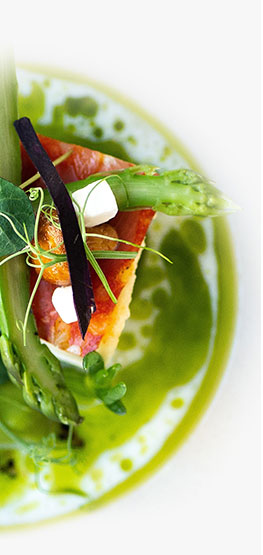
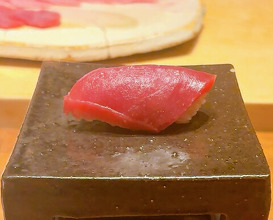
The individuality of the ingredients, the changes in flavor due to temperature, the spread of aromas, and the differences in texture.This renowned restaurant in Kamata thoroughly explores every element that makes sushi, creating a complete experience.With a strong commitment to carefully selected ingredients from across the country, they pay close attention to rice, vinegar, wasabi, and nori.As the skilled chefs explain each dish, you can enjoy the unique expressions of each piece.Currently, young chefs are taking the lead at the counter, continuing the tradition while operating the restaurant.It is also known for offering authentic sushi at relatively accessible prices, attracting a wide range of supporters from young people to sushi enthusiasts.Since the days of the head chef, it has been known as a difficult-to-reserve restaurant, and its popularity remains strong.Located just a few minutes' walk from Kamata Station, the exterior features white walls and a blue door, giving it a somewhat French restaurant-like atmosphere, which is a bit different from the typical sushi restaurant image.Inside, the dimly lit space consists only of counter seating, creating a calm environment.Rather than the usual tension found in sushi restaurants, you can enjoy your meal in a relaxed atmosphere.─────In the past, the sushi prepared by the head chef was known for being quite expensive and out of reach.Now, young chefs are at the counter, offering courses at surprisingly reasonable prices.However, the quality of the ingredients and the craftsmanship remain unchanged.As expected, it continues to be difficult to secure a reservation, and on this day, I was fortunate to be invited to experience this rare opportunity for my first visit.《5th Generation Omakase Course JPY 8,800, drinks not included》On this day, the young chef at the counter was just 19 years old.While I was surprised by his youth, his movements were confident, naturally raising my expectations.The rice used is "Hitomebore" from Miyagi Prefecture.It is cooked in a special charcoal pot at a high temperature of 400 to 700 degrees Celsius, taking just 10 minutes to prepare.The vinegar used is a 4-year aged sake lees vinegar from Yokoi Brewing.Its rich aroma and umami enhance the presence of the rice itself.Additionally, the wasabi is a 4-year variety from Azumino, Nagano Prefecture.The grating method alters its spiciness and aroma, with a copper grater suppressing the heat while enhancing the fragrance.On this day, the course featured bluefin tuna weighing 165 kg from Iwaki, Aomori Prefecture.▪️ Tuna Akami with SaltThe first impression was the tuna akami.To avoid dulling the flavor, it was served with salt instead of soy sauce.The plate was warmed to slightly melt the fat, recreating the temperature close to that of the tuna, a migratory fish.As soon as it entered my mouth, the robust umami of the akami spread rapidly.This sushi, which consciously considers flavor changes due to temperature, was very impressive.▪️ Chutoro with Soy SauceIn contrast to the akami, this was served with soy sauce.The sweetness and aroma of the fat rose, creating a wonderful harmony with the fluffy rice.▪️ Akami and Chutoro TartareThe akami and chutoro were chopped and seasoned with soy sauce and mirin.It was combined with smoked daikon and grated wasabi stems.The smoky aroma, texture, and refreshing spiciness of the wasabi added depth, elevating it beyond a simple tartare.▪️ KohadaThis unique style involves pressing the fish with the skin side down.After aging for about a week, the bones soften, creating a texture that allows you to feel the bones directly.The acidity is intentionally kept low.The finish emphasizes the umami of the kohada itself.▪️ Sea BreamDespite not being pressed, it has a flavor reminiscent of kombu aging.This is explained as being due to the food the sea bream consumes.The Kyushu re-brewed soy sauce used here highlights the aroma rather than sweetness, beautifully enhancing the flavor of the fish.▪️ IsakiThe balance of umami richness and fat was impressive.The flavor expanded with each bite.▪️ Aori IkaA large aori ika weighing over 4 kg.Beneath its sticky sweetness lies a thick umami.The beauty of the texture created by the knife work also left a lasting impression.▪️ Clam Sake SteamedNo seasoning was added, relying solely on the clam's own umami.A surprisingly clear broth sensation spread across the palate.▪️ Matsuba CrabDelicate yet with a very rich sweetness.The texture that breaks apart in the mouth is also pleasant.▪️ Marinated Tuna AkamiThe marination further concentrates the umami and aroma of the akami.It presents a different expression from the earlier salt preparation.▪️ Seasonal Mozuku Seaweed and Sea Bream RoeThe refreshing taste of the mozuku is layered with the rich umami of the sea bream roe.This dish adds a change to the flow of the course.▪️ Hokkaido Nemuro Bafun UniRich yet without any unpleasant heaviness, the aroma lingers beautifully.▪️ AnagoThe flavor-soaked flesh is tender and falls apart easily.The sauce is not overpowering, allowing the umami of the anago to shine.▪️ Kanpyo MakiUsing nori with aoyanori from Mikawa Bay.The aroma of the nori spreads impressively as you bite into it.▪️ ArajiruA broth made from fish heads and bones combined with Chichibu miso.It contains somen noodles, providing a comforting finish to the meal.《Drinks Consumed》〇 Heiwa Craft White Ale〇 Urakasumi Junmai Karakuchi〇 Okubansho Hojo Karakuchi〇 Tedori River Junmai Daiginjo Karakuchi〇 Tan Yamahai Junmai Unfiltered〇 Hiran〇 Takachiyo SKY Unfiltered Junmai─────Next, we stepped outside and moved to the second floor.The space, with stone walls and blue window frames, antique-style furniture, and soft chandelier lighting, resembles a Western-style lounge.The atmosphere changed so dramatically from where we had just enjoyed sushi that it naturally lifted our spirits in this extraordinary setting.▪️ Dessert: Japanese-style ParfaitLayered with rice ice cream, tamagoyaki, gyuhi, matcha terrine, strawberries, and juneberries.Homemade black syrup made from brown sugar from Iriomote Island ties everything together.The rice ice cream made from "Kamezoko" rice was particularly impressive with its gentle sweetness reminiscent of grains.─────This sushi experience is not just about presenting high-quality ingredients; it intricately crafts temperature, aroma, texture, and aftertaste.Each piece has a clear intention, and as you eat while listening to the explanations, understanding and surprise accumulate.Moreover, the experience of enjoying dessert and coffee in the lounge on the second floor adds to the strong sense of extraordinary throughout the meal.This restaurant left a lasting impression as a memorable dining establishment that transcends the boundaries of sushi, offering an experiential culinary journey.
We use cookies on this site to enhance your user experience.